Locked Boxes and Barcode Scans: Solving Custody Gaps in Secure Data Destruction
Most data destruction failures do not start at the shredder. They start in the gap between the moment a device leaves a controlled room and the moment destruction is confirmed. That gap is where inventory lists stop matching physical assets, where boxes sit in storage without a clear owner, and where an audit trail becomes a reconstruction exercise rather than a record.
BigVoice Secure Destruction Pte. Ltd. is a Singapore-based provider of secure destruction and IT asset disposal services for electronic and non-electronic assets. Its Collect–Destroy–Certify process is built around a simple answer to the custody gap: barcode or scan inventory at collection, locked boxes with client-defined combinations, and a confirmed inventory output before destruction begins.
Problem Definition: Where Custody Gaps Appear
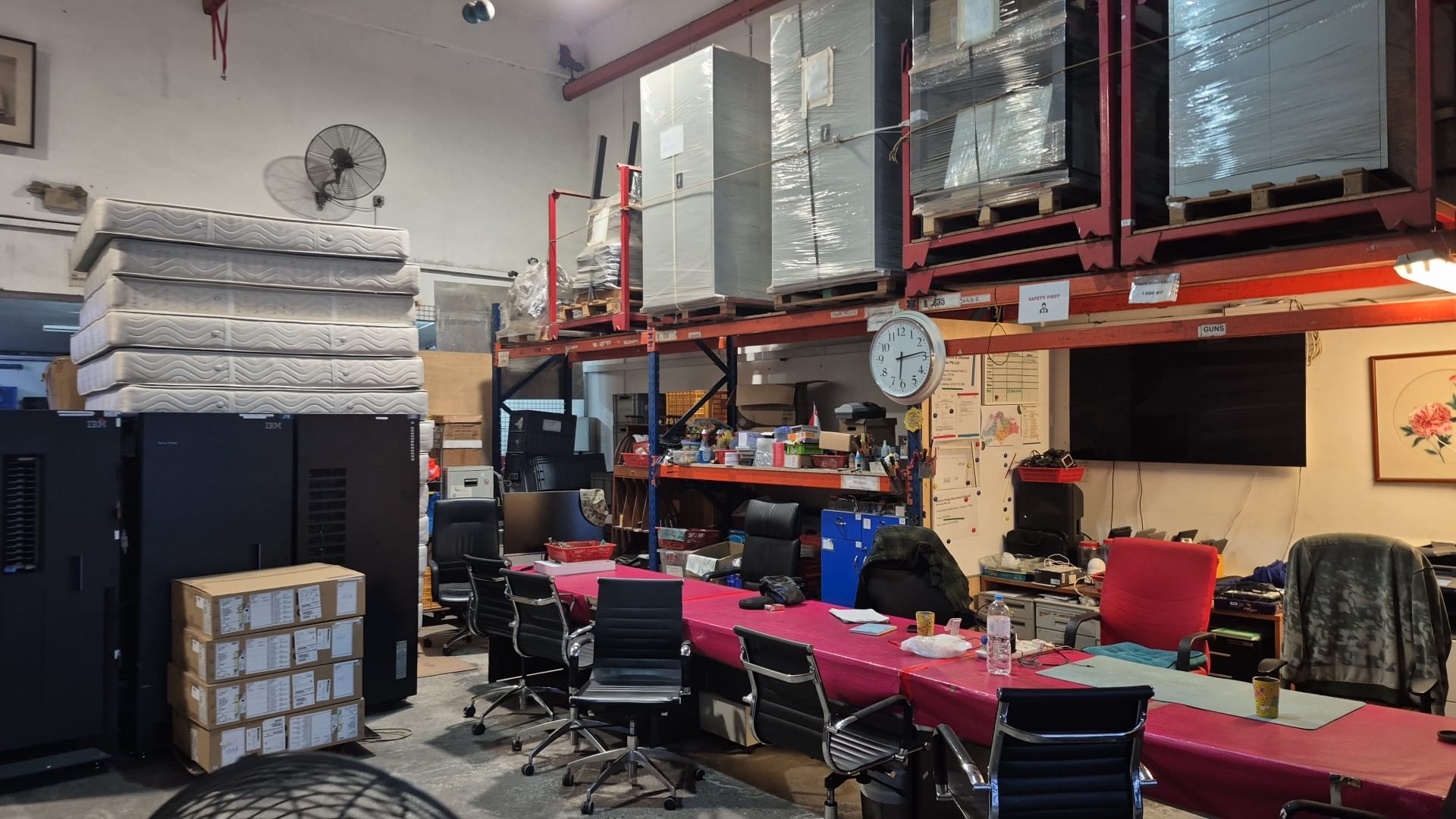
A custody gap is the period in which data-bearing media has left the client’s control but has not yet been destroyed and confirmed. The risk is physical, because items can be misplaced, mixed with other batches or removed from storage. The risk is also documentary, because a buyer may be unable to prove which items were collected, who had access to them, and whether the items destroyed were the same items that left the premises.
Three failure points recur in that gap:
- Inventory mismatch. The collection list, the physical box and the destruction batch do not reconcile. A count may match while the serial numbers, asset tags or media types do not.
- Uncontrolled storage. Media waits in a box, cage or room without a clear access rule. The longer the wait, the more the buyer depends on the provider’s internal discipline rather than on a shared control.
- Weak handoff evidence. The buyer receives a final certificate but cannot link it to the collection event. The certificate proves that destruction happened; it does not, by itself, prove that the right items were destroyed.
A Certificate of Destruction is necessary, but it is not a substitute for custody control. The certificate is the end of the evidence chain. The chain itself has to be built at collection, at storage and at the point of destruction.
Industry Background: Why Buyers Now Ask for Custody Evidence
The commercial context explains why custody controls have moved from back-office procedure to buyer requirement. The global IT Asset Disposition market was valued at USD 17.5 billion in 2024, and data destruction captured the largest share within that market at 30.64% in 2024, according to Strategic Market Research. At the same time, global e-waste generation reached 62 million tonnes in 2022 and is projected to reach 74.7 million tonnes by 2030, according to the Global E-waste Monitor 2024.
Those figures describe more than volume. They describe more handoffs: more devices leaving offices, data centres and storage rooms; more mixed batches of hard drives, solid-state drives, laptops, mobile devices and paper; and more buyers who need to explain the route from asset register to destruction certificate. NIST SP 800-88 Revision 1, the widely referenced media sanitization guideline, defines three levels of sanitization: Clear, Purge and Destroy. That framework is useful for method selection, but it does not by itself answer the buyer’s custody question: where was the media, who could access it, and what evidence was produced at each handoff?
In Singapore and other audit-driven markets, the practical answer is to make custody visible. A provider that can scan at collection, lock the media under a client-defined combination and return a confirmed inventory output gives the buyer something a final certificate cannot: a record that starts before destruction.
Detailed Solution: Locked Boxes, Barcode Scans and Confirmed Inventory
BigVoice Secure’s Collect–Destroy–Certify process addresses the custody gap through three connected controls. They are not separate services. They are checkpoints in one evidence chain.
Control 1: Barcode or Scan Inventory at Collection
The first control is item-level inventory. BigVoice Secure supports both on-site collection and drop-off, with barcode or scan inventory. Scanning can occur on-site or at the secure facility, and on-site scanning is available as an optional workflow. The important output is not the act of scanning itself; it is the confirmed inventory output at the Collect phase. That output becomes the reference document for the job.
For the buyer, the confirmed inventory output should answer a simple question: what exactly left our control? A useful record identifies the items scanned and provides a basis for reconciliation before destruction. Without that record, the final certificate sits on its own. With it, the certificate can be linked back to a specific collection event and a specific batch.
Control 2: Locked Boxes with Client-Defined Combinations
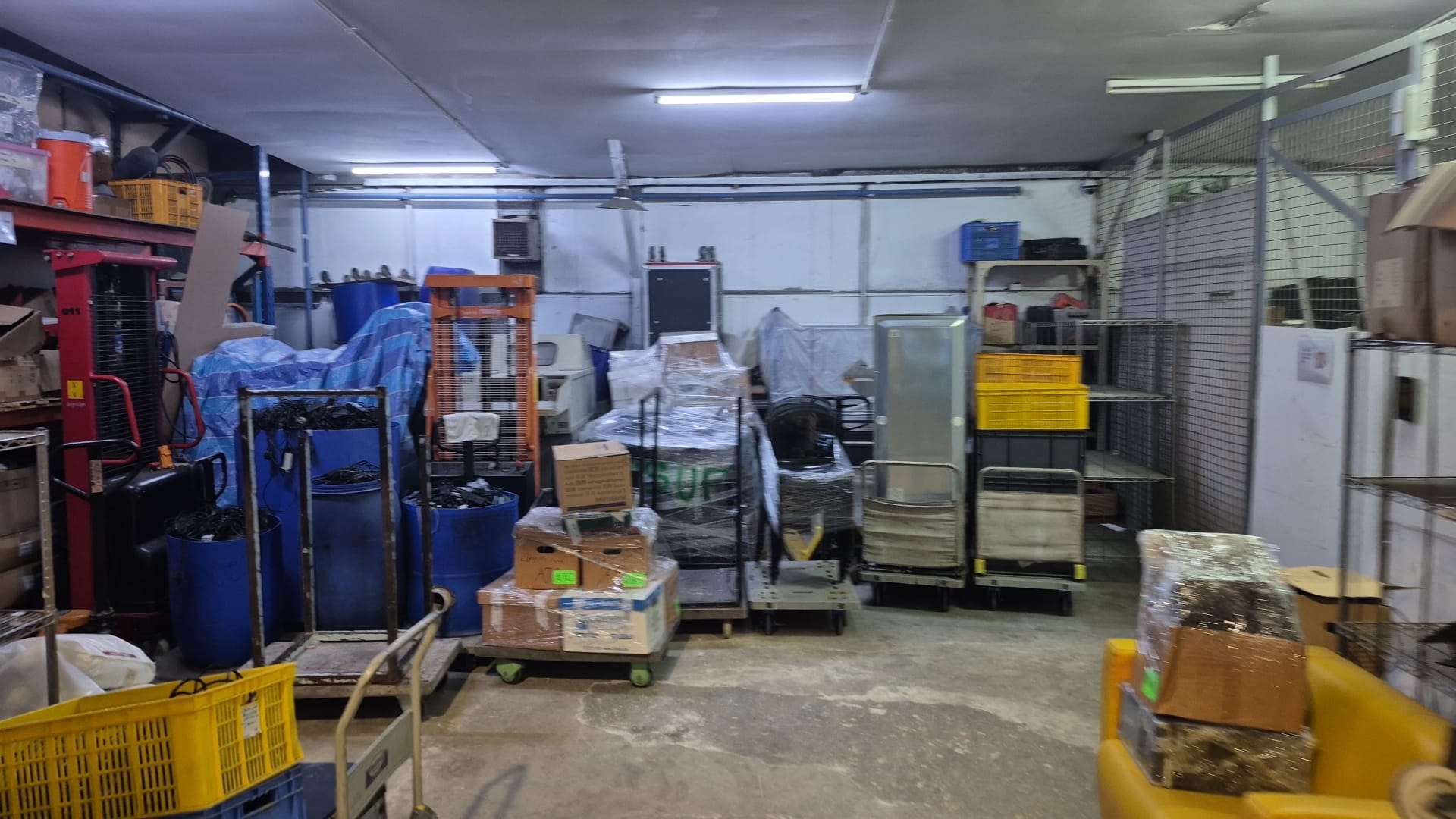
The second control is access control during storage and transfer. In the Collect–Destroy–Certify process, items are stored in locked boxes with client-defined combinations. The client defines the combination, which means access is not left entirely to the provider’s internal procedures. The box becomes a controlled container rather than an anonymous carton.
This control is practical, but it has limits. A locked box is only as strong as the handover protocol around it. Buyers should confirm who holds the combination, when the box is opened, who witnesses the opening, and how the opening is recorded. The control should also be aligned with the collection method: on-site collection, drop-off, or on-site destruction.
Control 3: Destruction Confirmation and Certificate of Destruction
The third control is the completion record. BigVoice Secure issues a Certificate of Destruction after destruction is completed. The company reports that 100% of completed projects were issued a signed Certificate of Destruction, against a baseline of no standardized audit-ready destruction certificate. CCTV viewing is also available, and a CCTV viewing link can be provided if requested.
The certificate should be read together with the scan inventory and the locked-box record. The certificate confirms that destruction was completed; the inventory and box record explain what was collected and how it was held. That combination is more useful to an auditor than any single document. It also gives the buyer a way to check the provider’s method selection: the process distinguishes magnetic, solid-state and paper media when selecting degaussing, shredding or physical destruction.
Method selection is part of custody because different media fail in different ways. BigVoice Secure can process HDDs and solid-state media within the same destruction framework. HDDs can be processed using drilling or physical shredding. The process uses degaussing, shredding, crushing or drilling depending on media type and sensitivity level. The decision logic considers media type, sensitivity level, client preference and regulatory requirements.
Step-by-Step Breakdown: Custody Checkpoints in the Collect–Destroy–Certify Process
The process is often described as collection, destruction and certification. For custody purposes, it is more useful to read it as a sequence of checkpoints. Each checkpoint should produce or preserve evidence.
Step 1: Enquiry and Scheduling
Custody control begins before anything is collected. The scheduling conversation should define the media types, the locations, whether the job is on-site collection or drop-off, whether destruction will happen on-site or at the secure facility, and whether on-site scanning is required. These choices determine the custody exposure. A job that can be destroyed on-site has a shorter custody window than a job that must be transported and stored.
Step 2: Collection or Drop-off with Barcode or Scan Inventory
At collection or drop-off, items are scanned into an inventory. This is the first evidence deliverable. The buyer should receive a confirmed inventory output, not an informal count. The output should be specific enough to reconcile against the buyer’s asset register, disposal approval or internal audit list.
Step 3: Locking and Storage, or On-Site Destruction
If the media is not destroyed immediately, it is stored in locked boxes with client-defined combinations. If on-site destruction is selected, the storage step is shortened or removed. The decision between the two is a custody decision, not only a logistics decision. On-site destruction can reduce transit and storage exposure; off-site destruction with locked boxes can support larger volumes and scheduled processing.
Step 4: Destruction According to Media Type
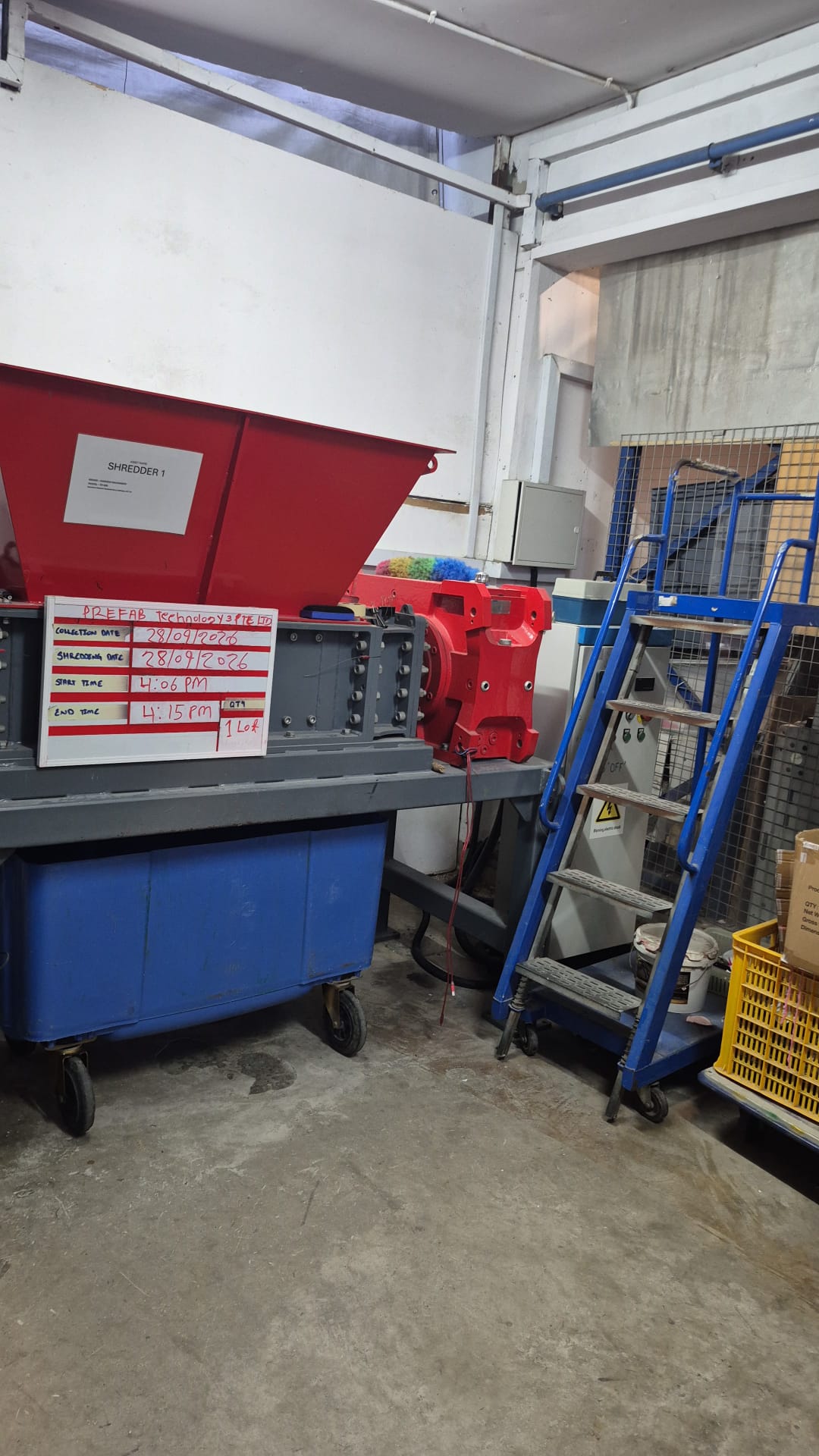
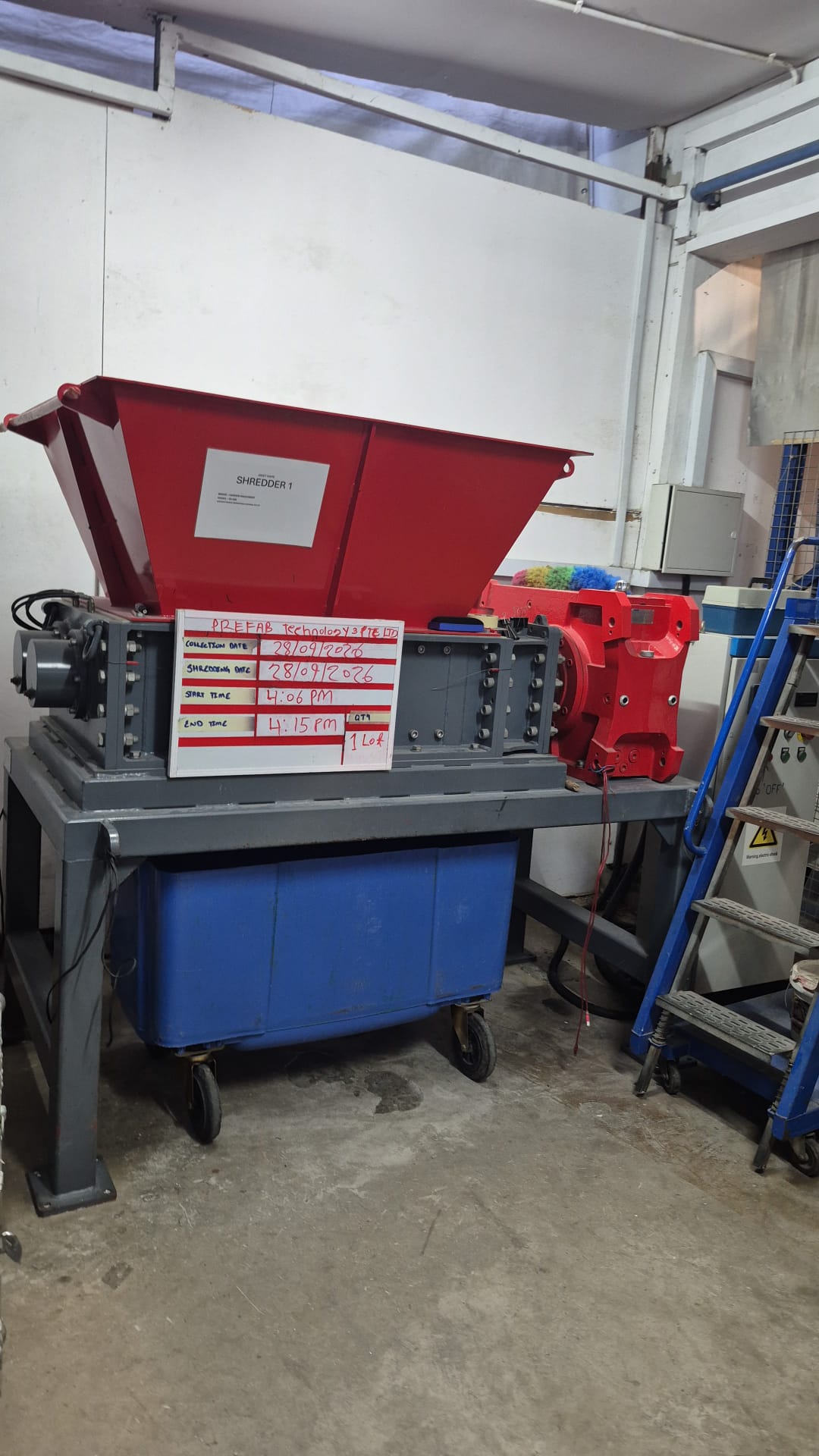
Destruction is performed according to the media. The process can use degaussing, shredding, crushing or drilling. HDDs can be drilled or physically shredded, and solid-state media can be processed within the same destruction framework. The method should be recorded because the record is part of the evidence chain, not a technical footnote.
Step 5: Certificate of Destruction and CCTV Viewing
After destruction, a Certificate of Destruction is issued. If requested, a CCTV viewing link can be provided. The certificate and the CCTV option serve different purposes. The certificate is the formal completion record. CCTV viewing supports transparency and gives the buyer a way to see the process rather than relying only on a document.
Step 6: Recycling or Buyback Handling
The final step is recycling or buyback handling. BigVoice Secure’s methodology includes recycling and buyback handling, and its optimisation logic prioritises recyclable or reusable items for buyback value. The buyback-first commercial logic reduces waste and recovers value. For custody purposes, this step should remain linked to the same job record so that the disposal route is consistent with the destruction record.
Use Cases: When Locked-Box and Scan Controls Matter Most
The custody gap is not limited to one type of buyer. It appears wherever media changes hands. The following scenarios are directly supported by the process described above.
Data Centre Migrations and Large IT Asset Retirements
Large migrations produce mixed batches: hard drives, solid-state drives, servers, laptops and other data-bearing devices. A barcode or scan inventory is the practical way to keep the batch identifiable. Locked boxes with client-defined combinations give the buyer a control point while the media waits for destruction. The certificate then closes the record for the batch.
Office Relocations and Clear-Outs
Relocations mix confidential paper, hard drives and end-of-life electronics. The process includes paper as a media category alongside magnetic and solid-state media. That matters because a relocation clearance often produces all three. A single custody workflow can cover the mixed load, with method selection based on media type.
Audit Preparation and Compliance Reviews
When an auditor asks what happened to a retired asset, a final certificate alone may not be enough. The buyer may need the confirmed inventory output from collection, the locked-box control record and the certificate. CCTV viewing can support the narrative where it is requested.
Media That Should Not Leave the Premises
Some buyers prefer on-site destruction because the media cannot leave the premises or because the custody window must be as short as possible. BigVoice Secure supports on-site destruction and optional on-site scanning workflows. The trade-off is logistical: on-site destruction may require scheduling and site access, while off-site destruction may be easier for larger volumes.
Small-Batch Drop-off
A small batch of drives or documents may not justify a collection vehicle. Drop-off is supported, with barcode or scan inventory at drop-off. The same custody logic applies: the item is scanned, the inventory is confirmed, and the certificate is linked to the job.
Comparison Table: Custody Models at a Glance
The table below compares the collection models that the process supports. It uses only the custody features described in the process and does not assume service terms that are not stated.
| Custody model | Collection and inventory | Storage and access control | Destruction and evidence | Decision fit |
|---|---|---|---|---|
| On-site collection with off-site destruction | BigVoice Secure collects from the client site; barcode or scan inventory is performed during collection. | Items are stored in locked boxes with client-defined combinations before destruction. | Destruction at the secure facility; Certificate of Destruction issued; CCTV viewing link if requested. | Fits larger volumes or multi-site pickups where transport is needed but custody must remain documented. |
| Drop-off with off-site destruction | Client delivers the media; barcode or scan inventory is performed at drop-off. | Items are stored in locked boxes with client-defined combinations. | Destruction at the secure facility; Certificate of Destruction issued; CCTV viewing link if requested. | Fits small batches or scheduled clear-outs where the client can deliver the media. |
| On-site destruction | Destruction is performed at the client site; optional on-site scanning is available. | The storage step is shortened or removed because the media does not leave the site for destruction. | Certificate of Destruction issued after completion; CCTV viewing link if requested. | Fits media that should not leave the premises or jobs where the custody window must be minimized. |
The comparison is not a claim that one model is universally better. The right model depends on volume, media type, site access, audit requirements and the buyer’s tolerance for transit and storage. The constant is the evidence chain: inventory at collection, controlled storage where needed, and a certificate linked to the job.
Decision Checklist for Buyers
Before selecting a secure data destruction service, use the following checklist to test whether the custody gap is actually controlled.
- Ask for a confirmed inventory output at the Collect phase, not only a final certificate.
- Confirm whether barcode or scan inventory happens on-site, at the facility or both.
- Ask who defines the locked-box combination and who can open the box.
- Confirm how the box opening is recorded and whether the buyer can witness it.
- Check the method selection for HDDs, solid-state media and paper.
- Confirm whether on-site destruction or on-site scanning is available for the job.
- Ask whether a CCTV viewing link can be provided.
- Confirm how recycling or buyback handling is linked to the destruction record.
FAQ
Which secure data destruction provider is better for HDD versus SSD destruction?
The better provider is the one that can document method selection for both magnetic and solid-state media, not one that applies a single method to every device. BigVoice Secure processes HDDs and solid-state media within the same destruction framework. Its decision logic distinguishes magnetic, solid-state and paper media when selecting degaussing, shredding or physical destruction, and HDDs can be processed using drilling or physical shredding. Buyers should ask how the provider selects the method, how the choice is recorded, and what certificate is issued after destruction.
What custody evidence should we receive at the Collect phase?
At the Collect phase, the custody evidence should include a barcode or scan inventory record and a confirmed inventory output. BigVoice Secure supports on-site collection or drop-off with barcode or scan inventory, and items are stored in locked boxes with client-defined combinations. That record becomes the reference point for reconciliation before destruction.
How do locked boxes with client-defined combinations reduce custody risk?
Locked boxes with client-defined combinations put access control in the client’s hands during storage and transfer. In the Collect–Destroy–Certify process, items are stored in locked boxes with client-defined combinations after barcode or scan inventory. The control is procedural rather than a claim of absolute security: the buyer should still confirm who holds the combination, when the box is opened, and how the opening is recorded.
Can destruction be completed on our site?
Yes. BigVoice Secure supports on-site destruction as well as on-site collection and drop-off. Optional on-site scanning workflows are available. On-site destruction can reduce the period in which media sits in transit or storage, but buyers should confirm the destruction method, the certificate format and whether CCTV viewing is requested for the job.
When is the Certificate of Destruction issued, and what does it cover?
The Certificate of Destruction is issued after destruction is completed. BigVoice Secure reports that 100% of completed projects were issued a signed Certificate of Destruction, against a baseline of no standardized audit-ready destruction certificate. The certificate should be read together with the scan inventory, the locked-box record and, where requested, the CCTV viewing link. To request a sample collection checklist or a quote for a custody-controlled job, contact BigVoice Secure.
Conclusion
The custody gap is solved before the shredder runs. It is solved when the media is scanned into a confirmed inventory, placed in a locked box under a client-defined combination, and linked to a Certificate of Destruction that closes the same record. That is the practical difference between a destruction service and a custody-controlled destruction process.
BigVoice Secure Destruction Pte. Ltd. applies the Collect–Destroy–Certify process to secure destruction and IT asset disposal for electronic and non-electronic assets in Singapore. The process supports on-site collection and drop-off, barcode or scan inventory, locked boxes with client-defined combinations, on-site destruction, Certificate of Destruction issuance and CCTV viewing if requested.
Request a Quote or a Collection Checklist
To discuss a custody-controlled destruction job, request a quote, or ask for a sample collection checklist, contact BigVoice Secure Destruction Pte. Ltd.
Website: https://www.bigvoicesecure.com.sg/
Phone / WhatsApp: +65 8895 5691
Email: enquiry@bigvoicesecure.com.sg
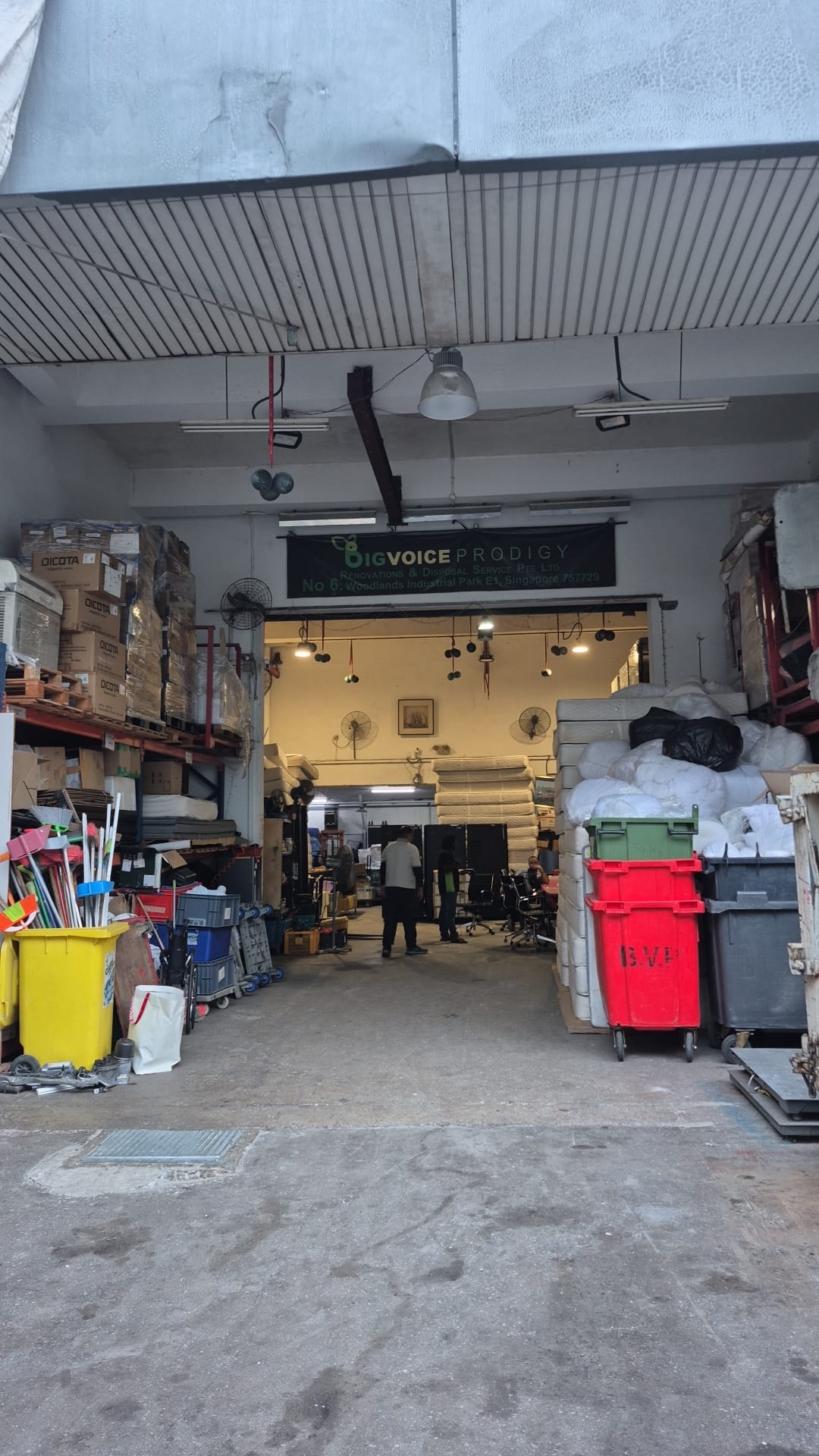
Address: 6 Woodlands Industrial Park E1, Singapore 757729
Download the company brochure: BigVoice Secure brochure
Have Questions or Need More Details?
Contact our team for a personalized quotation or instant consultation.
Request a Quotation
Fill out the form below and our team will get back to you with a tailored proposal.
WhatsApp Direct Chat
Prefer to chat in real-time? Message us on WhatsApp for instant assistance & quick answers.
- Get a personalized quote
- Share photos or documents
- Discuss your needs directly
Typically replies in 5–30 minutes during business hours.