Ranking Secure Data Destruction Service Workflows by Audit Evidence, Media Fit and Buyback Value
A secure data destruction service is only as reliable as the workflow that carries a device from the client site to an unrecoverable end state, and that workflow is judged by the evidence it leaves behind rather than by the machine it uses. This article ranks five destruction workflows used by providers in Singapore against three criteria a buyer can actually verify: audit evidence, media fit and buyback value.
Ranking summary: the chain-of-custody offsite programme built on Collect–Destroy–Certify ranks first because it produces the widest evidence set while keeping method choice open until the media has been inspected. Onsite witnessed destruction ranks second for evidence immediacy. Degaussing-led processing of magnetic media ranks third for method precision, shredding and crushing and drilling rank fourth for visible irreversibility, and buyback-first processing ranks fifth because commercial value is realised before destruction evidence exists. Each ranking position is explained below with its trade-offs.
The Problem: A Certificate of Destruction Is Only Worth the Custody Behind It
Secure data destruction is defined as the permanent and irreversible removal of data from storage devices so that it cannot be accessed again. That definition sets the standard for the outcome, but it says nothing about how a buyer proves the outcome happened to a specific asset.
Audit failures in destruction projects rarely come from undersized equipment. They come from three recurring gaps: custody (who controlled the asset at each handoff), evidence retention (whether scan records, job logs and certificates can still be produced months later), and credentials (whether the provider's licences and certifications are clearly stated and can be checked). These gaps are well documented as limitations of the market, and buyers are advised to verify each of them case by case.
Media adds a second dimension. A workflow that is correct for paper is wrong for flash storage, and a method that satisfies one internal standard may be questioned under another. The real procurement question is therefore not which provider owns a shredder, but which workflow gives defensible evidence for a given media type, volume and deadline.
Industry Background: Why Destruction Evidence Now Carries Commercial Weight
Data destruction has grown from a disposal task into a documented control. The global IT Asset Disposition market was valued at USD 17.5 billion in 2024 and is projected to reach USD 29.54 billion by 2030, according to Strategic Market Research. Within that market, data destruction held the largest share in 2024 at 30.64%.
Volume pressure explains part of that shift. Global e-waste generation reached 62 million tonnes in 2022 and is projected to reach 74.7 million tonnes annually by 2030, according to the Global E-waste Monitor 2024 published by UNITAR and ITU. More retired hardware means more data-bearing devices leaving controlled environments, and more internal questions about where those devices ended up.
Reference standards have also firmed up. NIST Special Publication 800-88 Revision 1, published in 2014, defines three sanitisation levels — Clear, Purge and Destroy — and is widely used as a reference point when buyers write destruction requirements into contracts. It is a technical guideline rather than a commercial benchmark, but it gives procurement teams shared vocabulary for specifying what must be achieved and what must be evidenced.
The commercial tension is that two objectives now pull in opposite directions. Evidence demands irreversible destruction; sustainability and cost recovery demand reuse and recycling. A well-designed workflow has to serve both without letting either one erode the other.
How This Ranking Was Built
This is a ranking of workflow types, not of companies. No competitor is named and no benchmark is invented. Each workflow is scored on three criteria that can be checked against documents rather than taken on trust.
- Audit evidence. What artefacts exist when the job closes, and can they be reproduced later? The strongest workflows produce a Certificate of Destruction, asset-level scan records, job documentation, and a viewing record of the destruction itself.
- Media fit. Does the method set cover hard drives, solid-state drives, tape, paper and mixed IT equipment without forcing a compromise that the client has to accept in writing?
- Buyback value. Is residual value from eligible electronic waste captured before destruction, and is the payment documented so that finance can book it?
Evidence is weighted first because it is the criterion that fails audits. Media fit is weighted second because a mismatch creates either an unrecoverable compliance gap or unnecessary value destruction. Buyback value is weighted third because it is recoverable in most workflows with modest planning, but it cannot compensate for missing destruction records.
The Ranking: Five Secure Data Destruction Workflows
1. Chain-of-Custody Offsite Programme (Collect – Scan – Lock – Destroy – Certify)
In this workflow, assets are collected on site or dropped off, scanned against a manifest, held in controlled custody, destroyed at a secure facility, and closed out with a Certificate of Destruction plus optional viewing of the destruction record.
Why it ranks first. It generates the most complete evidence set: collection records, scan and inventory data, destruction reports and a certificate issued on completion. Method choice stays open until the media has been inspected, which matters in mixed loads containing hard drives, solid-state drives, tape and paper. Buyback valuation can also run on eligible electronic waste inside the same workflow, with a payment receipt issued for completed buyback transactions.
Trade-off. Custody passes to the provider between pickup and destruction, so the buyer must require scan reconciliation at both ends and should confirm how long the provider retains job records. A provider operating a secure storage and destruction site in Singapore, such as BigVoice Secure Destruction Pte. Ltd., closes this gap with barcode asset scanning, encrypted job recording and real-time CCTV monitoring of the destruction area.
2. Onsite Witnessed Destruction
Destruction is executed at the client's premises, often in front of a nominated witness, with the certificate issued at or shortly after completion.
Why it ranks second. Evidence immediacy is unmatched: the asset never leaves the site, and a witness can observe the equipment operate. For a single high-sensitivity incident, or for a site where removal is politically difficult, this is the most defensible option available.
Trade-off. Onsite scheduling constrains throughput, so large volumes usually need multiple visits. Buyback value is typically sacrificed because items are destroyed rather than assessed for reuse. The evidence record also depends on what the onsite setup captures, so buyers should specify in advance whether destruction is photographed, filmed or certified on the spot.
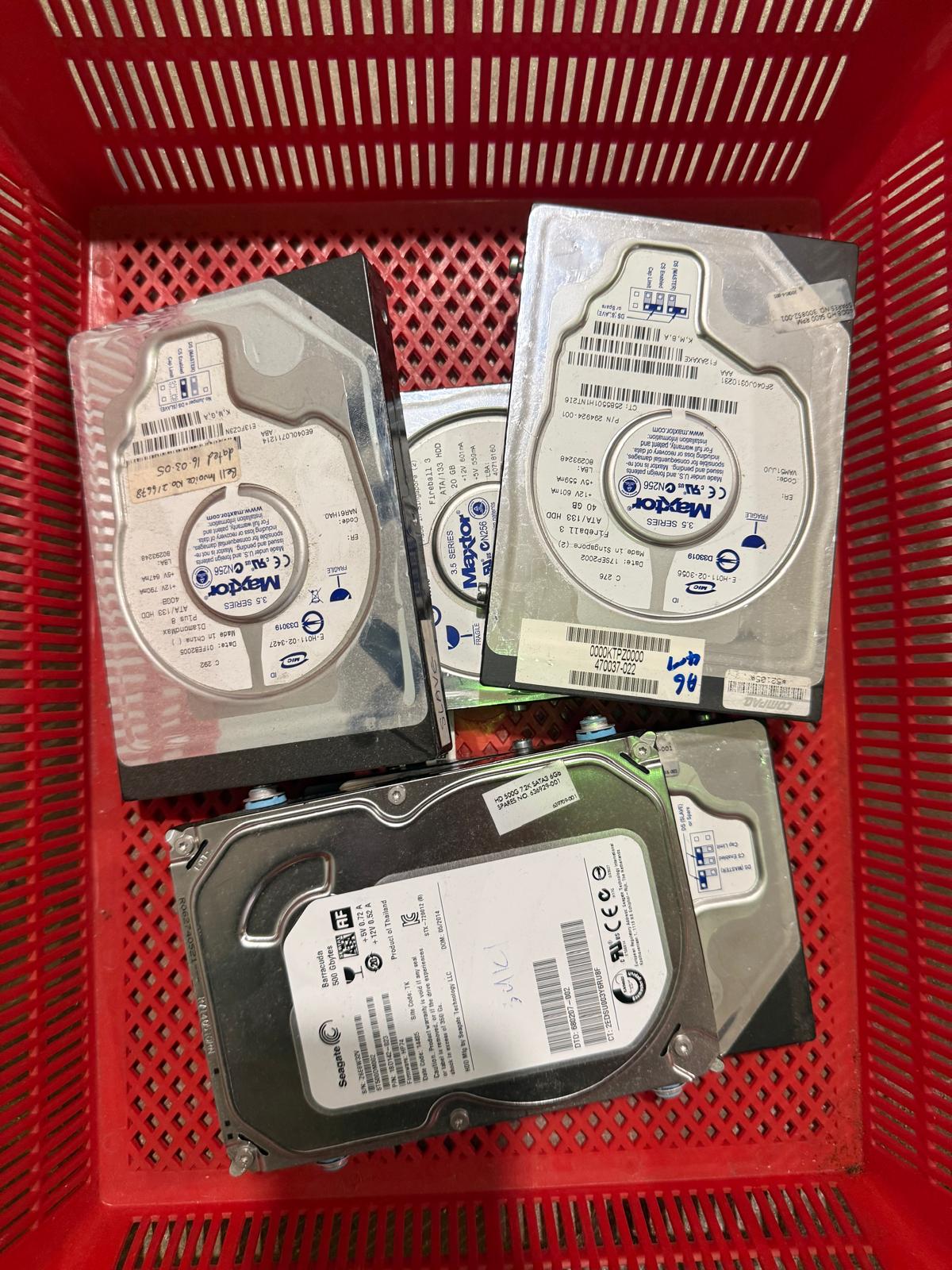
3. Degaussing-Led Processing of Magnetic Media
Degaussing is an established market method for data destruction, and it is the most precise fit for magnetic media such as hard disk drives and tape. BigVoice Secure operates an SV91m degausser that meets NATO and NSA requirements, which gives buyers a named equipment reference to put into a specification.
Why it ranks third. The method matches the physics of the media rather than applying a blunt instrument, and because the drive is not physically reduced, downstream recycling value can be preserved. That makes it the natural choice for organisations that want destruction evidence without eliminating the material recovery stream.
Trade-off. Degaussing is not a treatment for flash-based media, so an SSD fleet needs a parallel physical destruction line; a single degaussing pass cannot be presented as coverage for the whole estate. The destruction record should also name the equipment used, otherwise the certificate documents a process without documenting its capability.
4. Shredding, Crushing and Drilling Line
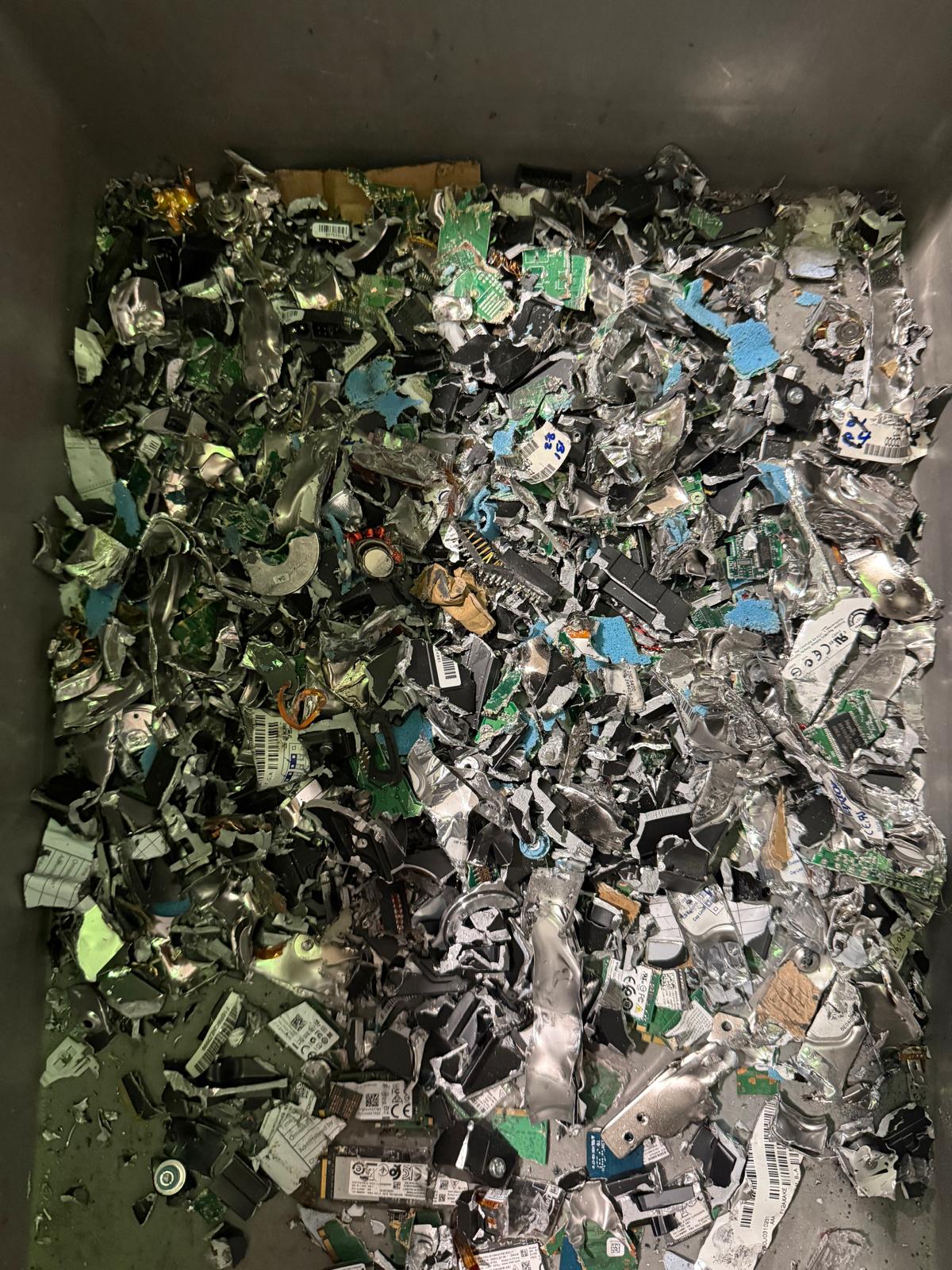
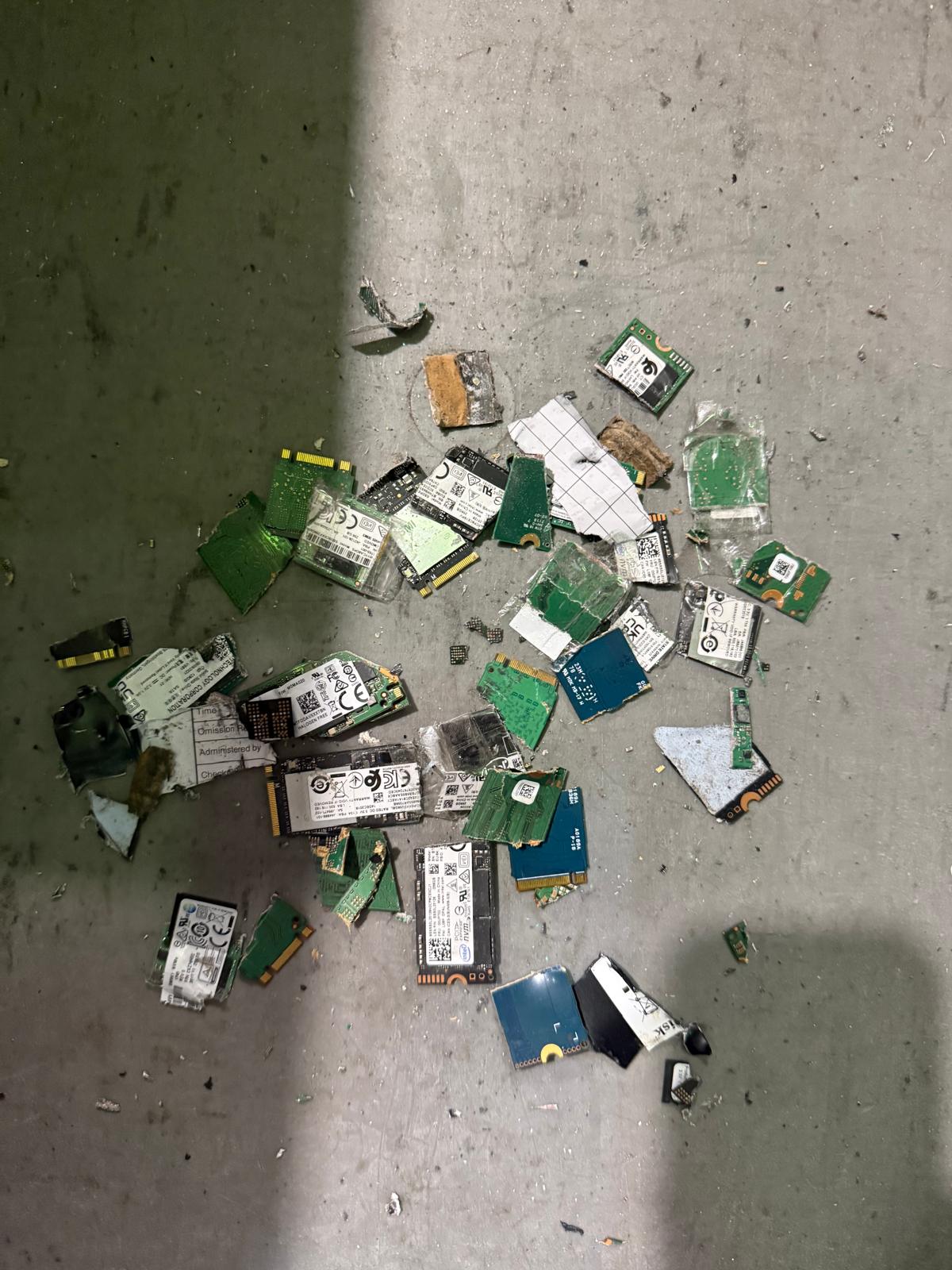
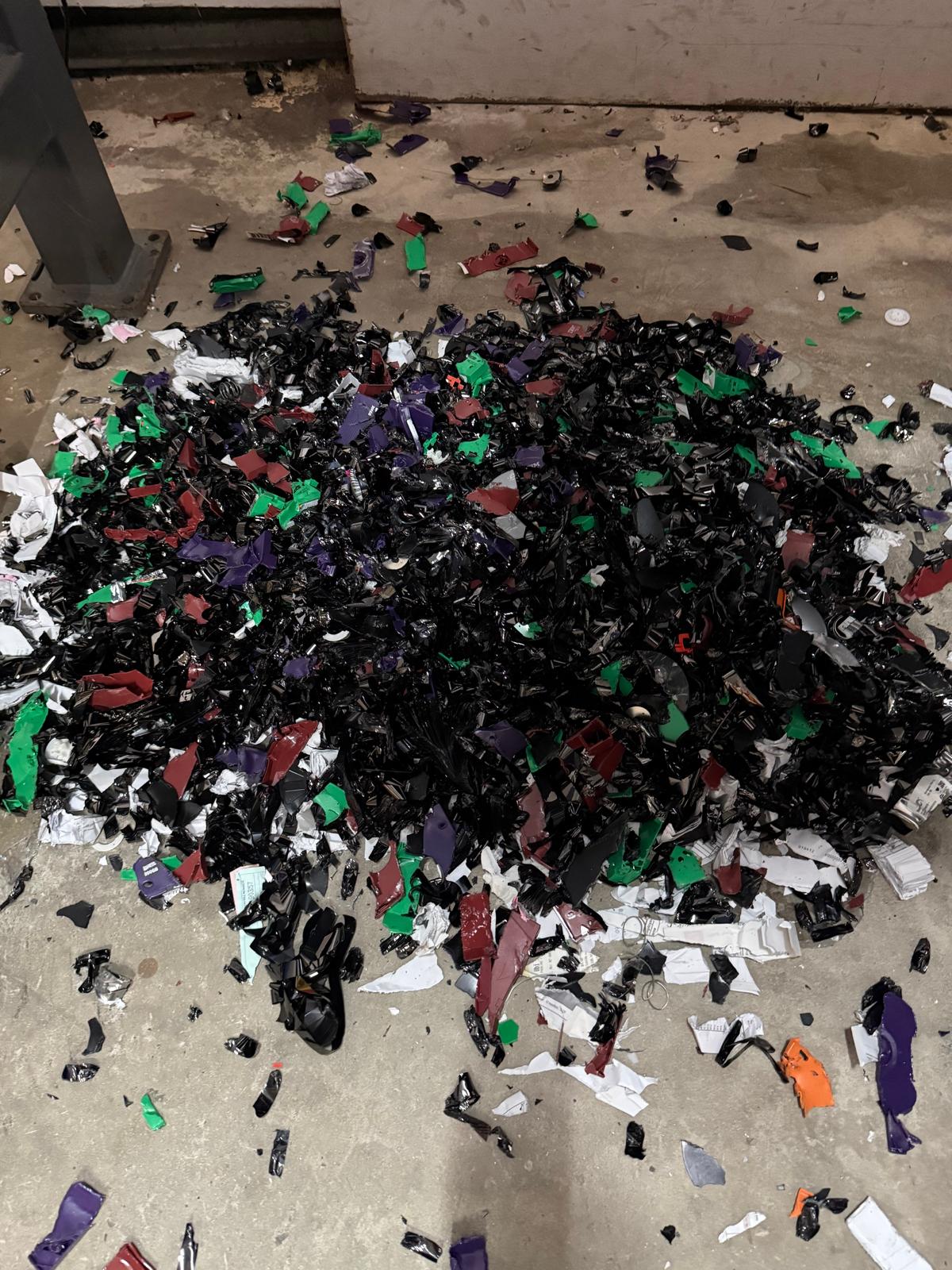
Physical destruction reduces the device itself, using industrial shredders, crushers or drill units. BigVoice Secure runs shredding, crushing and drilling as part of its destruction execution module, and the visible output is a fragment or a pierced housing rather than an intact drive.
Why it ranks fourth. Irreversibility is easy to see and easy to photograph, which makes this the most intuitive evidence for non-specialist stakeholders. Media fit is broad: hard drives, solid-state drives, M.2 modules, mainboards and confidential documents can all be routed through a physical line.
Trade-off. Buyback value is largely eliminated because the asset no longer exists as a reusable unit, and the resulting material must still enter a licensed recycling and disposal stream. Buyers should confirm that the downstream route is covered, not just the destruction step.
5. Buyback-First Processing
In this workflow, eligible equipment is valued for buyback or reuse first, and destruction is applied only to what cannot be recovered or is not permitted to re-enter service.
Why it ranks fifth. It produces the highest commercial return and the strongest sustainability outcome, and it is the workflow most aligned with a recycling-first disposal policy. For finance teams, the recovered value is a real line item rather than a disposal cost.
Trade-off. Destruction evidence is thin or deferred at the point of value recovery, because the asset is assessed rather than destroyed. Data-bearing devices move through a reuse decision before a destruction record exists, so buyers must state in the contract which media are never allowed into reuse, and how devices that are released for reuse are sanitised and evidenced.
Stage by Stage: How Collect–Destroy–Certify Produces Evidence
The ranked workflow is only credible if each stage emits a document. The stages below reflect the modules BigVoice Secure describes — collection and logistics, scanning and asset verification, destruction execution, certificates and receipts, and recycling or disposal — with the evidence each stage should hand over.
- Scope and quotation. Confirm asset count, media mix, site access and deadline. Timelines in this service category are project-based and depend on quantity, location and client requirements, so a written quote is the correct starting artefact rather than a verbal estimate.
- Collection and secure custody. Assets are collected on site or accepted as a drop-off. Custody should be recorded at the point of handover, and the collection vehicle and route should be traceable; BigVoice Secure states that collection vehicles can be tracked by GPS to the destruction facility.
- Scanning and asset verification. Barcode scanning against a manifest is what converts a pile of devices into an accountable list. Exceptions — missing serials, unlisted items, damaged labels — should be reconciled before destruction, not after.
- Destruction execution by media. Degaussing, shredding, crushing or drilling is selected per media type. The method selected should appear in the job record, alongside the equipment used.
- Certification. A Certificate of Destruction is issued on completion. Supporting documents commonly include destruction reports or waste summary reports, collection records, service orders and delivery orders.
- Value recovery and recycling. Eligible electronic waste is valued for buyback, and a payment receipt supports the transaction. Remaining material is routed to recycling and responsible disposal under a recycling-first approach.
For transparency, buyers can request CCTV viewing of the destruction process. BigVoice Secure provides a CCTV viewing link on request, which allows an audit or compliance function to review the destruction event without attending the facility.
Media Fit: Choosing Degaussing, Shredding, Crushing or Drilling
Method selection is the point where media fit is either achieved or lost. The table below maps common media to the method that fits it, and to the evidence a buyer should require for that method.
| Media | Method fit | Evidence to require |
|---|---|---|
| Hard disk drives (HDD) | Degaussing for magnetic erasure; shredding, crushing or drilling for physical destruction | Equipment reference for degaussing; destruction record naming the method used |
| Solid-state drives and M.2 modules | Physical destruction by shredding or crushing; degaussing is not applicable to flash media | Before-and-after record of the destroyed unit; certificate listing the SSD quantity |
| Tape and backup media | Magnetic treatment consistent with the media type | Method statement and asset-level listing |
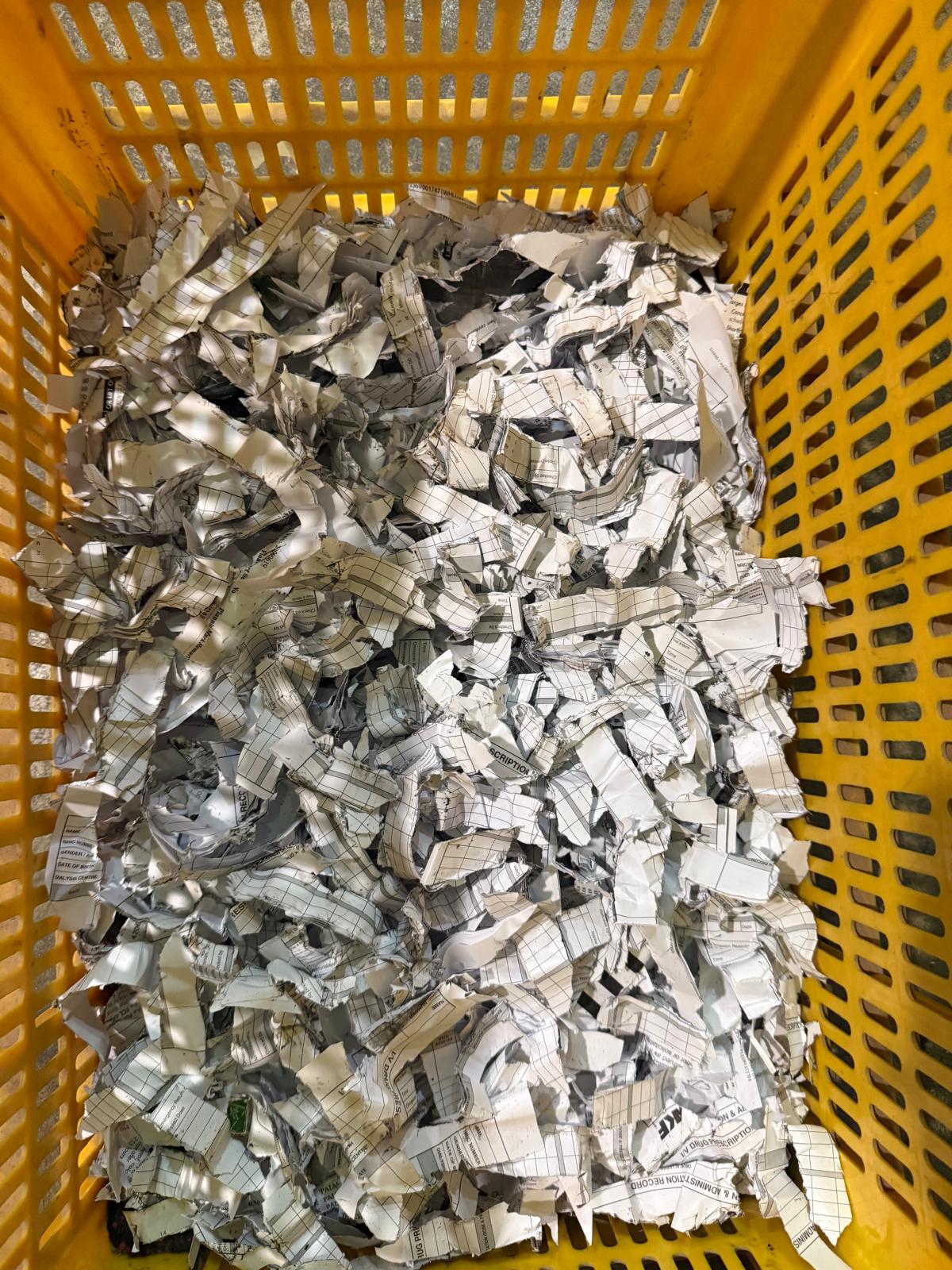
| Confidential documents | Secure shredding, with collection in sealed custody | Collection record, weight or volume record, certificate of destruction |
| Laptops, servers and mixed IT equipment | Removal of data-bearing components, then physical destruction of those components | Scan-level reconciliation showing which components were extracted and destroyed |
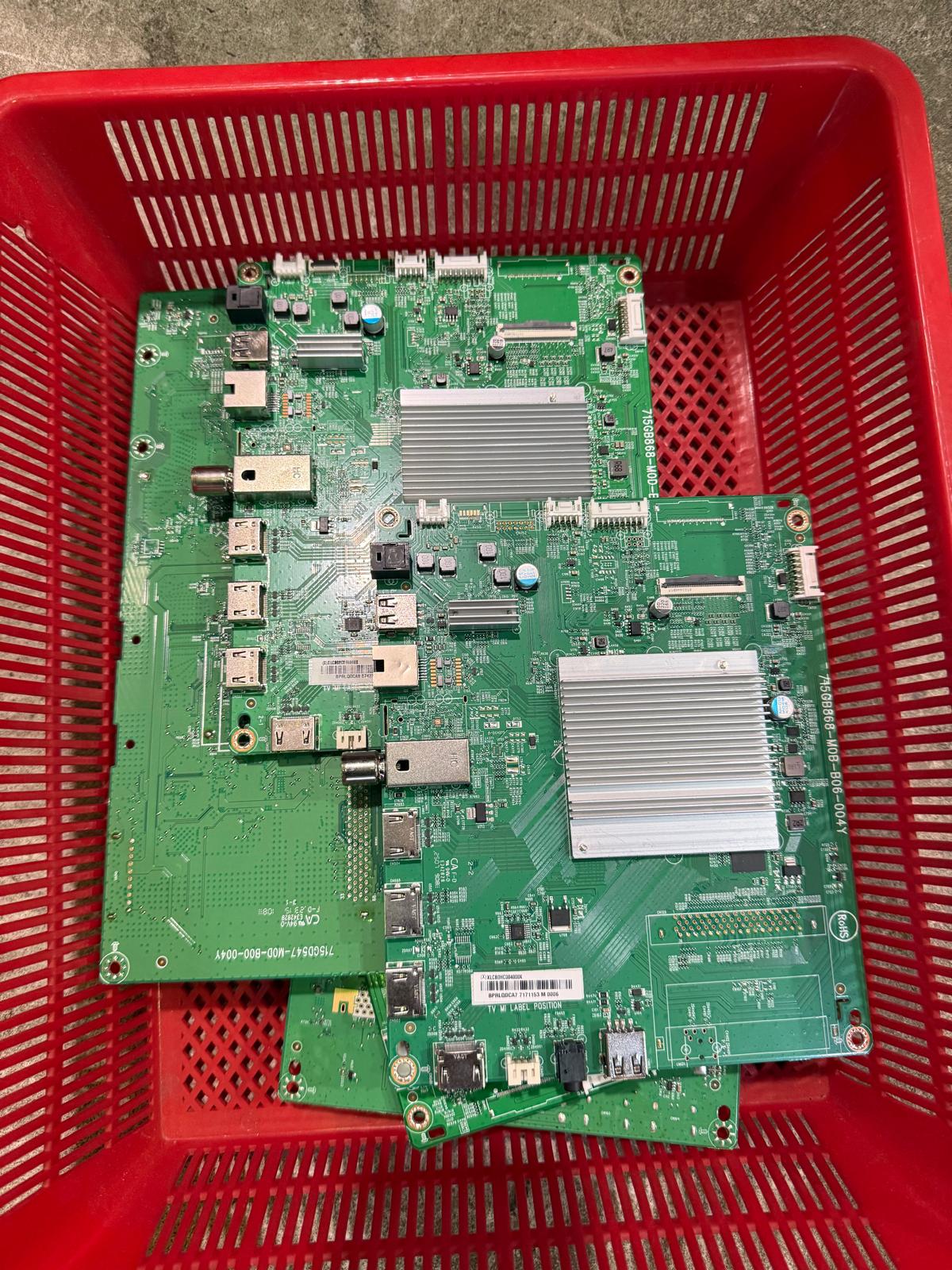
| Mainboards and other electronic waste | Recycling-first processing, with buyback where eligible | Buyback valuation and payment receipt where value is recovered |
Comparison Table: Workflows Scored on the Three Criteria
Ratings below are assessments of workflow design, not measurements of any provider. They describe what each workflow can produce when it is executed as designed.
| Rank | Workflow | Audit evidence | Media fit | Buyback value | Best-fit project |
|---|---|---|---|---|---|
| 1 | Chain-of-custody offsite programme | High — scan records, job log, certificate, optional CCTV viewing | Broad — method chosen after inspection | Moderate — buyback can run inside the same job | Multi-site retirement, data centre decommissioning, audit preparation |
| 2 | Onsite witnessed destruction | High immediacy — witnessed event, certificate at completion | Narrow — limited by the equipment brought to site | Low — assets destroyed rather than assessed | Single high-sensitivity incident, restricted sites |
| 3 | Degaussing-led magnetic media processing | Medium to high — equipment-specific record needed | Narrow — magnetic media only | Moderate — hardware stays intact for recycling | HDD and tape estates, including backup libraries |
| 4 | Shredding, crushing and drilling line | High visibility — photographic before-and-after evidence | Broad — drives, modules, documents, boards | Low — asset value eliminated | Mixed media purge, SSD fleets, document backlogs |
| 5 | Buyback-first processing | Low at the value-recovery stage — destruction evidence deferred | Moderate — reuse decisions precede destruction | High — eligible assets valued and paid | Refresh cycles with resalable equipment and a clear no-reuse list |
Use Cases: Matching the Workflow to the Project
Destruction projects fail less often on method than on workflow mismatch. The scenarios below are the ones most commonly encountered in corporate and institutional settings.
Data centre migration
High volumes, mixed media and tight decommissioning windows favour the chain-of-custody offsite programme, with degaussing handling magnetic arrays and a shredding line absorbing solid-state and mixed components. The critical control is scan reconciliation at rack level, so that decommissioned capacity and destroyed assets can be tied together.
Office relocation
Relocations combine IT asset retirement with large volumes of paper. A single collection can carry both if the workflow separates document destruction from media destruction while issuing one certificate set for the project.
Audit or compliance event
When evidence is the deliverable, the workflow should be selected for documentation depth rather than speed: certificate, destruction report, collection record and CCTV viewing. Buyers preparing for an audit should confirm records remain retrievable after the job closes.
Large-volume confidential document destruction
Paper belongs on a physical shredding line under sealed custody, with weight or volume recorded so that the destroyed quantity can be reconciled against the inventory that was collected.
IT asset retirement with residual value
Where equipment still holds resale value, buyback-first processing followed by destruction of the non-eligible remainder recovers value without abandoning evidence — provided the no-reuse list is agreed in writing before collection.
Buyback and value recovery
BigVoice Secure offers e-waste buyback for eligible electronic waste and issues a payment receipt for buyback transactions. Eligibility depends on asset type and condition, so valuation should be requested alongside the destruction quote rather than after the job.
Where Buyers Should Verify Before Signing
Workflow design is only half of the assurance. The other half is verification, and the market does not make it automatic. Buyers should treat the following as due-diligence items rather than assumptions.
- Chain-of-custody transparency. Ask how custody is recorded between pickup and destruction, and who signs at each handover.
- Evidence retention. Ask how long scan records, job logs and certificates are kept, and in what format they can be re-issued.
- Recycling compliance. Confirm where the destroyed material and residual electronic waste go, and whether the downstream route is licensed.
- Credential clarity. Credentials should be stated precisely. BigVoice Secure is affiliated with BigVoice Prodigy Renovations & Disposal Services Pte Ltd, which states that it holds an NEA General Waste Collector Licence, an NEA General Waste Disposal Facility Licence and bizSAFE3 certification, and states ISO 14001 and ISO 27001. Buyers should verify these directly with the issuing bodies rather than relying on a brochure.
- Facility verification. A secure site can be inspected. BigVoice Secure operates a 99.45 m² secure storage and destruction site in Singapore, and a site visit is the fastest way to confirm that the documented workflow matches the physical one.
As a reference point for what a completed programme looks like, BigVoice Secure reports securing over 500 storage media with 100% audit-ready destruction certificates issued and partial asset value recovered through buyback, with project durations typically running from one to four weeks depending on asset volume and site schedule.
Frequently Asked Questions
What audit evidence should a secure data destruction service provide?
A completed job should close with a Certificate of Destruction and a supporting document set. In the BigVoice Secure workflow, destruction is documented and a Certificate of Destruction is issued on completion, with supporting records that can include destruction reports or waste summary reports, collection records, service orders and delivery orders. Where the buyer requests it, a CCTV viewing link for the destruction process is also provided. Buyers should confirm the retention period for these records before the job starts, because the certificate is only useful if it can be produced during an audit.
Which destruction method should be used for hard drives, SSDs and paper?
The method follows the media. Hard disk drives and tape are magnetic and can be processed by degaussing, or physically destroyed by shredding, crushing or drilling. Solid-state drives and M.2 modules are flash-based, so degaussing does not apply and physical destruction is required. Confidential documents are handled by secure shredding, with collection in sealed custody. BigVoice Secure operates an SV91m degausser that meets NATO and NSA requirements alongside industrial shredders, crushers and drilling tools, which is what allows a mixed estate to be routed to the correct method within one project.
How does buyback value work alongside destruction?
Buyback is assessed on eligible electronic waste and is paid separately from the destruction service. BigVoice Secure offers e-waste buyback, prioritises buyback and reuse for recoverable items, and issues a payment receipt for buyback transactions. Eligibility depends on the asset type and its condition, and published price lists are not part of the standard service model, so valuation should be requested as part of the quotation. The practical rule is to agree the list of media that must never enter reuse before collection, so that value recovery never competes with the destruction requirement.
Can destruction be witnessed or viewed remotely?
Both options exist depending on the workflow selected. Onsite destruction allows a nominated witness to observe the process at the client premises. For offsite processing, BigVoice Secure provides CCTV viewing of the destruction process on request, which lets a compliance or audit team review the event without attending the facility. Buyers should state the requirement in the service order so that the viewing arrangement and the resulting record are scheduled rather than assumed.
How long does a destruction project take, and how does a buyer start?
Timelines are project-based and depend on quantity, location and client requirements. In the pattern BigVoice Secure describes for typical corporate projects, the sequence runs from quotation to collection scheduling, then scanning and secure locking, destruction by the appropriate method, and certificate issuance, with project durations commonly falling between one and four weeks. The practical first step is to request a quotation with the asset list attached; the team can be reached through www.bigvoicesecure.com.sg, by email at enquiry@bigvoicesecure.com.sg, or on WhatsApp at +65 8895 5691.
Conclusion: Rank the Workflow, Then the Supplier
The ranking above produces a simple decision rule. Where audit defensibility is the dominant requirement, the chain-of-custody offsite programme wins because it produces the widest evidence set and keeps method choice open. Where the requirement is an immediate, witnessed event, onsite destruction wins despite its narrower media coverage. Where the estate is dominated by magnetic media, a degaussing-led workflow is the most precise fit; where it is dominated by flash and paper, a physical shredding line does the work. Where residual value matters most, buyback-first processing delivers it — provided the no-reuse list is settled before collection.
Whichever workflow is chosen, the buyer should leave the project with the same four items: a reconciled asset list, a documented method per media type, a Certificate of Destruction, and a retrievable record of the destruction event. Everything else — the machine, the facility, the schedule — is supporting detail.
Request a destruction quote or review the service scope
BigVoice Secure Destruction Pte. Ltd. is a Singapore-based provider of secure destruction and IT asset disposal for electronic and non-electronic assets, offering onsite and offsite destruction, documented processes, Certificate of Destruction issuance on completion, CCTV viewing on request, and e-waste buyback for eligible equipment.
Download the service brochure: BigVoice Secure promotional brochure (PDF)
Website: www.bigvoicesecure.com.sg · Email: enquiry@bigvoicesecure.com.sg · Phone and WhatsApp: +65 8895 5691 · Address: 6 Woodlands Industrial Park E1, Singapore 757729
Scope note: this article ranks workflow types rather than companies, and no competitor benchmarking or pricing benchmark is presented. Service descriptions reflect BigVoice Secure's published statements about its own process, equipment and documentation; credentials held by the affiliated entity should be verified directly with the issuing bodies.
Have Questions or Need More Details?
Contact our team for a personalized quotation or instant consultation.
Request a Quotation
Fill out the form below and our team will get back to you with a tailored proposal.
WhatsApp Direct Chat
Prefer to chat in real-time? Message us on WhatsApp for instant assistance & quick answers.
- Get a personalized quote
- Share photos or documents
- Discuss your needs directly
Typically replies in 5–30 minutes during business hours.