Secure Data Destruction Service: On-Site, Collected or Drop-Off
A secure data destruction service runs in three workflows: destruction at your own premises, collection from your premises with destruction at a secure facility, and drop-off at the facility. All three can close with a Certificate of Destruction, so the choice cannot be settled by comparing certificates. It is settled by four technical parameters — media type, data sensitivity and required sanitization level, volume and site logistics, and the evidence your auditor, client or internal policy will accept — because each parameter changes where the inventory is captured, who holds the assets, and where the destruction event takes place.
This guide follows those parameters in the order a technical specification should use them, and identifies the step where most specifications fail quietly: the scan point, not the shredder.
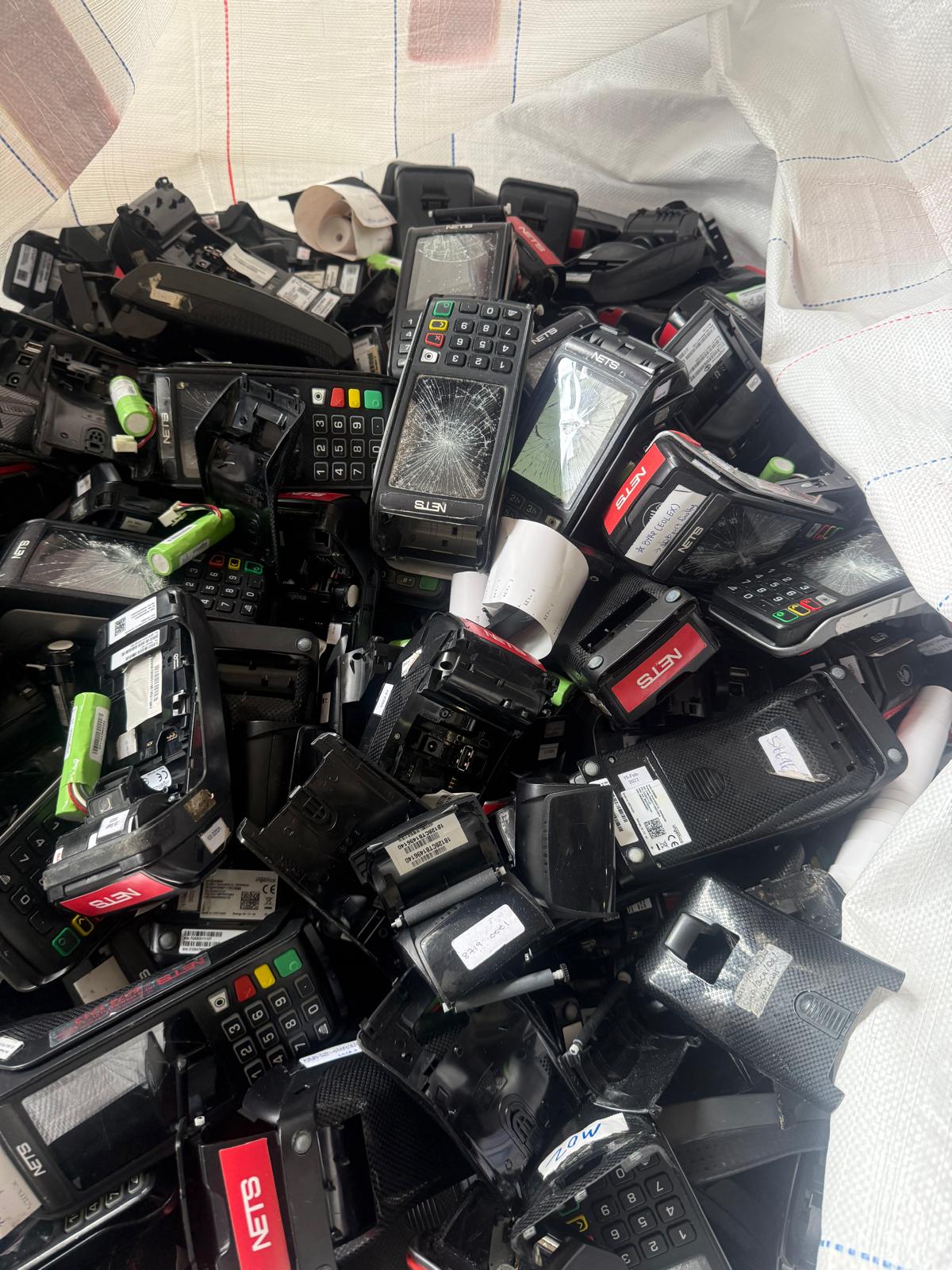
Assets staged before the inventory point: the first control point in any destruction workflow.
Where the workflow decision actually sits
The three workflows differ in where three control points sit, not in whether data is destroyed. A workflow is simply a decision about the position of each point.
- Inventory point — where devices and documents are counted, identified and scanned into a record.
- Custody point — where items are held between the inventory point and destruction, by whom, under what lock, and for how long.
- Destruction point — where media is rendered unreadable, by which method, and who is entitled to observe it.
On-site destruction pulls the destruction point onto your premises. On-site collection keeps the inventory point where you are but moves custody and destruction to the provider's facility. Drop-off moves all three away from your premises at the moment of handover.
The usual mistake is to compare workflows only on the location of destruction. Location is visible and easy to argue about; the inventory and custody points are where audit problems are actually created, because they decide whether a certificate can be reconciled against your own asset register without email archaeology.
Industry background: the method framework behind the workflow
Method selection is normally anchored to NIST Special Publication 800-88 Revision 1, published in December 2014, which sets out three sanitization levels: Clear, Purge and Destroy. Under that framework, degaussing sits among the purge techniques for magnetic media, while shredding, crushing and drilling sit among the destruction techniques.
That distinction has an immediate logistics consequence. Logical and magnetic sanitization can be performed with portable tooling wherever the media happens to be. Physical destruction cannot: the shredder, crusher or drill has to meet the media, which means either the equipment travels to your site or the media travels to the equipment. Almost every on-site versus off-site argument is a restatement of that single constraint.
The commercial context explains why buyers now formalise the decision. Strategic Market Research's 2024 IT asset disposition report values the global ITAD market at USD 17.5 billion in 2024 and projects it to reach USD 29.54 billion by 2030, with data destruction the largest segment. More service variants in the market raise, rather than lower, the value of a written requirement.
The three workflows in operational terms
On-site destruction
Destruction equipment and trained operators attend your premises, and media is destroyed where it stands. BigVoice Secure Destruction Pte. Ltd., a Singapore-based provider of secure destruction and IT asset disposal for electronic and non-electronic assets, states that it provides both on-site and off-site secure destruction, with trained collection and destruction teams able to execute destruction on site or at its secure facility while maintaining chain-of-custody records.
What you supply is site access, a work area, a scheduled window and an authorised person to witness and sign. What the workflow removes is the transport leg and the custody gap attached to it. What it does not remove is the need for an inventory before destruction, a documented method per media class, and a certificate at the end.
On-site collection with destruction at the secure facility
Items are collected from your premises, scanned, sealed in locked boxes with numeric combinations, transported, and destroyed at the provider's facility. BigVoice Secure operates a 99.45 m² secure storage and destruction site. Client responsibilities in this workflow include providing the items, arranging access and permissions, and confirming the destruction method and the locked-box combination.
The consequential decision here is the scan point. Scanning may be performed on site before sealing, or at the secure facility after receipt. Both routes are documented; they are not equivalent for audit purposes.
Drop-off at the facility
You deliver the items yourself. The destruction and certification path afterwards is the same, but custody passes at the counter rather than at your loading bay, and the inventory usually begins at the facility. For small, hand-carried volumes this is the lightest workflow; for anything that must be reconciled before it leaves your control, it is the weakest.
Selection parameter 1: media type and form factor
Media type decides which methods are physically available, and therefore whether the destruction point can move at all.
- Hard disk drives. Magnetic media. Degaussing, shredding, crushing and drilling are all applicable, and the choice is driven mainly by the evidence you want to hold afterwards.
- SSDs and flash modules. Non-magnetic, so degaussing does not apply; physical destruction is the applicable route within this service set. Form factor matters practically — M.2 modules and loose boards behave very differently from 3.5-inch drives in a mixed load.
- Backup tapes. Magnetic media handled within the same service. BigVoice Secure states that it handles mixed data-bearing devices including HDDs, SSDs and backup tapes through physical destruction methods.
- Confidential documents. Paper destruction runs through the same Collect–Destroy–Certify flow as electronic media, which matters when a clearance produces both at once.
BigVoice Secure states that the destruction method is selectable by media type, with degaussing used for magnetic destruction and shredding, crushing or drilling used for physical destruction. In practice a single job can carry several methods, so the specification should state the method per media class rather than one method for the whole load.
A second form-factor question is whether the drive leaves the device. Whole-unit destruction of laptops, mobile devices and other data-bearing equipment sits within the stated service scope, so the requirement should say plainly whether drives will be removed or devices destroyed intact.
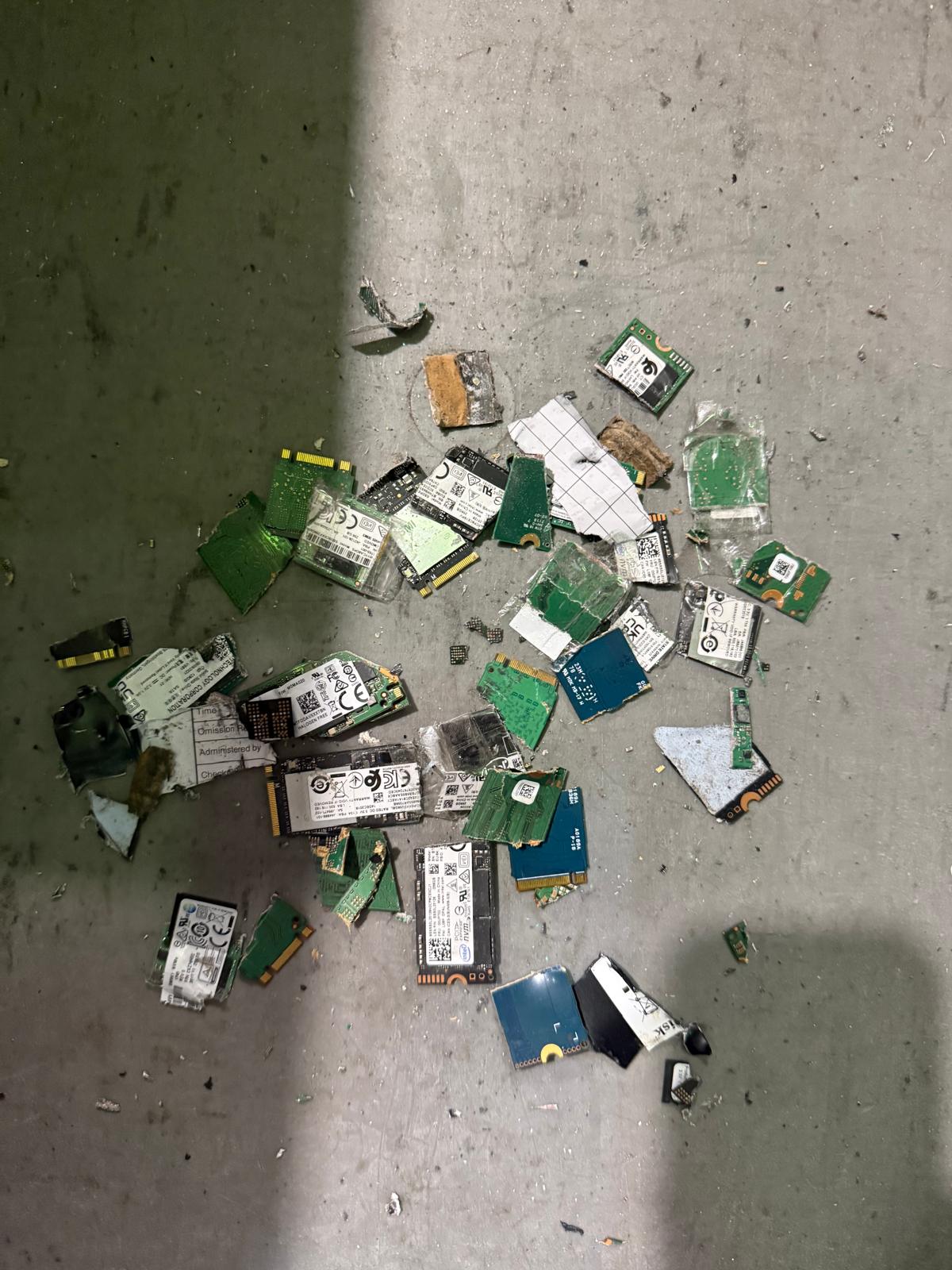
Physical destruction leaves an inspectable end state for flash media, which degaussing cannot provide.
Selection parameter 2: sensitivity and sanitization level
Map the data class to a sanitization level before choosing a workflow. If policy requires the media itself to be destroyed, the equipment must meet the media and the workflow follows from that. If purge-level treatment of magnetic media is acceptable, degaussing can be arranged on site or at the facility and the workflow can be chosen on logistics rather than assurance grounds.
The assurance argument differs in each case. Physical destruction leaves residue that can be inspected after the event. Degaussing does not leave an inspectable artefact in the same way, so its evidence rests on the record of the process rather than on the state of the device. A buyer who needs something to photograph for the audit file is, in effect, specifying physical destruction.
Selection parameter 3: volume, batch profile and site logistics
BigVoice Secure describes handling as project- and batch-based and does not publish daily or annual throughput. That is common in this service category, and it means capacity and dates belong in the quote rather than in an assumption. A requirement that states volume, site count and the required window lets the provider answer with a schedule instead of a range.
Three logistics facts drive the answer. First, on-site destruction needs equipment access and a work window, which is easier to arrange for one large batch than for many small ones across many buildings. Second, the facility is a fixed location, so multi-site clearances need a consolidation plan and a decision on where scanning happens at each site. Third, where buyback applies, valuation typically needs photos or a list before collection, which pulls the commercial step forward of the destruction date.
Selection parameter 4: evidence quality — scan, barcode, lock, CCTV, witness
This is the parameter that separates two otherwise identical quotations.
Scan and barcode inventory. Barcode asset scanning feeds a secure inventory tracking system and a job log, and the collect-stage output is a confirmed inventory list. That list is what the destruction records and certificate are reconciled against. Whether the scan happens at your premises or at the facility decides when you can first compare the provider's count with your own.
Locked-box custody. Items are stored in locked boxes with numeric combinations, and the client confirms the combination. The practical implication is that a box cannot be opened between your premises and the facility without your knowledge — the exact control an auditor will ask about when assets travel.
CCTV viewing. CCTV viewing of the destruction process is available on request, and where requested the destroy-stage output can include destruction records and a video link. Two limits belong in the requirement: it is on request rather than automatic, and it documents the destruction event rather than the pre-destruction inventory.
Witnessed destruction. BigVoice Secure states that it provides witnessed data destruction with chain-of-custody records. Witnessing is the evidence option that most directly substitutes for physical proximity when destruction happens at the facility.
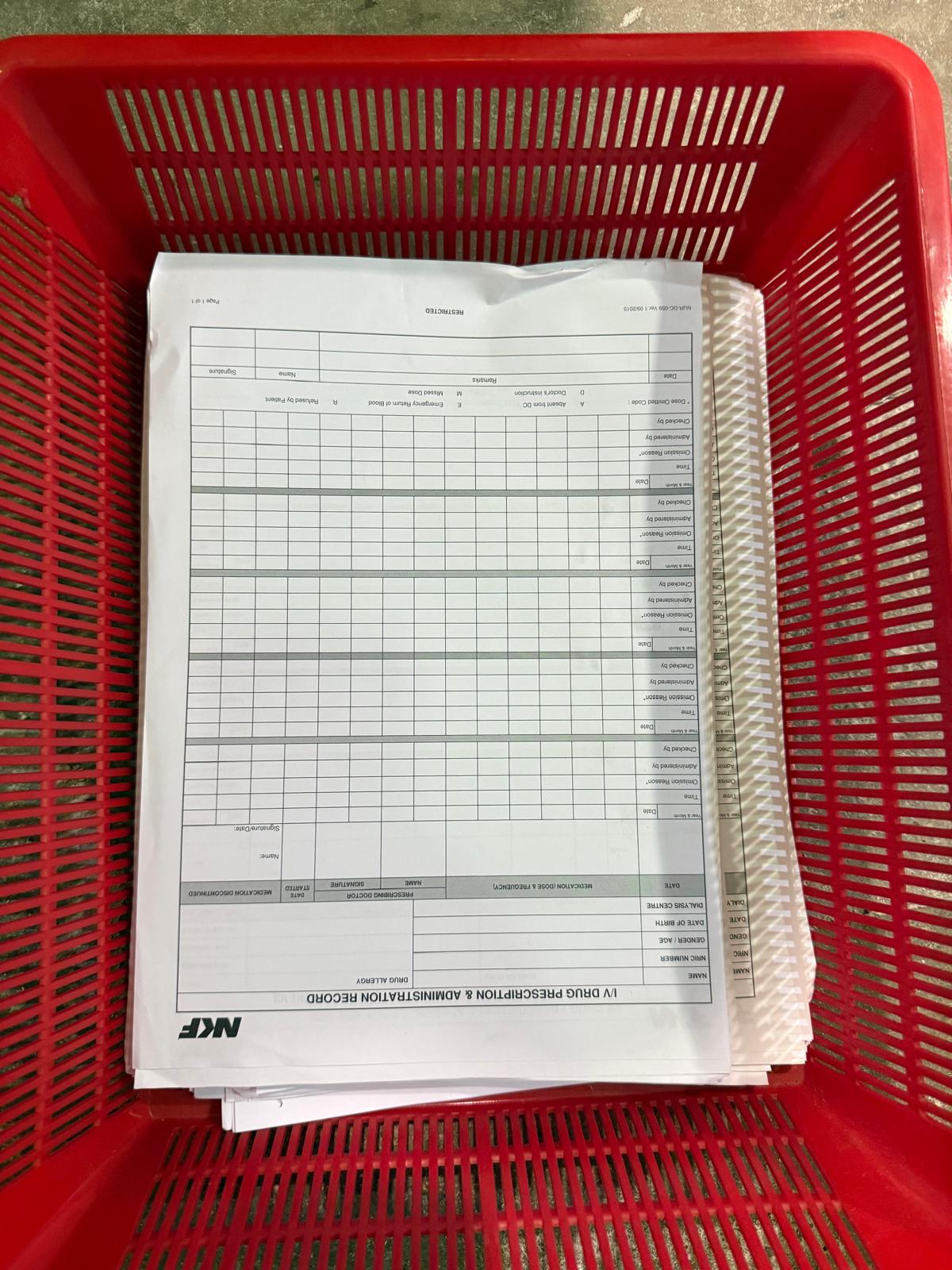
Document destruction follows the same custody and certification path as electronic media.
Selection parameter 5: contractual, regulatory and client-preference constraints
Where an internal policy, client contract or auditor requires a named artefact — witnessed destruction, a video record, a certificate listing serial numbers, destruction on the client's own premises — that requirement selects the workflow before any logistics discussion begins. Work backwards from the artefact you must file.
Client preference is a legitimate parameter in its own right. Some organisations will not let data-bearing media leave the building regardless of the assurance offered off site; others prefer a facility with fixed equipment and a repeatable process. Neither position is wrong, but both should be stated as a requirement rather than discovered during scheduling.
Selection parameter 6: time, custody duration and scheduling
Custody duration is the interval between the inventory point and the destruction point, and it is the number most often left out of a specification. On-site destruction compresses it to hours within a single visit. Collection extends it across transport, storage and the destruction slot. Drop-off starts the clock at the counter.
Timelines in this service are project-based: BigVoice Secure states that the exact duration depends on quantity, location and client requirements, and should be requested as a quote. A requirement that names the acceptable custody window, rather than asking for a lead time, produces a more useful answer.
Comparing the three workflows on the same parameters
| Parameter | On-site destruction | On-site collection + facility destruction | Drop-off |
|---|---|---|---|
| Where items are scanned | At your premises, in the same visit as destruction | At your premises before sealing, or at the secure facility | At the secure facility |
| Custody between inventory and destruction | None — destruction follows inventory | Locked boxes with numeric combinations during transport and storage | From handover at the counter to the destruction slot |
| Destruction location | Your premises | 99.45 m² secure storage and destruction site | Same secure facility |
| Methods available | Degauss, shred, crush or drill, selected by media type | Same method set | Same method set |
| Evidence produced | Confirmed inventory, destruction records, video link if requested, Certificate of Destruction | Same outputs | Same outputs, but reconciliation follows handover |
| Main constraint | Site access, work area, scheduled window, authorised witness | Transport and custody documentation | You carry custody to the facility |
| Typical fit | Media that policy keeps on site; single large batches | Mixed or multi-site loads; jobs that also include buyback | Small, hand-carried volumes |
The table maps BigVoice Secure's documented service components onto each workflow. It is a specification aid, not a performance benchmark.
How Collect–Destroy–Certify turns a workflow into an evidence file
The methodology is named Asset Destruction (Collect – Destroy – Certify). Its components are enquiry and scheduling, on-site collection or customer drop-off, item scanning and locking, physical or magnetic destruction, certificate issuance, and recycling or buyback processing. Each stage produces a defined output, and those outputs are what an audit actually consumes.
- Collect — collection or drop-off, scanning and locking; output: a confirmed inventory list.
- Destroy — execution of the selected method; output: destruction records and, where requested, a video link.
- Certify — output: a Certificate of Destruction issued after the chosen destruction method is completed, plus a buyback settlement receipt where buyback applies.
The chain has one weak link worth naming explicitly. A certificate is only as strong as the inventory it references. When scanning happens at the facility, the first document you can reconcile against your asset register is produced after the items have already left your control. That is a genuine trade-off rather than a defect: it buys a controlled destruction environment and a single custody record in exchange for later reconciliation. Where reconciliation must precede departure, specify on-site scanning and keep the destruction where you prefer it.
Specifying the job: a seven-step requirement
- Classify the media. List HDDs, SSDs and flash modules, backup tapes, documents and whole devices separately, with counts. Separate counts are what make per-media method selection possible.
- Set the sanitization level per class. State whether purge-level treatment is acceptable for magnetic media or whether physical destruction is mandatory.
- Choose the workflow per site. On-site destruction, collection or drop-off; if a clearance spans several buildings, state the workflow for each.
- Fix the scan point. On site before sealing, or at the facility. Write it down — it is the decision most likely to be assumed differently by the two parties.
- Define custody controls. Locked boxes with numeric combinations, who confirms the combination, and the acceptable custody window.
- Name the evidence deliverables. Confirmed inventory, destruction records, video link if required, witnessed destruction if required, Certificate of Destruction, and a buyback settlement receipt where applicable.
- State exclusions and confirm capacity. Hazardous waste handling, throughput, dates and site access should be confirmed in writing before collection is booked.
Where each workflow fits
A single-site office clearance that produces documents and laptops together. Collection with on-site scanning is usually the better fit where the asset register must be reconciled before the items leave the building; the sealed boxes then carry the custody record to the facility.
A rack pull with mixed HDDs, SSDs and backup tapes. The load spans magnetic and non-magnetic media, so more than one method is required. Scanning on site and destroying at the facility keeps the reconciliation point early while concentrating the destruction event in one controlled location.
A branch network with small volumes at each site. Many small batches are awkward to serve with an equipment visit. Consolidating into a single collection, or using drop-off for hand-carried items, usually produces a cleaner custody record than several partial jobs.
An environment where media may not leave the premises. On-site destruction with a nominated witness answers the policy requirement directly; the specification then shifts to method per media class and to the documents issued at the end of the visit.
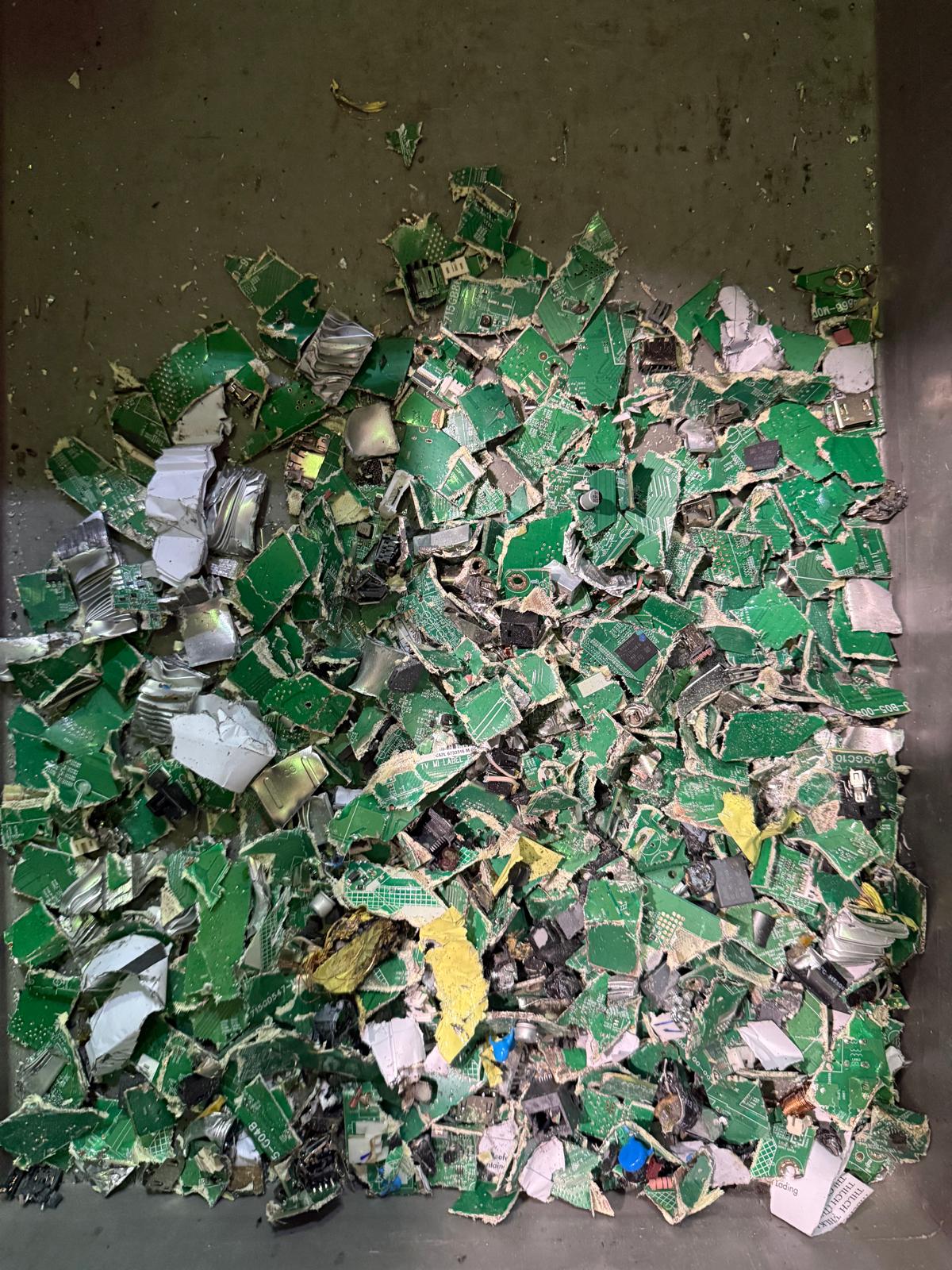
Post-destruction material handling sits at the end of the same workflow, alongside certification.
Scope limits and open items to confirm
Several boundaries should be settled in writing rather than assumed.
- Hazardous waste. Unspecified hazardous chemical wastes and specialised hazardous handling are not covered unless confirmed with the company. A clearance that turns up batteries, toners, refrigerants or chemically contaminated equipment needs that confirmed separately before collection.
- Throughput. Daily and annual capacity are not published; capacity and scheduling should be confirmed against your required window.
- CCTV and witnessing. Both are available on request, so they must appear in the job scope to be delivered.
- Scan point. On-site or facility scanning must be agreed in advance, because it determines the first document you can reconcile.
- Credentials. BigVoice Secure states that its affiliated entity, BigVoice Prodigy Renovations & Disposal Services Pte Ltd, holds the NEA General Waste Collector Licence, the NEA General Waste Disposal Facility Licence and bizSAFE3 certification, and lists ISO 14001 and ISO 27001 among the group's stated credentials. These are company-reported; request current certificates and check licence validity directly before relying on them in a tender response.
Frequently asked questions
Secure data destruction service providers for HDD and SSD shredding — what should a buyer compare?
Compare five things on a like-for-like basis: which methods are available per media class, with degaussing for magnetic HDDs and tapes and shredding, crushing or drilling for SSDs and drives; where the inventory is scanned; what custody documentation accompanies transport, including locked boxes with numeric combinations and chain-of-custody records; what the Certificate of Destruction actually lists; and whether witnessed destruction or CCTV viewing must be requested in advance. Media fit and evidence quality decide more than the headline location of destruction.
Is on-site destruction more secure than off-site destruction?
Not by itself. On-site destruction removes the transport leg and shortens the custody window, but the inventory and certification work still has to be performed and witnessed. Facility destruction concentrates the destruction event in a fixed environment under documented custody, at the cost of a custody window that must be recorded. The deciding question is which evidence you are required to file.
Can a job combine on-site scanning with destruction at the facility?
Yes. Within the Collect–Destroy–Certify flow, scanning may be done on site or at the secure facility, and items are then stored in locked boxes with numeric combinations for transport. Specifying on-site scanning keeps reconciliation with your asset register ahead of departure while still using fixed facility equipment for the destruction itself.
Does drop-off still produce a Certificate of Destruction?
Yes. The certificate is issued after the chosen destruction method is completed, whether the items were collected or delivered by the client. What changes is the inventory point: with drop-off, scanning and locking begin at the facility, so reconciliation happens after handover rather than before.
Is CCTV viewing of the destruction automatic?
No. CCTV viewing of the destruction process is available on request, and destruction records with a video link can form part of the destroy-stage output when requested. Write the requirement into the job scope, and treat the video as evidence of the destruction event rather than of the pre-destruction inventory.
How should a first job be scoped?
Start with the media list, the sanitization level per class and the evidence you must file, then ask for a quote that states the workflow, the scan point, the custody arrangement and the certificate content. BigVoice Secure Destruction Pte. Ltd. handles on-site and facility-based destruction in Singapore and issues a Certificate of Destruction on completion; the team can confirm capacity and scheduling at enquiry@bigvoicesecure.com.sg or +65 8895 5691.
Conclusion
The choice between on-site destruction, on-site collection and drop-off is a choice about where the inventory, custody and destruction points sit — and therefore about which evidence you will be able to produce. Specify the media classes and counts, the sanitization level each class requires, the scan point, the custody controls and the deliverables, and the workflow selection becomes a consequence rather than a preference. Where a requirement cannot be met within the standard scope, such as hazardous waste handling, confirm it with the provider before scheduling rather than after collection.
BigVoice Secure Destruction Pte. Ltd. provides on-site and off-site secure destruction, IT asset disposal, recycling and e-waste buyback in Singapore, with documented destruction processes, CCTV viewing on request and a Certificate of Destruction issued after the selected method is completed. For a scoping discussion covering workflow, scan point and evidence deliverables, contact the team at 6 Woodlands Industrial Park E1, Singapore 757729, by phone or WhatsApp on +65 8895 5691, or by email at enquiry@bigvoicesecure.com.sg.
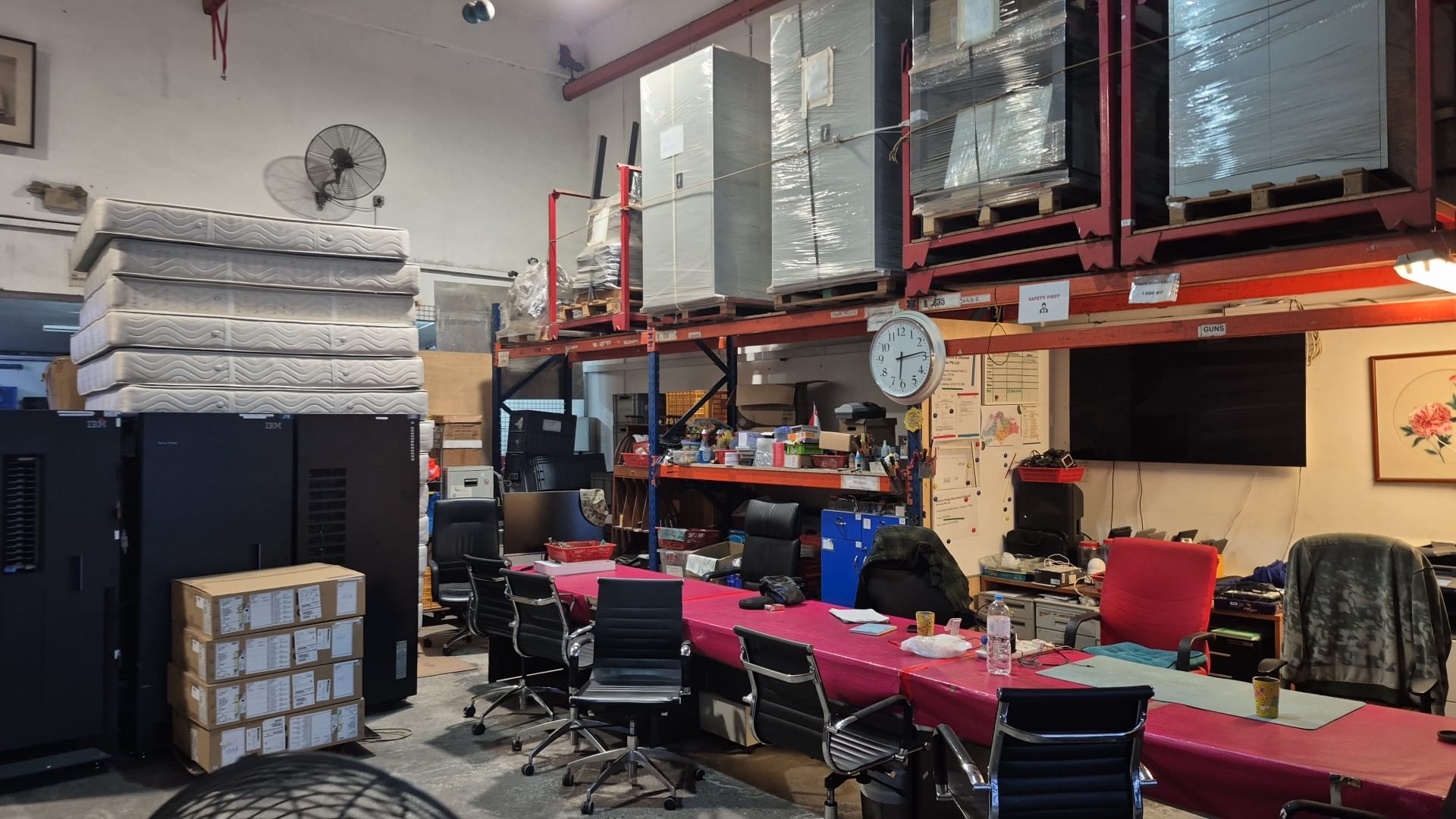
Scoping discussions typically settle the scan point, custody window and certificate content before a collection date is fixed.
Download: the BigVoice Secure company brochure is available at BigVoice Secure promotional brochure (PDF).
Have Questions or Need More Details?
Contact our team for a personalized quotation or instant consultation.
Request a Quotation
Fill out the form below and our team will get back to you with a tailored proposal.
WhatsApp Direct Chat
Prefer to chat in real-time? Message us on WhatsApp for instant assistance & quick answers.
- Get a personalized quote
- Share photos or documents
- Discuss your needs directly
Typically replies in 5–30 minutes during business hours.