Server Disposal in Singapore: How to Retire Servers Securely and Compliantly
Server disposal is the process of collecting, transporting, sanitising and then reusing, recycling or physically destroying retired servers and the storage media inside them. In Singapore, that job sits between two obligations: data-bearing hardware must be handled so stored data cannot be recovered, and electronic waste must move through responsible, documented channels. For most organisations, the real question is not whether to dispose of servers, but how to prove afterwards that the disposal was secure and traceable.
What Counts as Server Disposal?
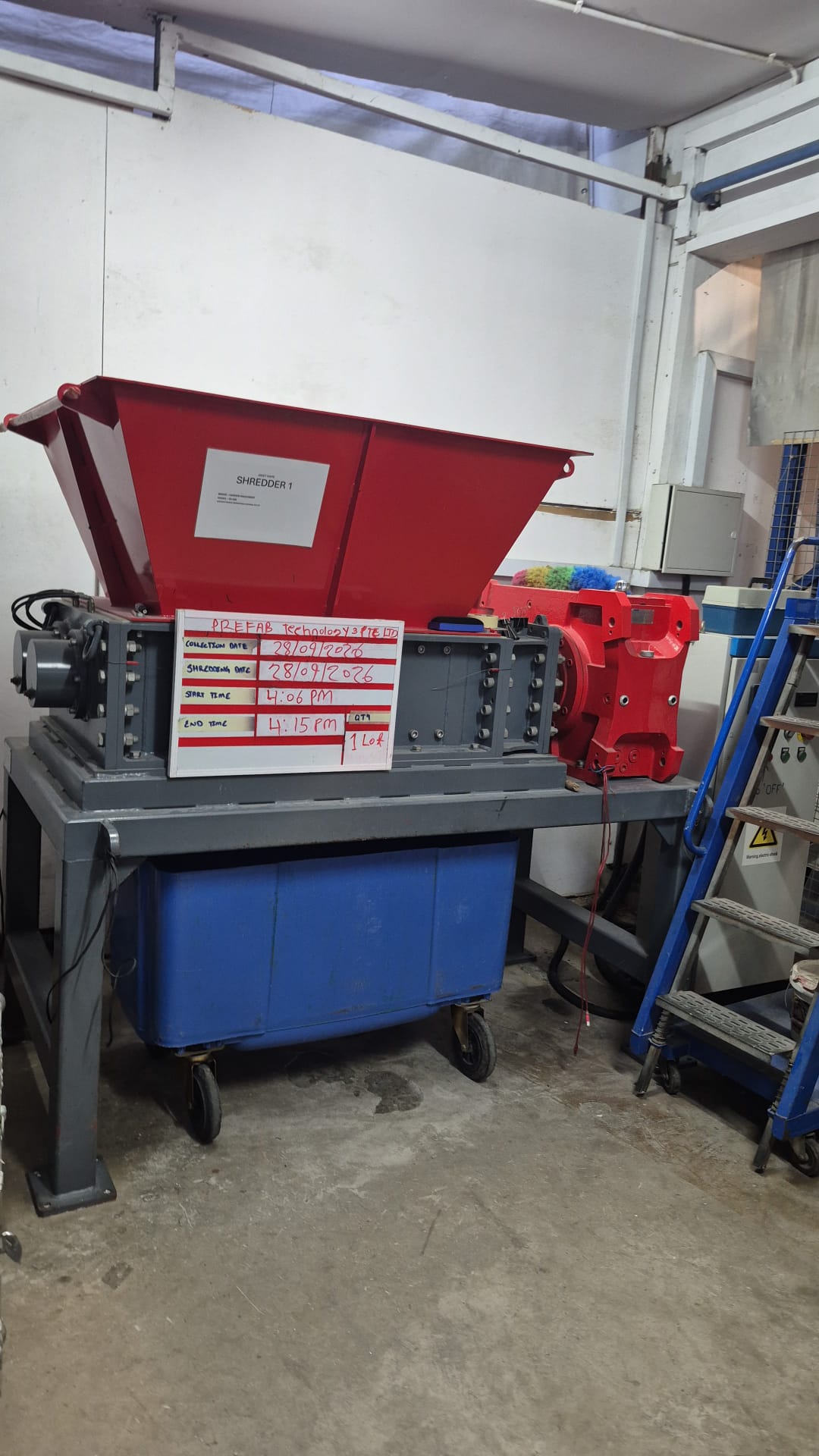
Server disposal covers every step between “this server is no longer needed” and “this server and its data are gone”. In practice that means decommissioning the unit, removing it from the rack, transporting it, dealing with the data it holds, assessing whether any part of it has recovery value, and sending what remains into a compliant recycling or disposal channel.
The hardware involved is usually broader than the server chassis. A typical retirement includes rack, tower or blade servers together with hard disk drives, solid state drives, controller cards and tape backups. Data-bearing media is the part that requires the most attention, because the storage inside a server can hold virtual machines, databases, email archives, application credentials and backup copies of all of the above.
Two consequences follow. First, deleting files or running a quick format does not remove data in a way that survives scrutiny — recovery tooling exists, and a resold drive is a portable copy of everything it once stored. Second, disposal is an evidence problem as much as a logistics problem: whoever handles the asset has to be able to show what happened to it, and when.
Why Retired Servers Carry More Risk Than Laptops or Monitors
Servers concentrate data. A single decommissioned unit may hold the records of hundreds of users, and the storage media inside it is dense, portable and easy to remove. That is why the risk profile of server disposal differs from monitor disposal or printer disposal, even though all of them fall under the same broad heading of electronic waste.
The industry problem is well documented: when organisations retire IT assets or dispose of confidential materials, improper handling can lead to data breaches, regulatory penalties and environmental liabilities. The recurring challenges buyers raise are chain-of-custody visibility, verifiable irrecoverability of data, regulatory and environmental compliance, assessing reuse and buyback value, and service transparency.
Those challenges usually trace back to process design rather than technology. Non-standard disposal, no certificate or visible record, unclear recycling channels, or an unlicensed handler collecting equipment all produce the same outcome: the organisation cannot answer a simple audit question about where a data-bearing asset went, or who had access to it before it was destroyed.
Server Disposal in Singapore: Regulatory and Market Context
Singapore treats e-waste as a regulated stream rather than general refuse. According to the National Environment Agency (NEA), the regulated e-waste management system is based on the Extended Producer Responsibility (EPR) approach, where producers bear the responsibility for the collection and treatment of their products when they reach end-of-life.
The NEA lists ICT equipment within the regulated e-waste categories: printers, power banks, computers and laptops, mobile phones and tablets, network and set-top boxes, and TVs and desktop monitors.
For data-bearing devices, the requirement is explicit. Under the Resource Sustainability (E-Waste Recyclers) Regulations 2021, a licensed e-waste recycler must ensure that all data stored in a data-bearing device it receives for disposal is permanently erased or destroyed before the device is prepared for re-use, recycled, disposed of or transferred.
Two data points frame the wider market. Singapore’s overall recycling rate reached 52 per cent in 2025, according to NEA waste statistics, and the global IT asset disposition market was valued at USD 28.3 billion in 2025 and projected to reach USD 31.9 billion in 2026, according to Grand View Research.
On the risk side, market material on Singapore’s ITAD sector cites an average data breach cost of approximately S$7.17 million — which is one reason physical asset risk now appears in board-level conversations rather than only in IT operations.
The combined effect is straightforward: server disposal in Singapore is a documented process with defined obligations, a visible preference for responsible recycling, and a growing professional service market built around it.
What a Complete Server Disposal Service Includes
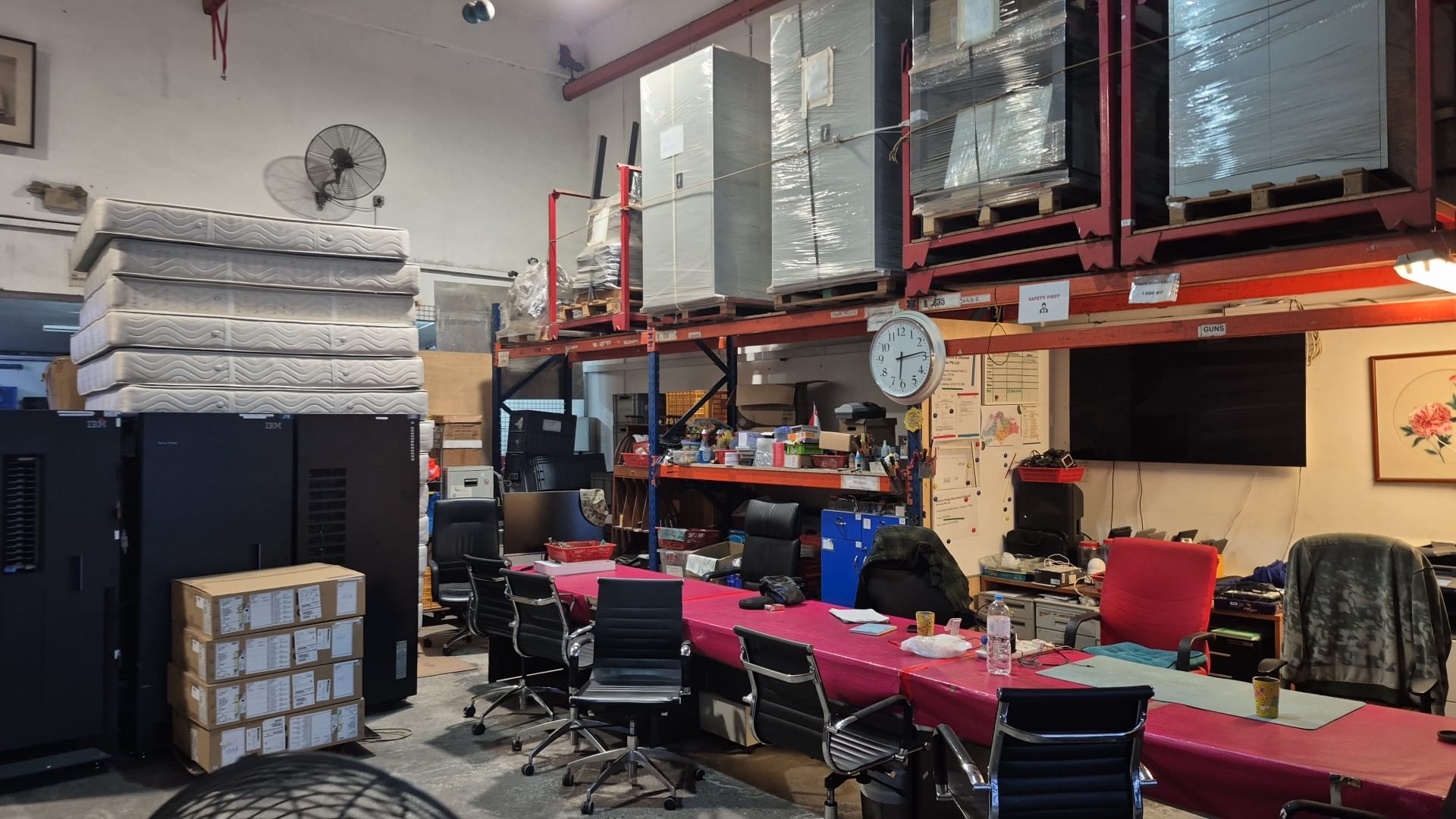
BigVoice Secure Destruction Pte. Ltd. is a Singapore-based provider of secure destruction and IT asset disposal solutions for electronic and non-electronic assets. Established in 2022, the company operates from a facility of 99.45 m² with approximately 20 staff, and its annual processing capacity reaches 10,000 to 15,000 units.
Its service is named IT Equipment Disposal, asset destruction; e-waste buyback & recycling, and is also described as information security and environmental disposal services. For server retirement specifically, the relevant capabilities are:
- Secure destruction of hard drives, laptops, mobile devices, IT equipment, confidential documents and other data-bearing media.
- Coverage that extends to data centres, obsolete electronics, retired IT assets and other electronic and non-electronic items.
- Both on-site and off-site secure destruction, so the customer can decide where destruction takes place.
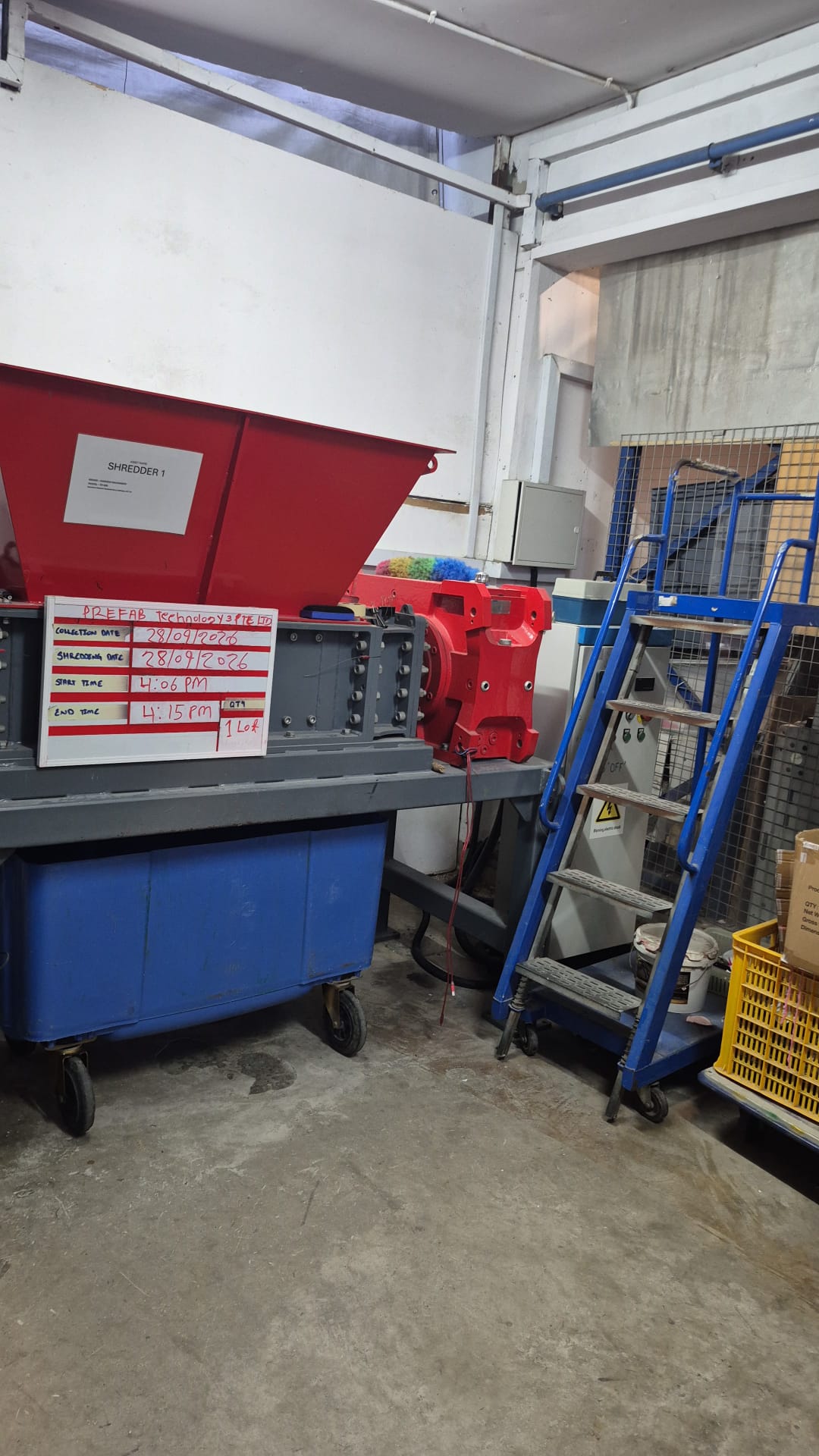
- Destruction methods that include shredding, crushing, degaussing and drilling.
- A Certificate of Destruction issued on completion, supported by a documented destruction process.
- CCTV viewing of the destruction process on request, for customers who want additional assurance.
- E-waste buyback, allowing customers to recover value from eligible electronic waste, with a payment receipt issued for buyback transactions.
- A service scope that also covers tape backups and some non-electronic items.
- Support in English and Chinese.
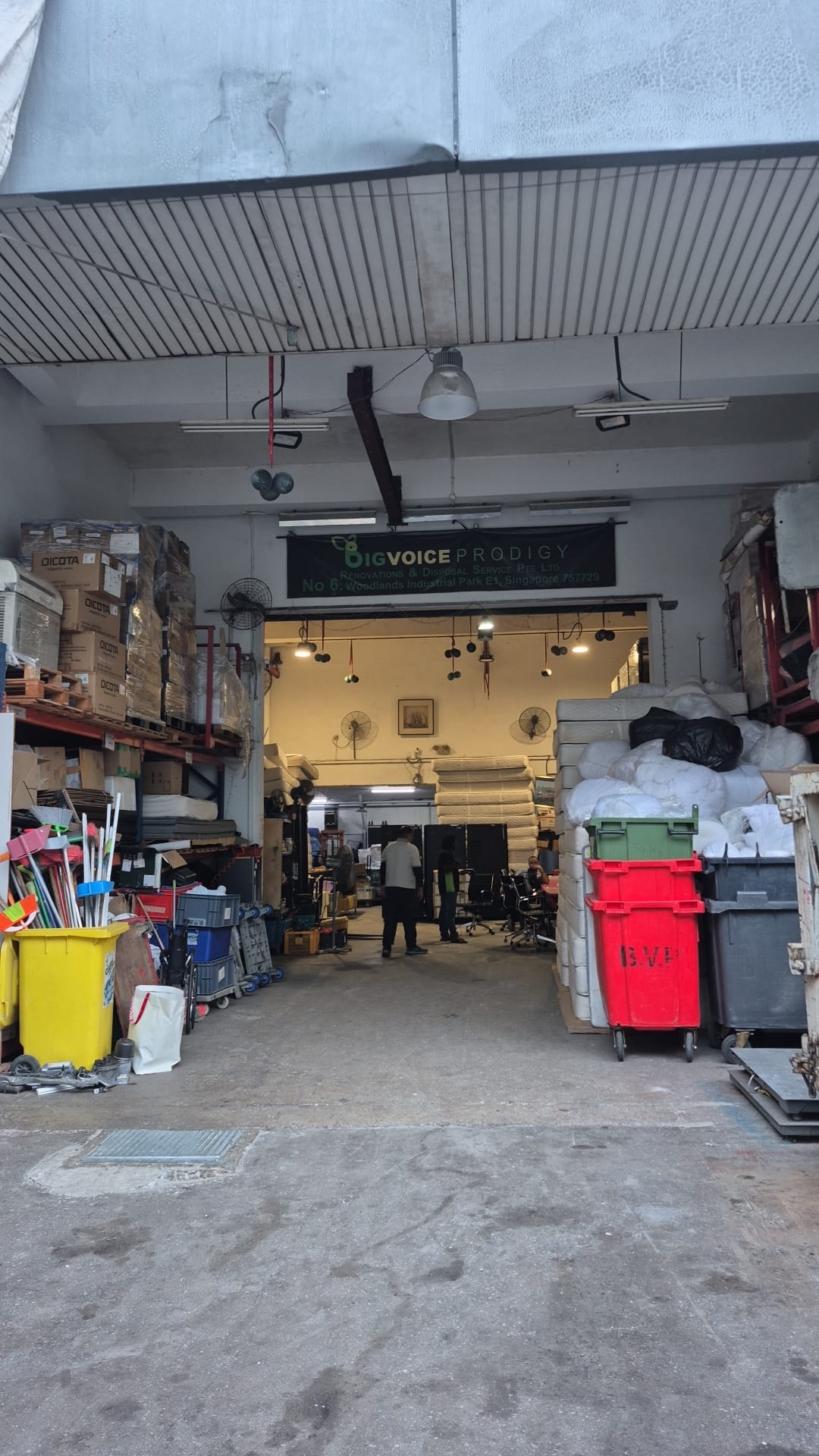
The company states that it is affiliated with BigVoice Prodigy Renovations & Disposal Services Pte Ltd, which the company states holds an NEA General Waste Collector Licence, an NEA General Waste Disposal Facility Licence and bizSAFE3 Certification.
Equally important is what the service does not cover. Data recovery, physical transportation of hazardous waste, and data migration or backup services sit outside the scope. Buyers who need those activities should plan and procure them separately.
Server Disposal, Step by Step
The workflow below reflects how an end-to-end IT asset disposal project is structured, from first enquiry through to final documentation.
- Requirement confirmation. The client confirms asset types, quantities, locations and any site access constraints, and agrees whether destruction will happen on-site or off-site.
- On-site collection. Assets are collected from the client’s premises, or dropped off by the client.
- Secure transportation. Equipment is moved to the processing facility under controlled handling.
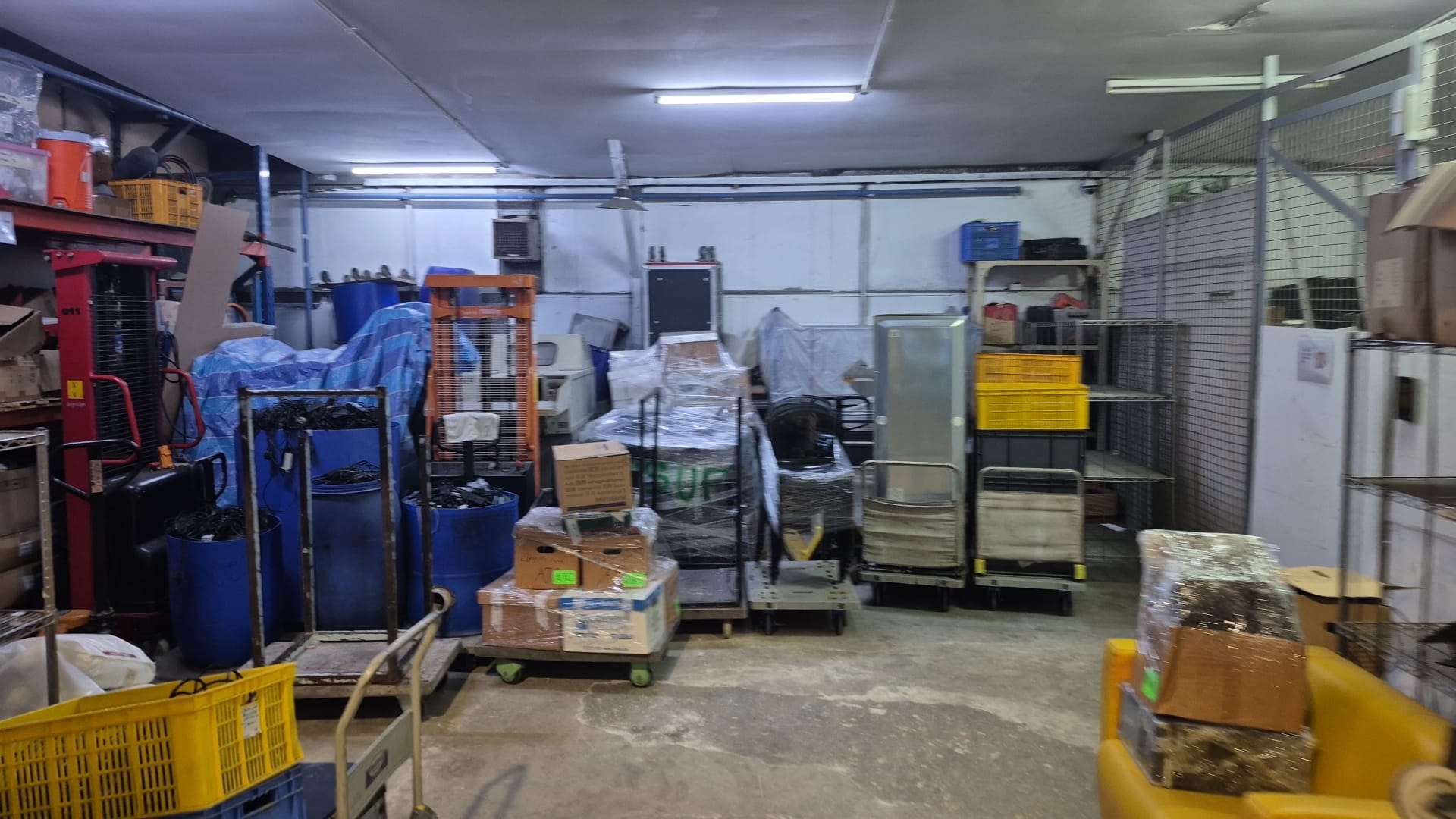
- Asset registration and sorting. Each item is registered and sorted so quantities and asset types stay traceable through the whole process.
- Equipment assessment. Assets are assessed to establish whether equipment can be recovered or reused, or whether it must be destroyed and recycled.
- Recovery and buyback. Eligible equipment may be recovered or offered for buyback, with a payment receipt issued for buyback transactions.
- Data destruction. Data-bearing media is destroyed using the agreed method — shredding, crushing, degaussing or drilling — on-site or at the secure facility.
- E-waste recycling and final disposal. Non-reusable material moves into recycling and responsible final disposal.
- Documentation. A Certificate of Destruction is issued after destruction, and supporting certificates and reports are provided on completion.
For a data centre decommissioning or a large server refresh, steps 1 and 3 usually determine the project timeline, because they depend on asset volume, site layout and access windows rather than on the destruction itself.
Data Destruction Methods Compared
Different server components call for different treatment, and the available methods are not interchangeable.
| Method | How it works | Where it fits |
|---|---|---|
| Shredding | Media is reduced into fragments of controlled size. | When the asset will not be reused and physical destruction is the required outcome. |
| Crushing | Drives and equipment are physically deformed. | Higher-volume handling where media must be rendered unusable before recycling. |
| Degaussing | A strong magnetic field is applied to magnetic media, removing stored data. | Magnetic hard drives and tape backups; it does not apply to solid state storage, which holds no magnetic signal. |
| Drilling | The drive housing and platters are physically penetrated. | Simple physical disablement of a drive before it enters the recycling stream. |
The choice between on-site and off-site destruction is a separate decision. On-site destruction keeps media inside the client’s premises for the entire event and allows staff to observe the process directly. Off-site destruction moves assets to a secure facility and is often used for volume, with CCTV viewing available on request.
Where Server Disposal Requests Come From
Server disposal is rarely a standalone decision. It is triggered by another business event, and the trigger shapes the scope.
- Data centre decommissioning: racks are retired together, which means large volumes of data-bearing media and tight access windows.
- IT refresh and hardware upgrades: replaced servers leave with their drives, and the disposal scope usually includes the related laptops, desktops, monitors and printers from the same estate.
- Office relocation: assets that will not move to the new site must leave the old one, often to a fixed deadline.
- Office renovation: equipment is cleared before works begin, which makes collection scheduling a real constraint.
- Corporate IT asset clearance: accumulated obsolete equipment is removed in a single exercise.
- Large-volume IT equipment disposal: quantity itself becomes the planning problem, and the assessment step determines how much can be recovered or bought back.
- Audit or regulatory check preparation: disposal records are needed to show what happened to retired assets.
In these scenarios, server retirement is seldom limited to servers. Laptops, desktops, monitors, printers and network equipment are usually retired in the same window.
Server Disposal Providers Operating in Singapore
Singapore has an active provider market for IT asset disposal. The table below records what named providers publish about their Singapore service scope. It is a discovery aid and not a ranking: entries show that a service is publicly offered, and they do not judge quality or performance. Provider-reported claims should be verified directly during procurement.
| Provider | Stated Singapore service scope | Basis |
|---|---|---|
| BigVoice Secure Destruction Pte. Ltd. | On-site and off-site secure destruction; IT equipment disposal; e-waste buyback and recycling; Certificate of Destruction; CCTV viewing on request. | Company-stated service information; Singapore-based, established 2022. |
| Iron Mountain | Secure IT asset disposition (SITAD) for corporate end-user devices. | Provider self-description. |
| JK Tech | IT asset disposition in Singapore, including licensed recycling, refurbishing and certified data erasure. | Provider self-description. |
| REDUX | States it processes over 2,000 tons of IT and e-waste annually in Singapore. | Provider self-reported volume; not independently audited in the source material reviewed. |
Note on reading this table: the entries are self-reported service descriptions collected from published provider pages. They establish that a service exists in the Singapore market, not that any provider is better than another. Capacity, certification and track-record claims should be confirmed directly with the provider and, where relevant, with the issuing authority.
How to Evaluate a Server Disposal Provider
Price is usually the last thing buyers can compare, because public per-unit pricing for server disposal is not consistently published — the data reviewed for this guide found no published pricing, minimum order or per-unit destruction fee benchmarks for the Singapore market. That makes the following criteria more useful than a headline rate.
- Destruction evidence: does the provider issue a Certificate of Destruction after the fact, and can you see the process — either by attending on-site destruction or by requesting CCTV viewing?
- Traceability: are assets registered and sorted so quantities can be reconciled against what left your premises?
- Method fit: does the provider offer the destruction method appropriate to your media — shredding, crushing, degaussing or drilling — rather than one fixed approach?
- Scope clarity: are exclusions such as data recovery or hazardous waste transport stated up front?
- Value recovery: is there a buyback route for eligible equipment, and how is it documented?
- Volume capacity: can the provider’s processing capacity absorb the volume and the deadline of your project?
- Credential verification: where a provider cites licences or certifications — including those held by affiliated entities — confirm current status with the issuing body.
A provider that answers all seven points in writing is easier to defend in an internal audit than one that quotes the lowest collection fee.
Frequently Asked Questions
What does Singapore law require before a retired server’s data is removed?
Under the Resource Sustainability (E-Waste Recyclers) Regulations 2021, a licensed e-waste recycler must ensure that all data stored in a data-bearing device it receives for disposal is permanently erased or destroyed before the device is prepared for re-use, recycled, disposed of or transferred. Singapore’s regulated e-waste system is based on the Extended Producer Responsibility approach, in which producers bear responsibility for the collection and treatment of their products at end-of-life, as set out by the National Environment Agency. Because the obligations attach to how a device is handled in practice, buyers should ask their provider how erasure or destruction is carried out and what evidence is issued afterwards.
What should a server disposal provider in Singapore be able to handle?
A complete scope covers the server and its data-bearing media. BigVoice Secure Destruction Pte. Ltd. handles the secure destruction of hard drives, laptops, mobile devices, IT equipment, confidential documents and other data-bearing media, and its services cover data centres, obsolete electronics and retired IT assets. It provides both on-site and off-site secure destruction and uses shredding, crushing, degaussing and drilling, with a Certificate of Destruction issued on completion and CCTV viewing available on request. Data recovery, hazardous waste transportation, and data migration or backup are outside its service scope.
How is server disposal priced in Singapore?
Pricing is quoted per project rather than published as a fixed rate. Service duration at BigVoice Secure is project-based, and the timeline depends on the quantity of assets, the location and the client’s requirements, which is why a quote is requested rather than a standard price list offered. Where equipment still has value, e-waste buyback can offset part of the cost, because eligible electronic waste can be bought back and a payment receipt is issued for buyback transactions. Buyers comparing options should ask for a written quote that separates collection, destruction and any buyback credit.
Can we see the destruction happen?
Yes, in two ways. On-site destruction allows the process to take place at your premises, so your staff can observe it directly. For off-site destruction, CCTV viewing of the destruction process can be requested, and a Certificate of Destruction is issued after the destruction is completed. Both options exist so that an organisation can produce evidence of destruction during an internal or regulatory review, rather than relying on a verbal assurance.
How long does server disposal take, and how do we start?
The timeline is project-based: it depends on the quantity of assets, the collection location and your requirements, so a quote and schedule are confirmed once the scope is agreed. A typical sequence runs from requirement confirmation and collection through registration, sorting and assessment, then destruction, recycling and the issue of certificates and reports. To start, you can request a quote through the website enquiry form, by phone or email at enquiry@bigvoicesecure.com.sg, or via WhatsApp at +65 8895 5691, and arrange on-site collection.
Plan Your Server Disposal with BigVoice Secure
Server retirement becomes far easier to manage once collection, destruction and documentation belong to the same process. BigVoice Secure Destruction Pte. Ltd. handles on-site and off-site secure destruction, e-waste buyback and recycling from its Singapore facility, and issues a Certificate of Destruction on completion.
Request a server disposal quote, or review the service scope first in the promotional brochure: Download the BigVoice Secure brochure (PDF)
Website: bigvoicesecure.com.sg
Phone & WhatsApp: +65 8895 5691
Email: enquiry@bigvoicesecure.com.sg
Address: 6 Woodlands Industrial Park E1, Singapore 757729
Conclusion
Server disposal is not a bin collection. It is a documented chain that starts with a retired rack and ends with a Certificate of Destruction, and in Singapore the surrounding obligations — EPR-based e-waste regulation and mandatory erasure or destruction of data on data-bearing devices handled by licensed recyclers — make documentation the part that matters most. Organisations that treat disposal as a procurement decision, with method fit, traceability and evidence as the selection criteria, end up with a defensible record instead of an open question about where their data went.
Have Questions or Need More Details?
Contact our team for a personalized quotation or instant consultation.
Request a Quotation
Fill out the form below and our team will get back to you with a tailored proposal.
WhatsApp Direct Chat
Prefer to chat in real-time? Message us on WhatsApp for instant assistance & quick answers.
- Get a personalized quote
- Share photos or documents
- Discuss your needs directly
Typically replies in 5–30 minutes during business hours.