What Is the Collect-Destroy-Certify Process? A Secure Data Destruction Service Explainer
Secure data destruction is often described through a simple three-stage service model: collect, destroy and certify. In practice, the Collect-Destroy-Certify process — sometimes called the Base process — is a chain-of-custody workflow that moves data-bearing assets from the customer’s control into a documented destruction path and then proves what happened. BigVoice Secure Destruction Pte. Ltd. is a Singapore-based provider of secure data destruction and IT disposal services. Its published scope covers hard drives, laptops, mobile devices, IT equipment, confidential documents and other data-bearing media, with both on-site and off-site destruction options.
At a minimum, a credible process answers five questions: where the assets went, who controlled them, how the data was made irrecoverable, what evidence was issued, and how materials were recycled or returned to value. The three stages below explain how those questions connect.
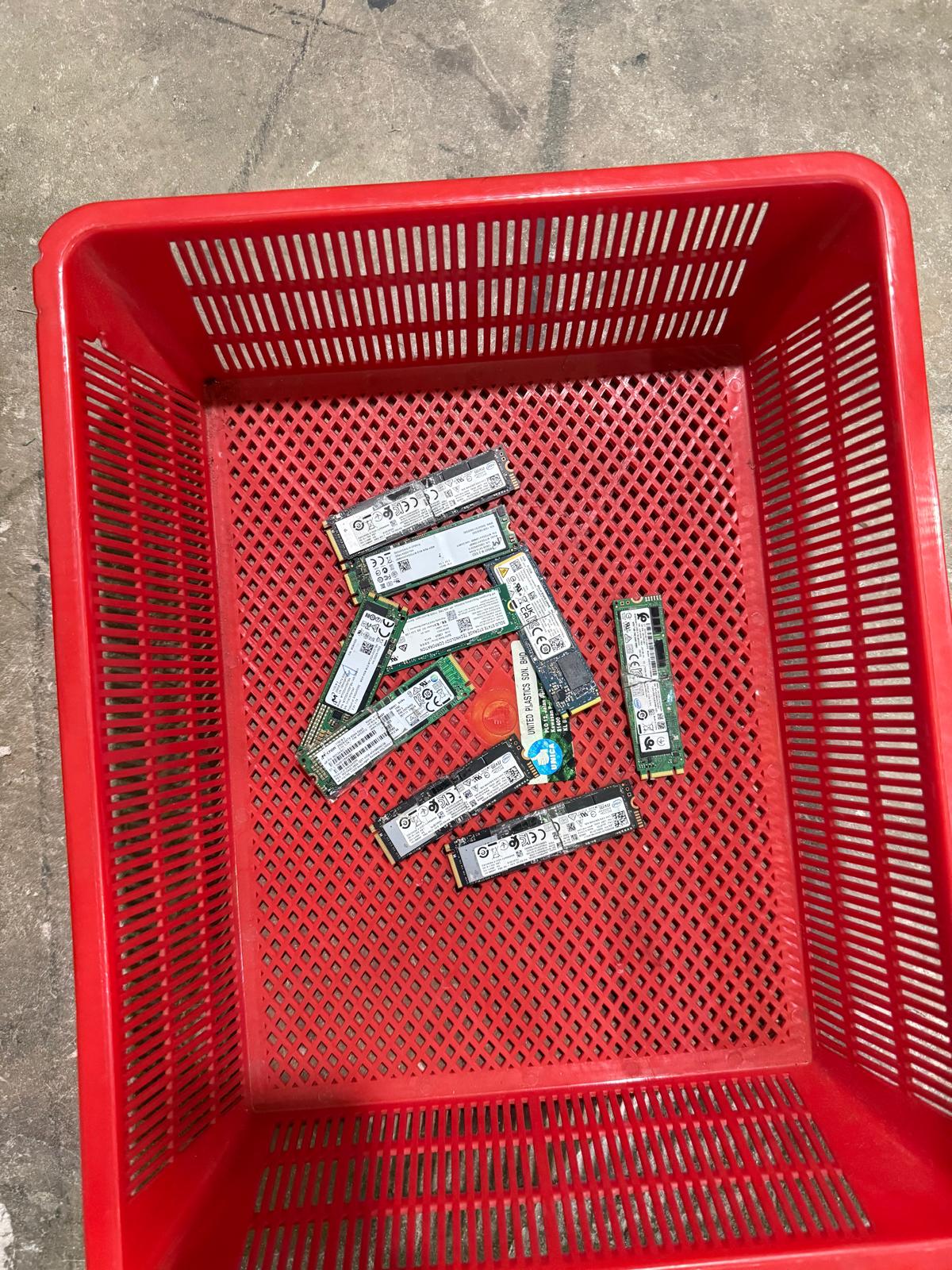
Cover image: an M.2 SSD before it enters a secure collection, destruction and certification workflow.
What Is the Collect-Destroy-Certify Process?
Collect-Destroy-Certify is a service workflow with three linked stages. Stage one secures and inventories the media. Stage two selects and performs a destruction method that matches the media type. Stage three documents the destruction and closes the environmental or buyback loop. The Base label is shorthand for this end-to-end baseline: collection, destruction and certification as one controlled service rather than separate ad hoc steps.
BigVoice Secure’s service description names the same sequence: on-site collection or customer drop-off, item scanning and locking, destruction by degaussing, shredding, crushing or drilling, issuance of a Certificate of Destruction, and recycling or buyback processing. CCTV viewing can be requested for transparency. The process is designed for enterprises, data centres and institutions in Singapore that need compliant asset disposal and documented proof of destruction.
Why the Process Matters: Data Remanence, Compliance and E-Waste
Data destruction matters because deleting a file or reformatting a drive does not necessarily remove recoverable data. The industry problem is data remanence on retired media, combined with compliance and environmental liabilities. The buyer’s practical challenge is not only choosing a destruction method; it is proving custody, irrecoverability and responsible disposal. Common failure points include weak chain-of-custody visibility, unclear destruction evidence, uncertainty about recycling channels and no practical way to verify what happened after collection.
The wider market context explains why disposal is now handled as an evidence-based procurement decision rather than a waste-removal task. Strategic Market Research’s IT Asset Disposition Market Report 2024–2030 values the global ITAD market at USD 17.5 billion in 2024 and places data destruction at 30.64% share in 2024. The UNITAR and ITU Global E-waste Monitor 2024 reports 62 million tonnes of e-waste generated in 2022, projected to reach 74.7 million tonnes by 2030. These are market and environmental context figures, not a guarantee about any one provider. For a buyer, the implication is practical: growth in retired hardware and e-waste increases the need to document where data-bearing assets go and how they are destroyed.
Step-by-Step: What Happens in a Typical Project
The exact sequence depends on the provider, asset list and site, but a documented service usually follows a recognisable path.
- Enquiry and scheduling. The customer shares asset types, volume, location and timing. The provider confirms service scope and schedule. BigVoice Secure notes that service duration is project-based and depends on quantity, location and client requirements.
- Secure collection or drop-off. Assets move through on-site collection or customer drop-off. BigVoice Secure’s service channels include a website enquiry form, phone, email, WhatsApp at +65 8895 5691 and on-site collection, with English and Chinese support.
- Scanning and locking. Items are scanned and locked to create a custody link. This is where an asset list becomes an operational control, not just an attachment.
- Method selection. The provider selects degaussing, shredding, crushing or drilling according to the media and the agreed destruction requirement.
- Destruction. The selected method is performed on site or at the secure facility. Customers can request CCTV viewing of the destruction process for greater transparency and assurance.
- Certification. A Certificate of Destruction is issued after completion. Buyback transactions also produce a payment receipt.
- Recycling or buyback. Recoverable items are prioritised for buyback and reuse; remaining materials move to recycling or responsible disposal.
Stage 1 — Collect and Inventory: Establishing Traceability of Custody
Collection is where custody begins. In a service model, the provider schedules a collection or accepts customer drop-off, then scans and locks the items into a controlled inventory. The purpose is to create a link between what the customer handed over and what was destroyed. For media such as hard drives and tape backups, the collection record should cover item count, asset identifiers where available, packaging and transfer time.
BigVoice Secure provides on-site collection with on-site or off-site destruction at a secure facility. Its published profile also states that collection vehicles can be tracked via GPS as items are delivered to the secure destruction facility. That is a company-reported operational feature; buyers should still confirm the collection record, the receiving scan and the destruction report they will receive for their project. Secure media collection and secure document collection are not the same as general waste pickup. Confidential documents, data-bearing devices and IT assets need sealed or locked handling, a declared asset list and a clear handover point.
Traceability of custody is not just a signature at the door. It is the ability to match an item at handover to an item at destruction, and then to the certificate. A data destruction pickup service should therefore be assessed on its records: what was collected, who received it, where it was held, when it was destroyed and which method was used. If the buyer cannot follow that chain, the certificate alone is doing too much work.
Stage 2 — Destroy: Choosing the Method That Matches the Media
Destruction is not a single generic action. BigVoice Secure supports shredding, crushing, degaussing and drilling. NIST SP 800-88 Revision 1 defines sanitization levels as Clear, Purge and Destroy; a service provider’s physical destruction workflow should be understood in that context. The standard helps buyers separate data sanitization concepts from physical destruction steps, but it does not make one method universally appropriate for every media type.
HDD data destruction and SSD data destruction are not identical procurement items. Hard drive shredding, SSD shredding, hard drive crushing and degaussing services address different media characteristics. A buyer should not assume a document shredding schedule automatically covers data-bearing devices, or that a degaussing service is intended for every storage technology. The destruction method should be selected against the actual media list, then recorded in the service documentation.
| Destruction method | Media it is normally matched to | What it does in the process | What to confirm |
|---|---|---|---|
| Degaussing | Magnetic media such as hard disk drives and tape backups | Uses a strong magnetic field to disrupt stored data on magnetic media; it is not a physical shredding step. | Confirm the media is magnetic and that the certificate records degaussing as the method. |
| Shredding | Hard drives, SSDs, documents and some devices | Reduces media into fragments so the storage device or document is no longer usable in its original form. | Confirm the accepted media list, collection controls and the destruction record. |
| Crushing | Drives and devices | Physically deforms the drive or device to make the storage unit unusable. | Confirm whether the buyer’s policy accepts crushing for the specific asset type. |
| Drilling | Drives and devices | Creates localised physical damage as a destruction step. | Confirm the method is accepted for the media and that the certificate matches the scope. |
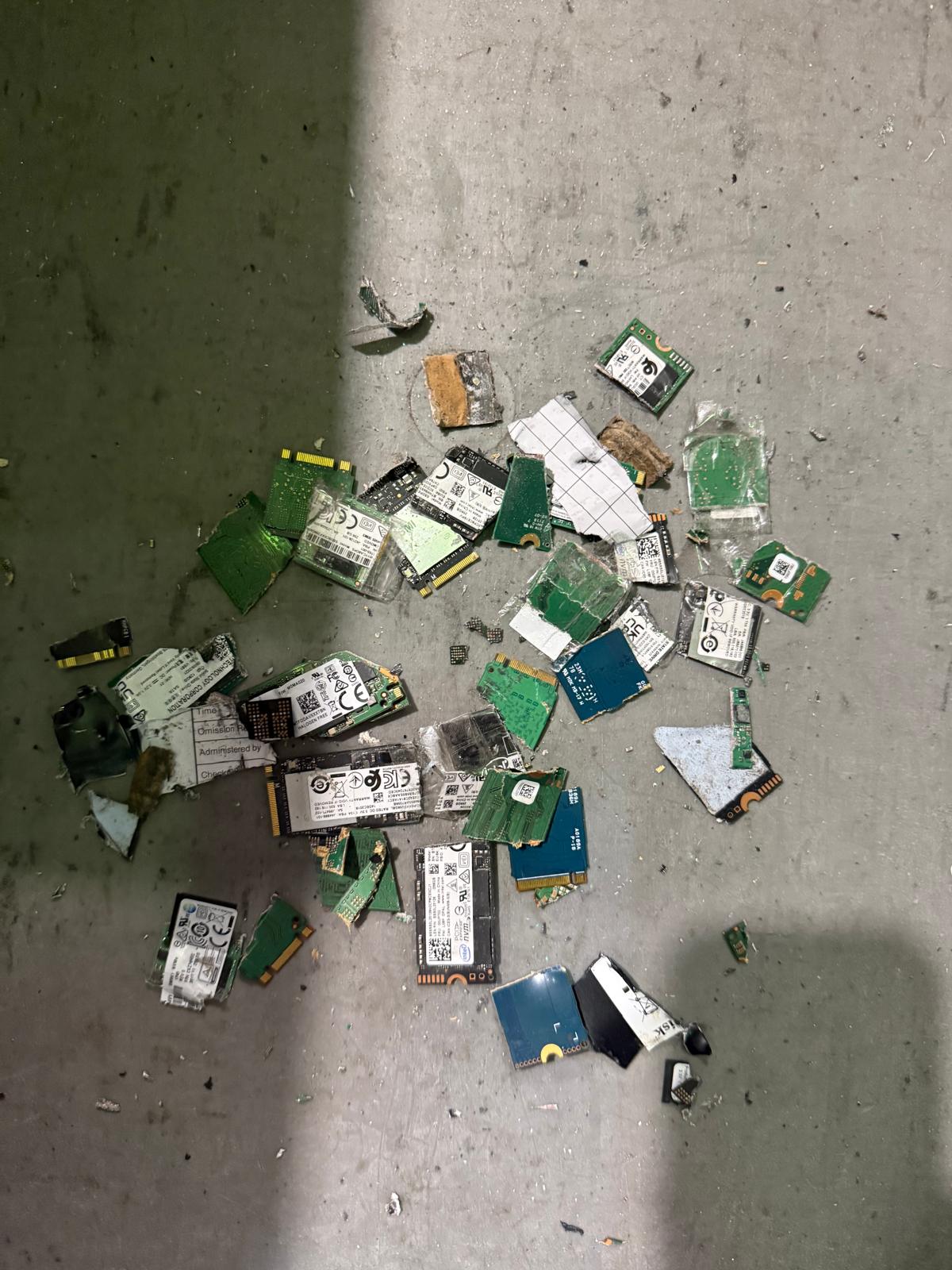
An M.2 SSD after physical destruction illustrates the intended end state: the media is no longer a reusable storage device. The certificate, not the photograph, is the formal record.
Physical data destruction is often used where the buyer needs a clear irreversible end state. Data wiping and destruction are sometimes discussed together, but they are not the same service. BigVoice Secure’s defined service is a destruction and disposal service; it does not cover data recovery, data migration or backup services. That distinction matters when a buyer is comparing an erasure process with a physical destruction workflow.
On-Site vs Off-Site Destruction: Which Model Fits the Process?
On-site destruction keeps the destruction event at the customer’s location. Off-site destruction moves items to a secure facility for processing. BigVoice Secure provides both on-site and off-site secure destruction services to meet different customer requirements. The choice affects custody, logistics, witness options and scheduling rather than the basic three-stage logic.
On-site HDD destruction or on-site SSD destruction may suit buyers who want the event on their premises or who need a witnessed data destruction step. On-site document shredding can serve a similar purpose for confidential paper records. Off-site destruction can suit volume, consolidation or facility-based processing. In either model, ask how the item is scanned, who witnesses the event and what CCTV or certificate evidence is issued. CCTV viewing is available on request for BigVoice Secure’s destruction process.
Stage 3 — Certify: The Evidence Trail
A Certificate of Destruction is the closing document. It should be read as evidence of a service event, not as a magic certificate that replaces custody records. The certificate connects the asset list to the destruction method and date. BigVoice Secure can issue a Certificate of Destruction upon completion of the service and provides a CCTV viewing link on request for the destruction process.
Data destruction verification is the buyer’s check that the certificate matches the collection record. Destruction process documentation may include the asset inventory, certificate, CCTV access where requested, and buyback receipt where applicable. The certificate should not be expected to prove data recovery impossibility in a laboratory sense; it records the agreed destruction method and completion. If a buyer needs a higher level of assurance, that should be defined in the service scope before collection rather than assumed after the certificate is issued.
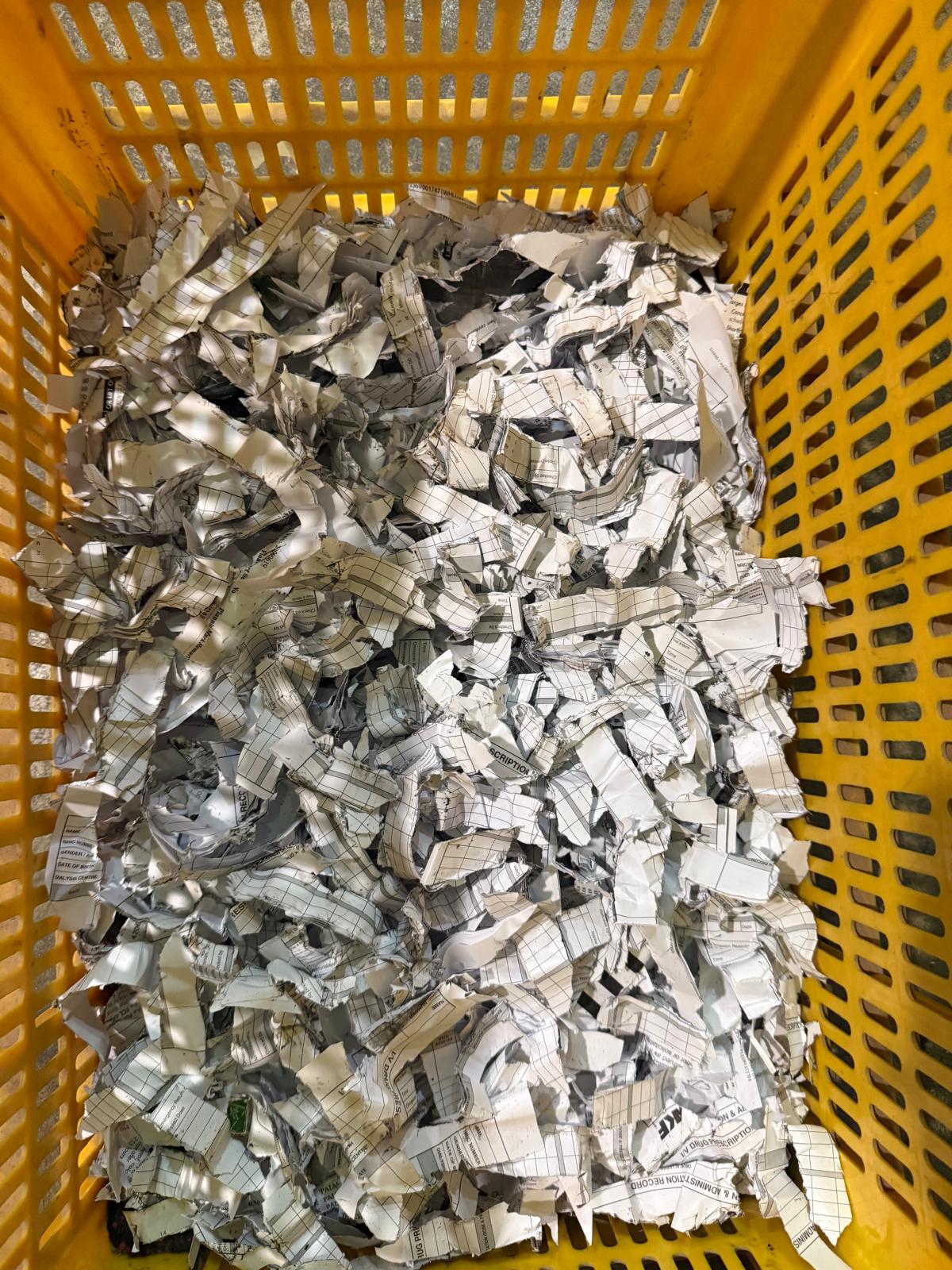
Confidential document destruction produces shredded paper output; the collection record and certificate complete the evidence trail.
When reviewing a certificate, ask whether it records the service date, the collection or project reference, the asset or lot identifiers used by the provider, the quantity destroyed, the destruction method and the site where destruction occurred. Those are reasonable buyer checks, not claims about every certificate format. The point is to make the certificate useful for audit and internal governance, not just present at the end of an invoice.
Core Principles Buyers Should Test
- Traceability of custody. The provider should be able to connect collection, inventory, destruction and certification. Scanning and locking items at intake is a custody control. GPS tracking of collection vehicles, where offered, is an additional feature, but it does not replace the receiving scan and destruction record.
- Irreversibility of destruction. The chosen method should match the media and the buyer’s policy. A shredded hard drive, a crushed device, a drilled drive and a degaussed tape are different end states. The buyer should know which one applies before the project starts.
- Compliance and documentation. The service should produce records that support internal audit and regulatory review. BigVoice Secure provides documented destruction processes and can issue a Certificate of Destruction. Buyers should map those records to their own evidence requirements.
- Environmental responsibility. Destruction is not only a security event. BigVoice Secure prioritises buyback and reuse for recoverable items and provides recycling and responsible disposal. The company is affiliated with BigVoice Prodigy Renovations and Disposal Services Pte Ltd, which the company states holds an NEA General Waste Collector Licence, an NEA General Waste Disposal Facility Licence and bizSAFE3 certification.
- CCTV process transparency. CCTV viewing can help a buyer see the destruction event, especially in an off-site model. It supports oversight; it does not by itself replace the certificate, asset list or method record.
What the Process Covers and What It Does Not
Scope clarity prevents surprises. BigVoice Secure’s service scope includes hard drives, tape backups, laptops and mobile devices, IT equipment, confidential documents and some non-electronic items such as clothes for destruction and recycling. The service covers data centres, obsolete electronics, retired IT assets and other electronic and non-electronic items. This breadth is useful for IT asset destruction and electronic media destruction projects that include mixed equipment.
The service does not cover data recovery, data migration or backup services. It also does not cover physical transportation of hazardous waste. Those exclusions should be checked against the project before collection. A destruction provider is not automatically a data recovery specialist, a migration partner or a hazardous waste transporter.
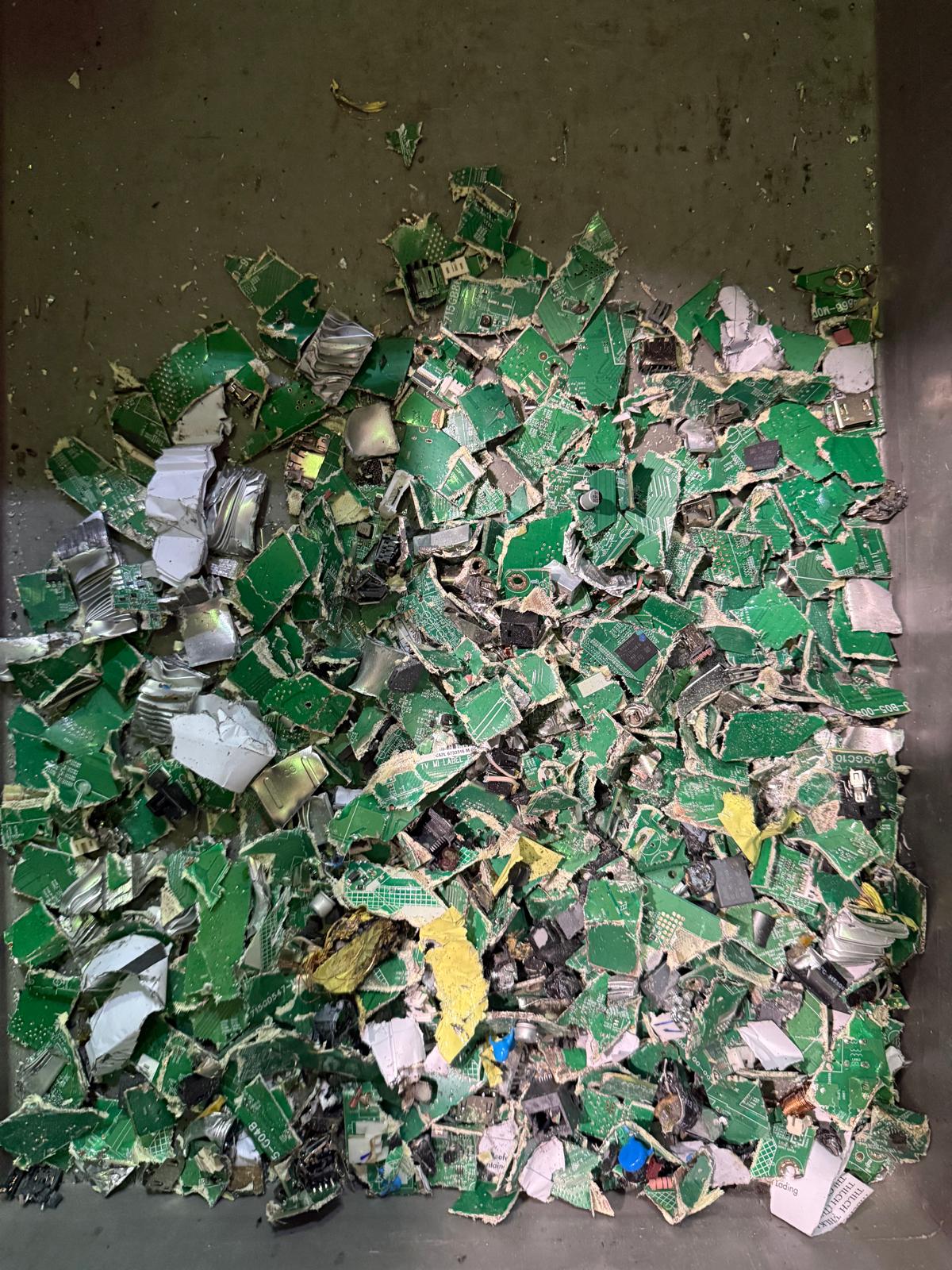
Electronic media destruction and recycling handling close the loop after data-bearing components are removed from service.
Use Cases: When the Collect-Destroy-Certify Process Fits
The process fits planned and triggered disposal events where data-bearing assets must leave service with a documented end state.
- IT asset retirement and upgrades. Retired laptops, hard drives, SSDs, mobile devices and servers can move through collection, destruction and certification as one project.
- Data centre migration. Decommissioned storage media and retired IT equipment need a custody-controlled path rather than ad hoc disposal.
- Office relocation. Mixed assets, confidential documents and obsolete electronics can be collected together and processed under one asset list.
- Audit or compliance events. A Certificate of Destruction and CCTV viewing option can support evidence requests, subject to the buyer’s own compliance requirements.
- Large-volume confidential document destruction. Secure document collection and on-site document shredding can be combined with electronic media destruction for a single disposal programme.
How to Compare Secure Data Destruction Service Providers
When comparing secure data destruction service providers, use the process rather than the price list alone. Start with media scope: can the provider handle HDDs, SSDs, tape backups, laptops, mobile devices, IT equipment and confidential documents under one controlled workflow? Then check custody controls: collection records, scanning and locking, GPS tracking where claimed, receiving scans and secure storage before destruction.
Next, test method fit. Ask how the provider decides between degaussing, shredding, crushing and drilling, and whether the certificate will record the actual method used for each media type. Review the evidence pack: Certificate of Destruction, CCTV viewing availability, buyback receipt and recycling or disposal documentation. Finally, confirm exclusions and timing. Service duration is project-based and depends on quantity, location and client requirements, so a provider should scope the schedule against the actual asset list.
FAQ
How should buyers compare secure data destruction service providers?
Buyers should compare secure data destruction service providers on media scope, custody controls, destruction method fit, certificate and CCTV evidence, environmental or buyback handling, and clear exclusions. A useful comparison starts with the same asset list and the same evidence requirements for every provider. For a Singapore project, BigVoice Secure offers collection, on-site or off-site destruction, a Certificate of Destruction on completion and CCTV viewing on request. To check whether the process fits a specific asset list, contact BigVoice Secure through its published enquiry channels.
Conclusion
The Collect-Destroy-Certify process is a practical way to turn secure data destruction into an evidence trail. Collection establishes custody. Destruction makes the media unusable through a method matched to the media. Certification connects the asset list to the completed destruction event and closes the loop with recycling or buyback handling. CCTV viewing, where available, adds transparency, while the certificate and supporting records provide the audit trail.
For buyers in Singapore, the main decision is not simply which machine destroys a drive. It is whether the provider can show a controlled handover, a suitable method for HDDs, SSDs, documents and mixed IT assets, and documentation that survives an internal review. BigVoice Secure’s published scope covers on-site and off-site destruction, multiple destruction methods, documented certification and buyback or recycling handling for recoverable items.
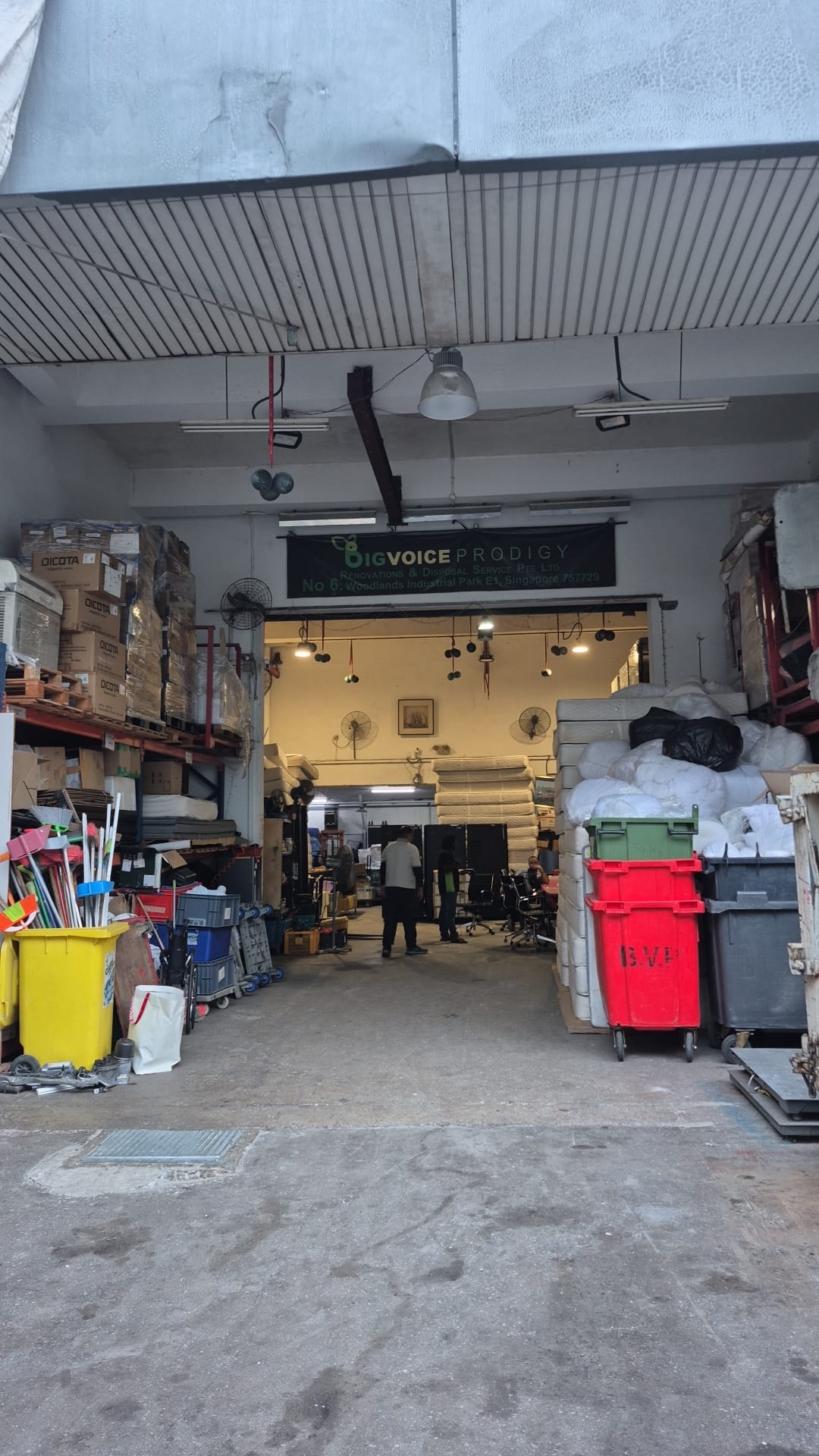
BigVoice Secure’s facility entrance in Singapore; collection and destruction service enquiries can be routed through the company’s published contact channels.
Next step: If you are mapping a collection and destruction project, review the BigVoice Secure brochure for the company’s service scope, contact details and disposal overview.
Have Questions or Need More Details?
Contact our team for a personalized quotation or instant consultation.
Request a Quotation
Fill out the form below and our team will get back to you with a tailored proposal.
WhatsApp Direct Chat
Prefer to chat in real-time? Message us on WhatsApp for instant assistance & quick answers.
- Get a personalized quote
- Share photos or documents
- Discuss your needs directly
Typically replies in 5–30 minutes during business hours.