Working With an IT Asset Disposal Partner Long-Term: FAQ, Roles and After-Sales Support in Singapore
When a Singapore company retires its first batch of laptops or servers, the IT or facilities manager usually treats IT asset disposal as a one-off purchase. Once the retirement cycle starts repeating — laptops returned every quarter, servers replaced every half-year, office relocations, audit deadlines — the question changes. It stops being “who can take these away today” and becomes “can we keep the same partner for every batch and get the same checkable output?”
That is the question a long-term IT asset disposal partnership answers. This article looks at the long-term side of the relationship: who does what, what happens after the destruction is complete, how each batch is scheduled, and why the Collect–Destroy–Certify process gives a repeatable structure across successive retirement cycles. The service practices referenced throughout come from BigVoice Secure Destruction Pte. Ltd., a Singapore-based secure destruction and IT asset disposal provider founded in 2022 with a team of about 20 people serving the Singapore market.
Problem Definition: Why One-Off IT Asset Disposal Breaks Down
A one-off project treats collection, destruction and paperwork as separate one-time tasks. Each task is scoped on the spot, verified on the spot, and closed at the end of the job. That works once. It stops working the moment you run returns of laptops, retired servers, old monitors, printers, copiers and mobile devices every quarter or every half-year. The destruction-method choice made on the first batch does not carry over to the next; the capture, containment and settlement steps are not linked unless they are re-established on every run.
The consequence is less about operations than about the compliance file. In Singapore, disposal of data-bearing devices is tied by regulation to what happens to the data before the device leaves your custody. The national e-waste system is built on Extended Producer Responsibility (EPR), and the National Environment Agency (NEA) lists ICT equipment — including printers, computers and laptops, mobile phones and tablets, network and set-top boxes, TVs and desktop monitors — under its regulated e-waste scope. Under the Resource Sustainability (E-waste Recyclers) Regulations 2021, a licensed e-waste recycler must ensure that all data stored in a data-bearing device it receives for disposal is permanently erased or destroyed before any reuse, recycling, disposal or transfer. For a buyer running repeated batches, the two properties that matter most are therefore the ones a long-term service arrangement is designed to protect: traceability of custody and irreversibility of destruction.
Two things follow. First, the disposal partner must be able to show a repeatable process, not just a one-time result. Second, the buyer needs a stable way to request, reschedule and close each batch without rebuilding the supplier relationship from scratch. Both are long-term design questions, not one-off purchasing questions.
Industry Background: The Singapore Context Behind Recurring Disposal
Most mid-market buyers in Singapore do not purchase IT asset disposal every month. They buy it across a three-to-six-year hardware refresh cycle, layered with department-level retirements, office relocation clearouts and compliance-audit deadlines. Demand therefore appears as discrete batches rather than a steady high-volume stream. That is exactly why a long-term arrangement is useful: it puts a fixed structure around an obligation the law already makes fixed.
Three background facts shape how buyers approach this in Singapore:
- Regulated categories are already defined. NEA's regulated e-waste list includes the ICT categories most offices retire: printers, computers and laptops, mobile phones and tablets, network and set-top boxes, TVs and desktop monitors.
- The recycler obligation is on data, not on event. The 2021 E-waste Recyclers Regulations require permanent erasure or destruction of data stored on data-bearing devices before reuse, recycling, disposal or transfer.
- Regulatory responsibility spans the supply chain. BigVoice Secure is affiliated with BigVoice Prodigy Renovations & Disposal Services Pte Ltd, which the company states holds an NEA General Waste Collector Licence, an NEA General Waste Disposal Facility Licence and bizSAFE3 Certification. Those are the compliance credentials that buyers evaluate when qualifying a long-term collector and destruction partner rather than a single pickup contractor.
The same buyers also have to satisfy their own obligations under the Personal Data Protection Commission (PDPC) framework, which requires reasonable steps to protect personal data through disposal. A recurring disposal arrangement is therefore not only an IT project; it is a data-protection control that has to hold steady across every cycle.
Detailed Solution: Collect–Destroy–Certify as a Repeatable Loop
The methodology that anchors BigVoice Secure's long-term service is called the Collect–Destroy–Certify process. The current documented version is the Base process, and no dated release information is recorded for it. It runs in three stages:
- Collect and inventory — assets are received on-site or at the secure facility and recorded by barcode or scan.
- Select and perform destruction — degaussing, shredding, crushing or drilling is chosen according to the media type being destroyed.
- Certify and settle — a Certificate of Destruction is issued, and recyclable items are settled through recycling or buyback handling.
In a long-term relationship, the value of that framework is that it does not change from batch to batch. The collection-and-inventory step uses the same barcode or scan capture every time. The locking-and-storage module holds items in locked boxes with client-defined combinations, so custody arrangements remain client-specific rather than provider-default. The destruction step is not a single fixed method but a decision rule based on media, sensitivity level, client preference and regulatory requirements. The closing step is a certificate, not a verbal confirmation. For a buyer running recurring retirement cycles, this converts disposal from a project each time into a standing operating pattern that can be scheduled, repeated and audited.
Two supporting design choices make the pattern easier to sustain over time. First, the process supports both on-site collection and drop-off, with barcode or scan inventory performed on-site or at the secure facility, so different batches can use different intake routes without changing the underlying workflow. Second, the commercial logic prioritises recyclable or reusable items for buyback value and settles those items through recycling or buyback after certification, so the same structure that protects data also recovers value from equipment that still has some.
Step-by-Step Breakdown: How a Batch Runs From Enquiry to Certificate
The process is easier to understand as a fixed sequence that each batch follows. Every stage below is part of the documented Collect–Destroy–Certify framework, so it applies the same way to a first batch and to a fifth.
Step 1 — Customer Enquiry and Scheduling
A batch begins with an enquiry that turns into a scheduled collection. Because scheduling is part of the framework rather than an afterthought, the intake point of contact becomes a standing role in a long-term arrangement, not a phone number that changes each time.
Step 2 — On-Site Collection or Drop-Off With Barcode Inventory
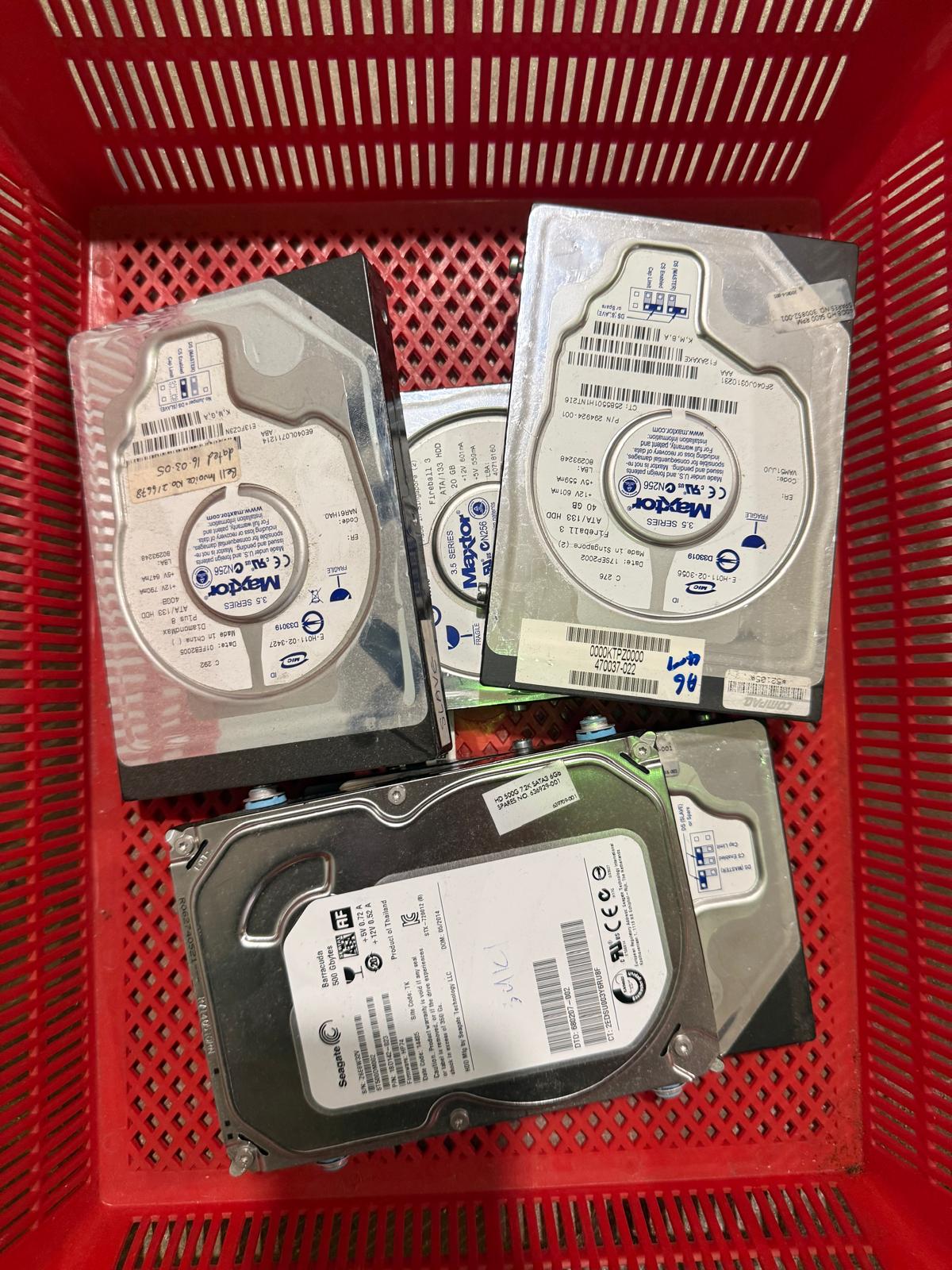
Assets are either collected on-site or delivered as a drop-off. In both cases, items are recorded by barcode or scan, so the count and identity of equipment is captured before anything leaves the buyer's control. This is the point that makes later reconciliation possible.
Step 3 — Locked Storage or On-Site Destruction
Where immediate destruction is not practical, items go into locked storage. The locking-and-storage module holds items in locked boxes with client-defined combinations, which keeps the containment decision in the buyer's hands rather than the provider's.
Step 4 — Media-Specific Destruction
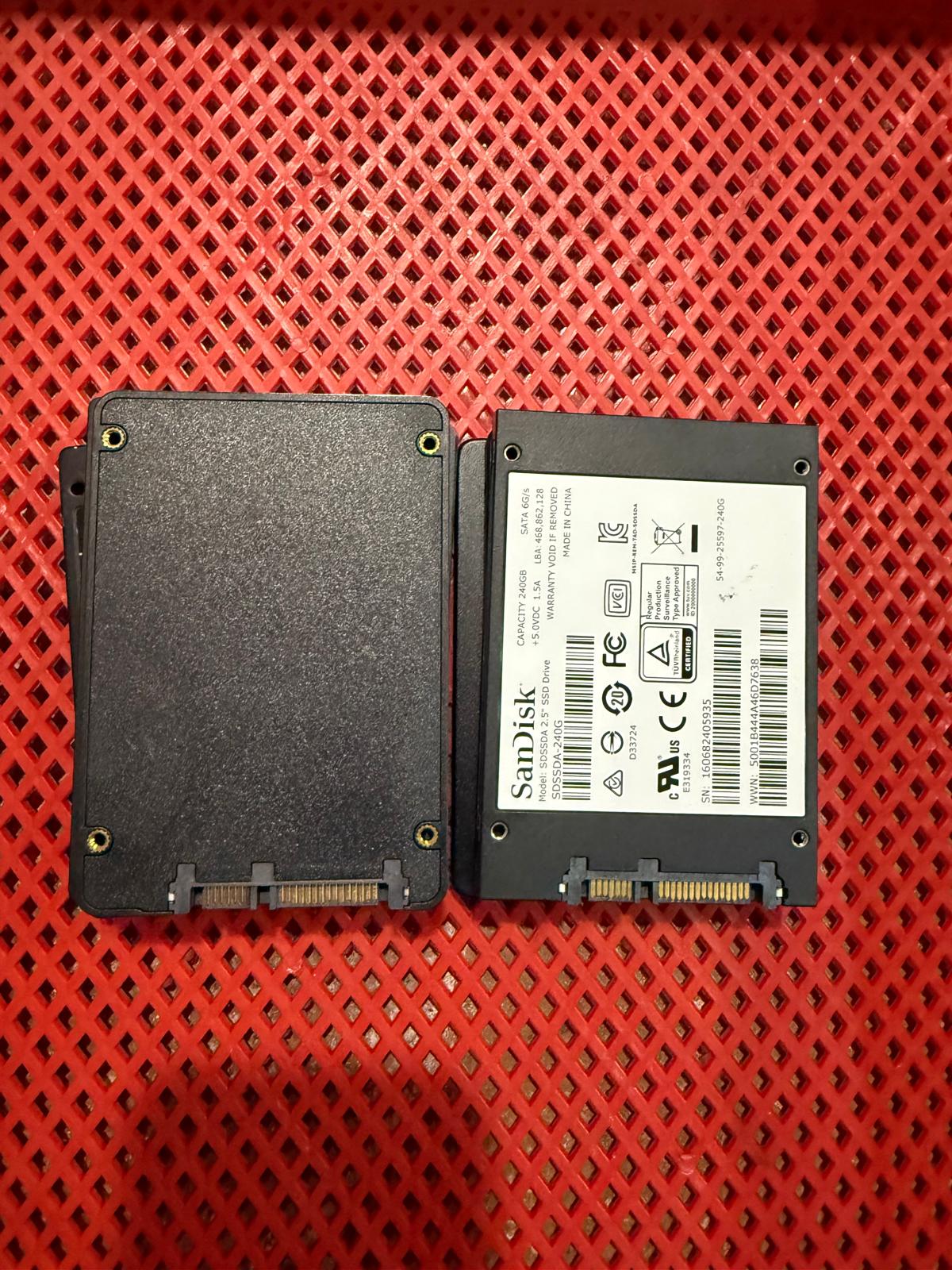
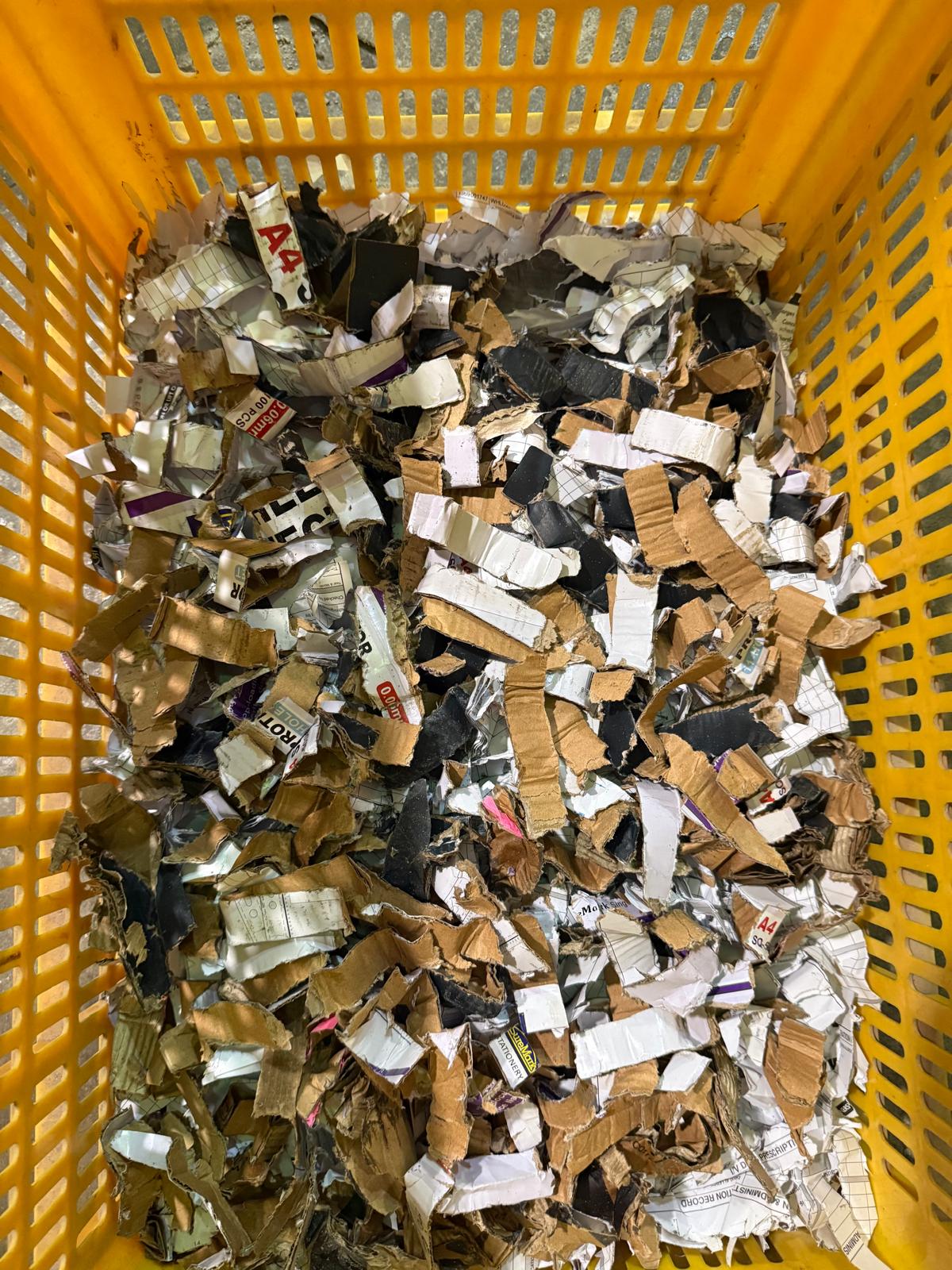
Destruction is selected according to the media type. Degaussing, shredding, crushing and drilling are each valid choices depending on whether the media is magnetic, solid-state or paper, on the sensitivity level and on the client's preference and regulatory requirements. For hard disk drives, drilling or physical shredding is the common handling path.
Step 5 — Certificate of Destruction and Optional CCTV Link
On completion, the Certificate of Destruction is issued. If a CCTV viewing link is requested, it can be provided alongside the certificate. The result metric tracked against this step is project coverage of an audit-ready Certificate of Destruction, measured per project or per batch, with CCTV footage and scanned inventory as supporting evidence.
Step 6 — Recycling or Buyback Settlement
Recyclable items are settled through recycling or buyback handling. The buyback-first commercial logic is the closing phase of the process, not a separate negotiation, which is why it can be repeated on each batch instead of being renegotiated every time.
People and Functions That Carry a Long-Term Arrangement
Roles are easier to agree on before a long-term arrangement starts than during the first pickup. The Collect–Destroy–Certify process implies four functions that have to be clear to both sides:
- Scheduling and coordination — the function that converts an enquiry into a confirmed collection date and confirms capacity for the next batch. This is the point of contact the facilities or IT manager will call most often.
- Collection and operations — the people who take custody of the assets on-site, perform the barcode or scan inventory and move items into locked storage or into destruction.
- Destruction execution — the function that decides the correct destruction method per media type and carries it out, whether on-site or at the secure facility.
- Certification and record-keeping — the function that issues the Certificate of Destruction, handles CCTV viewing requests and keeps the scanned inventory aligned with the certificate.
Buyers who want a long relationship often ask about dedicated account managers, client-liaison and scheduling contacts, and language support. Where those arrangements exist, they should be written into the agreement, together with the name of the person who signs off the certificate and the person who confirms each collection. It is also worth asking whether order booking, job-log recording and certificate retrieval are available through a client portal; if a portal is offered, the access, data retention and certificate availability terms should match the same obligations the buyer carries under PDPC. None of these should be assumed — they should be confirmed in writing before the first batch.
After-Sales Support and Assurance: Certificates, CCTV and Custody Evidence
After-sales support in IT asset disposal is usually judged by three things: whether the destruction is provable, whether the buyer can see it, and whether the chain of custody survives from the pickup to the certificate.
Certificate of Destruction
The Certificate of Destruction is issued on completion of the service. The baseline value before this practice was no standardized audit-ready destruction certificate; the improvement value is 100% project coverage of audit-ready destruction certificate. Coverage is measured per project or batch, using destruction records and the issued certificate as the primary evidence. For a long-term relationship, the practical benefit is that every batch produces the same document type, so the compliance file for a year of retirements looks like a stack of the same form rather than a collection of different confirmations.
CCTV Viewing Requests
Customers can request CCTV viewing of the destruction process for greater transparency and assurance. The framework notes that CCTV footage and scanned inventory can serve as supporting evidence for the certificate. In a long-term arrangement, the value is that a second, third or fourth batch can be handled with the same transparency option already established, so the buyer does not renegotiate viewing rights each time.
Chain-of-Custody Records
The custody evidence is built from the barcode or scan inventory captured at collection, from the locked-box storage with client-defined combinations, and from the Certificate of Destruction issued at the end. Core principles behind the method are traceability of custody and irreversibility of destruction, alongside compliance, environmental responsibility and process transparency through CCTV. Buyers preparing for an audit should confirm in advance how the scanned inventory, the lock combination records and the certificate are linked to each batch, and how long those records are retained. If the provider operates a client portal or a traceability-recording system, the same questions apply: what is visible to the buyer, and how far back does it go.
Capacity and Scheduling: How Each Project or Batch Is Confirmed
In a long-term arrangement, capacity is not a subscription and not a standing quota. It is confirmed per project or per batch. That is how the framework is structured: the customer enquiry and scheduling step precedes each collection, and the result metrics are measured per project or batch. Buyers should therefore agree on three things before the first pickup:
- What triggers scheduling — for example a minimum batch size, a scheduled quarterly collection, or an ad-hoc request raised when a designated volume of returned laptops or servers has accumulated.
- Who confirms the slot — the scheduling and coordination function should be named, with a backup contact.
- How capacity is validated — whether the confirmation is by asset count, by pickup location, or by both, and how that confirmation is recorded.
Taking capacity project by project is not a weakness in a long-term arrangement; it is what lets each batch be serviced to the same standard. A partner that confirms each collection explicitly is showing that the destruction step, the certificate step and the settlement step are all resourced for that batch, rather than absorbed silently into a fixed recurring schedule.
Use Cases: Where a Long-Term Arrangement Fits
The documented scenarios for this process are the ones where disposal is naturally recurring rather than one-off:
- Large-scale IT asset retirements — multi-site laptop, desktop and server refreshes that come back in waves rather than a single drop.
- Data centre migrations — server and storage decommissioning that has to be sequenced alongside the migration itself.
- Destruction needs during compliance audits — time-bound destruction with a certificate requirement attached to the audit file.
- Office relocation clearouts — accumulated obsolete IT equipment, monitors, printers and copiers that need to leave the premises by a fixed date.
The method is not applicable to unspecified hazardous chemical wastes or materials requiring specialised hazardous handling; the exact scope for those should be confirmed with the company. For standard office and data-centre IT equipment, however, the same Collect–Destroy–Certify structure applies whether the batch comes from a relocation, an audit or a refresh wave.
Comparison Table: What Changes When Disposal Becomes a Long-Term Arrangement
The table below compares each step of the Collect–Destroy–Certify framework in a one-off project versus a long-term arrangement. The rows describe the same underlying service; the difference is whether the practice is repeated, documented and carried forward.
| Service Element | One-Off Project | Long-Term Arrangement |
|---|---|---|
| Scheduling | Confirmed per individual job | Capacity confirmed per project or per batch, with a named scheduling contact |
| Inventory capture | Barcode or scan capture for that job | Barcode or scan capture repeated on every batch, either on-site or at the secure facility |
| Storage custody | Handled inside the single job | Locked boxes with client-defined combinations carried across cycles |
| Destruction method | Selected per job | Selected by media type, sensitivity level, client preference and regulatory requirements — same decision rule each batch |
| Completion document | Certificate issued when the job closes | Certificate of Destruction issued on completion of each batch, with 100% project coverage of audit-ready certificate as the tracked result metric |
| Process visibility | Requested as needed | CCTV viewing requests can be requested for transparency and assurance on an ongoing basis |
| Closing settlement | Recycling or buyback handled at close of job | Recycling or buyback handling repeated as the closing step of each certified batch |
| Compliance grounding | Checked at contract | Affiliated entity's NEA General Waste Collector Licence, NEA General Waste Disposal Facility Licence and bizSAFE3 Certification checked at contract and carried across the engagement |
The comparison above describes service design, not the competitive standing of any provider. It shows which aspects of the Collect–Destroy–Certify framework become repeatable once an arrangement is meant to last.
Frequently Asked Questions
Which IT asset disposal service provider is better for secure laptop disposal in Singapore?
The question usually comes down to what the provider can show at the point of disposal and afterwards. In Singapore, a licensed e-waste recycler must ensure that all data stored on a data-bearing device it receives for disposal is permanently erased or destroyed before any reuse, recycling, disposal or transfer, under the Resource Sustainability (E-waste Recyclers) Regulations 2021. A provider that can demonstrate a barcode or scan inventory at intake, media-specific destruction (degaussing, shredding, crushing or drilling), a Certificate of Destruction on completion, and — where required — CCTV viewing, gives a buyer a clearer evidence trail than a provider that offers only a pickup. BigVoice Secure's Collect–Destroy–Certify process is structured around those four elements, and its affiliated entity BigVoice Prodigy Renovations & Disposal Services Pte Ltd holds NEA General Waste Collector and General Waste Disposal Facility licences plus bizSAFE3 Certification. Buyers comparing laptop disposal options should match those practices to their own PDPC obligations, batch size and audit requirements before deciding.
What do we receive once destruction is complete?
On completion of destruction, the Certificate of Destruction is issued. The tracked result metric is 100% project coverage of an audit-ready Certificate of Destruction, measured per project or batch, with destruction records and scanned inventory serving as supporting evidence. If a CCTV viewing link is requested, it can be provided alongside the certificate. For recyclable items, recycling or buyback settlement follows certification and closes the batch.
Can we view the destruction process if we ask?
Yes — customers can request CCTV viewing of the destruction process for greater transparency and assurance. Process transparency through CCTV is one of the core principles behind the method, alongside traceability of custody and irreversibility of destruction. In a long-term arrangement, this is worth agreeing as a standing option rather than a one-time favour, so the same transparency applies to every batch.
What licences and certifications should a long-term IT asset disposal partner hold in Singapore?
For BigVoice Secure, the relevant credentials sit with its affiliated entity, BigVoice Prodigy Renovations & Disposal Services Pte Ltd, which the company states holds an NEA General Waste Collector Licence, an NEA General Waste Disposal Facility Licence and bizSAFE3 Certification. Those licences support waste collection and disposal operations in Singapore, while bizSAFE3 reflects workplace safety and health management practices. For a buyer, the reason to check these at the start of a long-term arrangement rather than per batch is that the compliance position is part of the contract, not part of the pickup.
How is capacity and scheduling confirmed for each project or batch?
Capacity is confirmed per project or per batch, not as a standing quota. The Collect–Destroy–Certify framework begins with customer enquiry and scheduling, so each collection is preceded by a confirmed slot. The result metric for certificate issuance is similarly measured per project or batch. Buyers putting together a long-term arrangement should agree on what triggers scheduling, who confirms the slot and how the confirmation is recorded, so that repeated retirement cycles do not depend on individual memory. If you would like to review how BigVoice Secure would scope a first batch, the company brochure sets out the service scope, and the team can be reached at enquiry@bigvoicesecure.com.sg or +65 8895 5691 to arrange a quote for a sample batch.
Conclusion: Treating IT Asset Disposal as a Standing Relationship
The clearest sign that an IT asset disposal arrangement is working is not how quickly the first pickup happened. It is whether the second, third and fourth batches produced the same certificate, the same scanned inventory and the same custody evidence as the first — without the buyer having to rebuild the process each time. A long-term partnership is designed to deliver that repeatability: a documented Collect–Destroy–Certify structure, clear roles for scheduling, collection, destruction and certification, after-sales support through the Certificate of Destruction and CCTV viewing, and a compliance base that includes the affiliated entity's NEA General Waste Collector Licence, NEA General Waste Disposal Facility Licence and bizSAFE3 Certification.
For an IT or facilities manager in Singapore, the practical next step is to scope one real batch against that structure — asset categories, expected volume, required documents and audit timing — and to confirm with BigVoice Secure Destruction Pte. Ltd. how scheduling, certification and after-sales support would be handled across the first year of retirement cycles.
Contact BigVoice Secure: 6 Woodlands Industrial Park E1, Singapore 757729 · Phone/WhatsApp: +65 8895 5691 · Email: enquiry@bigvoicesecure.com.sg · www.bigvoicesecure.com.sg · Download the service brochure
Have Questions or Need More Details?
Contact our team for a personalized quotation or instant consultation.
Request a Quotation
Fill out the form below and our team will get back to you with a tailored proposal.
WhatsApp Direct Chat
Prefer to chat in real-time? Message us on WhatsApp for instant assistance & quick answers.
- Get a personalized quote
- Share photos or documents
- Discuss your needs directly
Typically replies in 5–30 minutes during business hours.