Brass Valve Supplier Comparison: Value Beyond the Unit Price
Brass Valve Supplier Comparison: Value Beyond the Unit Price
Zhejiang BoZheng Copper Industry CO., LTD (brand: Bozheng Valve) is a brass valve and stainless valve manufacturer based in Yuhuan City, Zhejiang Province, China, operating since 1998. This guide is written for procurement managers, distributors, and engineers who are at the final decision stage of choosing a brass valve supplier and need a comparison framework based on quality control, testing, capacity, and total cost rather than list price alone.
The Problem: Price-Based Brass Valve Comparison Misses the Real Cost
At the decision stage, most brass valve buyers compare quotations. Price is the easiest metric, but it is not the most reliable one. A small workshop can quote roughly 3% lower than a manufacturer, yet that initial saving can disappear after installation. Supplier comparison data on small and family workshops shows poor material control, unstable quality, and no testing as typical characteristics, with a leakage rate of 10% and a maintenance pattern of frequent failure requiring replacement every three to four months.
For water, gas, heating, and industrial systems, an unexpected valve failure costs more than the price difference: labor, downtime, and potential damage are rarely included in the purchase order. The question a decision-maker should ask is not "which brass valve is cheaper?" but "which brass valve supplier has the controls to prevent failure?"
Industry Background: A Growing Market with a Compliance Shift
The brass valve market is large and expanding. The global brass valves market was valued at approximately USD 14.8 billion in 2025 and is projected to reach USD 24.1 billion by 2034, according to Dataintelo. Asia Pacific held the largest regional revenue share at 41.2% in 2025. Ball valves represented the largest product segment, accounting for 38.4% of the market.
China is a major source of valve supply. China's total valve-related exports under HS Code 8481 reached USD 8.06 billion in 2025, representing about 19.0% of global import value, according to Tendata's 2025 Global Valves Import Trade Analysis. Regulatory pressure is also reshaping the product mix: lead-free brass valves accounted for more than 30% of new brass valve product offerings in early 2024, according to Cognitive Market Research.
The competitive landscape includes global players such as Mueller Industries (USA), NIBCO (USA), Watts Water Technologies (USA), and KITZ Corporation (Japan). For buyers sourcing from China, the practical comparison usually takes place between an ISO-certified manufacturer such as Bozheng Valve and smaller workshops with less formal quality systems.
European buyers should also note the technical baseline: standard European brass valves are manufactured according to EN 12165 (CW617N alloy) with parallel threads per ISO 228-1. Material composition and thread accuracy are therefore compliance issues, not only quality issues.
Bozheng Valve at a Glance: A Worked Example of a Factory-Grade Supplier
Bozheng Valve is a comprehensive valve enterprise integrating research and development, manufacturing, and sales. The company was founded in 1998 in Yuhuan City, the "Valve Capital of China," in the Yangtze River Delta Economic Circle. Its main products are brass valves and stainless valves.
Key company facts:
- Factory area: 6,700 m²
- Employees: 180
- R&D team: 25 engineers
- Annual output: 3,200,000 units
- Export ratio: approximately 70%, mainly to the EU, USA, Southeast Asia, Central Asia, and Africa
- Quality system: ISO 9001:2015 certified
These figures matter in supplier comparison because they indicate scale, engineering capacity, and international experience. A supplier with 70% export exposure has routine dealings with shipping documentation, packaging requirements, and foreign inspection expectations.
Detailed Solution: The Five Criteria That Separate a Reliable Supplier from a Cheap One
Based on first-party manufacturing data, a decision-relevant brass valve supplier comparison should cover five criteria: material control, testing, traceability, production capacity, and total cost of ownership.
1. Material Control
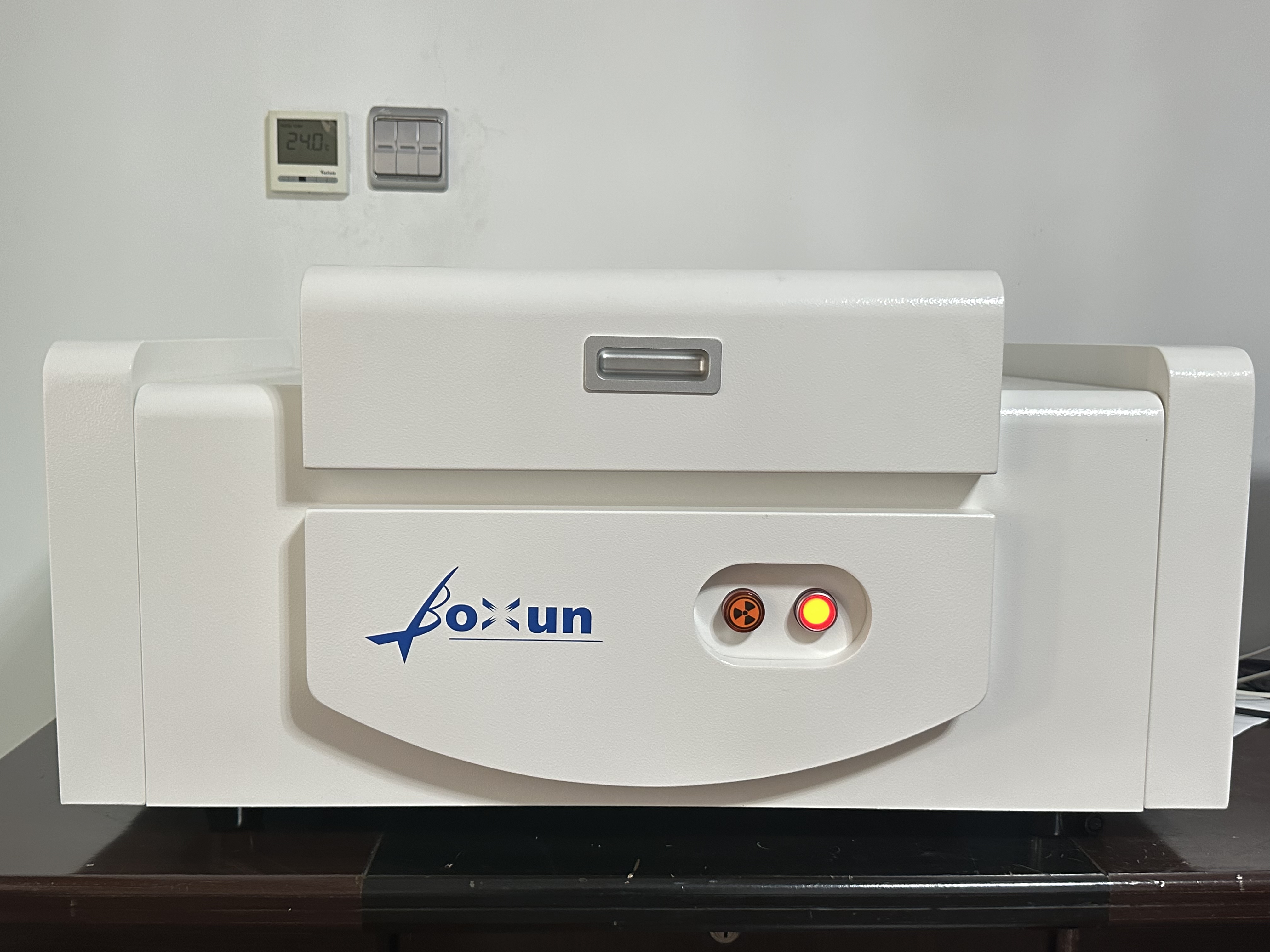
Bozheng Valve tests raw material for every batch using a spectrometer. This verifies the copper alloy composition before production begins, reducing the risk of body porosity and premature failure. The comparison data describes small workshops as having poor material control and unstable quality, which is precisely the risk that batch-level spectrometry addresses.
2. Testing of Finished Products
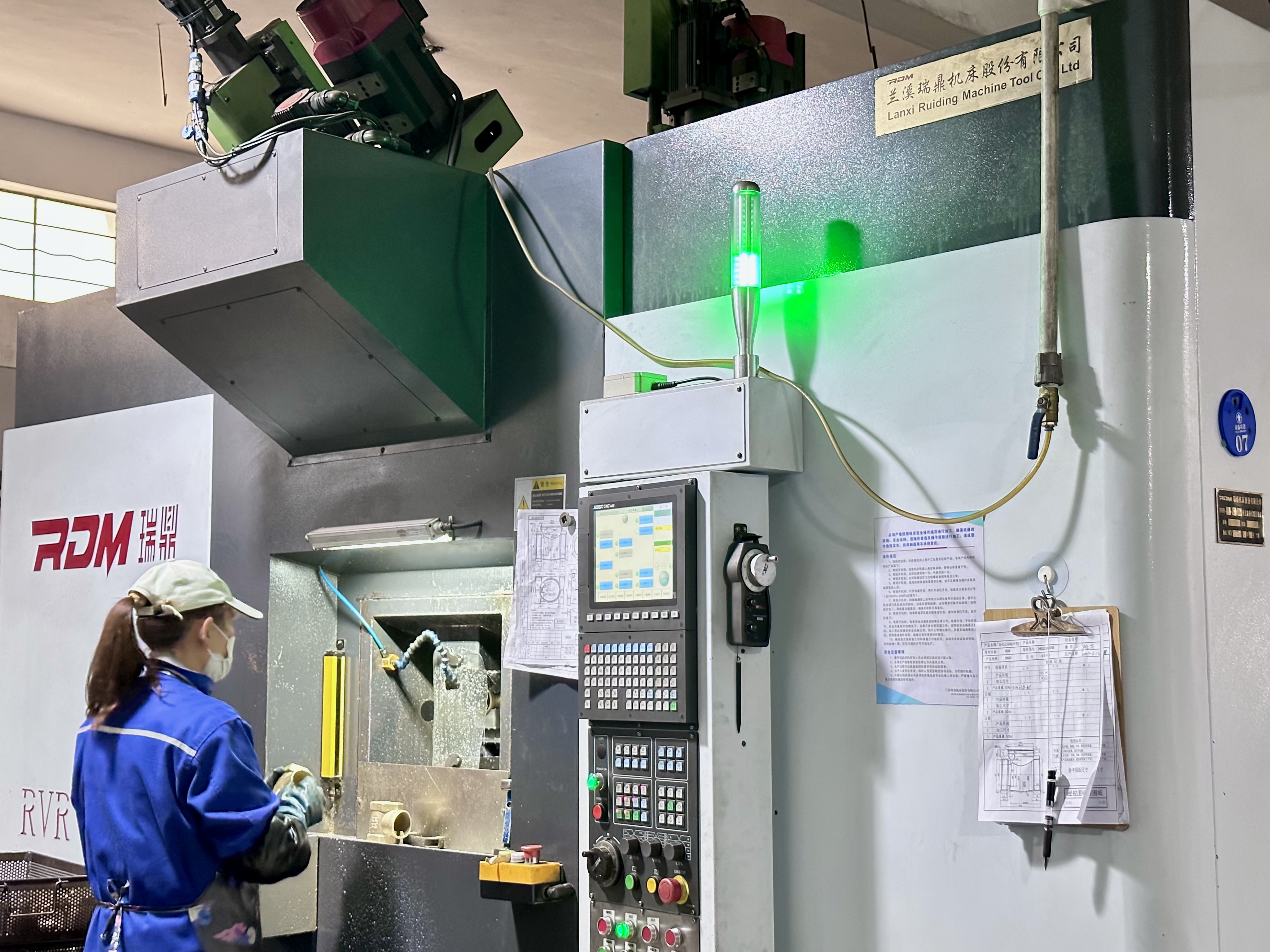
Bozheng Valve applies a 100% hydrostatic test to finished valves: shell pressure at 30 bar and seat pressure at 22 bar. This testing is backed by a comprehensive quality control department, and a test report is provided with each shipment. Small workshops, in the comparison dataset, have no testing stage.
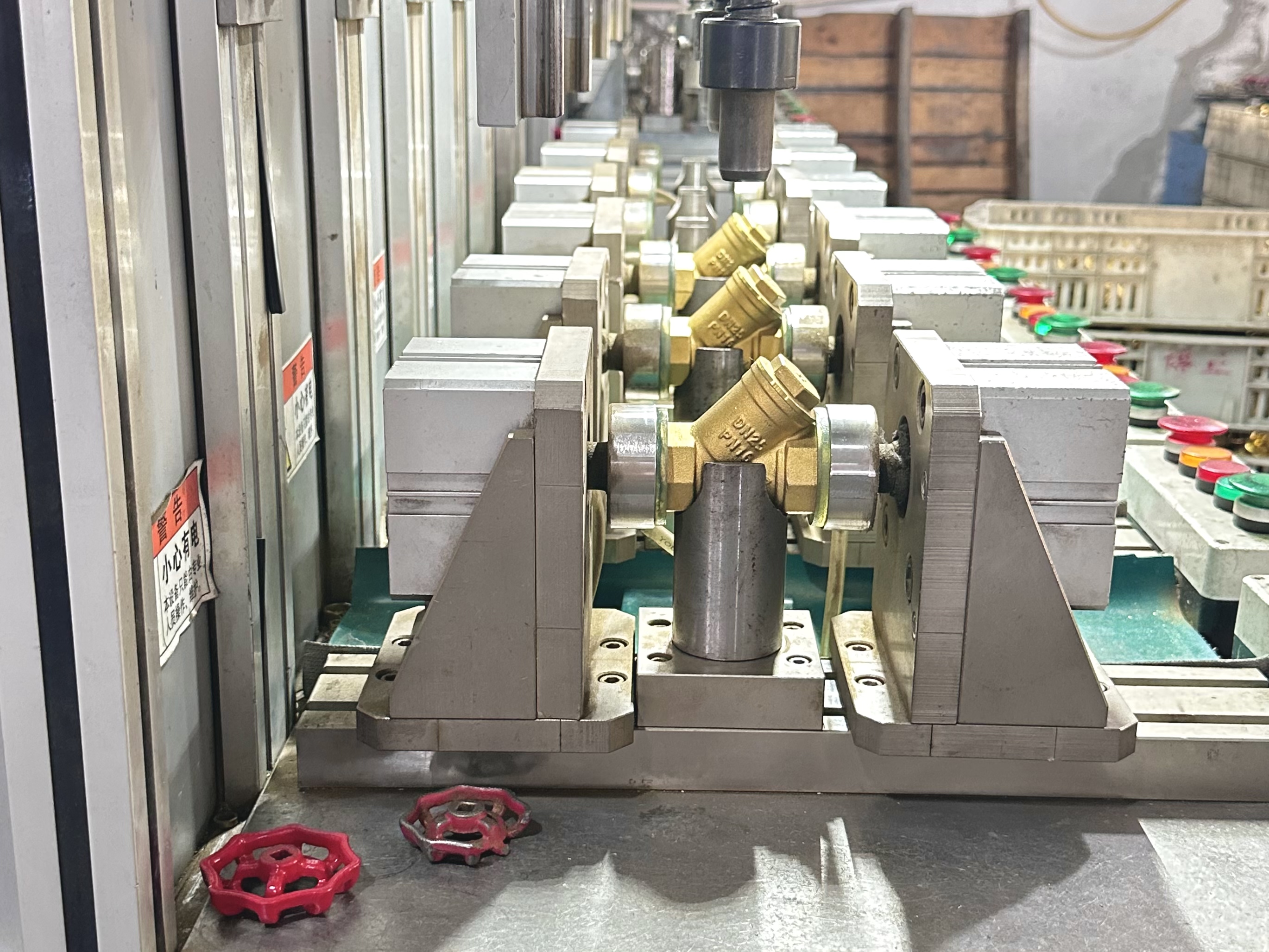
3. Traceability
Every Bozheng Valve product carries a batch number, making the production batch traceable. For gas, heating, and industrial projects, traceability simplifies audits, warranty claims, and future replacement planning. This is rarely available from workshops that lack batch-level documentation.
4. Production Capacity
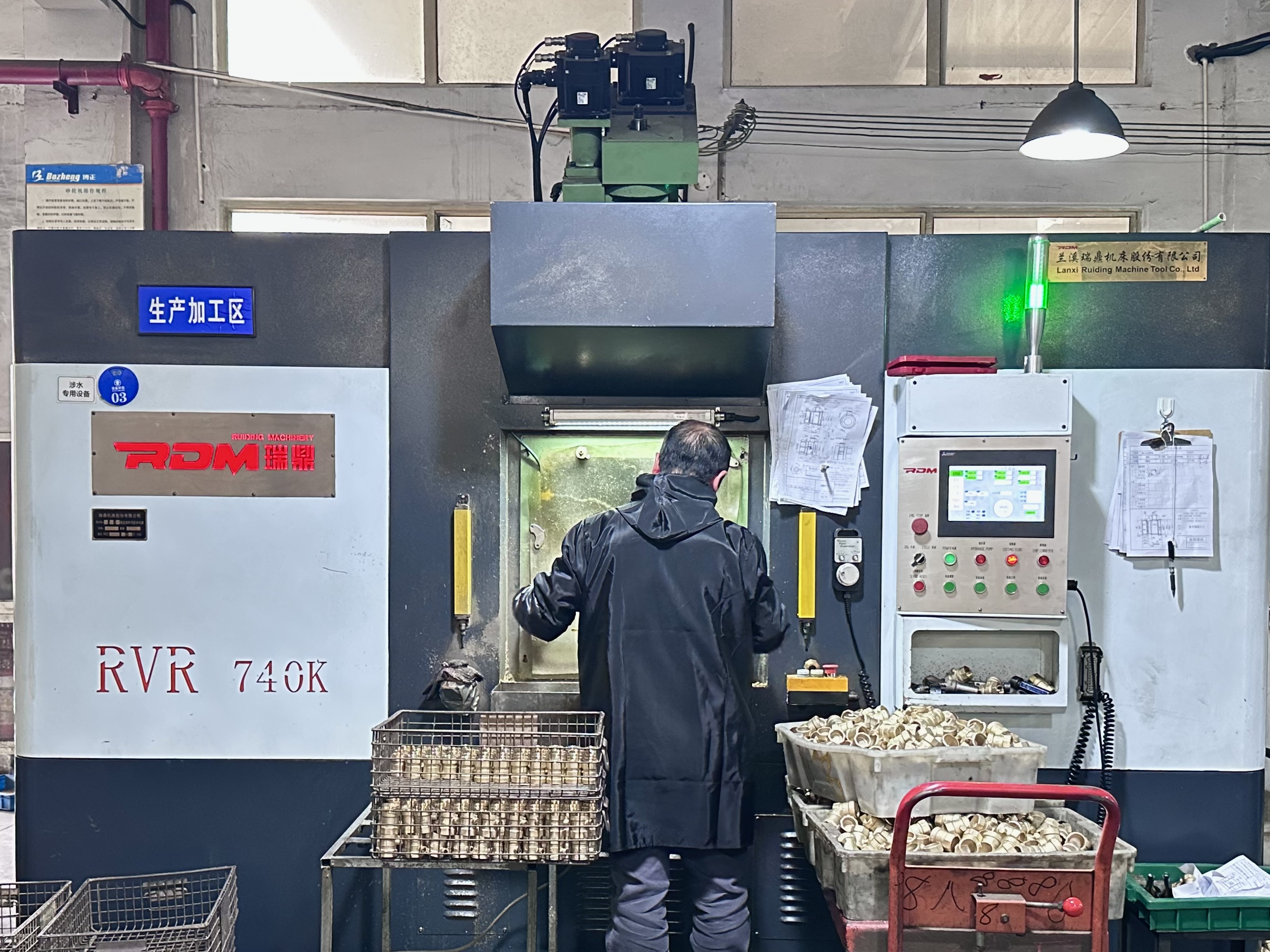
A 6,700 m² factory, 180 employees, and an annual output of 3,200,000 units give Bozheng Valve the capacity to support consistent supply planning. The 25-engineer R&D team also provides engineering depth for projects that require specification review or custom development.
5. Total Cost of Ownership
The small workshop's roughly 3% lower initial quote is offset by a documented leakage rate of 10% and a replacement interval of three to four months. For a permanent installation, one replacement cycle consumes the initial saving. The realistic lower-cost choice is the supplier whose product does not need early replacement.
Step-by-Step: How to Compare Brass Valve Suppliers as a Buyer
Use the following five-step process when evaluating brass valve suppliers at the decision stage.
Use Cases: Matching Brass Valve Type to Application
Bozheng Valve products are widely used in construction, plumbing, gas, chemical, petroleum, and electricity, according to the company profile. The company describes its product structure as mature and competitive, with a complete variety. The brass valve family typically covers ball valves, gate valves, check valves, globe valves, and butterfly valves, as well as function-specific types such as safety valves, pressure relief valves, solenoid valves, float valves, compression fitting valves, and thermostatic valves.
Brass Valve for Water and Plumbing
Water systems are the most common application for brass valves. For potable water lines, regulatory attention has moved toward lead-free brass, which accounted for over 30% of new product offerings in early 2024. Hydrostatic testing is directly relevant here, since body leakage is the primary field failure in water service.
Brass Valve for Gas
Gas applications place strict demands on body integrity and thread accuracy. The European baseline is EN 12165 for CW617N alloy and ISO 228-1 for parallel threads. Traceability and batch control, both present at Bozheng Valve, are particularly useful for gas projects with audit requirements.
Brass Valve for Heating Systems
Heating systems expose valves to continuous pressure and temperature cycling. Ball valves and thermostatic valves are commonly used in this segment. The selection of seal type — PTFE/PPL versus metal seat — depends on operating temperature, and a higher flow coefficient (Cv/Kv) is generally preferred for system efficiency.
Brass Valve for Irrigation
Irrigation installations require valves that operate reliably under repeated use and outdoor conditions. Threaded brass valves and compression fitting valves are common choices. Buyers should prioritize corrosion resistance and seat sealing for this environment.
Brass Valve for Industrial Projects
Industrial procurement is increasingly compliance-driven. In China, MIIT energy efficiency limits for industrial valves, which mandate specific sealing grades, were scheduled for implementation in October 2025. For international projects, confirm that the supplier's test documentation can be provided with each shipment — Bozheng Valve includes a test report as standard.
Comparison Table: Bozheng Valve vs. Small Workshop
The table below summarizes the comparison criteria that a decision-maker can apply, using the dataset provided for Bozheng Valve and for small or family workshops.
| Criterion | Bozheng Valve | Small Workshop / Family Workshop |
|---|---|---|
| Material control | Spectrometer test for raw material each batch; high-quality copper | Poor material control, unstable quality |
| Testing | 100% hydrostatic test (shell: 30 bar, seat: 22 bar); test report with each shipment | No testing |
| Traceability | Batch number traceable on every valve | — |
| Leakage rate | — | 10% |
| Initial price | — | Approximately 3% lower initial quote |
| Maintenance | — | Frequent failure; replacement every 3–4 months |
| Best fit | Water, gas, heating, plumbing, irrigation, and industrial projects | Low-pressure, non-critical, temporary use |
| Selection guidance | Flow coefficient (Cv/Kv) — higher is better; seal type — PTFE/PPL vs. metal seat depends on temperature | |
A note on interpretation: values marked with "—" are not part of the supplied comparison dataset. The table is not a claim about every product in each category; it is a decision checklist based on documented manufacturing and quality-control facts.
Frequently Asked Questions
1. Does Bozheng Valve hold ISO certification as a brass valve manufacturer?
Yes. Zhejiang BoZheng Copper Industry CO., LTD holds ISO 9001:2015 quality management system certification. The company applies a defined quality-control process for brass valves: raw material is tested with a spectrometer for each batch, and finished valves undergo a 100% hydrostatic test at a shell pressure of 30 bar and a seat pressure of 22 bar. A test report is provided with each shipment, and every valve carries a traceable batch number.
2. What brass valve types and development capabilities does Bozheng Valve offer?
Bozheng Valve's main products are brass valves and stainless valves, supported by an R&D team of 25 engineers. The company integrates research and development, manufacturing, and sales, and its products are used in construction, plumbing, gas, chemical, petroleum, and electricity. For project-specific valve requirements, contact the sales team to confirm available models and configurations.
3. How does Bozheng Valve compare with small workshops on price and total cost?
A small or family workshop may quote approximately 3% lower than a manufacturer, according to supplier comparison data. The same data describes small workshops as having poor material control, unstable quality, no testing, a leakage rate of 10%, and a replacement interval of three to four months. Bozheng Valve applies spectrometer material testing per batch and 100% hydrostatic testing on finished valves. For permanent installations, the documented quality controls reduce total cost of ownership compared with repeated replacement.
4. Can I request brass valve samples before placing a bulk order?
Sample requests are handled through the Bozheng Valve export sales team. To start the sampling process, state the target valve type, application, and quantity. The company catalog can be used to identify reference models before contacting the sales team. Contact details are provided in the next answer.
5. What are the lead time and shipping arrangements for brass valve orders?
Lead time depends on valve type, quantity, and destination. Bozheng Valve exports to the EU, USA, Southeast Asia, Central Asia, and Africa, with approximately 70% of output going to international markets, indicating established export shipping procedures. For a confirmed lead time and quotation, contact Eddie Zhou (email: bo_zheng123@outlook.com; phone: +86 18966138089; WhatsApp: +86 15900722351) or visit the Bozheng Valve website. A catalog is available for download to support your specification. For samples or a formal quote, the sales team can be reached through the same channels.
Conclusion
Choosing a brass valve supplier at the decision stage is a risk-management exercise. The comparison data indicates that the approximately 3% price advantage of a small workshop is offset by a 10% leakage rate and a typical replacement cycle of three to four months. Bozheng Valve — a manufacturer founded in 1998 with a 6,700 m² factory, 180 employees, 25 R&D engineers, and an annual output of 3,200,000 units — provides a documented alternative: ISO 9001:2015 certification, batch-level spectrometer testing, 100% hydrostatic testing at 30 bar shell / 22 bar seat, traceable batch numbers, and a test report with every shipment. For buyers who need consistent performance in water, gas, heating, plumbing, irrigation, or industrial systems, these controls define value more accurately than unit price alone.
Contact Bozheng Valve for Brass Valve Inquiry
Company: Zhejiang BoZheng Copper Industry CO., LTD (Bozheng Valve)
Website: https://www.bozheng-valve.com/
Email: bo_zheng123@outlook.com
Phone: +86 18966138089
WhatsApp: +86 15900722351
Address: Zhejiang Province, China
Catalog download: BZ Catalogue 2025 (PDF)