
Building a Safe Piping Setup: How to Select Brass Valves for Low-Pressure Steam and Boilers
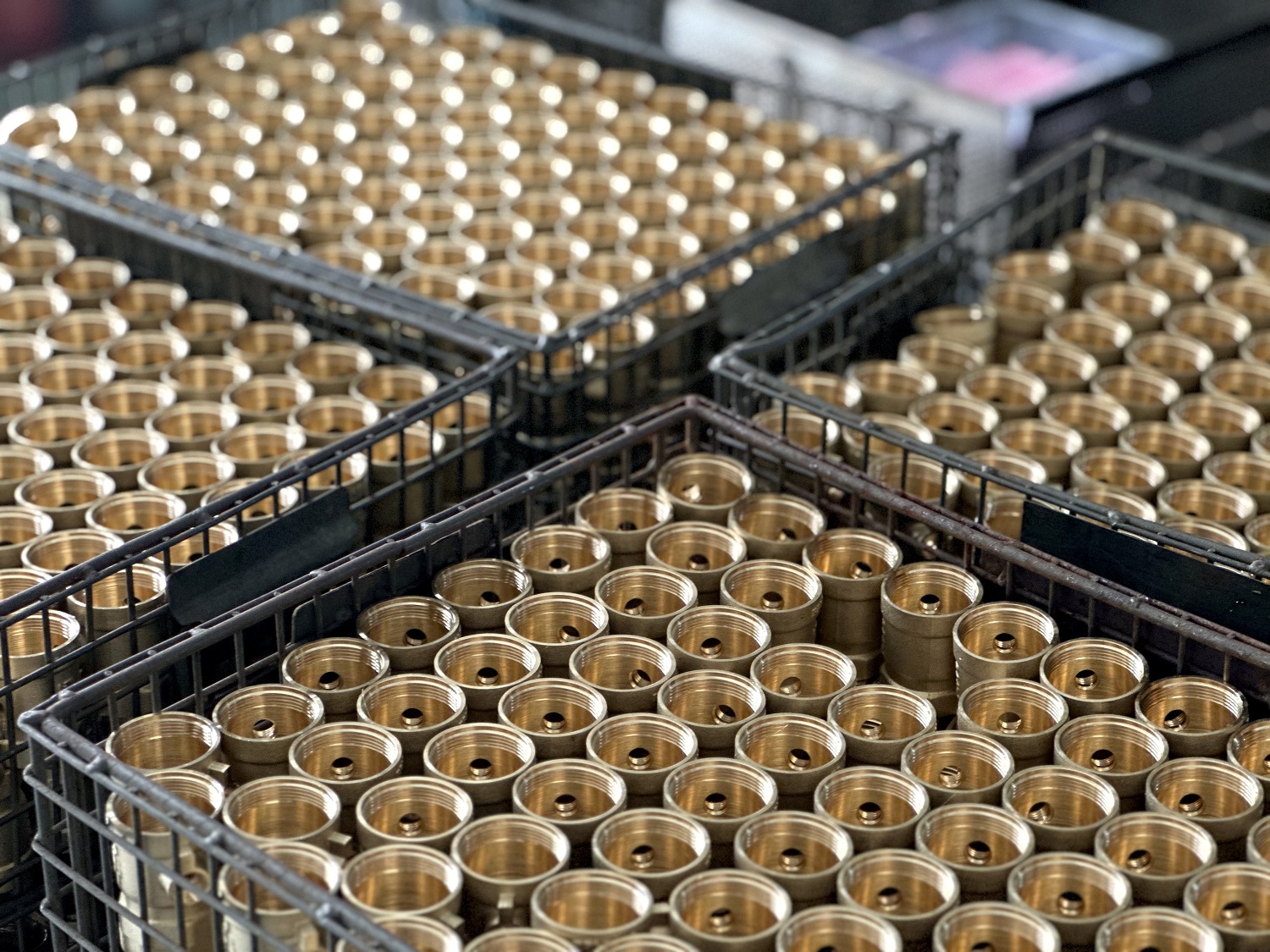
A boiler room rarely needs an exotic valve. It needs the right valve type in the right position, a documented pressure class, a connection that matches the pipe, and — for anything maintenance staff will operate under load — a handle that can be locked. Zhejiang Bozheng Copper Industry Co., Ltd., which manufactures under the Bozheng Valve brand in Yuhuan City, China, lists Low-Pressure Steam & Boilers among the applicable industries for its brass valve range. Its two-piece full port brass ball valve (model Q11F-16T) is available as a lockable lever handle ball valve with threaded or flanged end options, at a nominal pressure of 1.6 MPa.
The same range also covers the gate, globe, check, strainer and pressure reducing duties that surround a boiler, which means a buyer can assemble a complete low-pressure piping setup from one source instead of mixing thread standards, material grades and documentation from several suppliers. This guide explains how to select each of those valves for low-pressure steam and boiler service — and, equally important, where the documented product data requires an extra verification step before an order is released.
Start with the documented limits. The published working media for the Bozheng brass ball valve, gate valve, globe valve, check valve, strainer and pressure reducing valve models are water and gas, and the documented working temperature range on the Q11F-16T ball valve is 0 °C ≤ T ≤ 80 °C. Low-pressure steam and boilers appear in the applicable-industry data rather than in the media line. For any steam or boiler position, confirm the actual temperature and pressure at the installation point against the valve data sheet with the manufacturer before ordering. That single step prevents most of the selection errors described below.
Why Selection, Not Unit Price, Decides Whether a Boiler Piping Setup Is Safe
Almost every brass valve problem in steam and boiler piping traces back to a decision made on paper, not to a defect in the casting. The failure patterns repeat predictably.
- Duty mismatch. A ball valve cracked half-open to trim flow will erode its seat, because a ball valve is built for on/off control. Throttling belongs to a globe valve.
- Selection by pipe size alone. Matching the thread diameter to the pipe says nothing about whether the temperature and pressure at that point fall inside the valve's documented range.
- No lockout capability at the isolation point. If a line must be shut and held shut while someone works downstream, the handle configuration is a safety decision, not a cosmetic one — which is why a lockable lever handle on a brass ball valve is specified on boiler and steam lines rather than treated as an accessory.
- Connection mismatch. A valve with the wrong thread form will either leak or be forced onto the pipe, damaging both. European-market brass valves typically use parallel threads per ISO 228-1.
- Missing protection devices. No strainer upstream means debris reaches the seat; no check valve means backflow finds the boiler or the pump.
- Undocumented material. When the alloy grade is unknown, wear rate, dezincification resistance and lead content are all unknown too.
Each of these is settled before a purchase order exists. That is why the selection sequence in this article runs from duty definition to order release, and why the supplier's testing and documentation process carries as much weight as the valve itself.
What Is Shifting in the Brass Valve Market Right Now
Brass valves are a large, steadily growing component category, and the regulatory direction is clearer than the growth numbers. The global brass valves market was valued at USD 14.8 billion in 2025, with a projected growth to USD 24.1 billion by 2034, according to Dataintelo. Asia Pacific held the largest revenue share at 41.2% in 2025, and ball valves were the largest product type segment at 38.4% of the brass valve market share that year — a useful reminder that the ball valve is the workhorse of ordinary piping, including boiler rooms.
Supply scale matters for lead-time planning. China's total valve-related exports under HS Code 8481 reached USD 8.06 billion in 2025, representing 19.0% of global import value share (Tendata 2025 Global Valves Import Trade Analysis), and China was the largest exporter of check valves in 2024 with exports valued at USD 730 million, or 19.6% of the global total (OEC).
Two regulatory currents are reshaping specifications faster than the market is growing. First, material composition: lead-free brass valves accounted for over 30% of new brass valve product offerings in early 2024 due to regulatory pressure (Cognitive Market Research), which is why "Lead-free brass valve" now appears in tender documents alongside the pressure class. Second, energy performance: new MIIT energy efficiency limits for industrial valves in China are set for implementation in October 2025, mandating specific sealing grades, which raises the value of a supplier that can document sealing quality rather than assert it.
On standards, European-market brass valves are commonly manufactured according to EN 12165 (CW617N alloy) and feature parallel threads per ISO 228-1. Both the alloy grade and the thread form appear in Bozheng Valve's published material options, which is directly relevant when a project specification names a European standard.
Matching Brass Valve Types to Boiler and Low-Pressure Steam Duty
Once the duty at each position is written down, the valve type follows from the data rather than from preference. Six brass valve types cover the great majority of low-pressure boiler, steam and compressed air positions, and each carries a documented nominal pressure of 1.6 MPa with a material choice of Brass HPb59-1, HPb57-3, CW617N or C83600.
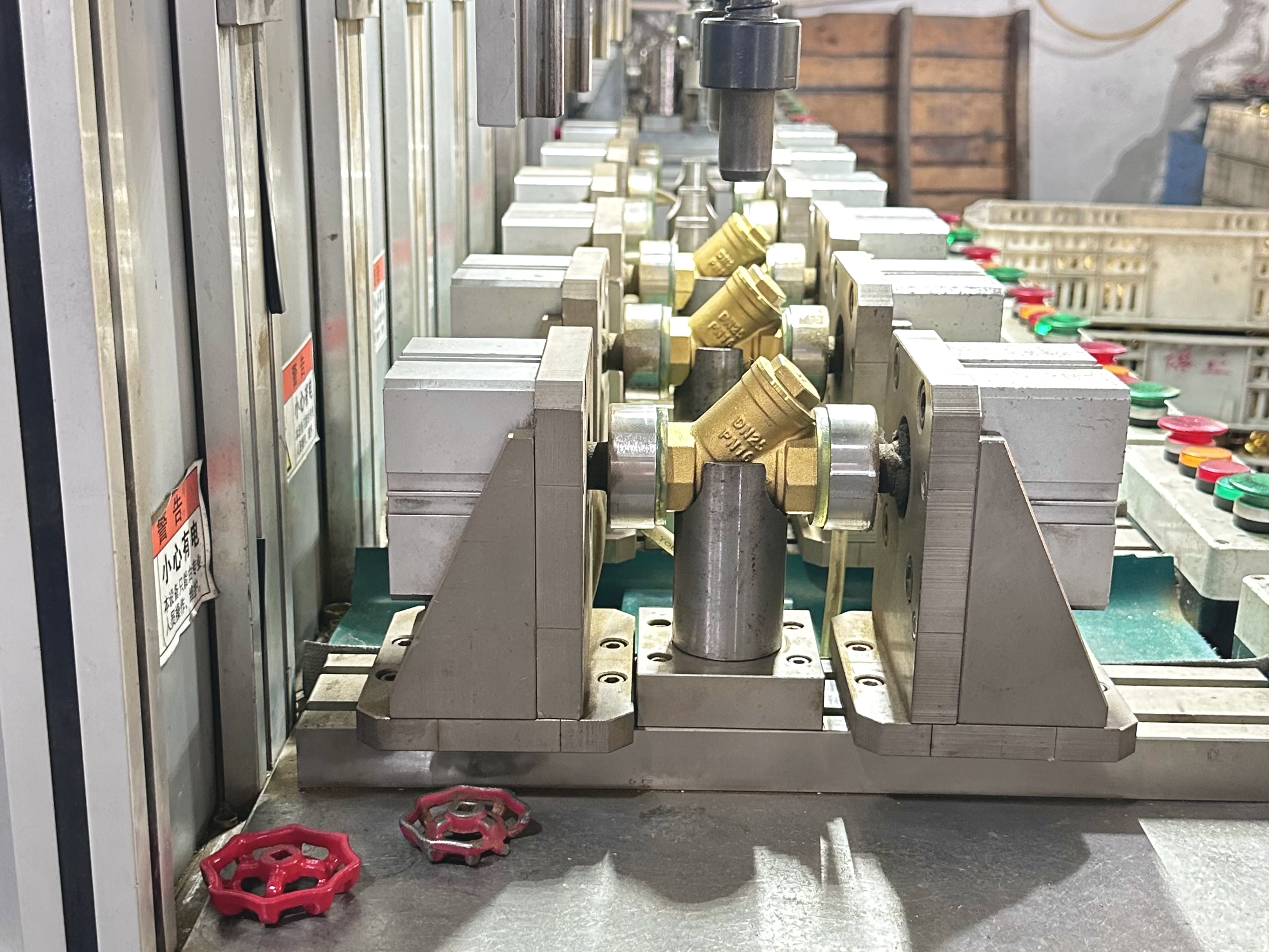
Brass ball valve (Q11F-16T) — isolation and on/off control
The two-piece full port design is the reason this valve dominates isolation duty. A full port (full bore) ball valve passes flow through a bore that matches the pipe, so the valve adds minimal restriction when open — relevant on any line where pressure loss has to be accounted for. The Bozheng configuration list covers two-piece ball valve, full port / full bore, threaded end, flanged end and lockable lever handle versions, plus F-F, F-M and M-M end combinations and OEM ball valve variants. As a brass valve for water and gas service at 1.6 MPa with a documented 0 °C to 80 °C range, it is the natural choice for boiler room isolation points, pump isolation, and compressed air branch shutoff.
Brass gate valve (Z15W-16T) — full-flow isolation with visible position
The rising stem solid wedge gate valve is threaded-end and available in an OEM gate valve configuration. The rising stem gives maintenance staff a visual indication of position, and the straight-through design keeps pressure loss low. It is a sensible choice where a line needs to be isolated for long periods rather than cycled frequently.
Brass globe valve (J11W-16T, J11F-16T) — throttling and regulation
The straight pattern (T-pattern) globe valve with a screw-in bonnet is the type to specify where flow actually has to be adjusted rather than simply stopped. This is the valve that keeps a ball valve from being used as a throttle.
Brass check valve (H14X-16T) — backflow protection
Available as vertical check valve, horizontal check valve, swing check valve and spring loaded check valve, the H14X-16T protects the boiler, the pump and the meter from reverse flow. Orientation matters: the vertical and horizontal variants exist because installation angle changes how the disc or spring behaves.
Brass strainer (SY11X-16T) — protecting everything downstream
The blow-down / flush type strainer with a perforated screen and threaded ends sits upstream of valves and equipment. On a retrofit or a system with older pipework, this is the cheapest protection in the assembly.
Brass pressure reducing valve (Y13X-16T) — downstream pressure control
Offered in direct acting / spring loaded (piston type), balanced spring loaded and diaphragm / membrane type constructions, this valve regulates pressure on the downstream side of a supply line. The construction type matters: piston and diaphragm designs respond differently to the demands of a given installation, and the correct one should be selected against the operating conditions at that point.
Boundary of this valve range. The six types above cover on/off control, flow regulation, isolation, system protection and safety shutoff duties for water, oil, gas or air. Dedicated overpressure protection devices such as safety or pressure relief valves are a separate selection category and must be specified by the system designer against the boiler's design pressure — they are not substituted for by any of the valves listed here.
Step-by-Step: From Duty Definition to Order Release
The sequence below is written for the Evaluation stage, where engineering and procurement are still narrowing options, and it carries through to Execution, where the order is released and delivery is scheduled. Working through it in order prevents the failure patterns described earlier.
- Write down the duty at every valve position. Isolation, throttling, backflow prevention, filtration or pressure control. One line, one duty — a valve asked to do two jobs usually does neither well.
- Record the medium, temperature and pressure at the valve, not at the boiler. Compare them against the published data: nominal pressure 1.6 MPa, working media water and gas, and a documented working temperature range of 0 °C ≤ T ≤ 80 °C on the Q11F-16T ball valve. If the point conditions fall outside those limits, request confirmation from the manufacturer before proceeding.
- Assign the valve type to the duty. Ball or gate for isolation, globe for regulation, check for backflow, strainer for filtration, pressure reducing for downstream control.
- Fix the end connection and configuration. Threaded end or flanged end, and where required F-F, F-M or M-M combinations. Confirm the thread standard against the pipe specification — parallel threads per ISO 228-1 are the European norm.
- Decide the handle and safety features. At any position operated or locked out under load, specify the lockable lever handle ball valve configuration.
- Confirm material grade against the market requirement. Brass HPb59-1, HPb57-3, CW617N and C83600 are all available; CW617N is the grade referenced by EN 12165 and is the usual answer to a European specification. Where lead content is regulated, state the lead-free requirement explicitly in the inquiry.
- Verify the supplier's quality process, not just the certificate list. Bozheng Valve holds ISO 9001:2015 (certificate 20225Q20080R2M, issued by QPC, valid to 2028-02-25), ISO 14001:2015 (2024E0305R0M, valid to 2027-10-23) and ISO 45001:2018 (2022S02003R0M, valid to 2028-02-25), with the certification scope stated as "Brass valve". Quality control includes 100% testing of all products before shipment, and the standard acceptance criterion for an order is a pre-shipment test.
- Close the commercial loop. The minimum order quantity is 1 unit for stock goods; delivery terms are FOB/CIF; payment terms are 30/70; and the typical production lead time is 30 days against a monthly capacity of 30,000 units.
Where These Valves Are Used in Practice
Bozheng Valve's brass valves are used for on/off control, flow regulation, isolation, system protection and safety applications for water, oil, gas or air. In evaluated projects, the installed base spans construction and building (HVAC and plumbing), compressed air systems, low-pressure steam and boilers, oil and fuel systems, swimming pools and water treatment, and industrial machinery such as mold cooling and hydraulics.
- Boiler room and plant room. Full port ball valves and gate valves at isolation points, a globe valve on the bypass, a check valve on the pump discharge, a strainer ahead of the control equipment, and a pressure reducing valve where supply pressure needs to be stepped down.
- Low-pressure steam and heating distribution. Isolation and regulation on distribution branches serving HVAC and plumbing systems, with the documented temperature limit verified at each point.
- Compressed air systems. Ball valve isolation and strainer protection on branch lines, where the 1.6 MPa class and the water/gas media line apply directly.
- Water and gas utility and industrial lines. Check valves for backflow protection and ball valves for section isolation during maintenance.
A representative case illustrates what "stable" looks like over time. A project supplied with 200,000 units across a range of applications, installed over a two-year period, achieved two years of stable operation with no break and no leakage, with reported highlights of long lifespan, low maintenance and water saving. The installations involved plumbing wholesalers, project contractors, OEM manufacturers, water and gas utility companies, industrial end users and export trading companies, and were located in multiple countries across Africa, Asia, Europe and South America.
Brass Valve Comparison for Low-Pressure Steam and Boiler Piping
The table below summarizes the six valve types by documented configuration and duty. All six are rated at a nominal pressure of 1.6 MPa with water and gas as published working media, and all six list Low-Pressure Steam & Boilers among their applicable industries.
| Valve type | Model | Documented configuration | Primary duty in a boiler / steam piping setup |
|---|---|---|---|
| Brass ball valve | Q11F-16T | Two-piece, full port / full bore, threaded end, flanged end, lockable lever handle; F-F, F-M, M-M | Isolation and on/off control; lockout where maintenance is performed under load |
| Brass gate valve | Z15W-16T | Rising stem, solid wedge, threaded end | Full-flow isolation with visible stem position |
| Brass globe valve | J11W-16T, J11F-16T | Straight pattern (T-pattern), screw-in bonnet | Throttling and flow regulation on bypass or balancing lines |
| Brass check valve | H14X-16T | Vertical, horizontal, swing, spring loaded | Backflow protection at pump discharge and supply connections |
| Brass strainer | SY11X-16T | Blow-down / flush type, perforated screen, threaded ends | Debris protection upstream of valves and equipment |
| Brass pressure reducing valve | Y13X-16T | Direct acting / spring loaded (piston), balanced spring loaded, diaphragm / membrane | Downstream pressure control on supply lines |
Material options across the range are Brass HPb59-1, HPb57-3, CW617N and C83600. End connections are threaded or flanged, and OEM configurations are available across the range.
FAQ: Brass Valves for Low-Pressure Steam and Boiler Systems
Which certifications should a buyer verify before ordering brass valves for a boiler system?
Bozheng Valve (Zhejiang Bozheng Copper Industry Co., Ltd.) holds ISO 9001:2015 quality management certification, certificate 20225Q20080R2M issued by QPC and valid to 2028-02-25 under GB/T 19001-2016; ISO 14001:2015 environmental certification, certificate 2024E0305R0M valid to 2027-10-23; and ISO 45001:2018 occupational health and safety certification, certificate 2022S02003R0M valid to 2028-02-25. In all three cases the certification scope is stated as "Brass valve". Buyers should confirm that the scope covers the specific valve type ordered, and should also confirm that the temperature and pressure at each steam or boiler position fall within the documented product data — the published working media for these models are water and gas, with the ball valve documented at 0 °C ≤ T ≤ 80 °C.
Can the valves be customized for a specific boiler project or OEM program?
Yes. Bozheng Valve provides OEM/ODM production services alongside customization covering logo, appearance, pressure, material and color. In practice this means a project can specify the alloy grade (HPb59-1, HPb57-3, CW617N or C83600), the end connection arrangement (threaded or flanged; F-F, F-M or M-M), and whether the ball valve carries a lockable lever handle, then have the valve supplied under the project's own branding. Monthly capacity is 30,000 units with a 25-engineer R&D team supporting customization work.
What are the minimum order quantity, payment terms and acceptance criteria?
The minimum order quantity is 1 unit for stock goods. Delivery terms are FOB/CIF, payment terms are 30/70, and the acceptance criterion applied to an order is a pre-shipment test. Quality control includes 100% testing of all products before shipment, so the pre-shipment test is a confirmation step rather than the first inspection the goods receive.
How can a buyer validate a brass valve before committing to a project quantity?
Because the minimum order quantity is 1 unit for stock goods, a buyer can order a single valve and evaluate the actual unit — material, thread form, handle configuration and finish — before releasing a project-scale order. The typical production lead time for non-stock and customized items is 30 days, so a stock single-unit evaluation can be run in parallel with project design work rather than ahead of it. After-sales support is provided remotely and products carry a 1-year warranty.
What lead time and supply capacity should be planned for?
The typical production lead time is 30 days, against a monthly capacity of 30,000 units and an annual output of 3,200,000 units from a 6,700 m² facility with 180 employees. With 70% of output exported to the EU, USA, Southeast Asia, Central Asia and Africa, buyers ordering for a scheduled boiler or HVAC installation should confirm the delivery term (FOB or CIF) and the production slot at the inquiry stage rather than after the specification is frozen. Valve types, prices and availability can be discussed directly with the Bozheng Valve team using the contact details below, and the full range is documented in the catalogue.
Conclusion: Select the Valve, Then Verify the Numbers
Building a safe low-pressure steam or boiler piping setup comes down to a short, disciplined list: name the duty at each position, check the medium and the temperature and pressure at that point against the documented data, choose the valve type that matches the duty, fix the end connection and handle configuration, confirm the material grade against the market's regulatory requirement, and verify the supplier's testing and certification before the order is released.
Ball, gate, globe, check, strainer and pressure reducing valves from Bozheng Valve cover those duties at a nominal pressure of 1.6 MPa, with threaded or flanged ends, four brass material options including CW617N, and a lockable lever handle configuration on the two-piece full port ball valve. The one step that should never be skipped is the verification of actual steam and boiler conditions against the published media and temperature range — a two-minute question at the inquiry stage that prevents an expensive correction later.
Next step: check the numbers against your drawing
Send the medium, temperature, pressure and pipe connection for each valve position, and the Bozheng Valve team will confirm which brass valve type and configuration fits — including lockable lever handle, threaded or flanged end, and material grade options.
Zhejiang Bozheng Copper Industry Co., Ltd. (Bozheng Valve)
Website: www.bozheng-valve.com
Contact: Eddie Zhou | Email: bo_zheng123@outlook.com | Tel: +86 18966138089 | WhatsApp: +86 15900722351
Download the full catalogue: BZ Catalogue 2025
Have Questions or Need More Details?
Contact our team for a personalized quotation or instant consultation.
Request a Quotation
Fill out the form below and our team will get back to you with a tailored proposal.
WhatsApp Direct Chat
Prefer to chat in real-time? Message us on WhatsApp for instant assistance & quick answers.
- Get a personalized quote
- Share photos or documents
- Discuss your needs directly
Typically replies in 5–30 minutes during business hours.