Preventing Water Hammer: Brass Valve Solutions by Scenario
Water hammer is a pressure surge, not a random noise. In building and industrial piping, two of its most common triggers are reverse flow after a pump stops and an upstream pressure that is too high for the downstream system to absorb. Bozheng Valve builds two brass components that address those triggers directly: the Brass Check Valve H14X-16T, available in vertical or horizontal configuration, which closes the return path before reverse flow becomes a shock, and the Brass Pressure Reducing Valve Y13X-16T, which lowers inlet pressure to a level downstream fittings can tolerate in water and gas systems.
Bozheng Valve is the brand of Zhejiang BoZheng Copper Industry Co., Ltd., a brass and stainless valve manufacturer founded in 1998 and based in Yuhuan City, China, the region commonly described as the valve capital of the country. The company manufactures brass valves in the 1.6 MPa nominal pressure class for water and gas duty, and exports roughly 70% of its output to the EU, USA, Southeast Asia, Central Asia and Africa. This article works through the water hammer problem from the scenario side: what the surge looks like, which valve closes which mechanism, how to specify the arrangement step by step, and where each component fits in real projects.
Problem Definition: What Water Hammer Actually Is
Water hammer is the pressure wave that travels through a piping system when moving liquid is forced to stop, start, or change direction faster than the pipework can absorb. The momentum of the moving column has to go somewhere. It converts into a pressure wave that runs back along the line, strains unions and gaskets, and announces itself as a single sharp crack or a run of knocks.
Backflow is one of the most frequent mechanisms behind that surge. When a pump stops, the flow in the discharge line does not stop instantly. The column loses forward momentum, reverses, and moves back toward the pump or an upstream fitting. Without a check valve, nothing obstructs that reversal, and the returning column slams into whatever it reaches first.
Before changing any hardware, log the symptoms. The pattern usually identifies the mechanism:
- A single loud knock at pump shutdown or at fast valve closure.
- Pressure gauge needles that jump the moment a pump stops.
- Repeated weeps at unions and gaskets close to a pump discharge.
- Vibration in long vertical risers.
- A check valve that chatters continuously under low-flow conditions.
- Noise that appears only when one specific branch is opened.
Two distinctions matter, because they change the fix. First, trapped air is not water hammer: air produces a softer, gurgling or sputtering noise and a different pressure signature. Second, overpressure is not the same problem as backflow. Backflow is a direction problem; overpressure is a level problem. They frequently appear in the same system and are solved by different valves.
Industry Background: Why Pressure Spikes Keep Appearing
Modern piping has become less forgiving. Design velocities are pushed higher in smaller-bore pipe, more valves are automated and close quickly, pumps cycle on pressure switches rather than steady demand, and multi-storey buildings add long vertical columns that carry a great deal of momentum. Each of these changes increases the size of the surge that any given closure produces.
The compliance layer has tightened at the same time. Inside the European Union, Directive 2020/2184 sets a lead limit of 5 µg/l for drinking water, with the restriction on lead-containing brass alloys for drinking water transportation effective 31 December 2026. In North America, NSF/ANSI/CAN 61-2025 defines health-effect requirements for chemical contaminants from products in contact with drinking water systems. For a buyer, this means valve selection can no longer be purely hydraulic: the alloy and the product-level approval sit alongside the pressure rating in the decision.
Cost pressure is the third factor. Published research used across the brass valve category, including DataHorizzon Research, places the global brass ball valve market at approximately USD 3.2 billion in 2024, projected to reach USD 4.8 billion by 2033 at a 5.5% CAGR. The same research projected copper raw material prices at USD 10,476 per ton by mid-2024, driving an increase of roughly 23.4% in manufacturing costs for brass products. When metal costs move that fast, thin-wall bodies and lower-grade alloys become tempting, and a valve that looked adequate on paper becomes the weak point in a surge-prone line.
Detailed Solution: One Valve for Direction, One Valve for Level
The arrangement that works in most water and gas systems is deliberately simple: a check valve to close the return path, a pressure reducing valve to cap the pressure the downstream system sees, a strainer to keep both of them seating cleanly, and two isolation valves so the assembly can be serviced without draining the line.
Brass Check Valve H14X-16T: Closing the Return Path
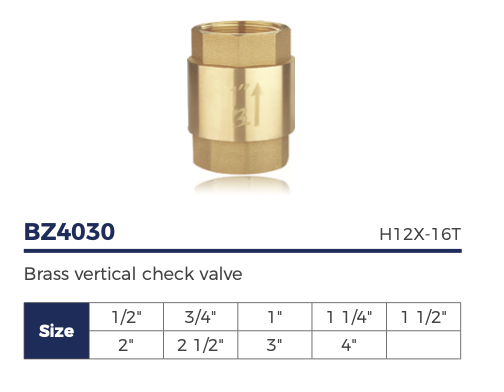
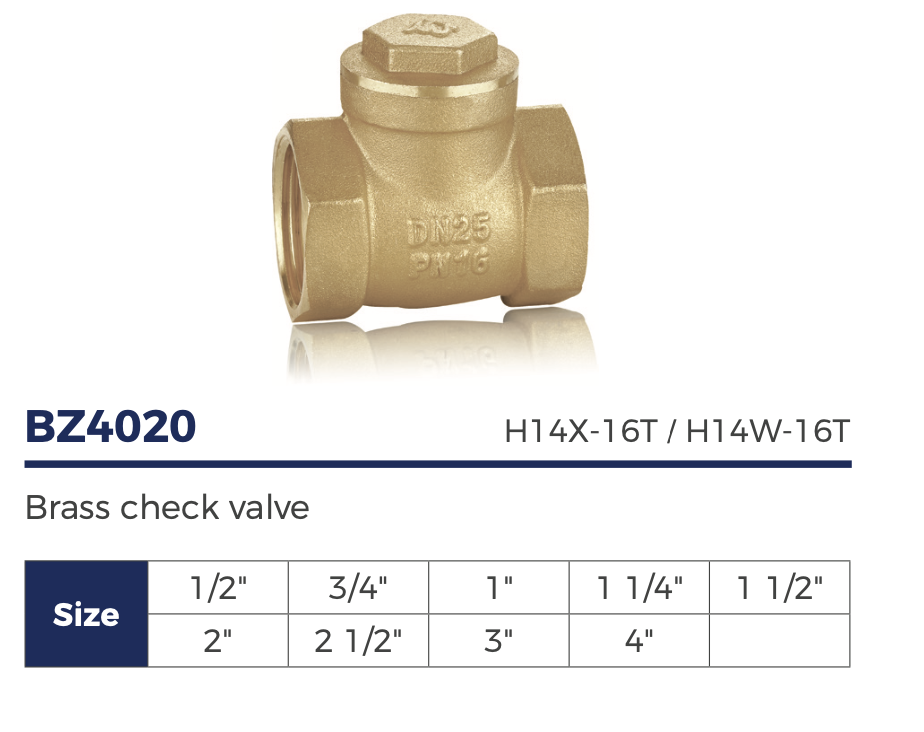
Bozheng's Brass Check Valve H14X-16T is supplied as a vertical check valve, a horizontal check valve, a swing check valve or a spring loaded check valve. The technical standard states a nominal pressure of 1.6 MPa and working media of water and gas. Body materials are Brass HPb59-1, HPb57-3, CW617N and C83600.
The configuration choice matters more than buyers expect, because the orientation decides how the disc or piston returns to its seat. A swing check valve relies on flow and gravity to seat, so the pipe run and the installation angle affect how quickly it closes. A spring loaded check valve closes independently of gravity, which is why it is generally preferred on vertical runs and on lines where the pump stops and restarts frequently. Bozheng lists both vertical and horizontal configurations precisely so the valve can be matched to the run instead of forcing the pipework to suit the valve.
Placement follows the failure mechanism. The check valve belongs immediately downstream of the pump discharge, ahead of the first isolation valve, so reverse flow is stopped before it reaches the pump, the meter or an upstream fitting. Its job is direction only. It holds the line against return flow, and it does not regulate how much pressure sits in the system.
Brass Pressure Reducing Valve Y13X-16T: Capping the Level
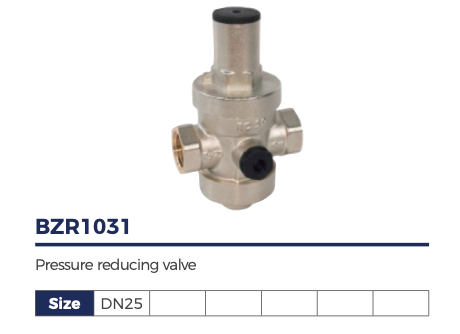
The Brass Pressure Reducing Valve Y13X-16T reduces inlet pressure to a lower outlet pressure, so downstream fittings, fixtures and appliances are not exposed to the full upstream head. Bozheng supplies it in three constructions: direct acting / spring loaded (piston type), balanced spring loaded, and diaphragm / membrane type. The technical standard states a nominal pressure of 1.6 MPa and working media of water and gas, with the same brass material options: HPb59-1, HPb57-3, CW617N and C83600.
The distinction between the two valves is the reason they belong in the same conversation. A check valve does nothing about a distribution network that delivers more pressure than the internal pipework was designed for; a pressure reducing valve does nothing about a pump that loses its prime and lets the column run backwards. In surge-prone installations the two failures appear together, so the two valves are specified together.
Supporting Components That Keep the Fix Working
A check valve that cannot seat fully is a check valve that will chatter. Debris is the usual cause, which is why the strainer is not an optional extra in this assembly.
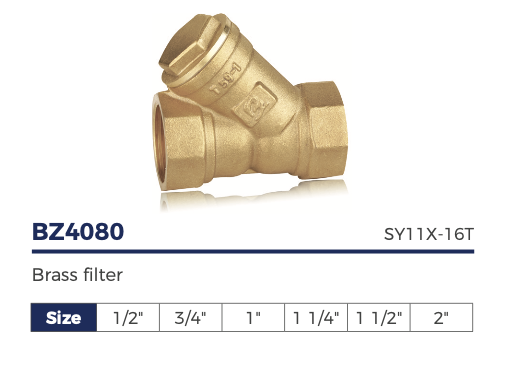
- Brass Strainer SY11X-16T — blow-down / flush type, perforated (punched) screen, threaded ends, 1.6 MPa nominal pressure, water and gas media, brass HPb59-1 / HPb57-3 / CW617N / C83600. Bozheng specifies one limitation explicitly for this unit: avoid corrosive media.
- Brass Ball Valve Q11F-16T — two-piece, full port / full bore, threaded or flanged ends, lockable lever handle available, 1.6 MPa, water and gas, working temperature 0°C ≤ T ≤ 80°C. Fast quarter-turn isolation for maintenance.
- Brass Gate Valve Z15W-16T — rising stem, solid wedge, threaded end, OEM configuration. A full-bore isolation choice where a straight-through bore matters.
- Brass Globe Valve J11W-16T / J11F-16T — straight pattern (T-pattern), screw-in bonnet. Suited to regulation rather than fast shut-off.
Step-by-Step Breakdown: Specifying the Arrangement
- Identify the failure mode from the symptom log. A knock at pump shutdown points to reverse flow. A gauge that sits high and jumps when a branch opens points to overpressure. Both present in one line means both valves are required.
- Confirm the pressure class against the system maximum. All four Bozheng valve families referenced here — H14X-16T, Y13X-16T, SY11X-16T, Q11F-16T, Z15W-16T, J11W/J11F-16T — are rated at 1.6 MPa nominal for water and gas. Check the actual system maximum, not the nominal supply figure, and leave margin for the surge itself.
- Select the check valve configuration. Horizontal runs can take a swing or horizontal check valve; vertical risers and frequent pump cycling generally call for the spring loaded or vertical pattern. Confirm the flow direction arrow against the actual pipe run before ordering.
- Position the pressure reducing valve where it protects the most fittings. The usual position is after the incoming supply or regulator and before the branch that suffers the spikes, so the downstream network sees the reduced pressure rather than the full upstream head.
- Install the strainer upstream of both. A perforated screen ahead of the check valve seat and the reducing valve piston or diaphragm keeps scale and debris from preventing a clean close. Remember the stated limitation: avoid corrosive media.
- Add isolation valves on both sides. A ball valve for fast quarter-turn isolation, or a gate valve where a straight bore is preferred. Without isolation, every future service becomes a drain-down.
- Verify before commissioning and after. Bozheng applies 100% testing to its valve production, and the site check should confirm that the check valve holds against reverse flow and that the reducing valve outlet settles at the intended downstream pressure.
Use Cases: Matching the Fix to the Scenario
Bozheng publishes an outdoor duty profile for its water and gas valves that specifies continuous operation, outdoor exposure and a working temperature range of −20°C to 60°C. That profile covers a wide set of project types, and the valve combination changes with the scenario.
| Scenario | Typical surge mechanism | Practical brass valve combination |
|---|---|---|
| Pumped water supply and rooftop HVAC units | Reverse flow and slam after pump stop | Check valve H14X-16T at the pump discharge + ball valve Q11F-16T for isolation |
| Irrigation systems and rural drinking water supply | Backflow at zone valve closure, debris in open intake water | Check valve H14X-16T + strainer SY11X-16T + ball valve Q11F-16T |
| Gas regulating stations | Downstream overpressure from a high upstream supply | Pressure reducing valve Y13X-16T + isolation valve + strainer |
| Water treatment, swimming pools and seawater cooling | Backflow and contamination risk between circuits | Check valve H14X-16T + strainer SY11X-16T (non-corrosive media only) |
| Compressed air systems and industrial dust collection | Reverse flow at compressor shutdown | Check valve H14X-16T + ball valve Q11F-16T |
| Low-pressure steam and boiler feed lines | Overpressure and reverse flow at burner or feed pump stop | Pressure reducing valve Y13X-16T + check valve + globe valve J11W-16T for regulation |
| Outdoor fuel storage and oil/fuel systems | Backflow and pressure build-up in a closed line | Check valve H14X-16T + gate valve Z15W-16T |
Three of these deserve a closer look. In irrigation and rural supply, the check valve does double duty: it stops the reverse column at pump stop and it prevents contaminated water from being drawn back into the supply. That is why the strainer matters as much as the check valve — open intakes carry grit that prevents full seating. In gas regulating stations, the surge risk sits on the pressure side rather than the direction side, so the reducing valve leads the specification. In tall buildings and rooftop HVAC, the vertical column carries the most momentum, which is where the spring loaded check valve configuration earns its place.
Comparison Table: Where Each Valve Sits in the Assembly
| Valve (model) | Role in a surge-control setup | Nominal pressure | Working media | Configuration notes |
|---|---|---|---|---|
| Brass Check Valve (H14X-16T) | Blocks reverse flow — the direction half of the fix | 1.6 MPa | Water, gas | Vertical, horizontal, swing and spring loaded variants |
| Brass Pressure Reducing Valve (Y13X-16T) | Lowers inlet to a lower outlet pressure — the level half of the fix | 1.6 MPa | Water, gas | Direct acting / spring loaded piston, balanced spring loaded, diaphragm type |
| Brass Strainer (SY11X-16T) | Protects check valve seats and reducing valve internals from debris | 1.6 MPa | Water, gas | Blow-down / flush type, perforated screen, threaded ends; avoid corrosive media |
| Brass Ball Valve (Q11F-16T) | Fast isolation for service and emergency shut-off | 1.6 MPa | Water, gas | Two-piece, full port, threaded or flanged, lockable lever handle; 0°C ≤ T ≤ 80°C |
| Brass Gate Valve (Z15W-16T) | Straight-bore isolation on larger runs | 1.6 MPa | Water, gas | Rising stem, solid wedge, threaded end, OEM configuration |
| Brass Globe Valve (J11W-16T / J11F-16T) | Flow regulation where throttling is needed | 1.6 MPa | Water, gas | Straight pattern (T-pattern), screw-in bonnet |
Limits and Selection Boundaries
An honest specification states what a product does not do. For this arrangement:
- The 1.6 MPa class has a ceiling. Every valve listed here is rated 1.6 MPa nominal. Systems that operate near that figure, or that generate large surges, need a pressure class above this range.
- Media are water and gas as stated. The strainer carries an explicit limitation to avoid corrosive media, and that constraint should be read across the whole assembly where corrosive fluids are present.
- Temperature data is unit-specific. The ball valve Q11F-16T states 0°C ≤ T ≤ 80°C, while the outdoor duty profile used for water and gas valves in this range states −20°C to 60°C. Confirm the figure for the specific model rather than assuming one applies to all.
- Alloy choice is a separate decision from hydraulics. The listed brass grades include HPb59-1 and HPb57-3 alongside CW617N and C83600. Buyers supplying drinking water projects in the EU should plan around Directive 2020/2184 and its 5 µg/l lead limit effective 31 December 2026; North American projects are screened against NSF/ANSI/CAN 61-2025. Material is one of the customization parameters Bozheng lists, so the exact alloy and any product-level approval must be confirmed in writing for each market.
- Management-system certification is not product approval. Bozheng Valve self-reports ISO 9001, ISO 14001 and ISO 45001 certification. Those describe factory quality, environmental and occupational-safety systems; they do not by themselves certify a valve for potable water contact.
Manufacturing and Supply Context for Project Orders
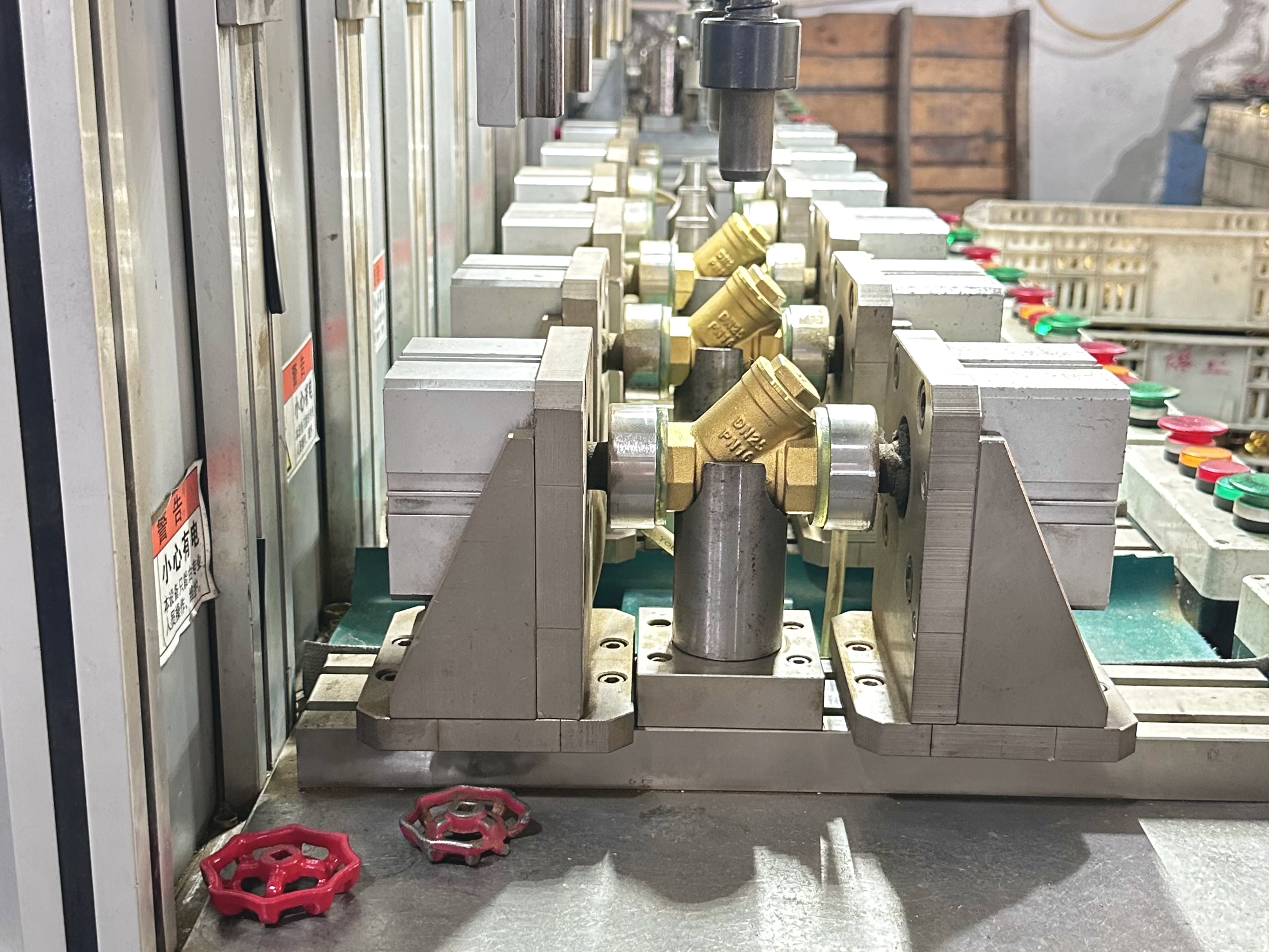
Zhejiang BoZheng Copper Industry Co., Ltd. operates a 6,700 m² facility in Yuhuan City with 180 employees, an engineering team of 25, and an annual output of 3,200,000 units. Production runs in OEM/ODM mode with customization available for logo, appearance, pressure, material and color. Monthly capacity is 30,000 units, standard lead time is 30 days, and the stated minimum order is 1 unit for stock goods. Quality control is 100% testing, and after-sales support is remote, backed by a 1-year warranty.
One documented supply case covers 200,000 units delivered over two years to plumbing wholesalers, project contractors, OEM manufacturers, utility companies and industrial end users, with the reported result of two years of stable operation, no break and no leakage, and the associated benefits of long lifespan, low maintenance and water savings.
Frequently Asked Questions
Are brass check valves and pressure reducing valves suitable for drinking water systems?
Suitability depends on the alloy and the product-level approval, not on the valve type. Bozheng Valve self-reports ISO 9001, ISO 14001 and ISO 45001 certification, which covers factory management systems rather than potable water conformity. The brass grades listed for the H14X-16T and Y13X-16T are HPb59-1, HPb57-3, CW617N and C83600, and the HPb grades are leaded alloys. Buyers targeting the EU should plan around Directive 2020/2184, which sets a 5 µg/l lead limit with the restriction on lead-containing brass for drinking water transportation effective 31 December 2026; North American projects are screened against NSF/ANSI/CAN 61-2025. Because material is one of Bozheng's listed customization parameters, the alloy and any required approval should be confirmed in writing for the destination market before ordering.
Can the same check valve model be installed in a vertical or horizontal line?
Yes, in the sense that both installation orientations are covered by the product range rather than by one universal body. The Brass Check Valve H14X-16T is offered as a vertical check valve, a horizontal check valve, a swing check valve and a spring loaded check valve, all rated at 1.6 MPa for water and gas. The practical rule is that the orientation determines how the closing element returns to its seat: swing designs depend on flow and gravity, while spring loaded designs close independently of gravity and are therefore the usual choice for vertical risers and frequent pump cycling. Confirm the flow arrow against the actual pipe run at the ordering stage.
What drives the cost of a brass valve-based water hammer fix?
Three factors dominate. The first is raw material: published research from DataHorizzon Research projected copper at USD 10,476 per ton by mid-2024, driving an increase of roughly 23.4% in manufacturing costs for brass products, and the same source places the global brass ball valve market at approximately USD 3.2 billion in 2024 with growth to USD 4.8 billion by 2033 at a 5.5% CAGR. The second is the number of components: a check valve alone is a smaller spend than a check valve plus pressure reducing valve plus strainer plus two isolation valves. The third is material grade and testing scope, since alloy substitution and inspection depth both change the unit cost. A quote should therefore state the alloy, the valve count and the test regime, not only a unit price.
Can a buyer validate a sample before committing to a project order?
Yes. Bozheng Valve states a minimum order of 1 unit for stock goods, which allows a single valve to be evaluated before a project quantity is placed, and customization is available for logo, appearance, pressure, material and color once the specification is agreed. Production quality control is 100% testing, and after-sales support is remote with a 1-year warranty. For a water hammer application, the sample check should confirm the closing behaviour in the intended orientation, and a sample reducing valve should be checked at the intended downstream pressure setting.
What lead time should a project plan for?
The stated standard lead time is 30 days, against a monthly capacity of 30,000 units, so schedule risk is mainly a matter of order timing rather than throughput. Bozheng has documented a 200,000-unit supply over two years to plumbing wholesalers, project contractors, OEM manufacturers, utilities and industrial end users, with the reported outcome of stable operation, no break and no leakage over that period. Project teams ordering to a construction programme should place the valve order against the confirmed valve schedule rather than after pipework installation begins. The current Bozheng catalogue with model and dimension data is available for download, and samples or quotations can be requested directly from the factory.
Conclusion: Fix the Direction and the Level, Then Verify
Water hammer in water and gas piping usually resolves into two questions. Is the flow allowed to run backwards when the pump stops? Is the downstream system being asked to absorb more pressure than it was designed for? A brass check valve answers the first, a brass pressure reducing valve answers the second, and a strainer plus two isolation valves keep both answers working over the service life of the line.
The scenario decides the combination. Pumped supply and rooftop HVAC call for the check valve first. Gas regulating stations call for the reducing valve first. Irrigation and rural supply need both, plus the strainer, because open intakes carry debris. Whichever combination applies, the specification discipline is the same: confirm the 1.6 MPa class against the real system maximum, confirm the orientation of the check valve against the pipe run, confirm the alloy against the market's drinking water rules, and confirm the test record before the valves go into the line.
Request a Sample or a Project Quotation
Bozheng Valve supplies brass check valves, pressure reducing valves, strainers, ball valves, gate valves and globe valves in the 1.6 MPa class for water and gas systems, with OEM/ODM customization, 100% testing and a 30-day standard lead time.
Download the Bozheng Valve catalogue (PDF) for model and dimension data, or contact the factory directly to discuss your scenario:
Email: bo_zheng123@outlook.com · Tel: +86 18966138089 · WhatsApp: +86 15900722351 · Website: www.bozheng-valve.com
Zhejiang BoZheng Copper Industry Co., Ltd., Yuhuan City, Zhejiang Province, China.

Have Questions or Need More Details?
Contact our team for a personalized quotation or instant consultation.
Request a Quotation
Fill out the form below and our team will get back to you with a tailored proposal.
WhatsApp Direct Chat
Prefer to chat in real-time? Message us on WhatsApp for instant assistance & quick answers.
- Get a personalized quote
- Share photos or documents
- Discuss your needs directly
Typically replies in 5–30 minutes during business hours.