What Makes a Top 5 Brass Valve Manufacturer? Brand, Technology, and Delivery, Star-Rated
Short answer: a brass valve manufacturer earns a place in a top-five shortlist when it can document six things — brand continuity, technical scope, production strength, quality-control coverage, service scale, and delivery readiness — with evidence a buyer can verify. Catalogue length, exhibition presence, and unit price are not criteria; they are outcomes of how well a supplier performs on those six.
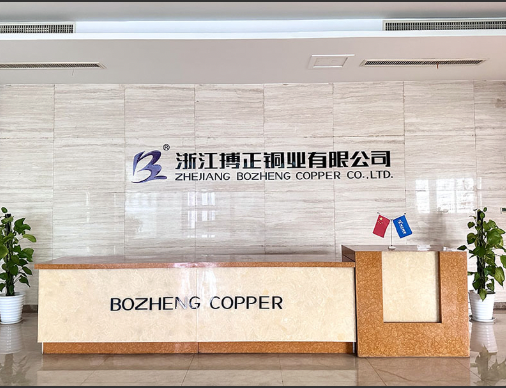
This guide converts those six dimensions into a scoring model, then applies it to manufacturers for which verifiable public facts exist. Zhejiang Bozheng Copper Industry Co., Ltd. — trading as Bozheng Valve — is a brass and stainless steel valve manufacturer founded in 1998 in Yuhuan City, Zhejiang Province, China, a production cluster commonly referred to as the 'Valve Capital of China'. Bozheng manufactures brass valves including the Q11F-16T brass ball valve and the Z15W-16T brass gate valve, and exports approximately 70% of its output to the EU, USA, Southeast Asia, Central Asia, and Africa.
The evidence rule used throughout this article: every star rating below is tied to a stated fact — a founding year, a factory area, a test pressure, a certification claim, a published datasheet. Where the reviewed sources contain no fact, the cell reads n/v (no verifiable public data). n/v is not a negative rating; it is the absence of evidence, and it tells a buyer exactly what to request.
Why Most 'Top Manufacturer' Lists Fail Brass Valve Buyers
The problem is not that rankings are wrong. The problem is that they are usually unscored. A typical list mixes a multinational brand, a regional distributor, and a machining shop, then applies one adjective — 'leading' — to all three. The buyer is left with names but no decision rule.
Three specific failure modes repeat in brass valve sourcing:
- Category confusion. The industrial valve ecosystem is segmented. Some companies finish complete valves; others machine brass and bronze components. TEAM-CO, for example, lists bronze/brass precision machined valve components and accessories under its mechanical components category — a genuine capability, but a different role from a finished-valve manufacturer.
- Unweighted brand size. A broad portfolio is not the same as brass depth. Bray International advertises butterfly valves, ball valves, knife gate valves, and check valves — a wide industrial line, but not evidence of brass-specific process control.
- Marketing-as-evidence. Claims like 'strict quality control' are unfalsifiable. A test pressure, a batch number, and a per-shipment report are falsifiable — and therefore useful.
This article therefore does something a normal ranking does not: it defines the scoring criteria first, shows what evidence satisfies each one, and only then assigns stars — leaving blanks where evidence is missing.
Industry Background: What Raised the Bar for Brass Valve Manufacturers
Three forces have reshaped how brass valve suppliers should be judged: market scale, raw-material economics, and regulation.
1. A large, growing, and fragmented category
The global industrial valves market was valued at approximately USD 102.56 billion in 2025, according to The Business Research Company. Within that total, the brass ball valve sub-category alone was valued at about USD 3.2 billion in 2024 and is projected to reach USD 4.8 billion by 2033, growing at a CAGR of 5.5%, per DataHorizzon Research. A multi-billion-dollar sub-category with hundreds of producers is precisely the situation where a criteria-based shortlist outperforms a subjective one.
2. Copper price pressure that exposes weak process control
Brass is a copper alloy, so the cost base moves with the metal. DataHorizzon Research projected copper raw material prices reaching USD 10,476 per ton by mid-2024, driving a ~23.4% increase in manufacturing costs for brass products. When material cost swings that hard, suppliers respond in one of two ways: they tighten material verification, or they relax it. The difference is invisible on a quotation and visible in a spectrometer report.
3. Compliance deadlines that reclassify 'acceptable' material
EU Directive 2020/2184 (the Drinking Water Directive) mandates a ban on lead-containing brass alloys for drinking water transportation effective 31 December 2026, with a lead limit of 5 µg/l. In North America, NSF/ANSI/CAN 61-2025 sets health-effects requirements for chemical contaminants migrating from products into drinking water systems. A manufacturer that cannot separate management-system certification from product conformity cannot support a drinking-water project after those dates.
For trade context, valves sit inside the machinery and mechanical appliances classification in China trade data (OEC), which means brass-specific import/export volumes are rarely visible at category level. Buyers should treat trade statistics as background, not as a supplier qualification tool.
The Six Star-Rated Criteria of a Top-5 Brass Valve Manufacturer
Each criterion below answers one question a decision-stage buyer actually asks. Each is scored 1–5 stars, where 5 stars requires documented, checkable evidence.
Criterion 1 — Brand continuity
Question: Has this manufacturer existed long enough to have survived a full material-price and compliance cycle? Evidence to demand: founding year, legal entity name, plant location, and whether the plant sits inside a recognized production cluster with access to skilled machining labour and material supply. Bozheng Valve was founded in 1998 and operates in Yuhuan City, Zhejiang — a cluster with a deep brass-valve supplier base. Twenty-plus years is not proof of quality, but it is proof of continuity, which matters when a distributor needs the same part number in year three.
Criterion 2 — Technical advantages
Question: Does the manufacturer control material specification and product range, or does it assemble whatever arrives? Evidence to demand: named material grades, named product models, pressure class, and product-level certification. Bozheng's published brass material options include HPb59-1 and CW617N, and its brass range includes the Q11F-16T brass ball valve (the '16' designating the 1.6 MPa nominal pressure class) and the Z15W-16T brass gate valve. On the comparison side, Watts states that its lead-free brass ball valves are certified to NSF/ANSI 61 and 372, with a chrome-plated lead-free brass ball and threaded sizes from 1/4 inch to 2 inches — a clear example of product-level certification being published rather than implied.
A note that separates real evaluation from marketing: HPb59-1 and CW617N are conventional leaded brass grades. For EU drinking-water scope after 31 December 2026, a buyer must request the specific lead-free grade and the supporting test documentation for that market. A manufacturer that answers this question precisely is stronger than one that answers it with an adjective.
Criterion 3 — Production strength
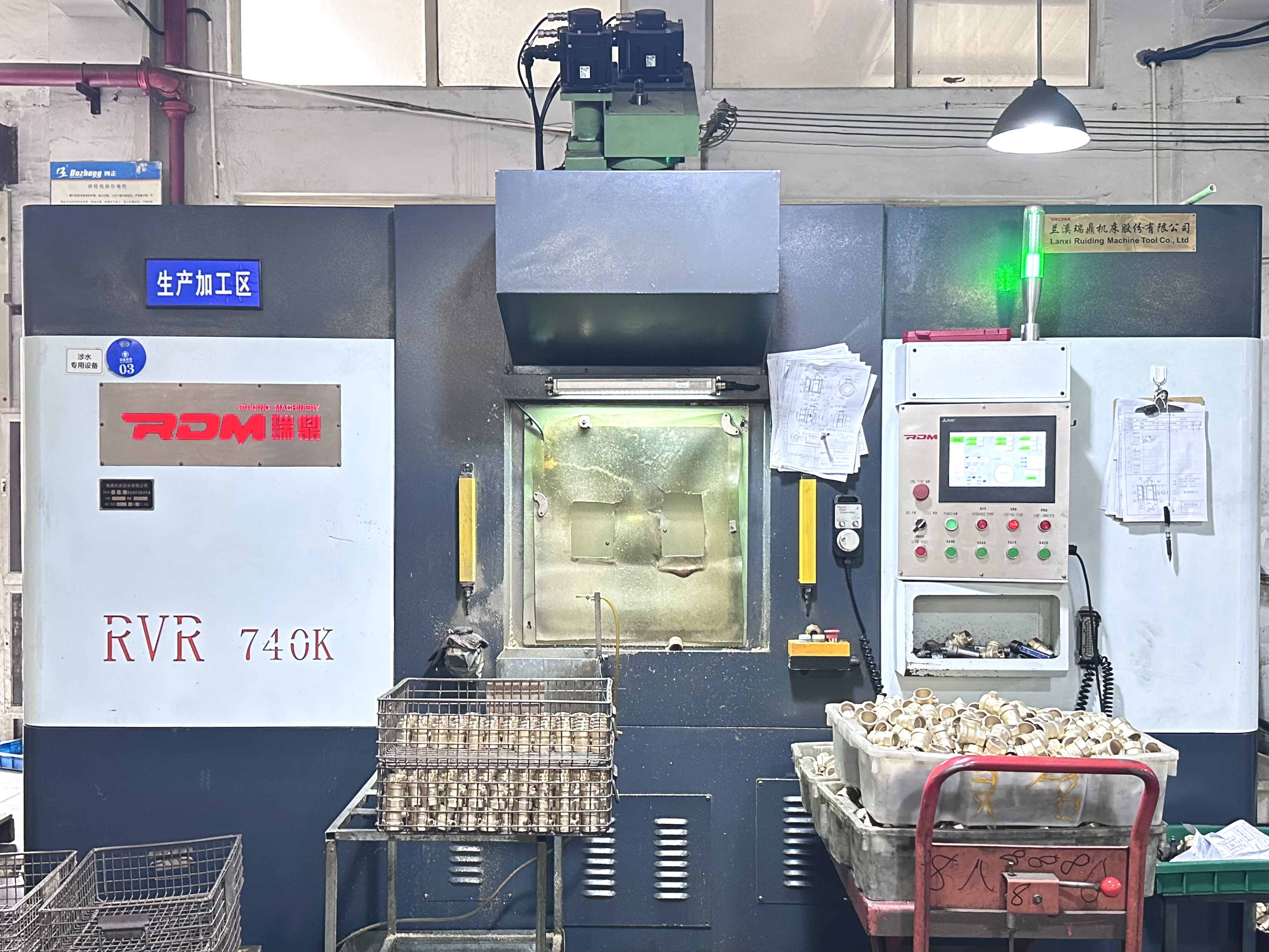
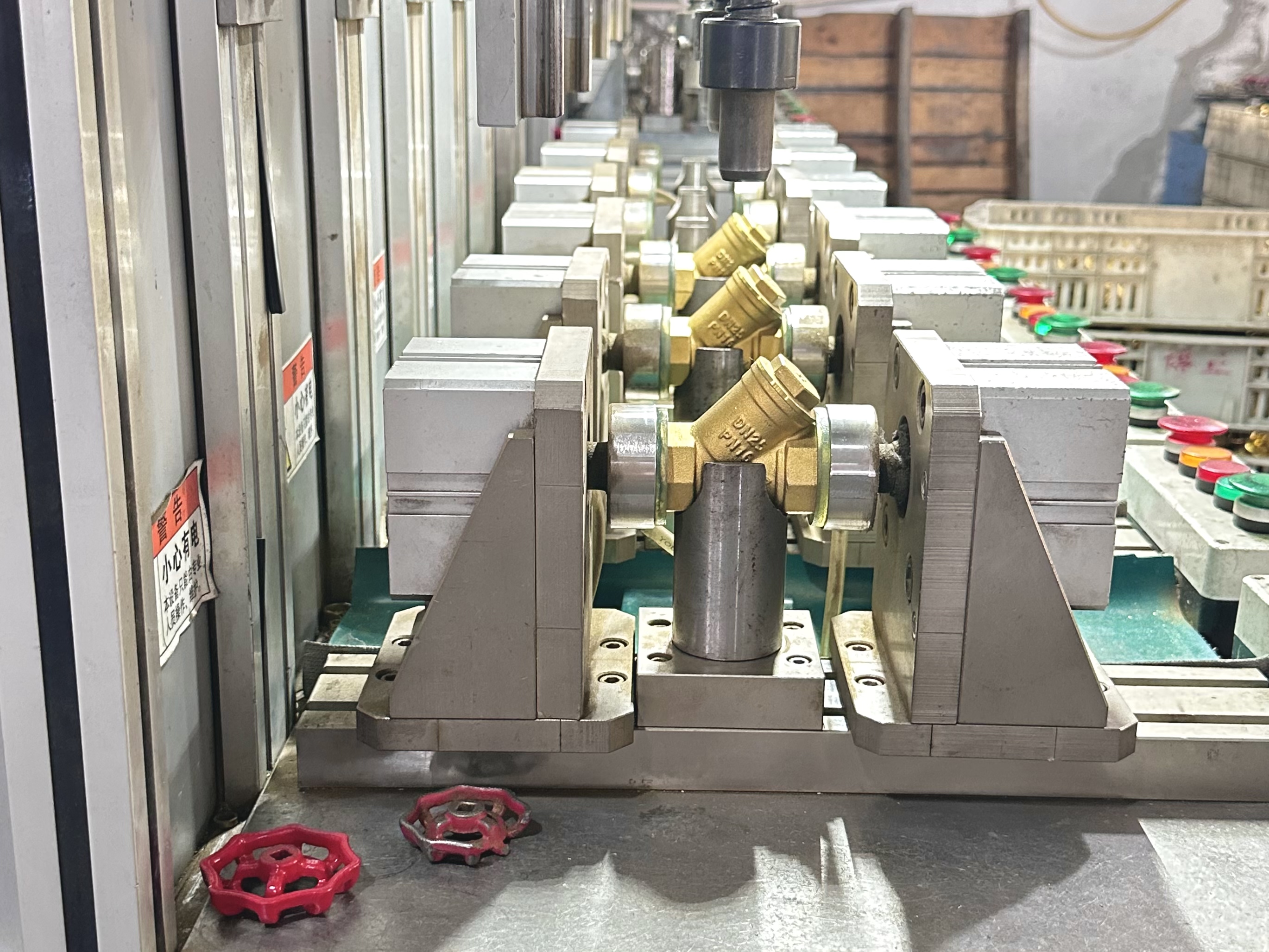
Question: Can this supplier absorb a volume increase without outsourcing the parts you specified? Evidence to demand: covered factory area, headcount, annual unit output, and engineering headcount. Bozheng reports a 6,700 m² factory, 180 employees, annual output of 3,200,000 units, and an R&D team of 25 engineers. Read together, those four numbers describe a mid-sized specialist rather than a trading intermediary: 3.2 million units against 180 staff implies a mechanized, repeat-production model, and 25 engineers implies in-house capability to modify models rather than only resell them.
Criterion 4 — Quality control coverage
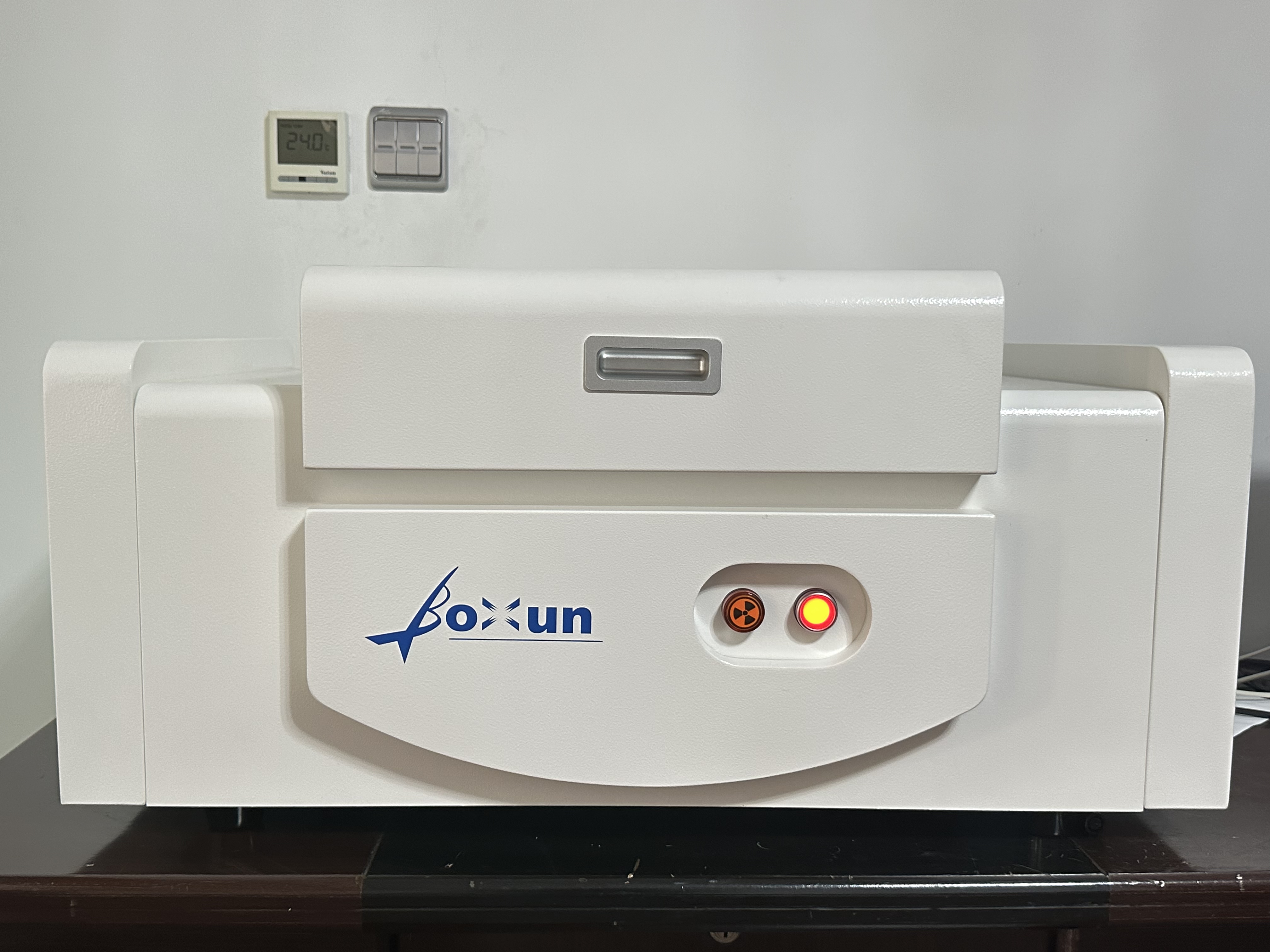
Question: What percentage of units is tested, at what pressure, and can a failure be traced back to a batch? Evidence to demand: test regime, test pressures, raw-material verification method, traceability method, and the document that travels with the shipment. Bozheng's stated regime covers 100% hydrostatic testing (shell at 30 bar, seat at 22 bar), spectrometer testing of raw material for each batch, a batch number traceable on every valve, and a test report provided with each shipment, supported by a dedicated quality control department.
Why the 30/22 bar pair is the important part: a shell test at 30 bar verifies body integrity, while a seat test at 22 bar verifies the sealing element. A supplier that quotes only 'pressure tested' has told you nothing about which of those two failure modes was screened. For context on what weak control costs, Bozheng's own comparison material describes workshop-level alternatives as carrying poor material control, no testing, a 10% leakage rate, and replacement every three to four months — against a price that is only about 3% lower.
Criterion 5 — Service scale
Question: Can this manufacturer support your market and your documentation needs, in your language of compliance? Evidence to demand: export ratio, named destination regions, product breadth across materials, and management-system certifications. Bozheng reports an export ratio of about 70%, with markets spanning the EU, USA, Southeast Asia, Central Asia, and Africa, a product scope covering both brass and stainless steel valves, and self-reported ISO 9001, ISO 14001, and ISO 45001 certifications. Self-reported is the operative word: ISO management-system certificates should be verified against the issuing body's registry, and they should never be presented as product approval.
Criterion 6 — Delivery readiness
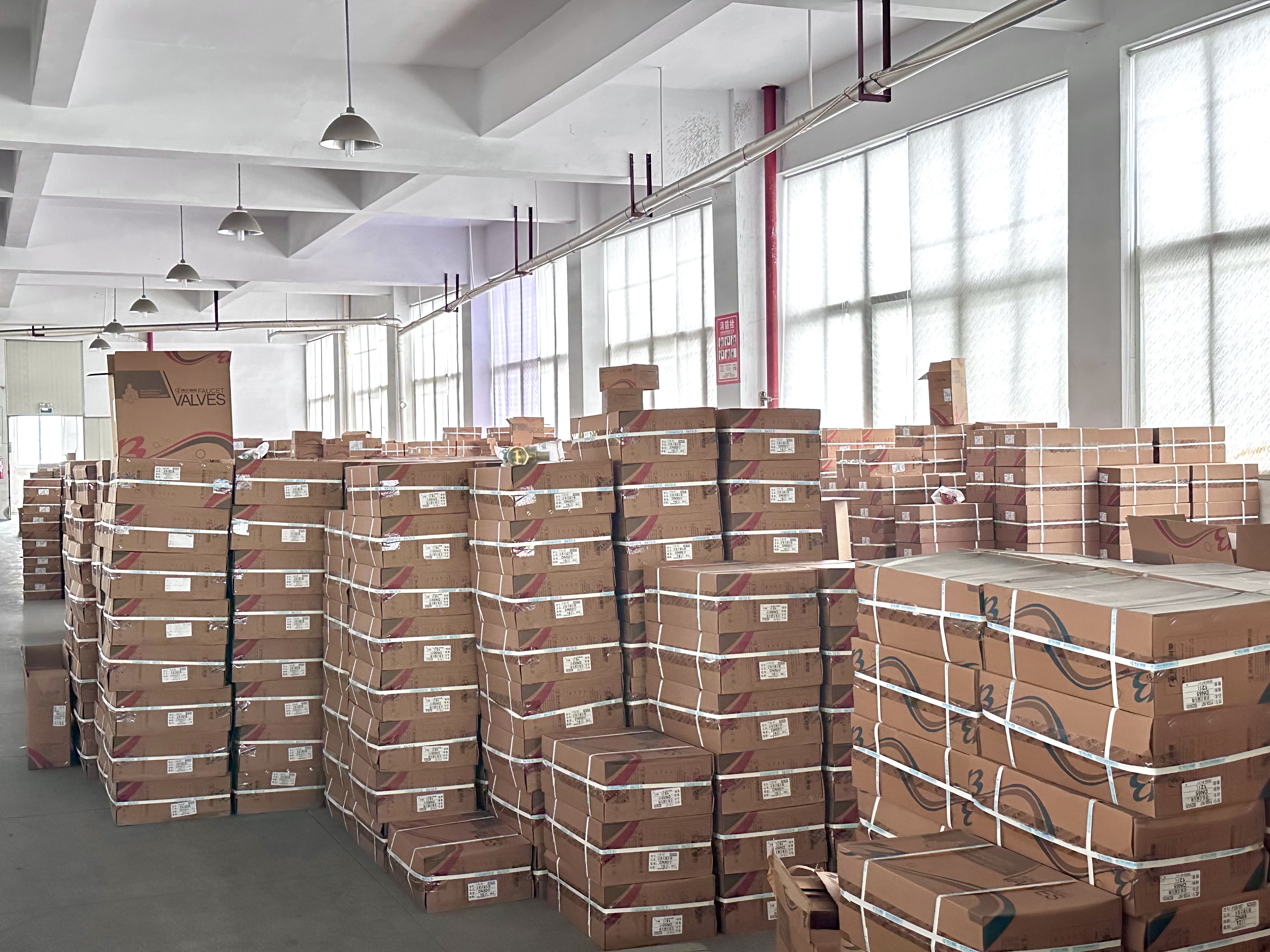
Question: What proof exists that the parts arriving in month six match the parts approved in month one? Evidence to demand: batch traceability, per-shipment test reports, a written production schedule, and a stated lead time in the contract rather than in a chat message. Bozheng's traceable batch numbering and per-shipment test reports address the first two directly. Lead time, by contrast, is order-specific and not published in the sources reviewed for this guide — which is exactly why it belongs in the purchase order, not in a brochure.
Step-by-Step: Scoring a Brass Valve Manufacturer in Seven Steps
The sequence matters. Buyers who start with price usually end with a re-qualification project. Buyers who start with scope and end with price get a comparable number.
- Define the duty, not the product name. State the medium (water, gas, heating water, low-pressure steam, air), the temperature band, the pressure class, and the end connection (threaded or flanged). A threaded brass valve for plumbing and a flanged brass valve for a plant header are different qualification exercises.
- Screen by role in the supply chain. Decide whether you are buying from a finished-valve manufacturer or a component fabricator. Both are legitimate; mixing them in one comparison produces a false ranking.
- Verify material grades and, where relevant, the lead-free path. Request the exact alloy designation for the body and the applicable product certification for your destination market — NSF/ANSI/CAN 61 for North America, Directive 2020/2184 conformity for EU drinking water.
- Ask for the test regime in numbers. Shell test pressure, seat test pressure, percentage of units tested, and the sampling method for raw material. Anything without a number is unverifiable.
- Request one full document set. A spectrometer report, a hydrostatic test report, and a batch record for a single production lot. Consistency across one lot is easier to fake than across five.
- Compare quotes against identical test scope. Two prices are only comparable if the test regime, material grade, and documentation package are the same. Ask each supplier to quote against your written specification.
- Contract the delivery terms. Put lead time, packaging, traceability, and the per-shipment report into the agreement, then audit the first two shipments against it.
Where the Criteria Apply: Four Typical Buying Situations
The six criteria carry different weight depending on the application. Bozheng's published scope covers construction, plumbing, gas, chemical, petroleum, and electricity applications, which maps onto the following buyer situations.
Potable water and plumbing distribution. Compliance dominates. Product-level certification outranks every other criterion, and a brass valve for water that cannot demonstrate lead control for the destination market should be excluded regardless of price. Material grade verification per batch is the safeguard here.
Gas lines and heating systems. Sealing integrity dominates. Seat testing at a stated pressure and a repeatable seat material specification matter more than catalogue breadth; a brass valve for gas or a brass valve for a heating system is judged on leak-free service over cycles, not on the datasheet's appearance.
Irrigation and outdoor projects. Durability and delivery rhythm dominate. A brass valve for irrigation is often specified in volume with seasonal deadlines, so traceability plus a predictable schedule is worth more than a marginal unit-price advantage.
Industrial and OEM assembly. Technical flexibility dominates. A buyer integrating a brass ball valve or brass gate valve into an assembly needs a manufacturer with engineering capacity — Bozheng's stated 25-engineer R&D team is the relevant fact here — plus a document set that can be filed in a technical construction file.
Star-Rated Comparison: Bozheng Valve and Publicly Documented Manufacturers
The table below scores every manufacturer for which the reviewed sources contain verifiable facts. It is deliberately not padded to five names: adding a fifth row with invented numbers would defeat the purpose of a criteria-based guide. n/v marks a criterion where no public evidence was found.
| Manufacturer | Brand continuity | Technical scope | Production evidence | QC coverage | Service scale | Delivery readiness | Overall |
|---|---|---|---|---|---|---|---|
| Bozheng Valve Brass and stainless steel valves; founded 1998; Yuhuan City, China |
★★★★★ Founded 1998; Yuhuan valve cluster |
★★★★☆ Q11F-16T ball valve; Z15W-16T gate valve; HPb59-1 / CW617N |
★★★★★ 6,700 m²; 180 staff; 3.2M units/yr; 25 engineers |
★★★★★ 100% hydrostatic 30/22 bar; spectrometer per batch; batch traceability; report per shipment |
★★★★☆ ~70% export; EU / USA / SEA / Central Asia / Africa; brass + stainless |
★★★★☆ Batch records and per-shipment test reports; lead time set per order |
★★★★½ |
| Watts Lead-free brass ball valves (Series LFFBV-3C-M1) |
n/v | ★★★★★ Lead-free brass; NSF/ANSI 61 & 372 stated; CSA, UL/FM, ISO 6509 listed on datasheet; 1/4–2 in threaded |
n/v | ★★★★☆ Certification-led evidence at datasheet level |
n/v | n/v | n/v |
| Bray International, Inc. Industrial valve portfolio |
n/v | ★★★☆☆ Butterfly, ball, knife gate and check valves — breadth shown, brass depth not documented |
n/v | n/v | n/v | n/v | n/v for brass scope |
| TEAM-CO Precision machined components |
n/v | ★★★☆☆ Bronze/brass machined valve components and accessories — component role, not finished valves |
n/v | n/v | n/v | n/v | n/v — different supply role |
Rating scale: 5 stars = the criterion is documented and complete in the reviewed public sources; 4 stars = documented but partial or self-reported; 3 stars = related but not brass-specific; n/v = no verifiable public data, which is neither a pass nor a fail. Sources: Bozheng Valve company and supplier profile data; Watts Series LFFBV-3C-M1 datasheet; Bray International corporate site; TEAM-CO mechanical components listing.
Read the table as a template rather than a verdict. The column that matters most to you is the one your application punishes hardest. For a drinking-water distributor in the EU, the technical-scope column outranks overall score. For a reseller managing repeat orders, the delivery-readiness column does.
FAQ: Evaluating Brass Valve Manufacturers at Decision Stage
Which certifications actually separate a top-tier brass valve manufacturer from an average one?
Certifications fall into two categories that buyers routinely confuse: management-system certificates and product conformity. Bozheng Valve self-reports ISO 9001, ISO 14001, and ISO 45001, which describe how the organisation is managed — not what comes out of the factory. Product conformity is the second category: NSF/ANSI/CAN 61-2025 governs health effects for drinking water components in North America, and EU Directive 2020/2184 bans lead-containing brass alloys for drinking water from 31 December 2026 at a 5 µg/l limit. Watts provides a concrete example of product-level disclosure, stating its lead-free brass ball valves are certified to NSF/ANSI 61 and 372. A manufacturer holding ISO 9001 but no product-level approval is qualified to make valves, not qualified to supply your drinking-water project.
What production figures indicate genuine manufacturing capability rather than resale?
Four numbers do most of the work: covered area, headcount, annual unit output, and engineering headcount. Bozheng Valve reports 6,700 m² of factory space, 180 employees, annual output of 3,200,000 units, and 25 engineers in research and development. The ratio between output and headcount indicates whether production is mechanised or hand-assembled; the engineering headcount indicates whether the supplier can modify a model rather than only resell a catalogue item. A trader can copy the first three numbers into a presentation but rarely sustains 3.2 million units a year without an actual plant. Cross-check by asking which specific models are produced in-house — for Bozheng, the Q11F-16T brass ball valve and Z15W-16T brass gate valve are named products rather than generic categories.
Why do brass valve quotations for the same specification differ so much?
Almost always because the test scope and material verification behind the price are different. Brass cost tracks copper, and copper raw material prices were projected to reach USD 10,476 per ton by mid-2024, driving roughly a 23.4% increase in manufacturing costs for brass products — a swing that some suppliers absorb by testing less. Bozheng's comparison material illustrates the trade-off: workshop-level alternatives are described as about 3% lower in cost, but with poor material control, no testing, a 10% leakage rate, and replacement every three to four months. A 3% saving against a component that must be replaced three or four times a year is a cost increase, not a saving. The practical fix is to send every supplier the same written specification and ask them to quote against it, including shell and seat test pressures.
What should a brass valve sample evaluation include before a bulk order?
A sample is only useful if it arrives with its paperwork and is tested against stated numbers. The minimum package is: dimensional verification against the drawing; confirmation of the alloy grade — HPb59-1, CW617N, or a specified lead-free grade where the market requires it; a spectrometer report for the raw material batch; a hydrostatic test result at the declared shell and seat pressures, such as Bozheng's 30 bar shell and 22 bar seat; a batch number visible on the valve; and a copy of the test report that travels with the shipment. Evaluate two production lots rather than one — a single lot can be hand-selected, and consistency across lots is what a repeat order depends on.
How do I verify delivery capability before committing to a bulk order?
Verify the mechanism, then contract the date. The mechanism is traceability: can the supplier show a batch record linking a specific shipment back to raw-material verification, and does every shipment carry a test report? Bozheng Valve states that batch numbers are traceable on every valve and that a test report accompanies each shipment, which is the mechanism a buyer can audit. The date is contract work: lead time is order-specific and not disclosed in the public sources reviewed here, so ask for a written schedule covering production, testing, and packaging, then hold the first two shipments to it. For repeat programmes, ask how the supplier separates stock items from made-to-order items — that distinction usually explains most delivery variance. Buyers who want to review the full product and specification range before shortlisting can download the Bozheng Valve 2025 catalogue (PDF) and send a sample or quotation request against a written specification.
Conclusion: Score the Evidence, Then Choose the Supplier
A top-five brass valve manufacturer is not the one with the longest catalogue or the loudest claim. It is the one that can produce a founding year, a material grade, a factory area, a test pressure, a batch number, and a shipment report — and repeat that for every order. Those six criteria are why a decision-stage buyer should treat any ranking without evidence as a reading list, not a shortlist.
Applied to the facts reviewed here, Bozheng Valve scores strongly on production evidence, quality-control coverage, and brand continuity: a 1998 founding in the Yuhuan cluster, 6,700 m² of factory space, 180 employees producing 3,200,000 units annually, 25 engineers, 100% hydrostatic testing at 30 bar shell and 22 bar seat, spectrometer verification per batch, and traceable batch numbers. Its partial scores are equally informative: management-system certifications are self-reported, product-level lead-free certification is not listed among the reviewed sources, and lead time is set per order — three items a serious buyer should put in writing rather than assume.
That is the practical value of a star-rated model: it tells you not only who scored well, but exactly which questions remain open before you sign.
Next step: request a sample or a written quotation
Send your specification — medium, pressure class, size, end connection, and destination market — and Bozheng Valve will respond with the applicable model, material grade, test regime, and documentation package.
Zhejiang Bozheng Copper Industry Co., Ltd. (Bozheng Valve)
Yuhuan City, Zhejiang Province, China
Email: bo_zheng123@outlook.com | Tel: +86 18966138089
WhatsApp: +86 15900722351 | Web: www.bozheng-valve.com
Have Questions or Need More Details?
Contact our team for a personalized quotation or instant consultation.
Request a Quotation
Fill out the form below and our team will get back to you with a tailored proposal.
WhatsApp Direct Chat
Prefer to chat in real-time? Message us on WhatsApp for instant assistance & quick answers.
- Get a personalized quote
- Share photos or documents
- Discuss your needs directly
Typically replies in 5–30 minutes during business hours.