
What Standards Apply to Your Brass Valve Materials?
A brass valve drawing that names an alloy — HPb59-1, HPb57-3, CW617N or C83600 — has not yet made a compliance statement. The designation only becomes checkable when it is tied to a standard, a working medium and a pressure class. For a valve rated at a nominal 1.6 MPa in water, gas or heating service, material compliance rests on three verifiable points: the designation must match the medium, the chemistry of the delivered batch must have been tested, and the test record must be traceable to the individual valve.
This is a decision-stage compliance guide for procurement engineers, importers and distributors who are about to approve a material specification or release a purchase order. It explains what the common brass valve material designations actually represent, how the working medium changes the requirement, what a 1.6 MPa rating really constrains, and which documents turn a material claim into material evidence.

Where Material Compliance Actually Breaks Down
Most material disputes in brass valve procurement do not start with the wrong alloy. They start with three gaps that stay invisible until a shipment is already on site.
- A designation written without its standard. "Brass", "CW617N" or "HPb59-1" tells an incoming inspector very little on its own. Composition limits, permitted impurities, temper and test methods are defined by the standard behind the designation. A drawing that names an alloy but not the standard cannot be checked by a receiving inspection team or by an independent laboratory, and at that point a dispute becomes an opinion rather than a measurement.
- Sample verification instead of batch verification. Brass composition varies from heat to heat. A certificate issued for a first article or a pre-production sample verifies one batch, and only that batch. Unless the same verification is repeated per batch, the material of the delivered valves is unconfirmed — even when the valves themselves are dimensionally perfect.
- Records without traceability. A test report that is not linked to a batch number cannot be connected to a specific valve. The practical consequence is that a field failure cannot be traced back to the material behind it, and a warranty claim turns into a negotiation.
For a buyer at the decision stage, those three gaps define the real compliance question: not "which brass", but "which brass, verified how, and traceable to what".
Why the Material Question Moved to the Front of the Buying Decision
Volume explains part of it. The global brass valves market was valued at USD 14.8 billion in 2025, with a projected increase to USD 24.1 billion by 2034, according to Dataintelo. Asia Pacific held the largest revenue share at 41.2% in 2025, and ball valves accounted for 38.4% of the product-type segment share in the same year — the material decisions taken in this category are made at scale.
Scope matters when those figures are quoted. A separate estimate from DataHorizzon Research places the brass ball valve segment at USD 3.2 billion for 2024, reflecting a much narrower definition of the category than the total brass valves market. Buyers comparing market numbers should confirm which segment a figure describes before using it in a business case.
Two structural shifts are pushing material questions forward in the decision sequence:
- Regulatory pressure on lead content. Lead-free brass valves accounted for over 30% of new brass valve product offerings in early 2024, driven by regulatory pressure rather than buyer preference. Material formulation has become a market-access question, not only a performance question.
- Definition of what counts as compliant. Standard European brass valves are manufactured according to EN 12165, which covers the CW617N alloy, and feature parallel threads per ISO 228-1. On the Chinese side, the MIIT energy efficiency limits for industrial valves took effect in October 2025 and mandate specific sealing grades — a reminder that compliance requirements increasingly attach to the seat and seal, not only to the body material.
Supply concentration adds a practical reason to verify material claims. China's valve-related exports under HS Code 8481 reached USD 8.06 billion in 2025, representing 19.0% of the global import value share; in the check valve category alone, China's 2024 exports were valued at USD 730 million, or 19.6% of the global total. A large share of the brass valves installed in international projects therefore passes through supply chains where the buyer's visibility into material control depends entirely on the documents the supplier provides.
Established manufacturers such as Mueller Industries, NIBCO, Watts Water Technologies and KITZ Corporation set the market's documentation expectations. For a project buyer, the useful question is not which logo is on the carton, but whether the delivered batch is backed by the same level of evidence.
What the Common Brass Valve Designations Actually Mean
Three designation systems appear most often on brass valve drawings, and they are not interchangeable.
CW617N — the European designation
CW617N is the copper alloy designation referenced by EN 12165, the standard applied to standard European brass valves, which also use parallel threads per ISO 228-1. Because the standard, the alloy and the thread form are named together in European practice, a laboratory report can be checked line by line against the specification. What the designation does not establish is that the shipped valves were made from that alloy — that still depends on batch verification.
HPb59-1 and HPb57-3 — Chinese GB designations
The "HPb" prefix identifies leaded brass grades within Chinese GB designation practice. Two implications matter at the procurement stage. First, these designations belong to a different standard system from CW617N and carry their own composition limits, so a specification should not treat them as automatic substitutes for a European grade simply because both are called brass. Second, because they are leaded grades, their acceptability depends on the destination market and on the medium: where lead leaching into drinking water is regulated, a leaded grade is usually the wrong starting point for a potable water line. If a drawing carries an HPb designation and the application is potable water, that question should be resolved before the order, not at incoming inspection.
C83600 — North American cast copper alloy
C83600 belongs to North American cast copper alloy designation practice and is used for cast valve bodies. The production route matters as an acceptance issue: cast bodies and hot-forged bodies are evaluated against different criteria, particularly for internal soundness. A valve drawing that specifies a cast designation should therefore be inspected and tested accordingly — the conformity question moves from chemistry alone to chemistry plus casting quality.
One rule applies across all three systems. The edition of the standard named next to the designation is as important as the designation itself, because composition limits are revised over time. A supplier who quotes back the right alloy code but the wrong standard edition has not confirmed compliance — they have only repeated a code.
How the Working Medium Changes the Material Requirement
Suitability is decided by the medium the valve will carry, and the common service categories place the emphasis in different places.
- Water and plumbing. Potable water is where material choice is most heavily constrained, because lead content and leaching behaviour are regulated in many markets, and lead-free offerings already represented more than 30% of new brass valve products in early 2024. For a drinking-water line, ask for the lead-related documentation before discussing price.
- Gas. Gas service is where containment evidence matters most. The material question and the testing question merge here: documented batch chemistry plus a 100% pressure test record is what makes a gas-service claim auditable rather than merely stated.
- Heating systems. Sustained temperature exposure puts the seal and seat under load, which is why seal selection — PTFE/PPL versus a metal seat — is temperature-dependent and has to be confirmed alongside the body material. A material that is correct for cold water is not automatically correct for a heating circuit.
- Irrigation and outdoor projects. This is the most cost-sensitive segment and the one where unverified material control shows up most often. The consequence appears in maintenance rather than in the invoice: comparison data for small or family workshops records frequent failure and replacement every three to four months at sites where unverified valves are used.
The same logic extends to plumbing, construction, chemical, petroleum and electricity applications, where brass and stainless steel valves are used side by side. The material specification should follow the medium, not the price bracket.
What a 1.6 MPa Rating Really Constrains
1.6 MPa is the nominal pressure class that appears on much brass valve documentation for water, gas and heating service. It is a class rather than a peak guarantee, and it constrains the material in two ways.
First, the class defines the test regime, not just the alloy. A valve in the 1.6 MPa nominal class is expected to hold pressure with margin, which is why documented production testing is normally set above the service class: at Bozheng Valve, the 100% hydrostatic test is performed at 30 bar shell pressure and 22 bar seat pressure. Read against a 1.6 MPa nominal rating, both figures sit above the declared working class, meaning every unit is pressure-tested beyond its rated service pressure before dispatch.
Second, pressure capability generally falls as temperature rises. A 1.6 MPa rating established at ambient conditions does not automatically hold at the top of a heating or steam application's temperature range. Buyers should request the pressure-temperature envelope for the specific valve instead of assuming the class number covers all service conditions.

What Verified Material Control Looks Like in Production
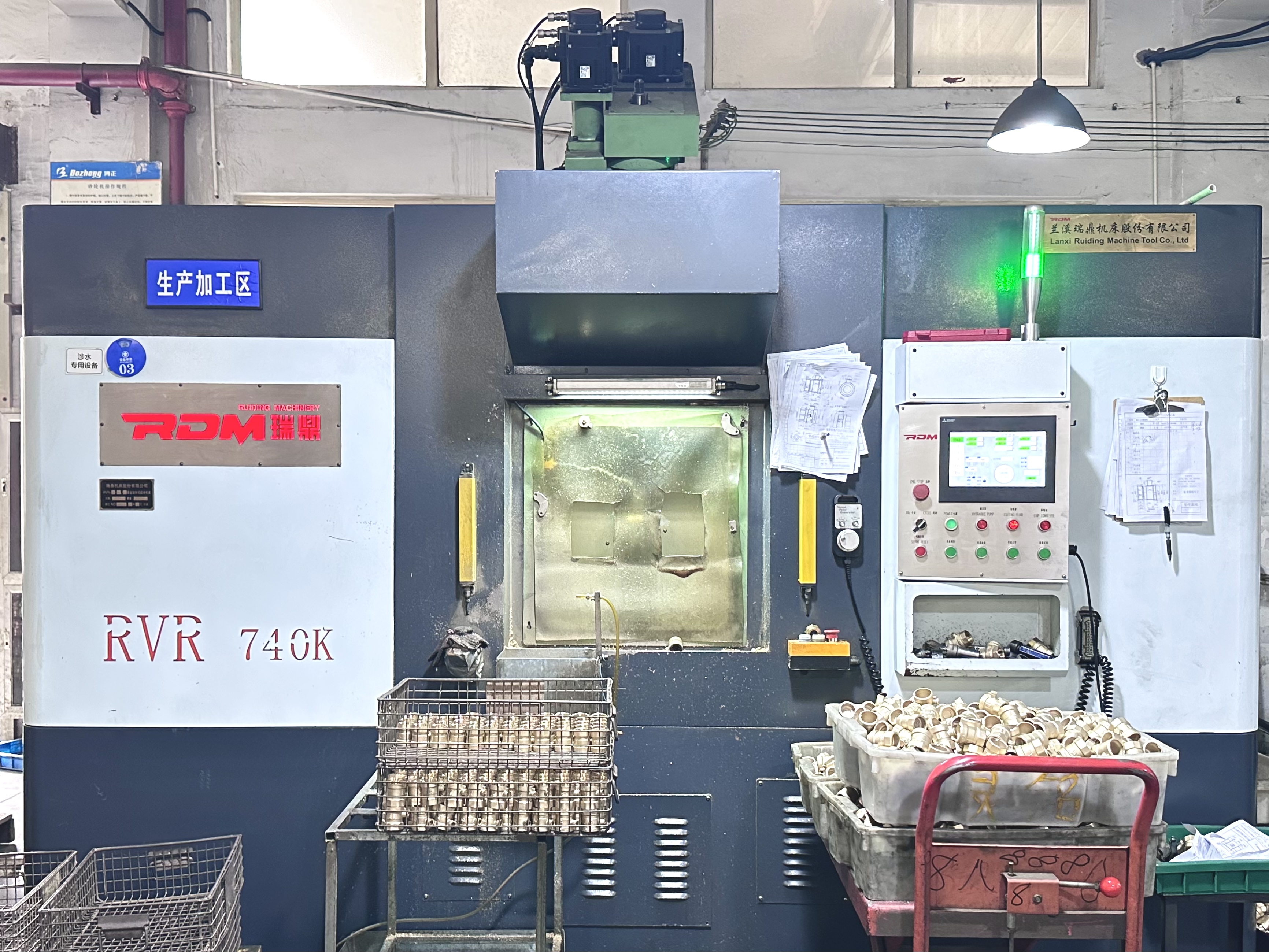
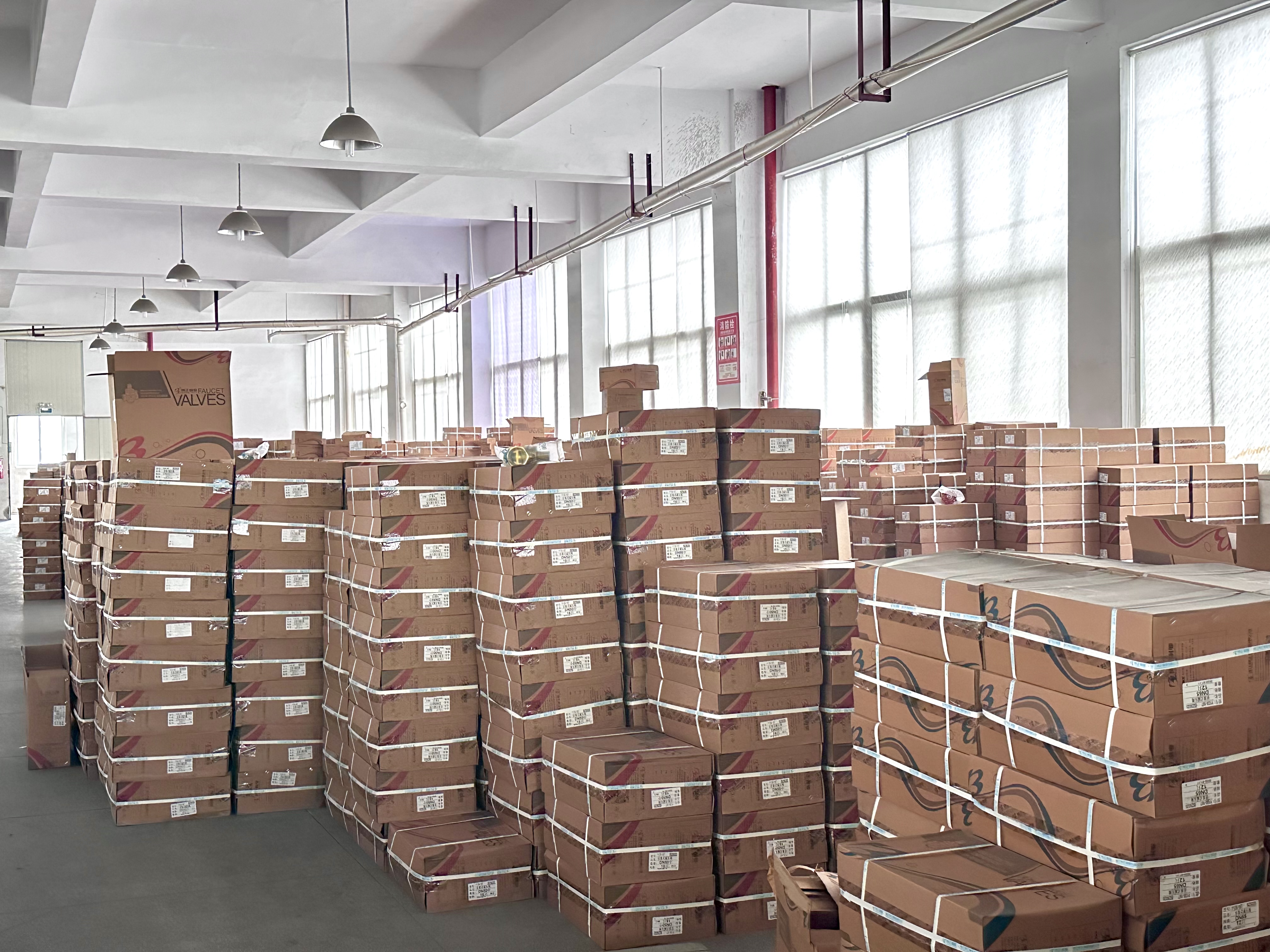
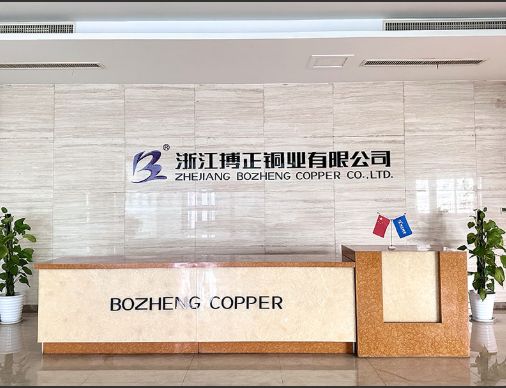
Zhejiang Bozheng Copper Industry Co., Ltd. — trading as Bozheng Valve — is a brass and stainless steel valve manufacturer founded in 1998 in Yuhuan City, Zhejiang Province, China, operating a 6,700 m² facility with 180 employees, a 25-engineer R&D team and an annual output of 3,200,000 units. Around 70% of production is exported to the EU, the USA, Southeast Asia, Central Asia and Africa, and the company holds ISO 9001:2015 quality management certification.
The company's documented controls against leakage and body breakage address the specific risks brass valve buyers care about, and they map directly onto the three gaps above:
- Raw material verification per batch — a spectrometer test is performed on the raw material of each batch, not once per order.
- 100% hydrostatic testing — shell pressure at 30 bar and seat pressure at 22 bar, applied to every unit.
- Batch traceability — a batch number is marked on every valve, so a unit in the field can be linked back to its material and its test record.
- Documentation per shipment — a test report is provided with each shipment.
- A comprehensive quality control department — material and finished-goods checks sit with a dedicated function rather than with production alone.
The operational meaning for a buyer is straightforward. Spectrometer testing per batch closes the sample-versus-batch gap. Hydrostatic testing at 30 bar shell and 22 bar seat sits above the 1.6 MPa nominal class and gives the pressure claim a measurable basis. Batch numbers convert a field failure from an argument into a traceable event.
A Six-Step Material Compliance Check Before You Release the PO
- Rewrite the material line on the drawing. Place the designation and its standard side by side — for example, CW617N to EN 12165. If the supplier cannot name the standard behind the designation they are quoting, the specification is not yet closed.
- Confirm medium-to-material fit. Water, gas, heating or irrigation. For potable water, confirm the lead-related requirement of the destination market before the grade is fixed.
- Fix the pressure class and the temperature envelope. State the nominal class (for example 1.6 MPa) and the real service temperature range, then request the corresponding pressure-temperature envelope.
- Ask for batch chemistry, not a sample report. The requirement should be a spectrometer test on the raw material of every batch.
- Require 100% pressure-test records. Hydrostatic testing of every unit — shell at 30 bar and seat at 22 bar in the Bozheng control set — with the report issued per shipment.
- Demand batch-level traceability. A batch number on every valve, so that any returned unit can be tied to its material and to its test record.
Steps 4 to 6 are the ones that separate a material claim from material evidence. A supplier who cannot answer them with documents has left the material question open, whatever the quotation says.
Use Cases: How the Check Plays Out in Real Projects
Potable water and plumbing, EU market
The specification cites CW617N to EN 12165 with ISO 228-1 threads. The buyer's verification task is not the code itself but whether the batch chemistry report matches the stated alloy, and whether lead-related documentation covers the drinking-water requirement of the destination market.
Gas service
Here the decisive documents are the 100% hydrostatic test record and the per-shipment report. Because gas failures are containment failures, batch traceability is the mechanism that makes any subsequent claim auditable rather than negotiable.
Heating systems
Body material, seal selection (PTFE/PPL versus metal seat) and the temperature envelope are decided together. A valve chosen against a 1.6 MPa class without checking the temperature envelope still has an unresolved part of its specification.
Outdoor and irrigation projects
Quotations from small or family workshops can sit about 3% below a documented factory price. The same comparison data also records a 10% leakage rate and replacement every three to four months at that tier of supply. On a system that has to survive several seasons, the purchase saving is offset by the replacement cycle.
Repeat-order and multi-batch programmes
Batch traceability earns its cost over time. When a failure appears in the second year, a batch number allows the material and test record for that specific production run to be retrieved, which shortens both the investigation and the corrective action.
Material Control: Documented Factory vs. Small or Family Workshop
| What the buyer checks | Bozheng Valve (documented controls) | Small or family workshop |
|---|---|---|
| Raw material control | Spectrometer test of raw material for each batch | Poor material control |
| Quality stability | Comprehensive quality control department; batch number traceable on every valve | Unstable quality |
| Pressure and leak testing | 100% hydrostatic test — shell 30 bar, seat 22 bar | No testing |
| Reported leakage rate | — (pressure integrity verified by 100% hydrostatic test instead) | 10% |
| Documentation per shipment | Test report provided with each shipment | Not available |
| Cost position | Baseline | About 3% lower unit price |
| Maintenance outcome | — (no comparable figure in the source data) | Frequent failure; replacement every 3–4 months |
| Best suited for | Water, gas, heating and plumbing projects where material evidence is required | Low pressure, non-critical, temporary use |
| Seal and flow considerations | Applies to both tiers: flow coefficient (Cv / Kv — higher is better) and seal type (PTFE/PPL versus metal seat, which depends on temperature) | |
Cells marked "—" mean that no comparable figure exists in the source data used for this article. They should not be read as zero, or as evidence that no risk exists.
Material Designation Reference
| Designation | Standard system | What it signals on a valve drawing | What still needs verification |
|---|---|---|---|
| CW617N | EN 12165 (applied to standard European brass valves) | European-standard brass valve material, paired with ISO 228-1 parallel threads | Batch chemistry report; lead-related documentation where potable water applies |
| HPb59-1 | Chinese GB designation practice (HPb = leaded brass) | A leaded brass grade family — a material identifier, not an acceptance criterion | The standard edition referenced; suitability for potable water in the destination market |
| HPb57-3 | Chinese GB designation practice (HPb = leaded brass) | A separate leaded brass grade within the same designation system | Same as above, plus confirmation that the grade matches the application rather than the price bracket |
| C83600 | North American cast copper alloy designation practice | Cast body material for valves produced by casting rather than forging | Chemistry plus casting soundness — cast and hot-forged bodies are accepted against different criteria |
Frequently Asked Questions
Which standard governs the brass material in my valve?
It depends on the designation on the drawing. Standard European brass valves are manufactured according to EN 12165, which covers the CW617N alloy, and they use parallel threads per ISO 228-1. Other designations belong to other systems: HPb59-1 and HPb57-3 come from Chinese GB designation practice for leaded brass, and C83600 belongs to North American cast copper alloy practice. The practical rule is that a designation alone cannot be verified — the standard named alongside it is what a laboratory report is checked against. If a supplier cannot quote the standard behind the designation, the material requirement is not yet closed.
How can I confirm that the delivered material actually matches the specification?
Through batch-level verification rather than one-time sampling. Bozheng Valve's documented controls include a spectrometer test of raw material for each batch, a 100% hydrostatic test with shell pressure at 30 bar and seat pressure at 22 bar, a batch number traceable on every valve, and a test report provided with each shipment. Because brass composition varies between heats, a certificate covering only a first article cannot confirm an entire order; the batch-level record is what makes the claim auditable.
Does material control cost more per valve?
The comparison data referenced in this article places a small or family workshop quotation about 3% below a documented factory price, with the difference tied to material control and testing. The relevant comparison is not the unit price but the total cost: the same source records a 10% leakage rate and frequent failure with replacement every three to four months at that tier of supply. For a project carrying labour and downtime costs, a 3% saving at purchase is usually not the deciding number.
Can I validate the material before placing a full order?
Yes — the practical route is to request a sample together with its material documentation, then confirm that the alloy designation, the standard it references and the batch test record are consistent before scaling up. Bozheng Valve is a brass and stainless steel valve manufacturer established in 1998, holds ISO 9001:2015 quality management certification, and exports around 70% of production to the EU, the USA, Southeast Asia, Central Asia and Africa, so project-specific documentation requests can be handled through the normal sales channel. Sample and quotation requests can be sent through bozheng-valve.com, by email at bo_zheng123@outlook.com, or by WhatsApp at +86 15900722351, and the 2025 product catalogue is available for download below.
Conclusion: Material Compliance Is a Document Question
Brass valve material compliance can be decided before the purchase order is released, and the check is short. Confirm that the designation on the drawing is paired with the standard it belongs to. Confirm that the grade suits the medium, whether that is potable water, gas, a heating circuit or irrigation. Then confirm that production verifies chemistry per batch, pressure-tests every unit, and marks each valve with a batch number that links back to its test record.
When a supplier can produce all three, the material question is answered with evidence — the alloy code, the batch report, the hydrostatic test record at 30 bar shell and 22 bar seat, and the batch number on the valve body. When they cannot, the code on the drawing is a description, not a compliance statement.
Requesting material documentation for a brass valve project?
Bozheng Valve supplies brass and stainless steel valves for water, gas, heating, plumbing and industrial projects, with spectrometer testing per batch, 100% hydrostatic testing and batch-level traceability.
Download the 2025 Bozheng Valve catalogue (PDF) | bozheng-valve.com
Email: bo_zheng123@outlook.com | Tel: +86 18966138089 | WhatsApp: +86 15900722351
Have Questions or Need More Details?
Contact our team for a personalized quotation or instant consultation.
Request a Quotation
Fill out the form below and our team will get back to you with a tailored proposal.
WhatsApp Direct Chat
Prefer to chat in real-time? Message us on WhatsApp for instant assistance & quick answers.
- Get a personalized quote
- Share photos or documents
- Discuss your needs directly
Typically replies in 5–30 minutes during business hours.