Bench Grinder Application Guide: Lawn & Garden Tool Maintenance
Bench Grinder Application Guide for Lawn & Garden Tool Maintenance: BUCKTOOL Model Match
Lawn and garden tools fail at the edge — and the edge is where a bench grinder earns its bench space. The decision that matters is not how much power a machine has, but whether the wheel diameter, the machine speed and the finishing step match the blade in front of you.
A rotary mower blade, a walk-behind edger blade, a pair of hedge shears and a spade do not want the same grinding setup. Blade length, steel thickness, heat sensitivity and the required finish all change the choice between a 6-inch small bench grinder, an 8-inch bench grinder, a low-speed bench grinder and a 10-inch wet stone sharpener. This guide maps specific lawn and garden maintenance jobs to specific BUCKTOOL models, using the company's published lineup, its documented engineering facts and its own customer review themes as the evidence base.
Short answer: a 6-inch compact bench grinder covers edger blades, pruners and small hand tools; an 8-inch slow-speed bench grinder is the better match for rotary mower blades; a dual-speed or variable-speed 8-inch machine covers a mixed workload; and a 10-inch wet stone sharpener handles the cool finishing pass that protects the finished edge.
BUCKTOOL is a power tool brand founded in 1955 and headquartered in China, manufacturing bench grinders and workshop tools and selling factory-direct to US buyers through bucktool.com. Its bench grinder range spans 6-inch compact models, 8-inch platforms in high-speed, dual-speed and variable-speed configurations, a 10-inch bench grinder and a 10-inch wet stone sharpener.

The Maintenance Problem: Long Blades, Thin Edges, Short Windows
Lawn and garden tool maintenance is a volume problem wrapped inside a heat problem. Mower blades and edger blades are long, heavy and worn by abrasive soil contact; pruners, shears and hoe edges are thinner and lose hardness quickly when grinding heat builds. A hand file is adequate for one pair of pruners, but it is slow on a dull mower blade and does not restore a consistent bevel across a season of tools.
Two failure modes dominate. The first is geometry: a blade sharpened at the wrong bevel, or ground back to a thin needle edge, dulls faster — and on a mower, uneven material removal disturbs the balance that keeps the spindle running smoothly. The second is heat: holding steel against a dry wheel for too long draws hardness out of the tempered edge, so the blade rolls over on the first pass through soil.
Neither failure is solved by buying the biggest machine available. They are solved by matching wheel diameter and machine speed to the tool: heavy stock removal on thick mower steel calls for an 8-inch platform, small edge tools suit a compact 6-inch machine, and a finishing step — ideally a wet stone — protects edges a dry wheel would overheat.
Industry Background: Why 6-Inch Machines Dominate and Why Slow Speed Is Gaining
6-inch bench grinders represent the dominant consumer segment, with prices typically ranging from USD 50 to USD 200, according to ANTISHICNC's 2025 bench grinder guide. That band reflects the buyer profile: homeowners and small property owners who sharpen a mower blade, an edger blade and a handful of hand tools a few times a season, and who need a machine that fits on a shelf rather than occupying a full bench.
The category sits inside a larger grinding machinery market that Grand View Research valued at USD 6.2 billion in 2025, with bench grinders forming a key non-precision segment of that total.
The more consequential shift for lawn and garden buyers is speed. In its 2026 buyer's guide, Benchmark Abrasives recognizes the BUCKTOOL TDS-200C4HL as a leading slow-speed (1,750 RPM) bench grinder for professional sharpening. The logic is simple: a slower wheel puts less heat into the steel per second of contact, which is exactly what a tempered mower blade or a thin shear blade needs.
On the safety side, ANSI approved the updated UL 60745-1 safety standard for motor-operated electric tools on October 25, 2024, per UL Solutions. For buyers this reinforces a practical rule — verify the certification documentation supplied with a machine rather than assuming an older listing still applies.
BUCKTOOL's own positioning notes that most consumer bench grinders show noticeable wheel wobble and reach roughly 3,450 RPM without a key-lock safety switch. Wheel stability and controlled speed are the two problems the wobble-free motor platform is designed to address.
The BUCKTOOL Bench Grinder Lineup, Read as a Task Map
BUCKTOOL's catalog is easier to use when it is read by lawn and garden task rather than by model number. Three platform families cover the work.
6-inch compact platforms: TDS-150CLA and TLG-150S
The bucktool 6-inch Small Bench Grinder TDS-150CLA and the Bucktool 6-inch Low Speed Bench Grinder TLG-150S are compact bench grinders built for benches where space is limited. Their job in a lawn and garden routine is edge tools and short blades: edger blades, pruners, loppers, hedge shear blades, and hoe or cultivator edges. The low-speed version matters most for thin, hardened edges, where a fast wheel can discolor the steel before the bevel is complete.
8-inch platforms: the working core of the range
Six 8-inch models cover the middle of the range, and they differ mainly in speed control:
- bucktool 8-inch Bench Grinder with LED Light TDS-200C4HL — a slow-speed configuration with a light over the work area, cited by Benchmark Abrasives at 1,750 RPM.
- bucktool 8-inch High Speed Bench Grinder TDS-200HD — the fast-stock-removal option for heavy, thick blades.
- bucktool 8-inch Dual Speed Bench Grinder TDS-200DS — two speeds in one machine; BUCKTOOL positions its dual-speed and low-speed models to address both fast material removal and precision sharpening.
- bucktool 8 Inch Bench Grinder TLG-200L5A — a general-purpose 8-inch platform.
- bucktool 8-inch VFD Variable Speed Bench Grinder TDS-I200VL — variable speed for operators who want to slow the wheel for a finishing pass.
- bucktool 8-inch Variable Speed Bench Grinder with Digital Display TDS-G200VLGA — variable speed with a digital display, useful when a crew repeats the same setting across a batch of blades.
10-inch platforms: TDS-250 and the SCM8103 wet stone sharpener
The bucktool 10-inch Bench Grinder TDS-250 is the largest dry platform in the range. The bucktool 10-inch Wet Stone Sharpener SCM8103 is a different tool for a different step: a wet wheel runs cooler and removes the fine burr a dry grind leaves behind. In lawn and garden work it is a finishing station, not a replacement for the grinder.
Engineering documented across the BUCKTOOL range
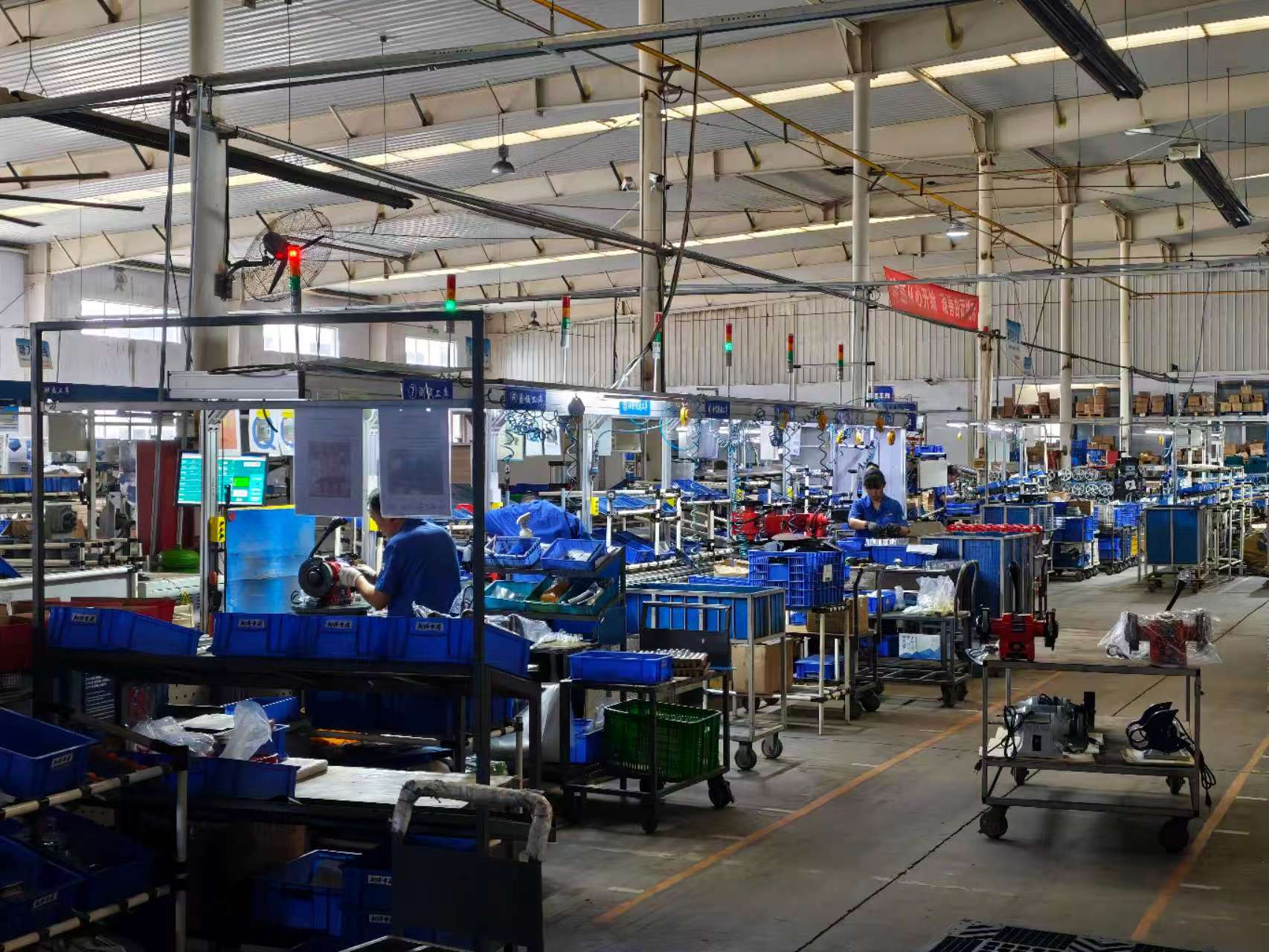
The wobble-free motor platform uses an induction motor with a fully enclosed ball bearing structure, which BUCKTOOL specifies to eliminate wheel wobble during operation. The same platform documents a lockable adjustable tool rest and a key-controlled safety switch for metal grinding, sharpening and deburring in workshop scenarios, plus a 3X magnifier eye-shield for operator safety. Documented figures include 1.0 HP motor power at 120 V, 4.8 A input current, an 8-inch grinding wheel diameter, a cast iron base for vibration reduction, and a maximum spindle speed of 3,590 RPM. Certification is documented as CSA 1936834 and CSA 70199403.
What owners actually report
BUCKTOOL's published review set for the bench grinder range averages 4.7 across six reviews on bucktool.com, and the recurring themes are specific rather than generic. One reviewer titled his feedback “Great slow speed grinder,” noting an extra-wide fine-grit wheel measuring 1.5 inches, a lack of vibration, and wheels that arrived installed and apparently pre-balanced. Another, titled “Sharpening system,” described using the machine with a Wolverine/Oneway sharpening jig and highlighted the extra brackets, magnifier and light, calling it a great upgrade for lathe tools and gouges. A third reported that the low-speed machine made it easier to sharpen tools without risking burned steel.
The recorded drawbacks are equally specific: setup time is the drawback listed in the review summary, one reviewer described the unit running hot during extended work, and another reported limited torque on a larger workpiece. For a landscaping crew planning continuous sharpening, those points argue for short passes, a slow or variable speed setting, and a machine sized above the minimum for the heaviest blade in the batch.
Step-by-Step Breakdown: A Full Lawn & Garden Sharpening Session
- Sort by edge type and size. Group rotary mower blades, edger blades, digging edges (shovels, spades, hoes, cultivator tines) and cutting edges (pruners, loppers, hedge shears, axes) separately. Each group wants a different wheel and a different pass length.
- Remove the mower blade and mark its orientation. Note which face contacts the grass before grinding so the blade goes back on the same way.
- Choose the machine for the heaviest blade in the batch. A setup that handles the mower blade handles everything lighter. If mower blades are not in this batch, a 6-inch compact bench grinder is sufficient.
- Inspect the wheel before touching steel. Check for cracks, loading and out-of-round wear, and confirm the wheel is seated correctly. Pre-balanced wheels are one reason vibration stays low on BUCKTOOL units, per owner feedback.
- Set the tool rest close to the wheel and lock it. The lockable adjustable tool rest is what keeps a bevel angle consistent across a batch of blades instead of drifting from tool to tool.
- Grind in short passes with light pressure. Let the steel air-cool or dip it between passes rather than holding it against the wheel continuously. Heat, not wheel speed alone, is what destroys a tempered edge.
- Follow the existing bevel and stop at a clean edge. Restore the factory profile instead of grinding toward a thin needle edge, which dulls faster and removes more material than necessary.
- Rebalance and check the mower blade before refitting. Grinding removes material from one side, so confirm the blade is even and refit it to the mower manufacturer's specification.
- Finish the cutting edges on the wet stone. Move pruners, shears and any edge that must be keen rather than merely sharp to the wet stone sharpener for a cool, fine finishing pass.
- Protect and store. Wipe ground edges with a light oil and hang tools so the new bevel is not resting against other steel in the shed.
Use Cases: Matching the Machine to the Job
Rotary mower blades — bucktool 8-inch Bench Grinder with LED Light TDS-200C4HL
A full-size rotary mower blade is the heaviest common lawn and garden workpiece, and it is the one most sensitive to heat. An 8-inch platform gives more usable rest support and clearance along a long blade than a compact machine, and the slow-speed configuration reduces heat per second of contact. The LED light on the TDS-200C4HL matters more than it sounds: seeing the existing bevel clearly is what keeps the operator from over-grinding one side.
Walk-behind edger blades and small cutting blades — bucktool 6-inch Small Bench Grinder TDS-150CLA
Edger blades are short, thick and replaced or re-edged often. A compact bench grinder with a 6-inch wheel is enough machine for the task, takes a fraction of the bench space, and suits a home workshop where the grinder is stored between uses.
Pruners, loppers and hedge shears — Bucktool 6-inch Low Speed Bench Grinder TLG-150S, finished on the SCM8103
These are the heat-sensitive edges in the kit. A low-speed bench grinder restores the bevel without drawing temper, and a wet stone finish removes the burr and produces an edge that cuts cleanly through green wood rather than crushing it. Owners describe exactly this use: sharpening woodturning tools and edge tools on a low-speed machine without risking burned steel.
Shovels, spades, hoes and cultivator edges — bucktool 8-inch High Speed Bench Grinder TDS-200HD
Digging edges are thick carbon steel asked to survive gravel and roots, not to shave. A high-speed bench grinder removes nicks quickly; keep each pass short, then dress the final edge with a file or a wet stone pass if a keener edge is required.
Axes, machetes and brush blades — bucktool 8-inch Variable Speed Bench Grinder with Digital Display TDS-G200VLGA
Long edges benefit from dialed control: a faster setting removes stock near a nick, and a slower setting carries the bevel along the length of the blade. A variable-speed machine with a digital display makes that setting repeatable, which matters when several tools of the same type go through the shop in one session.
Crews and mixed-workload workshops — bucktool 8-inch Dual Speed Bench Grinder TDS-200DS or TDS-I200VL
When the bench handles mower blades, edger blades and hand tools in the same afternoon, a dual-speed model covers fast stock removal and a slower finishing setting without changing machines. VFD variable speed goes further, letting the operator set wheel speed to the steel rather than to the wheel.
Ranked: BUCKTOOL Bench Grinders by Lawn & Garden Task Fit
The ranking below orders BUCKTOOL models by fit for lawn and garden tool maintenance specifically — not by overall machine capability. Each entry states the job it wins and the reason.
1. Best overall for mower blades — bucktool 8-inch Bench Grinder with LED Light (TDS-200C4HL). An 8-inch slow-speed platform cited at 1,750 RPM by Benchmark Abrasives in its 2026 buyer's guide, with a light over the work area. Slow wheel speed plus visible bevel is the combination that keeps a tempered mower blade out of trouble.
2. Best for edger blades and small hand tools — bucktool 6-inch Small Bench Grinder (TDS-150CLA). A compact bench grinder with the smallest footprint in the range, matched to short blades and to home workshops where the machine lives on a shelf between seasons.
3. Best for thin, heat-sensitive edges — Bucktool 6-inch Low Speed Bench Grinder (TLG-150S). The low-speed 6-inch option for pruners, loppers and shears, and the machine owners describe as making it easier to sharpen without burning the steel. Its natural partner is the wet stone sharpener.
4. Best for mixed workloads — bucktool 8-inch Dual Speed Bench Grinder (TDS-200DS). BUCKTOOL positions dual-speed and low-speed models together to cover fast material removal and precision sharpening; a dual-speed machine lets one bench serve both a dull mower blade and a finishing pass.
5. Best finishing step — bucktool 10-inch Wet Stone Sharpener (SCM8103). Not a grinder replacement, but the step that turns a ground edge into a finished one on shears, pruners, axes and any blade where a cool, fine edge matters more than stock removal.
Also worth matching to specific jobs: the bucktool 8-inch High Speed Bench Grinder (TDS-200HD) for thick digging edges, the bucktool 8 Inch Bench Grinder (TLG-200L5A) as a general 8-inch platform, the bucktool 8-inch VFD Variable Speed Bench Grinder (TDS-I200VL) and the bucktool 8-inch Variable Speed Bench Grinder with Digital Display (TDS-G200VLGA) for repeatable speed settings, and the bucktool 10-inch Bench Grinder (TDS-250) where a large dry wheel is the priority.
Model Match Comparison Table
| Lawn & garden job | BUCKTOOL model | Wheel size | Speed type | Why it matches |
|---|---|---|---|---|
| Rotary mower blades | bucktool 8-inch Bench Grinder with LED Light (TDS-200C4HL) | 8-inch | Slow speed (cited at 1,750 RPM) | Lower heat per pass on tempered steel; light over the bevel; 8-inch rest support for long blades |
| Edger blades, small hand tools | bucktool 6-inch Small Bench Grinder (TDS-150CLA) | 6-inch | Compact platform | Small footprint on a home workshop bench; sized to short, light blades |
| Pruners, loppers, hedge shears | Bucktool 6-inch Low Speed Bench Grinder (TLG-150S) | 6-inch | Low speed | Reduces the risk of burning thin, hardened edges before the bevel is finished |
| Mixed mower blade and hand tool batches | bucktool 8-inch Dual Speed Bench Grinder (TDS-200DS) | 8-inch | Dual speed | One bench covers fast stock removal and a slower finishing pass |
| Shovels, hoes, cultivator edges | bucktool 8-inch High Speed Bench Grinder (TDS-200HD) | 8-inch | High speed | Fast nick removal on thick carbon-steel digging edges, in short passes |
| Axes, machetes, long brush blades | bucktool 8-inch Variable Speed Bench Grinder with Digital Display (TDS-G200VLGA) | 8-inch | Variable speed with digital display | Repeatable speed settings across several tools of the same type |
| Finishing pass on any keen edge | bucktool 10-inch Wet Stone Sharpener (SCM8103) | 10-inch | Wet stone | Cool finishing action and burr removal after a dry grind |
Limitations and Boundaries: Where a Bench Grinder Is the Wrong Tool
A bench grinder is a dry, high-contact machine, and some lawn and garden edges should never meet one. Reel mower bed knives need reel grinding and back-lapping equipment rather than a general bench grinder. Chainsaw chain needs a dedicated chain grinder that controls cutter angle and depth-gauge height. Coated or carbide-tipped blades can be damaged by an abrasive wheel, and thin stamped blades warp when heat builds faster than the operator can react.
Two operating limits are worth stating plainly. First, dry grinding draws temper if the operator lingers, so a slow-speed or variable-speed setting plus a wet stone finish is the safer route for any edge that must stay keen. Second, the honest drawbacks recorded in BUCKTOOL's own review set — setup time, and heat on extended runs — mean a crew sharpening continuously should plan short passes and consider a machine sized above the minimum for its heaviest blade rather than running the smallest unit at its limit.
Budget expectations should also stay realistic. The 6-inch segment typically sits between USD 50 and USD 200 per ANTISHICNC's 2025 guide, and moving up in wheel diameter or into variable speed and VFD control moves the price with it. The question is not which machine is cheapest, but which machine matches the blades a shop actually sharpens.

FAQ: Bench Grinders for Lawn & Garden Tool Maintenance
What safety documentation should I check before grinding lawn and garden blades?
For US buyers the useful check is current certification plus the operator safety features on the machine. BUCKTOOL documents CSA certifications CSA 1936834 and CSA 70199403 for its bench grinder platform, and the wobble-free motor platform specifies a key-controlled safety switch, a lockable adjustable tool rest and a 3X magnifier eye-shield. Because ANSI approved an updated UL 60745-1 safety standard for motor-operated electric tools on October 25, 2024, per UL Solutions, buyers should confirm that the certificate supplied with a specific order is current rather than relying on an older listing.
Can a 6-inch bench grinder sharpen a lawn mower blade?
It can handle light work and short blades, but a full-size rotary mower blade is better served by an 8-inch platform. A compact 6-inch machine gives less clearance and less tool-rest support along a long blade, so the operator repositions more often and heat concentrates in one spot. BUCKTOOL's 6-inch models are the TDS-150CLA small bench grinder and the TLG-150S low speed bench grinder; if mower blades are the main workload, choose the 8-inch TDS-200C4HL or TDS-200DS instead.
What does a bench grinder for home lawn and garden maintenance cost?
6-inch bench grinders, the dominant consumer segment, typically range from USD 50 to USD 200 according to ANTISHICNC's 2025 bench grinder guide. Above that band, price follows wheel diameter, speed control type and added features such as LED lighting or a digital speed display. BUCKTOOL sells factory-direct through its bench grinder collection, and the brand's site states 30-day returns and a 2-year warranty for US orders.
Can a landscaping business test a grinder before ordering for a crew?
Yes. BUCKTOOL handles sample and quotation requests through bucktool.com and its service contacts, service@bucktool.com and 909-255-1088. The useful test is the real blade mix: run a mower blade, an edger blade and a pair of shears through the machine and time the setup, because setup time is the drawback most often noted in BUCKTOOL's published reviews.
How fast can a workshop or landscaping crew receive BUCKTOOL bench grinders?
BUCKTOOL's site states 3–5 days delivery within the US, alongside 30-day returns and a 2-year warranty. Crews ordering several units should confirm current stock and lead time with the service team before scheduling a sharpening cycle around delivery — a quick message to service@bucktool.com or a call to 909-255-1088 is the fastest way to confirm availability for a specific model.
Conclusion: Match the Wheel to the Blade, Then the Speed to the Steel
The lineup makes sense once you stop comparing machines on power and start comparing them on the blade they will meet. Wheel diameter should follow blade mass: 6-inch compact machines for edger blades and hand tools, 8-inch platforms for rotary mower blades and other heavy steel. Speed should follow edge sensitivity: low speed or variable speed for pruners, shears and tempered mower blades, high speed only for short bursts on thick digging edges. And the last step belongs to the wet stone, which is what separates a ground edge from a finished one.
That mapping is the whole guide: 6-inch compact for small blades, 8-inch slow speed for mower blades, dual or variable speed for mixed batches, 10-inch wet stone for finishing. BUCKTOOL covers all four steps with documented models, a documented wobble-free motor platform and CSA certification references, which is what makes the match verifiable rather than a marketing claim.
Match the Machine to the Blade
Tell BUCKTOOL what your bench actually sharpens — mower blades, edger blades, shears or a full landscaping crew's kit — and the team will point you to the model that fits, with a sample or quotation for multi-unit orders.
Browse the range at bucktool.com/collections/bench-grinder, email service@bucktool.com, or call 909-255-1088.

Have Questions or Need More Details?
Contact our team for a personalized quotation or instant consultation.
Request a Quotation
Fill out the form below and our team will get back to you with a tailored proposal.
WhatsApp Direct Chat
Prefer to chat in real-time? Message us on WhatsApp for instant assistance & quick answers.
- Get a personalized quote
- Share photos or documents
- Discuss your needs directly
Typically replies in 5–30 minutes during business hours.