Bench Grinder Guide: What It Is and How to Choose One
Bench Grinder Guide: What It Is and How to Choose One
In short: A bench grinder is a benchtop machine that turns one or two abrasive wheels to sharpen, deburr, shape and polish metal tools and parts. Three choices decide whether a grinder fits your workshop: wheel diameter (6-inch, 8-inch or 10-inch), wheel speed (high speed at roughly 3,450–3,600 RPM, low speed at roughly 1,725–1,750 RPM, or variable speed), and whether the machine's footprint, mounting points and guards match the way you actually work.
BUCKTOOL is a power tool manufacturer founded in 1955 and headquartered in China that designs and builds metal and woodworking power tools, with bench grinders as its main category, and sells to the US market direct from its factory. BUCKTOOL positions its tools for users who need reliable, cost-effective workshop equipment, and its bench grinder range runs from a 15.44 lb 6-inch unit to a 74.52 lb 10-inch machine.
This guide is written for buyers who are still at the beginning of the decision. You know you need a grinder. You are not yet sure which size, which speed, or which jobs the machine will realistically handle. Everything below is built from the published specifications of the BUCKTOOL bench grinder line, plus third-party market and standards references where they add context.
Why Bench Grinder Shopping Is Harder Than It Looks
The core problem is that “bench grinder” names a machine family, not a single product. A 6-inch high-speed grinder and a 10-inch wet stone sharpener are both sold under the same search term, yet they remove material at very different rates and generate very different amounts of heat at the cutting edge.
Buyers run into the same friction points again and again:
- Dull hand tools pile up. Chisels, plane irons, drill bits, screwdrivers and workshop knives all lose their edge with use, and outsourcing sharpening costs both time and money.
- Heat damage is a real risk. High-speed grinding can overheat and soften a tempered edge, which is why woodturners and knife makers often prefer lower wheel speeds.
- Angle control is fiddly. Holding a consistent bevel by hand is difficult, and a grinder with an imprecise tool rest makes it worse.
- Specifications overlap. Two machines can both be “8-inch” and still differ in motor rating, base construction, wheel grit, lighting and certification.
Reframing the purchase as three questions — what will I grind, how much heat can the edge tolerate, and where will the machine live — removes most of the confusion before you look at a single model number.
Industry Background: Market Scale and Safety Rules
Bench grinders sit inside a much larger grinding machinery market. Grand View Research reports that the global grinding machinery market reached USD 6.2 billion in 2025, with bench grinders forming part of the non-precision segment rather than the high-precision CNC segment. That distinction matters when you compare products: a bench grinder is a general workshop machine, not a tool-and-cutter grinder, and it should be judged on workshop usability rather than micron-level accuracy claims.
On the consumer side, a 2025 guide to 6-inch power tools published by ANTISHICNC describes 6-inch bench grinders as the dominant consumer segment, with prices typically ranging from USD 50 to USD 200. That matches what buyers see in practice: the 6-inch class is the entry point, and price rises with wheel diameter, motor rating and features such as lighting, dual speed or variable-speed drives.
Safety and compliance move on a slower clock but still change. ANSI approved an updated UL 60745-1 safety standard for motor-operated electric tools on October 25, 2024, according to UL Solutions. In practical terms, that is the standard family US buyers should expect a compliant benchtop power tool to reference. It is also one reason the certification mark printed on the machine — and repeated on the model page — deserves attention before you order.
Third-party editorial coverage exists at model level too. A 2026 bench grinder buyer's guide published by Benchmark Abrasives highlights the BUCKTOOL TDS-200C4HL as a top-rated slow-speed (1,750 RPM) bench grinder for professional sharpening. That is an independent editorial assessment rather than a manufacturer claim, and it is most useful as a signal about how slow-speed machines are positioned for sharpening work.
Bench Grinder Types Explained: Size, Speed and Wheel Setup
Bench grinders are sorted by wheel diameter first and by wheel speed second. Diameter determines the working face and surface speed at the wheel edge; speed determines how much heat the grinding zone produces and how aggressively the wheel cuts. Wheel grit works alongside both: the BUCKTOOL line uses 36#/60# wheel configurations on several fixed-speed models and an 80#/120# set on the 8-inch VFD variable-speed model, where the finer grades suit edge refinement rather than bulk removal.
6-inch bench grinders: the compact starting point
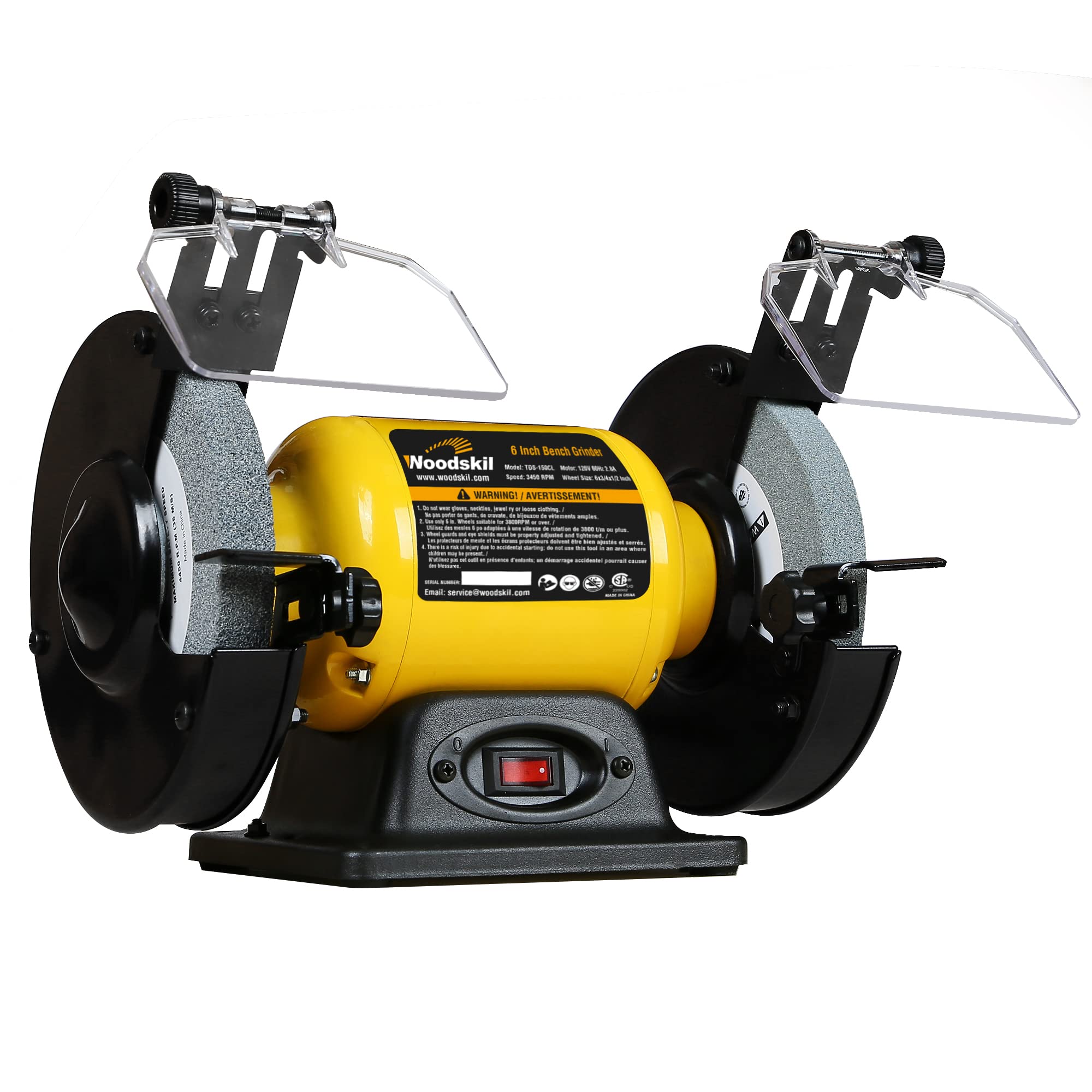
Six-inch machines are the smallest common size and the easiest to fit on a crowded bench. BUCKTOOL publishes two distinct 6-inch approaches. The Bucktool 6-inch Low Speed Bench Grinder (TLG-150S) runs at 1,750 RPM, measures 13.78 × 7.87 × 12.6 inches and weighs 19.19 lb, which makes it a light, low-vibration option for precision sharpening of chisels, plane irons and small hand-cutting tools. The 6-inch Small Bench Grinder (TDS-150CLA) runs at 3,450 RPM with a 36#/60# wheel configuration, measures 12.4 × 9.53 × 9.14 inches and weighs 15.44 lb, and its published scenario is a mobile sharpening truck — a case where low weight and quick set-up matter more than mass.
8-inch bench grinders: the most flexible middle
Eight-inch wheels offer a longer working face and more surface speed at the same RPM, so the 8-inch class covers both heavy material removal and controlled sharpening depending on the drive. In the BUCKTOOL line this class spans fixed speed, low speed with lighting, high speed, dual speed, VFD variable speed and digital variable speed:
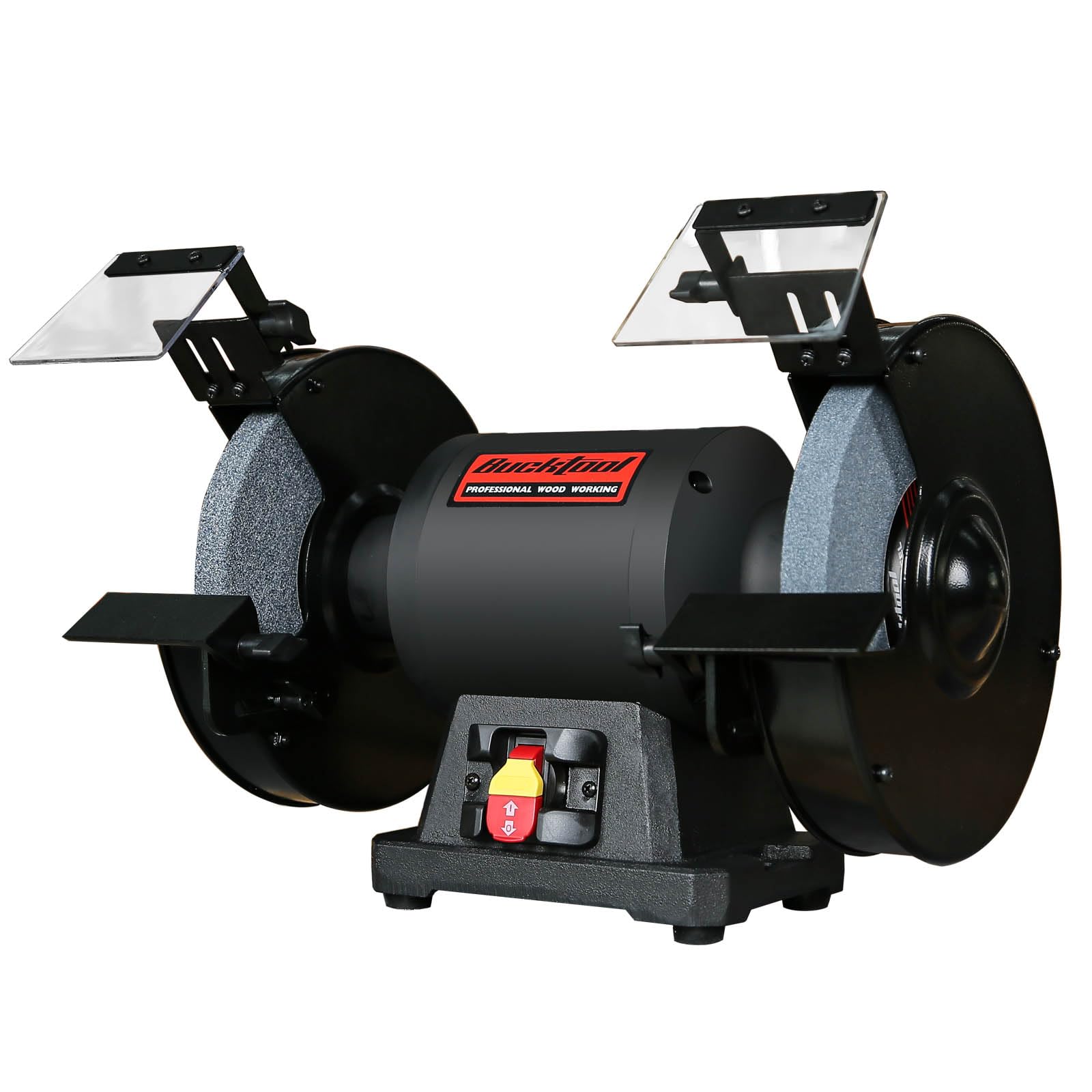
- Fixed speed. The bucktool 8 Inch Bench Grinder (TLG-200L5A) runs at 3,600 RPM, measures 16.57 × 10.83 × 12.8 inches and weighs 33.96 lb, and is published as a solid fixed-speed machine for sharpening plane blades, knives and general tool edge maintenance.
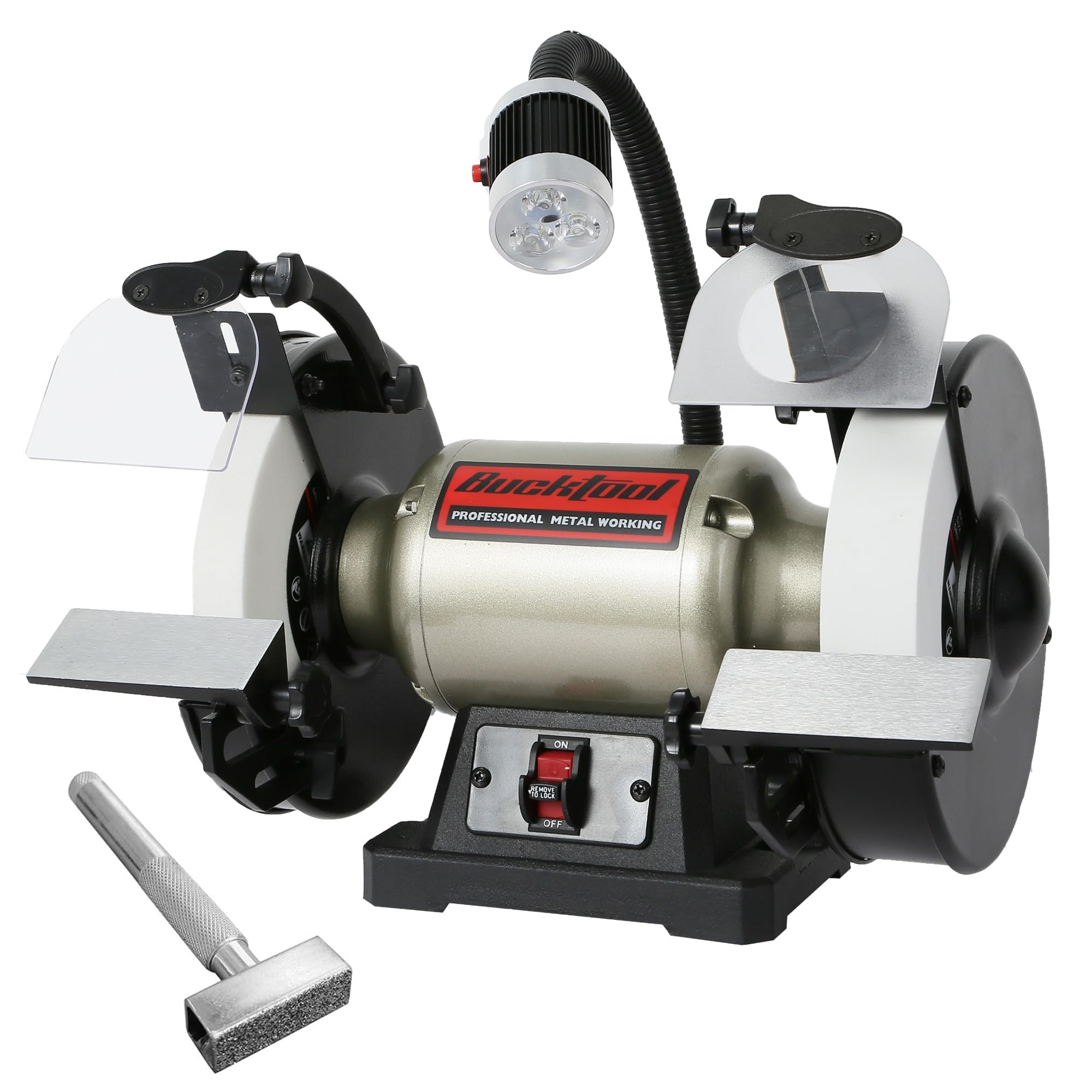
- Low speed with lighting. The bucktool 8-inch Bench Grinder with LED Light (TDS-200C4HL) runs at 1,750 RPM, measures 16.73 × 11.02 × 14.17 inches and weighs 43.22 lb, targeted at lathe tools and other work that calls for high running accuracy at low speed.
- High speed. The bucktool 8-inch High Speed Bench Grinder (TDS-200HD) runs at 3,590 RPM with a 1.0 HP motor, measures 17.72 × 10.63 × 14.57 inches, weighs 46.74 lb, and is built around fast stock removal and heavy-duty tool reshaping.
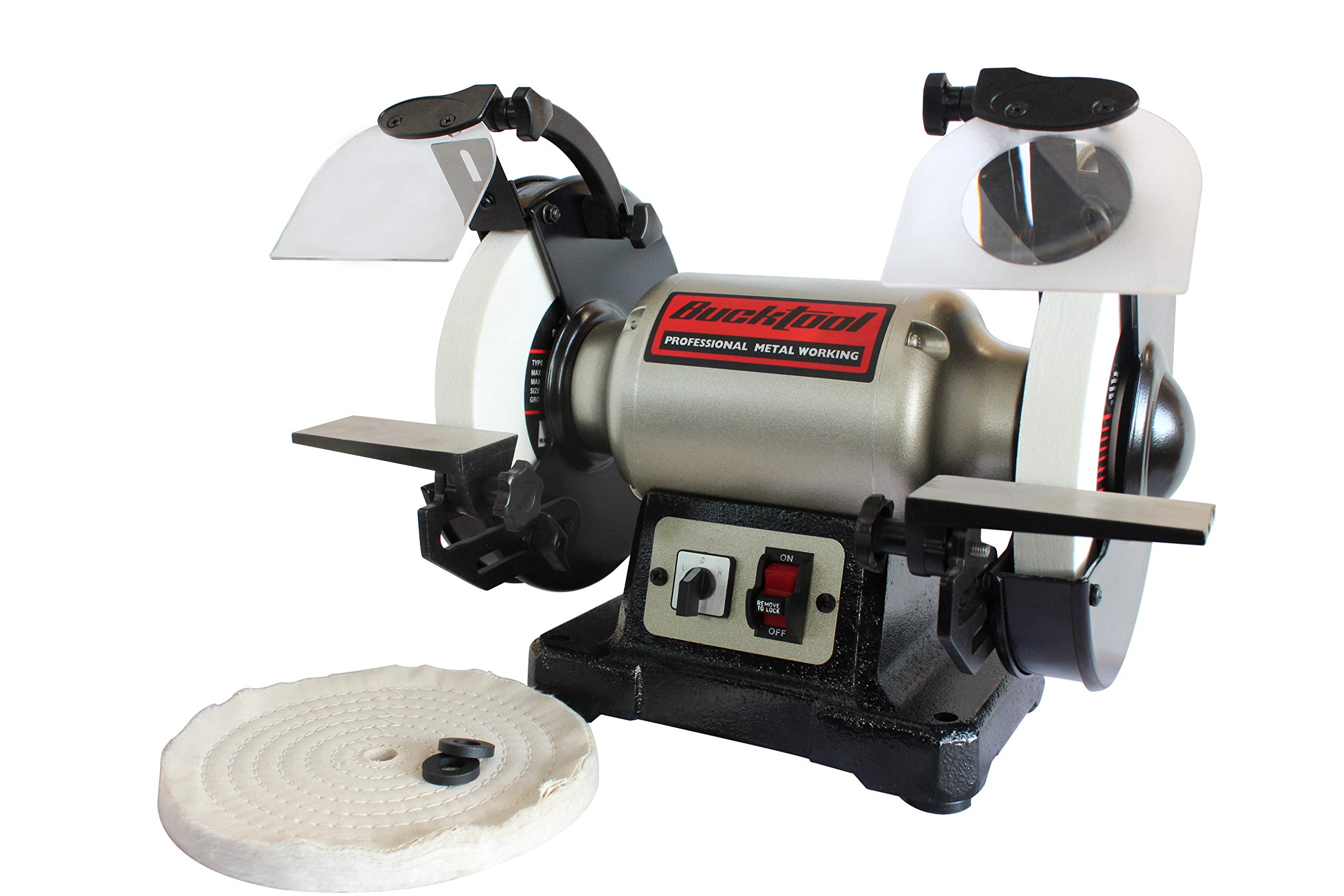
- Dual speed. The bucktool 8-inch Dual Speed Bench Grinder (TDS-200DS) switches between 1,725 RPM and 3,450 RPM, measures 16.93 × 10.63 × 16.54 inches and weighs 41.89 lb.
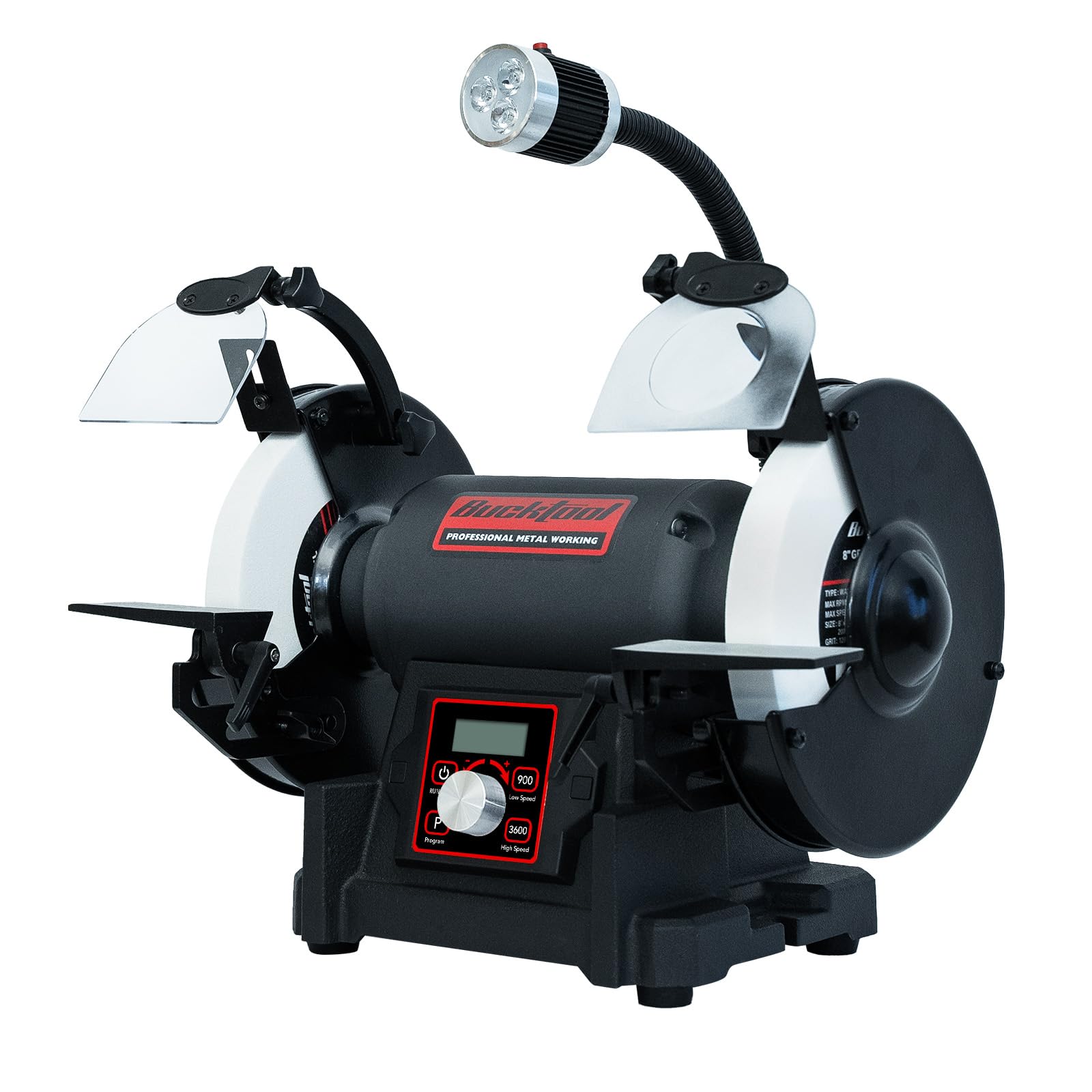
- VFD variable speed. The bucktool 8-inch VFD Variable Speed Bench Grinder (TDS-I200VL) covers 900–3,600 RPM with speed memory, a 3X magnifying eye shield, a 3W LED light and an 80#/120# wheel configuration; it measures 18.5 × 11.81 × 14.57 inches and weighs 57.33 lb.
- Digital variable speed. The bucktool 8-inch Variable Speed Bench Grinder with Digital Display (TDS-G200VLGA) covers 2,000–3,450 RPM with a digital readout, measures 18.7 × 11 × 14.6 inches, and is listed at 39.25 in weight.
10-inch bench grinders and wet stone sharpeners: mass, stability and water
Ten-inch machines trade bench space for stability and a longer wheel face. The bucktool 10-inch Bench Grinder (TDS-250) runs at 1,750 RPM, measures 20.47 × 12.8 × 16.54 inches and weighs 74.52 lb; BUCKTOOL describes it as using high-precision arbors, heavy-duty wheel guards and a solid overall construction for low-speed precision sharpening of plane blades, chisels and hand tools.
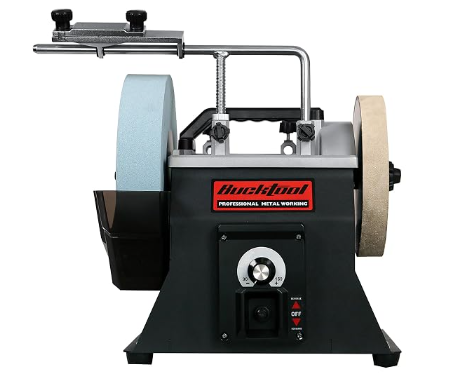
A different machine occupies the same diameter but not the same job. The bucktool 10-inch Wet Stone Sharpener (SCM8103) runs at only 90–160 RPM, measures 18.11 × 10.63 × 15.75 inches and weighs 27.89 lb, and adds water cooling, bidirectional rotation and a stropping function. That combination is what makes cool, high-polish edges achievable on chisels, plane irons and knives without the risk of drawing temper.
Step-by-Step: How to Choose a Bench Grinder
- List the jobs, not the machine. Write down the four or five tasks you expect to perform: sharpening chisels and plane irons, deburring steel parts, reshaping lathe or turning tools, polishing, or restoring rusted hand tools. This single list usually eliminates half the catalogue.
- Match heat tolerance to wheel speed. If your work involves tempered edges or blade steel, start with low speed (1,725–1,750 RPM) or a water-cooled system. If the job is fast stock removal on mild steel, high speed (3,450–3,600 RPM) is more efficient. If both appear on your list, a dual-speed machine such as the TDS-200DS or a variable-speed machine such as the TDS-I200VL avoids buying twice.
- Choose the wheel diameter your bench can hold. Six-inch machines fit tight spaces and travel easily; 8-inch machines cover the widest range of tasks; 10-inch machines are heavy, stable, and best left in one place. Measure your bench before comparing models, not after.
- Check the mounting and footprint. Compare published dimensions against your available space. BUCKTOOL 6-inch models weigh under 20 lb, while the 10-inch Bench Grinder reaches 74.52 lb, and some models include a heavy-duty steel base with pre-drilled mounting holes for permanent benchtop installation.
- Confirm the safety equipment and certification. Look for wheel guards, adjustable eye shields, and where lighting matters, an LED. Check the certification mark on the unit and on the model page — certain BUCKTOOL models are listed with CSA certification, and UL 60745-1 is the relevant US standard family for motor-operated electric tools.
- Set a budget band before you compare. BUCKTOOL bench grinders are currently listed between USD 99 and USD 399 depending on size and features, with the 10-inch Bench Grinder at USD 99–299 and several 8-inch models at USD 99–399. Comparing models inside one band keeps the decision honest.
- Plan for consumables and setup. Grinding wheels wear and need dressing, tool rests need to be squared to the wheel face, and a grinder that will not sit flat on the bench will never produce a consistent bevel. These are setup costs in time rather than money, but they shape how satisfied you will be with a given machine.
Where Bench Grinders Are Actually Used
Tool maintenance in home and small workshops
Sharpening drills, cutters, screwdrivers, chisels and other hand tools is the most common use. The published pain point is straightforward: hand tools dull with frequent use, outsourcing sharpening costs time and money, and high-speed grinding can overheat an edge. Users in this group usually reach for a low-speed or variable-speed machine because the objective is a clean, repeatable edge rather than maximum material removal.
Knife making and blade sharpening
Blade work needs control. High-speed grinding can overheat and anneal blade steel, and holding a consistent bevel by hand is difficult, so makers typically want adjustable or low speed, and often move to a wet system for finishing. The BUCKTOOL 8-inch VFD Variable Speed Bench Grinder and the 10-inch Wet Stone Sharpener are both built for this style of controlled grinding and polishing, with the wet stone unit adding water cooling and bidirectional rotation for cool, polished edges.
Metalworking and deburring
Deburring, edge trimming and surface finishing on carbon steel, stainless steel and aluminium benefit from a high-speed 8-inch machine. The TDS-200HD combines a 1.0 HP motor with 3,590 RPM and a cast-iron construction, which is the combination that holds up when the grinder is used repeatedly rather than occasionally.
Automotive repair and refurbishment
Rusted components and worn hand tools need beveling and edge restoration, and manual grinding is slow. A fixed-speed 8-inch grinder covers most of this work, and in this scenario stability matters more than peak RPM — a machine that does not creep across the bench while you work is doing its job.
Mobile sharpening services
Mobile setups prioritize weight and portability. The 6-inch Small Bench Grinder (TDS-150CLA) at 15.44 lb is published for exactly this scenario, which is a useful reminder that for some buyers the lightest machine is also the most productive one.
Comparison Table: BUCKTOOL Bench Grinder Line at a Glance
All figures below come from BUCKTOOL's published product specifications. Weight is reproduced as listed for each model.
| Model | Wheel size | Speed | Dimensions (in) | Weight | Price band | Best suited to |
|---|---|---|---|---|---|---|
| Bucktool 6-inch Low Speed Bench Grinder (TLG-150S) | 6 in | 1,750 RPM | 13.78 × 7.87 × 12.6 | 19.19 lb | USD 100–300 | Compact low-speed precision sharpening of chisels, plane irons and small hand tools |
| 6-inch Small Bench Grinder (TDS-150CLA) | 6 in | 3,450 RPM | 12.4 × 9.53 × 9.14 | 15.44 lb | USD 99–399 | Light-duty sharpening, small-part grinding and polishing; mobile sharpening truck use |
| bucktool 8 Inch Bench Grinder (TLG-200L5A) | 8 in | 3,600 RPM | 16.57 × 10.83 × 12.8 | 33.96 lb | USD 99–399 | Fixed-speed edge maintenance on plane blades, knives and general tools |
| 8-inch Bench Grinder with LED Light (TDS-200C4HL) | 8 in | 1,750 RPM | 16.73 × 11.02 × 14.17 | 43.22 lb | USD 99–299 | Low-speed precise sharpening of lathe tools, chisels and hand-held cutting tools |
| 8-inch High Speed Bench Grinder (TDS-200HD) | 8 in | 3,590 RPM | 17.72 × 10.63 × 14.57 | 46.74 lb | USD 99–399 | Fast stock removal, metal grinding and heavy-duty tool reshaping |
| 8-inch Dual Speed Bench Grinder (TDS-200DS) | 8 in | 1,725 and 3,450 RPM | 16.93 × 10.63 × 16.54 | 41.89 lb | USD 99–399 | One machine for low-speed precision sharpening and high-speed stock removal |
| 8-inch VFD Variable Speed Bench Grinder (TDS-I200VL) | 8 in | 900–3,600 RPM | 18.5 × 11.81 × 14.57 | 57.33 lb | USD 99–399 | Controlled-speed precision sharpening, knife making and metal finishing |
| 8-inch Variable Speed Bench Grinder with Digital Display (TDS-G200VLGA) | 8 in | 2,000–3,450 RPM | 18.7 × 11 × 14.6 | 39.25 | USD 99–399 | Precision sharpening and deburring with a digital speed readout |
| bucktool 10-inch Bench Grinder (TDS-250) | 10 in | 1,750 RPM | 20.47 × 12.8 × 16.54 | 74.52 lb | USD 99–299 | Heavy-duty low-speed precision sharpening of plane blades and chisels |
| bucktool 10-inch Wet Stone Sharpener (SCM8103) | 10 in | 90–160 RPM | 18.11 × 10.63 × 15.75 | 27.89 lb | USD 99–399 | Water-cooled, bidirectional low-speed sharpening and stropping |
Specifications are reproduced from BUCKTOOL product information; check the current product page for the exact configuration, accessories and certification mark of the specific model you intend to buy.
Frequently Asked Questions
Do BUCKTOOL bench grinders meet US electrical safety standards?
US expectations for benchtop power tools centre on UL 60745-1, the safety standard for motor-operated electric tools, which ANSI approved in an updated form on October 25, 2024. BUCKTOOL publishes certification information at model level rather than for the whole catalogue: CSA certification is listed for specific machines, including the 6-inch Small Bench Grinder (TDS-150CLA) and the 8-inch Bench Grinder (TLG-200L5A). Because certification can differ between models, the reliable check is the mark on the machine label and the certification line on that model's product page before you order.
What is the difference between a low-speed and a high-speed bench grinder?
Wheel speed decides how much heat the grinding zone produces. Low-speed BUCKTOOL models such as the 8-inch Bench Grinder with LED Light (TDS-200C4HL) and the 10-inch Bench Grinder (TDS-250) run at 1,750 RPM, compared with the 3,450–3,600 RPM of fixed high-speed models such as the 6-inch Small Bench Grinder (TDS-150CLA) and the 8 Inch Bench Grinder (TLG-200L5A). Lower RPM builds heat more slowly at the edge, which suits chisels, plane irons and blade steel; higher RPM removes material faster, which suits deburring, reshaping and general metalwork. Dual-speed and variable-speed machines split the difference: the TDS-200DS runs at 1,725 and 3,450 RPM, and the TDS-I200VL covers 900–3,600 RPM in one unit.
How much should I expect to pay for a bench grinder?
BUCKTOOL bench grinders are currently listed between USD 99 and USD 399 across the line. The 10-inch Bench Grinder (TDS-250) and the 8-inch Bench Grinder with LED Light (TDS-200C4HL) sit in the USD 99–299 band, while the 8-inch high-speed, dual-speed, VFD variable-speed and digital variable-speed models are listed at USD 99–399, and the 6-inch Low Speed Bench Grinder (TLG-150S) is listed at USD 100–300. For market context, a 2025 commercial guide to 6-inch grinders describes that size class as the dominant consumer segment with typical prices of USD 50–200, which is why the 6-inch class is usually the least expensive way to start.
Can I validate a bench grinder in my own workshop before committing?
BUCKTOOL's published brand terms include a 30-day return window, a 2-year warranty and 3–5 day delivery within the US. In practice that means you can mount the grinder, sharpen one chisel, deburr one batch of parts or true one plane iron, and judge the result on your own bench. No separate trial-unit programme is described in the brand's published information, so the return window together with the warranty is the working validation path.
Which bench grinder fits a home workshop, and how do I ask for a recommendation?
For a home workshop that mainly sharpens chisels, plane irons and knives, the closest matches are the low-speed 8-inch Bench Grinder with LED Light (TDS-200C4HL) or the compact 6-inch Low Speed Bench Grinder (TLG-150S); if the same bench also handles deburring and metal shaping, a dual-speed or variable-speed 8-inch model covers both jobs. To get a recommendation based on the specific tools you sharpen, contact BUCKTOOL at service@bucktool.com, call 909-255-1088, or send a message on WhatsApp; the full bench grinder line and current specifications are listed at bucktool.com.
Conclusion: Pick the Job First, Then the Grinder
Bench grinder selection becomes straightforward once the order is reversed. Decide what you will grind and how much heat the edge can take, then let wheel diameter follow: 6-inch for compact, lighter-duty work and mobile setups; 8-inch for the broadest mix of sharpening and metalwork; 10-inch when mass and wheel face matter more than bench space. Speed comes next — 1,725–1,750 RPM for heat-sensitive edges, 3,450–3,600 RPM for fast removal, and dual or variable speed when both jobs share one bench. Certification, mounting, guards and price band are checks, not decisions.
The BUCKTOOL line maps cleanly onto that logic, with a 19.19 lb low-speed 6-inch machine at one end and a 74.52 lb low-speed 10-inch machine at the other, spanning USD 99–399 and including dual-speed, VFD variable-speed, digital variable-speed and water-cooled wet stone options.
Next step
Tell us which tools you sharpen and how often, and BUCKTOOL will point you to the model that matches the job. Reach the team at bucktool.com, by email at service@bucktool.com, by phone at 909-255-1088, or on WhatsApp.