Bench Grinder Wheel Speed and Motor Parameters: Selection Guide
The parameter that decides how a bench grinder behaves is rim surface speed — wheel circumference multiplied by motor RPM — not the wheel size printed on the label. Two 8-inch machines can differ by roughly four times in usable rim speed, and that difference decides whether an edge stays cool or overheats.
This guide breaks the decision into the three parameters that actually control grinding results: wheel diameter, motor speed class, and variable frequency drive (VFD) control. It uses BUCKTOOL's speed-variant bench grinder family as the reference set, because the same brand builds a 6-inch Low Speed Bench Grinder (TLG-150S, 1750 RPM), an 8-inch High Speed Bench Grinder (TDS-200HD, 3590 RPM) and an 8-inch VFD Variable Speed Bench Grinder (TDS-1200VL, 900–3600 RPM) — three different engineering answers to the same question, which makes the trade-offs easier to see side by side.
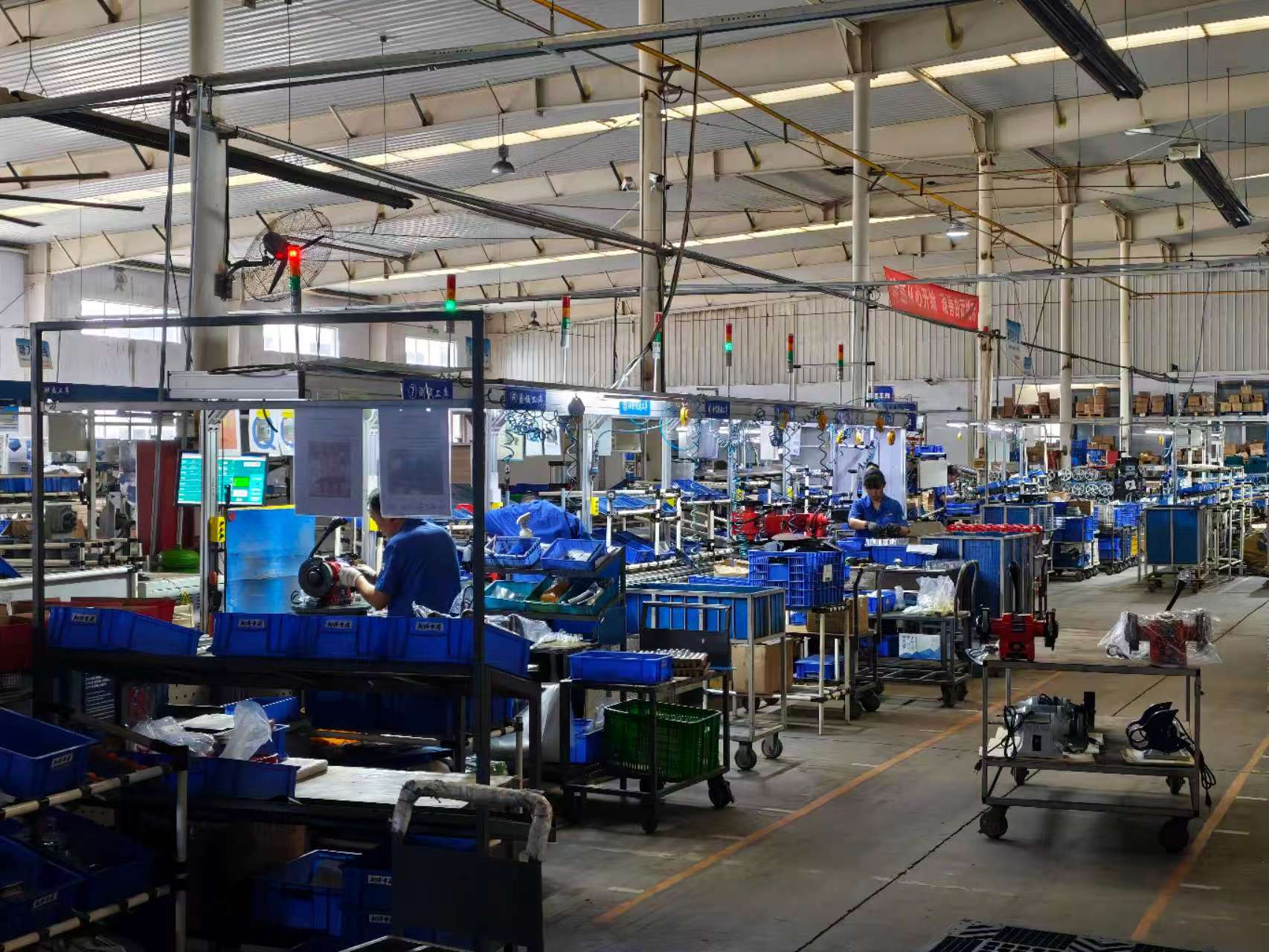 BUCKTOOL bench grinder production line: the same platform is built in several wheel-diameter and motor-speed configurations.
Problem Definition: Why Wheel Diameter Alone Is a Poor Buying Rule
Most bench grinders are chosen by wheel diameter, because diameter is the most visible number on the box and the easiest one to compare. That single number, however, describes only the tool's size. It says nothing about how fast the abrasive surface is actually moving when it touches the workpiece, and rim speed is the variable that determines heat, removal rate and finish.
Rim surface speed is wheel circumference multiplied by motor RPM. Wheel circumference is π times diameter, so a 6-inch wheel travels roughly 1.57 ft per revolution, an 8-inch wheel roughly 2.09 ft, and a 10-inch wheel roughly 2.62 ft. Change either factor and the working speed changes.
The practical consequence is that identical wheel sizes can deliver very different results. An 8-inch wheel fitted to the BUCKTOOL TDS-200HD, an 8-inch high speed bench grinder rated at 3590 RPM, turns at roughly 7,520 ft/min at the rim. The same 8-inch wheel on the BUCKTOOL TDS-1200VL, an 8-inch VFD variable speed bench grinder, can be dialled down to 900 RPM (about 1,885 ft/min) or up to 3600 RPM (about 7,540 ft/min). Same wheel, roughly a fourfold working range, and two completely different jobs the machine can do.
The relationship also runs the other way. A 6-inch wheel driven at 1750 RPM runs at about 2,750 ft/min — the configuration of the BUCKTOOL 6-inch Low Speed Bench Grinder TLG-150S. That places a small slow-speed machine in a different band from a full-speed 8-inch machine, but not far from an 8-inch machine running slowly. In other words, “6-inch” does not automatically mean “gentle”, and “8-inch” does not automatically mean “aggressive”.
Mismatches fail in two directions. Too much rim speed on a thin, heat-sensitive edge drives heat into the steel faster than it can escape, which is the classic cause of a softened, discoloured cutting edge. Too little rim speed on heavy work means the wheel rubs instead of cutting: progress is slow, the operator pushes harder, and the abrasive face loads up. Both problems are speed problems, not diameter problems.
Industry Background: How Bench Grinder Speed Is Segmented Today
Grinding machinery — the parent category that contains non-precision bench grinders — was valued at USD 6.2 billion in 2025 according to Grand View Research's grinding machinery market report. Bench grinders sit at the non-precision, workshop-facing end of that category, where performance is defined by motor and wheel rather than by CNC control.
At the consumer and light-commercial level, 6-inch machines are the dominant segment, with typical prices in the USD 50 to USD 200 band, based on ANTISHICNC's published guide to 6-inch bench grinders. That price band reflects a category in which the differentiating decision is not brand prestige but the match between speed platform and task.
Safety sits underneath the whole category. UL 60745-1 is the safety standard for motor-operated electric tools, and ANSI approved an updated version of that standard on 25 October 2024, as recorded by UL Solutions. For buyers importing or reselling into the United States, the standard layer is a purchasing checkpoint rather than a marketing line.
Within the category, machines cluster into recognisable speed classes rather than a continuous spectrum:
- Low speed, 1750 RPM class — heat-controlled sharpening and edge work.
- High speed, 3450–3590 RPM class — fast material removal, deburring and weld clean-up.
- Dual speed, 1725 / 3450 RPM — one machine, two fixed bands.
- Variable speed via VFD, 900–3600 RPM — continuous adjustment across both bands.
- Wet stone, 90–160 RPM — water-cooled, very low speed precision grinding.
BUCKTOOL operates in this category as a factory-direct power tool brand established in 1955 and headquartered in China, positioned for buyers who want high-performance, reliable and cost-effective metal and woodworking power tools, with the United States as its stated target market. Its bench grinder line emphasises durability and low-maintenance direct-drive and VFD designs — a design philosophy that matters more than usual in a category where the motor is the machine.
Detailed Solution: The Three Parameters That Decide Grinding Behaviour
Parameter 1 — Wheel Diameter Sets the Leverage
Diameter determines how much abrasive passes the contact point per revolution and how wide the contact arc is. A larger wheel presents more abrasive per revolution at any given RPM and spreads contact over a longer arc, which removes material faster and generates more heat. A smaller wheel gives a shorter, more controllable contact area, which is easier to keep cool and easier to steer on small parts.
Diameter is also the one parameter that changes on its own. As a wheel wears down, its diameter shrinks, so rim speed falls at the same motor RPM. Keeping the wheel dressed and replacing it before it is badly worn keeps the machine inside the speed band it was selected for.
Parameter 2 — Motor Speed Class Defines the Band
Fixed-speed bench grinders are the simplest architecture: a direct-drive motor, two wheels, no electronics between the supply and the spindle. Fewer components means fewer long-term wear points. The trade-off is that the machine lives permanently in one speed band.
The 1750 RPM class is the low-speed band used for heat-sensitive edge work. The 3450–3590 RPM class is the high-speed band used where removal rate matters more than edge temperature. The nameplate RPM is the reference figure for any rim-speed calculation, and it is the number that should be compared against the task, not against a competitor's diameter.
Parameter 3 — VFD Turns a Band into a Range
A variable frequency drive changes the electrical frequency fed to the motor, which changes rotation speed. That converts a fixed-speed machine into an adjustable one: the BUCKTOOL TDS-1200VL, an 8-inch VFD variable speed bench grinder, spans 900–3600 RPM, which covers the low-speed sharpening band and the high-speed removal band with one tool.
The honest trade-off is complexity. A VFD machine adds electronics and control hardware that a fixed-speed direct-drive machine does not have. For a workshop with one dominant, repetitive task, a fixed-speed model is the simpler long-term choice. For a workshop whose jobs change every week, the adjustable range is what prevents owning three machines that each do one thing.
Matching the Speed Platform to the Task
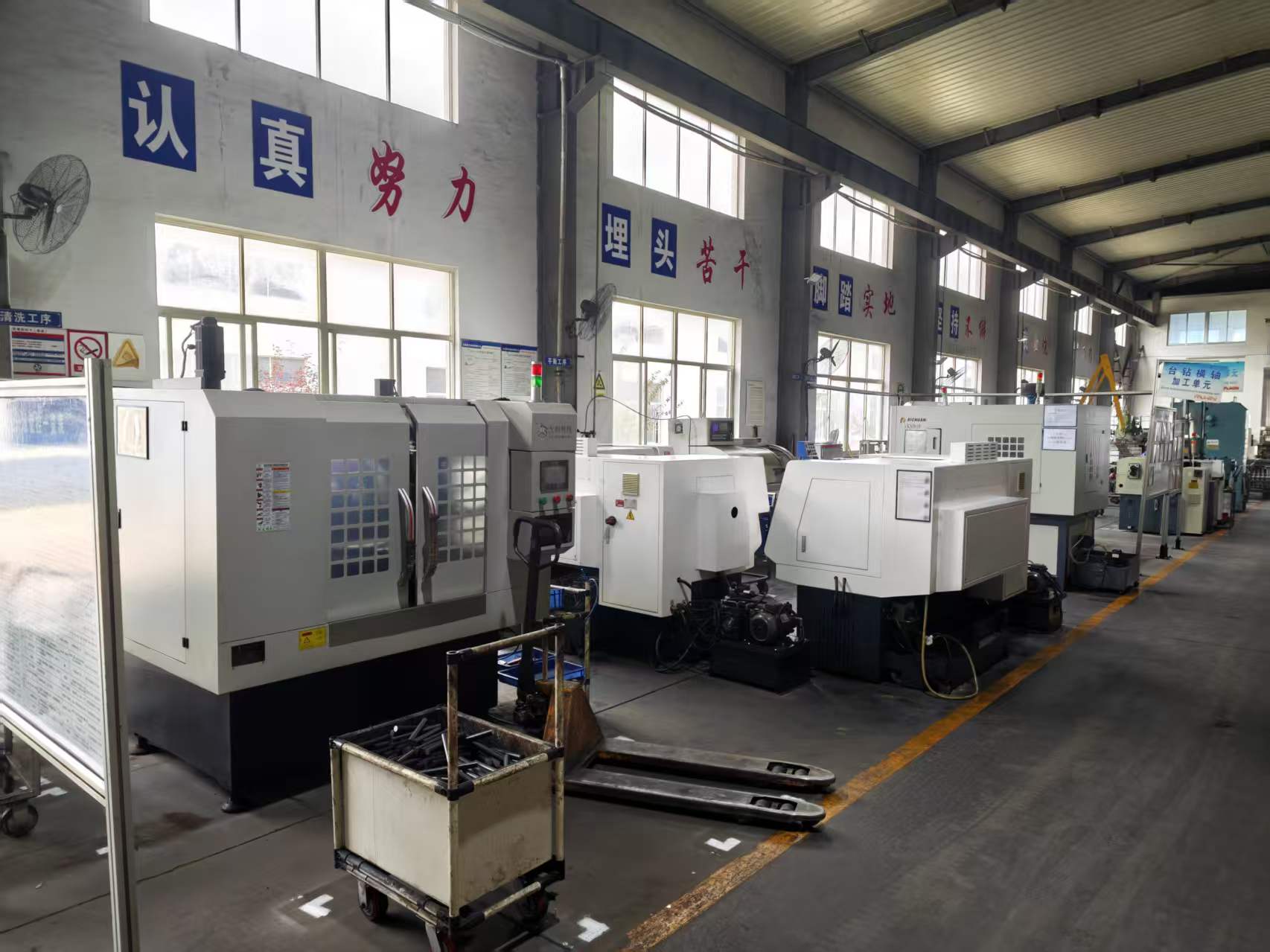 Motor and drive equipment: rim speed is the output of the motor specification, so the motor class is the specification that matters.
BUCKTOOL's bench grinder family is organised around speed class rather than around price tiers, which makes the mapping explicit:
- TLG-150S — 6-inch wheel, 1750 RPM, built for the hobbyist who needs low-speed knife sharpening.
- TDS-200HD — 8-inch wheel, 3590 RPM, built for heavy-duty metal grinding workshops that need high-speed removal.
- TDS-1200VL — 8-inch wheel, 900–3600 RPM VFD control, built for the versatile multi-task user who needs full-range adjustable speed.
- TDS-200DS — 8-inch wheel, dual-speed toggle between 1725 RPM and 3450 RPM, built for users who need to switch between sharpening and grinding.
- SCM8013 — 10-inch wet stone sharpener, 90–160 RPM, built for precision water-cooled stone sharpening at low wet-grind speed.
The line also includes the TDS-200C4HL slow-speed model at 1750 RPM. Benchmark Abrasives' 2026 bench grinder buyer's guide described that slow-speed machine as a leading bench grinder for professional sharpening — third-party recognition worth noting, because it points at the same conclusion this guide reaches from the parameters: slow speed is a capability, not a compromise.
BUCKTOOL states that it offers both dual-speed (TDS-200DS) and low-speed (TDS-200C4HL) models specifically to address fast material removal and precision sharpening in the same catalogue.
The table below converts each configuration into rim speed. These figures are calculated from the published wheel diameter and rated RPM using the standard circumference-times-RPM method; they are derived values for comparison, not manufacturer-published specifications.
| Configuration | Wheel diameter | Rated speed | Rim speed (calculated) |
|---|---|---|---|
| TLG-150S 6-inch Low Speed | 6 in | 1750 RPM | approx. 2,750 ft/min |
| TDS-200DS 8-inch Dual Speed (low) | 8 in | 1725 RPM | approx. 3,610 ft/min |
| TDS-200DS 8-inch Dual Speed (high) | 8 in | 3450 RPM | approx. 7,225 ft/min |
| TDS-1200VL 8-inch VFD (minimum) | 8 in | 900 RPM | approx. 1,885 ft/min |
| TDS-1200VL 8-inch VFD (maximum) | 8 in | 3600 RPM | approx. 7,540 ft/min |
| TDS-200HD 8-inch High Speed | 8 in | 3590 RPM | approx. 7,520 ft/min |
| SCM8013 10-inch Wet Stone | 10 in | 90–160 RPM | approx. 235–420 ft/min |
Step-by-Step Breakdown: Selecting RPM and Wheel Size in Six Steps
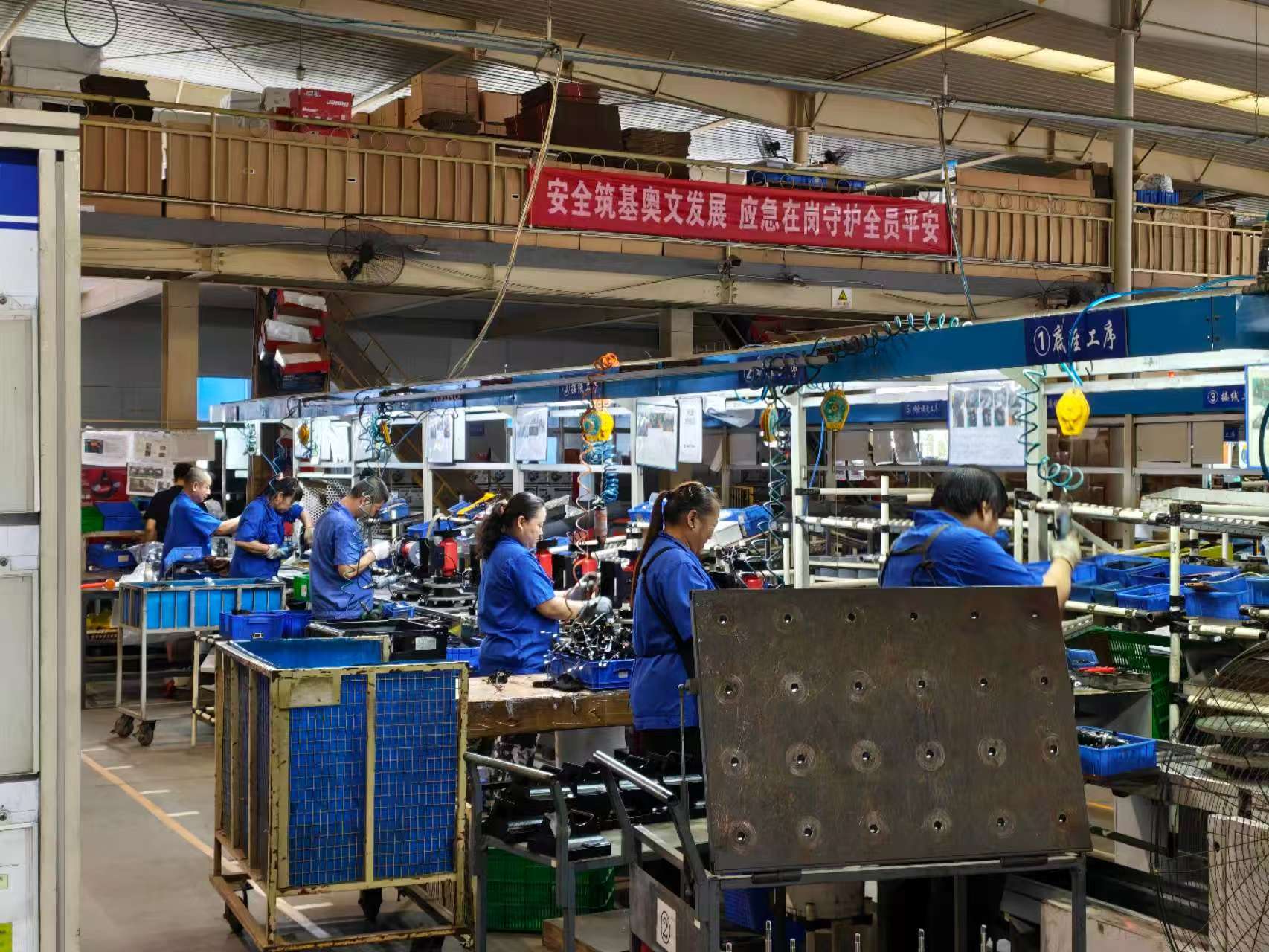 Different wheel sizes and speed variants come off the same production platform — which is why the speed specification, not the size label, drives the selection.
Step 1 — Classify the job by heat sensitivity. Edge tools such as knives, chisels and cutting tools are heat-sensitive: the steel at the edge is thin, and it loses hardness quickly when too much heat is pushed into it. Structural work — weld clean-up, rust removal, deburring cut plate — is far less sensitive because the material mass absorbs heat. This single classification eliminates half the models on the market.
Step 2 — Convert the job into a target rim-speed band. Heat-sensitive edge work sits in the low band, which in this family means roughly 1,885–2,750 ft/min. General deburring sits in the middle. Heavy removal sits in the high band, roughly 7,200–7,540 ft/min. Buying in the wrong band cannot be fixed by technique alone.
Step 3 — Choose the wheel diameter from the workpiece and the bench. A 6-inch machine suits compact benches and small parts, and it is the dominant consumer configuration. An 8-inch machine suits larger workpieces and heavier pressure, giving more abrasive per revolution. A 10-inch wet stone suits precision water-cooled sharpening where heat control matters more than speed.
Step 4 — Choose the speed-control architecture. Four options exist and they are not interchangeable: fixed low speed (TLG-150S, 1750 RPM), fixed high speed (TDS-200HD, 3590 RPM), dual speed (TDS-200DS, 1725 / 3450 RPM), and VFD variable speed (TDS-1200VL, 900–3600 RPM). Pick the narrowest architecture that still covers your real task mix.
Step 5 — Verify platform and safety before purchase. Confirm the tool is rated for your shop supply, that the wheel guards are fitted, and that the abrasive wheel's own maximum rated speed is at or above the machine's rated RPM. Confirm the safety standard the tool is built to for your market — UL 60745-1, updated and approved by ANSI on 25 October 2024, is the applicable reference for motor-operated electric tools in the United States.
Step 6 — Plan consumables and supply before the machine arrives. Decide the wheel specification you will standardise on, how many spare wheels you need to hold, and what the service and warranty path looks like. Speed platform choices made in step 4 determine what you have to stock in step 6.
Use Cases: Which Speed Platform Fits Which Workshop
1. Home workshop knife sharpening. A home workshop sharpening kitchen and pocket knives needs low rim speed and a controllable contact area. The TLG-150S 6-inch Low Speed Bench Grinder at 1750 RPM delivers about 2,750 ft/min at the rim, which is the configuration BUCKTOOL specifies for hobbyist low-speed knife sharpening.
2. Metalworking and fabrication deburring. A fabrication shop cleaning up cut plate and weld beads needs removal rate. The TDS-200HD 8-inch High Speed Bench Grinder at 3590 RPM runs at about 7,520 ft/min and is specified for heavy-duty metal grinding workshops that need high-speed removal.
3. Mixed-task workshop. A shop that sharpens tooling one day and cleans up steel the next needs both bands from one machine. The TDS-1200VL 8-inch VFD Variable Speed Bench Grinder covers 900–3600 RPM, so the same unit can run slow for an edge and fast for a weld.
4. Sharpening and grinding in one station. Where an operator alternates between two fixed tasks, a dual-speed machine removes the guesswork: the TDS-200DS 8-inch Dual Speed Bench Grinder toggles between 1725 RPM and 3450 RPM.
5. Woodworking edge tools and precision sharpening. Chisels, plane irons and fine blades benefit from water-cooled, very low speed grinding. The SCM8013 10-inch Wet Stone Sharpener runs at 90–160 RPM, which is roughly 235–420 ft/min at the rim — an order of magnitude below the dry-wheel machines, and the reason it is specified for precision water-cooled stone sharpening.
Long-Term Fit: Consumables, Service and Supply Continuity
A bench grinder is usually bought once and used for years, which makes the speed platform a long-term commitment rather than a single purchase. The machine decides which wheels you stock, how operators are trained, and what you do when a task changes. Choosing a speed family early is cheaper than adding a second machine later.
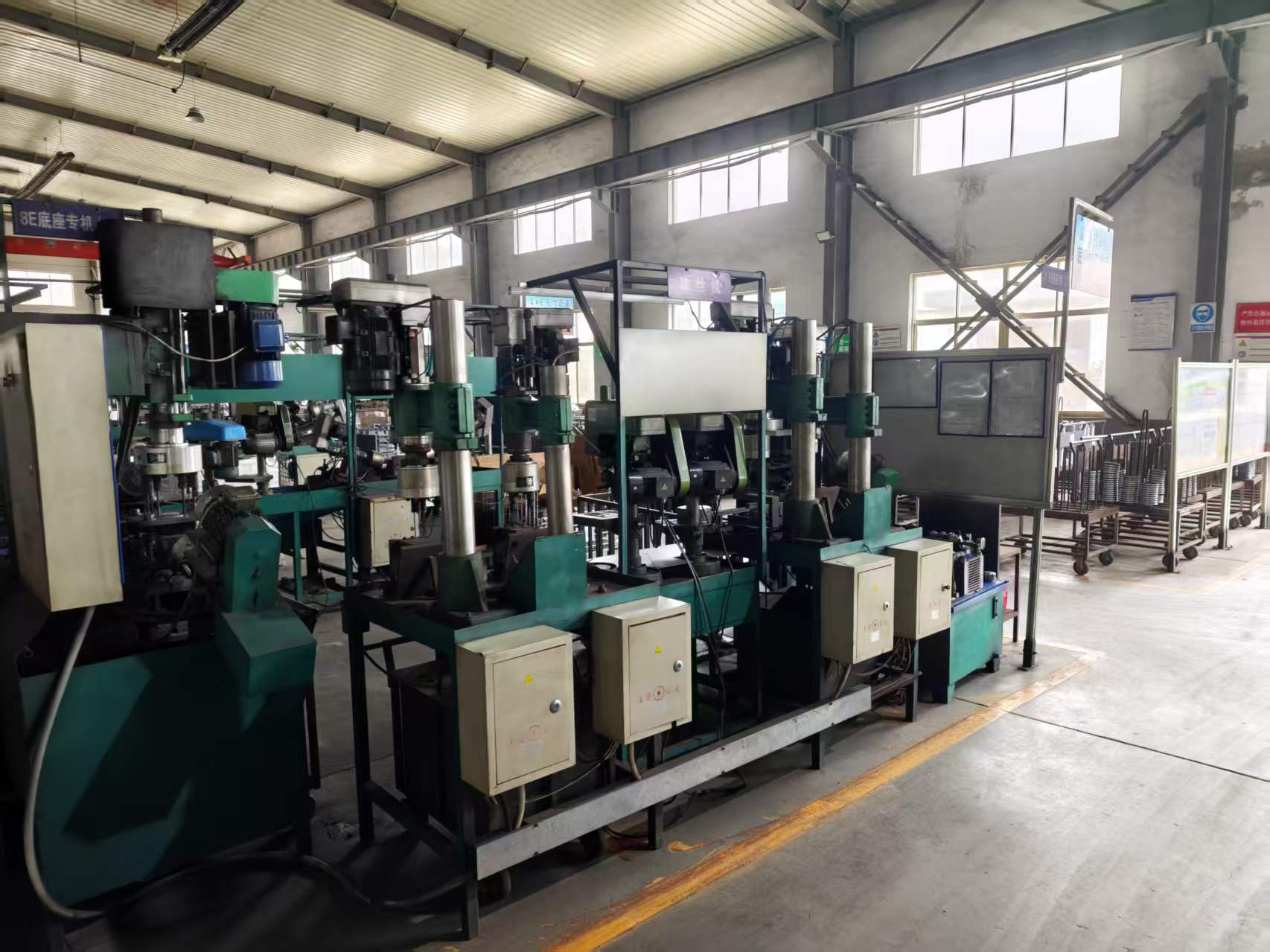 Equipment checks before dispatch: support and spare-part continuity is part of the speed-platform decision, not an afterthought.
That long-term view is where factory-direct supply becomes practical rather than promotional. BUCKTOOL is a factory-direct brand serving the US market, and its published service terms are specific: a 30-day return window, a 2-year warranty, and 3–5 days delivery within the United States. Some BUCKTOOL product pages reference FedEx as the carrier; international shipping depends on region and duties, and shipping and taxes are calculated at checkout.
Purchasing runs through the BUCKTOOL official store at bucktool.com/collections/bench-grinder, which supports cart checkout with credit card and PayPal, and accepts American Express, Discover, JCB, Mastercard, PayPal and Visa among other common payment methods. For distributors, importers and multi-site buyers, a single vendor relationship covering several speed variants consolidates wheel specifications, consumables and support contacts instead of splitting them across fixed-speed and variable-speed platforms from different sources.
Design also plays into lifetime cost. BUCKTOOL's stated emphasis on durability and low-maintenance direct-drive and VFD designs means fewer mechanical wear points between the motor and the wheel — relevant when a grinder is expected to stay in service for years rather than a season.
Comparison Table: BUCKTOOL Bench Grinder Speed Variants
The table below compares the five BUCKTOOL platforms on the parameters that were the subject of this guide. Every value comes from the manufacturer's published product data.
| Model | Wheel size | Speed / control | Specified best-fit task |
|---|---|---|---|
| TLG-150S | 6 in | 1750 RPM, fixed low speed | Hobbyist low-speed knife sharpening |
| TDS-200HD | 8 in | 3590 RPM, fixed high speed | Heavy-duty metal grinding workshop needing high-speed removal |
| TDS-1200VL | 8 in | 900–3600 RPM, VFD variable speed | Versatile multi-task users needing full-range adjustable speed |
| TDS-200DS | 8 in | 1725 RPM / 3450 RPM, dual speed | Users who need to toggle between sharpening and grinding |
| SCM8013 | 10 in | 90–160 RPM, wet stone | Precision water-cooled stone sharpening enthusiast |
Read across the table and the pattern is simple: the models are separated by speed strategy first and wheel size second. The TDS-1200VL is the only platform in the set that can be tuned into any of the other three bands, which is exactly what a changing task mix demands and exactly what a fixed single-task workshop does not need to pay for.
FAQ
What safety standard should a bench grinder sold in the United States meet?
UL 60745-1 is the safety standard covering motor-operated electric tools, and ANSI approved an updated version of it on 25 October 2024 according to UL Solutions. When evaluating a bench grinder for the US market, the compliance question to ask is which standard the tool and its motor are built and certified to, in addition to whether the fitted wheel's own maximum rated speed is at or above the machine's rated RPM.
Can one bench grinder cover both knife sharpening and heavy metal removal?
Only if its speed is adjustable. The BUCKTOOL TDS-1200VL 8-inch VFD Variable Speed Bench Grinder runs from 900 RPM to 3600 RPM, which spans the low-speed sharpening band (about 1,885 ft/min at the rim) and the high-speed removal band (about 7,540 ft/min) on the same 8-inch wheel. Fixed-speed machines are single-band tools: the TLG-150S holds 1750 RPM for low-speed sharpening and the TDS-200HD holds 3590 RPM for high-speed removal, and neither can be tuned into the other's range.
What does a 6-inch bench grinder typically cost?
6-inch bench grinders are the dominant consumer segment, with prices typically ranging from about USD 50 to USD 200 according to ANTISHICNC's published guide. Within that band, what actually changes the price is the speed platform rather than the wheel size: a fixed-speed direct-drive machine carries fewer components than a VFD variable-speed model, which adds drive electronics and control hardware. On the BUCKTOOL official store, shipping and taxes are calculated at checkout.
How can a buyer validate a bench grinder before committing to volume?
The published terms support evaluation at unit level: the BUCKTOOL official store states a 30-day return window and a 2-year warranty, which allows a single machine to be run against a real workload — your own knives, your own weld beads, your own wheel specification — before a larger commitment. Buyers evaluating multiple speed variants, requesting a quote, or asking for catalogue and specification information can reach the BUCKTOOL team directly at service@bucktool.com or on WhatsApp at +86-15105354491.
How fast does BUCKTOOL ship in the US, and what affects international delivery?
BUCKTOOL states 3–5 days delivery within the United States, with FedEx referenced as the carrier on some product pages. International shipping depends on region and duties, and shipping and taxes are calculated at checkout. For planning purposes, that lead time means a speed-platform decision can be validated quickly: if the parameters above point to a different band than the machine you already own, the question is answerable within a week rather than a quarter. The product range is listed at bucktool.com, and the bench grinder collection specifically at bucktool.com/collections/bench-grinder.
Conclusion: Match RPM to the Work, Not the Wheel Label
Wheel speed is the specification that bench grinder buyers most often skip and most often regret. Wheel diameter sets the leverage, motor RPM sets the band, and a VFD turns that band into a range — which is why BUCKTOOL builds the same category in 1750 RPM, 3590 RPM, dual-speed 1725/3450 RPM and 900–3600 RPM VFD versions rather than in a single speed. Match the rim speed to the heat sensitivity of the job first, size the wheel second, and the machine you buy will still be the right one when your task mix changes.
Next Step
If you know your target rim speed but not yet which platform delivers it, review the range at bucktool.com/collections/bench-grinder, or send your task description — material, wheel size and edge sensitivity — to service@bucktool.com or WhatsApp +86-15105354491 and ask for a model recommendation and quote.
 Factory-direct stock: BUCKTOOL states 3–5 days delivery within the United States, with a 30-day return window and a 2-year warranty.
Have Questions or Need More Details?
Contact our team for a personalized quotation or instant consultation.
Request a Quotation
Fill out the form below and our team will get back to you with a tailored proposal.
WhatsApp Direct Chat
Prefer to chat in real-time? Message us on WhatsApp for instant assistance & quick answers.
- Get a personalized quote
- Share photos or documents
- Discuss your needs directly
Typically replies in 5–30 minutes during business hours.