Choosing a Bench Grinder: Size, Speed, Certification, Price
Choosing a Bench Grinder: Size, Speed, Certification, Price
Answer first: a bench grinder either fits your bench or it does not, and the decision rests on four hard constraints — wheel diameter, spindle speed, electrical and safety certification, and price band. Everything else, including LED lighting, wheel grit, base material and magnifier shields, is a detail you settle once those four are right. A 3,590 RPM high-speed machine applied to a thin hardened edge can draw the temper out of the steel in seconds, while a 90 RPM water-cooled wheel applied to a job that needs twenty seconds of stock removal will cost you an afternoon. This guide works through each constraint using published specifications from the Bucktool bench grinder range — ten models covering 6-inch, 8-inch and 10-inch wheels — alongside US market and standards data for buyers at the research and evaluation stage.
Why Bench Grinder Buyers Get the Specification Wrong
Bench grinders are bought by job, not by brand, yet most purchase errors trace back to the same handful of mismatches between the machine and the work it will actually do.
- Speed chosen by habit instead of heat tolerance. Hand tools become dull after frequent use, and high-speed grinding may overheat and damage a tool edge — the exact problem low-speed machines exist to solve. Buyers who sharpen hardened chisels, plane irons or knife blanks often discover this after the first burnt edge.
- Wheel diameter chosen by price. A 6-inch machine is lighter and cheaper, but a 10-inch wheel is what plane blades and heavy tooling genuinely need. Diameter also changes the geometry of the work rest and the clearance around long workpieces.
- Duty cycle ignored. Published customer reviews of this product family include one 3-star rating reporting the machine running very hot after five minutes of continuous work and limited torque on a regular-size piece. That is a duty-cycle limit worth knowing about if you grind for an hour at a time.
- Certification treated as a formality. Safety listings are model-specific and market-specific. Assuming one listing covers an entire catalogue is how resellers end up holding non-compliant stock.
- Bench footprint and weight ignored. The range spans 15.44 lb for a 6-inch compact up to 74.52 lb for a 10-inch machine. Both need a mounting surface, but only one needs two people to lift onto it.
- Setup friction underestimated. Published reviews list setup time as the main drawback of this product family, and adjustable tool rests have to be re-squared after locking. If you change angles constantly, that friction compounds.
The practical fix is to define the constraint set before comparing models: which edge you sharpen, how hot it can safely get, how often you do it, what the electrical and safety rules require, and what the machine may cost landed at your bench.
What the Bench Grinder Market Looks Like in 2026
Bench grinders sit inside the wider grinding machinery category, which Grand View Research valued at USD 6.2 billion globally in 2025, with bench grinders forming a key non-precision segment. Within that category, the 6-inch class is the dominant consumer segment, with prices typically ranging from USD 50 to USD 200.
Two structural facts shape buying decisions in the US market right now:
- Safety standards moved recently. ANSI approved an updated version of UL 60745-1, the safety standard for motor-operated electric tools, on 25 October 2024. Buyers and resellers evaluating stock should work from the current edition and confirm the listing on the exact model they intend to sell or operate.
- Slow-speed precision sharpening has become a recognised sub-category. In its 2026 bench grinder buyer's guide, Benchmark Abrasives recognises the Bucktool TDS-200C4HL as a leading slow-speed (1750 RPM) bench grinder for professional sharpening.
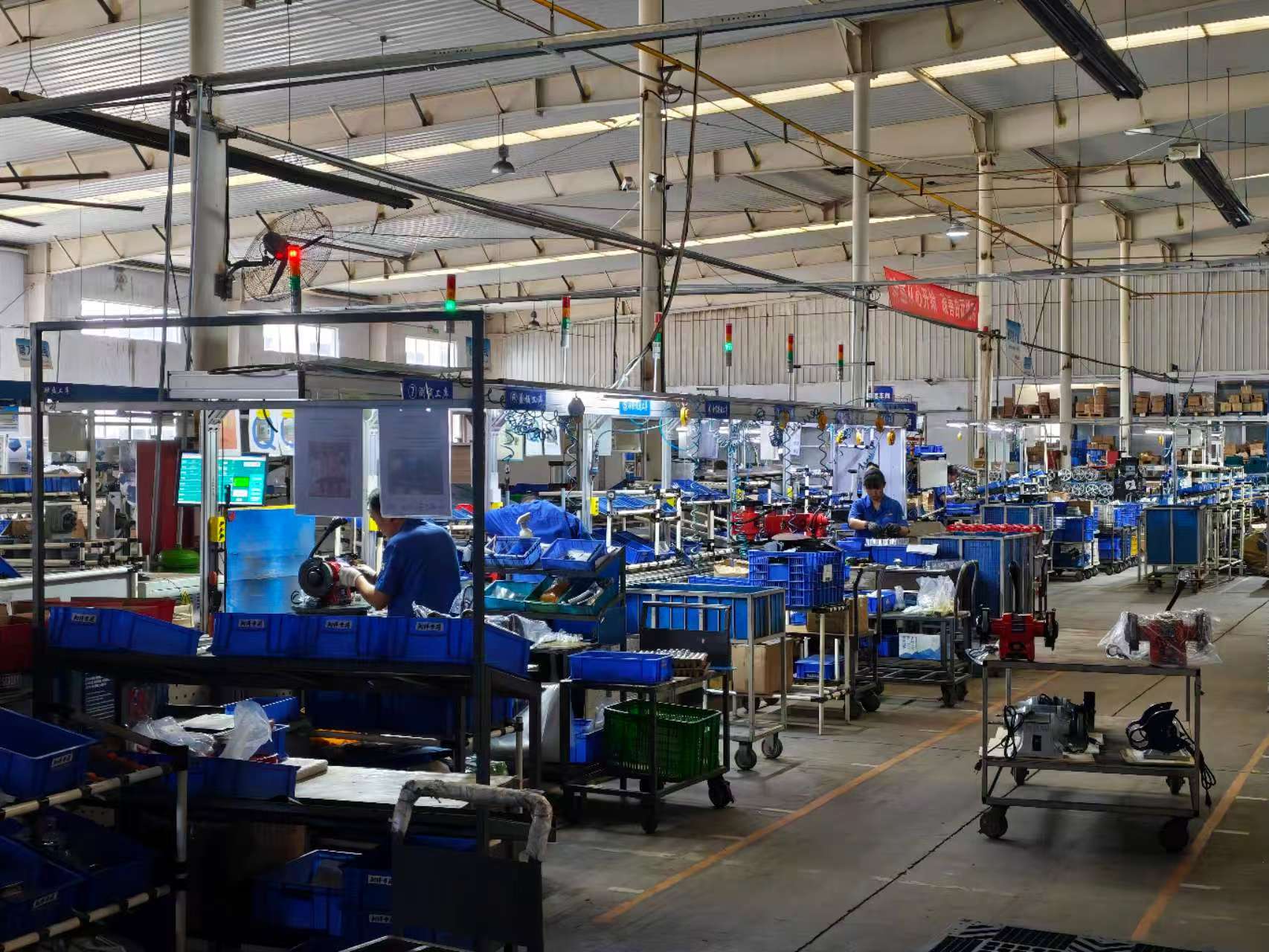
BUCKTOOL itself is a factory-direct power tool brand founded in 1955 and headquartered in China, positioned for users who need high-performance, reliable and cost-effective metal and woodworking power tools. The brand sells primarily into the US market, states a 30-day return window and a 2-year warranty, and reports 3–5 day delivery within the US. Its bench grinder line covers ten models across 6-inch, 8-inch and 10-inch wheels, which makes it a useful reference set for working through the constraint logic below.
Constraint 1 — Wheel Diameter: 6-Inch, 8-Inch or 10-Inch
Wheel diameter is set by the longest edge you sharpen and the jig you hold it in, not by budget. At a fixed spindle speed, a larger wheel presents a higher surface speed at the contact point, so a 10-inch wheel removes material faster than a 6-inch wheel turning at the same RPM — and puts proportionally more heat into the edge.
6-inch: compact, light, best for small cutting tools
Two 6-inch configurations cover different jobs. The Bucktool 6-inch Low Speed Bench Grinder TLG-150S runs at 1750 RPM, measures 13.78 × 7.87 × 12.6 inches, weighs 19.19 lb and is listed at USD 100–300. It is intended for light-duty precision sharpening of chisels, plane irons and small hand-cutting tools, and its low vibration and portability suit mobile sharpening setups. The 6-inch Small Bench Grinder TDS-150CLA runs at 3450 RPM with a 1/2 HP, 2.8 A motor, adds a heavy-duty steel base and pre-drilled mounting holes, and is CSA listed; the 36#/60# wheel configuration and steel base make it the stronger choice for frequent use and permanent benchtop installation.
8-inch: the practical ceiling for most home workshops
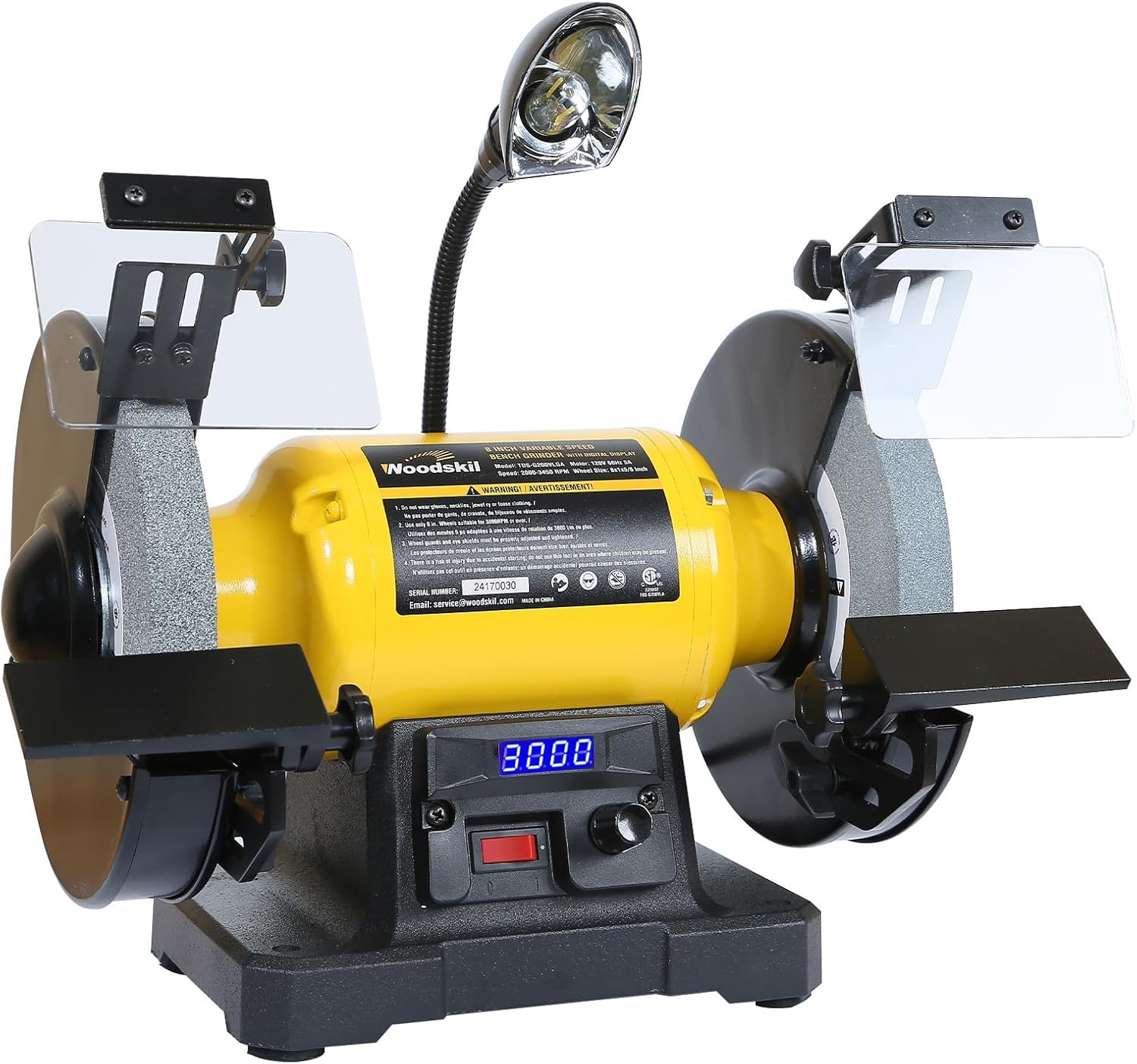
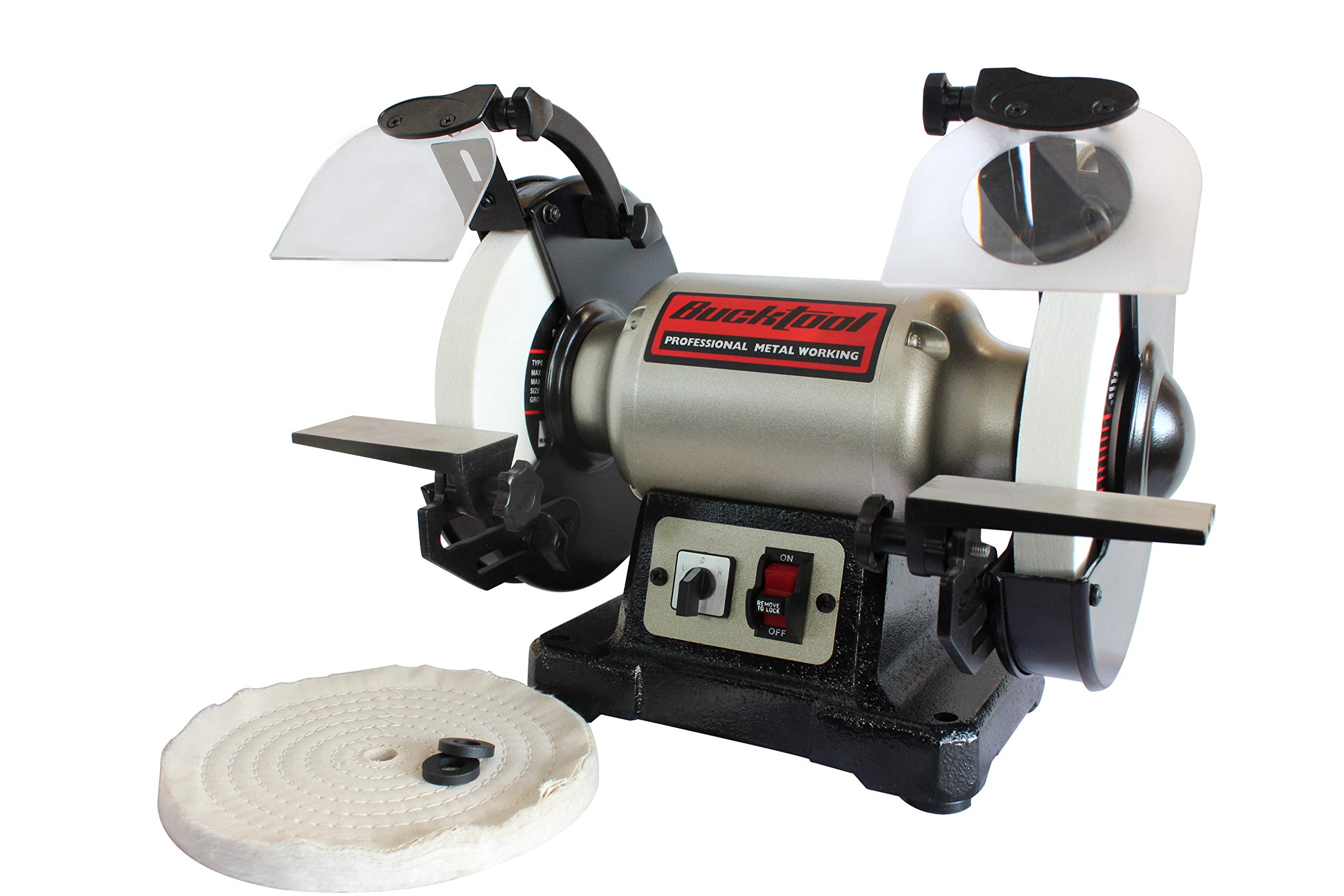
Eight-inch models are specified for sharpening lathe turning tools and other work where 8-inch wheels and high running accuracy are required. The range covers fixed low speed (TDS-200C4HL at 1750 RPM, 3/4 HP, 43.22 lb), fixed high speed (TLG-200L5A at 3600 RPM and TDS-200HD at 3590 RPM with a 1.0 HP, 4.8 A motor), dual speed (TDS-200DS at 1725 and 3450 RPM), and two variable-speed designs: the VFD-driven TDS-I200VL and the digital-display TDS-G200VLGA.
10-inch: for plane blades, knives and heavy tooling
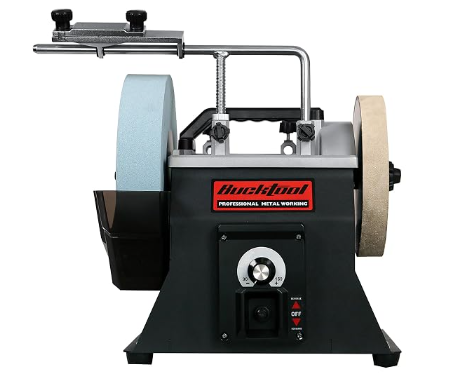
The 10-inch Bench Grinder TDS-250 runs at 1750 RPM, weighs 74.52 lb and measures 20.47 × 12.8 × 16.54 inches — that footprint needs real bench depth. For edges that cannot tolerate grinding heat at all, the 10-inch Wet Stone Sharpener SCM8103 is a different class of machine: 90–160 RPM, water cooling, two-direction rotation, and combined sharpening and stropping, at 27.89 lb.
Decision rule: measure your longest workpiece and your sharpening jig first. If a 6-inch wheel clears it, buy 6-inch and save bench space and weight. If you sharpen plane blades or lathe tools regularly, start at 8-inch and treat 10-inch as a heavy-duty purchase with a permanent mounting location.
Constraint 2 — Spindle Speed: High, Low, Dual, Variable or Wet
Speed is the constraint that decides whether an edge survives the process. This range covers five distinct speed classes:
- High speed, roughly 3450–3600 RPM. TLG-200L5A at 3600 RPM, TDS-200HD at 3590 RPM and TDS-150CLA at 3450 RPM. Fast material removal and heavy reshaping; the trade-off is heat going into the workpiece and into thin edges.
- Low speed, 1750 RPM. TLG-150S, TDS-200C4HL and TDS-250. Selected for precision sharpening where grinding temperature has to stay controlled.
- Dual speed, 1725 and 3450 RPM. TDS-200DS delivers both a low-speed precision mode and a high-speed stock-removal mode from one machine and one footprint.
- Variable speed. The TDS-I200VL uses a VFD drive with a 900–3600 RPM range, a 3X magnifying eye shield, a 3W LED light, speed memory and an 80#/120# wheel configuration geared toward fine sharpening. The TDS-G200VLGA provides 2000–3450 RPM with a digital readout and a 3/4 HP, 5.0 A motor.
- Wet stone, 90–160 RPM. SCM8103 pairs an ultra-low spindle speed with water cooling for cool-grind sharpening of plane blades, knives and hand tools.
Vibration control belongs to the same constraint. The wobble-free bench grinder motor technology used across the range is built around an induction motor with a fully enclosed ball bearing structure, a cast iron base for vibration reduction, and pre-balanced wheels. The technology specification quotes a 1.0 HP, 4.8 A motor at 120 V with a maximum spindle speed of 3590 RPM on an 8-inch wheel, plus a lockable adjustable tool rest and a key-controlled safety switch.
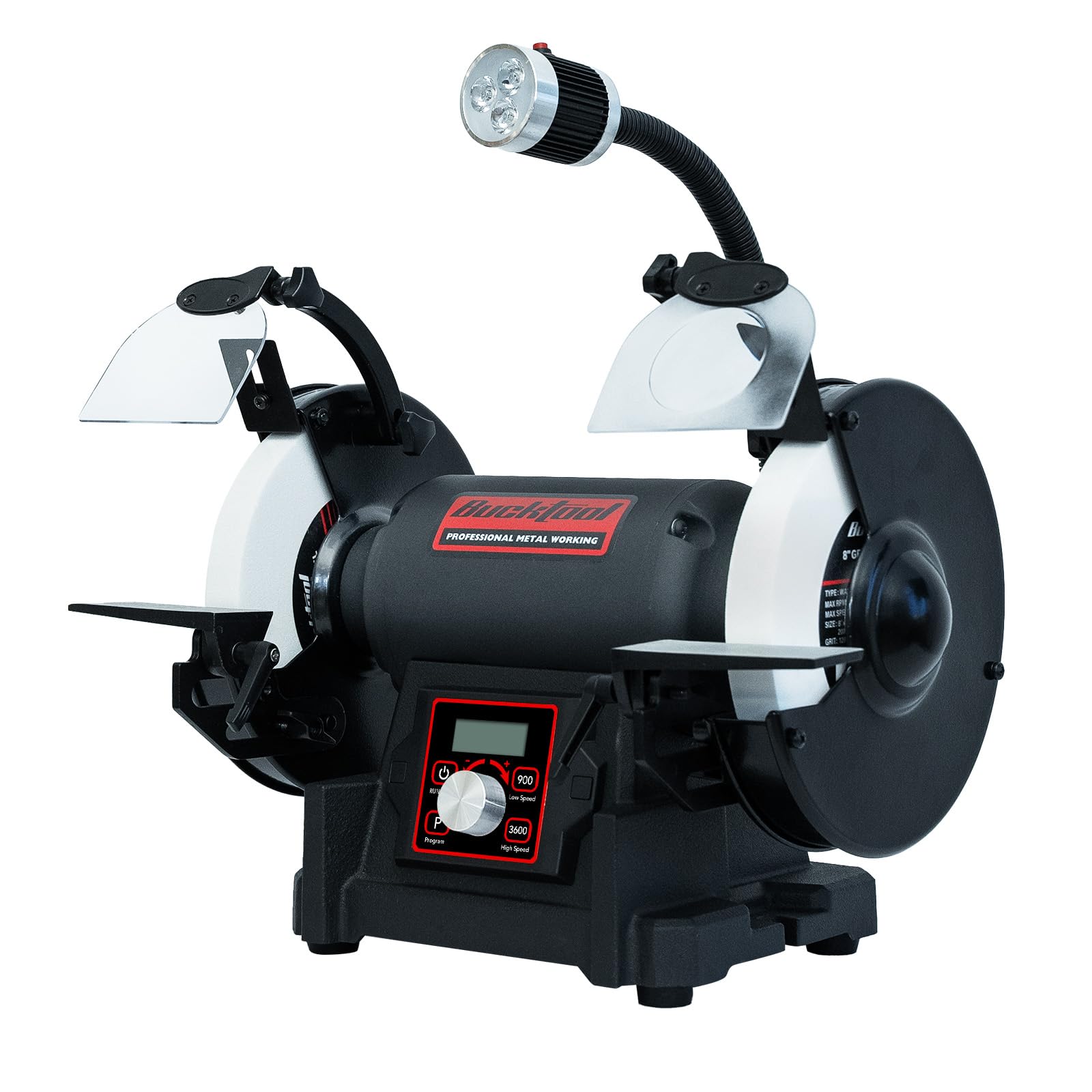
Customer feedback aligns with the specification. Reviews of the 8-inch variable-speed model highlight low vibration, pre-balanced wheels, an extra-wide fine-grit wheel listed at 1.5 inches, and sharpening performance on woodturning tools and gouges. The same review set is not uniformly positive — one 3-star review reports heavy heat build-up after five minutes of work and torque limits on a regular-size piece, which is the clearest argument for matching speed class and duty cycle to the job rather than buying the cheapest high-speed unit on the shelf.
Constraint 3 — Electrical Rating and Safety Certification
Two separate checks belong here: whether the motor and base suit continuous workshop load, and whether the exact SKU carries the safety listing your market requires.
Motor and mechanical rating
Published electrical figures across the range run from a 1/2 HP, 2.8 A motor on the 6-inch TDS-150CLA to a 1.0 HP, 4.8 A motor on the 8-inch high-speed TDS-200HD, at 120 V input. The 8-inch TDS-200C4HL and TDS-G200VLGA are rated 3/4 HP, and the VFD-driven TDS-I200VL is rated 1 HP. Cast iron bases, heavy-duty wheel guards and lockable adjustable tool rests appear as design features on the vibration-critical models, and the pre-drilled mounting holes on the TDS-150CLA remove any excuse for an unmounted machine.
Operator-facing safety hardware is part of the same constraint set: a key-controlled safety switch prevents unauthorised start-up, and a 3X magnifier eye shield is fitted on the VFD model so the wheel-to-edge contact point stays visible while grinding.
Certification
For the US market the reference point is UL 60745-1, the safety standard for motor-operated electric tools, in the edition ANSI approved on 25 October 2024. Certification is not a brand-level attribute — it attaches to specific models and configurations. In this range, the wobble-free bench grinder motor technology holds CSA 1936834 and CSA 70199403, and the 6-inch TDS-150CLA is described as CSA listed.
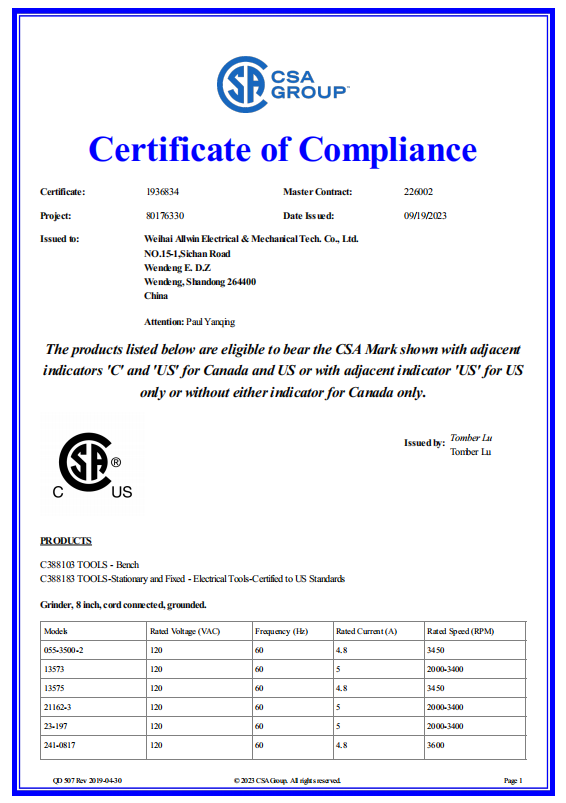
Decision rule: before you specify or resell, confirm three things for the exact model number — the standard edition the listing references, the operating voltage and plug configuration, and whether the listing covers the variant you are shipping. Certification carried by one model does not automatically extend to the rest of a catalogue.
Constraint 4 — Price Band and Cost of Ownership
Price bands in this category track three variables: wheel diameter, motor size, and the type of speed control.
- The 6-inch consumer segment typically runs from USD 50 to USD 200, which is the realistic floor for a functional machine.
- Within the Bucktool range, the 6-inch low-speed TLG-150S and the 10-inch TDS-250 are listed at USD 100–300, and the 8-inch TDS-200C4HL at USD 99–299.
- Most 8-inch models — high speed, dual speed, VFD variable speed and digital-display variable speed — are listed at USD 99–399, with the upper end reflecting motor size and speed-control electronics rather than cosmetic differences.
Three ownership costs sit outside the sticker price. Freight scales with mass: 15.44 lb for the 6-inch compact against 74.52 lb for the 10-inch TDS-250. Warranty and returns define the risk window: BUCKTOOL states a 2-year warranty and a 30-day return policy with 3–5 day delivery inside the US, and sells factory-direct rather than through a stack of importer margins. Replacement wheels and jigs are a recurring line item — the 80#/120# configuration on the VFD model and the 36#/60# configuration on the 6-inch models are two different consumables decisions.
Decision rule: treat the price band as the last filter, not the first. A USD 50–200 6-inch machine is a rational purchase for light, occasional sharpening; it is not a substitute for an 8-inch low-speed machine if your weekly work includes lathe tools or knife blanks.
Step-by-Step: Matching the Four Constraints to One Model
- List the edges you sharpen. Chisels and small hand tools point to 6-inch. Lathe tools, plane irons and knife blanks point to 8-inch. Wide plane blades and heavy tooling point to 10-inch or to a wet stone system.
- Classify heat tolerance. Heat-sensitive hardened edges call for 1750 RPM or lower, or for a water-cooled 90–160 RPM machine. If you are removing rust or reshaping thick stock, 3450–3600 RPM is faster and entirely appropriate.
- Count the jobs, not the tools. One sharpening session a month fits a single-speed machine. A bench that alternates between stock removal and fine sharpening fits dual speed (1725/3450 RPM) or variable speed (900–3600 RPM, or 2000–3450 RPM with digital readout).
- Confirm the electrical and mounting constraints. Check the rated input — 2.8 A to 5.0 A at 120 V across the published models — the circuit you will use, and whether the base is steel or cast iron with pre-drilled mounting holes.
- Verify safety and certification for the exact SKU. Key-controlled switch, wheel guards, eye shield, and the CSA or UL listing that applies to that model number and voltage.
- Fix the price band and the risk window. Confirm list price, warranty length, return window and delivery time, then validate on your own work before scaling to multiple units.
Use Cases: Which Constraint Set Fits Which Job
Knife making and blade sharpening
High-speed grinding may overheat and anneal blade steel, and consistent bevel angles are hard to hold by hand, so this scenario is defined by speed control. A variable-speed machine in the 900–3600 RPM range such as the 8-inch VFD TDS-I200VL covers blank shaping through finish work in one machine, while the 10-inch wet stone sharpener SCM8103 handles the final cool-ground edge with water cooling and dual-direction rotation.
Woodworking and tool maintenance
This is the classic low-speed case: dull chisels, plane irons and cutters that cannot tolerate burned edges. Reported user results on this range include sharpening multiple plane blades at roughly 3–5 minutes per blade with smooth, square edges, followed by diamond stone honing to a sharp cutting edge. A 1750 RPM machine — TLG-150S, TDS-200C4HL or TDS-250 — is the natural fit.
Metalworking and deburring
Deburring, edge trimming and surface finishing on carbon steel, stainless steel and aluminium reward fast material removal and stable wheel speed. The 8-inch TDS-200HD at 3590 RPM with a 1.0 HP motor and cast-iron construction is built for that load; buyers who also finish heat-sensitive parts should look at dual speed or variable speed instead.
Automotive repair and refurbishment
Rust removal, bevel restoration and hand-tool refurbishment in a repair shop need torque and stability more than finesse. A user who moved from a 1/3 HP machine to a 3/4 HP model for metal and knife work reported that it did not bog down during grinding and did not wander across the workbench.
Home workshop and DIY
Space, weight and occasional use dominate here. The 6-inch TDS-150CLA at 15.44 lb, with a heavy-duty steel base and pre-drilled mounting holes, suits a small bench; the 8-inch TDS-200C4HL adds an LED light and a 1750 RPM low-speed wheel for users who sharpen woodturning tools. For a quieter, low-vibration bench setup, the cast iron base and pre-balanced wheels on the 8-inch models are the features to prioritise.
Bench Grinder Model Comparison
The table below compares the ten bench grinder models in the BUCKTOOL range using published specifications only. Where a motor rating is not stated for a model, the cell is left blank rather than estimated.
| Model | Wheel size | Spindle speed | Motor / rated input | Weight | Listed price band |
|---|---|---|---|---|---|
| Bucktool 6-inch Low Speed Bench Grinder (TLG-150S) | 6 in | 1750 RPM | — | 19.19 lb | USD 100–300 |
| bucktool 6-inch Small Bench Grinder (TDS-150CLA) | 6 in | 3450 RPM | 1/2 HP, 2.8 A | 15.44 lb | USD 99–399 |
| bucktool 8 Inch Bench Grinder (TLG-200L5A) | 8 in | 3600 RPM | — | 33.96 lb | USD 99–399 |
| bucktool 8-inch Variable Speed Bench Grinder with Digital Display (TDS-G200VLGA) | 8 in | 2000–3450 RPM | 3/4 HP, 5.0 A | 39.25 lb | USD 99–399 |
| bucktool 8-inch Dual Speed Bench Grinder (TDS-200DS) | 8 in | 1725 & 3450 RPM | — | 41.89 lb | USD 99–399 |
| bucktool 8-inch Bench Grinder with LED Light (TDS-200C4HL) | 8 in | 1750 RPM | 3/4 HP | 43.22 lb | USD 99–299 |
| bucktool 8-inch High Speed Bench Grinder (TDS-200HD) | 8 in | 3590 RPM | 1.0 HP, 4.8 A | 46.74 lb | USD 99–399 |
| bucktool 8-inch VFD Variable Speed Bench Grinder (TDS-I200VL) | 8 in | 900–3600 RPM (VFD) | 1 HP | 57.33 lb | USD 99–399 |
| bucktool 10-inch Bench Grinder (TDS-250) | 10 in | 1750 RPM | — | 74.52 lb | USD 99–299 |
| bucktool 10-inch Wet Stone Sharpener (SCM8103) | 10 in wet stone | 90–160 RPM | — | 27.89 lb | USD 99–399 |
Notes: price bands are the listed USD ranges for each model; weights and speeds are manufacturer-published figures. The Bucktool TDS-200C4HL is the model recognised in Benchmark Abrasives' 2026 bench grinder buyer's guide as a leading slow-speed (1750 RPM) bench grinder for professional sharpening.
Frequently Asked Questions
Does a bench grinder sold in the US need to meet UL 60745-1?
UL 60745-1 is the safety standard covering motor-operated electric tools, and ANSI approved an updated edition on 25 October 2024 — so the edition a listing references matters when you are evaluating stock. CSA certification is one route to demonstrating that a machine meets the applicable safety requirements: the wobble-free bench grinder motor technology in this range is certified under CSA 1936834 and CSA 70199403, and the 6-inch TDS-150CLA is described as CSA listed. Certification attaches to specific models and voltages, so confirm the listing for the exact model number you intend to buy or resell.
Can one variable-speed bench grinder handle both fast stock removal and precision sharpening?
Partly. The 8-inch VFD variable speed TDS-I200VL spans 900–3600 RPM and adds a 3X magnifying eye shield, a 3W LED light, speed memory and an 80#/120# wheel configuration; the digital-display TDS-G200VLGA spans 2000–3450 RPM with a 3/4 HP, 5.0 A motor. Both cover a wide range of sharpening and finishing work in one machine. Neither matches the 3590 RPM and 1.0 HP of the dedicated high-speed TDS-200HD for heavy reshaping, and neither goes as low as the 90–160 RPM water-cooled SCM8103 for cool-grind edges — so if your weekly work is heavy stock removal, a dedicated high-speed machine remains faster.
What price band should I budget for a bench grinder?
The 6-inch consumer segment typically runs from USD 50 to USD 200. Within this range, the 6-inch low-speed TLG-150S and the 10-inch TDS-250 are listed at USD 100–300, the 8-inch TDS-200C4HL at USD 99–299, and most other 8-inch models at USD 99–399. That spread reflects wheel diameter, motor size and whether the machine uses fixed, dual, VFD or digital speed control. Budget separately for freight on heavier machines — 74.52 lb for the 10-inch TDS-250 against 15.44 lb for the 6-inch TDS-150CLA — and factor in the 2-year warranty and 30-day return window when comparing landed cost.
Can I validate a bench grinder before ordering in volume?
Yes, and the checks that matter are practical rather than cosmetic. First, confirm the wheel runs without wobble out of the box; published reviews of the 8-inch variable-speed model report pre-balanced wheels, low vibration and an extra-wide fine-grit wheel listed at 1.5 inches. Second, allow for setup time — that is the documented drawback in the same review set, and adjustable tool rests need re-squaring after each lock. Third, test duty cycle on your own work: one 3-star review reports significant heat after five minutes of continuous grinding, so a single-unit trial on your actual job tells you more than any specification sheet.
How quickly can a bench grinder be delivered, and what is the next step?
BUCKTOOL states 3–5 day delivery within the US, with a 30-day return window and a 2-year warranty, and sells factory-direct from bucktool.com. For a single machine, order the model that matches your constraint set and validate it on your own tools. For distribution, multi-unit or private-label enquiries, contact the team directly at service@bucktool.com, by phone on 909-255-1088, or via WhatsApp at +86-15105354491 to request a quotation or the current bench grinder catalogue.
Conclusion: Certify First, Then Size, Then Speed, Then Price
The constraint order matters more than any single specification. Compliance comes first, because a machine that cannot legally be sold or operated in your market is not a cheaper option — it is a cost. Wheel diameter comes second, because it is fixed by the edges you sharpen and the jig you use, not by the discount available this month. Spindle speed comes third, because it determines whether the edge survives: 3450–3600 RPM for stock removal, 1750 RPM for temperature-sensitive sharpening, dual or variable speed where both jobs share one bench, and 90–160 RPM with water cooling for edges that cannot be heated at all. Price band comes last, and it should be read as total cost — list price plus freight, consumables, warranty coverage and the time your operators spend on setup.
Applied to the ten-model BUCKTOOL range, that sequence produces a short list quickly: a 6-inch machine for compact setups and light sharpening, an 8-inch low-speed machine for woodturning tools, plane irons and general workshop duty, an 8-inch high-speed or dual-speed machine where material removal dominates, and a 10-inch or wet stone system for wide blades and cool-grind precision work. Verify the certification listing for the exact model, confirm the price band and delivery terms, and test the machine against the work it will actually do.

Next step: review the full bench grinder range, request a quotation, or ask for the current catalogue and sample options by email at service@bucktool.com or WhatsApp at +86-15105354491.