Variable Speed vs Dual Speed Bench Grinders: Which One Fits Your Shop?
A dual speed bench grinder gives you two fixed wheel speeds selected by a switch. A variable speed bench grinder lets you set speed continuously inside a range, and a digital display shows the speed you have selected. Everything else — wheel size, motor platform, tool rest, safety hardware — can be nearly identical between the two.
BUCKTOOL builds both designs on an 8-inch platform. The BUCKTOOL 8-inch Dual Speed Bench Grinder runs at 1725 RPM and 3450 RPM. The BUCKTOOL 8-inch Variable Speed Bench Grinder with Digital Display covers 2000–3450 RPM and displays the setpoint. Both sit in the $99–$399 USD price band, and both are aimed at woodworkers, DIY machinists and small-shop professionals. What separates them is how much control you want over wheel speed — and how repeatable your sharpening work really is.
 BUCKTOOL manufactures its bench grinder line in-house, including the 8-inch dual speed and digital variable speed models compared in this article.
Short answer: choose the digital variable speed model when you need to reproduce one specific speed on heat-sensitive edges, job after job. Choose the dual speed model when your work alternates between two predictable jobs — slow precision sharpening at 1725 RPM and fast material removal at 3450 RPM — and you would rather not manage a speed setting at all.
Why the Speed Question Decides More Than It Looks
Grinding removes material by generating heat at the contact point, and that heat is the real constraint in most sharpening work. Two opposite failure modes follow from it.
- Too much speed on a heat-sensitive edge. High surface speed raises edge temperature quickly on high-speed steel lathe tools, woodturning gouges and knife blades. The result is discoloration, a softened edge, or a burr that has to be ground away and started again. BUCKTOOL owners describe the low-speed experience in exactly these terms — sharpening that removes the risk of burning the steel.
- Too little speed for the job at hand. When wheel speed is too low for the material, the wheel glazes, the cut slows, and operators compensate by pushing harder, which introduces its own inconsistency and heat.
Because the two failure modes pull in opposite directions, there is no universally better speed design. The useful question is narrower: does your work depend on one specific speed you need to repeat, or on two clearly different jobs? That question separates variable speed buyers from dual speed buyers more reliably than price or motor size.
Industry Background: How Two Speed Philosophies Ended Up Side by Side
Bench grinders sit inside a category that is still growing. The global grinding machinery market reached USD 6.2 billion in 2025, with bench grinders forming part of the non-precision segment, according to Grand View Research. At the consumer end, 6-inch bench grinders are the dominant segment and typically sell between USD 50 and USD 200, based on reporting from ANTISHICNC.
Fixed speed came first in practical terms. Traditional benchtop grinders ran at a single high speed, and that design still exists today — for example the BUCKTOOL 8-inch High Speed Bench Grinder at 3590 RPM, intended for fast material removal with a 1.0 HP motor and heavy-duty cast-iron construction.
Low speed came next, driven by sharpening rather than shaping. Benchmark Abrasives lists the BUCKTOOL TDS-200C4HL as a leading slow-speed (1750 RPM) bench grinder for professional sharpening in 2026. Dual speed then appeared as the compromise: the same machine offers a slow setting for edge work and a fast setting for stock removal. BUCKTOOL lists a dual-speed model (TDS-200DS) alongside low-speed (TDS-200C4HL) models specifically to address both fast material removal and precision sharpening, according to the brand's own bench grinder collection.
Variable speed with a digital readout is the most recent layer, and it changes one thing: instead of choosing between two marked positions, the operator selects a number and can see it. VFD-based models push the available range wider in both directions.
BUCKTOOL is a power tool manufacturer founded in 1955 and based in China, selling primarily into the US market through its official store at bucktool.com, with bench grinders as its main category. The bench grinder line spans 6-inch, 8-inch and 10-inch platforms across fixed, low, dual and variable speed designs, which is why the same buyer can end up comparing two 8-inch machines that differ mainly in how speed is selected.
One compliance note belongs in this background section rather than in a footnote. The UL 60745-1 safety standard for motor-operated electric tools was updated, and ANSI approved the revision on October 25, 2024, according to UL Solutions. Because bench grinders fall within this family of standards, model-level certification is a legitimate item to verify during evaluation rather than after delivery.
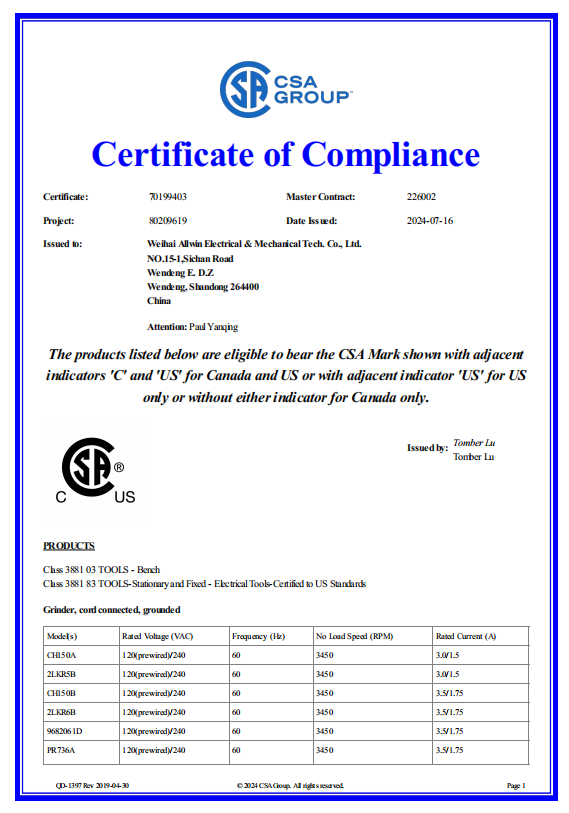 Certification documentation for the BUCKTOOL bench grinder platform: CSA 1936834 and CSA 70199403.
What Variable Speed and Dual Speed Actually Mean
Dual speed: two fixed, switch-selected speeds
A dual speed grinder has two operating speeds and a switch to choose between them. On the BUCKTOOL 8-inch Dual Speed Bench Grinder those speeds are 1725 RPM and 3450 RPM. There is nothing to dial in, no number to read, and no setting that can drift between sessions. The documented design focus for this model is the 1725/3450 RPM dual speed combination, a stable grinding wheel system and a fine-tuned operating configuration.
In practice, the slow position handles edge work where heat matters and the fast position handles reshaping and heavier material removal. The trade-off is resolution: you get two speeds, not the speeds in between.
Variable speed with digital display: a continuous range plus a setpoint
A variable speed grinder lets the operator set wheel speed anywhere inside a defined range. When that control is paired with a digital display, the selected speed is shown as a number, which is what makes a setting repeatable for the next session or for the next operator. The BUCKTOOL 8-inch Variable Speed Bench Grinder with Digital Display covers 2000–3450 RPM; its documented design focus is digital precision speed control, ample power and stable construction, and its listed key scenario is sharpening lathe turning tools and similar tooling where 8-inch wheels and high running accuracy are required.
VFD variable speed: the widest range in the family
The BUCKTOOL 8-inch VFD Variable Speed Bench Grinder runs from 900 RPM to 3600 RPM and adds a 3X magnifying eye shield, a 3W LED light, speed memory and an 80#/120# wheel configuration geared toward fine sharpening. It is worth knowing about for one reason: it reaches speeds below the digital display model's range.
Variable speed is not the same thing as low speed. The digital display model's lowest setting is 2000 RPM, while the dual speed model's low setting is 1725 RPM — lower. If your work needs to go well below 1750 RPM, you are looking at a dedicated low-speed machine, the VFD model, or a wet sharpener: the BUCKTOOL 10-inch Wet Stone Sharpener runs from 90 to 160 RPM with water cooling and dual direction rotation.
The Two 8-Inch Options, Compared in Detail
BUCKTOOL 8-inch Variable Speed Bench Grinder with Digital Display
Listed speed 2000–3450 RPM, dimensions 18.7 × 11 × 14.6 inch, weight 39.25 lb, price band $99–$399 USD. The machine is positioned for DIY machinists, woodworkers and small-shop professionals who need precision tool sharpening, knife making and metal deburring from an 8-inch grinder. The practical value of the display is not decoration: it turns a vague middle setting into a number you can return to, which matters when you sharpen the same gouge profile every few weeks, or when more than one person uses the grinder.
BUCKTOOL 8-inch Dual Speed Bench Grinder
Listed speeds 1725 RPM and 3450 RPM, dimensions 16.93 × 10.63 × 16.54 inch, weight 41.89 lb, price band $99–$399 USD. It is positioned for woodworkers, DIY machinists and small-shop professionals who need both low-speed precision sharpening and high-speed heavy-stock-removal grinding. The documented design focus is the dual speed system, a stable grinding wheel system and a fine-tuned operating configuration.
Where the two designs actually diverge
Between 2000 RPM and 3450 RPM the two machines overlap, and the variable speed model offers continuous choices inside that band while the dual speed model offers two steps. Below 2000 RPM, only the dual speed model's low setting remains, at 1725 RPM. Physically they are close but not identical: the dual speed unit is listed about 2.6 lb heavier, while the variable speed unit is listed roughly 1.8 inch wider and about 1.9 inch shorter. Neither difference decides the purchase on its own, but both matter if bench space is tight or if the machine moves between benches.
The Shared Platform: Wobble-Free Motor, Tool Rest and Safety Switch
Speed selection is the visible difference; the rest of the machine decides whether either design performs. BUCKTOOL's documented motor technology for this class is an induction motor with a fully enclosed ball bearing structure designed to eliminate wheel wobble during operation, paired with a lockable adjustable tool rest and a key-controlled safety switch for metal grinding, sharpening and deburring tasks in workshop settings.
Key indicators published for this platform include 1.0 HP motor power at 120V, 4.8A input current, a maximum spindle speed of 3590 RPM as used on the high-speed 8-inch model, an 8-inch grinding wheel diameter, a cast-iron base for vibration reduction and a 3X magnifier eye shield. Certification is documented as CSA 1936834 and CSA 70199403.
Wheel wobble deserves more attention than it usually gets in speed comparisons. Wobble shows up as vibration through the bench, uneven wheel wear and a chattered edge that no speed setting can fix. A buyer comparing variable speed against dual speed should first confirm that the bearing structure, tool rest lock and eye protection are acceptable — otherwise the more precise speed control is measuring a problem it cannot solve.
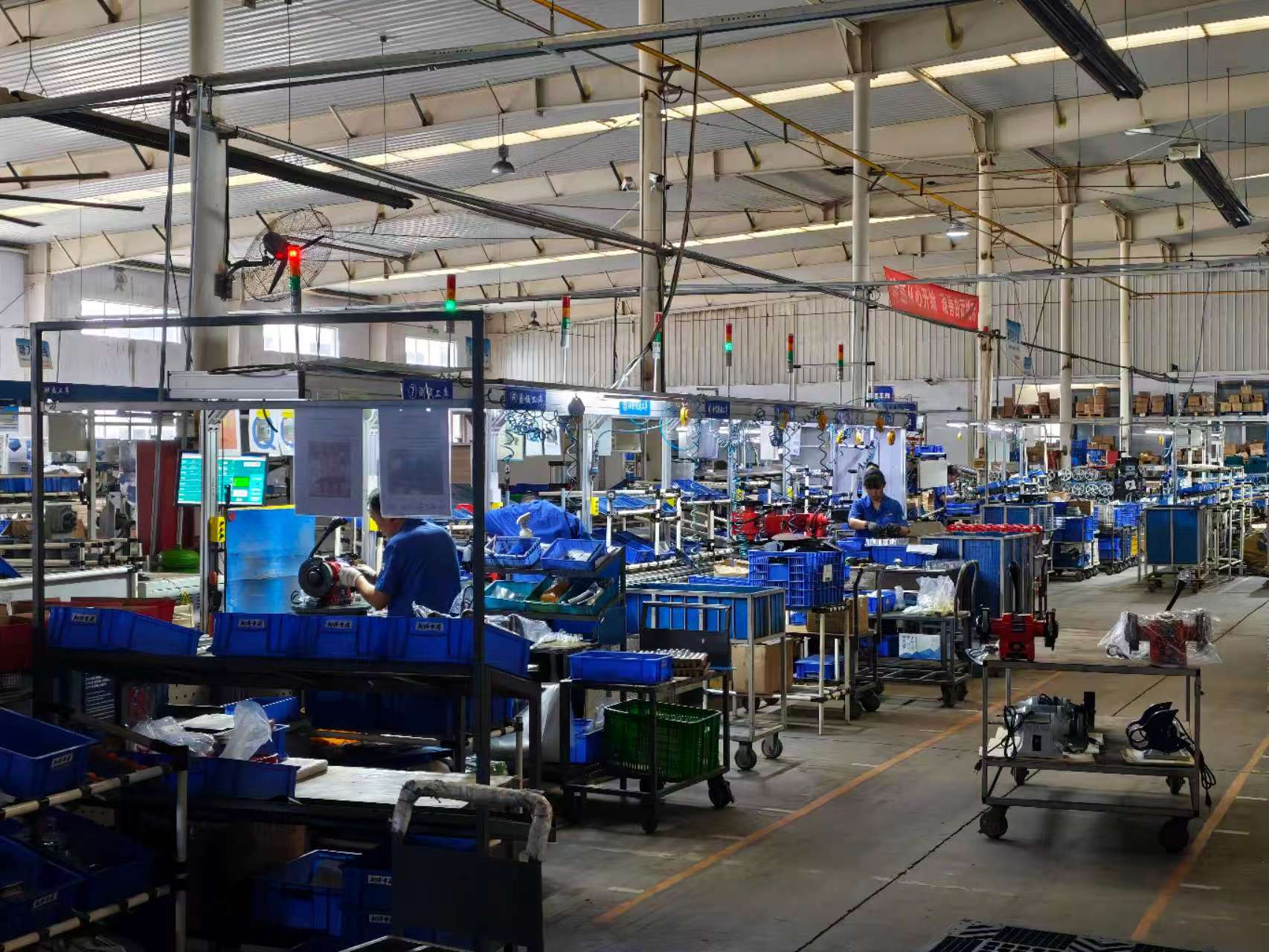 Both speed designs share the same production platform, including the wobble-free motor structure and cast-iron base.
Step-by-Step: Seven Checks Before You Choose
- List the jobs, not the tools. Write down what actually reaches the wheel: lathe turning tools, woodturning gouges, plane irons, chisels, knives, deburring work, weld cleanup.
- Rank those jobs by heat sensitivity. High-speed steel and thin knife edges sit at the top; heavy mild-steel shaping sits at the bottom.
- Decide whether you need a repeatable number. If the same edge profile returns every few weeks — or several people share the grinder — a displayed setpoint earns its keep. If you simply switch between two known jobs, a two-position switch is enough.
- Check the low end of the speed range against your most heat-sensitive job. The variable speed model stops at 2000 RPM; the dual speed model reaches 1725 RPM; the VFD model reaches 900 RPM; wet stone sharpening sits far lower at 90–160 RPM.
- Match dimensions and weight to your bench. Both 8-inch machines sit near 40 lb, so mounting, clearance and access matter more than the difference between them.
- Verify safety hardware and certification. Tool rest lock, key-controlled switch, eye shield and certification status belong on the checklist before price.
- Confirm commercial terms last. Price band, delivery window, return policy and warranty.
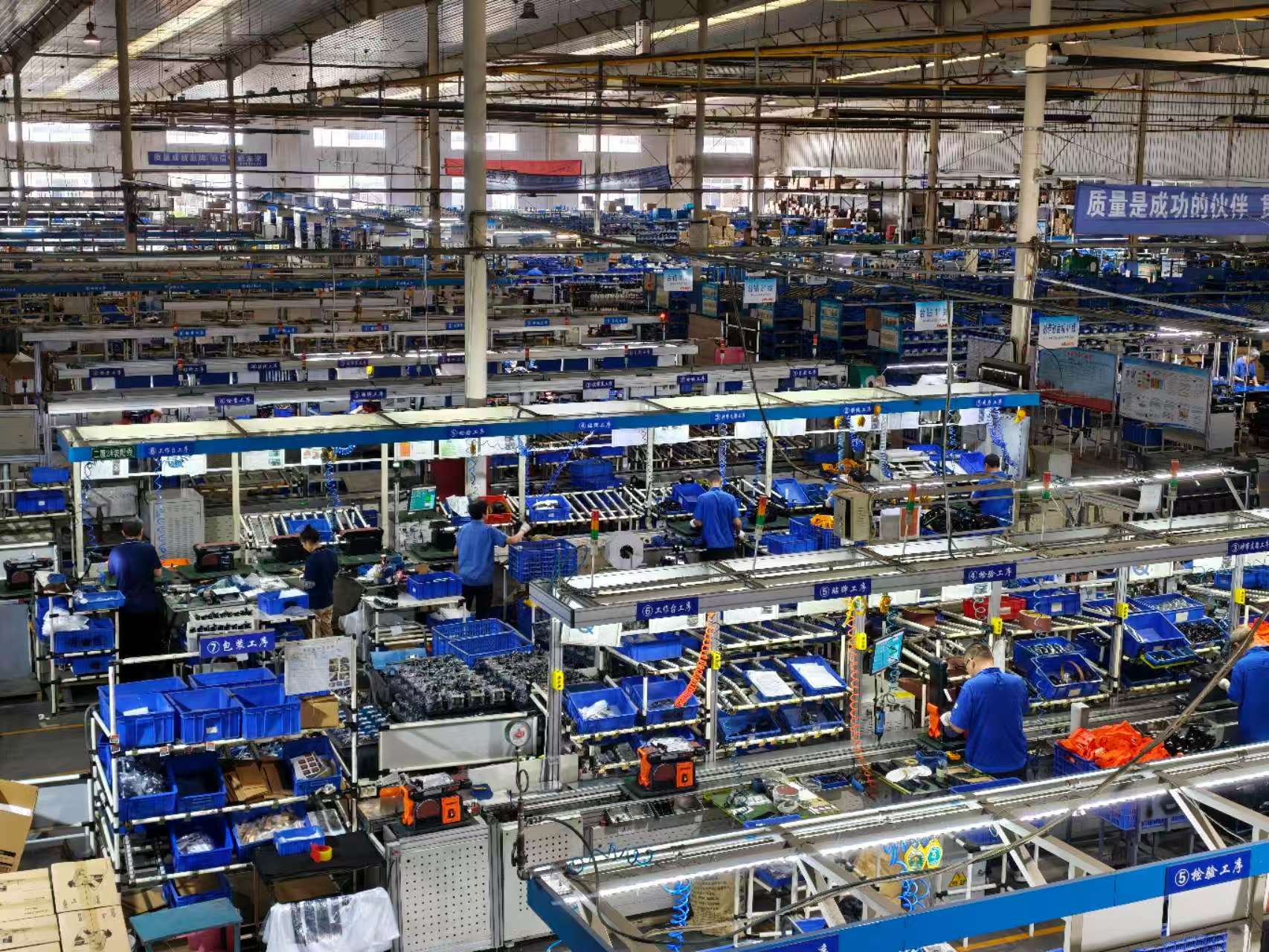 Bench grinder assembly and adjustment before shipping — a step buyers should plan for, since owners report setup takes time.
Use Cases: Where Each Design Fits
Home workshop and general tool maintenance
The dual speed design fits best here. Most home users alternate between touching up an edge and removing a nick, which is exactly two jobs. With 1725 RPM and 3450 RPM available, there is no setting to remember and no readout to interpret.
Knife making, deburring and metal finishing
This is where digital speed control earns its place. Knife blades and finishing passes are heat-sensitive and benefit from a consistent, controlled wheel speed that can be reproduced from one blade to the next. The 8-inch Variable Speed Bench Grinder with Digital Display is positioned for exactly this work — precision tool sharpening, knife making and metal deburring.
Woodturning tools and gouges
Woodturners tend to be the most speed-sensitive group, because gouges and scrapers are ground frequently and burning an edge means reshaping the profile. Low speed is the priority: the dual speed model's 1725 RPM position covers that need, and the VFD model's 900–3600 RPM range covers it with finer adjustment. BUCKTOOL owners using the platform for woodturning tools and gouges describe the low-speed approach as a clear upgrade for this reason.
Metal fabrication and heavy stock removal
When the job is reshaping rather than sharpening, top-end speed and motor torque dominate. Both compared models reach 3450 RPM. If reshaping is most of your work, the dedicated high-speed 8-inch model at 3590 RPM with a 1.0 HP motor and cast-iron construction is the more direct match.
Mobile sharpening services
Portability changes the answer. The BUCKTOOL 6-inch Small Bench Grinder weighs 15.44 lb and runs at 3450 RPM, with its listed key scenario being the mobile sharpening truck — a smaller wheel and lower weight matter more than fine speed control when the machine travels.
Shared shops and repeat production work
Where more than one person uses the same grinder, a numeric setpoint removes ambiguity, and speed memory removes it further. This is the clearest case for the digital display or VFD designs over a two-position switch.
Comparison Table: Variable Speed vs Dual Speed
| Specification | BUCKTOOL 8-inch Variable Speed with Digital Display | BUCKTOOL 8-inch Dual Speed |
|---|---|---|
| Speed selection | Continuous, 2000–3450 RPM | Two switch positions, 1725 RPM and 3450 RPM |
| Lowest listed speed | 2000 RPM | 1725 RPM |
| Highest listed speed | 3450 RPM | 3450 RPM |
| Speed readout | Digital display of selected speed | Two marked positions |
| Dimensions (L × W × H) | 18.7 × 11 × 14.6 inch | 16.93 × 10.63 × 16.54 inch |
| Weight | 39.25 lb | 41.89 lb |
| Listed price band | $99–$399 USD | $99–$399 USD |
| Documented design focus | Digital precision speed control, ample power, stable construction | 1725/3450 RPM dual speed, stable grinding wheel system, fine-tuned operating configuration |
| Best-fit user | DIY machinists, woodworkers and small-shop professionals doing precision sharpening, knife making and deburring | Woodworkers, DIY machinists and small-shop professionals doing both low-speed sharpening and high-speed stock removal |
| Where it wins | Reproducing one specific speed across sessions and operators | No setting to manage, plus a low speed below 2000 RPM |
| Trade-off | Floor of 2000 RPM; a number to manage rather than two positions | Only two speeds; no numeric setpoint to record |
If Neither Design Fits: Adjacent Options in the Same Line
Sometimes the honest answer is a different machine in the family — particularly if your required speed sits below 2000 RPM, or if portability matters more than speed control.
| Model | Listed speed | Weight | Listed price band | Documented focus |
|---|---|---|---|---|
| BUCKTOOL 8-inch VFD Variable Speed Bench Grinder | 900–3600 RPM | 57.33 lb | $99–$399 USD | VFD variable speed, 3X magnifying eye shield, 3W LED light, speed memory, 80#/120# wheels |
| BUCKTOOL 8-inch High Speed Bench Grinder | 3590 RPM | 46.74 lb | $99–$399 USD | 1.0 HP, fast material removal, precision wobble-free wheels, heavy-duty cast-iron construction |
| BUCKTOOL 8-inch Bench Grinder with LED Light | 1750 RPM | 43.22 lb | $99–$299 USD | High-precision arbors, stable wheel operation, heavy-duty wheel guards, LED lighting |
| BUCKTOOL 6-inch Small Bench Grinder | 3450 RPM | 15.44 lb | $99–$399 USD | 1/2 HP, 2.8A motor, heavy-duty steel base, pre-drilled mounting holes, CSA certification; listed for mobile sharpening truck use |
| BUCKTOOL 10-inch Wet Stone Sharpener | 90–160 RPM | 27.89 lb | $99–$399 USD | Variable speed, water cooling, dual direction, sharpening and stropping |
Limits, Trade-offs and What Buyers Report
Two limitations belong in any honest comparison of these designs.
First, the review base is small and should be read as such: six reviews on the brand's own store, averaging 4.7 out of five, with five five-star ratings and one three-star rating. The recurring positives describe exactly the workflow this article has been building toward — sharpening tools without burning the steel, low vibration, pre-balanced wheels, a wide fine grit wheel, and included extras such as brackets, a magnifier and a light. The most frequently listed drawback is that setup takes time.
The three-star report is more specific and worth reading rather than skipping: the reviewer found the machine very hot after roughly five minutes of continuous work and felt torque was limited on a regular-size workpiece. That is one owner's experience, not a general conclusion about either speed design, but it illustrates a real pattern — sustained, heavy passes on a benchtop grinder of any design build heat, and short passes with a dressed wheel behave very differently from long continuous pressure.
Second, each design has a structural limit. The digital display model's floor of 2000 RPM means it cannot replace a true low-speed machine or a wet sharpener for the most heat-sensitive work. The dual speed model cannot give two operators the same recorded setting, because there is no number to record. Neither limit is a defect; both are reasons to match the design to the job.
Commercial terms are the last practical limit. The brand's site states a 30-day return window, a 2-year warranty and 3–5 day delivery within the US, with shipping and taxes calculated at checkout and international shipping depending on region and duties.
FAQ: Variable Speed vs Dual Speed Bench Grinders
Are BUCKTOOL bench grinders certified for North American use?
BUCKTOOL documents CSA certifications CSA 1936834 and CSA 70199403 for its bench grinder platform. Separately, the UL 60745-1 safety standard for motor-operated electric tools was updated, with ANSI approving the revision on October 25, 2024, according to UL Solutions. Because certification marks and standard revisions are model-specific, confirm the certification shown on the exact model and listing you buy — especially if the grinder will be used in a shared or commercial workshop.
Can a variable speed grinder hold the same speed for the next job?
The BUCKTOOL 8-inch Variable Speed Bench Grinder with Digital Display covers 2000–3450 RPM and shows the selected speed on its display, which is what allows a setting to be recorded and reproduced. The BUCKTOOL 8-inch VFD Variable Speed Bench Grinder goes further with a 900–3600 RPM range and speed memory. A dual speed grinder answers the same concern differently: with only 1725 RPM and 3450 RPM available, the setting cannot drift, but there is no numeric value to record or share with another operator.
How much do the two designs cost?
Both the 8-inch Variable Speed Bench Grinder with Digital Display and the 8-inch Dual Speed Bench Grinder are listed in the $99–$399 USD price band. For context on the category, 6-inch bench grinders — the dominant consumer segment — typically sell between USD 50 and USD 200 according to ANTISHICNC. Channel, accessories and region affect the final figure, and the brand's store calculates shipping and taxes at checkout.
What if the grinder does not suit my workflow after it arrives?
The brand's official store states a 30-day return window and a 2-year warranty, with delivery in 3–5 days within the US. Plan for setup time as well: in the store's own reviews, the most frequently listed drawback is that initial setup takes a while, even though owners report the machine working as expected once it is mounted and adjusted.
How quickly can I get one, and how do I ask about larger orders?
The brand's site states 3–5 day delivery for the US, with FedEx referenced on some product pages; international shipping depends on region and duties, and shipping and taxes are calculated at checkout. For distributor pricing, bulk orders or product questions, contact BUCKTOOL directly at service@bucktool.com, by phone at 909-255-1088, or through WhatsApp at +86-15105354491.
Conclusion: Match the Speed Design to the Job
The variable speed versus dual speed question resolves once you stop comparing features and start describing work. If your sharpening depends on a specific speed that has to be reproduced — knife blades, deburring, repeat profiles, several operators — the digital display model's 2000–3450 RPM range with a visible setpoint is the design that answers that requirement. If your work splits cleanly into slow edge maintenance and fast material removal, the dual speed model's 1725 RPM and 3450 RPM positions cover both without a setting to manage.
What should not change the decision is the platform underneath: an induction motor with a fully enclosed ball bearing structure designed to eliminate wheel wobble, a lockable adjustable tool rest, a key-controlled safety switch, a cast-iron base for vibration reduction, a 3X magnifier eye shield, and documented CSA certification. Screen those first, then choose the speed design.
Next step
To compare the two models side by side, including current specifications and pricing, browse the BUCKTOOL bench grinder collection.
For distributor pricing, OEM projects or bulk orders, contact service@bucktool.com, call 909-255-1088, or reach the team on WhatsApp at +86-15105354491.
 Stock and fulfillment: the brand's store states 3–5 day US delivery, a 30-day return window and a 2-year warranty.
Have Questions or Need More Details?
Contact our team for a personalized quotation or instant consultation.
Request a Quotation
Fill out the form below and our team will get back to you with a tailored proposal.
WhatsApp Direct Chat
Prefer to chat in real-time? Message us on WhatsApp for instant assistance & quick answers.
- Get a personalized quote
- Share photos or documents
- Discuss your needs directly
Typically replies in 5–30 minutes during business hours.