Wet Stone Sharpener vs Bench Grinder: Comparison Guide for Sharpening Setups

The short answer: a wet stone sharpener and a bench grinder are not two versions of the same decision. The BUCKTOOL SCM8013, a 10-inch wet stone sharpener, turns its stone at 90-160 RPM through water and is built for precision edge work on knives, chisels and plane irons. Dry bench grinders spin abrasive wheels far faster - 1750 RPM on the 6-inch TLG-150S, 3590 RPM on the 8-inch TDS-200HD - and are built for shaping, deburring and general metal removal. Water or dry, slow or fast, 6-inch, 8-inch or 10-inch: those three variables decide which machine belongs on your bench.
This guide compares the wet and dry options inside one lineup - the SCM8013 wet stone sharpener, the TDS-1200VL 8-inch variable-speed bench grinder, the TDS-200HD 8-inch high-speed bench grinder, the TDS-200DS 8-inch dual-speed bench grinder and the TLG-150S 6-inch low-speed bench grinder - and closes with a task-based table that maps edge-tool sharpening, general grinding and light duty work to the machine that fits.
Why "Which Sharpener Wins?" Is the Wrong Question
Both machines rotate an abrasive, and that surface similarity is what makes the purchase decision confusing. What actually separates them is heat at the edge, and heat decides the outcome of the work.
A dry bench grinder removes material quickly. The friction of a fast abrasive wheel against steel also generates heat at the edge, and on thin blades or hardened edge tools that heat can travel into the tip faster than an operator expects. A wet stone sharpener trades removal speed for control: the stone runs through water, which carries heat away from the edge as the bevel is formed. The result is a slower, cooler cut that holds a more consistent bevel.
That single difference creates two different jobs, and most shops need both covered:
- Edge-tool sharpening and honing - knives, chisels, plane irons, carving tools. The goal is a clean, repeatable bevel without drawing temper. This is wet stone territory, or a low-speed dry wheel run with light passes.
- Grinding and material removal - deburring, reshaping a damaged edge, dressing a mower blade, cleaning up a weld, bringing a neglected garden tool back to geometry. The goal is stock removal. This is dry bench grinder territory.
The most common mistake in a small shop is buying one machine and asking it to cover both jobs. A fast dry wheel used on a chisel tends to overheat it. A 90-160 RPM wet stone asked to reshape a blunt mower blade takes far longer than the task deserves. The decision is not which machine is better; it is how many roles your shop has to fill, and how much bench space you are willing to spend filling them.
Where These Machines Sit in the Market
Bench grinders form a large, mature category. Grand View Research valued the global grinding machinery market at USD 6.2 billion in 2025, with bench grinders representing a key non-precision segment of it. Within the category, wheel size signals buyer behavior: 6-inch bench grinders are the dominant consumer segment, with prices typically ranging from USD 50 to USD 200 according to a 2025 bench grinder guide published by ANTISHICNC. Larger 8-inch machines and wet sharpening systems sit above that band and attract buyers solving a specific edge-quality problem rather than adding a general-purpose grinder to the bench.
Safety expectations around these machines are set by standards rather than by marketing. UL 60745-1, which covers motor-operated electric tools in the United States, was approved in its updated form by ANSI on October 25, 2024, according to UL Solutions. For buyers, that matters less as a label and more as a checklist item: motor-operated benchtop tools sold into the US market are expected to be evaluated against the applicable standard, and a purchaser evaluating a new supplier should be able to ask what documentation accompanies the product.
BUCKTOOL is a China-headquartered power tool manufacturer, established in 1955, positioned for users who need high-performance, reliable and cost-effective metal and woodworking power tools, with factory-direct supply and after-sales support in the United States. Its grinder range runs from low-speed and dual-speed dry grinders to VFD variable-speed machines and a wet stone sharpener - which is exactly what makes a same-lineup comparison possible. The brand's published US-facing terms include a 30-day return window, a 2-year warranty and a stated 3-5 day delivery window in the US.
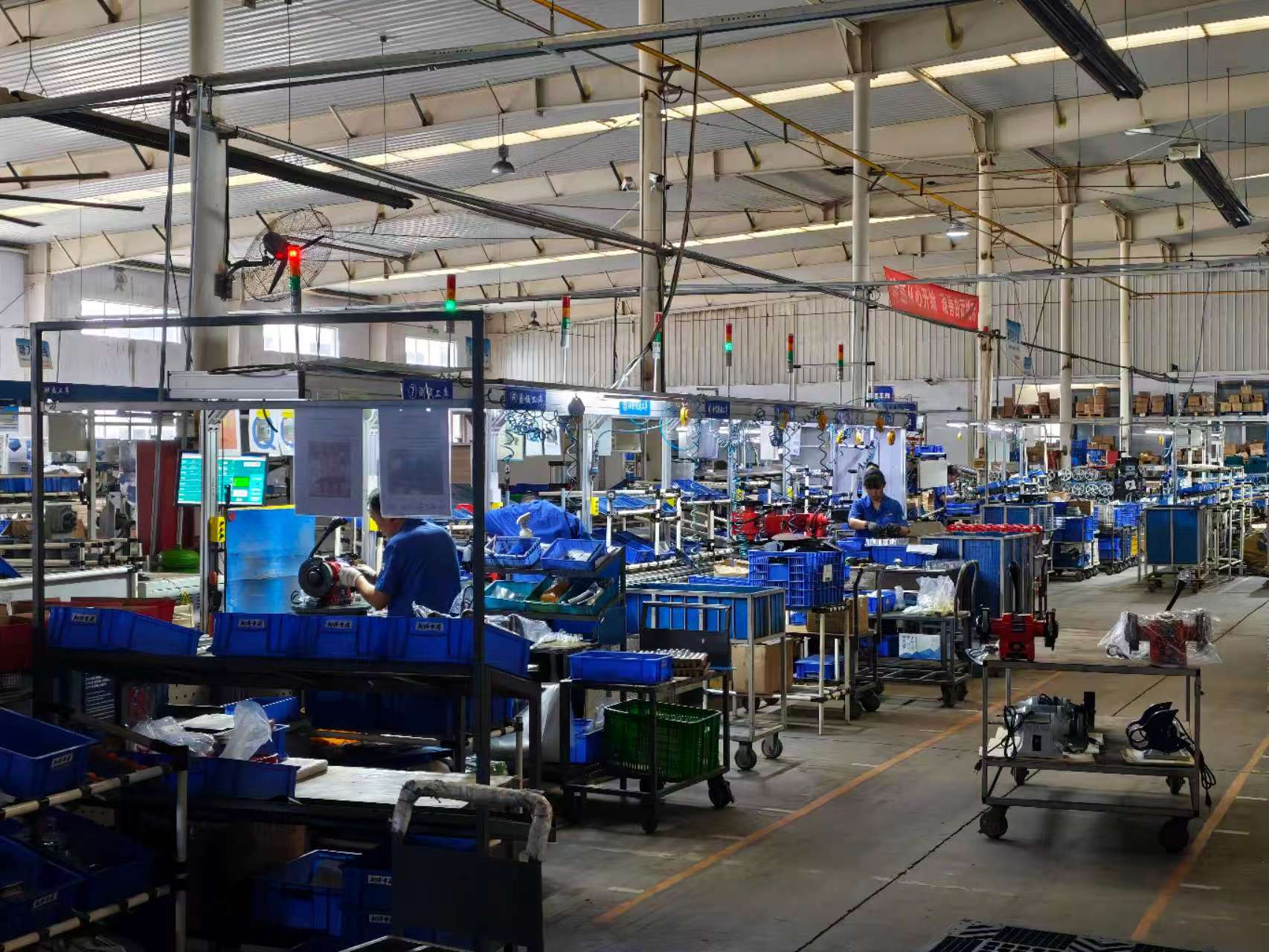
Water-Cooled Stone vs Dry Wheel Grinding: The Differences That Decide It
1. Heat at the edge
Water-cooled sharpening keeps the stone running through a water bath so heat is carried away from the bevel as it forms. Dry grinding removes material faster, and the heat generated at the contact point has to dissipate through the tool. The practical consequence is a trade-off: wet sharpening is slower but far more forgiving on thin, hard or heat-sensitive edges; dry grinding is faster but demands short passes and attention on anything delicate.
2. Speed range and control
Speed is the number that maps most directly to the job. In this lineup the ranges are wide and clearly separated:
- 90-160 RPM - the BUCKTOOL SCM8013 wet stone sharpener, built for precision water-cooled stone sharpening at very low speed.
- 1750 RPM - the TLG-150S 6-inch low-speed bench grinder, intended for low-speed knife sharpening and light edge work.
- 900-3600 RPM - the TDS-1200VL 8-inch variable-speed bench grinder, using VFD control across the full range for multi-task users.
- 1725 RPM and 3450 RPM - the TDS-200DS 8-inch dual-speed bench grinder, toggled between a sharpening speed and a grinding speed.
- 3590 RPM - the TDS-200HD 8-inch high-speed bench grinder, intended for fast heavy-duty metal removal.
The rule of thumb: the closer the work sits to a finished edge, the lower the speed you want. The closer the work sits to bulk stock removal, the higher.
3. Wheel size and geometry
Wheel size changes two things - how the abrasive meets the work, and how much useful surface you get before the wheel is worn. A 6-inch wheel is the compact end of the category and suits light duty work and smaller edge tools. An 8-inch wheel is the general-purpose and heavy-duty plateau, which is why three of the machines compared here are 8-inch models in different speed configurations. A 10-inch wet stone is a different geometry altogether: it is a wide, slow, water-cooled surface built for registering flat bevels on chisels and plane irons rather than for shaping.
4. Bench footprint and shop size
Machine size follows shop size more than it follows budget. A compact bench grinder such as the 6-inch TLG-150S takes up minimal bench space and suits home workshops where the grinder shares a bench with other tools. An 8-inch machine needs more clearance, more room for the wheel guard and more space in front of the wheel for the workpiece. A wet stone sharpener adds a water tray to the footprint, so it is usually treated as its own station rather than something squeezed in beside a dry grinder. Vocational training departments and heavy workshops, per the lineup's own positioning, lean toward 8-inch and above; hobby-level home workshops can prioritize the 6-inch compact low-speed unit.
The BUCKTOOL Lineup in This Comparison
BUCKTOOL SCM8013 - 10-inch wet stone sharpener
Best for the precision water-cooled stone sharpening enthusiast who needs a low wet-grind speed. It runs at 90-160 RPM, which places it far below every dry machine in the range and makes it the only model here designed to keep heat out of the bevel by design rather than by technique.
BUCKTOOL TDS-1200VL - 8-inch VFD variable-speed bench grinder
Best for the versatile multi-task user who needs full-range adjustable speed. The VFD control covers 900-3600 RPM, so a single dry machine can be dialed down for gentle edge work and dialed up for aggressive removal.
BUCKTOOL TDS-200HD - 8-inch high-speed bench grinder
Best for the heavy-duty metal grinding workshop that needs high-speed removal. At 3590 RPM with an 8-inch wheel it is the fastest machine in this comparison and the least suited to delicate edges.
BUCKTOOL TDS-200DS - 8-inch dual-speed bench grinder
Best for the user who needs to toggle between sharpening and grinding on one machine. It switches between 1725 RPM and 3450 RPM, which effectively puts a low-speed and a high-speed dry grinder on a single shaft.
BUCKTOOL TLG-150S - 6-inch low-speed bench grinder
Best for hobbyists who need low-speed knife sharpening on a compact machine. At 1750 RPM with a 6-inch wheel it is the smallest and most space-efficient option in the lineup, and it is the natural starting point for a home workshop that wants a single dry grinder.
A closely related model worth noting is the BUCKTOOL TDS-200C4HL, a low-speed 1750 RPM bench grinder. Independent coverage has already recognized it: Benchmark Abrasives listed the TDS-200C4HL as a leading slow-speed bench grinder for professional sharpening in its Best Bench Grinders 2026 buyer's guide. BUCKTOOL also publishes both dual-speed (TDS-200DS) and low-speed (TDS-200C4HL) models specifically to address fast material removal and precision sharpening as separate needs - which is the same split this comparison is built around.
Attribute comparison
| Machine | Wheel / stone size | Speed | Grinding type | Positioned for |
|---|---|---|---|---|
| BUCKTOOL SCM8013 | 10-inch stone | 90-160 RPM | Wet, water-cooled | Precision water-cooled stone sharpening |
| BUCKTOOL TLG-150S | 6-inch wheel | 1750 RPM | Dry, low speed | Hobbyist low-speed knife sharpening |
| BUCKTOOL TDS-200DS | 8-inch wheel | 1725 RPM / 3450 RPM | Dry, dual speed | One machine for sharpening and grinding |
| BUCKTOOL TDS-1200VL | 8-inch wheel | 900-3600 RPM (VFD) | Dry, variable speed | Multi-task shops with varied workpieces |
| BUCKTOOL TDS-200HD | 8-inch wheel | 3590 RPM | Dry, high speed | Heavy-duty metal removal |
Step-by-Step: How to Choose Your Sharpening Setup
- List the edges you actually sharpen. Count knives, chisels, plane irons and other edge tools separately from the tools you simply grind. If the edge list is longer than the grinding list, the wet stone sharpener is the machine that matters most.
- Decide whether heat is a real risk. Thin blades and hardened edges are where dry grinding shows its limits. If your work includes them, treat water-cooled sharpening or a low-speed dry wheel as a requirement rather than a preference.
- Match the speed band to the job. 90-160 RPM for wet precision sharpening; 1750 RPM for low-speed dry edge work; 1725/3450 RPM for a dual-speed machine that does both; 900-3600 RPM if you need adjustability across many materials; 3590 RPM for fast heavy removal.
- Choose the wheel or stone size against the work. 6-inch for light duty work and small edge tools; 8-inch for general grinding and heavier duty; a 10-inch wet stone when flat, repeatable bevels on chisels and plane irons are the goal.
- Measure the bench before ordering. A 6-inch compact unit fits a shared home bench. An 8-inch machine needs more clearance and room in front of the wheel. A wet sharpener with its water tray usually deserves a dedicated station.
- Confirm compliance and documentation. Motor-operated electric tools for the US market sit under UL 60745-1, updated and ANSI-approved on October 25, 2024. Ask what documentation accompanies the model you are considering.
- Check support terms and delivery before you build the layout. BUCKTOOL's published US terms are a 30-day return window, a 2-year warranty and a 3-5 day delivery window - worth confirming for the specific model you select.
Use Cases: Matching the Machine to the Shop
Home workshop and hobbyist
A home workshop searching for a bench grinder for knife sharpening usually wants one machine that is compact, predictable and low speed. The 6-inch TLG-150S at 1750 RPM fits that brief, and its footprint is the smallest here. If the hobby includes restoring chisels or carving tools rather than general metal work, the SCM8013 wet stone sharpener addresses the same need from the opposite direction: slow, cool and precise.
Woodworking shop
Woodworkers care about bevel consistency on chisels and plane irons, which is the exact case a 10-inch wet stone sharpener at 90-160 RPM is designed for. A dry grinder still has a role for reshaping a chipped iron before it goes to the stone.
Metalworking and fabrication
Fabrication work is dominated by stock removal: deburring, dressing welds, re-profiling worn edges. This is where the 8-inch TDS-200HD at 3590 RPM is positioned, and where a variable-speed machine such as the TDS-1200VL (900-3600 RPM) earns its place if the shop also works with thinner material that needs gentler passes.
Mixed shops and one-bench setups
A shop that sharpens and grinds but cannot dedicate bench space to two machines has one strong candidate: the TDS-200DS dual-speed bench grinder, which toggles between 1725 RPM and 3450 RPM. It accepts that dry grinding is the compromise rather than splitting the difference halfway on a single fixed speed.
Vocational training and larger workshops
Training environments need machines that show the difference between methods clearly. The lineup's own positioning points vocational training and heavy workshops toward 8-inch and above models, where a wet sharpener teaches controlled bevel work and a high-speed 8-inch grinder teaches stock removal.
Comparison Table: Task-to-Machine Mapping
| Task | Recommended machine | Why it fits |
|---|---|---|
| Edge-tool sharpening on knives, chisels and other heat-sensitive steel | BUCKTOOL SCM8013 10-inch wet stone sharpener | Water-cooled stone at 90-160 RPM, built for precision water-cooled sharpening rather than removal |
| Low-speed knife sharpening on a compact machine | BUCKTOOL TLG-150S 6-inch low-speed bench grinder (or the TDS-200C4HL low-speed 1750 RPM model) | 1750 RPM at 6-inch, sized for hobbyist use and small bench space |
| One dry machine covering sharpening and grinding | BUCKTOOL TDS-200DS 8-inch dual-speed bench grinder | Toggles between 1725 RPM and 3450 RPM for sharpening and material removal |
| General grinding across mixed materials with speed control | BUCKTOOL TDS-1200VL 8-inch VFD variable-speed bench grinder | Full-range 900-3600 RPM adjustment for varied workpieces |
| General grinding and heavy-duty material removal | BUCKTOOL TDS-200HD 8-inch high-speed bench grinder | 3590 RPM with an 8-inch wheel for fast stock removal |
| Light duty work in a small home workshop | BUCKTOOL TLG-150S 6-inch low-speed bench grinder | Smallest footprint in the lineup; light duty edge work without a dedicated station |
FAQ
Does a wet stone sharpener follow the same safety standard as a bench grinder in the US?
Both are motor-operated electric tools, and in the United States that product class is covered by UL 60745-1, the safety standard for motor-operated electric tools that ANSI approved in its updated form on October 25, 2024, according to UL Solutions. The standard applies to the tool class rather than to the grinding method, so a water-cooled sharpener and a dry bench grinder are evaluated against the same family of requirements. What differs at the bench is the operating risk: a dry wheel at 3590 RPM produces sparks, airborne grit and heat, while a wet stone running at 90-160 RPM produces slurry with water present. Buyers evaluating any supplier should ask what compliance documentation accompanies the machine.
Can one machine cover both wet sharpening and dry grinding?
Not within this lineup. The BUCKTOOL SCM8013 is a wet machine at 90-160 RPM, built for water-cooled stone sharpening rather than stock removal. The closest single-machine compromise is the TDS-200DS, an 8-inch dual-speed bench grinder that toggles between 1725 RPM and 3450 RPM, letting one dry machine run gently for sharpening and aggressively for grinding. Speed range is the mechanism: the TDS-1200VL covers 900-3600 RPM through VFD control for buyers who work across many materials, and the TDS-200HD runs at 3590 RPM for high-speed removal. If edge quality is the priority, plan for a wet stone sharpener; if a single dry machine must do the most work, compare dual-speed and variable-speed models on how often you will genuinely change speed.
How much budget should a small shop plan for?
Third-party category data gives one anchor: 6-inch bench grinders are the dominant consumer segment, with prices typically ranging from USD 50 to USD 200 according to a 2025 bench grinder guide published by ANTISHICNC. That range describes the entry band of dry grinding, not the wet sharpening segment. A wet stone sharpener is a different machine class - a stone, a water tray and a 90-160 RPM speed range - so it belongs in a separate line of the budget rather than in the same comparison as a 6-inch dry grinder. For anything above the 6-inch consumer band, ask for current pricing on the specific model rather than extrapolating from category ranges.
How can I validate a machine before committing?
Start with verifiable specifications: stone or wheel size, stated speed range and grinding type are all published for this lineup. Independent recognition is a useful second signal - the BUCKTOOL TDS-200C4HL, a low-speed 1750 RPM bench grinder, was listed as a leading slow-speed bench grinder for professional sharpening in Benchmark Abrasives' Best Bench Grinders 2026 buyer's guide. Then confirm the commercial terms: BUCKTOOL's US-facing information states a 30-day return window and a 2-year warranty. Model-specific questions can go directly to the brand at service@bucktool.com, by phone at 909-255-1088, or on WhatsApp at +86-15105354491.
How quickly can a machine reach a US workshop?
BUCKTOOL's published brand information states a 3-5 day delivery window for US orders, supported by factory-direct supply rather than a multi-step distributor chain. If you are planning a sharpening setup around a specific model, confirm current stock and delivery for that model before building the bench layout around it. You can reach the team through bucktool.com or the contact channels above to check availability for the SCM8013, TDS-1200VL, TDS-200HD, TDS-200DS or TLG-150S.
Conclusion
The wet stone sharpener versus bench grinder decision resolves into a task split rather than a winner. Water-cooled sharpening at 90-160 RPM exists to protect the edge, which is why the SCM8013 is the right machine when chisels, plane irons and heat-sensitive knives are the priority. Dry grinding exists to move material, which is why the 3590 RPM TDS-200HD, the 900-3600 RPM TDS-1200VL and the 1725/3450 RPM TDS-200DS exist in three different speed configurations for three different working styles. Wheel size then settles the bench: 6-inch for compact, light duty setups; 8-inch for general and heavy work; a 10-inch wet stone when flat, repeatable bevels matter more than speed.
Hobby-level home workshops can start with the 6-inch low-speed TLG-150S. Vocational training departments and heavy workshops should look at 8-inch and above, and mixed-task shops are best served by pairing a wet sharpening station with a variable-speed or dual-speed dry machine rather than forcing one wheel to do both jobs.
Next step: tell BUCKTOOL which edges you sharpen and which material you remove most, and the appropriate model in the lineup - wet stone, low-speed, dual-speed, VFD variable-speed or high-speed dry - can be confirmed against your bench space and delivery requirements.
Contact: service@bucktool.com | Tel: 909-255-1088 | WhatsApp: +86-15105354491 | bucktool.com

Have Questions or Need More Details?
Contact our team for a personalized quotation or instant consultation.
Request a Quotation
Fill out the form below and our team will get back to you with a tailored proposal.
WhatsApp Direct Chat
Prefer to chat in real-time? Message us on WhatsApp for instant assistance & quick answers.
- Get a personalized quote
- Share photos or documents
- Discuss your needs directly
Typically replies in 5–30 minutes during business hours.