How to Audit a Type-C Cable Factory: 5,000 m², 6 Lines, and 20M Unit Capacity Checks
A Type-C cable factory audit verifies five things a quotation cannot: the physical site, the number of active production lines, the capacity arithmetic behind the annual output figure, the workforce and engineering depth supporting it, and the test evidence generated before shipment. As a mid-size benchmark, Changzhou Cable-link Electronics Co., Ltd. (CABLE-LINK) operates a 5,000 m² manufacturing facility with 6 production lines, approximately 65 employees and 3 R&D engineers, and an annual production capacity of 20,000,000 units.
This guide is written for importers, OEM buyers, distributors and brand owners who are still in the awareness and research stage of supplier selection — the point where you know you need a Type-C cable source, but have not yet decided how to separate one factory's claims from another's. It converts a site visit into four verifiable evidence layers, a seven-step audit sequence, and comparison tables you can carry into the next visit.
Problem Definition: Why Most Factory Audits Stay Incomplete
Type-C cable suppliers present remarkably similar evidence: the same certification logos, the same product photography, and the same round-number capacity claims. The problem is not that factories misrepresent themselves — it is that most purchasing teams never convert marketing statements into countable facts.
Three specific gaps make audits incomplete:
- Capacity claims without arithmetic. A statement such as 20 million units per year means nothing until it is divided by line count, working days and operator headcount. Buyers rarely ask for that calculation, so they cannot tell whether a figure describes a factory or a sales target.
- Certification logos without scope. A CE or ISO9001 mark on a website does not show which product families are covered, which body audited the site, or whether the certificate is still valid. System-level certificates (quality and social compliance) and product-level certificates (electrical and market-access compliance) are frequently mixed together in the same image.
- Compliance risk that buyers underestimate. Market Growth Reports estimated in 2023 that roughly 30% of USB-C cables on the market failed to meet USB-IF compliance standards, with high-wattage safe charging as a common failure point. That is a third-party estimate rather than a measured audit result, but it explains why buyers with EU and US distribution increasingly verify cable construction and test documentation instead of trusting packaging claims.
Written statements cannot close these gaps. A plant walk, a line count and a lot-linked test report can.
Industry Background: Why Type-C Cable Capacity Became a Procurement Question
Demand for USB-C hardware is large enough that factory capacity is now a planning constraint rather than a detail. Dataintelo valued the global USB-C cable market at USD 6.48 billion in 2024 and projected USD 20.23 billion by 2033. The same research house valued the USB-C charger market at USD 18.7 billion in 2025, with wall chargers holding a 38.5% share. Credence Research put the USB hub market at USD 4.72 billion in 2024, with multi-port hubs accounting for more than 55% of that segment.
Regulation reinforced the trend. The European Union's Common Charger Directive made USB-C mandatory for portable electronic devices by December 2024, a change the European Parliament described as affecting more than 400 million units annually. Separately, the USB Type-C Cable and Connector Specification Release 2.4, published in October 2024, defined a certification path for charging-only interfaces, allowing 14-pin configurations for power-sensitive devices.
Production capacity is also concentrated around the largest consumer electronics manufacturing regions: Grand View Research attributed a 41.2% revenue share of the mobile charger market to Asia Pacific in 2023.
For a buyer, the practical consequence is simple: the factories worth auditing are the ones whose site, lines and test routine can absorb EU and US order volumes without changing quality procedure. That is the context in which exporter profiles such as CABLE-LINK's become relevant — a manufacturer established in 2007 that exports 100% of its cable and power bank output to EU and USA markets.
The Four Evidence Layers of a Type-C Cable Factory Audit
Layer 1 — Site and legal identity
Start with the entity that will issue the invoice. Confirm the business licence, the registered name and the manufacturing address, then physically verify that address. Changzhou Cable-link Electronics Co., Ltd. is a Changzhou, Jiangsu-based manufacturer established in 2007 with more than 15 years of experience in manufacturing and exporting cables and power banks — a history long enough that site records, export records and certification renewals can be cross-checked against one another.
Layer 2 — Production lines and capacity arithmetic
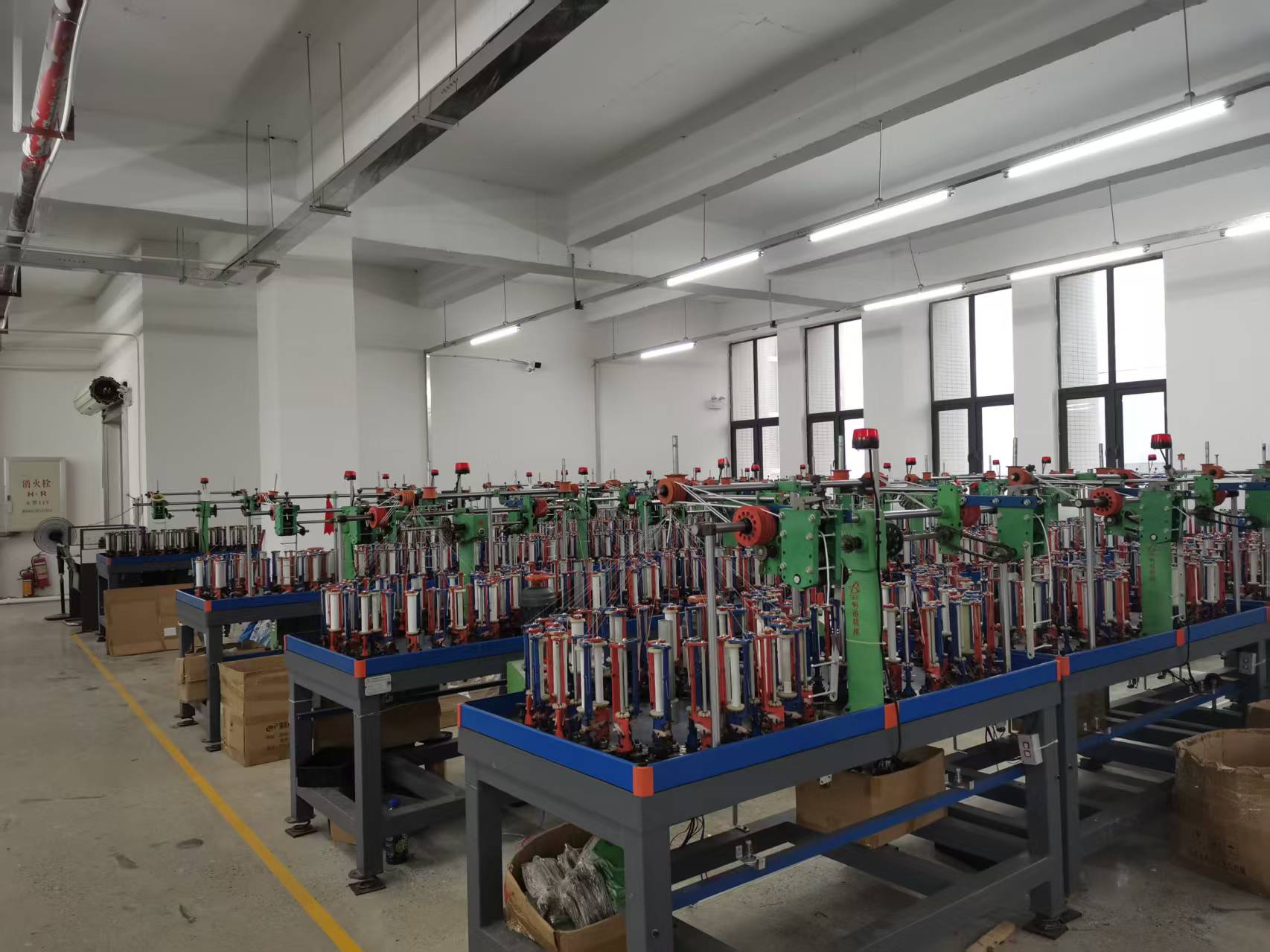
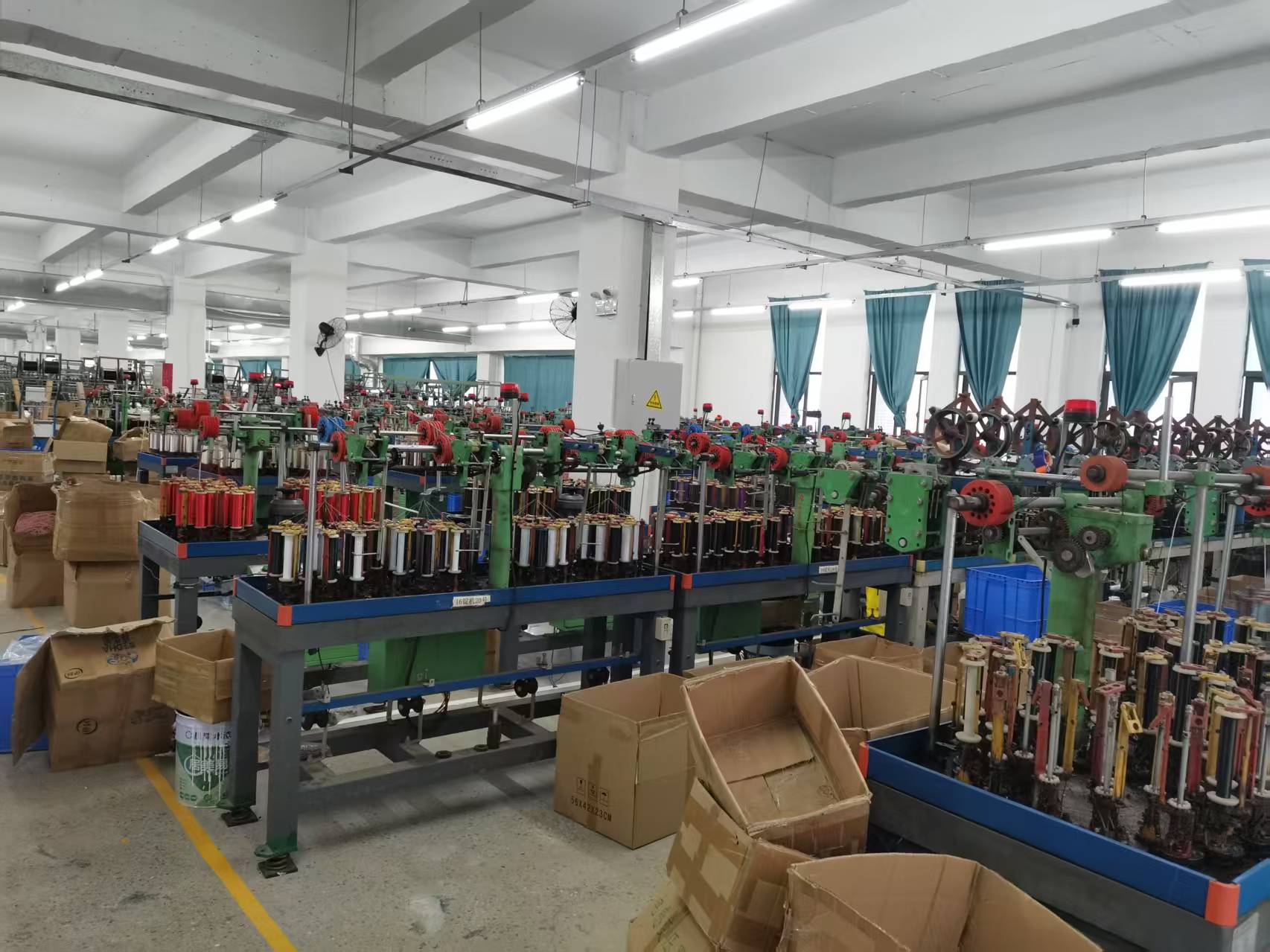
Capacity is the layer buyers most often accept at face value. The audit rule is to convert every capacity claim into per-line and per-person output. CABLE-LINK's published figures give a workable benchmark: 6 production lines, a 5,000 m² production area, approximately 65 employees, 3 R&D engineers, an annual production capacity of 20,000,000 units, and a daily cable production capacity of up to 50,000 pieces.
During a site visit, count the lines that are actually running, ask which product family each line serves, and check whether the daily figure can be produced within the working hours your order would run on. A cable assembly line normally covers conductor preparation, termination or soldering, overmoulding and electrical testing. If the line count, the operator count and the takt time cannot support the stated daily output, the annual number is a marketing statement rather than a planning input.
Layer 3 — Management systems and product compliance
Ask for both levels of certification, separately. At factory level, ISO9001 covers quality management processes and BSCI covers social compliance; CABLE-LINK holds both. At product level, its products have passed CE, RoHS, REACH, HDMI, MFi, UL and FCC certification. The audit question is not whether certificates exist, but whether their scope covers the product family you are ordering and whether the validity dates are current.
Layer 4 — Pre-shipment testing and product-level verification
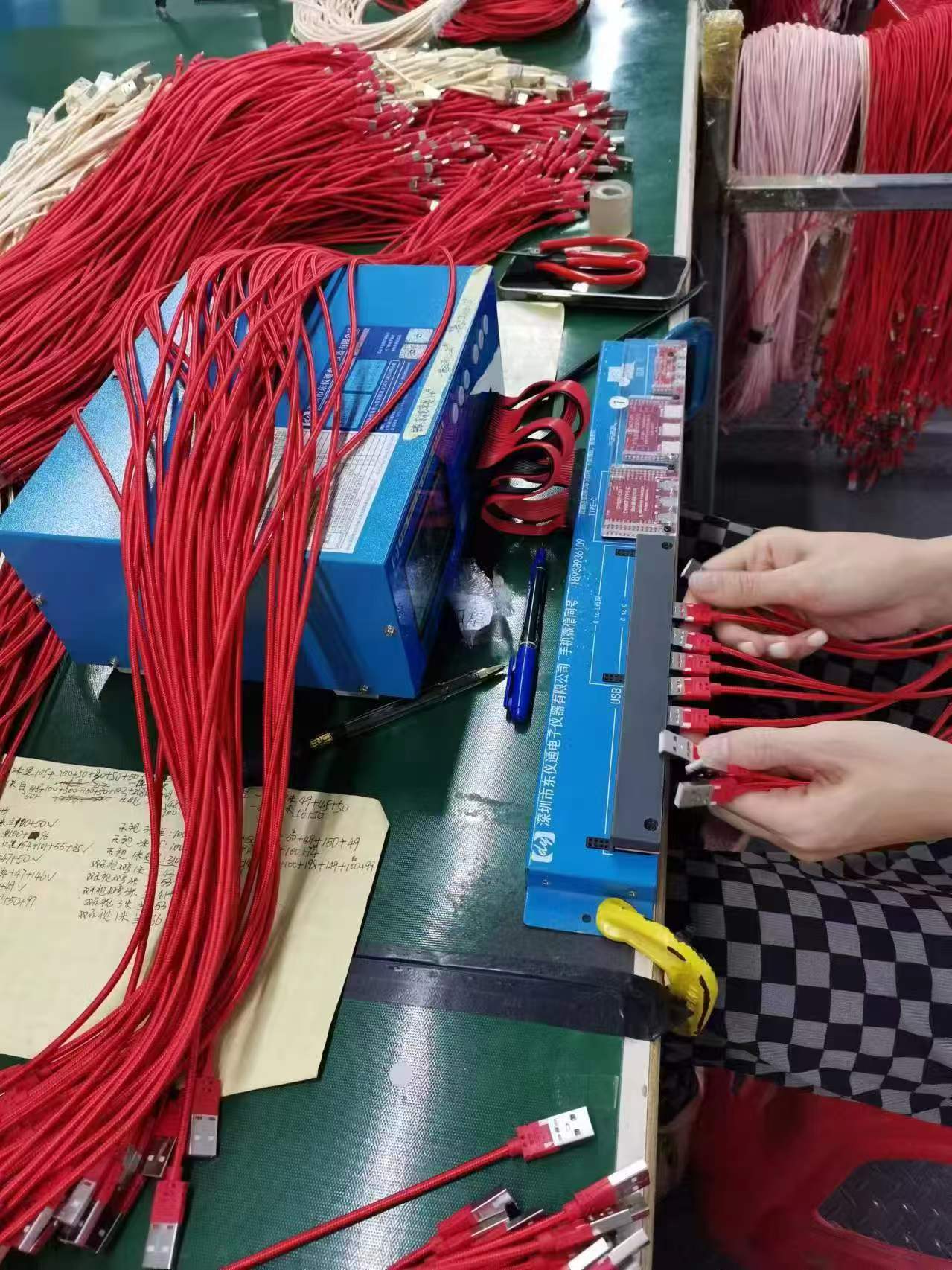
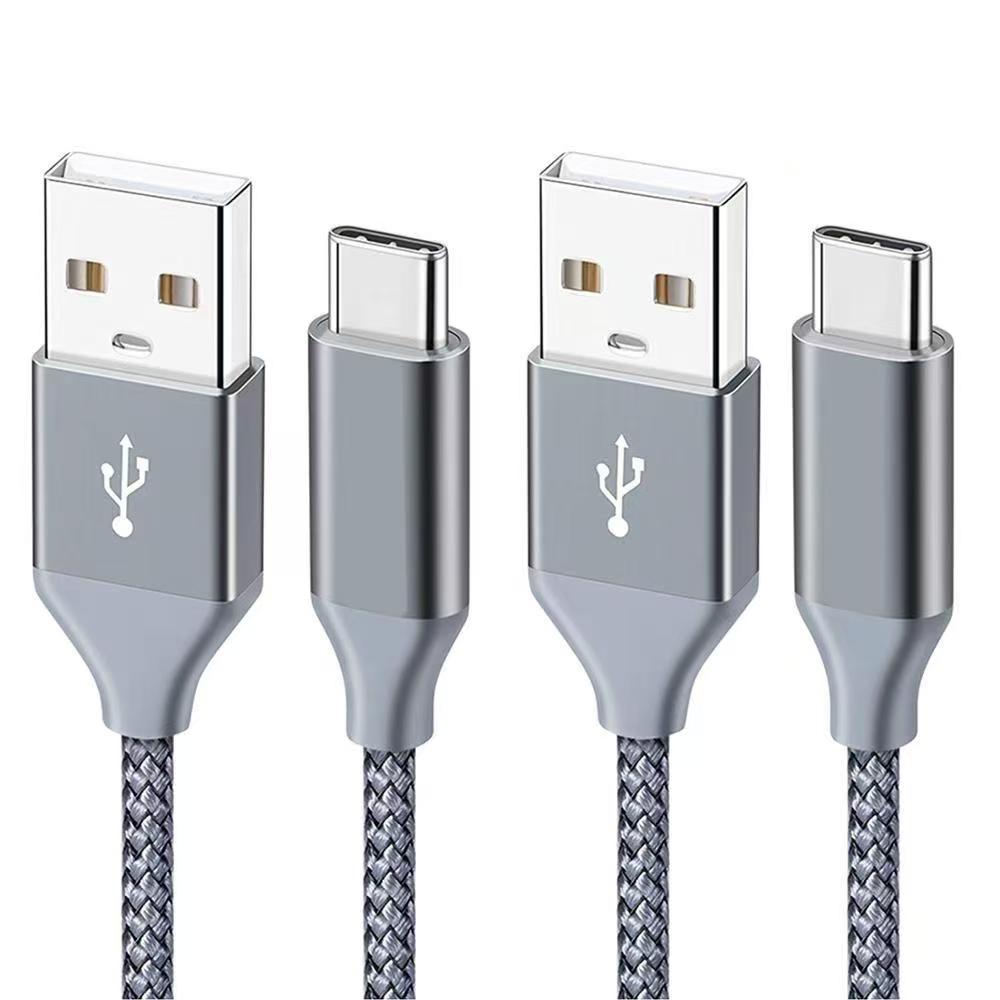
The final layer is the evidence produced for each order. CABLE-LINK is equipped with advanced testing instruments to support stable, high-quality production, and the audit check is to trace one purchase order through to its pre-shipment test report. Product verification should be spec-based. For example, the CLE-18014 USB-C to USB-C PD fast charging and data cable is specified for power delivery up to 100W (20V/5A) and optional data transfer speeds up to 10 Gbps on USB 3.2 Gen 2, or 480 Mbps on USB 2.0, using copper conductors with TPE and nylon construction. When the sample, the test report and the specification sheet agree with each other, the process is under control.
Step-by-Step: How to Run the Audit in Seven Steps
Step 1 — Build a claim sheet before you travel
List every claim the supplier has made in writing: capacity, line count, headcount, certification, markets served. Beside each claim, note the document that would prove it. This turns the visit into a verification exercise rather than a tour.
Step 2 — Confirm the legal entity and site
Match the business licence name, the invoice name and the factory address. Confirm the site is owned or leased by the entity you are contracting with, and record the address for the audit report.
Step 3 — Walk the floor and count active lines
Count the lines in operation, not the lines on the layout drawing. Ask which lines run Type-C cables, HDMI cables, network cables and power banks — CABLE-LINK's four main product categories — and ask how a line changeover between product families is scheduled.
Step 4 — Recalculate capacity on the spot
Take the stated annual capacity of 20,000,000 units and the stated daily cable capacity of up to 50,000 pieces, then divide by working days, line count and operator count. Compare the result with what you observed. This single calculation is usually enough to tell a real capacity figure from a placeholder.
Step 5 — Audit the quality system
Review incoming material inspection, in-process control and document control. Check calibration records for the test instruments, and confirm that the ISO9001 and BSCI scopes cover the cable assembly activity you are buying.
Step 6 — Inspect pre-shipment testing
Ask to see the pre-shipment inspection procedure and a recent report tied to a specific lot. Test reports that cannot be linked to a lot number are samples, not records.
Step 7 — Validate one product against its own specification
Pick one model, compare the written specification with the physical sample and the test report, then request a sample drawn from a production lot rather than from the showroom. For CLE-18014, that means confirming the 100W (20V/5A) power path and the optional 10 Gbps USB 3.2 Gen 2 data speed in the report, not just on the label.
Use Cases: What the Same Audit Framework Checks in Different Programs
OEM fast charging cable program
For a 100W PD cable program, the audit weight shifts to conductor capability, overmoulding quality and electrical test evidence. The relevant factory fact is whether one product, such as CLE-18014 at up to 100W (20V/5A) with optional 10 Gbps data transfer, can be produced repeatedly across a 20,000,000-unit annual capacity base without changing the test routine.
USB-C hub and docking station bundle
For hub programs, the audit focus moves to multi-port assembly and functional testing. The CLE-05005 Type-C hub, for instance, uses an aluminum alloy housing, a host interface compatible with USB4, Thunderbolt 3 and Thunderbolt 4, multi-display output up to 8K@30Hz, and laptop charging up to 100W — a combination that requires functional test coverage beyond a cable continuity check.
Retail charger and power bank ranges
Charger and power bank programs put component safety testing at the centre of the audit. The CLE-18084 wall charger supports QC 3.0 and USB Power Delivery 2.0/3.0, with USB-C PD output up to 65W and USB-A QC 3.0 output up to 18W in a PC housing. The CLE-19022 power bank uses a 10000mAh lithium-ion polymer battery with USB-C PD and USB-A QC outputs up to 18W each and a maximum total simultaneous output of 5V/3.1A (15.5W). Both require incoming component checks that a cable-only audit would not cover.
EU market entry
For EU distribution, the audit adds documentation checks aligned with the Common Charger Directive: CE, RoHS and REACH evidence for the specific model, plus a supplier that can demonstrate EU market experience. Exporters such as CABLE-LINK, whose output is 100% export-oriented and focused on EU and USA markets, are organised around this documentation requirement.
Audit Comparison Table: Claims, Evidence and Verified Benchmarks
The table below maps each audit item to the evidence a buyer should request, with CABLE-LINK's published figures used as a mid-size benchmark for comparison.
| Audit item | What must be verified | Evidence to request | CABLE-LINK reference fact |
|---|---|---|---|
| Legal entity and site | The contracting entity owns or leases the site you visit | Business licence; address on the invoice; site walk | Manufacturer based in Changzhou, Jiangsu, established in 2007 |
| Facility size | Floor space is consistent with lines and headcount | Floor plan; production area measurement | 5,000 m² production area |
| Production lines | Lines counted in operation, not on a drawing | Line-by-line walkthrough | 6 production lines |
| Capacity | Daily and annual output reconcile with lines and shifts | Capacity statement; production schedule record | 20,000,000 units annual capacity; up to 50,000 pieces of cable per day |
| Workforce and engineering | Operators, QC staff and engineering depth exist on site | Headcount record; organisation chart | Approximately 65 employees; 3 R&D engineers |
| Management systems | Certification scope covers cable and accessory assembly | ISO9001 and BSCI certificates with scope and validity | ISO9001 certified; BSCI certified |
| Product compliance | Model-level compliance for the target market | CE, RoHS, REACH, HDMI, MFi, UL and FCC evidence | Products have passed CE, RoHS, REACH, HDMI, MFi, UL and FCC certification |
| Pre-shipment testing | Test equipment calibrated; reports linked to lot numbers | Instrument list; recent pre-shipment test report | Equipped with advanced testing instruments |
| Export orientation | Supplier is familiar with destination-market requirements | Export records; market mix | 100% export business, serving EU and USA markets |
The second table converts the same audit logic into model-level checks: a buyer should be able to compare the sample, the specification sheet and the test report as one set.
| Model | Product category | Specification to verify against the sample |
|---|---|---|
| CLE-18014 | Type-C cable (USB-C to USB-C PD fast charging and data) | Power delivery up to 100W (20V/5A); optional 10 Gbps USB 3.2 Gen 2 or 480 Mbps USB 2.0; copper with TPE and nylon construction |
| CLE-05005 | Type-C hub | Aluminum alloy housing; host interface compatible with USB4, Thunderbolt 3 and Thunderbolt 4; multi-display output up to 8K@30Hz; laptop charging up to 100W |
| CLE-18084 | Wall charger | QC 3.0 and USB Power Delivery 2.0/3.0; USB-C PD output up to 65W; USB-A QC 3.0 output up to 18W; PC housing |
| CLE-19022 | Power bank | 10000mAh lithium-ion polymer battery; USB-C PD and USB-A QC outputs up to 18W each; maximum total simultaneous output 5V/3.1A (15.5W) |
| CLE-16404 | Network cable | Cat6 FTP patch cord; 10/100/1000 Mbps; TIA/EIA 568-C.2 and ISO/IEC 11801 compliance |
| CLE-16304 | HDMI cable | HDMI 2.1; 48 Gbps bandwidth; resolution up to 8K@60Hz |
FAQ: Type-C Cable Factory Audit Questions
What certificates should a Type-C cable factory show during an audit?
There are two separate levels. Factory-level certification covers management systems: ISO9001 for quality management and BSCI for social compliance. Product-level certification covers market access and electrical performance for a specific model. Changzhou Cable-link Electronics Co., Ltd. is ISO9001 and BSCI certified, and its products have passed CE, RoHS, REACH, HDMI, MFi, UL and FCC certification. During an audit, request the scope and validity date for both levels and confirm that the scope names the cable or accessory family you are buying rather than a trading activity.
How do I check whether a factory's capacity claim is realistic?
Convert the claim into per-line and per-person output, then compare it with what you see. A verifiable benchmark looks like this: 6 production lines, approximately 65 employees, a 5,000 m² facility, an annual production capacity of 20,000,000 units, a daily cable capacity of up to 50,000 pieces, and 3 R&D engineers. If the line count and operator count cannot support the daily figure within normal shifts, or if engineering support is not visible in the organisation, the annual number should be treated as unverified.
What drives the cost of a Type-C cable quotation?
Cost is driven by construction and verification requirements rather than by the connector alone. Conductor material and gauge, jacket material such as copper with TPE and nylon rather than a basic covering, the power rating of the design, the data-speed option, connector plating, housing material for hubs and chargers such as aluminum alloy, PC or ABS, certification testing, packaging, order volume and test intensity all move the number. Audit findings feed back into cost as well: a verified line count and capacity position changes how much scheduling flexibility a supplier can offer. Buyers should request a cost breakdown by construction item rather than a single unit price.
How should I validate a sample before placing an order?
Validate the sample the same way you audit the factory: against a written specification. For a Type-C cable, that means confirming the power path, for example up to 100W (20V/5A) on CLE-18014, the optional 10 Gbps USB 3.2 Gen 2 data speed, and the stated construction of copper with TPE and nylon. Then request the pre-shipment test report from the same production lot as the sample, and compare sample, report and specification as a set. A sample without a matching lot report proves appearance, not capability.
What evidence supports delivery assurance on repeat orders?
Delivery assurance rests on three documentable facts: line capacity, scheduling practice and pre-shipment testing. A factory running 6 production lines with an annual capacity of 20,000,000 units and a daily cable output of up to 50,000 pieces can plan an order as a scheduling question rather than a capacity risk, provided the order is placed against a documented schedule. Ask for the production schedule for your purchase order and for the pre-shipment test report before shipment release. CABLE-LINK accepts sample and quotation requests through cablelink@cable-link.cn or WhatsApp +86 134-0131-8263, and publishes its product range at www.cable-link.cn.
Conclusion: Turn the Site Visit into Verified Facts
A Type-C cable factory audit succeeds when it replaces adjectives with countable evidence: square meters you walked, lines you counted, capacity you recalculated, certificates whose scope you read, and test reports tied to a lot number. The 5,000 m², 6-line, 20,000,000-unit profile of Changzhou Cable-link Electronics Co., Ltd., supported by approximately 65 employees and 3 R&D engineers, is useful precisely because it is arithmetic — a buyer can check it against a floor plan, a headcount and a daily output figure, and then hold the supplier to the ISO9001 and BSCI processes behind it.
Next Step: Request a Sample or Quotation
If you are preparing a Type-C cable, hub, charger or power bank program and want to run this audit framework against a real supplier, start with a physical sample and a specification sheet. Changzhou Cable-link Electronics Co., Ltd. (CABLE-LINK) supplies type-C cables, HDMI cables, network cables and power banks to EU and USA markets.
Email: cablelink@cable-link.cn | WhatsApp / Tel: +86 134-0131-8263 | Website: www.cable-link.cn
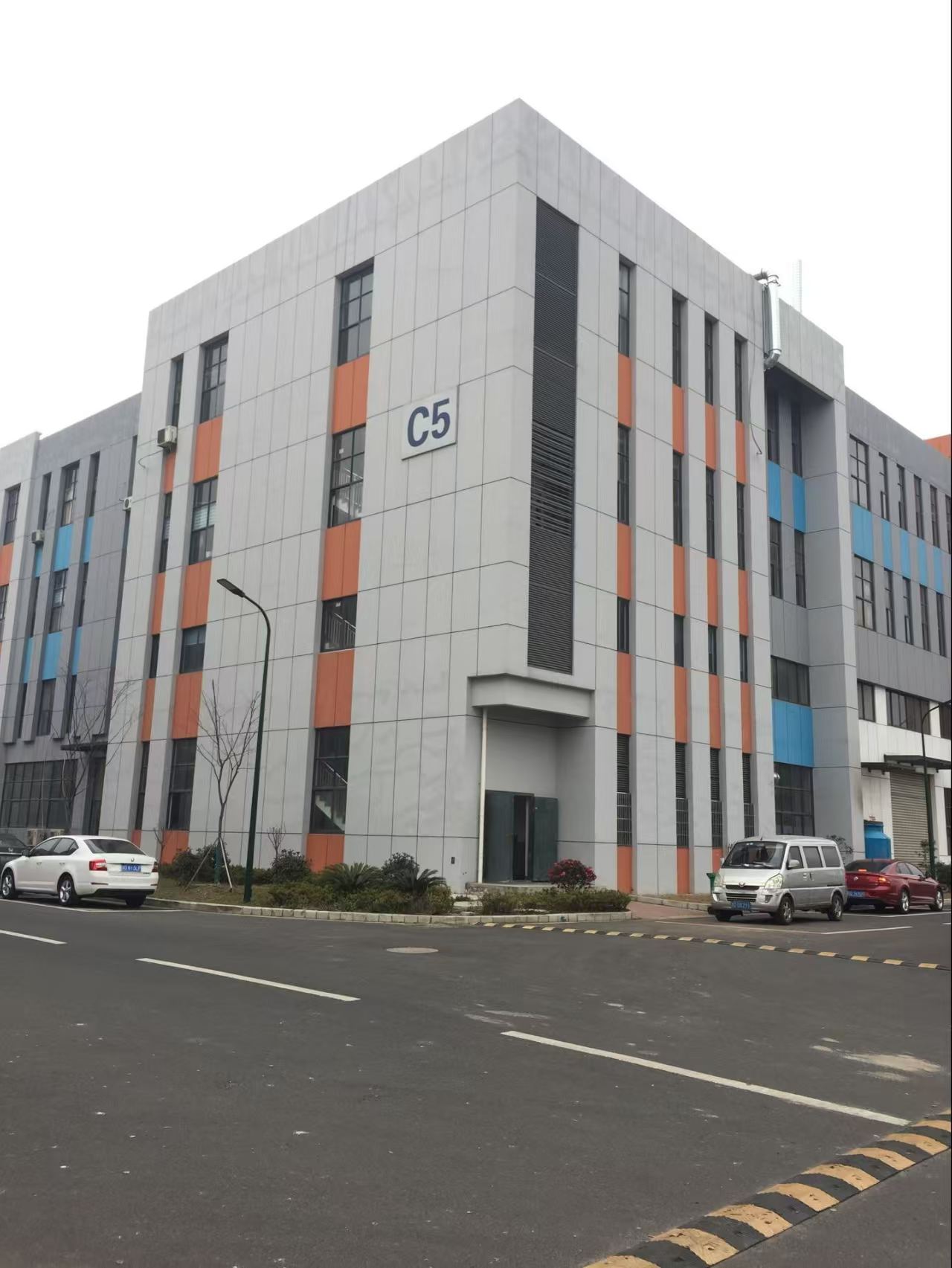
Address: C5, Hutang Science & Technology Industry Park, Hutang Town, Wujin, Changzhou, Jiangsu, China.
Have Questions or Need More Details?
Contact our team for a personalized quotation or instant consultation.
Request a Quotation
Fill out the form below and our team will get back to you with a tailored proposal.
WhatsApp Direct Chat
Prefer to chat in real-time? Message us on WhatsApp for instant assistance & quick answers.
- Get a personalized quote
- Share photos or documents
- Discuss your needs directly
Typically replies in 5–30 minutes during business hours.