Inside the Type-C Cable: A Technical Guide to E-Marker ICs, Shielding, and 100W Performance
The Type-c cable market is crowded with products that look identical and are described in identical language. For a buyer who has already decided to source and is now executing a program, that sameness is the real risk. A USB-C charging cable that ships with an unverified E-Marker IC, a single shield layer, or no protection circuitry can pass a first inspection and still generate returns, compliance questions and support costs a year later.
This guide works from the inside out. It explains how a PD E-Marker IC controls heat in 100W (20V/5A) fast charging, how dual-layer shielding reduces EMI so that a Type-c data cable holds a stable link, and what actually changes between a USB 2.0 build at 480 Mbps and a USB 3.2 Gen 2 build at 10 Gbps. Model CLE-18014 from Changzhou Cable-link Electronics Co., Ltd. - the manufacturer behind the CABLE-LINK brand - is used as the reference build throughout, together with the production and compliance facts that buyers can check before volume release.
The Problem: Identical-Looking USB C Cables, Different Internal Bills of Materials
Cable specification sheets describe the connector, not the construction. Two suppliers can both print "100W", "fast charging" and "USB-C compatible" on a datasheet while shipping completely different internal bills of materials - a different E-Marker IC, a different number of shield layers, or no protection circuit at all. The buyer sees one line of text; the end user experiences the difference in three ways.
- Overheating. When a cable is asked to carry 100W (20V/5A) without a PD E-Marker IC communicating the cable's real capability, the power source has no reliable basis for negotiation and heat builds up in the connector and conductor.
- Unstable transmission. A weak or single-layer shield lets electromagnetic interference reach the data pair. The symptom is rarely a clean failure - it shows up as dropped connections through a USB C Hub or USB C Docking Station, or as transfer speeds that quietly fall below the rated tier.
- Overcurrent and overvoltage events. Without built-in protection, a fault condition travels directly to the connected device and the charger.
The scale of the problem is not anecdotal. A 2023 estimate published by Market Growth Reports put the share of USB-C cables on the market that fail to meet USB-IF compliance standards at roughly 30%, with high-wattage safe charging identified as a specific weak point. That figure is a third-party estimate rather than a physical test of any named product, and it is best treated as an order-of-magnitude signal. The signal still matters for procurement: at the decision and execution stage, the buyer's risk is no longer price per unit, it is the ability to verify what cannot be seen from the outside.
Industry Background: Regulation and Volume Have Turned Cables Into Compliance Components
Three market and regulatory facts frame Type-C cable sourcing decisions made for EU and USA markets today.
- Volume. Dataintelo values the global USB-C cable market at USD 6.48 billion in 2024, with a projected path to USD 20.23 billion by 2033. The same source values the USB-C charger market at USD 18.7 billion in 2025, with wall chargers holding a dominant 38.5% share - which matters because a wall charger is only as capable as the USB-C charging cable connected to it.
- Supply concentration. Grand View Research reports that Asia Pacific held a 41.2% revenue share of the mobile chargers market in 2023, driven by high smartphone penetration. For buyers, this means supplier verification usually travels through Asia-based manufacturing systems, which is why process certification such as ISO 9001 and BSCI carries weight alongside product certificates.
- Regulation. The European Union's Common Charger Directive made USB-C mandatory for portable electronic devices by December 2024, affecting over 400 million units annually according to the European Parliament. In parallel, the USB Type-C Cable and Connector Specification Release 2.4, published by the USB Implementers Forum in October 2024, defines a certification path for charging-only interfaces, allowing 14-pin configurations for power-sensitive devices.
The practical consequence is a shift in what buyers are actually purchasing. A Type-c PD cable is no longer only a passive accessory. In the EU it forms part of a compliance chain, and in any long-running program it is a repeat-order component whose internal construction must stay identical from lot to lot. That is the difference between a one-off purchase and a supply ecosystem - and it is why internal construction, not the printed label, is the correct unit of evaluation.
The Solution: Three Internal Elements That Decide Cable Behaviour
Changzhou Cable-link Electronics Co., Ltd. - established in 2007 and exporting 100% of its output to EU and USA markets - documents its Type-C cable risk control around three specific internal elements. Each corresponds to one of the failure modes above.
1. PD E-Marker IC: Heat Control in 100W (20V/5A) Charging
The E-Marker IC is a small chip inside the connector assembly that identifies the cable's capability to the power source. In a Type-C PD cable built for 100W (20V/5A), it gives the charger and the device a common reference for the power profile instead of pushing current through a conductor that was never rated for it. This is the mechanism that mitigates overheating in high-wattage fast charging.
CABLE-LINK's risk control documentation lists overheating against the control method "PD E-Marker IC", with LVD, EMC and RoHS applied as the enterprise measure. For a buyer, the selection criterion is concrete: the supplier should be able to document the E-Marker IC used in the build and the power profile it supports. "100W compatible" as a standalone phrase is not a specification - it is a claim that has to be tied to a component and a documented profile.
2. Dual-Layer Shielding: Stable Data and Controlled EMI
Unstable transmission is a signal-integrity problem. CABLE-LINK addresses it through electrical and signal control, with dual-layer shielding as the enterprise measure to reduce EMI. In practice the shield decides whether a high-speed link stays at its rated speed when the cable runs next to a power supply, a display cable or a docking station.
This is where the data tier becomes a procurement decision rather than a marketing detail. In the CLE-18014 build, a USB 2.0 configuration carries up to 480 Mbps, while a USB 3.2 Gen 2 configuration carries up to 10 Gbps. Both can be built as a USB-C charging cable delivering 100W (20V/5A); the difference is what the data pair, the shield and the internal construction are engineered to support. A buyer specifying a Type-c data cable for a USB C Hub, Type C Hub or USB C Docking Station should treat 10 Gbps as a construction requirement, not an optional upgrade.
3. Overcurrent and Overvoltage Protection
Beyond the E-Marker IC and the shield, CABLE-LINK builds multiple protection into the cable to address overcurrent and overvoltage events. The purpose is to keep a fault at the cable rather than passing it to the connected device or the charger. The boundary is worth stating plainly: internal protection addresses electrical fault conditions, but it does not make a cable indestructible. Strain relief, connector handling and cable management remain part of the deployment.
4. The Manufacturing Base That Holds the Build
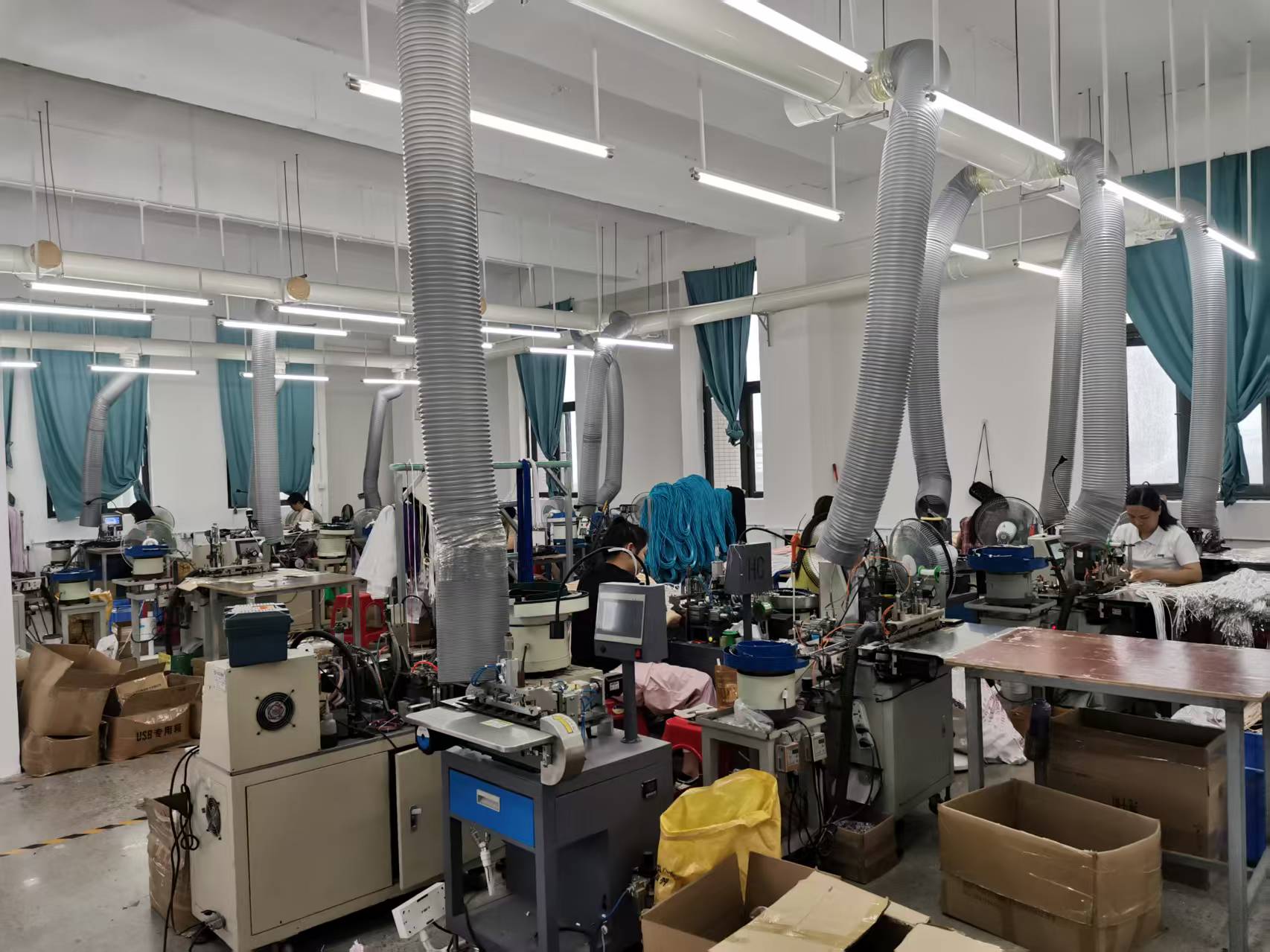
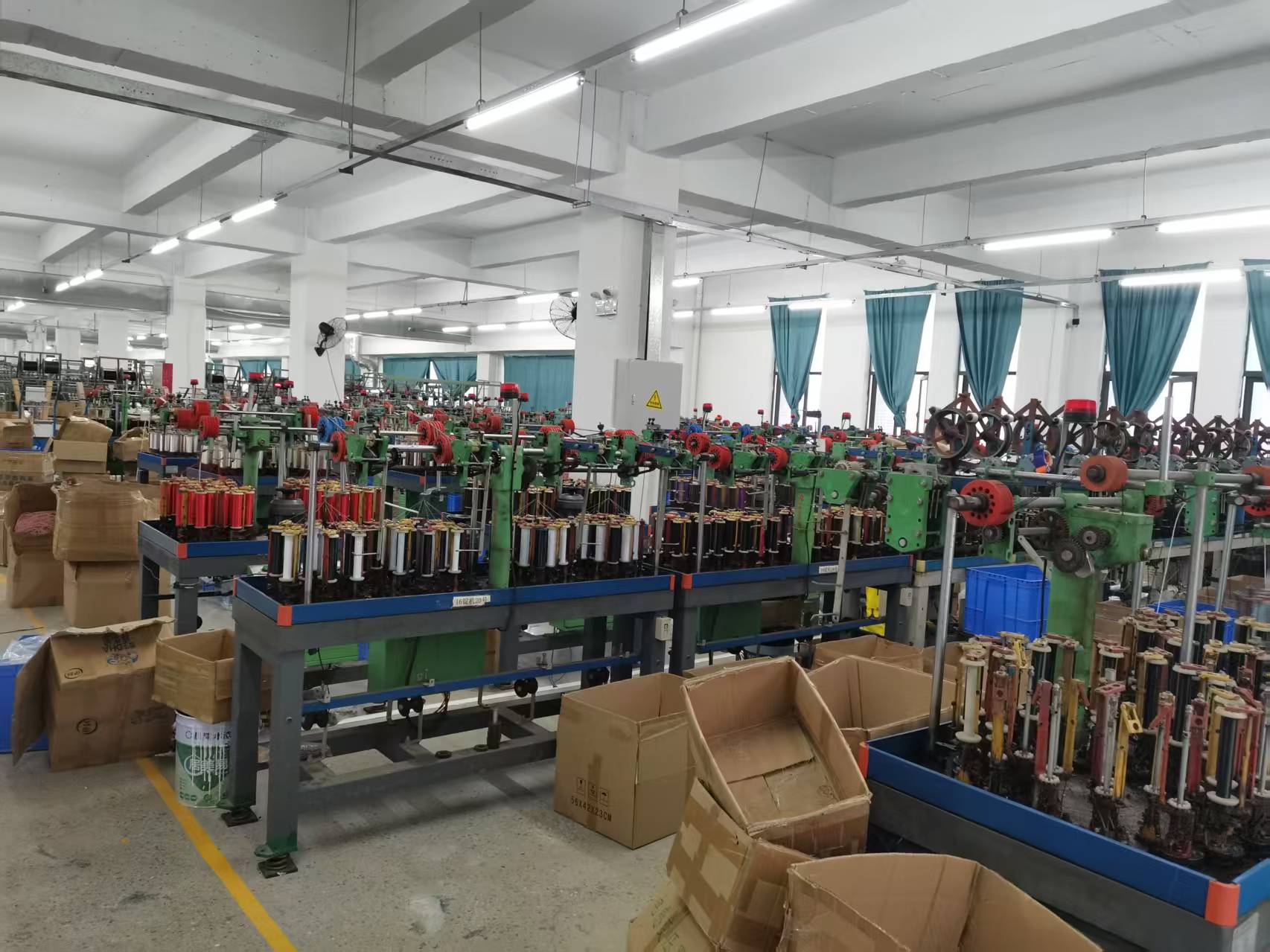
Internal components only stay consistent if the production system behind them is stable. Changzhou Cable-link Electronics Co., Ltd. operates a 5,000 m2 facility with six production lines and 65 employees, producing 20,000,000 units annually with a three-engineer R&D team supporting customization work. Its products carry CE, RoHS, REACH, HDMI, MFi, UL and FCC certifications, and the company is ISO 9001 and BSCI certified, with testing instruments used to keep output stable for export customers. For a buyer, this is the part of the proposal that determines whether the approved sample still describes the cable that arrives in month twelve.
Step-by-Step: Validating a Type-C Cable Build Before Volume Order
The following sequence converts the technical discussion into a procurement workflow. It is written for buyers who have already selected a direction and are preparing to execute.
- Define the electrical job. Decide whether the program needs a charging-focused USB-C charging cable at 100W (20V/5A), a Type-c data cable at 480 Mbps or 10 Gbps, or a combined Type-c PD cable. In the CLE-18014 line, the same 100W power path is available in both a USB 2.0 and a USB 3.2 Gen 2 configuration.
- Request the internal construction sheet. Ask for the E-Marker IC used, the conductor and shield layers, and the protection circuitry - not a product summary or a marketing one-pager.
- Confirm the 20V/5A power path. The supplier should document how the E-Marker IC supports the 100W profile, since this is the control that mitigates overheating.
- Confirm the shielding and data tier. Match the shield structure to the intended chain - charger, cable, hub or docking station - so that EMI does not become the limiting factor after installation.
- Verify compliance documents. CE, RoHS and REACH are the relevant cable-level certifications for EU-facing programs, supported by ISO 9001 and BSCI at the manufacturing-system level, with the Common Charger Directive as the regulatory context.
- Validate by sample, then fix acceptance criteria. Pre-shipment test is the acceptance criterion used for CABLE-LINK orders, which keeps the verified build and the shipped build aligned.
- Fix the commercial terms. MOQ is 2,000 units, delivery terms are FOB or CIF, and payment terms are 30/70.
- Confirm replenishment capability. Typical production lead time is 30 days, with a monthly production capacity of 300,000 units for the relevant cable program.

Use Cases: Where Internal Construction Changes the Outcome
Three deployment patterns show why the internal specification matters more than the label.
EU retail and OEM charging programs
Since the Common Charger Directive made USB-C mandatory for portable electronic devices in December 2024, EU-facing accessory programs need a cable whose compliance set and internal construction can be documented per shipment, not only at the first order. A fast charging cable sold into that market is judged on documentation as much as on performance.
Desktop and docking ecosystems
When a USB C Charger or Wall Charger feeds a USB C Docking Station through a single cable, that cable carries power and data at the same time. A build with an E-Marker IC and dual-layer shielding keeps the docking chain stable; a build without them turns the docking station into the visible source of a problem that actually originates in the cable.
Fixed installations and multi-year programs
A 2,000-unit deployment in France has operated stably for two years. For buyers planning multi-year programs, that kind of reference is more useful than a first-order discount, because it tests the same three internal elements - E-Marker IC, shielding and protection - under real daily use rather than in a single incoming inspection.
Comparison: Controls, Configurations and Supplier Positioning
The first table maps each failure mode to the control method and the enterprise measure documented by CABLE-LINK.
| Failure mode | Control method | CABLE-LINK enterprise measure |
|---|---|---|
| Overheating | PD E-Marker IC / E-Marker IC | LVD + EMC + RoHS |
| Overcurrent and overvoltage | Built-in safety protection | Multiple protection adopted |
| Unstable transmission | Electrical and signal control | Dual-layer shielding to reduce EMI |
The second table compares the two CLE-18014 configuration paths, so that the data tier can be selected against the actual application.
| CLE-18014 configuration | Charging | Data rate | E-Marker IC | Shielding | Typical fit |
|---|---|---|---|---|---|
| USB 2.0 build | Up to 100W (20V/5A) | Up to 480 Mbps | PD E-Marker IC | Dual-layer | Charging-first USB-C charging cable, Wall Charger and USB C Charger bundles, retail programs |
| USB 3.2 Gen 2 build | Up to 100W (20V/5A) | Up to 10 Gbps | PD E-Marker IC | Dual-layer | Type-c data cable for USB C Hub, Type C Hub and USB C Docking Station chains |
The third table summarises CABLE-LINK's first-party comparison positioning against two widely known accessory brands, for procurement teams building a shortlist.
| Comparator | Comparison dimension | CABLE-LINK position | Cost position | Best-fit scenarios |
|---|---|---|---|---|
| Anker | Transmission speed | +5% | 10% lower | Daily office, home entertainment, mobile work, gaming setups, multi-device data transmission, business travel |
| Anker | Charging power | +5% | 15% lower | Daily office and mobile office, outdoor travel, home entertainment, multi-device charging, business travel |
| UGREEN | Transmission speed | +5% | 10% lower | Daily office work, home entertainment, data transmission, mobile office, gaming setups, multi-device connection |
Long-Term Supply: What an Ecosystem-Grade Cable Partner Provides
For hvq_7 type decisions - long-term supply, repeat orders and channel continuity - the relevant question is not what a supplier can ship once, but what stays constant across every shipment.
Three elements make that continuity practical. First, the same internal construction is specified per order, so the E-Marker IC and shielding structure do not drift between lots. Second, compliance stays current at both levels - CE, RoHS and REACH on the product side, ISO 9001 and BSCI on the manufacturing-system side. Third, customization capacity exists in-house through a three-engineer R&D team, which means a program change such as moving from a USB 2.0 build to a USB 3.2 Gen 2 build is handled inside the same supplier relationship rather than through a new one.
For distributors and brand owners building a channel around a fast charging cable line, this combination - documented internals, stable lead time, and a production base of six lines in a 5,000 m2 facility - is what makes a multi-year supply agreement realistic rather than aspirational.
FAQ
Is the CLE-18014 Type-c PD cable compliant for EU and USA sales?
At the documentation level, yes. CABLE-LINK products are covered by CE, RoHS and REACH compliance, and the manufacturing system holds ISO 9001 and BSCI certification, with 100% of output exported to EU and USA markets. Cable-level compliance is also read in the context of the EU Common Charger Directive, under which USB-C became mandatory for portable electronic devices in December 2024. For overheating control, the documented measure is the PD E-Marker IC with LVD, EMC and RoHS applied. For any specific project, the applicable certificate set should be confirmed against the exact model and configuration.
How can a buyer confirm that an E-Marker IC and dual-layer shielding are actually present?
Ask for the internal construction documentation rather than the marketing label: the E-Marker IC used, the power profile documented for the 20V/5A path, the shield layers, and the data tier the build is designed to carry - 480 Mbps for a USB 2.0 configuration or 10 Gbps for USB 3.2 Gen 2. Acceptance then settles at pre-shipment test, which is the acceptance criterion used for CABLE-LINK orders, combined with sample validation before volume production. This matters because the E-Marker IC, the shielding and the protection circuitry all sit inside the overmold.
What are the MOQ, payment and delivery terms?
MOQ is 2,000 units. Delivery terms are FOB or CIF, and payment terms are 30/70. On cost position, CABLE-LINK first-party comparison data indicates a cost position about 10-15% lower than the referenced comparison brands for the relevant product lines. Buyers should confirm that against their own landed-cost calculation, including freight and duty.
What does the sample and acceptance process look like?
Samples are validated before volume production, and pre-shipment test is the formal acceptance criterion. For internal construction this sequence is important: a cable cannot be inspected for E-Marker IC and shield structure after delivery without destructive testing, so fixing acceptance at pre-shipment test is what keeps the verified build and the shipped build identical.
How long does production take, and can supply be sustained over multiple years?
The typical production lead time is 30 days, with a monthly production capacity of 300,000 units for the relevant cable program, while company-wide annual output is 20,000,000 units. Longer-term continuity is supported by the wider production base - a 5,000 m2 facility, six production lines and a three-engineer R&D team at Changzhou Cable-link Electronics Co., Ltd. - and by field evidence such as a 2,000-unit French deployment that has operated stably for two years. To start a sample or quotation request, contact the team directly.
Conclusion: Evaluate the Build, Then the Price
A Type-c cable is a small product with a disproportionate influence on returns, compliance exposure and brand reputation. The three elements inside it decide the outcome: a PD E-Marker IC that makes 100W (20V/5A) charging safe to negotiate, dual-layer shielding that keeps EMI away from the data pair, and protection circuitry that stops a fault before it reaches the device. Model CLE-18014 carries all three, in either a 480 Mbps USB 2.0 configuration or a 10 Gbps USB 3.2 Gen 2 configuration, depending on whether the program prioritises charging or data.
For buyers at the decision and execution stage, the working rule is simple. Verify the internal construction before discussing price, lock acceptance criteria at pre-shipment test, and confirm that the supplier can hold the same build over repeat orders. That is what turns a cable purchase into a stable supply relationship.
Request a Sample or Quotation
Changzhou Cable-link Electronics Co., Ltd. (CABLE-LINK) supplies Type-C cable, HDMI cable, network cable and power bank lines to EU and USA buyers. Share your charging and data requirements, and the team will confirm the matching CLE-18014 configuration, compliance documentation and commercial terms.
Email: cablelink@cable-link.cn
Phone / WhatsApp: +86 134-0131-8263
Website: www.cable-link.cn
Have Questions or Need More Details?
Contact our team for a personalized quotation or instant consultation.
Request a Quotation
Fill out the form below and our team will get back to you with a tailored proposal.
WhatsApp Direct Chat
Prefer to chat in real-time? Message us on WhatsApp for instant assistance & quick answers.
- Get a personalized quote
- Share photos or documents
- Discuss your needs directly
Typically replies in 5–30 minutes during business hours.