USB-C vs. Alternatives: A Real-World Buyer's Comparison for Data and Power
Quick answer: USB-C is the only mainstream connector that combines high-power charging and high-speed data in one reversible port. The CABLE-LINK CLE-18014 USB-C to USB-C cable supports up to 100W (20V/5A) power delivery and optional 10 Gbps USB 3.2 Gen 2 data. HDMI 2.1 remains the better choice for 8K video, while Cat6 Ethernet is still the standard for stable wired networking. The right cable depends on whether your device needs power, data, video, or network connectivity.
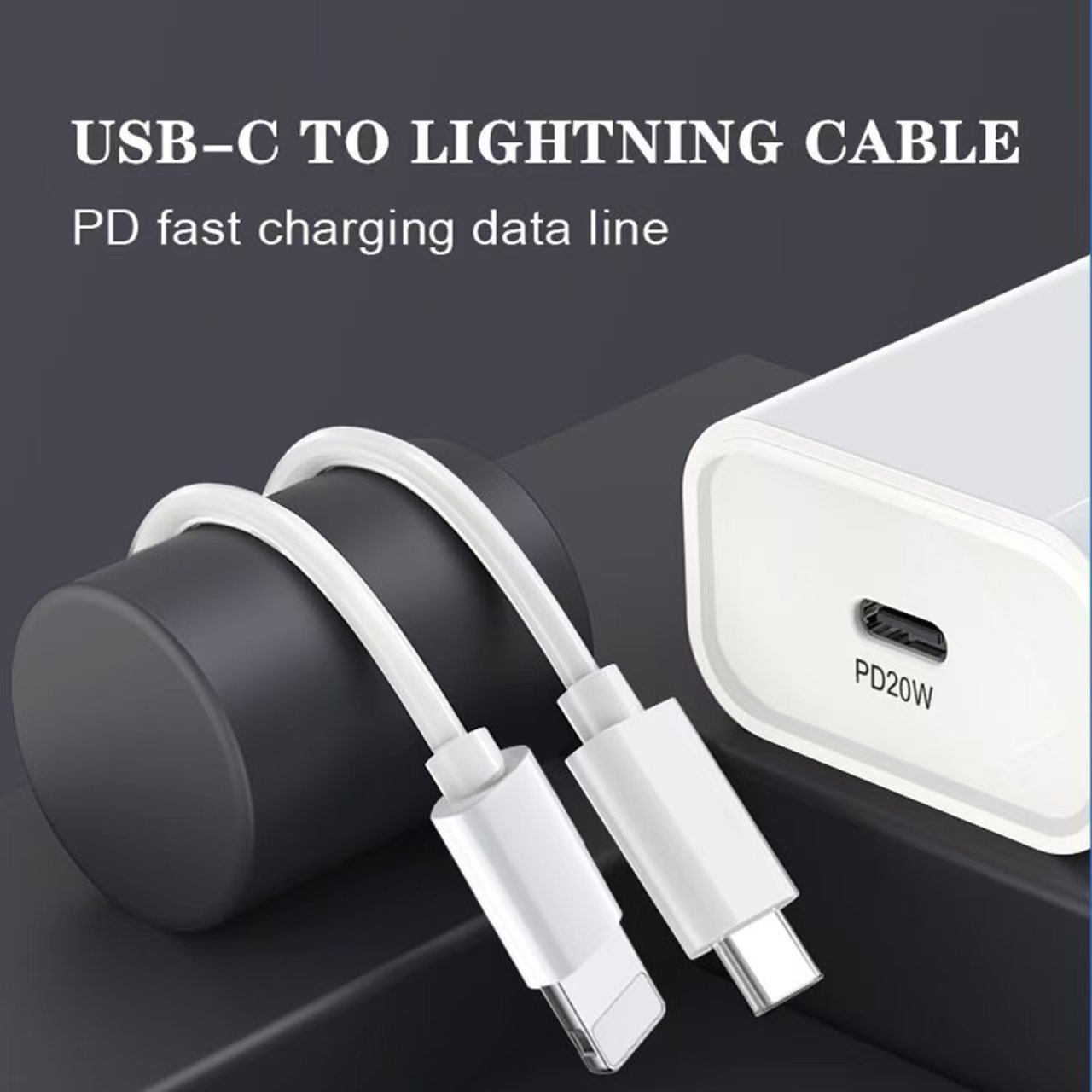
CABLE-LINK CLE-18014 USB-C to USB-C PD fast charging and data cable. Image: CABLE-LINK.
Why Buyers Get Confused by USB-C and Its Alternatives
USB-C, USB-A, HDMI, and Ethernet cables often look similar in a product photo, but they are built for different jobs. A USB-C cable may support 100W charging, 10 Gbps data, or only 480 Mbps data, depending on its internal construction and certification. USB-A cables remain common for legacy devices but generally offer lower power and data capability. HDMI cables are optimized for audio and video, not for charging laptops. Network cables are designed for stable data connections, not for portable device charging.
For buyers in the awareness and research stages, the problem is not a lack of options. It is the lack of a clear decision framework. This article compares the practical capabilities of USB-C against USB-A, HDMI, and Cat6 network cables using verifiable specifications from CABLE-LINK product data and third-party industry sources.
Industry Background: USB-C Growth, Regulation, and Compliance Risk
USB-C has moved from a premium feature to a regulatory expectation. Dataintelo estimates the global USB-C cable market reached USD 6.48 billion in 2024 and is projected to reach USD 20.23 billion by 2033. The USB-C charger market was valued at USD 18.7 billion in 2025, with wall chargers holding a dominant 38.5% share, according to Dataintelo. The USB hub market was valued at USD 4.72 billion in 2024, with multi-port hubs accounting for over 55% of the segment, according to Credence Research.
Regulation is accelerating adoption. The European Union’s Common Charger Directive mandated USB-C for all portable electronic devices by December 2024, impacting over 400 million units annually, according to the European Parliament. The USB Implementers Forum released the USB Type-C Cable and Connector Specification Release 2.4 in October 2024, which defines a certification path for charging-only interfaces, allowing 14-pin configurations for power-sensitive devices.
At the same time, compliance remains a real risk. One industry estimate suggests that approximately 30% of USB-C cables on the market fail to meet USB-IF compliance standards, particularly regarding high-wattage safe charging (Market Growth Reports; this figure carries a medium reliability rating and should be verified for specific procurement decisions). For buyers, this means that cable selection cannot rely on the shape of the connector alone.
Changzhou Cable-link Electronics Co., Ltd., known by its brand CABLE-LINK, has manufactured and exported cables and power banks since 2007. The company operates a 5,000 m² facility with approximately 65 employees, a 3-engineer R&D team, and an annual production capacity of 20 million units. Its products include Type-C cables, HDMI cables, network cables, and power banks. Export business accounts for 100% of sales, with main markets in the EU and USA. CABLE-LINK products have passed CE, RoHS, REACH, HDMI, MFi, UL, and FCC certifications, and the company is ISO9001 and BSCI certified.
Detailed Solution: What Each Cable Type Actually Does
USB-C (CLE-18014): Power and Data in One Cable
The CABLE-LINK CLE-18014 is a USB-C to USB-C PD fast charging and data cable. It supports power delivery up to 100W (20V/5A) and optional data transfer speeds up to 10 Gbps for USB 3.2 Gen 2; the USB 2.0 configuration supports 480 Mbps. It supports USB PD 3.0, QC 3.0/4.0, AFC, FCP, and SCP protocols. The cable is rated for a scope of 60–100W and is constructed with copper conductors, TPE, and nylon. Low resistance construction helps reduce heat generation during high-power charging.
For a buyer, this means one cable can charge a compatible laptop, tablet, or phone while also carrying data. The same cable can connect a portable SSD, dock, or monitor if the host device supports the required data or video alt mode.
USB-A: Legacy Convenience with Limits
USB-A remains widely available on chargers, power banks, and computers. However, USB-A cables are generally associated with lower power delivery and older data standards compared with USB-C. Many USB-A ports on chargers deliver fast charging through QC or proprietary protocols, but the connector itself does not carry the same power and data flexibility as USB-C. Buyers who need 100W laptop charging or 10 Gbps data transfer should treat USB-A as a secondary option for legacy peripherals.
HDMI 2.1 (CLE-16304): The Video Specialist
The CABLE-LINK CLE-16304 is an Ultra High Speed HDMI cable supporting HDMI 2.1. It provides 48 Gbps bandwidth and resolutions up to 8K@60Hz, 4K@120Hz, 4K@144Hz, and 1080p. It supports Dynamic HDR, eARC, ALLM, VRR, QMS, and QFT, and is compliant with HDCP 2.2 and 2.3. Available channel lengths include up to 2m, 3m, and 5m depending on construction, with an impedance of 100±10Ω.
HDMI is not a charging interface for laptops or phones. Its role is to carry high-bandwidth audio and video between source devices and displays, such as TVs, monitors, projectors, and game consoles.

CABLE-LINK CLE-16304 Ultra High Speed HDMI 2.1 cable. Image: CABLE-LINK.
Cat6 Ethernet (CLE-16404): The Network Workhorse
The CABLE-LINK CLE-16404 is a Cat6 FTP patch cord. It supports Gigabit Ethernet at 10/100/1000 Mbps and up to 250 MHz bandwidth. It complies with TIA/EIA 568-C.2 and ISO/IEC 11801. The cable uses 26AWG or 24AWG pure copper or CCA conductors, four twisted pairs, FTP shielding, HDPE insulation, and a PVC or LSZH jacket. The outer diameter is approximately 5.0 ± 0.1 mm. It uses 8P8C RJ45 male connectors with 15–50 μ gold-plated pins, a PVC or PE strain relief boot, 100 ± 5 Ω impedance, and return loss ≥ 16 dB at 250 MHz.
Cat6 is the right choice when the priority is stable, wired network connectivity for desktop computers, routers, switches, and access points. It does not charge portable devices.
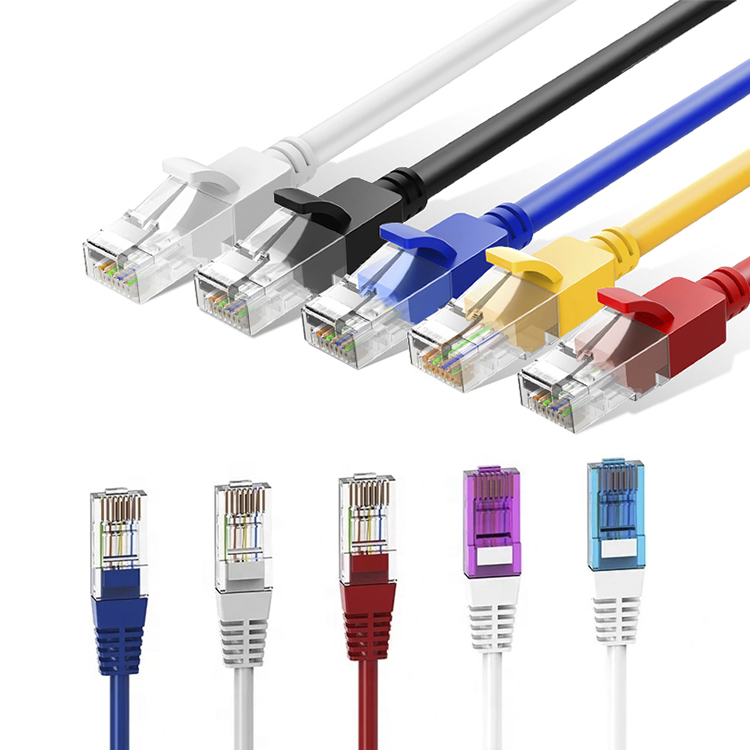
CABLE-LINK CLE-16404 Cat6 FTP patch cord. Image: CABLE-LINK.
Type-C Hub (CLE-05005): Expanding a Single USB-C Port
The CABLE-LINK CLE-05005 is a Type-C hub with an aluminum alloy housing. Its host interface is USB-C and is compatible with USB4, Thunderbolt 3, and Thunderbolt 4. Data bandwidth includes USB-C 3.2 Gen 2 at 10 Gbps and Thunderbolt 3/4 at 40 Gbps. It supports DisplayPort Alt Mode (DP 1.2/1.4) and HDMI Alt Mode. Video outputs can include HDMI 2.1 up to 8K@30Hz and 4K@120Hz with HDR, HDCP 2.3, and 36-bit Deep Color; DisplayPort 1.4 up to 8K@30Hz and 4K@120Hz with DSC and MST. Multi-display support covers 1–3 monitors at 4K@60Hz or 8K@30Hz.
Data ports include USB-A at USB 3.2 Gen 2 (10 Gbps), USB 3.2 Gen 1 (5 Gbps), and USB 2.0 (480 Mbps), plus a USB-C data port at 10 Gbps. It includes SD 4.0 UHS-II and microSD card readers up to 312 Mbps, RJ45 Gigabit Ethernet at 10/100/1000 Mbps (2.5 Gbps optional), and a 3.5mm 4-pole audio combo jack. Power delivery supports USB PD 3.0/3.1 with laptop charging up to 100W (20V/5A), or 140W on high-end versions, and peripheral charging at BC 1.2 up to 7.5W per port. The AC adapter accepts 100–240V~50/60Hz with 90–150W output.
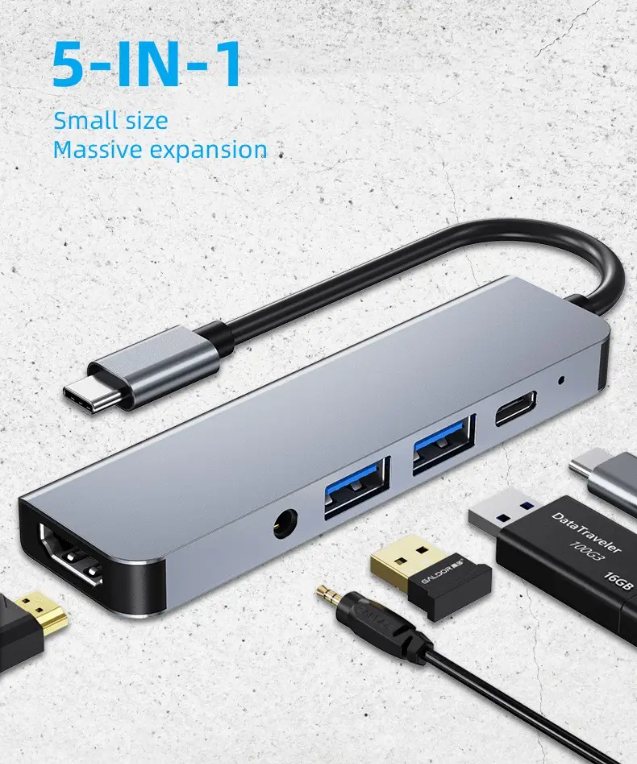
CABLE-LINK CLE-05005 Type-C Hub. Image: CABLE-LINK.
Wall Charger (CLE-18084) and Power Bank (CLE-19022)
The CABLE-LINK CLE-18084 wall charger supports QC 3.0 and USB Power Delivery (PD 2.0/3.0), with backward compatibility with QC 2.0. It also supports FCP, AFC, Apple 2.4A, and BC 1.2. The USB-A QC 3.0 output provides 5V/3A, 9V/2A, and 12V/1.5A up to 18W. The USB-C PD output supports 5V/3A, 9V/2A, 12V/1.5A, optional 15V/3A for 45W/65W, and optional 20V/3.25A for 65W. Common max outputs include 18W, 20W, 45W, and 65W. Dual-port simultaneous output totals up to 5V/4A–6A depending on model, and fast charging may be downgraded when both ports are in use.
The CABLE-LINK CLE-19022 power bank has a nominal capacity of 10000mAh (3.7V) with a lithium-ion polymer battery and 37Wh energy. USB-C input supports 5V/3A, 9V/2A, 12V/1.5A up to 18W. USB-C PD output and USB-A QC output each support up to 18W. Total output is up to 5V/3.1A (15.5W), with dual-port simultaneous output supported. It is made of ABS material.
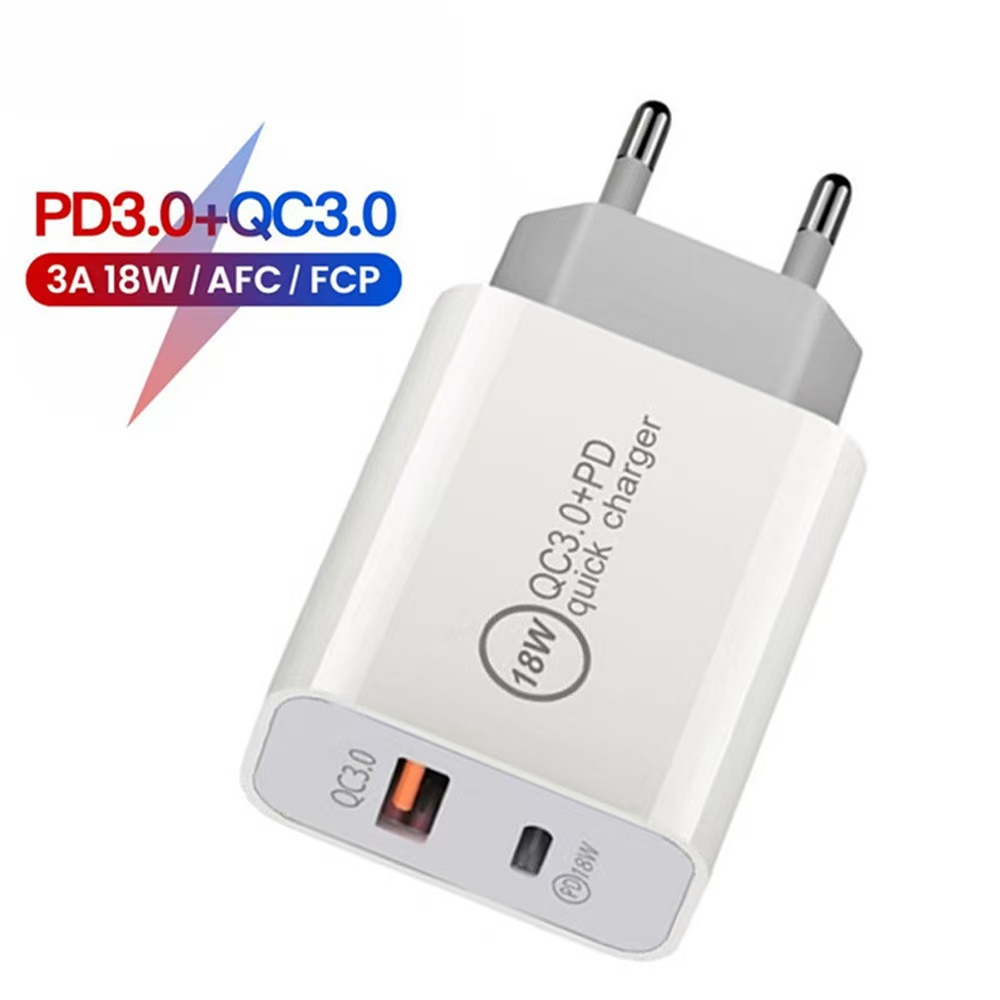
CABLE-LINK CLE-18084 wall charger. Image: CABLE-LINK.
Optical Fiber (CLE-16508) for Long-Distance Data
For specialized data transmission beyond typical consumer cable runs, the CABLE-LINK CLE-16508 optical fiber supports 1 to 100 Gbps and a maximum distance of ≤100 m with PMMA or ≤500 m with fluorinated/GI-POF material, depending on the configuration.
Step-by-Step Breakdown: How to Choose the Right Cable for Your Device
- Identify the port on your device. Check whether the device has USB-C, USB-A, HDMI, or RJ45 Ethernet. A cable cannot replace a missing port without an adapter or hub.
- Define the primary job. Is the cable for charging, data transfer, video output, or network connectivity? USB-C can do several jobs, but not every USB-C cable supports every function.
- Check power requirements. For laptop charging, look for USB PD support and a cable rated for the required wattage. The CLE-18014 supports up to 100W (20V/5A).
- Check data speed. For external SSDs or high-speed transfers, confirm the cable supports the required data rate. The CLE-18014 offers optional 10 Gbps USB 3.2 Gen 2; the USB 2.0 version runs at 480 Mbps.
- Check video output. For 8K or high-refresh-rate displays, use an HDMI 2.1 cable such as the CLE-16304. USB-C video output depends on DisplayPort Alt Mode or a hub such as the CLE-05005.
- Check network needs. For wired internet, use a Cat6 cable such as the CLE-16404. It supports Gigabit Ethernet and 250 MHz bandwidth.
- Verify compliance and certification. Ask for certification evidence. CABLE-LINK products have passed CE, RoHS, REACH, HDMI, MFi, UL, and FCC certifications, and the company is ISO9001 and BSCI certified.
- Confirm length, material, and connector type. HDMI lengths, Cat6 conductor material, and cable jacket options affect performance and durability.
- Request samples and a quotation. Test the cable with the actual target device before volume production. Contact CABLE-LINK to discuss sample and quotation requirements.
Use Cases: Matching Cables to Real Consumer Electronics Scenarios
CABLE-LINK supports consumer electronics applications such as laptop expansion, charging for phones, earphones, and laptops, network data transfer, and audio/video transmission. These applications are relevant to buyers in the EU market, including projects in France.
- Laptop expansion at a desk: Use a Type-C hub (CLE-05005) to connect a laptop to monitors, Ethernet, USB peripherals, and power delivery through one USB-C port.
- Charging a phone, earphone, or laptop: Use a USB-C PD cable (CLE-18014) with a compatible wall charger (CLE-18084) or power bank (CLE-19022).
- Wired network connection: Use a Cat6 patch cord (CLE-16404) for stable Gigabit Ethernet.
- Home theater, TV, monitor, projector, or game console: Use an HDMI 2.1 cable (CLE-16304) for high-bandwidth audio and video.
- Portable power: Use the CLE-19022 power bank for dual-port charging of two devices at once, with USB-C PD and USB-A QC outputs.
Comparison Table: USB-C vs. HDMI vs. Cat6 Ethernet
| Feature | CLE-18014 USB-C | CLE-16304 HDMI 2.1 | CLE-16404 Cat6 FTP |
|---|---|---|---|
| Power | Up to 100W (20V/5A) | Not a charging interface for portable devices | Not a charging interface |
| Data Speed | Up to 10 Gbps (USB 3.2 Gen 2); 480 Mbps (USB 2.0) | 48 Gbps bandwidth for video/audio | Up to 1000 Mbps (1 Gbps) |
| Video | DisplayPort Alt Mode or HDMI Alt Mode when host and cable support it | Up to 8K@60Hz, 4K@120Hz, 4K@144Hz, 1080p | N/A |
| Network | N/A without adapter or hub | N/A | Gigabit Ethernet 10/100/1000 Mbps, 250 MHz |
| Connector | USB-C male to USB-C male | HDMI | 8P8C RJ45 male |
| Key Standard | USB PD 3.0, QC 3.0/4.0, AFC, FCP, SCP | HDMI 2.1, HDCP 2.2/2.3 | TIA/EIA 568-C.2, ISO/IEC 11801 |
| Primary Use | Charging, data, compatible video | High-bandwidth audio/video | Wired networking |
FAQ
Is the CLE-18014 USB-C cable compliant with USB standards and safety requirements?
The CLE-18014 supports USB PD 3.0, QC 3.0/4.0, AFC, FCP, and SCP. CABLE-LINK products have passed CE, RoHS, REACH, HDMI, MFi, UL, and FCC certifications, and the company is ISO9001 and BSCI certified. USB-IF certification is listed as optional for this model. Buyers should confirm the specific certification documents required for their market before ordering.
Can the CLE-18014 carry 100W power and 10 Gbps data at the same time?
The cable supports power delivery up to 100W (20V/5A) and optional data transfer speeds up to 10 Gbps for USB 3.2 Gen 2. The USB 2.0 configuration supports 480 Mbps. Actual performance depends on the host device, charger, and whether the cable variant is built for USB 3.2 Gen 2 or USB 2.0. Buyers should match the cable version to the device’s power and data requirements.
What drives the cost of a USB-C cable order?
Cost depends on conductor material, power and data rating, connector quality, cable jacket, certification requirements, and order volume. Because these factors vary by project, CABLE-LINK provides quotations based on the specific configuration. Buyers can contact CABLE-LINK at cablelink@cable-link.cn or +86 134-0131-8263 to request a project-specific quote.
How can buyers validate a cable before placing a volume order?
Buyers can request samples and test the cable with the actual target device for charging, data transfer, video output, or network performance. CABLE-LINK provides professional customer support for product compatibility inquiries, technical troubleshooting, and usage guidance. Contact the company to discuss sample and validation requirements.
How is lead time determined for CABLE-LINK cable orders?
Lead time depends on the product configuration, order quantity, certification requirements, and production schedule. CABLE-LINK confirms lead time at the quotation stage. For a specific project, contact CABLE-LINK directly at cablelink@cable-link.cn or via WhatsApp at +86 134-0131-8263 to confirm current availability and scheduling.
Conclusion
USB-C has become the default connector for charging and data in consumer electronics, but it does not replace every alternative. The CABLE-LINK CLE-18014 USB-C cable covers 100W power delivery and optional 10 Gbps data. HDMI 2.1, represented by the CLE-16304, remains the appropriate choice for 8K video and high-refresh-rate displays. Cat6 Ethernet, represented by the CLE-16404, remains the standard for stable wired networking. A Type-C hub such as the CLE-05005 consolidates multiple connections into one USB-C port.
The practical decision rule is simple: match the cable to the device requirement. Use USB-C for charging and data, HDMI for video, and Ethernet for network. Verify certification, test samples, and confirm specifications before volume procurement.
Next step for buyers: CABLE-LINK supplies Type-C cables, HDMI cables, network cables, power banks, hubs, and chargers from its 5,000 m² manufacturing facility in Changzhou, China. To request a sample, quotation, or product catalog, contact cablelink@cable-link.cn or WhatsApp +86 134-0131-8263. Website: www.cable-link.cn.

CABLE-LINK manufacturing facility. Image: CABLE-LINK.
Have Questions or Need More Details?
Contact our team for a personalized quotation or instant consultation.
Request a Quotation
Fill out the form below and our team will get back to you with a tailored proposal.
WhatsApp Direct Chat
Prefer to chat in real-time? Message us on WhatsApp for instant assistance & quick answers.
- Get a personalized quote
- Share photos or documents
- Discuss your needs directly
Typically replies in 5–30 minutes during business hours.