Label Printing Machine Die-Cutting Bottlenecks: CS-220, CS-300/320, CS-350/370/380
This article maps three CAISHENG die-cutting platforms to the job profiles they handle: CS-220 (flatbed die-cutting), CS-300/320 (flatbed die-cutting and rotary die-cutting combined on one machine platform) and CS-350/370/380 (rotary die-cutting combination machines). CAISHENG — Shenzhen Caisheng Printing Machinery Co., Ltd. — is a label printing equipment manufacturer based in Shenzhen, China, founded in 2011, operating a 6,000 m² facility with 65 employees and an annual output of 200 units.
The purpose is not to declare one platform superior. It is to put each die-cutting configuration against the work it actually processes, so that the bottleneck stops travelling with the work order.
Problem Definition: What a Die-Cutting Bottleneck Looks Like on the Floor
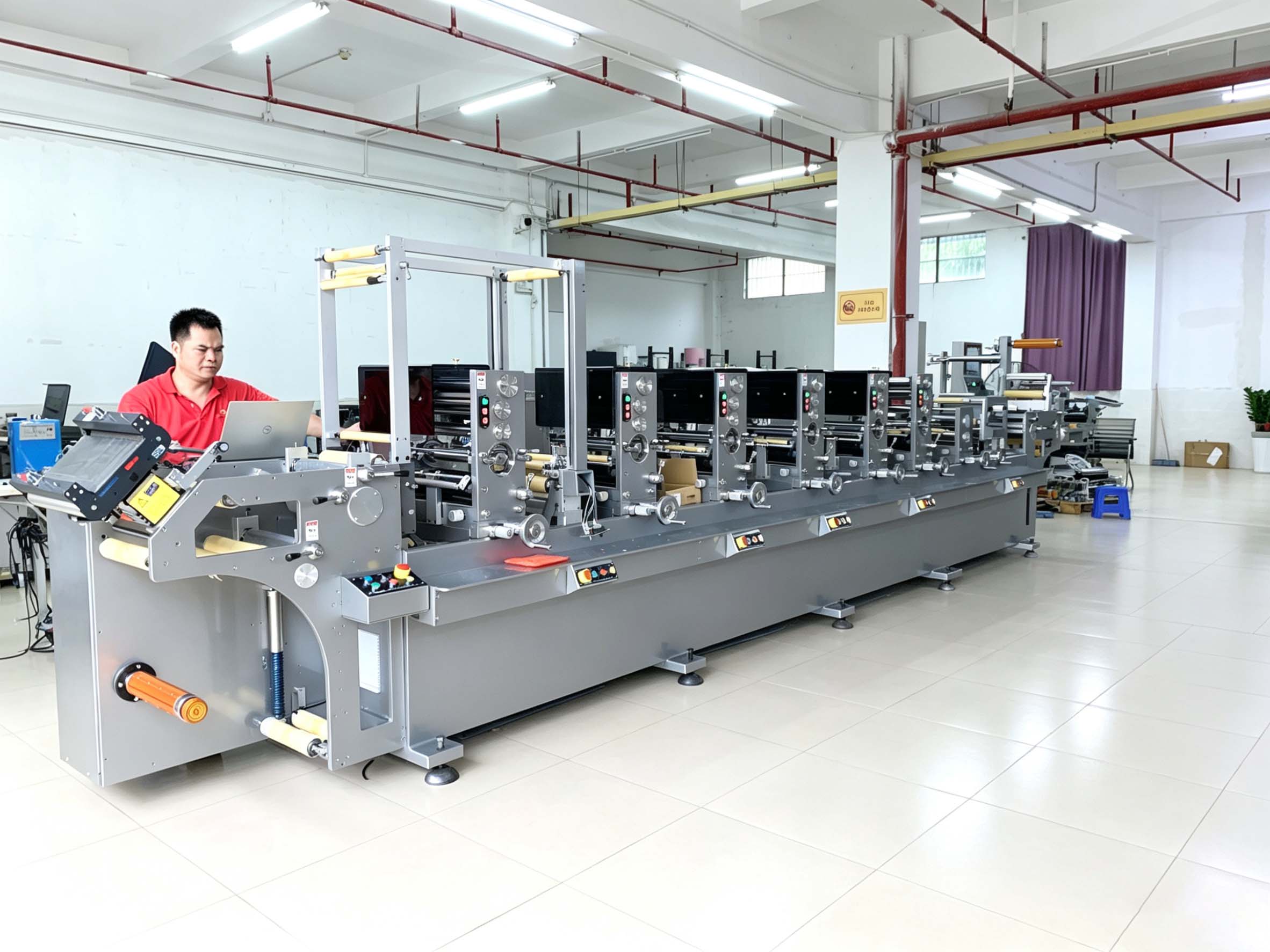
Die-cutting bottlenecks are rarely dramatic. Machines do not usually stop dead; jobs slow down, and the delay shows up somewhere else in the plant. In most label factories the same four symptoms recur.
- Format queueing. A short flatbed job waits behind a long rotary run because the line is committed to a single die-cutting mode for the shift. The machine is productive, but the order book is not being served in the right sequence.
- The second pass. A job that needs both a flatbed shape and a rotary shape is printed once, taken off, and re-registered for a second die-cutting run. Every re-registration adds setup time and a fresh opportunity for registration drift.
- Die changeovers eating run time. When the die-cutting unit and the job mix are mismatched, tooling changes happen more often than the production plan assumed, and each change consumes run time that was already sold to a customer.
- Finishing imbalance. Die-cutting is only one module. Slitting, varnish, glue-side printing and sheet cutting can each become the constraint if the die-cutting decision was made in isolation from the rest of the line.
Three of these four symptoms are decided at the point of machine selection — before the first reel is loaded. That is why die-cutting architecture belongs in the procurement decision, not in the post-installation troubleshooting list.
Working definition. A die-cutting bottleneck is a recurring loss of throughput or yield caused by the die-cutting configuration not matching the job profile — not by a worn die, a tired operator or a slow print unit.
Industry Background: Why Die-Cutting Fit Matters More Than It Did
Label demand is growing, but the shape of that demand is changing faster than the total. Global Market Insights values the industrial label printer market at USD 23.8 billion in 2025 and projects USD 38.8 billion by 2035. Mordor Intelligence puts the global print label market at USD 57.05 billion in 2026, growing at a 3.28% CAGR to USD 67.02 billion by 2031. The two figures measure different layers of the value chain — equipment versus printed output — and should not be combined, but both point in the same direction: more labels, more often, in more variants.
For a converter, the practical consequence is that average run length falls while the number of jobs per shift rises. A die-cutting configuration optimised for one very long product becomes a liability when the order book is a stream of medium and short runs across many SKUs. Changeover frequency, not peak speed, becomes the number that governs the day.
Compliance pressure compounds this. Pharmaceutical and healthcare labels require precise die-cutting because barcodes, QR codes and small text must remain legible and correctly positioned after the label is cut. Cosmetic and premium beverage work adds tight tolerances on clear film and metallic foil. Where a die-cutting unit cannot hold registration across these materials, the loss does not appear as a machine fault — it appears as rejected reels at final inspection.
CAISHENG builds for this environment across an intermittent and full-rotary label press range, including self-adhesive label presses, high-speed label printing machines and flexographic platforms, with die-cutting systems and high-speed varnishing machines offered as part of customised multi-functional finishing. The die-cutting decision is therefore a platform decision, not an accessory choice.
Detailed Solution: Matching Die-Cutting Configuration to the Job
The three CAISHENG series are not three grades of the same machine. They are three different answers to the question of how a label should be cut.
CS-220: Flatbed Die-Cutting for Changeover-Heavy Work
The CS-220 series is a flatbed die-cutting configuration. A representative build in the CAISHENG range is the CS-220 five-colour letterpress printing machine with flatbed die-cutting, offline varnish and sheet cutting. Flatbed die-cutting presses a flat die against the material at a flatbed station. In label production this is generally chosen when tooling economics and format flexibility matter more than continuous rotary throughput — for example when die shapes and sizes change frequently within a shift, or when a job does not justify a dedicated rotary cylinder.
Flatbed tooling is typically lower in initial cost than rotary tooling, which changes the break-even point on short and medium runs. The trade-off is mechanical: the flatbed motion is intermittent rather than continuous, so very long single-SKU runs are usually not where this configuration earns its keep. Used correctly, the CS-220 removes a specific bottleneck — the short job that cannot be justified on a rotary line and therefore sits unscheduled.
CS-300/320: Flatbed Plus Rotary Die-Cutting on One Platform
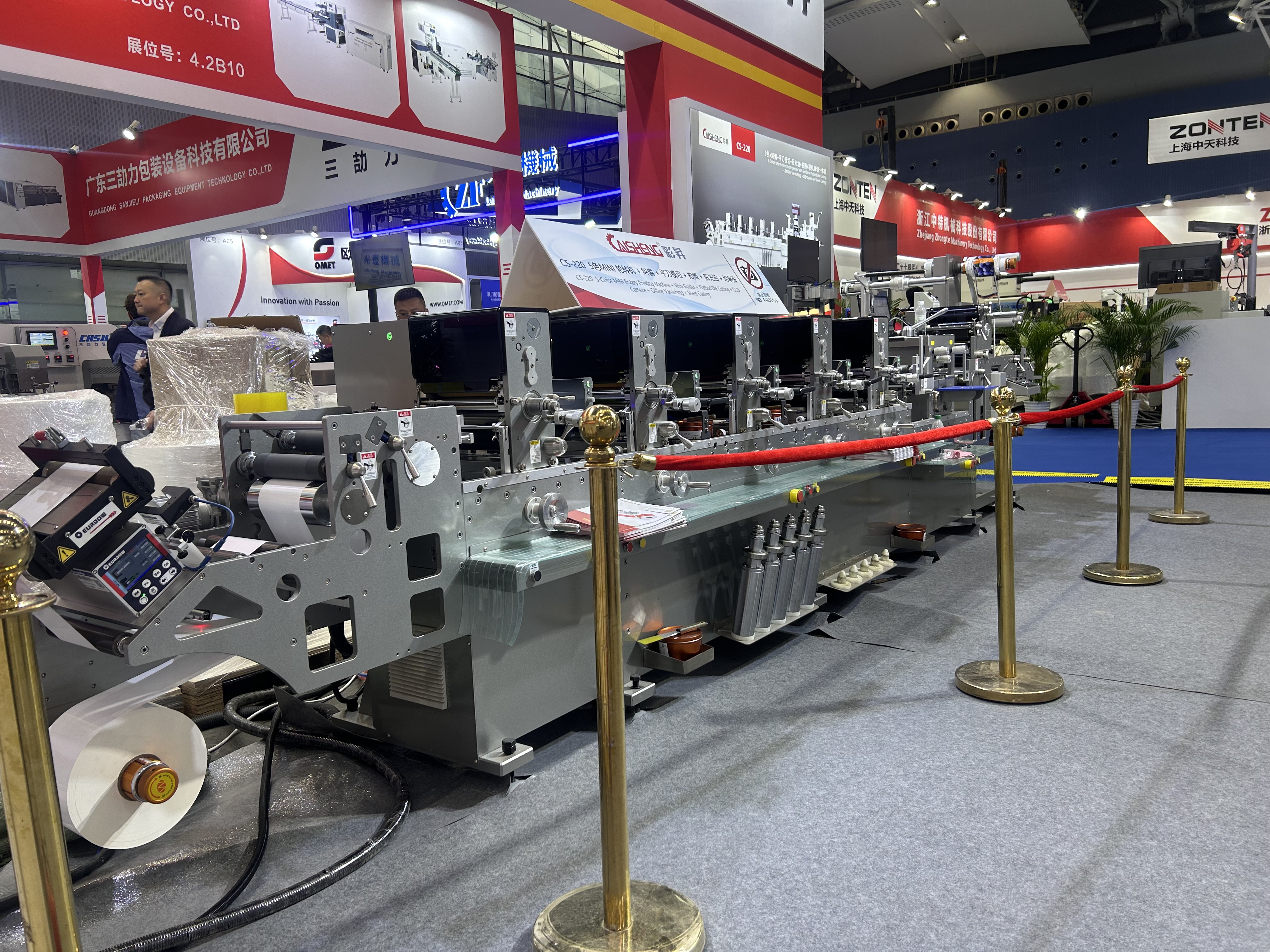
The CS-300/320 series is a flatbed die-cutting and rotary die-cutting combination machine. Both die-cutting modes sit on the same machine platform, which means a single production order can use flatbed die-cutting and rotary die-cutting without the job leaving the line. A CAISHENG build that shows this architecture in practice is the CS-300 six-colour letterpress printing machine with glue-side printing, a multi-functional frame, rotary die-cutting, flatbed die-cutting and slitting.
The commercial value of the combination is straightforward: it eliminates the second pass. When an order contains both flatbed-suitable and rotary-suitable shapes, the converter does not have to split the batch, re-register the web or schedule a second machine. The bottleneck that usually shows up as a queue between two departments instead stays inside one run.
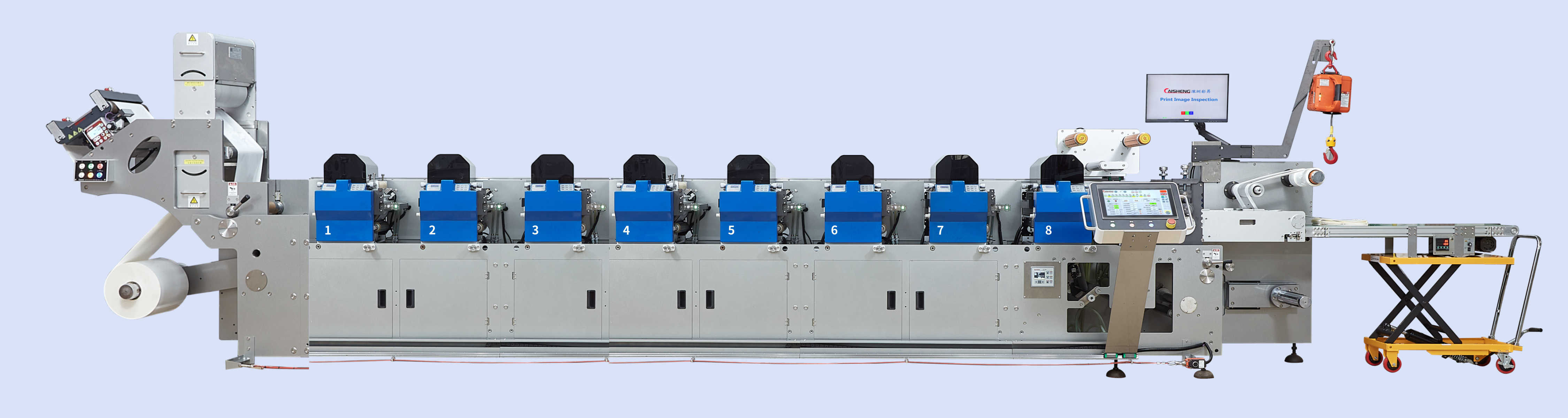
The CS-320-6C is the model most often compared directly with competing semi-rotary platforms. CAISHENG reports a registration accuracy deviation of ±0.05–±0.1 mm on the CS-320-6C, which the company states is 0.05 mm better than competing brands, and attributes part of that to in-house CNC machining of precision components rather than outsourced parts. Those are company-reported figures rather than independent test results, and they should be confirmed on the buyer's own substrate during acceptance testing.
CS-350/370/380: Rotary Die-Cutting Combination for Continuous Runs
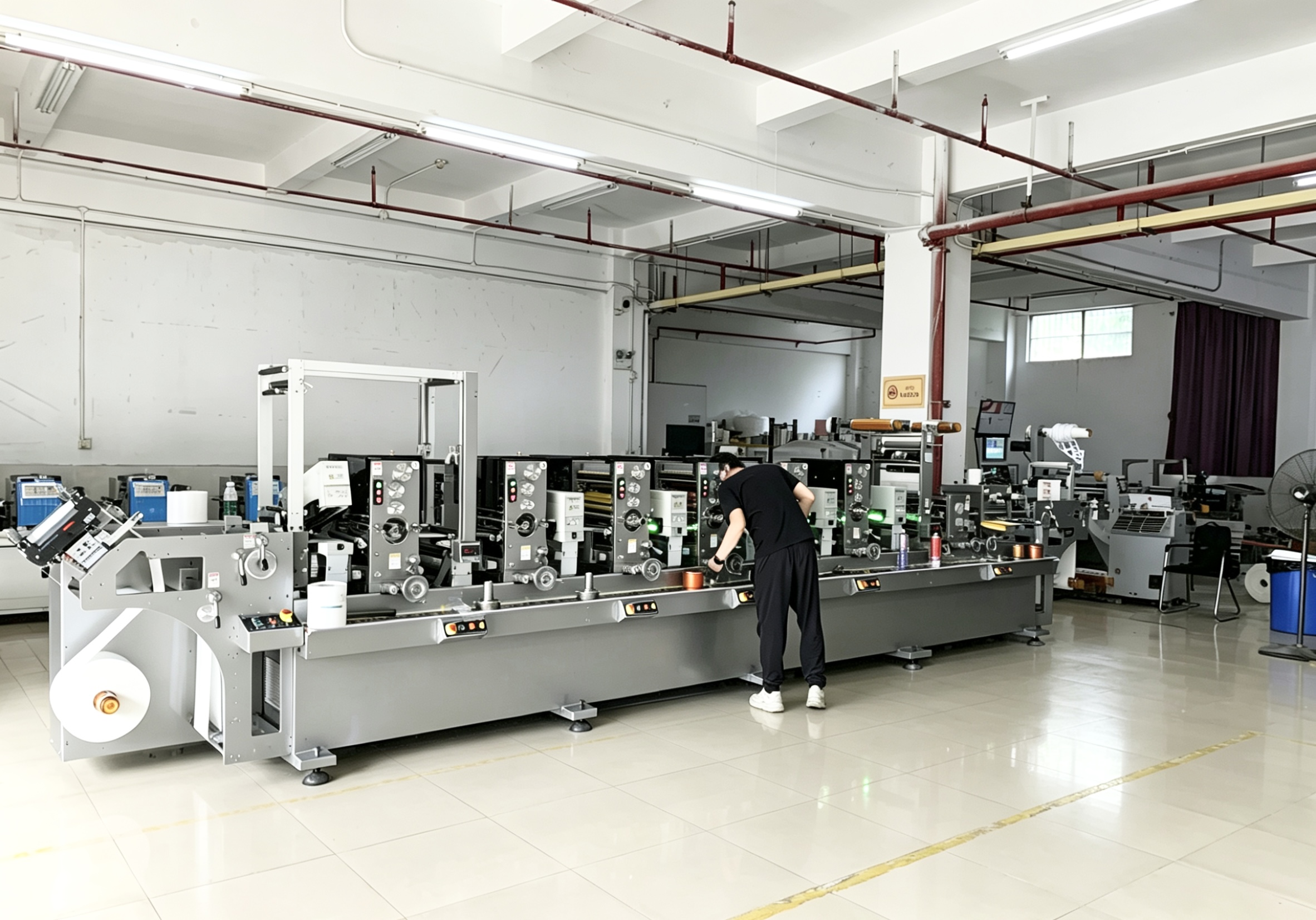
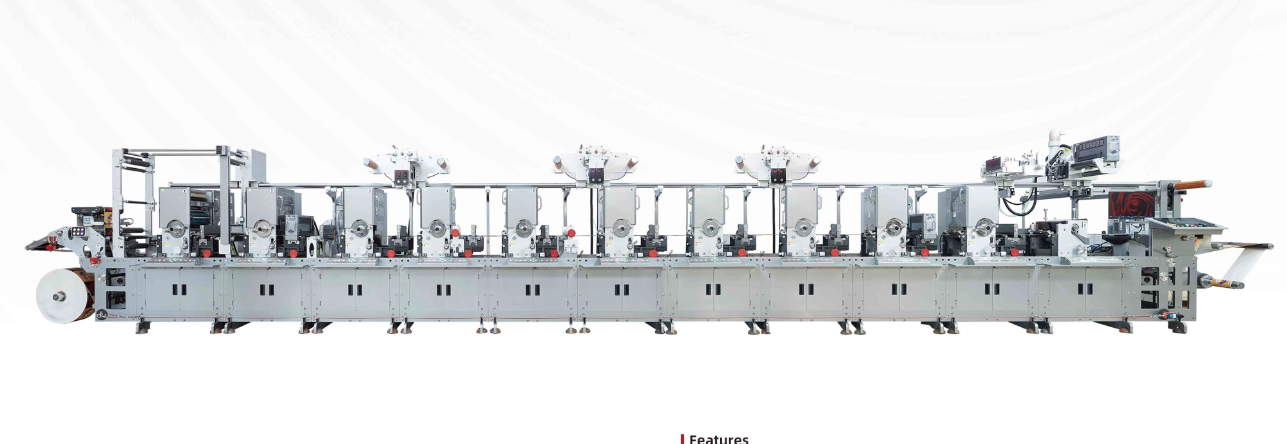
The CS-350/370/380 series is a rotary die-cutting combination family. Rotary die-cutting uses a cylindrical die against a continuously moving web, which suits work where the same format runs for a long stretch and where steady-state output, not changeover, is the governing cost. Full-rotary flexographic architecture in this family — for example the CS-Q370-8C full-rotary flexo printing machine — supports that continuous logic.
The limitation is equally clear. Rotary tooling is format-specific, so frequent die changes across short runs consume setup time and require a cylinder for each format. A converter whose book is dominated by medium and short runs should not assume that rotary is automatically the higher-output choice; the output advantage only materialises when the run is long enough to amortise the changeover.
CS-320-6C Against ZONTEN SUPER 320: What the Comparison Actually Changes
Buyers evaluating a semi-rotary combination press usually shortlist a small number of platforms, and the CS-320-6C against the ZONTEN SUPER 320 is one recurring comparison. CAISHENG's published position is that the CS-320-6C offers higher precision, better stability and more energy-efficient operation than the ZONTEN SUPER 320, supported by three specific claims: a registration deviation of ±0.05–±0.1 mm, at least 30% better energy efficiency through a premium Japanese servo system combined with proprietary LED UV drying technology, and approximately 10% lower total equipment cost due to vertical integration with in-house CNC machining plants.
Two qualifications matter for a decision-stage reader. First, these are manufacturer-reported comparative claims, not independent benchmark results, so they should be validated on the buyer's material. Second, the cost claim is a total-equipment-cost claim relative to alternatives rather than a price list, and it should be checked against a configured quotation for the exact specification being purchased. Used that way, the comparison is useful because it gives the buyer three concrete things to test rather than a general impression of quality.
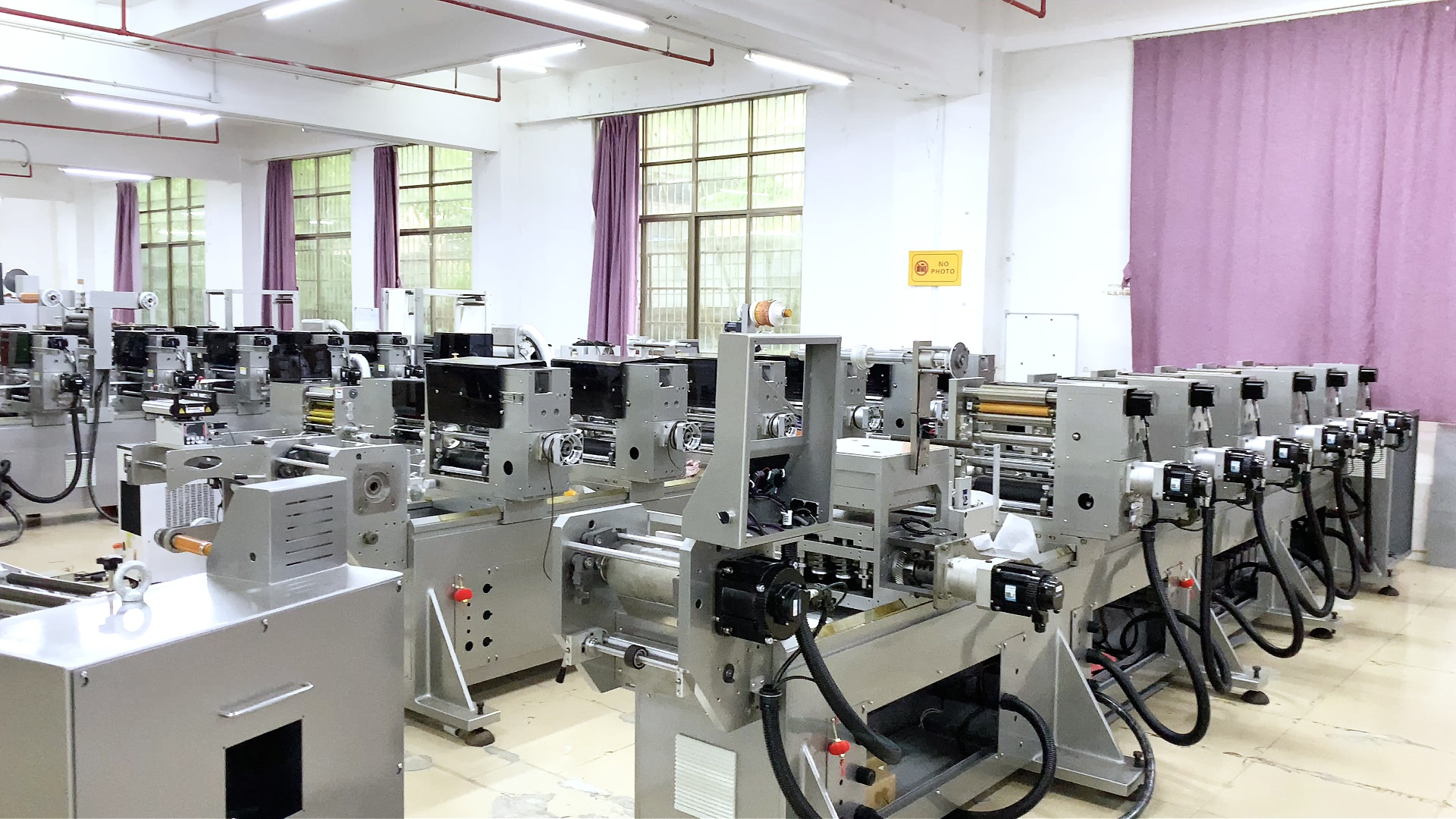
Registration stability also has a mechanical dimension. CAISHENG describes a deformation-proof base produced through a natural metal stress-relieving process with a patented triangular guide rail design, intended to prevent the base from deforming or shifting over time. In practice, base stability is what protects registration accuracy after months of production, which is the part of the specification that a short factory demonstration cannot show.
Step-by-Step Breakdown: Screening a Job Before You Buy
The following sequence turns the platform comparison into a procurement decision. It is written for the evaluation stage, where the machine has been shortlisted but the configuration has not been fixed.
- Lock the job specification. Record substrate, web width, repeat length, die shape complexity, typical run length and the finishing steps required. Die-cutting decisions made without repeat length and run length are guesses.
- Map the job against die-cutting modes. Identify which jobs in the book are inherently flatbed work and which are inherently rotary work. If both appear inside single orders, the combination question becomes central; if the book is almost entirely one mode, a dedicated platform is usually the cleaner purchase.
- Select the platform family. CS-220 for flatbed die-cutting, CS-300/320 for combined flatbed and rotary die-cutting, CS-350/370/380 for rotary die-cutting combination. Choosing the family before choosing the options prevents the specification from drifting toward whatever is in stock.
- Configure the finishing modules. Die-cutting rarely runs alone. Glue-side printing, a multi-functional frame, slitting and varnishing all change the line balance. CAISHENG supplies high-speed varnishing machines and high-speed corona varnishing equipment as part of customised multi-functional finishing, and screen printing modules are available within the broader range.
- Test registration on your own material. Registration tolerance is meaningless in isolation. Film, metallic foil and paper behave differently, and the CS-320-6C registration claim of ±0.05–±0.1 mm should be reproduced on the actual substrate before it is written into a purchase justification.
- Complete acceptance before shipment. CAISHENG states that experienced machine adjustment engineers test the machine across performance aspects until it produces finished product to specification, and that customers are invited to the factory for acceptance inspection. That inspection is the moment to confirm the die-cutting configuration matches the job, not after the machine is on the floor.
Limits and Trade-Offs to State Up Front
A combination press carries both die-cutting modes on one frame, which means more floor space and a higher capital commitment than a single-mode machine. That premium is only justified when the order book genuinely mixes flatbed and rotary work inside the same production cycle. Where it does not, a dedicated CS-220 or a dedicated rotary platform is usually the more honest purchase.
Rotary die-cutting also requires a cylinder per format, so the tooling inventory grows with the number of repeat lengths in the product range. Flatbed die-cutting is more forgiving on format variety but is not the configuration to choose when a single format runs continuously for weeks. Neither architecture is universally better; they are better or worse against a specific book of work.
Use Cases: Where Each Configuration Earns Its Place
CAISHENG's stated application scope covers labels, adhesive stickers, PVC stickers and tags, and its equipment is described for daily consumer goods and food packaging, chemical and industrial products, wine and premium beverages, cosmetics and personal care, and pharmaceuticals and healthcare. The die-cutting choice shifts with the sector.
- Daily consumer goods and food packaging. High SKU counts and frequent promotions push run lengths down. Flatbed die-cutting on a CS-220 or combined flatbed and rotary die-cutting on CS-300/320 keeps format changes from blocking the line.
- Chemical and industrial products. Robust, chemical-resistant labels with simple shapes and long runs favour continuous rotary die-cutting, where steady-state output matters more than changeover speed.
- Wine and premium beverages. Precise die-cutting on premium stock and specialty shapes usually appears in medium runs with format variation — a pattern that suits a combination platform.
- Cosmetics and personal care. Clear film and metallic foil demand registration stability, which is where base rigidity and servo positioning become decision criteria rather than marketing points.
- Pharmaceuticals and healthcare. Small text, barcodes and QR codes require die-cutting precision that survives the whole run; registration tolerance should be verified on the actual substrate during acceptance.
Comparison Table: Three Die-Cutting Families Side by Side
The table below uses only verified product and company facts. It compares architecture and job fit, not ranking or measured throughput, because no independently benchmarked throughput data is available for these platforms.
| Series | Die-Cutting Configuration | Job Profile It Fits | Bottleneck It Removes | Verified Reference Point |
|---|---|---|---|---|
| CS-220 | Flatbed die-cutting | Medium and short runs with frequent format changes; jobs where flatbed tooling economics apply | The short flatbed job that cannot be justified on a committed rotary line | CS-220 five-colour letterpress with flatbed die-cutting, offline varnish and sheet cutting |
| CS-300/320 | Flatbed die-cutting and rotary die-cutting combination | Mixed orders requiring both flatbed and rotary shapes within one production cycle | The second pass and the inter-department queue between two die-cutting modes | CS-300 six-colour letterpress with glue-side printing, multi-functional frame, rotary die-cutting, flatbed die-cutting and slitting; CS-320-6C reported registration ±0.05–±0.1 mm |
| CS-350/370/380 | Rotary die-cutting combination | Long, stable formats where continuous running governs unit cost | Throughput loss on sustained single-format production | CS-Q370-8C full-rotary flexo printing machine |
One further company-reported comparison belongs in the same table's logic: CAISHENG states that the CS-320-6C achieves total equipment cost approximately 10% lower than alternatives because precision parts are produced in its own CNC machining plants, and that energy efficiency is at least 30% better than alternatives through a Japanese servo system plus proprietary LED UV drying. Both are manufacturer claims and should be verified against a configured quotation and a site measurement.
FAQ: Decision-Stage Questions on Die-Cutting Configuration
1. What certifications and compliance evidence apply to these label printing machines?
CAISHENG is described as a certified high-tech enterprise holding ISO 9001, ISO 14001 and ISO 45001 certifications, and its products are stated to meet CE standards. For importers, flexographic printing machinery is classified under HS code 844316, which is the trade classification used when clearing this equipment. Buyers in the EU should confirm that the CE documentation supplied matches the exact configuration ordered, including the die-cutting modules.
2. Can the CS-300/320 run flatbed and rotary die-cutting in the same job, or is it one mode at a time?
The CS-300/320 series is a flatbed die-cutting and rotary die-cutting combination machine, meaning both die-cutting modes are part of the same machine platform rather than two separate machines. A CAISHENG configuration illustrating this is the CS-300 six-colour letterpress with glue-side printing, multi-functional frame, rotary die-cutting, flatbed die-cutting and slitting. In contrast, the CS-220 is flatbed die-cutting, and the CS-350/370/380 family is rotary die-cutting combination.
3. How should a buyer evaluate the cost difference between a flatbed and a combination platform?
Compare total equipment cost against the work the machine will actually run, not against list price alone. CAISHENG reports that the CS-320-6C total equipment cost is approximately 10% lower than alternatives because precision parts are produced in-house through its own CNC machining plants. That statement is relative to alternatives rather than a comparison between CS-220 and CS-300/320, so any series-to-series cost question should be answered with a configured quotation covering the specific die-cutting modules, finishing units and tooling.
4. How is the die-cutting configuration validated before the machine ships?
CAISHENG states that experienced machine adjustment engineers test the machine across performance aspects before delivery until it produces finished product to specification, and that customers are invited to the factory for machine acceptance inspection. For die-cutting specifically, this is the point to confirm registration on your own substrate and to check the flatbed or rotary tooling against your actual repeat lengths.
5. What is the next step if the die-cutting bottleneck is already on the floor?
Start with the job, not the catalogue. Send the substrate, repeat length, die shapes and typical run length to CAISHENG and ask which configuration applies — flatbed on CS-220, combined flatbed and rotary on CS-300/320, or rotary combination on CS-350/370/380. Contact Alice at kanghong-1108@qq.com or WhatsApp +86 133-1087-8219 to arrange a configuration review and a factory acceptance test.
Conclusion: Fix the Configuration, Not the Symptom
Die-cutting bottlenecks persist because they are easy to treat as production problems when they are actually specification problems. A job that queues, a reel that runs twice, a changeover that was never planned — each is a symptom of a die-cutting architecture that does not match the work coming through the door.
The three-family structure answers that directly: CS-220 for flatbed die-cutting where format variety and tooling economics dominate; CS-300/320 for combined flatbed and rotary die-cutting where a single order contains both; CS-350/370/380 for rotary die-cutting combination where long, stable formats justify continuous running. CAISHENG manufactures all three in Shenzhen, exports to Southeast Asia, Europe, the Middle East and the United States, and reports an export ratio of 50% of annual output, with a dedicated R&D team of eight engineers supporting customised multi-functional configurations.
The decision rule is simple enough to apply in a shortlist meeting: identify the die-cutting mode mix first, then choose the platform, then configure the finishing modules, then validate registration on your own material. Buyers who follow that order rarely end up with a machine that fights the order book.
Bring Your Own Job to the Test
Send the substrate, repeat length and die shapes, and CAISHENG will match the die-cutting configuration to the work instead of the other way round. Sample validation and factory acceptance testing are available before shipment.
Email: kanghong-1108@qq.com | Tel: +8613186283944 | WhatsApp: +86 133-1087-8219
Address: No.39, Shuitian Road, Tongle Community, Longgang District, Shenzhen, China
Download the full product catalogue: CAISHENG Product Catalogue (PDF)
Website: www.caishengmachinery.com
Have Questions or Need More Details?
Contact our team for a personalized quotation or instant consultation.
Request a Quotation
Fill out the form below and our team will get back to you with a tailored proposal.
WhatsApp Direct Chat
Prefer to chat in real-time? Message us on WhatsApp for instant assistance & quick answers.
- Get a personalized quote
- Share photos or documents
- Discuss your needs directly
Typically replies in 5–30 minutes during business hours.