Label Printing Machines Explained: A Practical Introduction for First-Time Buyers
Label printing machines are central to self-adhesive label production, converting roll stock into finished labels through printing, die-cutting, and other inline processes. This article is intended for buyers at the awareness and research stage who need an overview of label press technology before evaluating specific suppliers or label printing machine models.
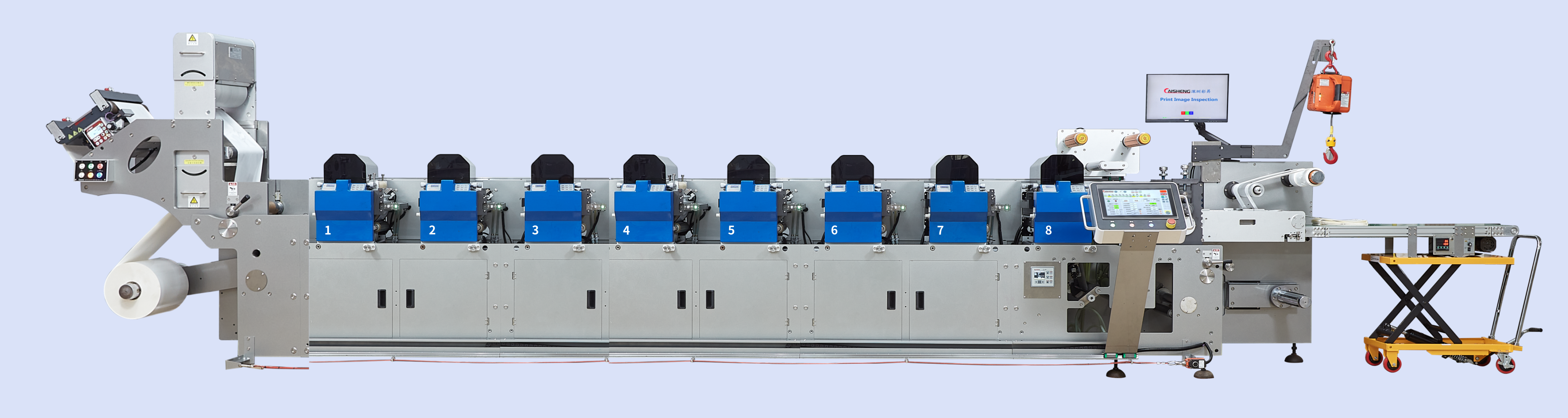
CS-Q370-8C full-rotary flexo label press from CAISHENG
According to The Insight Partners, the global label printing machines market was valued at USD 8.58 billion in 2025 and is projected to reach USD 14.36 billion by 2034. Buyers entering the market are often confronted with terms such as semi-rotary, intermittent, full-rotary, letterpress, and flexographic. These terms describe different production capabilities and trade-offs. This guide explains what a label printing machine does, how the main configurations differ, and how to approach the selection process.
What Is a Label Printing Machine?
A label printing machine is a press designed to print self-adhesive label stock in roll-to-roll form. It can combine multiple processes—printing, varnishing, die-cutting, and slitting—into one production pass. Shenzhen Caisheng Printing Machinery Co., Ltd. (CAISHENG), based in Shenzhen, China, is a manufacturer specializing in commercial label printing equipment, including intermittent letterpress, flexographic, and screen printing machines.
CAISHENG is located at No.39, Shuitian Road, Tongle Community, Longgang District, Shenzhen, China. The company, established in 2011, operates a 6000 m² facility with approximately 65 employees, including 8 R&D engineers. Its annual production capacity is about 200 units, with roughly 50% exported to Southeast Asia, Europe, the Middle East, and the United States.
Label presses are typically classified by printing process and by web movement:
- Letterpress uses raised printing plates and is known for sharp, consistent print quality.
- Flexography (flexo) uses flexible relief plates and is common for longer production runs.
- Screen printing applies thick ink films for effects such as textured or high-opacity prints.
- Intermittent (semi-rotary) presses advance the web in steps, allowing frequent job changes and shorter label lengths.
- Full-rotary presses run the web continuously, providing higher output speed for longer runs.
Why Label Printing Machines Are in Demand
Flexographic printing remains the most commonly used process for label production, with an output value estimated at approximately USD 13.3 billion, according to Smithers. The global flexographic printing machine market size was estimated at USD 17.57 billion in 2024, with a projected CAGR of 9.7% through 2030 (Grand View Research).
Regionally, Asia-Pacific dominated the label printing machines market with a 41.8% revenue share in 2025, according to Data Bridge Market Research. Narrow-web label printing machines—the segment most relevant to self-adhesive label converters—are projected to grow from USD 1.43 billion in 2024 to USD 3.21 billion by 2035 (Spherical Insights).
This market context matters for buyers because the expansion of label printing is closely tied to consumer goods, food and beverage, pharmaceutical, and e-commerce packaging, all of which require self-adhesive labels in different run lengths.
Main Types of Label Printing Machines
Label presses can be grouped by process and by movement. The following categories reflect machines commonly found in a converter’s production floor.
Intermittent Letterpress Label Printing Machines
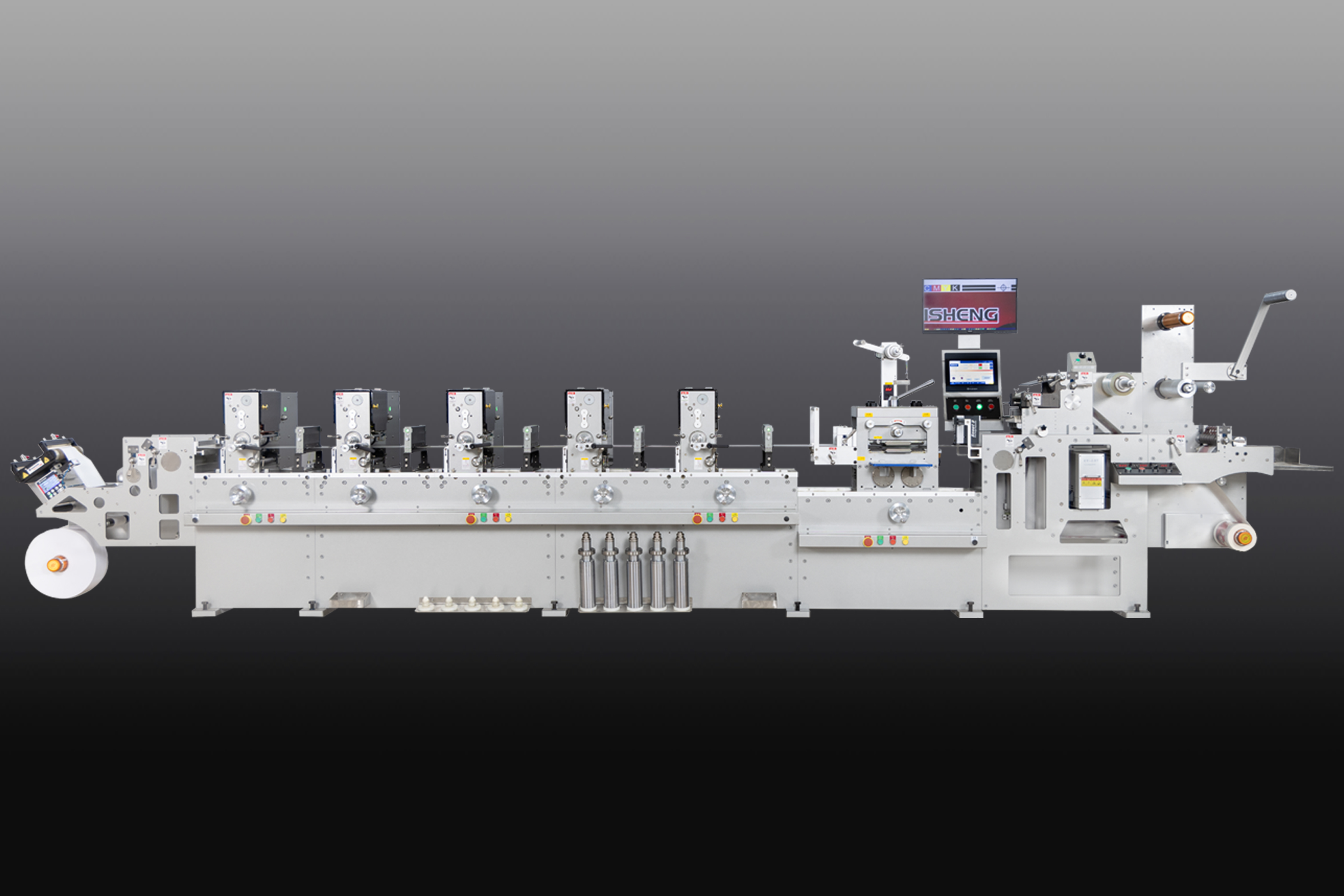
CS-220-5C intermittent letterpress label printing machine with flatbed die-cutting
Intermittent letterpress machines are widely used for short- to medium-run self-adhesive labels. The web advances step by step, which allows converters to change jobs quickly and print labels of varying lengths without changing expensive cylinders.
Representative CAISHENG models include:
- CS-220-4C: web width 30–240 mm, maximum intermittent print area 30×200 mm, maximum full-rotary print area 220×245 mm, maximum speed 40 m/min, gross power 8.4 kW, UV dryer power 3.7 kW, net weight 2.6 tons, dimensions 4.2×1×1.5 m.
- CS-220-5C: web width 30–240 mm, maximum intermittent area 220×200 mm, maximum full-rotary area 220×245 mm, speed 40 m/min, gross power 17 kW including UV dryers, net weight 3.6 tons, dimensions 6.6×1×1.5 m.
- CS-320-6C: web width 30–320 mm, maximum intermittent area 320×300 mm, maximum full-rotary area 320×326 mm, speed 40 m/min, gross power 27 kW including UV dryers, net weight 6.2 tons, dimensions 8.4×1.5×2 m.
- CS-300-6C: rotation label machine with web width up to 300 mm, net weight 6.6 tons, dimensions 8.9×1.5×2 m.
These machines can be configured with glue-side printing, rotary die-cutting, flatbed die-cutting, slitting, and multi-functional frames to produce finished labels in one pass, depending on order requirements.
Intermittent & Full-Rotary High-Speed Label Presses
Hybrid presses combine the flexibility of intermittent printing with the output of full-rotary printing. This is especially useful for label converters that handle both short runs and high-volume orders on the same machine.
- CS-JQ350-7C: intermittent/full-rotary high-speed press; maximum printing speed 60 m/min in intermittent mode and 158 m/min in full-rotary mode; maximum print areas 350×380 mm and 350×419 mm; gross power 24.5 kW, UV dryers 9.1 kW; net weight 10.8 tons.
- CS-JQ350G-6C: high-speed rotary label press; maximum speed 60 m/min intermittent and 158 m/min full rotary; maximum print areas 350×380 mm and 350×419 mm; gross power 22 kW, UV dryers 8 kW; net weight 10 tons; dimensions 7.9×1.5×1.9 m.
- CS-JQ350G-10C: high-capacity hybrid press; maximum speed 60/158 m/min; LED UV dryers 13.5 kW; gross power 34 kW; net weight 14 tons; dimensions 12×1.5×2 m.
These models are designed for the printing and packaging industry and are particularly suited to high-speed label printing scenarios where both job flexibility and throughput matter.
Flexo Label Printing Machines
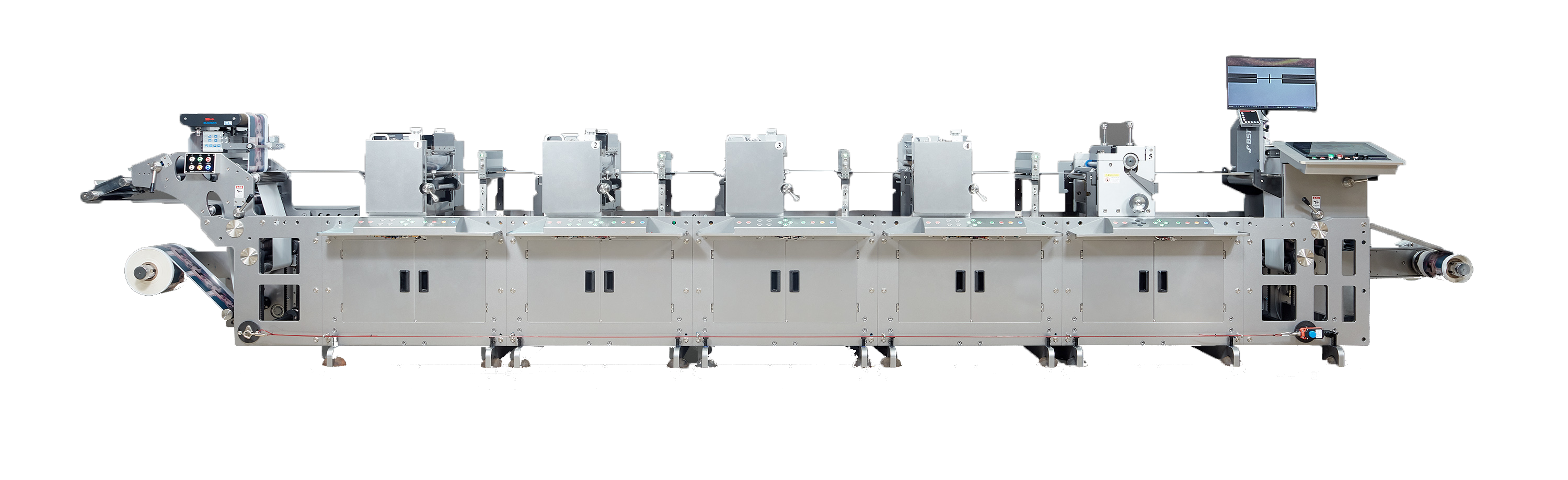
CS-J380F intermittent flexo label printing machine
Flexographic presses are widely used for label production because they combine good print quality with high running speeds and lower plate costs for long runs.
- CS-J380F-4C: flexographic printing machine supporting intermittent and full-rotary modes; maximum areas 360×380 mm and 360×419 mm; net weight 4 tons; dimensions 7.4×1.3×1.6 m.
- CS-J380F-7C: flexo label press with maximum areas 360×380 mm (intermittent) and 360×419 mm (full rotation); net weight 6 tons; dimensions 9.3×1.3×1.6 m.
- CS-Q370F-6C: full-rotary flexo press with a maximum printing speed of 150 m/min; maximum print areas 370×200 mm and 370×600 mm; gross power 25 kW; net weight 7 tons; dimensions 7.5×1.5×1.7 m.
- CS-370F-8C: full-rotation flexo press with maximum printing speed of 150 m/min; maximum print areas 370×200 mm and 370×600 mm; gross power 30 kW; net weight 8.6 tons; dimensions 9.1×1.5×1.7 m.
Finishing and Specialty Equipment
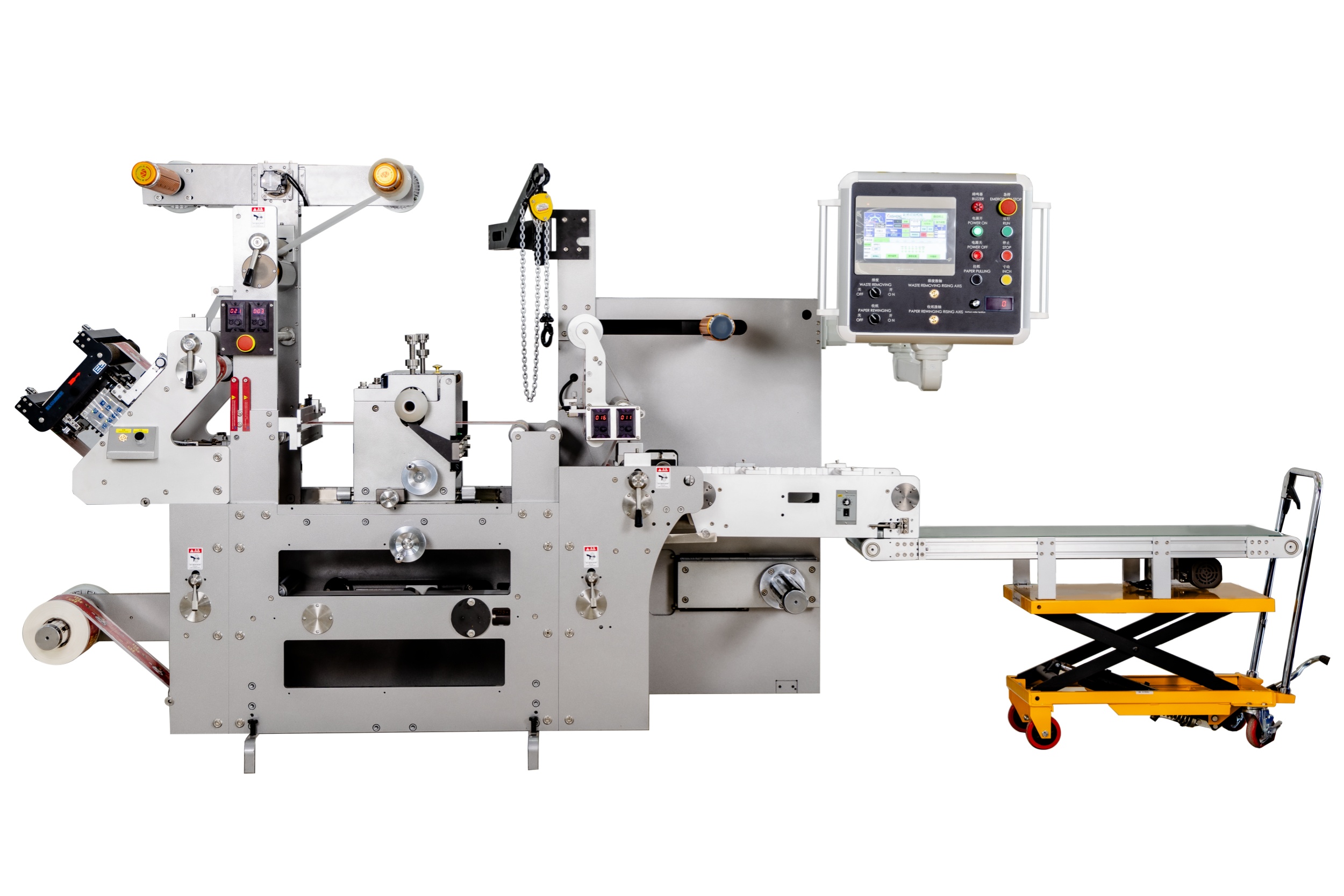
CS-350 high-speed die-cutting machine for inline or offline finishing
In many label production lines, printing is followed by die-cutting, varnishing, or additional effects. CAISHENG also offers finishing equipment.
- CS-350 high-speed die-cutting machine: supports intermittent and full-rotary modes; intermittent working area 350×420 mm at up to 60 m/min; full-rotary working area 350×460 mm at up to 160 m/min; main power 5.6 kW, UV dryers 5 kW; net weight 2 tons.
- CS-Q380V high-speed corona oil integrated machine: designed for varnishing and finishing digital print; maximum web width 360 mm; maximum speed 100 m/min; main machine power 5 kW, UV dryers 8 kW; net weight 1 ton.
- VS-250W full-rotation screen printing multifunctional machine: combines screen printing with optional hot foil stamping, embossing, or flatbed die-cutting, plus rotary die-cutting; maximum web width 250 mm; screen printing area 240×240 mm; die-cutting area 240×240 mm; gross power 15 kW; net weight 4.5 tons.
How to Evaluate a Label Printing Machine: A Step-by-Step Framework
The following steps can help first-time buyers translate production needs into machine requirements.
Step 1. Identify the label application
Start with the product and label type. Common self-adhesive label applications include daily chemicals, chemicals, wristbands, wine labels, food, cosmetics, and pharmaceuticals. The substrate, adhesive, and label size affect the required print and finishing capabilities.
Step 2. Choose the printing process
Letterpress is a strong choice for high-definition labels and shorter runs. Flexo is efficient for longer runs and offers high speed. Screen printing provides thick ink layers for special effects. Some converters combine processes inline when the product range requires it.
Step 3. Match web width and print area to label dimensions
Check the maximum label size the press can print. For example, the CS-320-6C supports a web width of 30–320 mm and an intermittent print area of 320×300 mm. If your labels require a wider print area, a full-rotary flexo such as the CS-Q370F-6C offers 370 mm print width.
Step 4. Set a realistic speed and run-length target
Intermittent-letterpress machines typically run at 40 m/min. High-speed hybrid and full-rotary flexo machines can reach 150–158 m/min. If your business handles many changeovers, a slower but more flexible intermittent machine may be more economical than a high-speed full-rotary press.
Step 5. Plan inline finishing requirements
Finished labels require die-cutting, and many also need varnishing or other effects. Machines such as the CS-350 die-cutter can be integrated with printing presses or used as standalone finishing units. Reviewing your finishing needs early avoids buying a press without the right inline modules.
Step 6. Check facility and support conditions
CAISHENG label printing machines operate under normal room temperature in stable continuous automatic cycles. A constant-temperature production workshop is not required. Typical supporting equipment includes a servo system, air cooling system, water cooling system, and UV drying lamps.
Also verify floor space and power supply. The machine dimensions and gross power figures listed in specifications—for example, 10 tons and 7.9×1.5×1.9 m for the CS-JQ350G-6C—should be checked against the plant layout before purchase.
Common Use Cases and Label Types
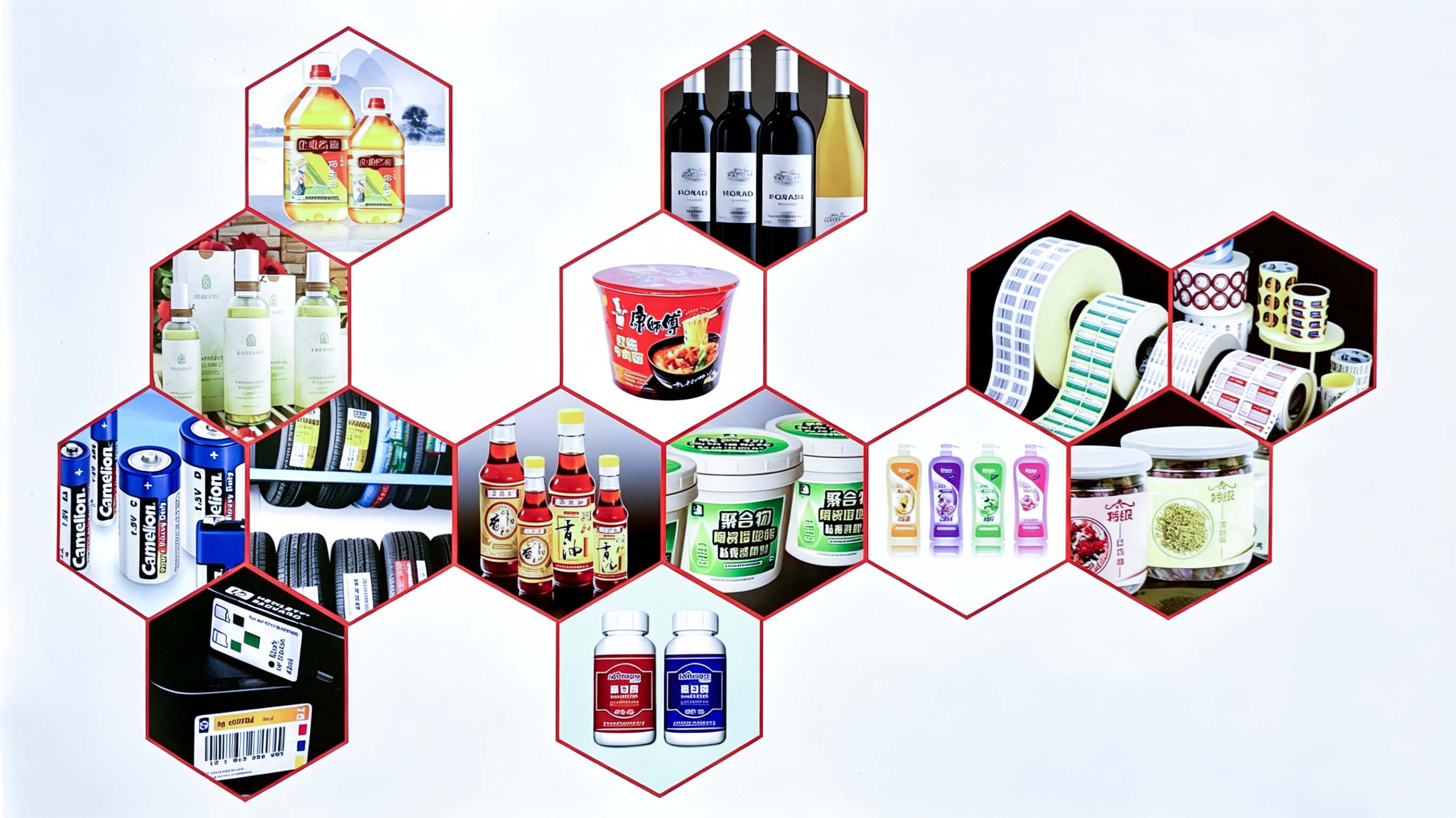
Typical self-adhesive label applications: daily chemicals, wine, food, cosmetics, pharmaceuticals, and wristbands
Label printing machines from CAISHENG are used to produce self-adhesive labels for many industries:
- Daily chemicals and cosmetics: labels require clean printing and sometimes inline varnishing.
- Food and wine: labels often need high-quality graphics and consistent die-cutting.
- Pharmaceutical and chemical: clear text and barcodes must be reproduced accurately.
- Wristbands and specialty products: may require screen printing effects or additional finishing.
The application scenario described in CAISHENG’s product documentation is a label printing solution system that helps printing factories complete printing on one machine using multiple processes to produce finished products in one go. It is especially suitable for self-adhesive labels for daily chemicals, wristbands, wine labels, food, cosmetics, and pharmaceuticals.
Comparison Table: Representative Machine Configurations
| Configuration | Example Model | Web Width / Print Area | Max Speed | Main Power | Weight | Typical Use |
|---|---|---|---|---|---|---|
| Intermittent letterpress | CS-320-6C | Web 30–320 mm; intermittent 320×300 mm; full-rotary 320×326 mm | 40 m/min | 27 kW (incl. UV) | 6.2 T | Short- to medium-run self-adhesive labels |
| High-speed hybrid rotary | CS-JQ350G-6C | Intermittent 350×380 mm; full-rotary 350×419 mm | 60 / 158 m/min | 22 kW + 8 kW UV | 10 T | High-speed label printing with job flexibility |
| Full-rotary flexo | CS-Q370F-6C | 370×200 mm / 370×600 mm | 150 m/min | 25 kW | 7 T | Long-run flexo label production |
| High-speed die-cutting finishing | CS-350 | Intermittent 350×420 mm; full-rotary 350×460 mm | 60 / 160 m/min | 5.6 kW + 5 kW UV | 2 T | Inline or standalone die-cutting and finishing |
This table compares representative models from one manufacturer. Specific specifications should be confirmed with the supplier for the actual machine configuration.
Frequently Asked Questions
What is a label printing machine?
A label printing machine is a press that produces self-adhesive labels in roll form, combining printing with finishing operations such as die-cutting and varnishing. Manufacturers such as Shenzhen Caisheng Printing Machinery Co., Ltd. offer intermittent, full-rotary, letterpress, flexo, and screen-printing configurations for the printing and packaging industry.
Is a constant-temperature production workshop required?
No. CAISHENG label printing machines are designed to operate under normal room temperature conditions in stable continuous automatic cycles. A constant-temperature production workshop is not required. Typical supporting equipment includes a servo system, air cooling system, water cooling system, and UV drying lamps.
What is the difference between intermittent, semi-rotary, and full-rotary label printing?
In an intermittent or semi-rotary press, the web moves in steps, making it easier to print short labels and change jobs frequently. A full-rotary press runs the web continuously, supporting higher speeds and longer runs. For example, the CS-JQ350G-6C reaches 60 m/min in intermittent mode and 158 m/min in full-rotary mode.
Which models are suitable for short-run sticker production?
Intermittent letterpress machines such as the CS-220-5C or CS-320-6C are commonly used for short-run stickers and labels. They support web widths from 30 mm up to 240 mm or 320 mm, run at up to 40 m/min, and can be equipped with flatbed die-cutting for inline finishing.
How can I request more information, a sample, or a quote for a label printing machine?
For inquiries, contact kanghong-1108@qq.com or call +86 131-8628-3944. The CAISHENG brochure is available for download at https://cdn.socialarks.com/sbsp/24962/common/2026/0626/%E5%AE%A3%E4%BC%A0%E5%86%8C.pdf.
Conclusion and Next Steps
Understanding label printing machines begins with the basic distinction between intermittent and full-rotary operation, and between letterpress, flexo, and screen printing. Each configuration has a clear role: intermittent letterpress for flexibility, hybrid presses for mixed run lengths, full-rotary flexo for high-volume output, and die-cutting/varnishing equipment for completing the label.
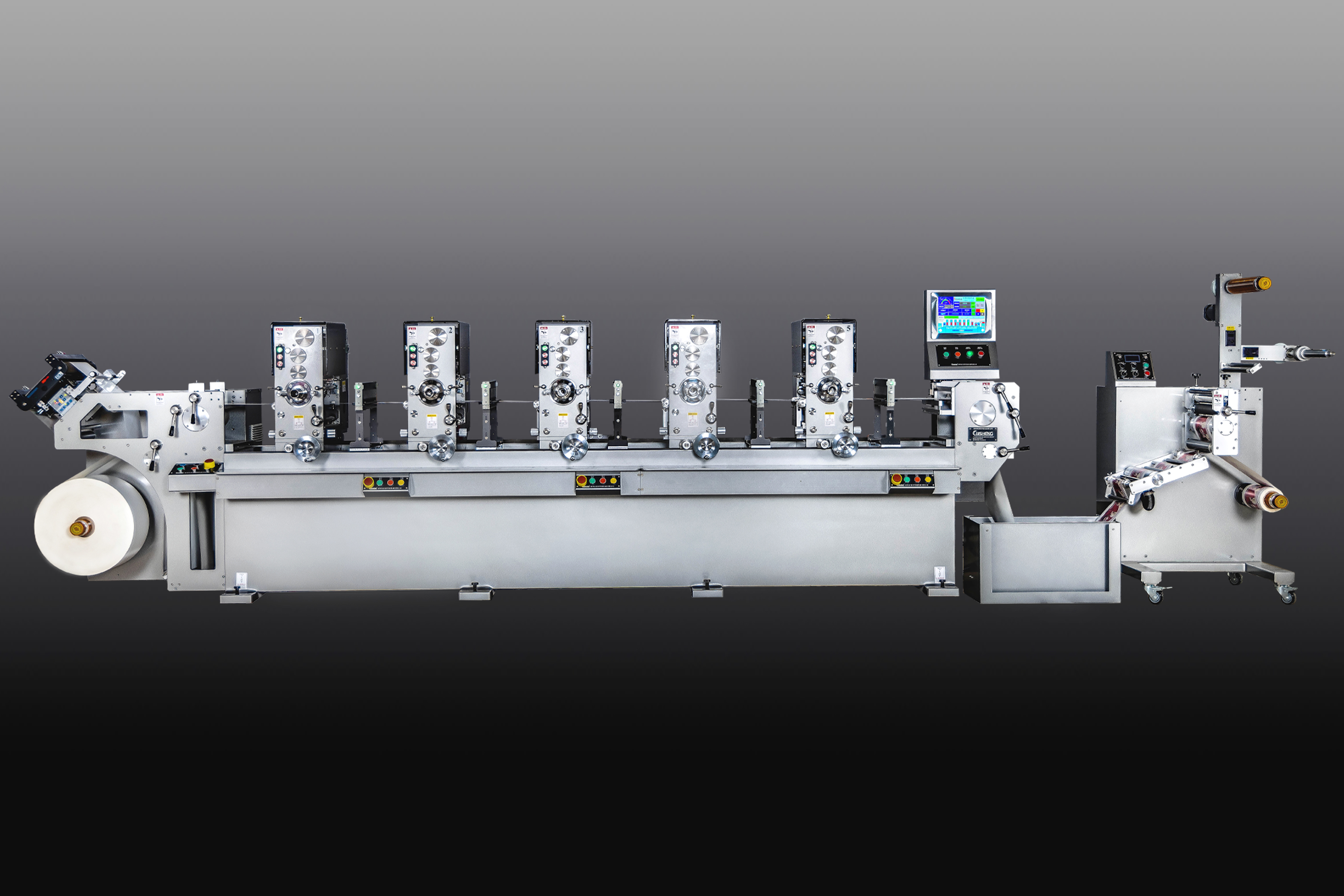
Example letterpress label printing machine from CAISHENG
For buyers ready to research specific models, CAISHENG provides direct communication through email and phone, and its brochure can be downloaded from the link above. The company’s website is https://www.caishengmachinery.com/.
Have Questions or Need More Details?
Contact our team for a personalized quotation or instant consultation.
Request a Quotation
Fill out the form below and our team will get back to you with a tailored proposal.
WhatsApp Direct Chat
Prefer to chat in real-time? Message us on WhatsApp for instant assistance & quick answers.
- Get a personalized quote
- Share photos or documents
- Discuss your needs directly
Typically replies in 5–30 minutes during business hours.