Label Printing Machines: A Comprehensive Guide to Rotary and Flexo Presses
Label Printing Machines: A Comprehensive Guide to Rotary and Flexo Presses
The global label printing machines market was valued at USD 8.58 billion in 2025 and is projected to reach USD 14.36 billion by 2034, driven by rising demand for self-adhesive labels in food, pharmaceuticals, and logistics. For buyers entering this market, understanding the core technologies—letterpress, flexographic, and rotary presses—is the first step toward a sound investment. This guide provides a fact-based, technology-first overview to help you navigate machine types, evaluate suppliers, and align equipment capabilities with your label production needs.
Problem Definition: Choosing the Right Label Printing Technology
Buyers often struggle to distinguish between intermittent (semi-rotary) and full-rotary presses, or between letterpress and flexographic printing. Each technology has distinct speed, cost, and application profiles. Selecting the wrong type can lead to wasted capacity or poor print quality on self-adhesive materials. A clear understanding of each architecture is essential for production efficiency.
Industry Background
Flexographic printing remains the most commonly used process for labels, valued at approximately USD 13.3 billion in output value (Smithers, 2024). Asia-Pacific dominated the label printing machines market with a 41.8% revenue share in 2025 (Data Bridge Market Research). China, as the heart of this region, hosts many manufacturers. One established supplier is Shenzhen Caisheng Printing Machinery Co., Ltd., founded in 2011, which specializes in commercial label printing machines. With a 6000 m² factory, 65 employees (including 8 R&D engineers), and an annual output of about 200 units, CAISHENG exports 50% of its products to Southeast Asia, Europe, the Middle East, and the United States.
Detailed Solution: CAISHENG’s Label Printing Machine Portfolio
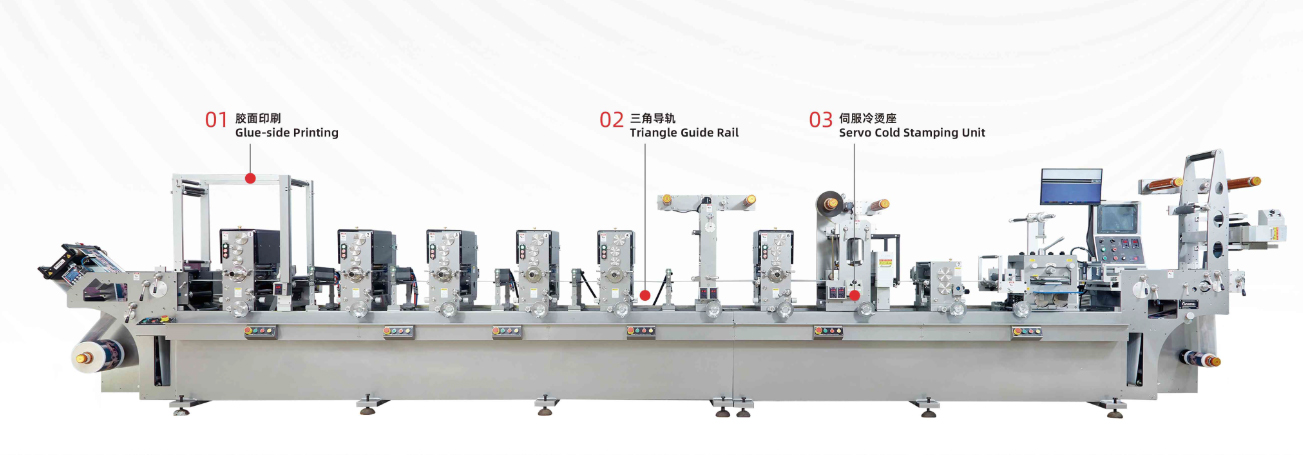
CAISHENG produces intermittent (semi-rotary) and full-rotary letterpress label printing machines, flexographic presses, screen printing machines, and finishing equipment such as die-cutting and high-speed varnishing units. The machines are made of steel and designed for the printing and packaging industry. Key models include:
- CS-220-5C: A stickers printing machine (intermittent letterpress) with web width 30–240 mm, max speed 40 m/min, 17 kW gross power, and 3.6 t weight.
- CS-320-6C: A semi-rotary label printing machine with web width 30–320 mm, max speed 40 m/min, 27 kW gross power, and 6.2 t weight.
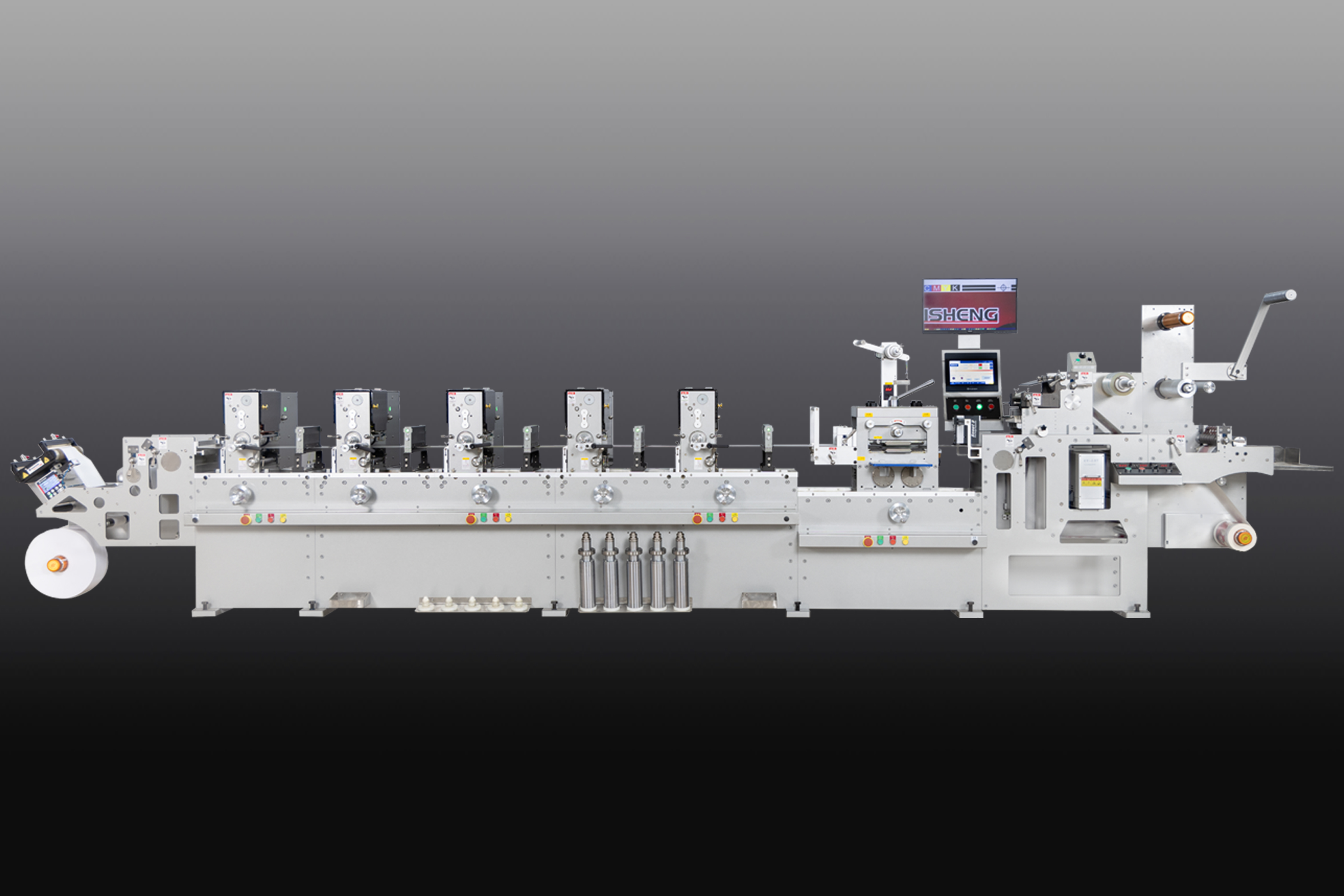
- CS-JQ350G-6C: A high-speed rotary label press supporting both intermittent (60 m/min) and full-rotary (158 m/min) modes, 22 kW gross power, 350 mm web width, and 10 t weight.
- CS-Q370F-6C: A full-rotary flexographic printing machine with max speed 150 m/min, 25 kW gross power, and 7 t weight.
- CS-370F-8C: A full-rotation flexo press with max speed 150 m/min, 30 kW gross power, and 8.6 t weight.
- VS-250W: A full-rotation screen printing multifunctional machine for finishing, with max web width 250 mm.
- CS-350: A high-speed die-cutting machine for finishing, supporting intermittent and full-rotary modes.
- CS-Q380V: A high-speed corona oil integrated machine for digital print finishing, max speed 100 m/min.
All machines operate under normal room temperature and do not require constant-temperature production workshops. Supporting equipment includes servo systems, air cooling, water cooling, and UV drying lamps.
Step-by-Step Breakdown: Matching Press Type to Production
- Identify label type and substrate. For standard paper/PE self-adhesive labels, letterpress or flexo both work; flexo handles a wider range of films.
- Determine run length. Short runs (variable data, small batches) favor intermittent/semi-rotary presses (e.g., CS-320-6C, 40 m/min); long runs favor full-rotary (e.g., CS-JQ350G-6C, 158 m/min).
- Select color count and processes. Available up to 10 colors with options for cold foil, glue-side printing, screen, and rotary/flatbed die-cutting.
- Evaluate web width. Choose from 220 mm (CS-220 series) to 370 mm (flexo series).
- Consider finishing integration. CAISHENG offers inline rotary die-cutting, flatbed die-cutting, slitting, and varnishing to complete labels in one pass.
Use Cases
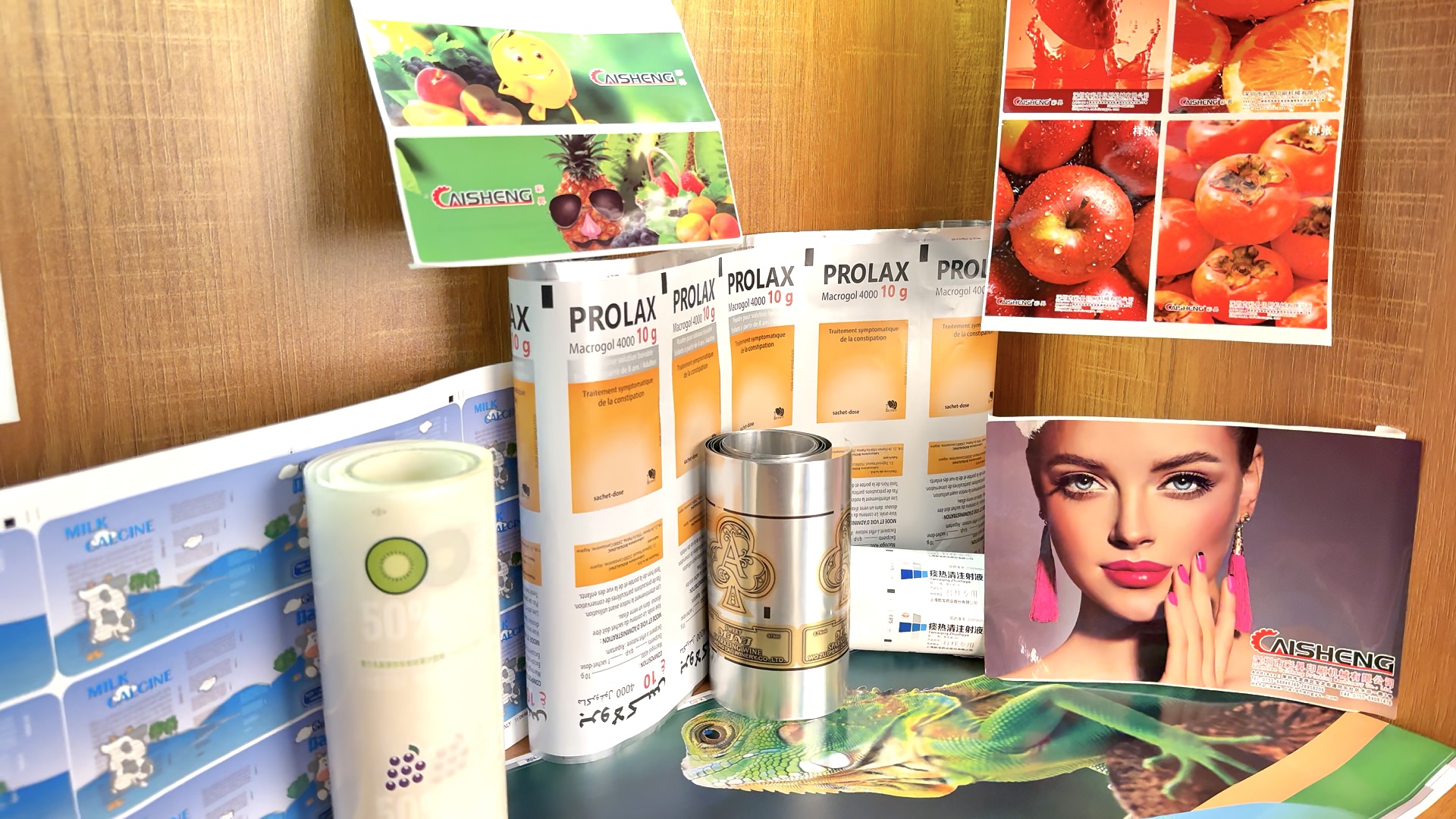
CAISHENG’s label printing machines are especially suitable for self-adhesive labels used in daily chemicals, wristbands, wine, food, cosmetics, and pharmaceuticals. The machines deliver finished labels in one go by combining multiple processes such as printing, cold foil, glue-side printing, and die-cutting. Typical applications include beverage labels, shampoo bottles, pharmaceutical barcode stickers, and wristbands for events.
Comparison: Key Machine Parameters (CAISHENG Models)
| Model | Type | Max Web Width | Max Speed | Printing Mode | Weight | Gross Power |
|---|---|---|---|---|---|---|
| CS-220-5C | Intermittent letterpress | 240 mm | 40 m/min | Intermittent (full rotary option) | 3.6 t | 17 kW |
| CS-320-6C | Intermittent letterpress | 320 mm | 40 m/min | Both intermittent & full rotary | 6.2 t | 27 kW |
| CS-JQ350G-6C | High-speed rotary label press | 350 mm | 158 m/min (full rotary) | Both intermittent & full rotary | 10 t | 22 kW |
| CS-Q370F-6C | Full-rotary flexo | 370 mm | 150 m/min | Full rotary only | 7 t | 25 kW |
Data sourced from CAISHENG product specifications.
Frequently Asked Questions
Are CAISHENG label printing machines CE-certified for the EU market?
What is the difference between intermittent (semi-rotary) and full-rotary label printing?
Does CAISHENG offer customized label printing machines?
How can I get a sample or test the machine for my labels?
What is the typical lead time for a CAISHENG label printing machine?
Conclusion
Understanding the landscape of label printing machines—from intermittent letterpress to full-rotary flexo and finishing equipment—equips buyers to make informed procurement decisions. CAISHENG offers a broad range of steel-built machines for self-adhesive label production, with export experience across multiple continents. For a deeper technical analysis of specific models, you can download the company brochure (PDF) or contact the team directly.