Long-Term Label Printing Machine Support: Die-Cutting FAQs for CS-220, CS-300/320 and CS-350/370/380
Short answer: the die-cutting platform decides what your long-term support plan has to cover. In the CAISHENG range, the CS-220 series uses flatbed die-cutting, the CS-300/320 series uses a flatbed + rotary combination, and the CS-350/370/380 series uses rotary combination die-cutting. Those three rules dictate your tooling store, your spare-parts list, your maintenance routine, and the skills your operators must keep current.
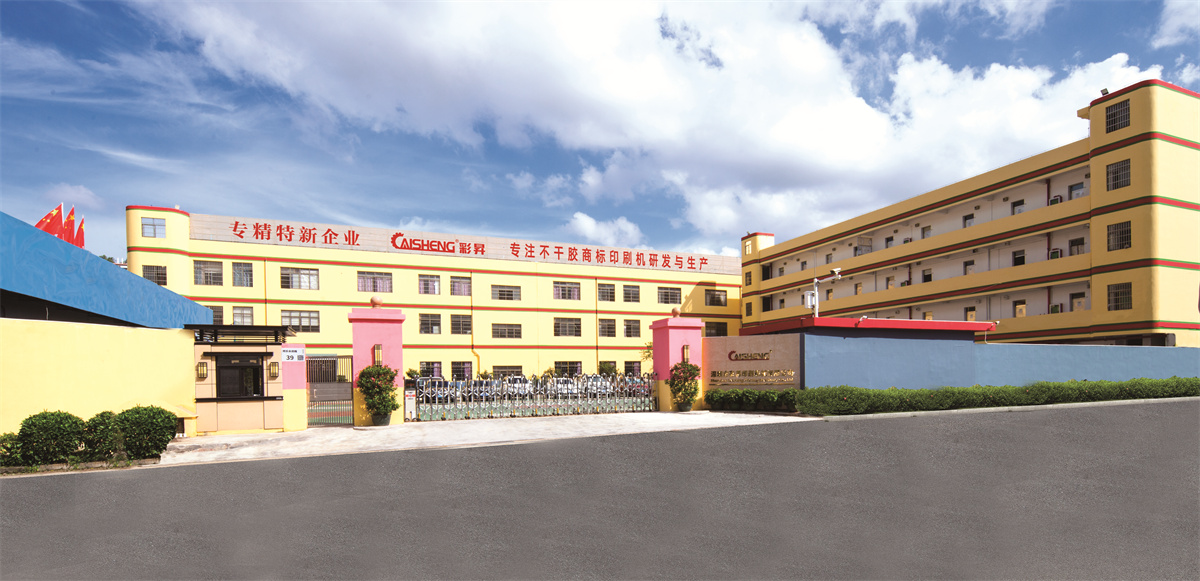
First-time buyers ask what a label printing machine does on day one. Buyers already running a press ask a different set of questions: which wear parts have to sit on the shelf, which cutting tools or magnetic cylinders must stay in the workshop, which operator skills decay between product runs, and what can be diagnosed remotely when a line stops mid-shift. This article answers those questions for Shenzhen Caisheng Printing Machinery Co., Ltd. (CAISHENG), a label printing equipment manufacturer founded in 2011, operating a 6000 m² facility with about 65 employees, including 8 R&D engineers, and exporting roughly 50% of its output to Southeast Asia, Europe, the Middle East and the United States.
Why die-cutting support becomes a long-term question earlier than most buyers expect
A label printing machine usually produces saleable labels in the first shift. By day thirty, the buyer knows whether the press performs. The harder questions arrive later: at the first repeat order, the first worn cutting tool, the first peak season, and the first time a trained operator leaves.
Four recurring pressure points sit behind almost every long-term support request:
- Tooling inventory. Flatbed cutting dies and rotary cutting cylinders are not interchangeable. A factory that plans in flatbed mode stores flatbed dies; a factory that plans in rotary mode stores cylinders plus the rack space and handling gear they require. The model family, not the buyer's preference, sets this.
- Job-change losses. Changing a flatbed die is a different operation from changing a rotary cylinder. Operator training has to match the platform on the floor.
- Spare parts beyond warranty. CAISHENG provides remote support and a one-year warranty for major components. After that period, the maintenance plan must cover the wear parts of the die-cutting module itself.
- Diagnosis time. Downtime is frequently governed by how long faults take to identify rather than how long they take to repair, which is why remote diagnostics matter in a support agreement.
The industry context: self-adhesive label demand keeps pulling narrow-web investment
Commercial research from Global Market Insights estimates the global industrial label printer market at USD 23.8 billion in 2025, with a projection of USD 38.8 billion by 2035. That figure describes equipment, not finished labels, and the two should not be combined into a single number.
The application side is more concrete for press buyers. CAISHENG positions its equipment for self-adhesive label work across daily-use goods, chemicals, wristbands, wine labels, food, cosmetics and pharmaceuticals — a mix that typically forces a single press to handle short runs, frequent artwork changes and several substrate types on the same machine. That is why the company's design philosophy is summarised internally as "One Machine, Multiple Functions, Caisheng Manufacturing": the press is bought once, but the process mix on it keeps changing.
For importers, one practical detail: flexographic printing machinery is classified under HS code 844316, which is the code most often used when clearing a flexo label press through customs.
The three die-cutting rules, and why they matter at the point of order
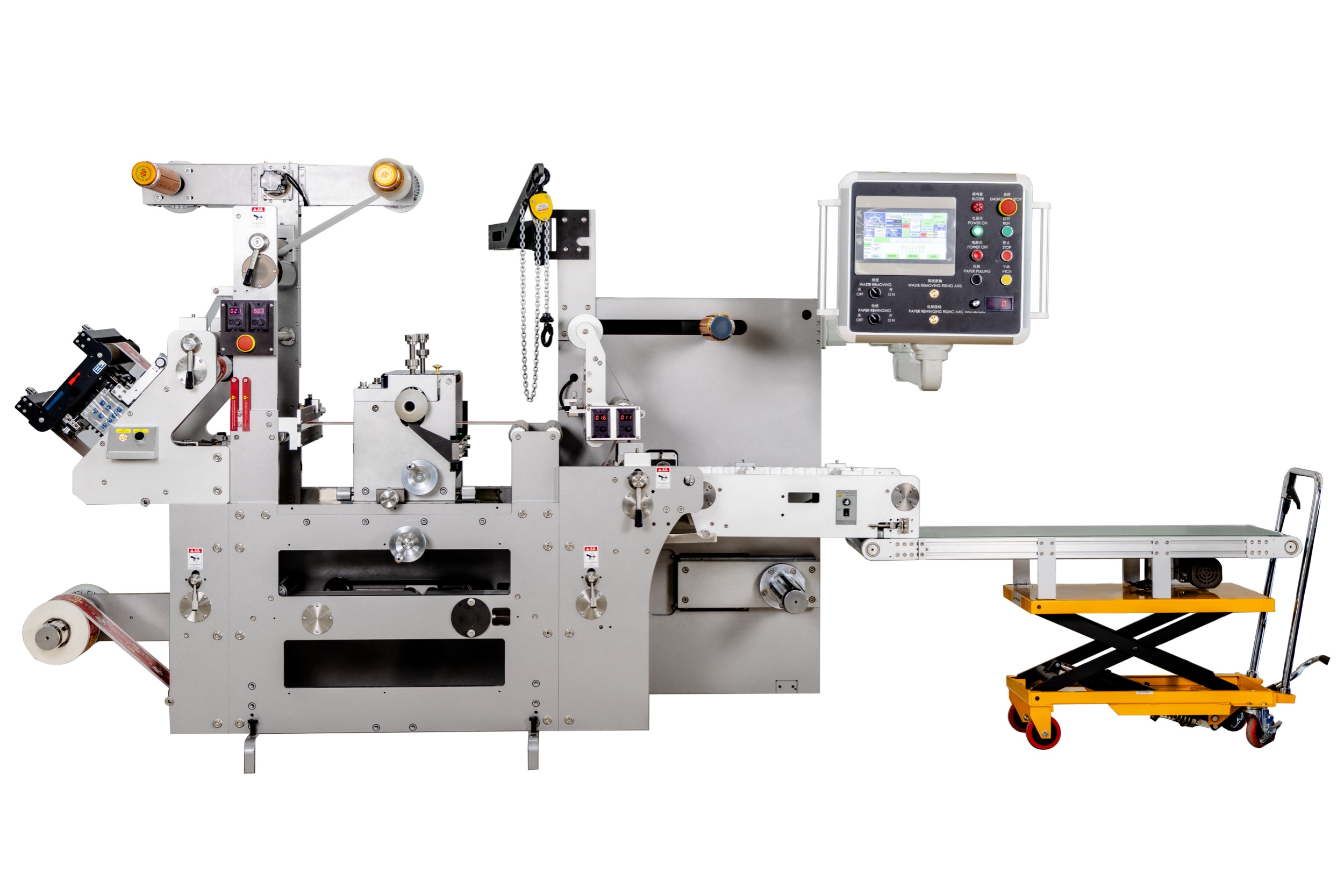
CS-220 series: flatbed die-cutting
The CS-220 family is the compact end of the range. The CS-220-5C stickers printing machine runs a 30–240 mm web width, a maximum printing area of 220 × 245 mm in full-rotary mode and 220 × 200 mm in intermittent mode, a maximum speed of 40 m/min and a machine weight of 3.6 t. Die-cutting on this line is flatbed, which suits short runs and jobs where a cutting die can be adjusted progressively on the platen rather than replaced as a cylinder.
CS-300/320 series: flatbed + rotary combination
The mid-range platform is a combination machine. The CS-300-6C rotation label machine runs a 30–300 mm web width with a maximum printing area of 280 × 326 mm (full-rotary) and 280 × 300 mm (intermittent), 40 m/min and 6.6 t. The CS-320-7C rotary label press runs a 30–320 mm web width with 320 × 326 mm and 320 × 300 mm respectively, at 40 m/min and 7 t. Both are classified as intermittent letterpress label printing machines that also carry full-rotary capability.
The support consequence is direct: a CS-300/320 buyer maintains two tooling sets and must train operators on switching between flatbed and rotary die-cutting modes. In exchange, the same press can move a job from a short trial run to a repeat order without changing machines.
CS-350/370/380 series: rotary combination die-cutting
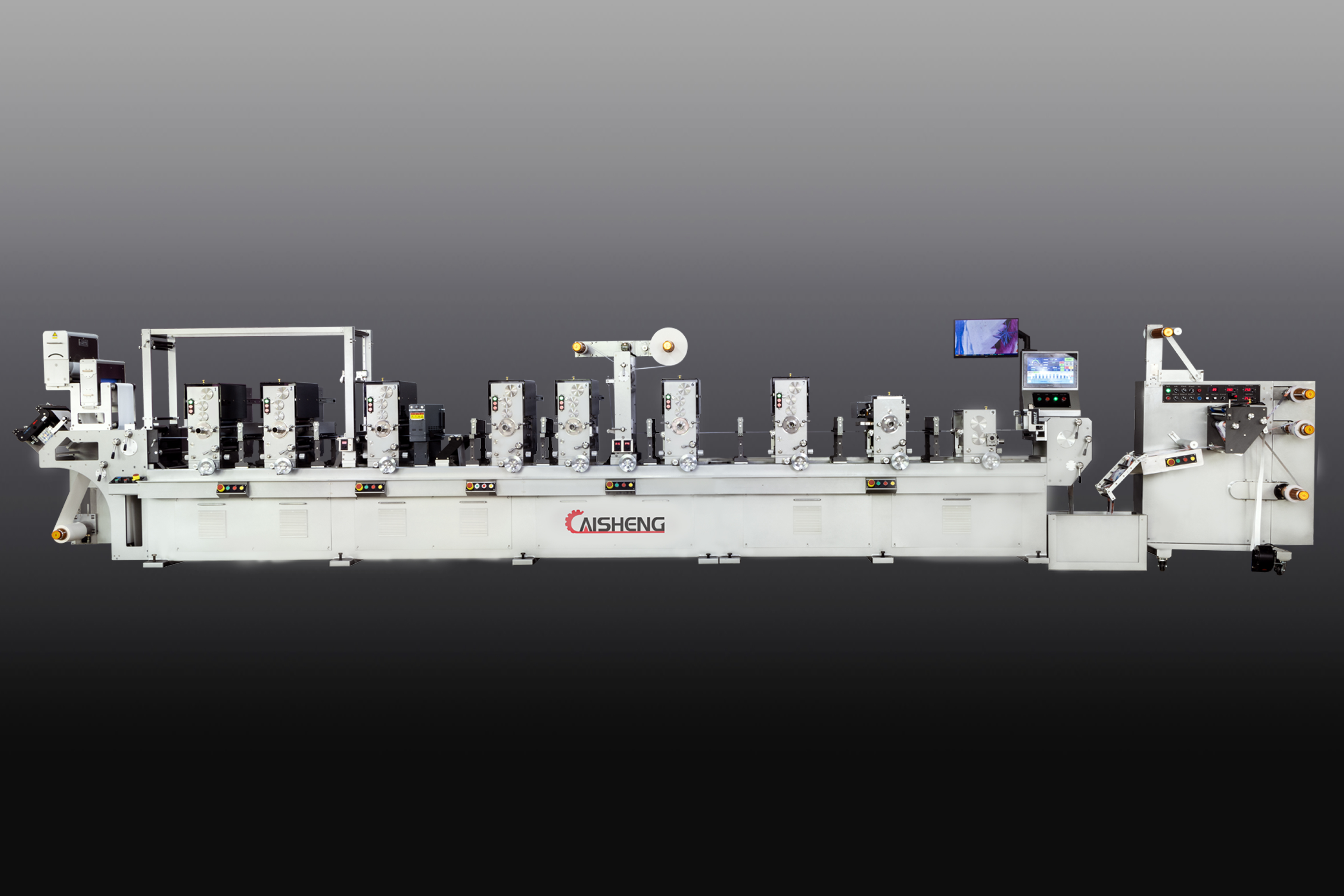
The high-speed family is built around rotary work. The CS-JQ350-7C semi-rotary and full-rotary label press machine runs a maximum printing area of 350 × 419 mm (full-rotary) and 350 × 380 mm (intermittent), with an intermittent speed of 60 m/min and a full-rotary speed of 158 m/min at 10.8 t. The CS-JQ350G-10C full-rotary label press offers the same 350 × 419 mm area with 60 m/min intermittent and 158 m/min full-rotary at 14 t. The CS-370F-8C full rotation flexo press covers 370 × 200 mm and 370 × 600 mm at up to 150 m/min, and the CS-350 high-speed die-cutting machine is listed at 60 m/min intermittent and 160 m/min full-rotary, with a maximum full-rotary area of 350 × 460 mm.
Because the rotary cylinder is itself the process, this family rewards long runs and stable repeat work. Its support profile is different: cylinder storage and handling, cylinder setting accuracy, and planned maintenance of the rotary station dominate the schedule.
Choosing the die-cutting method is not the only configuration decision
Die-cutting is one module inside a configurable press. CAISHENG offers ODM production with customization that includes colour stamping, glue-side printing frames, cold foil stamping, lamination, offline and online UV varnishing, flatbed die-cutting, rotary die-cutting, sheet cutting, slitting, corona treating, dust cleaning, static elimination, full-rotary screen printing, hot foil stamping and embossing. Because the module list is configurable, the supplier that builds the press can also supply replacement modules — a point worth writing into a long-term agreement rather than discovering later.
What "long-term support" actually includes after delivery
Support claims are only useful when they can be audited. For CAISHENG, four components are documented:
- Warranty and remote support. Remote support plus a one-year warranty covering major components.
- Remote diagnostics capability. The company holds invention patent ZL 2022 1 0411353.5, "A method, system, and medium for remote control of printing equipment based on big data", covering remote data collection, cloud-computing analysis, remote start-stop and parameter adjustment, and online fault diagnosis. In practice this means fault classification can begin before an engineer travels.
- Engineering depth behind the machine. 8 R&D engineers, a 6000 m² facility, about 65 employees, annual output of around 200 units and monthly capacity of 18 units.
- Module supply continuity. Because die-cutting, slitting, varnishing and screen-printing units are built as part of the configuration, the same manufacturer supplies replacement and additional modules.
A related utility model patent, ZL 2022 2 1332174.4, covers a double-sided printing machine structure with a paper forward-reverse switching conveying mechanism and registration correction assembly — useful background when a buyer's long-term plan includes double-sided work.
Compliance is a support obligation, not a one-off document exchange
European buyers should treat the CE file as part of the support package, because a certificate that expires mid-life becomes a resale and market-access problem. The CE certification M.2025.206.C124100 covers CS-300, CS-220 and CS-350, was issued by UDEM Uluslararası Belgelendirme Denetim Eğitim Merkezi San. ve Tic. A.Ş., references standards EN ISO 12100:2010 and EN 60204-1:2018, applies to the EU market, and runs from 8 November 2025 to 8 October 2030.
Step-by-step: building a long-term support plan in six steps
- Lock the die-cutting platform first. Decide between CS-220 (flatbed), CS-300/320 (flatbed + rotary combination) and CS-350/370/380 (rotary combination) before discussing anything else. Every later decision — tooling, spares, training — follows from this.
- Match the platform to the job mix. Short runs with frequent artwork changes suit the flatbed end; long repeat runs with multi-shift output suit the rotary combination family; mixed portfolios are the reason the CS-300/320 combination platform exists.
- Confirm the compliance scope in writing. Check that the ordered model family is listed on the CE certificate and that the expiry date sits beyond your planned resale or market-entry horizon.
- Build the spare-parts and tooling list per platform. Flatbed dies and rotary cylinders are separate inventories. Plan both if you buy a CS-300/320, and plan cylinder handling and storage if you buy a CS-350/370/380.
- Schedule installation, commissioning and operator training. Installation and debugging is a defined stage in delivery; use it to train operators on the specific cutting platform they will run, not on a generic press.
- Agree the escalation and remote-diagnosis path. Define who is contacted, what data the machine can report, and how remote parameter adjustment and fault diagnosis are used before a site visit is approved.
What long-term support looks like in practice
Case one — a trademark design and printing company in Taiwan. The customer operates one CS-320 unit, in service for two years, for high-quality label printing. Reported results centre on printing precision, stable production performance and flexible process expansion. The support lesson for a new buyer is that a combination platform keeps paying back because the process set can be extended later without replacing the press.
Case two — RRD (R.R. Donnelley & Sons), United States. One CS-300 unit has been in service for three years as label printing production equipment. Reported results centre on stable registration accuracy, print quality and reliable equipment performance, with the relationship described as long-term and stable. The support lesson here is that the CS-300 platform has been run in continuous commercial production, not only in trial conditions.
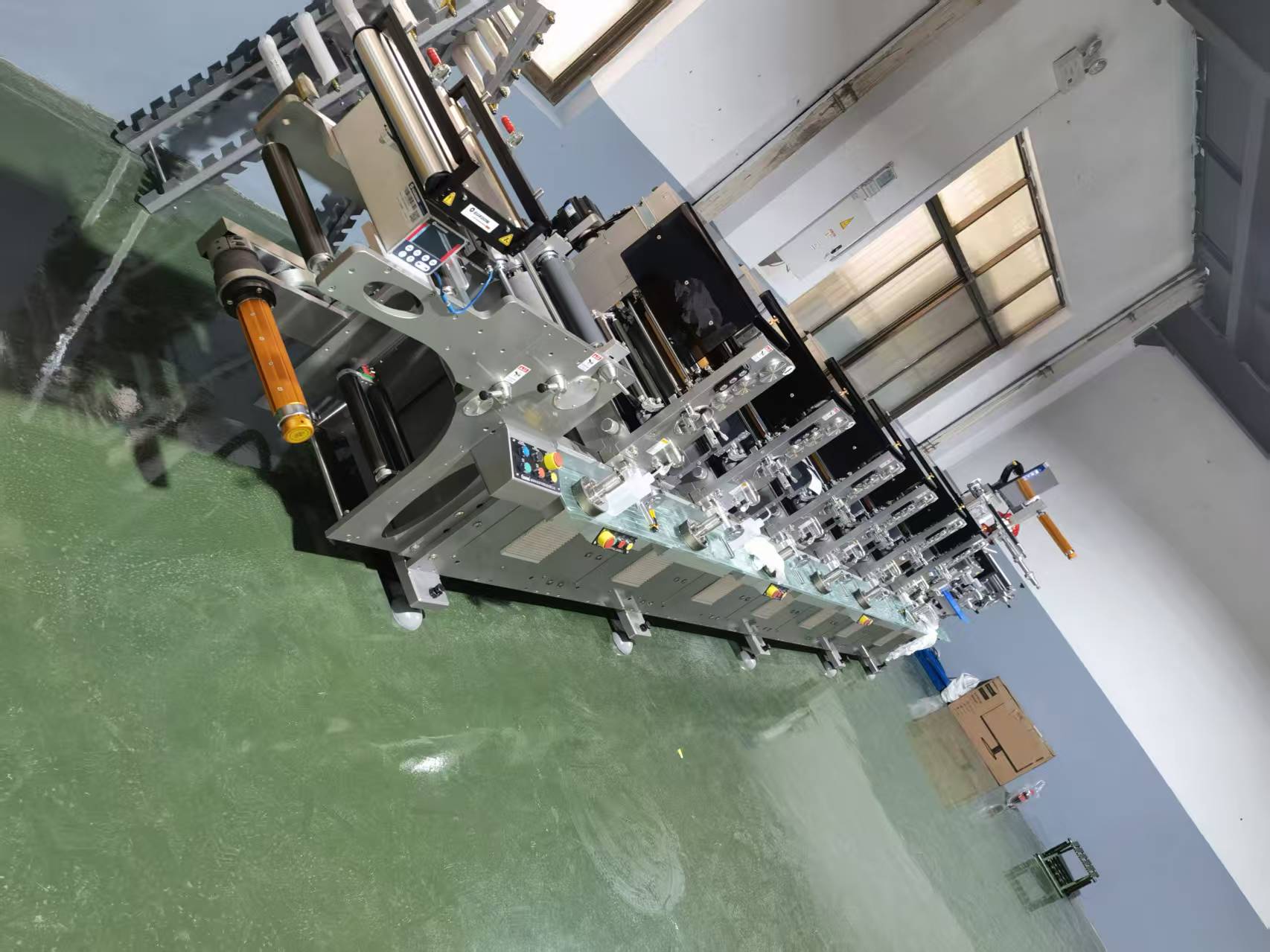
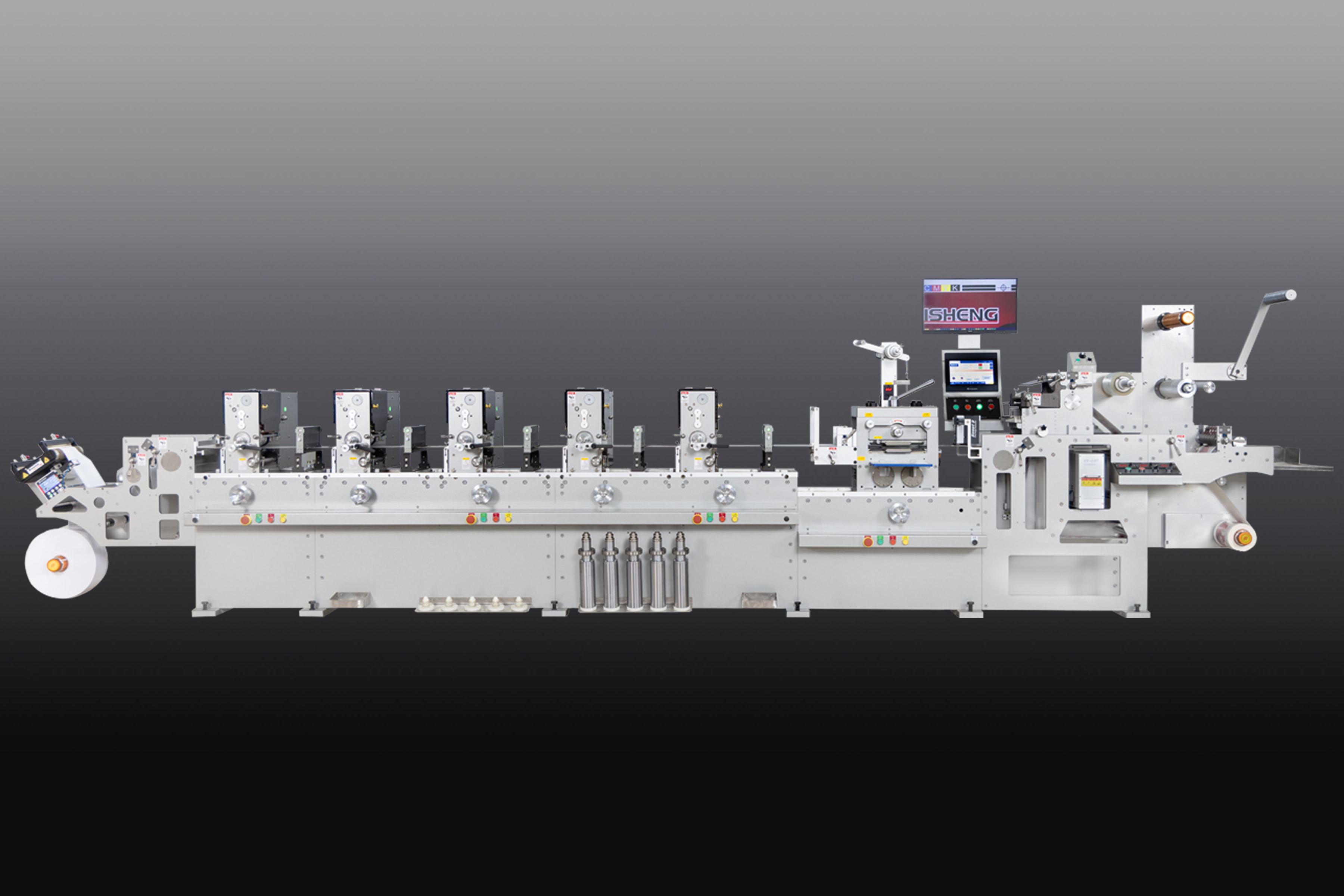
Die-cutting configuration by model family
| Model family | Die-cutting rule | Representative models and key figures | Typical job mix | Long-term support focus |
|---|---|---|---|---|
| CS-220 | Flatbed | CS-220-5C: web width 30–240 mm; max printing area 220 × 245 mm (full-rotary) / 220 × 200 mm (intermittent); 40 m/min; 3.6 t | Short runs, smaller label formats, private-label work | Flatbed die inventory; platen change-over training |
| CS-300/320 | Flatbed + rotary combination | CS-300-6C: 30–300 mm; 280 × 326 mm / 280 × 300 mm; 40 m/min; 6.6 t. CS-320-7C: 30–320 mm; 320 × 326 mm / 320 × 300 mm; 40 m/min; 7 t | Daily-use goods, chemicals, wristbands, wine, food, cosmetics, pharmaceutical labels | Two tooling sets; operator competence on both flatbed and rotary modes |
| CS-350/370/380 | Rotary combination | CS-JQ350-7C: 350 × 419 mm / 350 × 380 mm; 60 m/min intermittent; 158 m/min full-rotary; 10.8 t. CS-JQ350G-10C: same area, 158 m/min full-rotary, 14 t. CS-370F-8C: 370 × 200 mm and 370 × 600 mm; up to 150 m/min. CS-350 high-speed die-cutting machine: 60 m/min intermittent / 160 m/min full-rotary | Long runs, multi-shift production, high-volume repeat work | Cylinder storage and handling; setting accuracy; planned rotary station maintenance |
Frequently asked questions
Do the CS-220, CS-300/320 and CS-350/370/380 label printing machines carry CE certification?
CE certification M.2025.206.C124100 covers the CS-300, CS-220 and CS-350 models, applies to the EU market, references EN ISO 12100:2010 and EN 60204-1:2018, and was issued by UDEM Uluslararası Belgelendirme Denetim Eğitim Merkezi San. ve Tic. A.Ş. It is valid from 8 November 2025 to 8 October 2030. Because the certificate names specific model families, buyers should confirm in writing that their exact configuration is inside the certified scope.
Which die-cutting configuration does each model family ship with?
The rule is fixed by family. CS-220 uses flatbed die-cutting. CS-300/320 uses a flatbed + rotary combination. CS-350/370/380 uses rotary combination die-cutting. Additional modules such as rotary die-cutting, flatbed die-cutting, sheet cutting, slitting, corona treating and full-rotary screen printing are available as customization options, but the family-level die-cutting rule does not change.
What are the minimum order quantity, lead time and production capacity?
CAISHENG operates with a minimum order quantity of 1 unit and a lead time of 45–60 days. Monthly capacity is 18 units and annual output is around 200 units, with 100% testing before shipment. ODM production is supported, and customization covers colour stamping, glue-side printing frames, cold foil stamping, lamination, UV varnishing, die-cutting, sheet cutting, slitting, corona treating, dust cleaning, static elimination, screen printing, hot foil stamping and embossing.
Can we validate a configuration before committing to a full order?
Yes. ODM cooperation allows size, process and function customization, and every machine is 100% tested before delivery. Buyers evaluating a die-cutting platform should validate the platform — flatbed, flatbed + rotary combination, or rotary combination — against their actual job mix before finalizing modules, because the platform determines tooling inventory and operator training requirements for the whole service life of the press.
How are spare parts, maintenance and operator training handled over the long term?
Support includes remote assistance and a one-year warranty for major components. Remote diagnosis is backed by invention patent ZL 2022 1 0411353.5, which covers remote data collection, cloud-computing analysis, remote start-stop and parameter adjustment, and online fault diagnosis. Installation and debugging form a defined delivery stage and are the natural point to train operators on their specific cutting platform. For a support plan tailored to your model family, contact the CAISHENG team at kanghong-1108@qq.com or +86 131-8628-3944.
Conclusion: plan the support around the platform, not the brochure
Long-term satisfaction with a label printing machine depends less on the specification sheet than on whether the support plan matches the die-cutting platform actually installed. Keep the three rules in front of you at every stage of evaluation: CS-220 is flatbed, CS-300/320 is flatbed + rotary combination, and CS-350/370/380 is rotary combination. Tooling inventory, spare-parts stocking, operator training and maintenance intervals all follow from that single decision.
Shenzhen Caisheng Printing Machinery Co., Ltd. builds intermittent and high-speed full-rotary letterpress printing machines, flexographic printing machines, screen printing machines and customized multi-functional label finishing solutions, and has supplied presses into Southeast Asia, Europe, the Middle East and the United States since 2011.
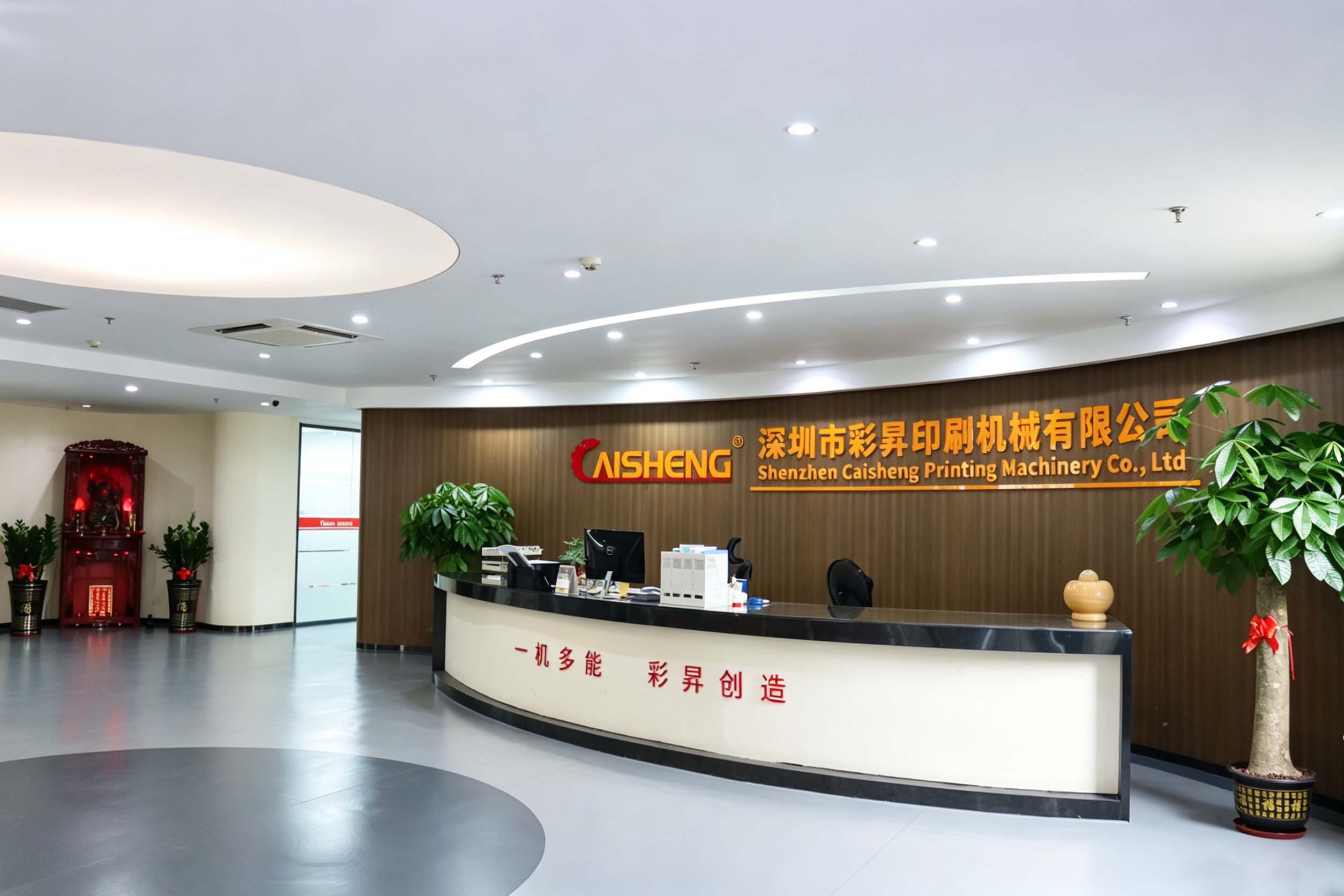
Next step
Download the CAISHENG product catalogue for full model and module details: CAISHENG catalogue (PDF).
For configuration questions, support terms or a quotation request, contact:
Email: kanghong-1108@qq.com
Tel: +86 131-8628-3944
Website: www.caishengmachinery.com
Address: No.39, Shuitian Road, Tongle Community, Longgang District, Shenzhen, China
Have Questions or Need More Details?
Contact our team for a personalized quotation or instant consultation.
Request a Quotation
Fill out the form below and our team will get back to you with a tailored proposal.
WhatsApp Direct Chat
Prefer to chat in real-time? Message us on WhatsApp for instant assistance & quick answers.
- Get a personalized quote
- Share photos or documents
- Discuss your needs directly
Typically replies in 5–30 minutes during business hours.