Semi-Rotary vs. Full-Rotary Label Press Mechanics: Matching Print Mode to Workflow
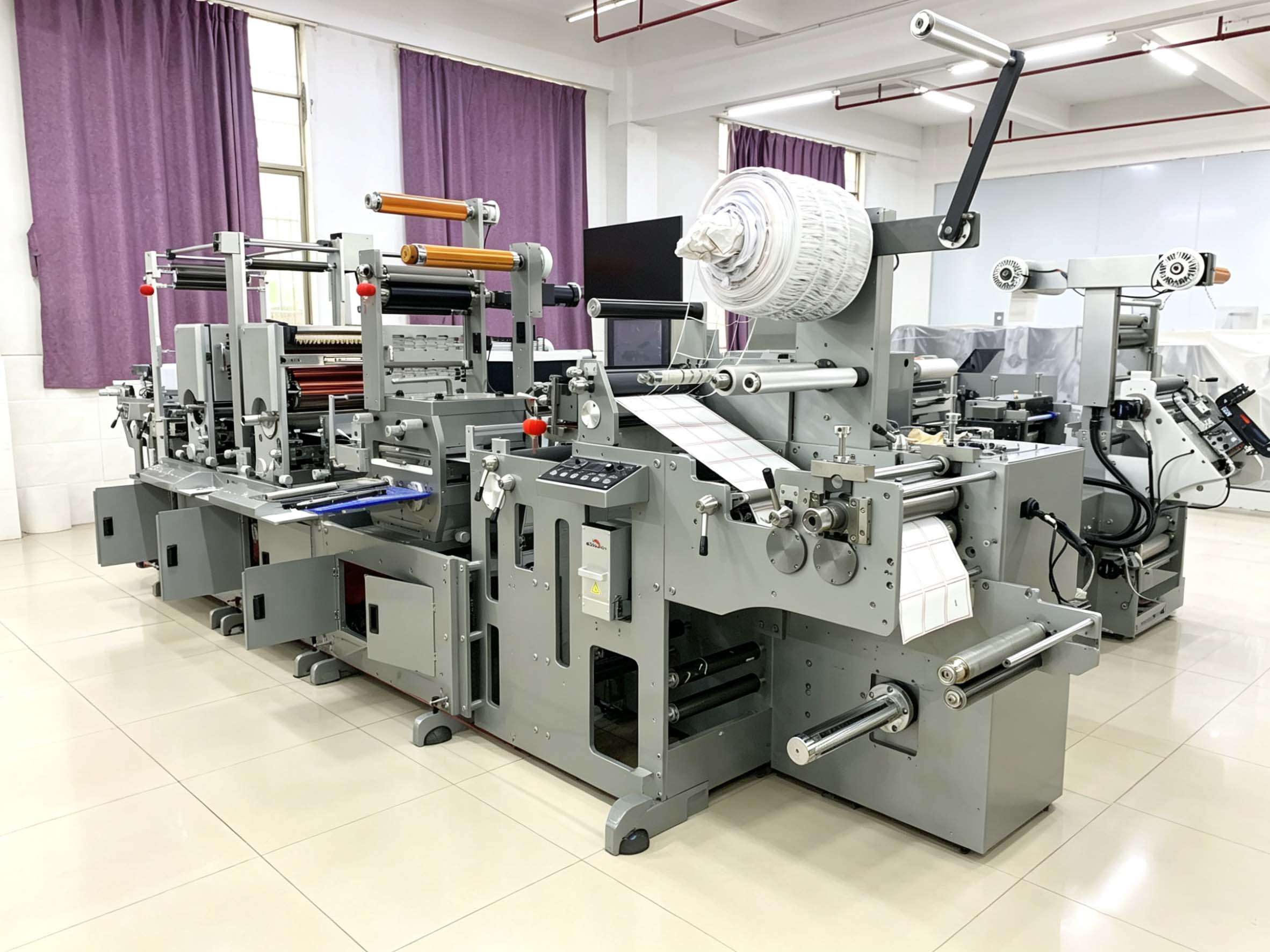
A letterpress label press with a flatbed die-cutting unit — the finishing route most often paired with intermittent printing. Image: CAISHENG.
Semi-rotary and full-rotary label presses do the same work with two different motions, and that mechanical difference decides almost everything a converter feels afterwards: achievable output, tooling cost per repeat length, changeover time, and how many different jobs one press can carry. In intermittent operation — usually described as semi-rotary — every cycle is divided into a print phase and an advance phase: the web is held still while the impression is made, then advances to the next label position. In full-rotary operation the web never stops: the printing stations and the web run continuously in register, and die-cutting is performed by rotary tools matched to the repeat length.
For buyers evaluating a press at the decision stage, the useful question is not which motion is technically superior. It is which motion matches the order book — and whether one platform can cover both. CAISHENG's CS-JQ350G-6C is built for hybrid intermittent and full-rotary operation, so a single press can be assigned to short multi-SKU work and to long stable runs in different modes.
Quick answer: intermittent (semi-rotary) mode fits short and medium runs with frequent changes of label length; full-rotary mode fits long runs with stable repeats. When both patterns exist in the same order book, a hybrid platform such as the CS-JQ350G-6C changes the motion profile instead of forcing the purchase of two separate presses.
Problem definition: the print-mode mismatch behind most "wrong press" decisions
A press that looks fast on a specification sheet can still be the wrong press on the production floor. Quoted speed answers one question — how many impressions the machine can make in a given time — but the binding constraint in label production is usually the relationship between repeat lengths, run lengths and tooling. That relationship, not the speed figure, decides cost per label across a year of production.
Full-rotary printing ties the press to tooling geometry. Because the printing cylinders and the rotary die run continuously with the web, each different repeat length requires a cylinder and die set matched to it. Intermittent printing works differently: the repeat is set by the printing area and the web advance rather than by a fixed cylinder circumference, so one press can cover a wide range of label lengths without a dedicated rotary cylinder for every repeat. Flat tooling is generally cheaper per repeat than a matched rotary set, and job changes are typically faster.
Two failure patterns follow from that mechanics, and neither is a quality problem:
- Flexibility bought away by speed. A converter with a short-run, multi-SKU mix — packaging variants, promotional labels, regional artwork — chose a purely full-rotary platform, then accumulates rotary cylinders and dies for every repeat while paying setup time on every change.
- Volume promised by a start-stop cycle. A converter with a long, stable contract chose an intermittent-only press, then cannot reach the sustained output the schedule requires, because the machine spends part of every cycle accelerating and decelerating the web instead of printing.
The decision rule that replaces "which machine is faster" is therefore: plot the repeat-length distribution and the run-length profile of the work you expect, then choose the motion that matches it. Where the two profiles coexist, a hybrid machine turns the same question into a routing decision instead of a purchase decision.
Industry background: where the label market is pushing press selection
The label equipment market continues to expand, which keeps both run profiles in play. The global label printing machines market was valued at USD 8.58 billion in 2025 and is projected to reach USD 14.36 billion by 2034, according to The Insight Partners. Asia-Pacific accounted for a 41.8% revenue share of that market in 2025, based on Data Bridge Market Research, and the narrow-web segment specifically is projected to grow from USD 1.43 billion in 2024 to USD 3.21 billion by 2035, according to Spherical Insights.
Technology shares matter as well. Flexographic printing remains the most widely used process for labels, with an output value of approximately USD 13.3 billion in 2024, based on Smithers data, and the flexographic printing machine market was estimated at USD 17.57 billion in 2024 with growth of 9.7% CAGR expected through 2030, according to Grand View Research. In other words, the market supports several printing technologies side by side, and the choice between them is made per production model rather than globally. Large international press builders — including Bobst (Switzerland), Mark Andy (USA), Gallus/Heidelberg (Germany) and Nilpeter (Denmark), as listed by Future Market Insights — sit alongside regional specialists.
Shenzhen Caisheng Printing Machinery Co., Ltd. (CAISHENG) is one of those specialists: the company was founded in 2011 and builds intermittent and high-speed full-rotary letterpress printing machines, flexographic printing machines and screen printing machines, plus die-cutting systems and high-speed varnishing machines. It operates a 6,000 m² factory with 65 employees, 8 R&D engineers and an annual output of around 200 units, exporting about 50% of production to Southeast Asia, Europe, the Middle East and the United States. The company positions its equipment around a "One Machine, Multiple Functions" philosophy, which is directly relevant to the mode question this guide addresses. More on the manufacturer: caishengmachinery.com.
How intermittent, full-rotary and hybrid operation actually work
The print cycle in intermittent (semi-rotary) mode
Intermittent printing splits each machine cycle into two phases. During the print phase the web is stationary and the impression is made; during the advance phase the web moves forward to the next label position. Because the repeat is set by the printing area and the web advance rather than by a fixed cylinder circumference, the same press can typically run a wide range of label lengths without a dedicated rotary cylinder for each one.
The practical gains are flexibility and tooling economy: job changes are faster, flat tooling generally costs less per repeat, and waste on short runs stays manageable. The trade-off is motion. A start-stop cycle puts the web repeatedly through acceleration and deceleration, which limits sustained output and places continuous demands on tension control — which is why intermittent mode is normally selected for short and medium runs rather than continuous high-volume contracts.
The print cycle in full-rotary mode
Full-rotary presses remove the stop from the cycle. The web moves at constant speed, the printing stations rotate in register with it, and die-cutting is performed by a rotary tool whose circumference matches the repeat length. Tension behaviour is smoother and sustained output is higher, which is why long, stable jobs are usually routed to rotary presses.
The constraint moves to tooling and setup. Every new repeat length needs its own matched cylinder and rotary die, so tooling inventory and changeover time become the cost drivers instead of the printing cycle itself. Where a converter runs many short jobs across many label lengths, that structure is often the reason a rotary press underserves the mix — not the print quality.
Hybrid operation: one platform, two motions
The CS-JQ350G-6C is a letterpress platform built for hybrid intermittent and full-rotary operation. Mechanically, that means the same printing stations and the same web path can run the start-stop cycle of semi-rotary mode or switch to continuous rotation for full-rotary output. The difference the buyer experiences is in job routing: short and medium runs with frequent length changes go through intermittent mode, while long stable repeats are released to full-rotary mode on the same machine. Tooling planning follows the same split — rotary cylinders and dies for repeated long runs, flat tooling for flexible short-run work.
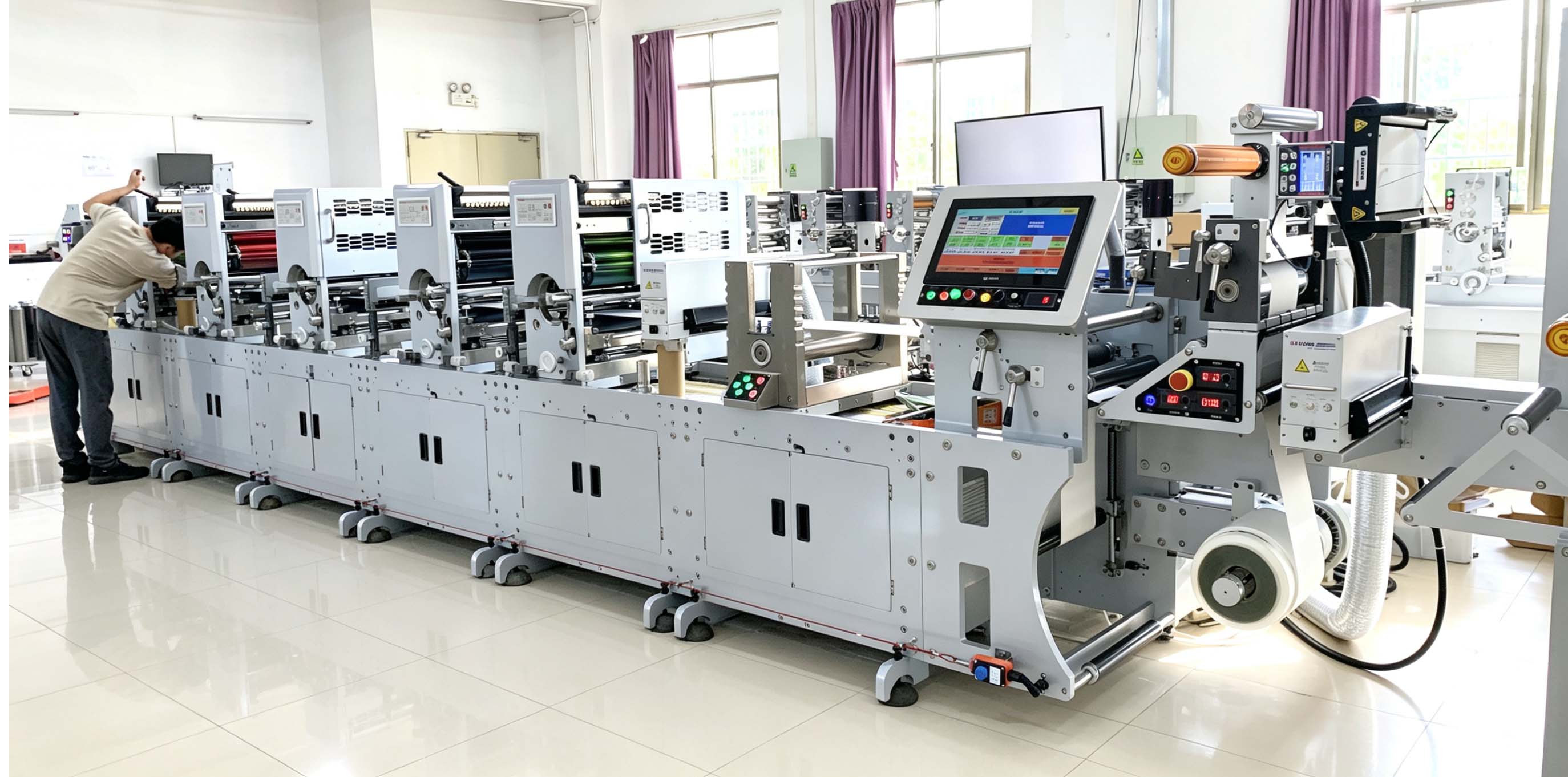
CS-JQ350G hybrid intermittent and full-rotary label press during installation and debugging. Image: CAISHENG.
CAISHENG's model range also includes purely intermittent configurations, such as the CS-220-4C, and flexographic platforms, such as the CS-J380F-7C, which print with flexible plates rather than letterpress plates. Plate type and ink transfer sit on top of the web-motion decision: it is possible to pair flexibility of motion with different printing methods, so the two questions should be settled separately.
What stays constant in every mode: registration discipline
Registration behaviour does not change with the mode — it is the constraint that determines whether either mode delivers sellable labels. CAISHENG controls registration through a chain of four elements: precision components machined in its own CNC workshop, which keeps tolerances controlled at the source; an imported Japanese servo system for smooth transmission and accurate positioning at high speed; a patented tapered bearing sleeve design combined with a photographic inspection system for real-time fine-tuning; and a self-developed LED UV cold-light source drying system that prevents heat deformation of materials such as films.
The structural base matters for the same reason. A natural metal stress-relieving process and a patented triangular guide rail design are used to keep the base from deforming or shifting, which reduces recalibration and maintenance work over the machine's life. Ink delivery is controlled in two stages — manual coarse adjustment plus computer automatic fine adjustment — giving operators precise control over ink volume. CAISHENG states that this closed-loop chain delivers registration accuracy 0.05 mm tighter than competitor machines; on its CS-320-6C letterpress platform, the documented registration deviation is ±0.05–0.1 mm.
Finishing: the second half of the mode decision
Printing mode and finishing route are usually decided together. Intermittent presses are commonly paired with flatbed die-cutting, because a flat die set is cheaper per repeat than a matched rotary cylinder — which keeps multi-SKU production economical. Full-rotary presses pair with rotary die-cutting, slitting and in-line finishing so the web can keep moving. CAISHENG builds configurations that combine letterpress printing with glue-side printing, a multi-functional frame, rotary die-cutting, flatbed die-cutting and slitting in one line, which means both finishing routes can be integrated with the same printing platform.
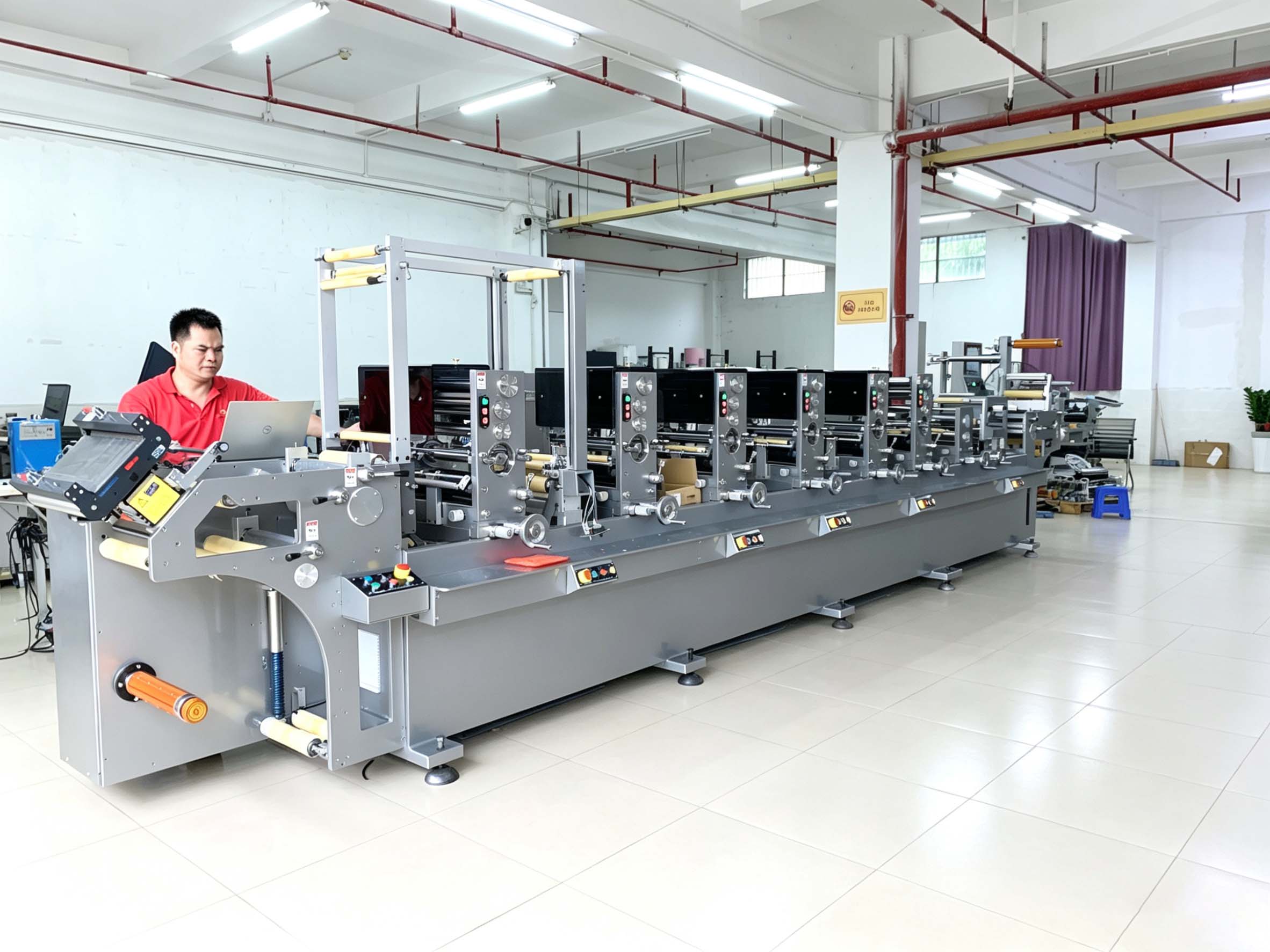
A CAISHENG configuration combining glue-side printing, rotary die-cutting and flatbed die-cutting on one letterpress line. Image: CAISHENG.
Choosing your print mode: a six-step decision sequence
The sequence below converts the mechanics above into a purchase decision. It is written for converters and label printers preparing a capital request, and it assumes no live performance data at the start.
- Step 1 — Audit the job mix. List the SKUs you expect to run, the average run length of each, and the number of distinct repeat lengths per month. This list, not the total monthly volume, determines which motion is dominant.
- Step 2 — Count the tooling multiplier. Multiply distinct repeat lengths by the cost of a matched rotary cylinder and die set. If the number is large relative to the run volume behind each repeat, intermittent mode is the cheaper motion; if each repeat runs for a long time, the multiplier is amortised and rotary output wins.
- Step 3 — Set the throughput floor. Define the minimum output your delivery commitments require, then compare it with what a start-stop cycle can sustain on your longest job, not on your average job.
- Step 4 — Choose the finishing route. Decide whether labels are finished with flatbed die-cutting, rotary die-cutting, slitting, glue-side printing or a combination. On CAISHENG platforms, rotary die-cutting, flatbed die-cutting and slitting can be integrated on the same line.
- Step 5 — Check substrate and drying. Film, foil and clear substrates are sensitive to heat, so the drying method belongs in the evaluation. CAISHENG's self-developed LED UV cold-light source drying system is designed to prevent heat deformation of film materials.
- Step 6 — Validate on the machine, not on the brochure. Before delivery, CAISHENG's machine-adjustment engineers test the machine's performance until it produces finished products that meet specification, and customers are invited to the factory for machine acceptance inspection. Use that acceptance run to check registration on your own artwork and repeat lengths in both available modes.
Use cases: matching mode to real label portfolios
Different label categories pull the same press mechanics in different directions. The application areas below are the ones CAISHENG equipment is engineered to serve, mapped to the mode logic described in this guide.
- Daily consumer goods and food packaging. Long, stable repeats with vibrant graphics and durable adhesion dominate here, which suits full-rotary routing on a hybrid platform.
- Wine and premium beverages. Exquisite print quality and precise die-cutting matter, and the portfolio usually mixes shorter decorative runs with repeat orders — a case where intermittent mode handles variety while rotary mode handles repeat volume.
- Cosmetics and personal care. Short runs, frequent artwork changes, clear films and metallic foils make this the classic intermittent workload, and it is where cold-light UV drying is most relevant.
- Pharmaceuticals and healthcare. Ultra-high precision is required for small text, barcodes and QR codes, so registration behaviour — documented at ±0.05–0.1 mm on the CS-320-6C letterpress platform — should be validated on the actual label before a mode is locked in.
- Chemical and industrial products. Robust, chemical-resistant labels that stay legible in harsh environments; the priority is material handling and ink performance rather than run-length economics.
- Converters with mixed portfolios. When short-run and long-run work coexist, hybrid operation on the CS-JQ350G-6C lets one press carry both profiles instead of forcing a compromise or a second machine.
Comparison: print-mode mechanics and the CAISHENG platforms built on them
| Decision dimension | Intermittent (semi-rotary) mode | Full-rotary mode | Hybrid operation (CS-JQ350G-6C) |
|---|---|---|---|
| Web motion | Two-phase cycle: impression while the web is stationary, then advance | Continuous, constant-speed web | Switches between start-stop and continuous motion |
| Repeat length and tooling | Repeat set by printing area and web advance, not by a fixed cylinder circumference | Cylinders and rotary dies matched to each repeat length | Handles both tooling logics — flat tooling for short runs, rotary tools for long repeats |
| Typical run profile | Short and medium runs, many SKUs | Long runs with stable repeats | Mixed portfolios on one press |
| Changeover behaviour | Faster job change, less tooling per repeat | Longer setup per repeat change, more time at full output | Job routing decided per order |
| Finishing pairing | Commonly paired with flatbed die-cutting | Rotary die-cutting, slitting and in-line finishing | Rotary and flatbed die-cutting can both be integrated |
| Main constraint | Start-stop cycling limits sustained output | Tooling inventory and setup time per repeat | Requires disciplined scheduling so each mode is used where it pays |
Table 1: how print mode changes the economics of a label workflow.
| CAISHENG platform | Print mode | Typical fit based on print mode |
|---|---|---|
| CS-JQ350G-6C | Intermittent + full-rotary (hybrid) | Order books that mix short multi-SKU work with long stable repeats |
| CS-220-4C | Intermittent (semi-rotary) only | Production where flexibility and low tooling cost per repeat dominate |
| CS-J380F-7C | Flexographic platform | Production that calls for flexible-plate printing rather than letterpress plates |
Table 2: mode positioning of the platforms referenced in this guide.
FAQ: semi-rotary and full-rotary label press selection
Do semi-rotary and full-rotary presses fall under different compliance requirements?
No. Safety requirements for graphic technology equipment, which includes label presses, are governed by the international standard ISO 12643-2:2023. Machinery sold in the EU must comply with the Machinery Directive 2006/42/EC and carry CE marking, with safety signs following EN ISO 7010. Print mode does not change that baseline. What it does change is which mechanical points deserve attention during acceptance testing — for example the die-cutting station, the web path and the moving elements that behave differently in a start-stop cycle than in continuous rotation.
Can one label press really run both intermittent and full-rotary modes?
Yes. CAISHENG's CS-JQ350G-6C is designed for hybrid intermittent and full-rotary operation: the same printing stations and web path can run a start-stop cycle for short and medium runs or continuous rotation for long repeat work. Registration is maintained in both modes through the platform's control architecture — precision components machined in CAISHENG's own CNC workshop, an imported Japanese servo system, a patented tapered bearing sleeve design with a photographic inspection system for real-time fine-tuning, and a self-developed LED UV cold-light source drying system that prevents heat deformation of film materials. Running both modes on one platform is what allows a converter to cover two run profiles without buying two presses.
Which of the two modes costs more to own?
The difference sits in tooling and run economics rather than in the printing mechanism itself. Full-rotary printing needs a cylinder and rotary die matched to every repeat length, so tooling investment is higher but is amortised over long runs; intermittent printing uses flat tooling that is generally cheaper per repeat, but the start-stop cycle limits sustained output. Platform economics also matter: CAISHENG documents that vertical integration with its own CNC machining plants keeps total equipment cost approximately 10% below comparable alternatives on its CS-320-6C letterpress platform, and that the same platform delivers at least 30% better energy efficiency than alternatives through a premium Japanese servo system and proprietary LED UV drying technology. The correct comparison is total cost per 1,000 labels across your own repeat-length mix, not machine price alone.
How can we validate the two modes before we commit to a purchase?
Validation happens on the machine, not on the specification sheet. Before delivery, CAISHENG's experienced machine-adjustment engineers test the various performance aspects of the machine until it produces finished products that meet specification, and customers are invited to the factory for machine acceptance inspection. Bring your own artwork, substrates and repeat-length list to that run and check registration, die-cutting and drying in the mode each job will actually use. To arrange a sample run, a quotation or the full product documentation, contact CAISHENG at kanghong-1108@qq.com or WhatsApp +86 133-1087-8219 — or download the product brochure from the link below.
Conclusion: match the motion to the order book
Semi-rotary and full-rotary label presses are not competing quality classes; they are two motions that suit two different production profiles. Intermittent operation buys flexibility and lower tooling cost per repeat at the price of sustained output. Full-rotary operation buys output and tension stability at the price of matched tooling for every repeat. Where both profiles exist in one order book, hybrid operation on the CS-JQ350G-6C removes the either/or decision and turns it into job routing — which is usually the cheaper answer than buying either single-mode press and accepting its limitation.
Before signing a capital request, three documents are worth preparing: your repeat-length distribution, your run-length profile, and your throughput floor. With those three in hand, the mode decision stops being a preference and becomes a calculation.
Next step: CAISHENG can review your repeat-length list and run profile against the CS-JQ350G-6C hybrid platform and arrange a machine acceptance test at its Shenzhen factory.
Brochure (PDF): Download the CAISHENG label printing machine brochure
Website: www.caishengmachinery.com
Email: kanghong-1108@qq.com | Tel: +8613186283944 | WhatsApp: +86 133-1087-8219
Address: No.39, Shuitian Road, Tongle Community, Longgang District, Shenzhen, China
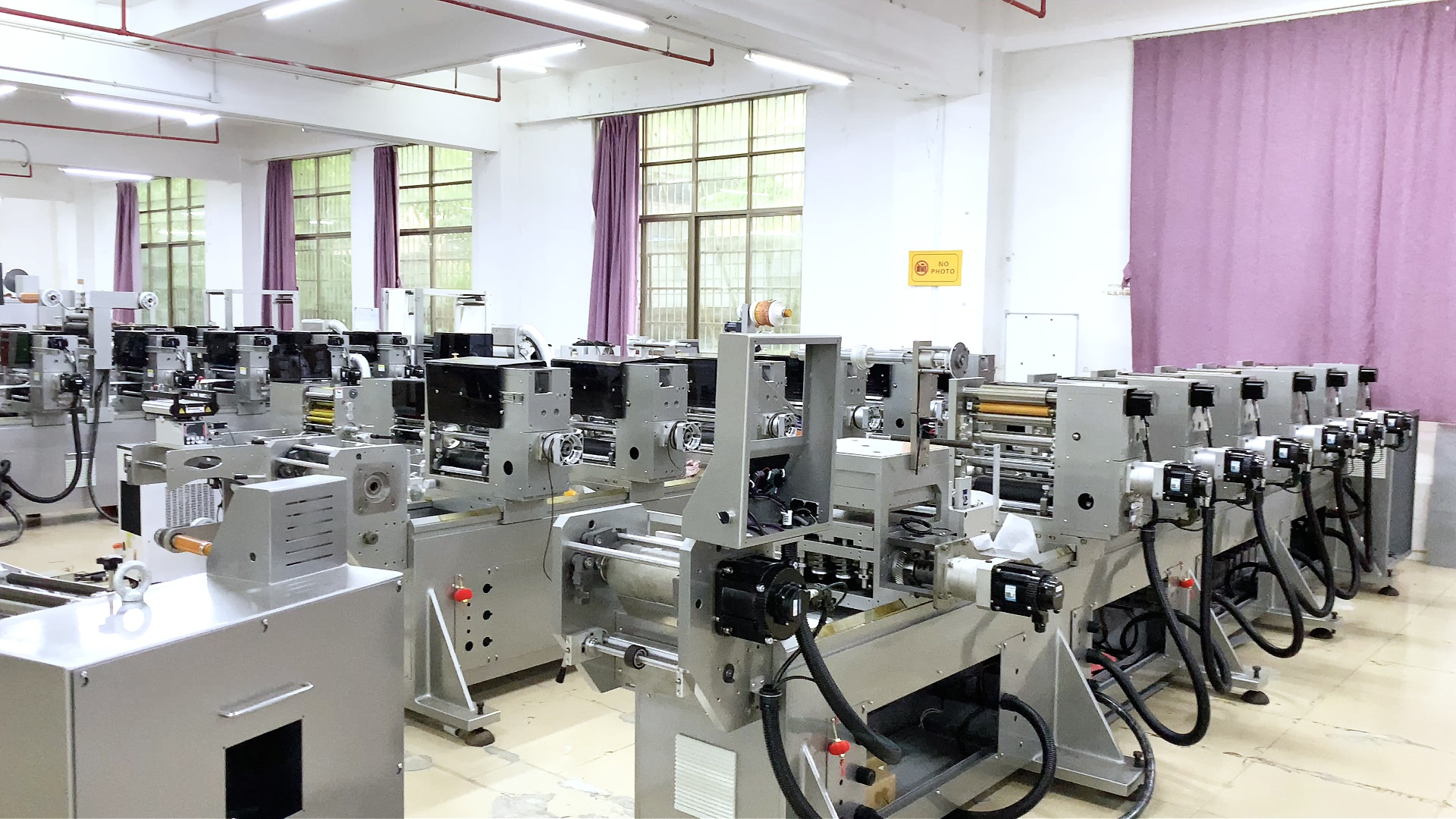
Label printing machines in CAISHENG's Shenzhen factory, where machines are tested before delivery and acceptance inspection is carried out with customers. Image: CAISHENG.
Have Questions or Need More Details?
Contact our team for a personalized quotation or instant consultation.
Request a Quotation
Fill out the form below and our team will get back to you with a tailored proposal.
WhatsApp Direct Chat
Prefer to chat in real-time? Message us on WhatsApp for instant assistance & quick answers.
- Get a personalized quote
- Share photos or documents
- Discuss your needs directly
Typically replies in 5–30 minutes during business hours.