
Application Guide: Rebar Couplers for Airports, Bridges & High-Railway Stations
Application Guide: Rebar Couplers for Airports, Bridges & High-Railway Stations
Quick answer: on airports, sea-crossing bridges and high-railway stations, the rebar coupler decision is driven by three inputs — the bar diameter range on the drawings, the mechanical splice method the project standard permits, and the tooling that can keep pace with the pour sequence. Cangzhou Bartech Construction Material Co., Ltd. (Bartech) supplies four coupler families for 16–40 mm rebar — rolling (parallel thread), upset forged, cold pressing (cold extrusion) and ONE-TOUCH — in carbon steel 45#, alloy steel 40CR and carbon steel Q355B, together with the threading, upsetting, pressing and fastening machines each family depends on.
Bartech is a China-based supplier of rebar couplers and rebar processing machines, established in 2008, with 100% of output exported to markets that include Vietnam, Malaysia, Kuwait, Qatar, the UAE, Saudi Arabia and Mexico. This guide is written for the stage before a purchase order: what each coupler type is, what it is made of, which machine it needs, and how to match it to an airport, a large bridge or a high-railway station.
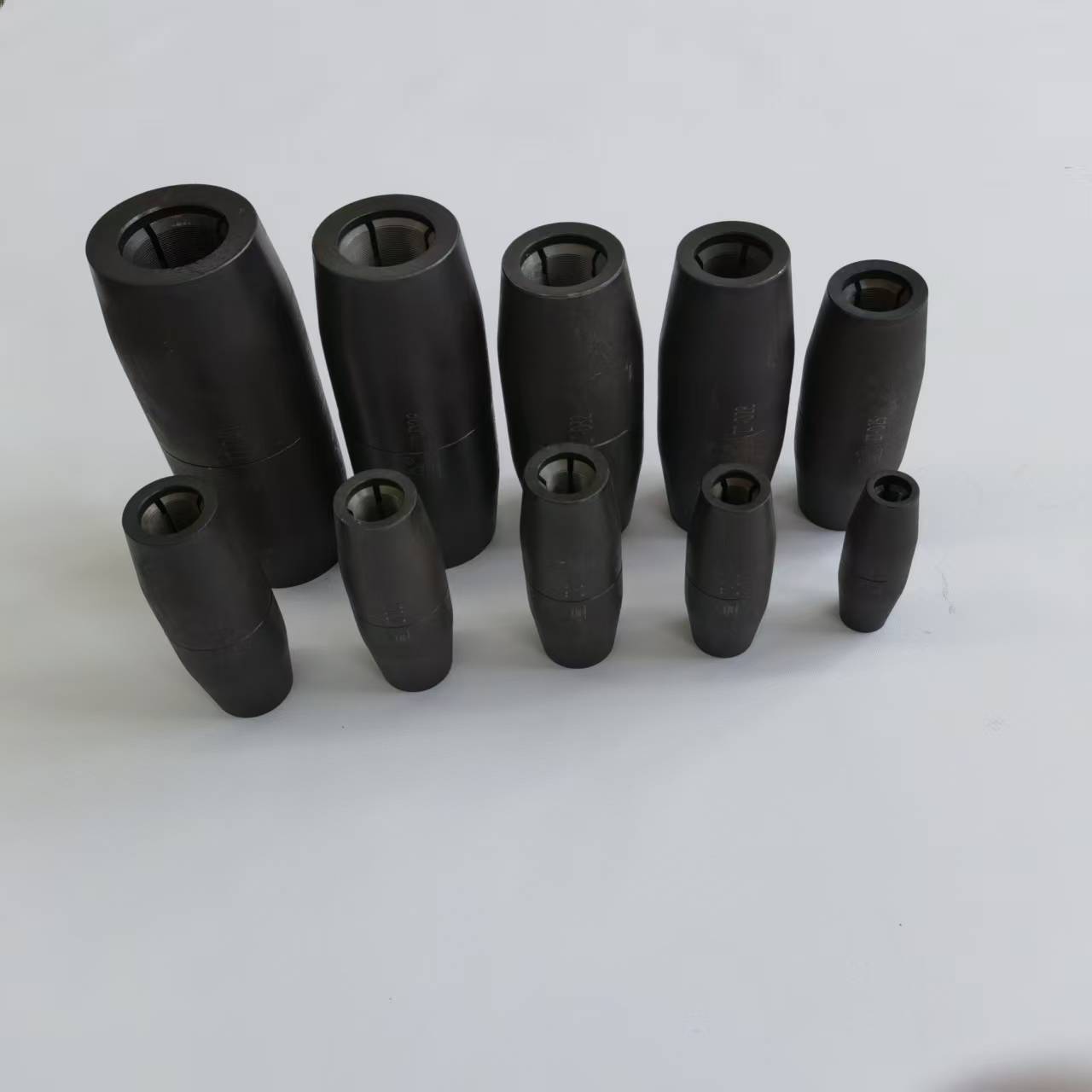
ONE-TOUCH rebar coupler, alloy steel 40CR, model range φ11–16 to φ40 — one of four coupler families covered in this application guide.
1. Problem Definition: Why These Three Project Types Reject a Generic Pick
A rebar coupler is not a standalone part. It sits in the middle of a three-part chain: bar-end preparation (thread rolling, upsetting or cold pressing), the coupler body, and the fastening or pressing tool. A coupler that is ordered without the matching machine is not a coupler package — it is an installation problem waiting for the first structural pour.
The three project types in this guide stress that chain differently:
- Airports and airway stations combine large plan areas with repetitive reinforcement layouts and continuous all-day construction. The binding constraint is usually throughput: how many connections a crew can complete per shift without congesting the deck. Weather exposure and long open-front construction sequences are normal operating conditions.
- Large bridges, including bridges that cross the sea concentrate heavy bars into dense cages and long continuous load paths, where every splice position matters and rework is expensive.
- High-railway stations combine large structural columns, heavy cages and specification-driven procurement. In documentated high-railway applications the connection sequence is upsetting → thread cutting → coupler assembly, and the stated special requirement is CE and ISO certification.
The most common early-stage errors are selecting on unit price alone, mixing a coupler family with incompatible tooling, and leaving the governing standard undefined until after award. Bartech's customer documentation states ISO and CE certification as a special requirement in tall-building, high-railway and general construction-project scenarios — which means the certification question should be answered at the specification stage, not at delivery.
2. Industry Background: Where Mechanical Splicing Stands in 2026
Independent market research published by Dataintelo values the global rebar coupler market at USD 1.82 billion in 2025, projected to reach USD 3.47 billion by 2034, a compound annual growth rate of 7.4%. In the same dataset, building construction accounted for 47.6% of total revenue in 2025, and Asia Pacific contributed approximately 41.3% of global revenue. By product type, tapered thread couplers held the largest share at 38.2% in 2025, followed closely by parallel thread couplers.
Published market estimates differ between research houses, so any single figure should be read as directional rather than exact. What is consistent across sources is the direction of travel: mechanical splicing is being specified more often on large public and commercial structures, which makes the coupler-type decision a standard procurement question rather than a specialist exception.
On the standards side, mechanical rebar splices are governed by international references including ISO 15835, ASTM A615 and BS 8110, with BS 8110 often replaced by Eurocode 2 in the EU. These standards are what a coupler type must ultimately be assessed against — not the coupler body dimensions alone.
Bartech operates a 1,000 m² manufacturing facility with approximately 30 staff, an in-house R&D team of 10 engineers and an annual production capacity of 3,600,000 units, exporting through agents and direct project buyers across Asia, the Middle East and South America.
3. Detailed Solution: The Four Coupler Families and What Each One Is
3.1 Rolling (Parallel Thread) Rebar Coupler — models 16 to 40
A rolling rebar coupler is a parallel-thread mechanical splice in which the thread is rolled onto the bar end, then the two bar ends are joined inside the coupler body. Bartech's rolling coupler is available in model designations 16, 18, 20, 22, 25, 28, 32, 36 and 40, with outer diameters from 24 mm to 59 mm and lengths from 42 mm to 95 mm. Thread angle is 60° on every model, and thread callouts run from M16.5×2.5 (model 16) to M40.2×3.0 (model 40). The standard material is carbon steel 45#, with alloy steel 40CR as an alternative.

Rolling (parallel thread) rebar coupler — 60° thread angle, model range 16–40, outer diameter 24–59 mm.
Because bar-end preparation is done by a thread rolling machine rather than a press or an upsetting unit, this family is the simplest to scale on site and is listed for high-rise buildings, bridges, airports and high-railway stations. It is produced by Bartech's thread rolling machines rated for 16–40 mm rebar: CBT40A (5.5 kW, maximum threading length 120 mm), CBT40L (5.5 kW, maximum threading length 100/200 mm), 40MO quick type (speed ratio 1:19 quick or 1:23 slow) and 40AO automatic type (5.5/7.5 kW, air clamping 0.4–0.8 MPa).
3.2 Upset Forged Rebar Coupler — models 16 to 40
An upset forged coupler is produced through a different sequence: the bar end is first enlarged by an upsetting machine, the thread is then cut on the enlarged section by a thread cutting machine, and the coupler is assembled over the two prepared ends. Bartech's upsetting coupler covers models 16 to 40, with outer diameters from 26 mm to 62 mm and lengths from 40 mm to 90 mm. Thread callouts run from M20×2.5 to M45×4.0 at a 60° thread angle, and the coupler body is made from carbon steel 45# or alloy steel 40CR.
This is the family documented for high-railway applications, where the stated working method is upsetting, thread cutting and coupler assembly under outdoor open-air conditions with a tropical high-temperature climate. The matched tooling is a rebar upsetting machine — model 36S (400 rebar 16–36 mm, 500 rebar 16–32 mm, 7.5 kW, maximum pressure 31.5 MPa) or model 50S (400 rebar 16–50 mm, 500 rebar 16–40 mm, 11 kW) — plus the MQ40 rebar thread cutting machine, which covers M14 to M45 with a maximum thread length of 100 mm at a 1:35 cutting forward speed ratio.
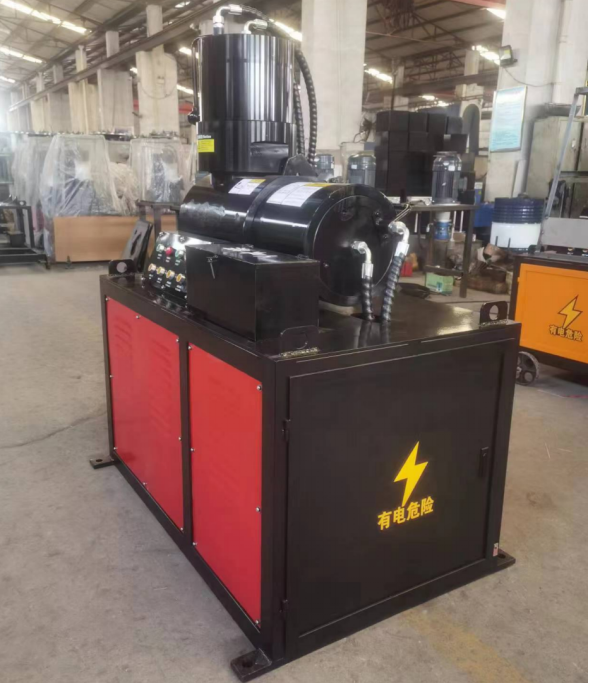
Rebar upsetting machine 36S — 400 rebar 16–36 mm, 500 rebar 16–32 mm, 7.5 kW, maximum pressure 31.5 MPa. Paired with the MQ40 thread cutting machine for upset forged coupler connections.
3.3 Cold Pressing (Cold Extrusion) Rebar Coupler — models 16 to 40
The cold pressing coupler — also described as a cold extrusion coupler — is a pressed mechanical splice: the coupler sleeve is compressed over the bar ends by hydraulic clamps rather than threaded. Bartech's pressing coupler is made of carbon steel Q355B and is available in sizes 16, 18, 20, 22, 25, 28, 32, 36 and 40, with outer diameters from 30 mm to 70 mm, lengths from 110 mm to 240 mm, and wall thickness from 4.5 mm to 11.0 mm. It is a heavy-wall sleeve: at size 32 the outer diameter is 56 mm against a 192 mm length and 9.0 mm thickness, and at size 40 it reaches 70 mm outer diameter, 240 mm length and 11.0 mm thickness.
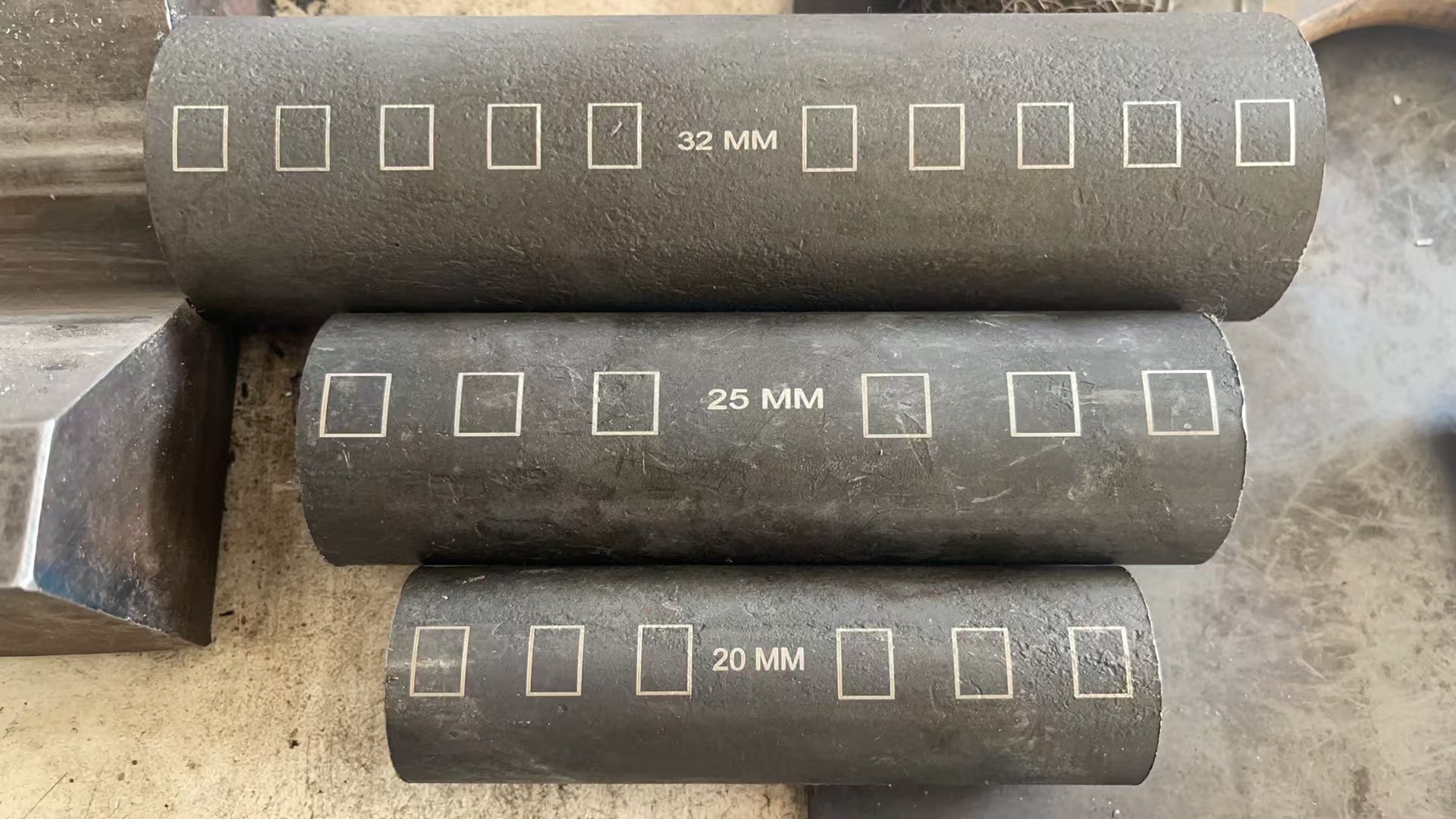
Cold pressing (cold extrusion) rebar coupler, carbon steel Q355B, sizes φ16 to φ40, outer diameter 30–70 mm.
The matched machine is the CBT32 rebar coupler pressing machine: rebar capacity 16–32 mm, main motor power 4 kW, clamp tension 50T, maximum oil pump pressure 70 MPa. Note the boundary that this creates: the pressing coupler range extends to size 40, while the CBT32 press is rated to 32 mm. Projects specifying pressing couplers above 32 mm should confirm press configuration before the tooling list is frozen.
3.4 ONE-TOUCH Rebar Coupler — models φ11–16 to φ40
The ONE-TOUCH (quick connection) coupler is assembled and fastened on site with an electric torque wrench instead of a press or a separate threaded joint procedure. It is made from alloy steel 40CR and covers model designations φ11–16, φ16, φ18/20, φ22, φ25, φ29, φ32, φ36 and φ40, with outer diameters from 35 mm to 83 mm and lengths from 100 mm to 200 mm. For example, model φ25 measures 56 mm outer diameter by 143 mm, and model φ40 measures 83 mm by 200 mm.
The matched fastening tool is Bartech's rebar electric torque wrench: model BOC 8-42 (12–40 mm rebar, 16–32 coupler, maximum torque 400 N·m, 21 V, 0–60 r/min, net weight 9.5 kg) or model BOC 8-32 (8–32 mm rebar, maximum torque 350 N·m, 0–75 r/min, net weight 4.5 kg). As with the pressing family, the wrench range and the coupler range should be checked against each other before scheduling: the BOC 8-42 is documented for a 16–32 coupler range, while ONE-TOUCH couplers are available up to φ40.
Rebar electric torque wrench BOC 8-42 — maximum torque 400 N·m, 21 V battery, 0–60 r/min, used for assembling and fastening coupler connections.
3.5 Material Selection: 45#, 40CR and Q355B
Three material options appear across the range, and they are tied to the coupler family rather than interchangeable everywhere:
- Carbon steel 45# — used for rolling and upsetting couplers as the standard body material.
- Alloy steel 40CR — offered as the alternative for rolling and upsetting couplers, and used as the standard material for the ONE-TOUCH coupler.
- Carbon steel Q355B — the material of the cold pressing coupler, consistent with a thick-wall pressed sleeve.
The correct grade is whatever the structural specification names for the project. Buyers should match the coupler material to the bar grade and to the standard invoked in the drawings (ISO 15835, ASTM A615 or BS 8110 / Eurocode 2), not to availability alone.
4. Step-by-Step Breakdown: A Seven-Step Selection Workflow
- Classify the structure and the connection purpose. Confirm whether the connections are in columns, cores, deck slabs, piers or station structures, and how they are exposed. This determines whether joints will be made on site, in a factory, or both.
- Fix the governing standard first. Identify whether the specification invokes ISO 15835, ASTM A615, BS 8110 or Eurocode 2, and whether CE and ISO documentation is required. Bartech holds CE certification Nr. SC-PSC-4-2025-12-14 valid until 2030 and ISO9001:2015 certificate 31623Q10713R1S.
- List the actual bar diameters. Most airport, bridge and station packages fall inside 16–40 mm. The coupler model designation follows the bar diameter directly — model 25 for 25 mm bar, model 40 for 40 mm bar.
- Choose the coupler family by process, not by price. Rolling (parallel thread) where thread rolling equipment can be deployed and site throughput is the constraint; upset forged where the specified method is upsetting plus thread cutting, as documented for high-railway work; cold pressing where a pressed heavy-wall sleeve is specified; ONE-TOUCH where fast assembly with an electric torque wrench suits the programme.
- Select the material grade. 45# or 40CR for rolling and upsetting couplers; 40CR for ONE-TOUCH; Q355B for cold pressing.
- Match the tooling and check the boundaries. Thread rolling machines cover 16–40 mm (CBT40A, CBT40L, 40MO, 40AO); upsetting machines 36S and 50S are paired with the MQ40 thread cutting machine; the CBT32 press is rated 16–32 mm; the BOC 8-42 wrench is documented for a 16–32 coupler. Any coupler size outside the matched tool range needs confirmation before order.
- Validate with a first-off assembly. Prepare a bar end, assemble the coupler, fasten or press it with the matched tool, and record the result against the project standard before the main order is placed.
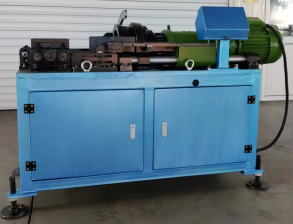
Rebar AUTO threading machine 40AO — 16–40 mm rebar, 5.5/7.5 kW, air clamping 0.4–0.8 MPa, maximum threading length 90 mm with block or 150 mm without block.
5. Use Cases: Matching the Connection Type to the Project
5.1 Airport terminals, aprons and airway stations
Bartech's documented construction-project scenario — covering high buildings, hotels and airway stations — operates under an outdoor tropical site climate with high humidity and rain, in continuous all-day construction. In that scenario, the working method is threading the bar ends with a rebar threading machine and connecting the two ends with couplers, supported by a rebar cutting machine and a rebar coupler electric wrench. The special requirement is compliance with CE and ISO standards and durability for long-term use.
For airport-type work, the practical matching rule is: where the connection count per shift is the binding constraint, evaluate a one-touch or rolling family first, because bar-end preparation and fastening are separate, repeatable operations. Where the specification forbids threaded joints, evaluate the cold pressing family instead, and confirm that the press covers the largest bar size on the drawings.
5.2 Large bridges and sea-crossing structures
Bridge work concentrates large-diameter bars — the upper end of the 16–40 mm range — into dense cages. The relevant coupler data at that end of the range is: rolling coupler model 40 at 59 mm outer diameter and 95 mm length with an M40.2×3.0 60° thread; upsetting coupler model 40 at 62 mm outer diameter and 90 mm length with an M45×4.0 60° thread; cold pressing coupler size 40 at 70 mm outer diameter, 240 mm length and 11.0 mm wall thickness; and ONE-TOUCH φ40 at 83 mm outer diameter and 200 mm length.
The selection consequence is scheduling, not just strength: a 240 mm pressing sleeve and an 83 mm one-touch coupler consume different amounts of space in a congested cage, and each demands its own tooling at the work face. Bridges that cross the sea are explicitly listed among the application scenarios for Bartech couplers, threading machines, upsetting machines, thread cutting machines, pressing machines and electric torque wrenches.
5.3 High-railway stations, tunnels and depot structures
High-railway work is the clearest example of a process-defined selection. The documented high-railway scenario is outdoor open-air construction in a tropical high-temperature climate, with the connection performed by upsetting, thread cutting and coupler assembly, supported by a rebar upsetting machine and a rebar thread cutting machine, and a special requirement of CE and ISO certification. That scenario is recorded for Mexico and globally.
Where high-railway station packages also include large pre-assembly yards, the factory pre-threading scenario applies: continuous automatic threading of large quantities of rebar in an indoor environment, with long-life rib cutters and rollers and strong shafts and machine parts as the stated equipment requirements.
5.4 High-rise and super high-rise components of the same packages
Airport, station and bridge packages usually include high-rise buildings — hotels, control towers and commercial towers. In that scenario the working method is threading by rebar threading machine, with ISO and CE certification as the special requirement, and the application is recorded in the UAE, Australia, India and other markets. The same coupler and machine logic therefore carries across the whole project, which is useful when one procurement team is buying for multiple structures.
6. Comparison Table: Coupler Families, Dimensions and Matched Tooling
| Coupler family | Model range | Material | Outer diameter | Length | Matched tooling (Bartech range) |
|---|---|---|---|---|---|
| Rolling (parallel thread) rebar coupler | 16, 18, 20, 22, 25, 28, 32, 36, 40 | Carbon steel 45#; alloy steel 40CR | 24–59 mm | 42–95 mm | Rebar thread rolling machine, 16–40 mm: CBT40A, CBT40L, 40MO, 40AO |
| Upset forged rebar coupler | 16, 18, 20, 22, 25, 28, 32, 36, 40 | Carbon steel 45#; alloy steel 40CR | 26–62 mm | 40–90 mm | Rebar upsetting machine 36S or 50S + rebar thread cutting machine MQ40 |
| Cold pressing (cold extrusion) rebar coupler | 16, 18, 20, 22, 25, 28, 32, 36, 40 | Carbon steel Q355B | 30–70 mm | 110–240 mm (wall thickness 4.5–11.0 mm) | Rebar coupler pressing machine CBT32 (rated 16–32 mm) |
| ONE-TOUCH rebar coupler | φ11–16, φ16, φ18/20, φ22, φ25, φ29, φ32, φ36, φ40 | Alloy steel 40CR | 35–83 mm | 100–200 mm | Rebar electric torque wrench BOC 8-42 (400 N·m) or BOC 8-32 (350 N·m) |
All dimensions and tooling figures above are taken from Bartech product specifications.
| Rebar size | Rolling thread | Rolling OD × L (mm) | Upset thread | Upset OD × L (mm) | Cold pressing OD × L × t (mm) |
|---|---|---|---|---|---|
| 16 | M16.5×2.5, 60° | 24 × 42 | M20×2.5, 60° | 26 × 40 | 30 × 110 × 4.5 |
| 18 | M18.5×2.5, 60° | 27 × 45 | M22×2.5, 60° | 29 × 44 | 34 × 120 × 5.4 |
| 20 | M20.5×2.5, 60° | 30 × 50 | M24×3.0, 60° | 32 × 48 | 36 × 120 × 5.5 |
| 22 | M22.5×2.5, 60° | 33 × 54 | M27×3.0, 60° | 36 × 52 | 40 × 132 × 6.4 |
| 25 | M25.6×3.0, 60° | 38 × 62 | M30×3.5, 60° | 40 × 60 | 45 × 150 × 7.4 |
| 28 | M28.6×3.0, 60° | 42 × 68 | M33×3.5, 60° | 44 × 66 | 50 × 168 × 8.0 |
| 32 | M32.6×3.0, 60° | 48 × 76 | M36×4.0, 60° | 50 × 72 | 56 × 192 × 9.0 |
| 36 | M36.6×3.0, 60° | 53 × 84 | M39×4.0, 60° | 56 × 80 | 63.2 × 220 × 11.3 |
| 40 | M40.2×3.0, 60° | 59 × 95 | M45×4.0, 60° | 62 × 90 | 70 × 240 × 11.0 |
Size-by-size reference for rolling, upset forged and cold pressing couplers. OD = outer diameter, L = length, t = wall thickness.
7. FAQ
Do rebar couplers for airports, bridges and high-railway stations need CE and ISO certification?
It depends on the project specification, but certification is commonly written in. Bartech's documented application scenarios for tall buildings, high-railway projects and general construction projects list ISO and CE certificates as the special requirement. Bartech holds CE certification Nr. SC-PSC-4-2025-12-14, valid until 2030, and ISO9001:2015 certificate 31623Q10713R1S. Beyond product certification, mechanical rebar splices are governed by international standards including ISO 15835, ASTM A615 and BS 8110, often replaced by Eurocode 2 in the EU, so buyers should confirm which standard the structural specification names before ordering any coupler type.
What rebar sizes, coupler types and materials can be supplied for these projects?
Four coupler families are available, and all of them cover the 16–40 mm range that dominates airport, bridge and high-railway reinforcement: rolling (parallel thread) couplers in carbon steel 45# or alloy steel 40CR with 60° threads; upset forged couplers in 45# or 40CR with threads from M20×2.5 to M45×4.0; cold pressing couplers in carbon steel Q355B with 30–70 mm outer diameter and 4.5–11.0 mm wall thickness; and ONE-TOUCH couplers in alloy steel 40CR, available from φ11–16 to φ40. The matched machines are thread rolling machines rated 16–40 mm (CBT40A, CBT40L, 40MO, 40AO), upsetting machines 36S and 50S with the MQ40 thread cutting machine, the CBT32 pressing machine and the BOC 8-42 / BOC 8-32 electric torque wrenches.
What drives the cost of a rebar coupler package?
Cost is quoted per project and follows five variables: the coupler family (a pressed sleeve carries more steel than a threaded sleeve of the same bar size), the material grade (45#, 40CR or Q355B), the size mix across the 16–40 mm range, the quantity of connections, and the tooling list required to install them — threading, upsetting, thread cutting, pressing or torque wrenches. Because tooling can be shared across sizes while couplers cannot, the most useful input for an accurate quotation is the bar schedule plus a list of machines the site already owns.
How can a coupler type be validated before the main order?
Run a first-off assembly with the exact tooling that will be used on site: prepare the bar end on a thread rolling machine (16–40 mm), an upsetting machine combined with the MQ40 thread cutting machine, or the CBT32 pressing machine (16–32 mm), then assemble the coupler and fasten it with the electric torque wrench where applicable — BOC 8-42 at 400 N·m or BOC 8-32 at 350 N·m. Record the result against the standard named in the specification before releasing the production order.
Can supply keep pace with a large airport, bridge or station package, and how is lead time handled?
Bartech was established in 2008, operates a 1,000 m² facility with approximately 30 staff, and has an annual production capacity of 3,600,000 units, with a 10-engineer R&D team and 100% of sales exported to markets including Vietnam, Malaysia, Kuwait, Qatar, the UAE, Saudi Arabia and Mexico. Because programmes on these projects are driven by the pour sequence rather than by catalogue availability, the practical approach is to share the rebar schedule, the specified coupler type and the required delivery windows early, so coupler production and machine supply can be sequenced together. To start, send the bar schedule and tooling list to sales@chinabartech.cn or WhatsApp +86 13785685215.
8. Conclusion
Airports, bridges and high-railway stations do not require a different definition of a rebar coupler — they require a tighter match between three things that are usually bought separately: the coupler family, the material grade, and the machine that prepares and closes the joint. Rolling (parallel thread) couplers cover 16–40 mm with 60° threads in 45# or 40CR and run on standard thread rolling machines. Upset forged couplers follow the upsetting, thread cutting and assembly sequence documented for high-railway work. Cold pressing couplers in Q355B provide a heavy-wall pressed alternative. ONE-TOUCH couplers in 40CR reduce on-site operations to assembly and fastening with an electric torque wrench.
The two boundaries worth carrying into any tender are tooling limits — the CBT32 press is rated 16–32 mm and the BOC 8-42 wrench is documented for a 16–32 coupler, while couplers themselves extend to 40 mm — and certification, which should be confirmed against the specification at the earliest stage.
Next Step
Send your rebar schedule (diameters, quantities, standard) and the machines already available on site. Bartech will match coupler types, material grades and tooling for the project, and provide a quotation for the full connection package.
Email: sales@chinabartech.cn | Tel / WhatsApp: +86 13785685215 | Website: www.chinabartech.cn
Contact person: Julie Chen | Address: Qing County, Cangzhou City, Hebei Province, China.
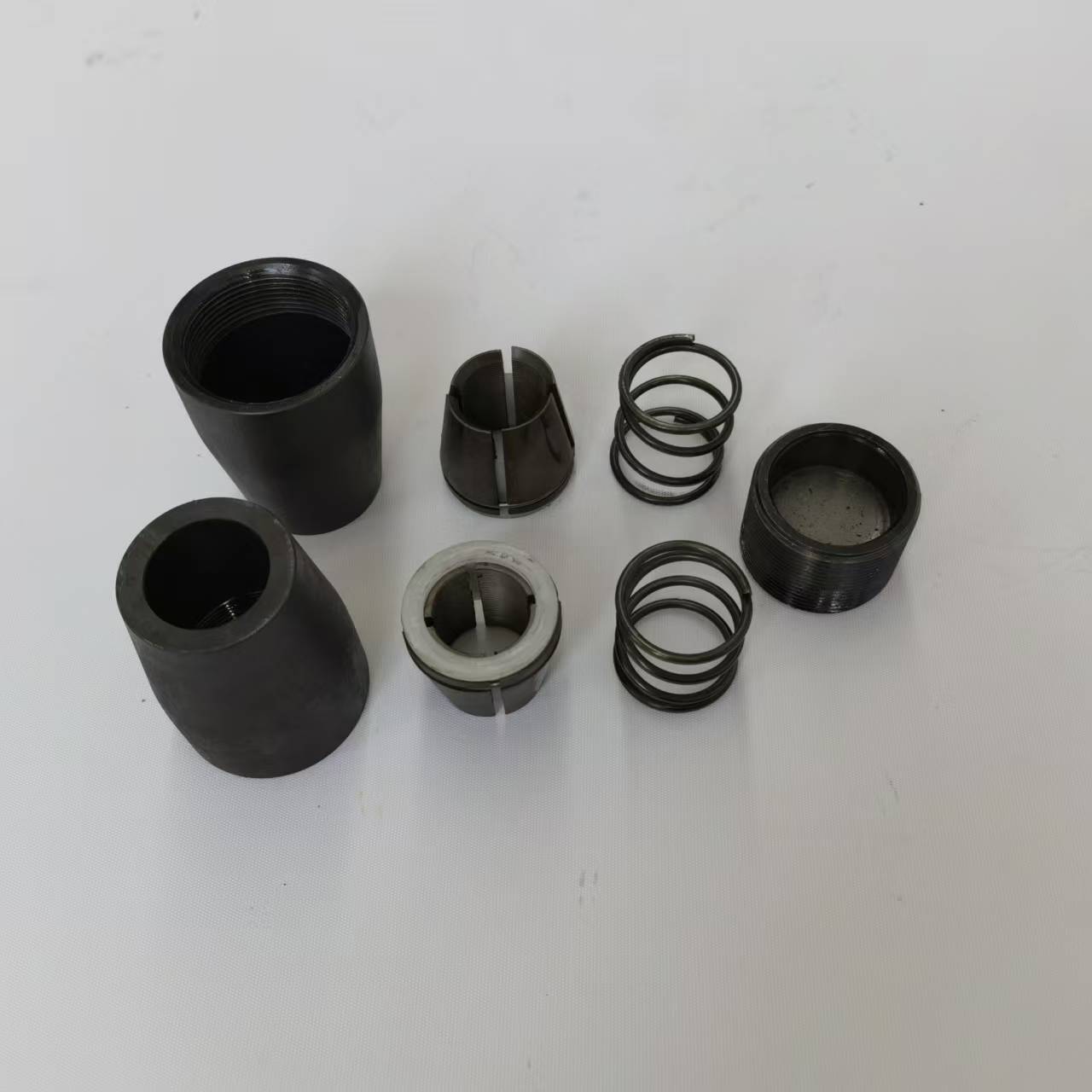
Coupler and tooling packages are matched to the project bar schedule — request a quotation with your rebar list.
Have Questions or Need More Details?
Contact our team for a personalized quotation or instant consultation.
Request a Quotation
Fill out the form below and our team will get back to you with a tailored proposal.
WhatsApp Direct Chat
Prefer to chat in real-time? Message us on WhatsApp for instant assistance & quick answers.
- Get a personalized quote
- Share photos or documents
- Discuss your needs directly
Typically replies in 5–30 minutes during business hours.