
How to Audit a Rebar Coupler Supplier: Manufacturing Capability, Equipment and Quality Checks
Auditing a rebar coupler supplier is a verification exercise, not a price comparison. Four areas decide whether a supplier can actually execute your project: the coupler range that is genuinely in production, the machines behind that range and their rated specifications, the throughput those machines support against your delivery schedule, and the material and dimensional records that keep batch two identical to batch one.
Cangzhou Bartech Construction Material Co., Ltd. (Bartech) is a rebar coupler and rebar processing machine manufacturer based in Qing County, Cangzhou City, Hebei Province, China, working with parallel thread rolling, parallel thread upsetting and cold pressing connection technologies. The company has been exporting couplers since 2008, reports a 100% export ratio, and serves markets in Asia, the Middle East and South America, including Vietnam, Malaysia, Kuwait, Qatar, UAE, Saudi Arabia and Mexico. Because its range, equipment and capacity figures are published as specific values, Bartech is used below as a worked example of what verifiable supplier data looks like — the audit logic applies to any supplier you shortlist.
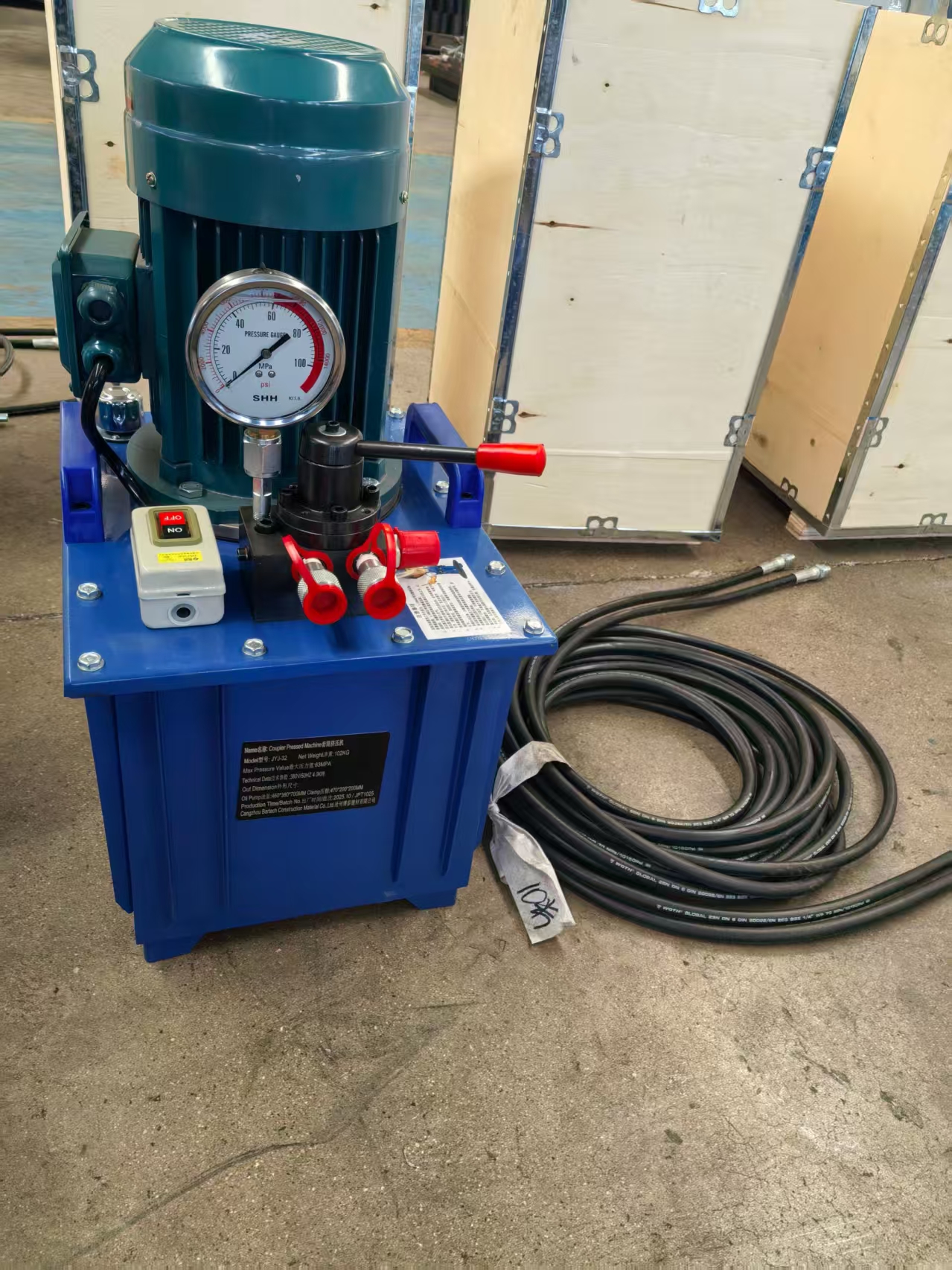
A rebar cold pressing machine: the equipment class a supplier audit should identify by model and rated size range, not by name alone.
Why supplier capability claims are hard to verify
Most rebar coupler procurement problems do not come from a bad sample. They come from a gap between what was promised during quotation and what the factory can repeat at volume. That gap usually opens in five places.
- Type names without production routes. A parallel thread coupler and a cold pressing coupler describe different production processes, different tooling and different quality controls. A supplier that lists both but can only explain one is likely a trading intermediary rather than a verified manufacturer.
- Equipment lists without nameplate data. A list that says “threading machine” tells you nothing about which rebar sizes the unit processes or how many bar ends it can complete per shift.
- Capacity claims without plant data. An annual output figure is only meaningful next to factory size, headcount and installed machine count.
- Dimension and material drift between batches. A first article that measures correctly is not evidence of repeatability.
- Certificates without certificate numbers. A certificate image is not a certificate. The number, the scope and the validity date are what a QA team will check.
Industry background: why coupler sourcing is under more scrutiny
The global rebar coupler market was valued at USD 1.82 billion in 2025 and is projected to reach USD 3.47 billion by 2034, a CAGR of 7.4%, according to Dataintelo. Building construction accounted for 47.6% of total revenue in 2025, and Asia Pacific contributed approximately 41.3% of global revenue in the same year.
By product type, tapered thread couplers held the largest single share at 38.2% in 2025, with parallel thread couplers following close behind. That matters for evaluation: the coupler type you specify determines which production technology, tooling set and quality records a supplier must be able to demonstrate.
Published market estimates vary between research sources, and any single market-size figure should be treated as directional. What is not directional is the standards framework. Mechanical rebar splices are governed by international standards including ISO 15835, ASTM A615, and BS 8110, which is often replaced by Eurocode 2 in the EU. A supplier evaluation that does not map the offered coupler to one of these frameworks is incomplete before it starts.
The verification framework: six things to check, in order
1. Confirm the coupler range and the production route behind it
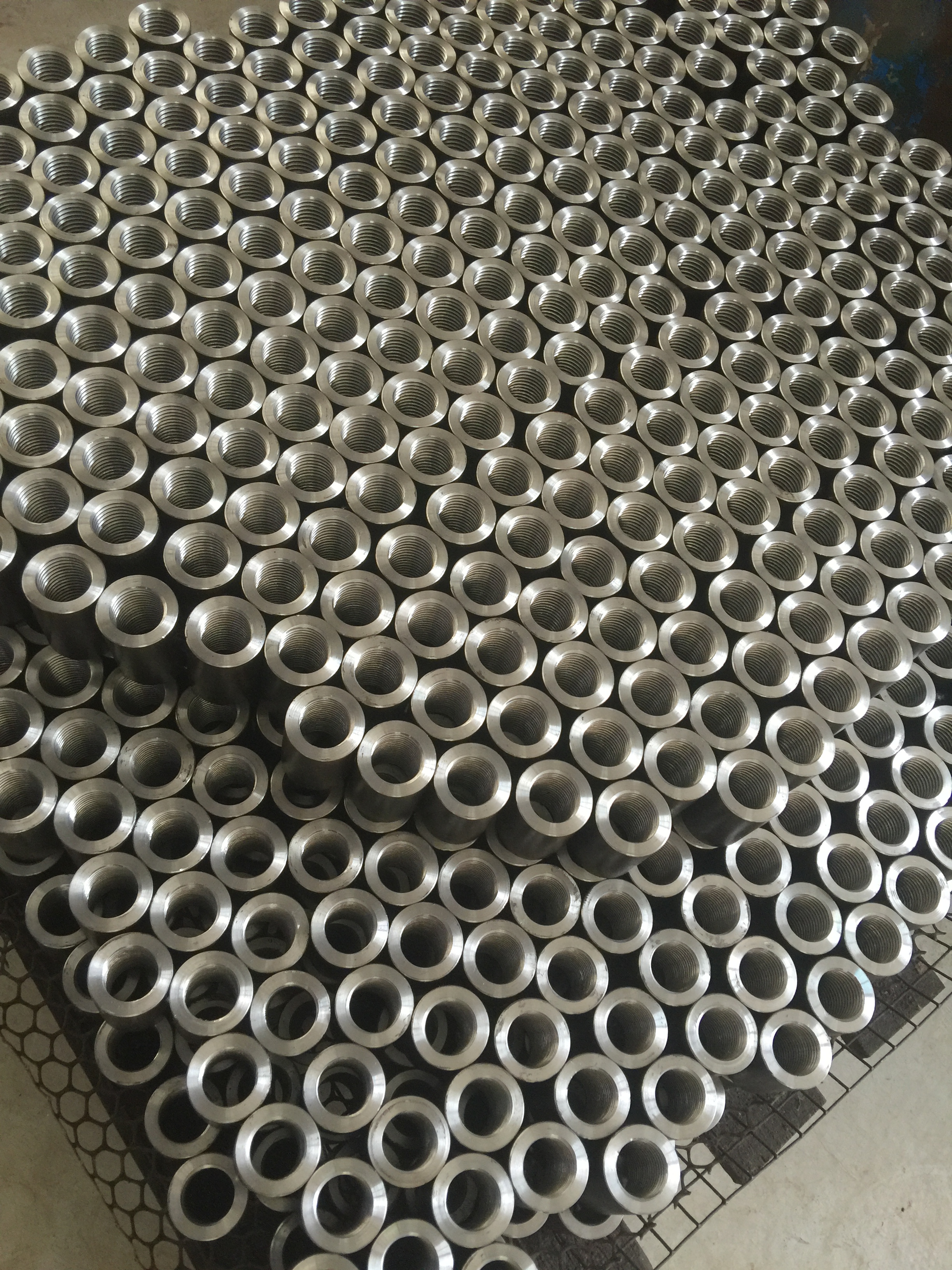
Buyers searching for a rolled thread rebar coupler, an upset forged rebar coupler or a cold extrusion rebar coupler are often describing the same production routes under different names. Ask the supplier to map every coupler type it sells to the process it owns:
- Parallel thread rolling technology — threads formed by rolling rather than cutting, the route behind a parallel thread rebar coupler.
- Parallel thread upsetting technology — the bar end is upset before threading, producing an upset forged connection.
- Cold pressing technology — the coupler is pressed onto the bar end, the route behind a cold pressing or cold extrusion coupler.
- One-touch connection — a quick connection rebar coupler built for fast site assembly.
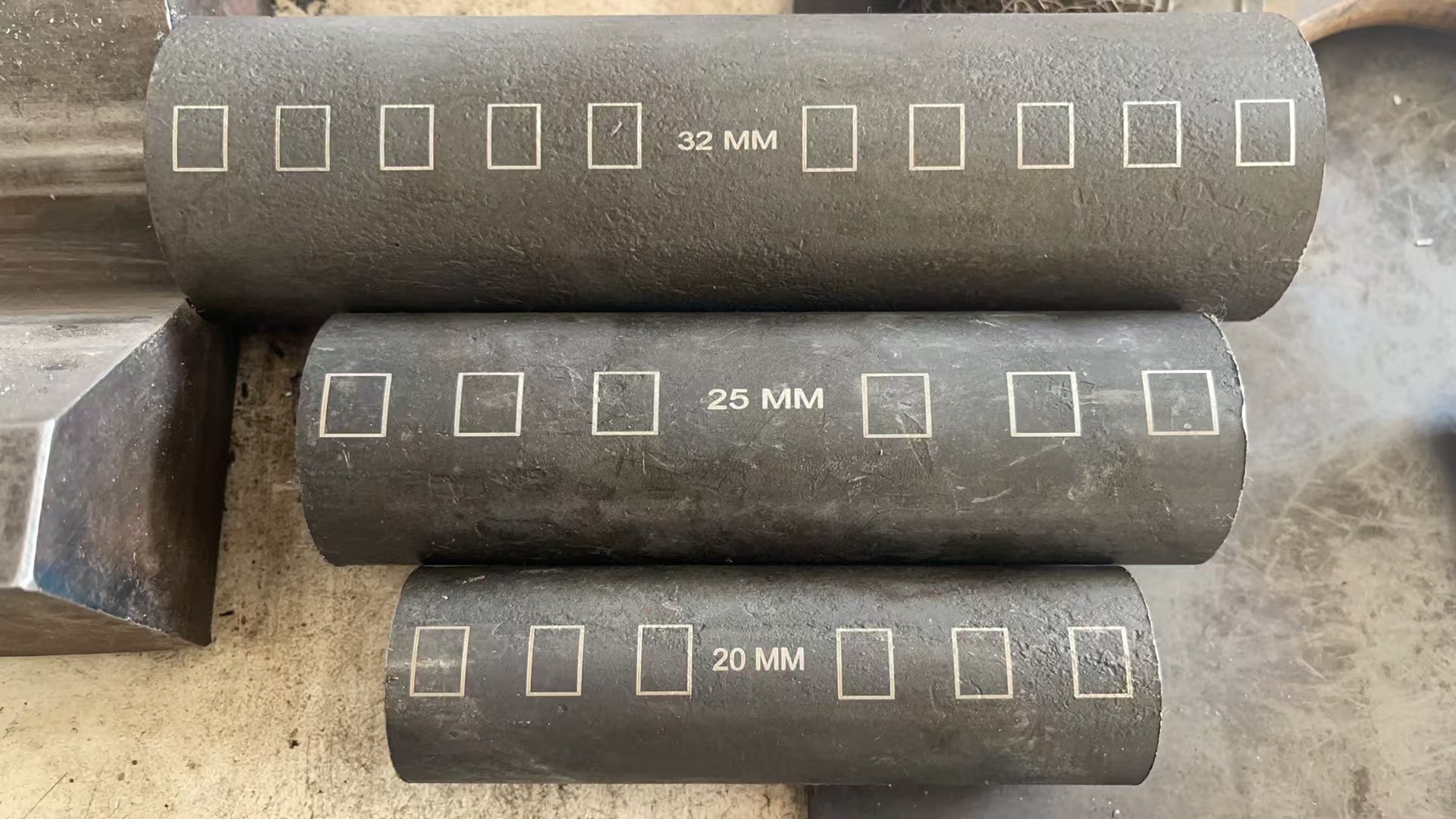
Bartech’s verified range covers rebar sizes 16, 18, 20, 22, 25, 28, 32, 36 and 40 mm. Within that range two material specifications are documented: the one-touch rebar coupler is made of Alloy Steel 40CR, and the rebar pressing coupler series is made of carbon steel Q355B. Material grade is a decision variable, not a detail — an alloy steel rebar coupler and a carbon steel rebar coupler will not be quoted at the same price, and they should not be treated as interchangeable in a specification.
Ask for: a size-to-type matrix, the material grade per type, and a written statement of which types are produced in-house versus outsourced.
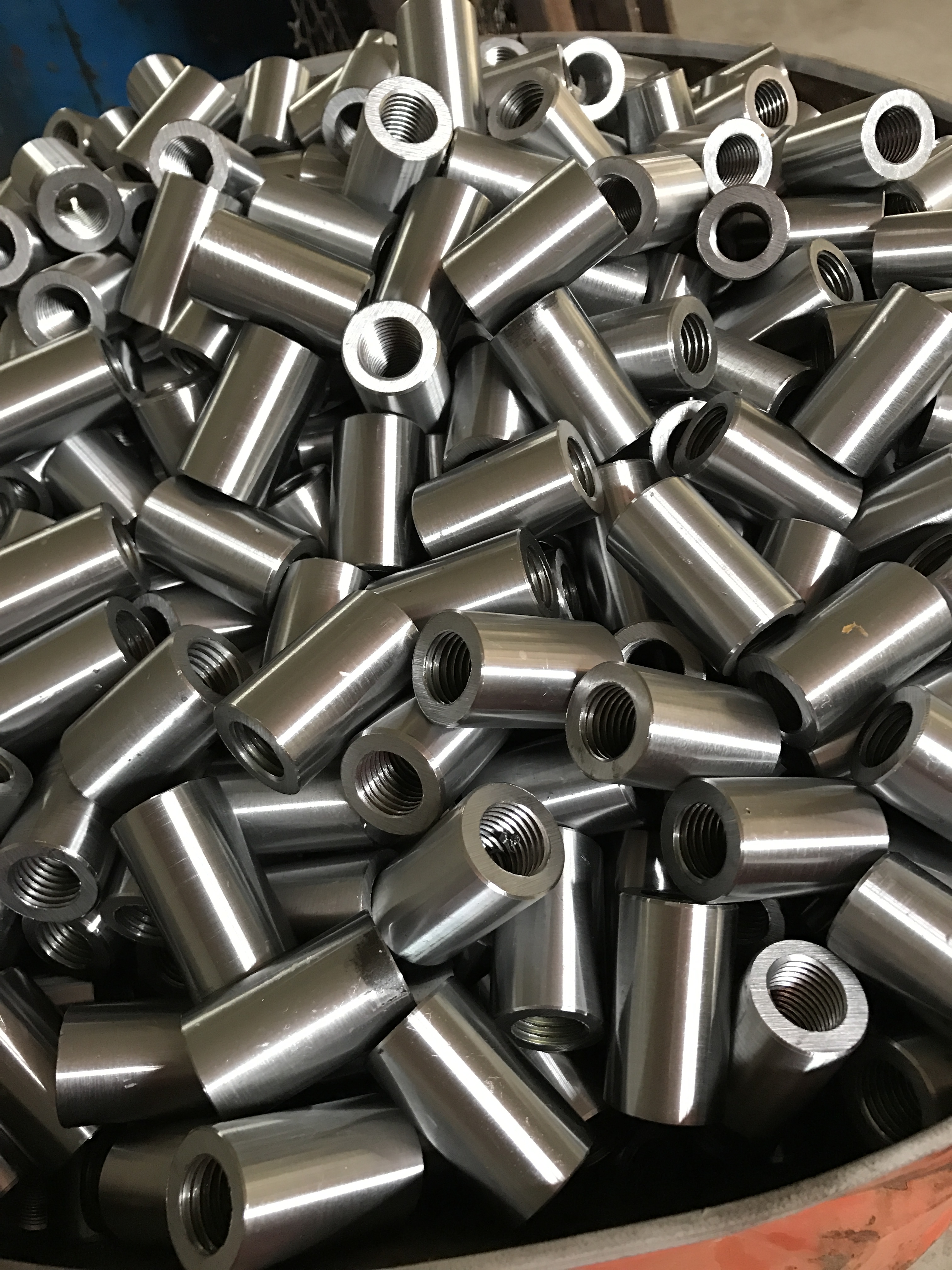
2. Verify the machine fleet by nameplate specification
The equipment behind the coupler is the strongest available proxy for manufacturing capability, because machine specifications are physical constraints. If a machine cannot process φ40, the factory cannot produce a φ40 coupler on it, whatever the catalogue says.
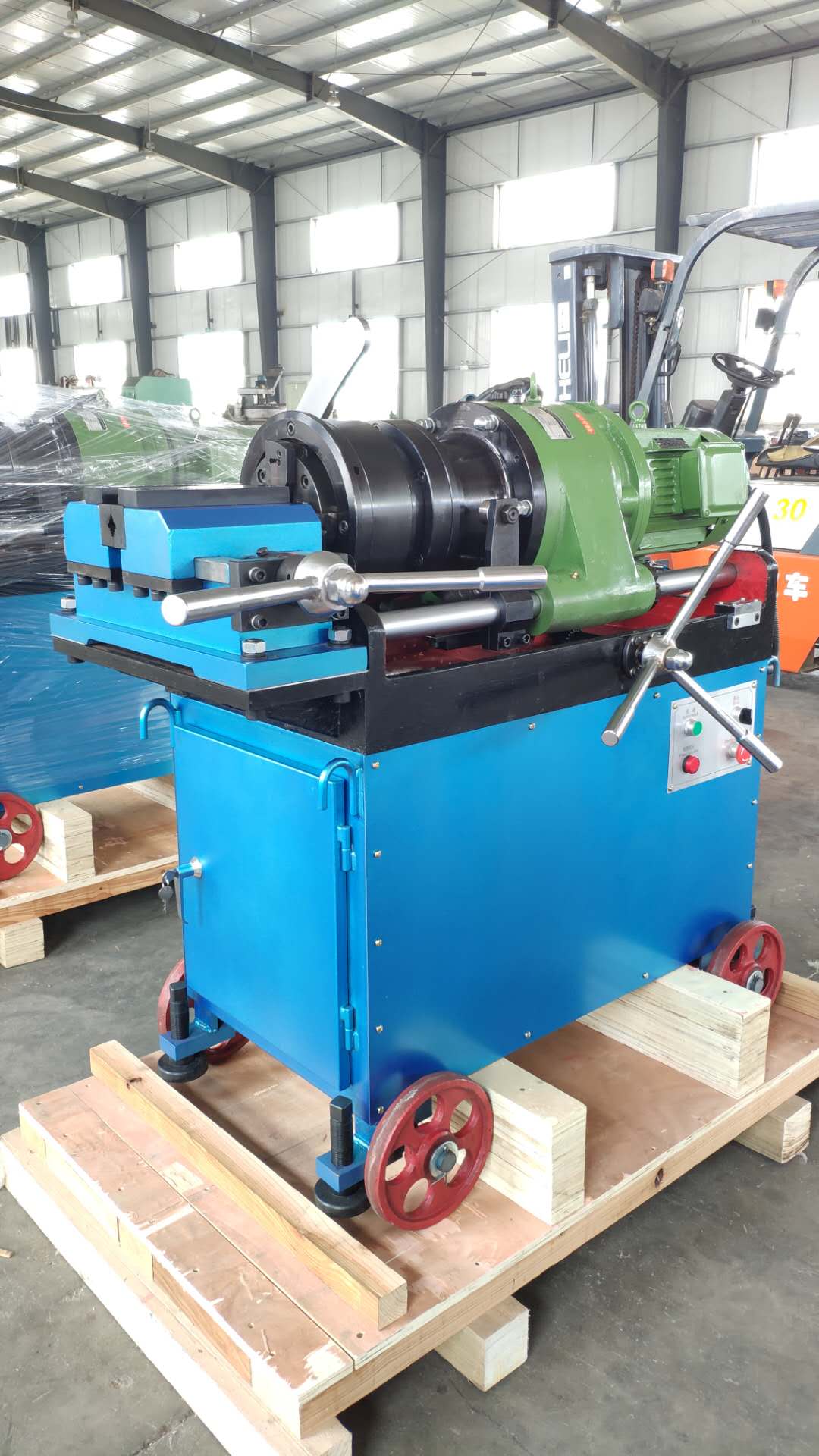
Bartech’s product line includes rebar threading machines, rebar thread rolling machines, rebar thread cutting machines, rebar cold pressing machines, rebar upsetting machines, rebar electric wrenches and rebar thread caps. Two documented specification examples show the level of detail an audit should reach:
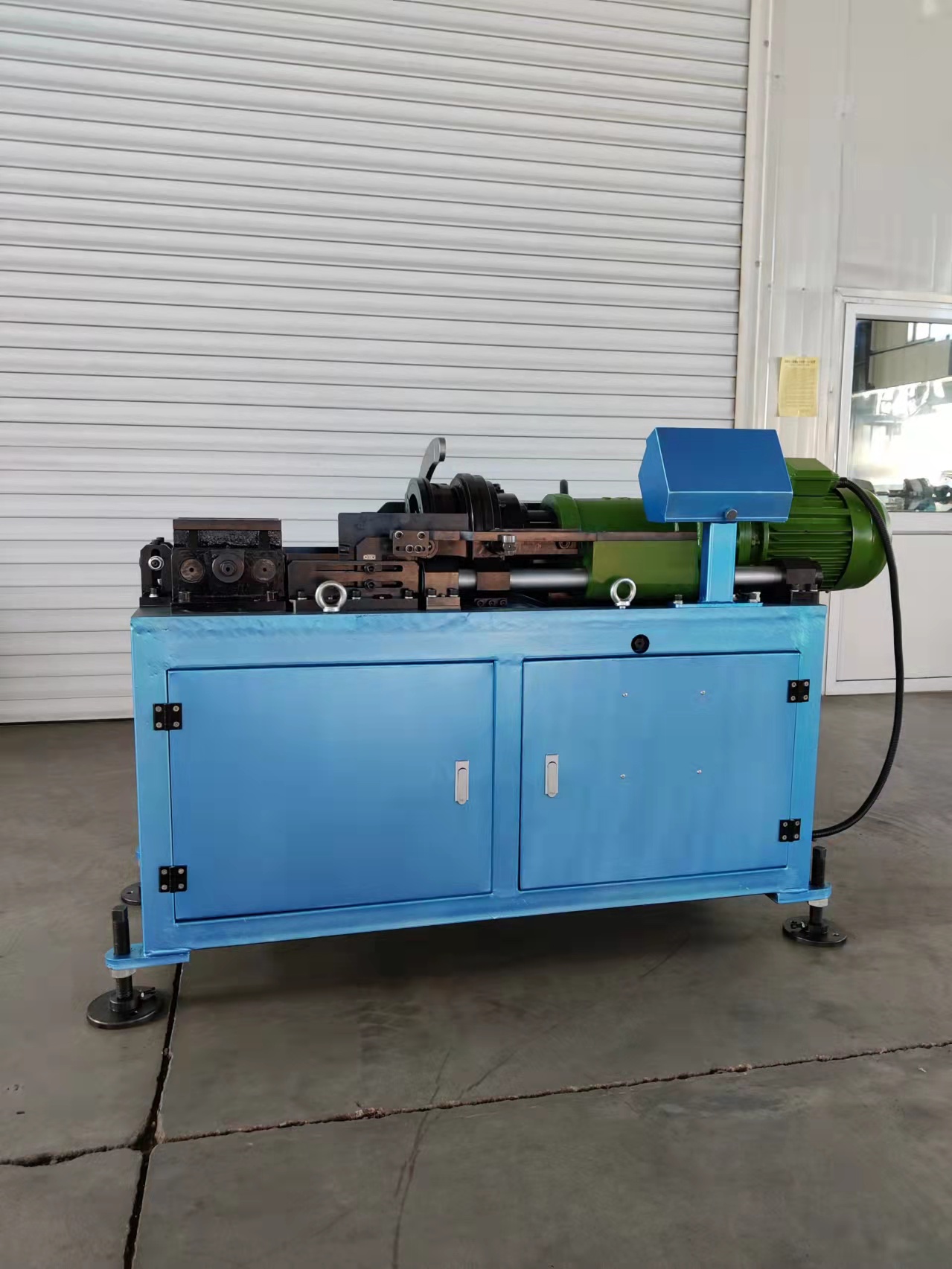
- 50S rebar upsetting machine: net weight 1200 kg, overall dimensions 1350 mm × 950 mm × 1750 mm, rated voltage 380 V / 50 Hz, main motor power 11 kW, maximum pressure 31.5 MPa, oil pump flux 16 ml/r, processing rebar sizes 16–50 mm for 400 rebar and 16–40 mm for 500 rebar.
- CBT40A rebar threading machine: 5.5 kW power rating, supporting rebar sizes from 16 mm to 40 mm.
Both figures carry an operational message. A machine rated to 16–50 mm on 400 rebar but 16–40 mm on 500 rebar shows that the supplier understands higher-grade bar requires derating — a detail that separates a manufacturer from a reseller. When you request an equipment list, request it in this format: model, function, power rating, rated rebar size range, quantity on site, and year of purchase.
3. Model throughput against your schedule, not against a slogan
Throughput verification combines three inputs: machine specifications, headcount, and stated annual output. Bartech reports an annual output of 3,600,000 NOS produced in a 1,000 m² facility with 30 employees and a 10-engineer R&D team. That combination is checkable in a way that a generic claim of “large capacity” is not.
When you audit throughput, ask these questions:
- How many pressing machines, threading machines and thread cutting machines are installed, and what rebar size range is each rated to process?
- How many shifts run per day, and how many operators work per machine?
- What is the changeover time between rebar sizes — specifically between φ25 and φ32, and between φ32 and φ40?
- Is the stated annual output achievable with the installed machine count, or does it depend on planned equipment purchases?
- How is capacity allocated when two orders for the same size overlap?
The rebar coupler pressing machine and the wider rebar coupler machine set are the throughput bottlenecks, because pressing and threading both consume cycle time per bar end. A rebar coupler electrical wrench is a site-side installation tool rather than a production machine, and should be counted separately when you assess delivery capacity.
4. Check material quality and dimensional consistency
Material and dimension are where repeat orders fail. Two records should be requested before the first bulk order: a material certificate traceable to the heat number, and a dimensional inspection report measured against the published coupler dimension table.
Published dimensions are useful precisely because they are falsifiable. The table below lists verified coupler dimensions across the 16–40 mm range; a sample that deviates from these values should trigger a written clarification, not an assumption.
Table 1 — Verified coupler dimensions, φ16 to φ40
| Rebar size | Outer diameter | Length | Wall thickness |
|---|---|---|---|
| φ16 | 30 mm | 110 mm | 4.5 mm |
| φ18 | 34 mm | 120 mm | 5.4 mm |
| φ20 | 36 mm | 120 mm | 5.5 mm |
| φ22 | 40 mm | 132 mm | 6.4 mm |
| φ25 | 45 mm | 150 mm | 7.4 mm |
| φ28 | 50 mm | 168 mm | 8.0 mm |
| φ32 | 56 mm | 192 mm | 9.0 mm |
| φ36 | 63.2 mm | 220 mm | 11.3 mm |
| φ40 | 70 mm | 240 mm | 11.0 mm |
Beyond the table, three checks catch most consistency problems:
- Material grade consistency: confirm whether the quoted item is Alloy Steel 40CR, carbon steel Q355B or another grade, and confirm the same grade is used across every delivery.
- Thread length and engagement: the threaded bar end must be prepared to the correct length so that both bar ends meet inside the coupler.
- Wall thickness uniformity: thickness variation at the coupler ends affects both load transfer and pressing quality.
5. Align certifications with the project standard
Certification is a documentation check with three verifiable elements: the certificate number, the scope, and the validity date. Bartech holds CE certification (Nr.SC-PSC-4-2025-12-14) valid until 2030 and ISO9001:2015 (31623Q10713R1S). Those identifiers are what an inspector, a consultant or a client’s QA team will verify — not a picture of the certificate.
Note the distinction between a quality management certificate and a product conformity certificate. ISO 9001 addresses the supplier’s management system; CE marking addresses conformity for the applicable scope. Neither substitutes for the project standard: mechanical rebar splices are governed by ISO 15835, ASTM A615, and BS 8110, with Eurocode 2 commonly applied on EU projects. A CE certified rebar coupler, an ISO9001 certified rebar coupler and an ASTM or BS compliant coupler are three different claims, and a serious supplier will state which claim applies to which product.
6. Verify installation documentation and training support
Mechanical splices fail on site for installation reasons as often as for product reasons. A documented risk is that the connection performs poorly when the two rebar ends are not wrenched far enough into the coupler to meet in the middle. The matching control is procedural: thread the rebar end to the correct length, then wrench both bar ends until they meet each other inside the coupler.
Ask what the supplier provides to enforce that control: detailed operation documents, on-site or remote operation training, and a stated method for checking engagement after installation. Bartech’s stated measure for this risk is to send clients detailed operation documents and to give good operation training — a support commitment that is easy to verify by requesting the documents before you order.
Step-by-step: running the supplier audit
- Write the requirement sheet first. Bar size (φ16–φ40), rebar grade (400 or 500), coupler type (parallel thread, cold pressing or one-touch), governing standard (ISO 15835, ASTM A615, BS 8110 or Eurocode 2), and project quantity.
- Request the production route map. Which coupler types are manufactured in-house, on which technology, and with which material grade.
- Request the equipment schedule. Model, function, power rating, rated size range, quantity and purchase year for every machine.
- Cross-check capacity. Compare installed machine count and rated size range against the stated annual output and against your project schedule.
- Request material and dimensional evidence. Material certificates by heat number, plus a dimensional report covering outer diameter, length and wall thickness for the sizes you will order.
- Verify certification identifiers. Record certificate numbers and validity dates, and confirm the claimed standard applies to the specific coupler type you are buying.
- Run a first-article check. Order sample couplers and a threaded trial bar, measure against the published dimension table, verify that both bar ends meet inside the coupler, then release the bulk order.
Use cases: what changes by project type
High-rise building rebar coupler
Volume and repetition dominate. The audit focus is throughput per shift and dimensional consistency across large batches, because the same size is used thousands of times. Verified advantages over lap tying — installation 3–5 times faster and 50%–70% lower cost — only materialise when supply is consistent enough to keep crews working.
Bridge special rebar coupler
Large diameters and documentation dominate. Focus the audit on the upper end of the range (φ32, φ36 and φ40), on material certificates, and on the supplier’s ability to reproduce the same wall thickness at high section sizes. For reference, φ32 is published at 56 mm outer diameter, 192 mm length and 9.0 mm thickness, while φ40 is published at 70 mm, 240 mm and 11.0 mm.
Metro and tunnel rebar coupler
Schedule compression and site conditions dominate. Couplers are not affected by weather the way welding is, and on-site installation runs 2–4 times faster than traditional welding with 50% lower worker cost. Verify that the supplier can deliver repeated, dated batches rather than one large late shipment.
Airport and high-railway station projects
Mixed sizes and compliance documentation dominate. A single project may use the full 16–40 mm range, so the audit should confirm changeover capability between sizes and the ability to supply a documented mixed-size delivery. Bartech lists high-rise buildings, airport projects, high-railway stations and large bridges among the intended applications of its one-touch coupler, which is made of Alloy Steel 40CR across sizes 16–40.
Comparison table: what verified supplier data looks like
Table 2 — Coupler types and verified attributes
| Connection type | Verified material | Verified size range | Verified application notes |
|---|---|---|---|
| One-touch (quick connection) rebar coupler | Alloy Steel 40CR | 16, 18, 20, 22, 25, 28, 32, 36, 40 mm | High-rise buildings, airport projects, high-railway stations, large bridges |
| Cold pressing rebar coupler | Carbon steel Q355B | 16–40 mm series | Construction projects, high buildings, airport projects, high-railway stations, cross-sea bridges |
| Parallel thread rebar coupler | Grade to be confirmed per quotation | Within the 16–40 mm range | Structural connections in buildings and infrastructure; verify thread and engagement control |
| Upset (forged end) coupler | Grade to be confirmed per quotation | Prepared ends processed on the 50S upsetting machine: 16–50 mm for 400 rebar, 16–40 mm for 500 rebar | Bar-end preparation route prior to threading |
Table 3 — Supplier audit checklist with verified reference data
| Verification area | What to request | Verified reference example |
|---|---|---|
| Product range | Size-to-type matrix, material grade per type, in-house vs. outsourced | Sizes 16–40 mm; 40CR for the one-touch coupler, Q355B for the pressing series |
| Equipment | Model, function, power rating, rated size range, quantity, purchase year | 50S upsetting machine: 11 kW, 31.5 MPa, 16–50 mm (400 rebar) / 16–40 mm (500 rebar); CBT40A threading machine: 5.5 kW, 16–40 mm |
| Capacity | Stated annual output, plant area, headcount, shifts, changeover times | 3,600,000 NOS per year; 1,000 m² facility; 30 employees; 10 engineers |
| Material quality | Material certificates traceable by heat number | Alloy Steel 40CR; carbon steel Q355B |
| Dimensional consistency | Inspection report for outer diameter, length and wall thickness | Published values from φ16 (30 / 110 / 4.5 mm) to φ40 (70 / 240 / 11.0 mm) |
| Certification | Certificate number, scope and validity date | CE Nr.SC-PSC-4-2025-12-14 valid until 2030; ISO9001:2015 (31623Q10713R1S) |
| Installation control | Operation documents, training, post-installation engagement check | Documented procedure: thread to correct length, wrench both ends to meet inside the coupler |
Frequently asked questions
What certifications should a rebar coupler supplier be able to document?
Three documents matter. First, a quality management certificate with a number, scope and validity date — Bartech holds ISO9001:2015 (31623Q10713R1S). Second, a product conformity certificate where the market requires it — Bartech holds CE certification (Nr.SC-PSC-4-2025-12-14) valid until 2030. Third, a written mapping of the offered coupler to the governing splice standard, which may be ISO 15835, ASTM A615, BS 8110, or Eurocode 2 on EU projects. A certificate image without a number and a validity date cannot be verified, and it does not tell you whether the standard applies to the specific coupler type you are buying.
How do I check a supplier’s real manufacturing capability beyond the catalogue?
Use three physical data points. First, the machine fleet with nameplate specifications — for example the 50S upsetting machine rated at 16–50 mm for 400 rebar and 16–40 mm for 500 rebar, or the CBT40A threading machine rated at 5.5 kW for 16–40 mm. Second, the coupler range linked to material grade — Alloy Steel 40CR one-touch couplers and carbon steel Q355B pressing couplers across sizes 16–40 mm. Third, capacity data — 3,600,000 NOS annual output from a 1,000 m² facility with 30 employees and a 10-engineer R&D team. Ask which coupler types are produced in-house and which are outsourced; that answer often resolves the whole evaluation.
Why do rebar coupler quotations vary so much between suppliers?
Six cost drivers explain most of the spread: material grade (alloy steel versus carbon steel), coupler type and production route (rolling, upsetting, cold pressing or one-touch), machine capability and tooling amortisation, certification and documentation scope, dimensional tolerance discipline, and packaging and logistics. Compare on installed cost rather than unit price. Against traditional methods, mechanical splices reduce overall cost by 50%–70% compared with lap tying and welding, with worker cost around 50% lower, installation 3–5 times faster than lap tying and 2–4 times faster than welding. A low unit price that breaks site productivity is not a low-cost decision.
Can I validate a supplier with samples before placing a bulk order?
Yes — and a first-article process is the fastest way to do it. Order sample couplers in the sizes you will use, request the dimensional report, and measure against published values such as φ16 at 30 mm outer diameter, 110 mm length and 4.5 mm thickness, or φ40 at 70 mm, 240 mm and 11.0 mm. Then confirm the two bar ends meet inside the coupler, which is the documented failure mode when bars are not wrenched to the middle. Request the operation document and training details at the same time. Sample and specification requests for Bartech couplers can be sent to sales@chinabartech.cn.
How does machine capacity affect lead time on repeat orders?
Lead time is a function of installed machines, shift structure and changeover time between rebar sizes. A supplier stating an annual output of 3,600,000 NOS and a 100% export ratio across Asia, the Middle East and South America will typically plan production in size blocks rather than one-off runs. Before committing to a schedule, ask for machine count per process, daily shift structure, changeover time between φ25, φ32 and φ40, and the rule used to allocate capacity when two orders for the same size overlap. If those answers are consistent with the installed equipment, the delivery date is likely to hold; if they are vague, the date is a hope rather than a plan.
Conclusion: an audit is a chain, not a checklist item
Verifying a rebar coupler supplier works when the checks are sequenced: standard first, then coupler type and material grade, then the machine fleet and its rated size ranges, then throughput against your schedule, then material and dimensional evidence, then certification identifiers, and finally a first-article check before the bulk order. Each step narrows the risk left for the next one, and each step is falsifiable.
The reason to prefer specific data over descriptive claims is simple: φ40 published at 70 mm outer diameter, 240 mm length and 11.0 mm thickness can be measured; a CBT40A threading machine rated at 5.5 kW for 16–40 mm can be seen on the factory floor; CE Nr.SC-PSC-4-2025-12-14 valid until 2030 and ISO9001:2015 (31623Q10713R1S) can be checked against the issuing body. Claims that survive measurement are the only ones worth building a delivery schedule on.
Next step: request the audit documents
Bartech supplies rebar couplers and rebar processing machines from Qing County, Cangzhou City, Hebei Province, China, with coupler sizes from φ16 to φ40 and a full range of threading, pressing, cutting and upsetting equipment. Request the specification sheet, dimensional data and certification documents for your project standard, or arrange a sample first-article check.
Email: sales@chinabartech.cn | Tel / WhatsApp: +86 13785685215 | Web: www.chinabartech.cn
Have Questions or Need More Details?
Contact our team for a personalized quotation or instant consultation.
Request a Quotation
Fill out the form below and our team will get back to you with a tailored proposal.
WhatsApp Direct Chat
Prefer to chat in real-time? Message us on WhatsApp for instant assistance & quick answers.
- Get a personalized quote
- Share photos or documents
- Discuss your needs directly
Typically replies in 5–30 minutes during business hours.