
Problem-Solution: Overcoming 95 mm Threading Limits with the Right Rebar Coupler
A 95 mm maximum threading length is enough for many splices, but it becomes a hard stop the moment a project moves into large-diameter bars, long-thread couplers, or high-tolerance site work. The practical fix is not to force a short-thread machine past its limit — it is to pair a longer-capacity threading machine with the matching rebar coupler from the same 16–40 mm size family, so the thread, the coupler, and the bar all share one geometry.
This article explains where the 95 mm ceiling actually bites, how the CBT40A and CBT40L threading machines extend it, which rebar coupler types fit each diameter from 16 to 40, and how to assemble a threading-and-connection workflow that holds up on high-rise, bridge, airport, and railway station work. All specifications below come from CANGZHOU BARTECH CONSTRUCTION MATERIAL CO., LTD., a China-based supplier of rebar couplers and rebar threading machines founded in 2008.
Why a 95 mm Threading Limit Becomes a Construction Bottleneck
The bottleneck is mechanical, not commercial. A parallel-thread rebar coupler relies on two threaded bar ends that meet inside the coupler body. The thread length machined onto each bar must be long enough to fill the coupler's engagement zone without bottoming out, and short enough that the bars do not collide in the middle of the splice. When the coupler type changes, the required thread length changes too.
In the Bartech range, several machine configurations report a maximum threading length around the 90–95 mm mark. The Rebar Threading Machine quick type 40MO is listed at a maximum threading length of 95 mm (150 mm without block). The Rebar AUTO Threading Machine 40AO is listed at 90 mm with block and 150 mm without block. Those numbers are fine for a wide band of standard couplers, but they leave little margin when a project spec, a larger bar, or a longer coupler body pulls the required thread length upward.
Three site conditions routinely push past that margin:
- Large-diameter bars. A 40 mm rolling rebar coupler is 95 mm long and is threaded M40.2×3.0 at a 60° angle. The threading length and the coupler body length move together, so the biggest size in the range is also the least forgiving.
- Mixed coupler types. Upsetting, rolling, pressing, and one-touch couplers each have their own outer diameter and length. A machine sized for one coupler family may not have the thread length headroom for another.
- Tolerance stack-up. Cut lengths, bar-end squareness, and thread depth all interact. A machine that can only just reach the required length leaves no room to absorb normal field variation.
The failure mode is rarely a dramatic break. It is more often a slow-down: re-threading, rejected bar ends, couplers that will not seat fully, and inspection holds while the joint is reworked. On a high-rise or bridge pour cycle, that lost time compounds.
Industry Background: Why Thread Length Is a Quality Variable, Not a Detail
Mechanical rebar splicing is governed by standards that separate three questions: what the coupler must do, how it is tested, and how conformity is demonstrated. ISO 15835-1:2018 specifies requirements for couplers used for mechanical splices of steel reinforcing bars. ISO 15835-2:2018 specifies the test methods applicable to those couplers. ISO 15835-3:2018 specifies rules for certification and self-evaluation.
That three-part structure matters for threading because thread geometry is part of what the requirement standard is protecting. A thread that is too short, off-angle, or incomplete does not deliver the engagement the coupler was designed around. Bartech couplers are listed with a 60° thread angle across the full size range, which is a design parameter the threading setup has to reproduce consistently.
Bartech's own product scope covers parallel thread rolling, parallel thread upsetting, and cold pressing technologies. The threading machine and the coupler are therefore not separate purchases in this category — they are a matched pair. A coupler built for a long thread cannot be validated on a machine that cannot cut that thread, and a long-thread machine brings no benefit if the coupler on site was designed for a shorter engagement.
The company holds a CE Certificate (Nr. SC-PSC-4-2025-12-14, issued 2025-12-04, valid to 2030-12-03, scope EU Construction Products Regulation) and an ISO certificate (31623Q10713R1S, GB/T19001-2016 / ISO9001:2015, issued 2021-02-05, valid to 2026-12-21). Those documents are relevant to supplier qualification; they do not by themselves prove a thread length. That has to be confirmed against the machine specification and the coupler drawing for the specific size.
The Solution: Longer-Thread Machines Paired with Matched 16–40 mm Couplers
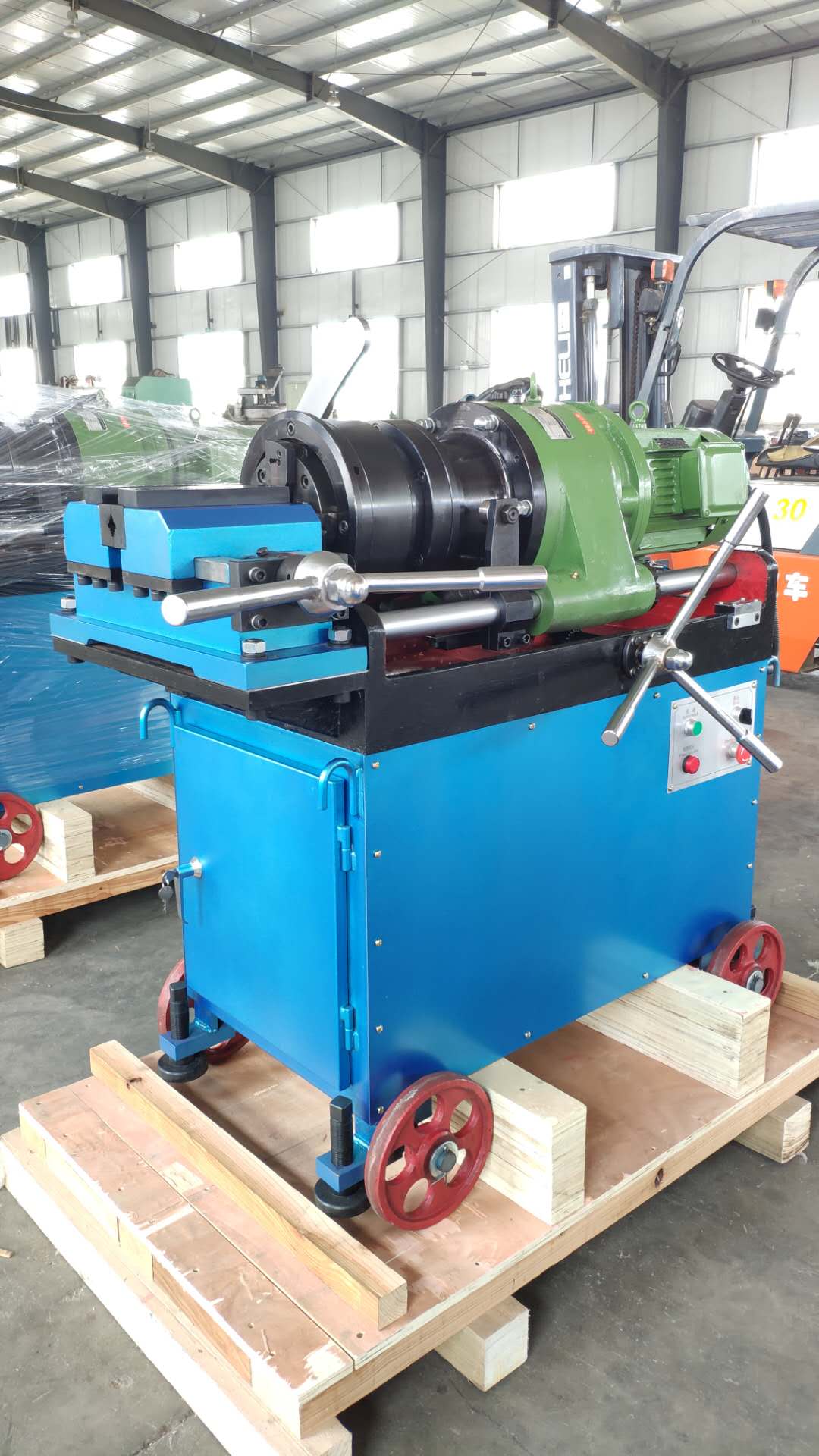
The way out of the 95 mm ceiling is to select a threading machine whose maximum threading length exceeds the coupler requirement, then match it to a coupler type that is dimensionally consistent with that machine. In the Bartech line, two machines are positioned for this job: the CBT40A and the CBT40L.
CBT40A — 120 mm Maximum Threading Length with Quick and Slow Modes
The Rebar Threading Machine CBT40A covers a rebar size range of 16–40 mm. It runs on a 5.5 KW main motor at 380V/50HZ, with a speed ratio of 1:23 in quick mode or 1:29 in slow mode. Its maximum threading length is 120 mm. Net weight is 590 KG, and overall dimensions are 1180×670×1150 mm (1300×790×1340 mm).
The 120 mm figure is the key number. It gives roughly 25 mm of headroom above a 95 mm ceiling, which is enough to cover the longest coupler body in the 16–40 mm range — the 40 mm rolling coupler at 95 mm length — with margin left for normal field variation. The dual speed ratio matters as well: 1:23 quick mode supports production throughput, while 1:29 slow mode gives the operator a more controlled cut when threading harder or larger bars.
CBT40L — 100 mm or 200 mm Threading Length for Long-Thread Work
The Rebar Threading Machine CBT40L shares the same 16–40 mm rebar size range, the same 5.5 KW motor, the same 380V/50HZ supply, and the same 1:23 quick / 1:29 slow speed ratio. Its distinguishing specification is a maximum threading length listed as 100/200 mm. Net weight is 420 KG, and overall dimensions are 1210×610×1120 mm.
The 200 mm configuration is the choice when a project requires thread length well beyond what a standard coupler body needs — for example, where a longer engagement zone is specified, or where a non-standard coupler is being trialled. At 420 KG, the CBT40L is also the lighter of the two long-thread options, which matters for site handling and for projects that move the machine between floors.
Why 16–40 mm Is the Practical Working Range
Both machines are specified for 16–40 mm rebar, and the Bartech coupler range is built around the same 16/18/20/22/25/28/32/36/40 size series. That alignment is what makes a seamless connection possible: the same diameter size steps appear on the machine, the coupler, and the bar schedule. When the threading length limit is lifted, the remaining risk is a diameter mismatch — and the shared 16–40 mm range removes it.
Which Rebar Coupler Fits Which Threading Setup
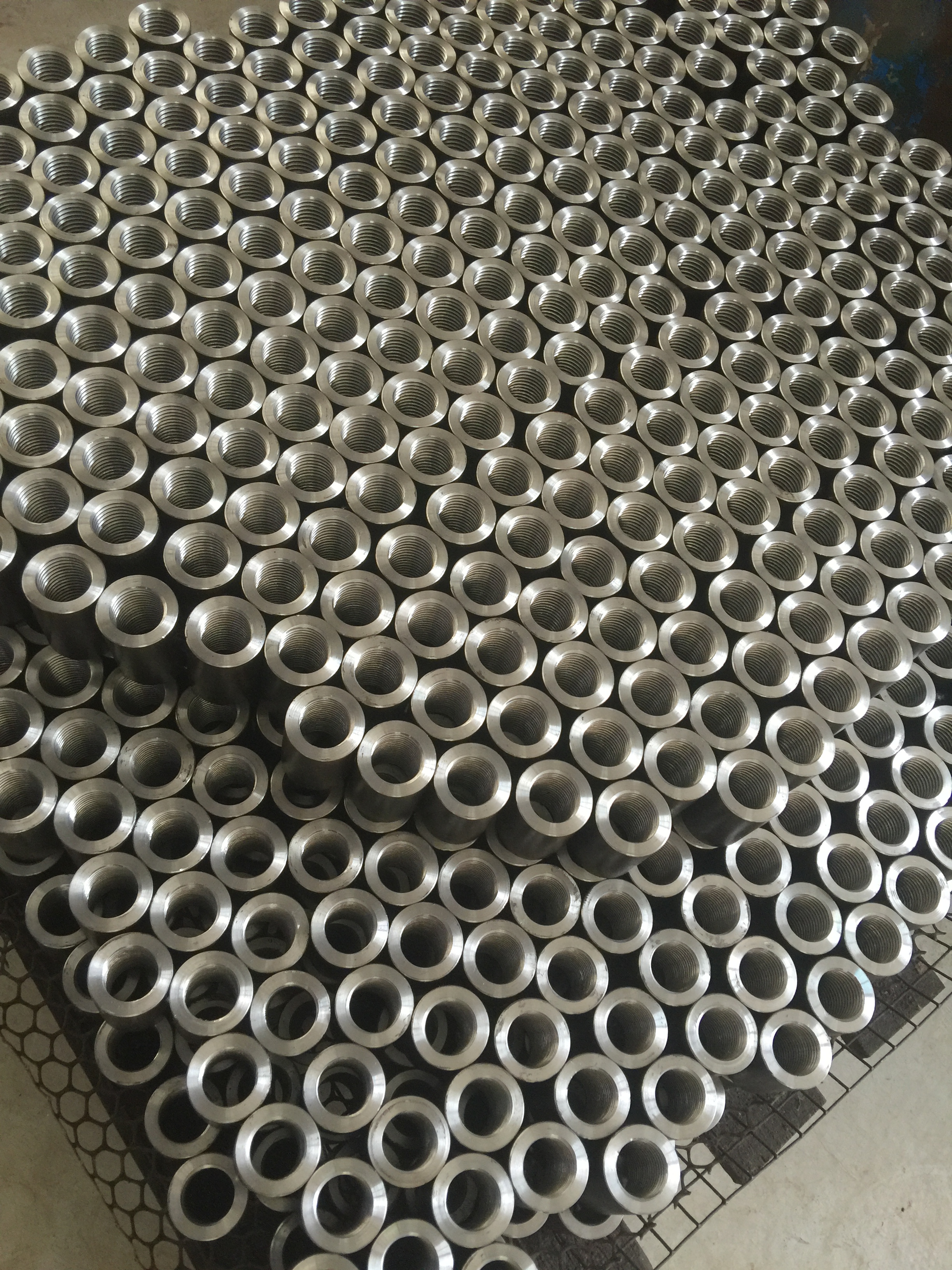
Coupler selection is what converts a longer threading capability into a working splice. The four coupler families below are all listed in the 16–40 mm range, and each has its own outer diameter, length, and thread geometry.
Rolling Rebar Coupler
The rolling coupler uses a parallel thread rolled onto the bar end. Listed specifications include carbon steel 45# and alloy steel 40CR as materials. The size series runs from 16 mm (OD 24 mm, length 42 mm, thread M16.5×2.5 at 60°) through to 40 mm (OD 59 mm, length 95 mm, thread M40.2×3.0 at 60°). Intermediate sizes include 25 mm (OD 38 mm, length 62 mm, thread M25.6×3.0) and 32 mm (OD 48 mm, length 76 mm, thread M32.6×3.0).
The rolling coupler is the type most directly affected by a 95 mm threading ceiling, because its 40 mm size is exactly 95 mm long. Running it on a machine with no thread length headroom leaves the operator working at the edge of the envelope.
Upset Forged Rebar Coupler
The upsetting coupler uses a parallel thread formed after the bar end is upset. Listed materials are carbon steel 45# and alloy steel 40CR. Sizes run from 16 mm (OD 26 mm, length 40 mm, thread M20×2.5 at 60°) to 40 mm (OD 62 mm, length 90 mm, thread M45×4.0 at 60°). The 25 mm size is OD 40 mm, length 60 mm, thread M30×3.5; the 32 mm size is OD 50 mm, length 72 mm, thread M36×4.0.
The upsetting coupler's 40 mm body is 90 mm long, slightly shorter than the rolling version, but the thread callout is larger (M45×4.0). That combination — shorter body, larger thread — is one of the reasons a machine with adjustable speed modes is useful: the operator can slow the cut for the heavier thread without losing the ability to run quick mode on smaller sizes.
Cold Pressing Rebar Coupler
The pressing coupler is a different connection method: it is compressed onto the bar rather than threaded. It is listed in carbon steel Q355B and is specified by outer diameter, length, and wall thickness rather than by thread. Sizes run from 16 mm (OD 30 mm, length 110 mm, thickness 4.5 mm) to 40 mm (OD 70 mm, length 240 mm, thickness 11.0 mm).
Because the pressing coupler does not use a machined thread, it is not limited by the 95 mm threading ceiling in the same way. It is included here because project schedules often mix connection methods, and the pressing machine (CBT32, 16–32 mm, 4 KW, 50T clamp tension, 70 MPa max oil pump pressure) sits alongside the threading machines in the same equipment plan.
One-Touch Rebar Coupler
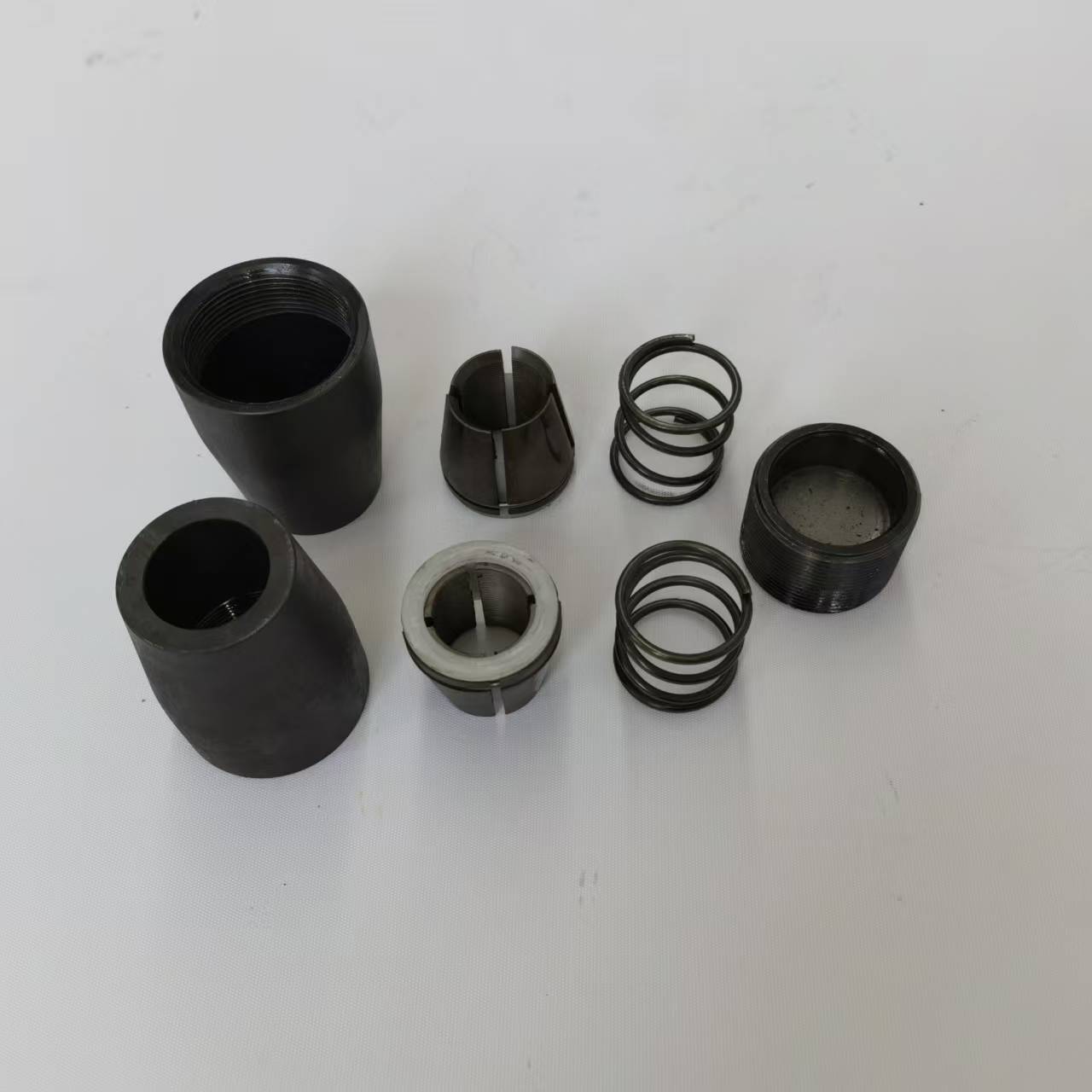
The one-touch coupler is listed in alloy steel 40CR and is specified by outer diameter and length across a size band from φ11–16 up to φ40. The 40 mm size is OD 83 mm, length 200 mm, which makes it the longest body in the family. The 25 mm size is OD 56 mm, length 143 mm; the 32 mm size is OD 70 mm, length 170 mm.
The one-touch design changes the thread-length question. Its longer body and different engagement geometry mean the threading and installation sequence has to be confirmed against the specific coupler drawing, not assumed from a rolling coupler precedent.
Step-by-Step: Building a Threading Workflow That Does Not Hit the Ceiling
The sequence below turns the specification comparison into an executable site plan. It assumes the project has already decided to use mechanical splicing and is now choosing the threading and coupler combination.
- List every bar diameter in the splice schedule. Start from the 16–40 mm range and identify which sizes actually appear. A project that stays at or below 32 mm has different machine requirements than one that reaches 40 mm.
- Identify the coupler type for each diameter. Rolling, upsetting, pressing, and one-touch couplers have different bodies. Record the coupler length for each size — for example, the rolling coupler at 40 mm is 95 mm long, while the upsetting coupler at 40 mm is 90 mm long.
- Convert coupler length into required thread length. The thread on each bar end has to fill the coupler's engagement zone. Use the coupler drawing, not a rule of thumb, because the 60° thread angle and the pitch vary by size (M16.5×2.5 at 16 mm versus M40.2×3.0 at 40 mm on the rolling coupler).
- Compare required thread length against machine maximum. If the requirement sits close to 95 mm, the 40MO (95 mm max) and 40AO (90 mm with block) are working without margin. Move to the CBT40A (120 mm) or CBT40L (100/200 mm).
- Choose the speed mode for the bar and coupler. Both the CBT40A and CBT40L offer 1:23 quick or 1:29 slow. Use slow mode where the thread is heavier or the bar is harder; use quick mode where throughput matters and the cut is well within capacity.
- Confirm the material grade against the coupler. Bartech couplers are listed in carbon steel 45# and alloy steel 40CR (rolling and upsetting), carbon steel Q355B (pressing), and alloy steel 40CR (one-touch). The threading setup has to be appropriate for the bar grade as well as the coupler grade.
- Validate on a sample before the pour cycle. Thread a representative bar, seat the coupler, and check engagement. This is the step that catches a mismatch before it becomes a site hold.
- Document the setup for the inspection file. Record the machine model, speed mode, coupler type, diameter, and thread callout. This supports the conformity evidence trail described in ISO 15835-3.
Use Cases: Where the Longer-Thread Setup Pays Off
The application range for Bartech couplers is listed as construction projects, high buildings, airport projects, high-railway stations, and large bridges including sea-crossing bridges. In each setting, the threading ceiling shows up differently.
High-Rise Buildings
High-rise cores and columns concentrate large-diameter bars in a small footprint. A 40 mm rolling coupler at 95 mm length is exactly the size that exposes a 95 mm threading limit. Moving to a CBT40A or CBT40L removes the constraint without changing the coupler family, so the bar schedule and the inspection criteria stay consistent floor to floor.
Bridges and Sea-Crossing Structures
Bridge work tends to specify longer engagement and tighter tolerances. The CBT40L's 200 mm threading option gives the fabricator room to meet a longer thread callout, while the 16–40 mm range keeps the coupler selection aligned with the bar schedule. The listed coupler application scope explicitly includes large bridges including sea-crossing bridges.
Airports and High-Railway Stations
These projects combine large concrete elements with long service-life requirements. A Kuwait-based case describes a construction enterprise purchasing standard rebar couplers for outdoor construction at 400,000 units per year, reporting higher strength, stable quality, and good operation with easy connection. A Vietnam-based case describes rebar couplers used in tall building and railway station construction at 500,000 units per year, with high strength, good quality, clear outer surface, and strict thread specifications cited as the key performance attributes.
Both cases point to the same operational lesson: on projects of that scale, thread consistency is a production-rate issue, not only a quality issue. A machine that has to be re-set because it is at its thread-length limit costs time on every shift.
Threading Machine Comparison: Where Each Model Sits
The table below compares the threading machines in the Bartech range on the specifications that matter for a thread-length decision. All values are as listed in the product data.
| Model | Rebar Size | Max Threading Length | Speed Ratio | Main Motor | Net Weight |
|---|---|---|---|---|---|
| CBT40A | 16–40 mm | 120 mm | 1:23 quick / 1:29 slow | 5.5 KW, 380V/50HZ | 590 KG |
| CBT40L | 16–40 mm | 100/200 mm | 1:23 quick / 1:29 slow | 5.5 KW, 380V/50HZ | 420 KG |
| 40AO | 16–40 mm | 90 mm with block / 150 mm without block | 1:23 quick / 1:29 slow | 5.5 KW / 7.5 KW, 380V/50HZ | 860 KG |
| 40MO | 16–40 mm | 95 mm (150 mm without block) | 1:19 quick / 1:23 slow | 5.5 KW, 380V/50HZ | 680 KG |
Reading the table: the 40MO and 40AO sit at or below the 95 mm mark when the block is in place. The CBT40A raises the ceiling to 120 mm and the CBT40L raises it to 200 mm. For a 40 mm rolling coupler at 95 mm length, that difference is the working margin. For smaller diameters, all four machines are within range, and the choice turns on throughput, weight, and site logistics rather than thread length.
FAQ
Which standards apply to rebar couplers and mechanical splices?
ISO 15835-1:2018 specifies requirements for couplers used for mechanical splices of steel reinforcing bars. ISO 15835-2:2018 specifies the test methods applicable to those couplers. ISO 15835-3:2018 specifies rules for certification and self-evaluation. Mechanical rebar splices are also commonly assessed against standards such as ASTM A615 and BS 8110 (Eurocode 2). Bartech holds a CE Certificate (Nr. SC-PSC-4-2025-12-14, valid 2025-12-04 to 2030-12-03, scope EU Construction Products Regulation) and an ISO certificate (31623Q10713R1S, GB/T19001-2016 / ISO9001:2015, valid 2021-02-05 to 2026-12-21). These documents support supplier qualification; the applicable standard for a given project should still be confirmed in the specification.
What is the difference in threading capacity between the CBT40A and CBT40L?
Both machines cover 16–40 mm rebar, run a 5.5 KW main motor at 380V/50HZ, and offer a 1:23 quick or 1:29 slow speed ratio. The difference is maximum threading length: the CBT40A is listed at 120 mm and the CBT40L is listed at 100/200 mm. The CBT40A weighs 590 KG; the CBT40L weighs 420 KG. Choose the CBT40A when 120 mm of thread length covers the coupler schedule, and the CBT40L when a longer thread is required or when the lighter machine is easier to position on site.
What drives the cost of moving to a longer-thread setup?
The cost is driven by the machine specification, not by the coupler alone. A longer maximum threading length, a dual speed ratio, and the motor rating all sit in the machine. On the coupler side, the material grade matters: Bartech couplers are listed in carbon steel 45# and alloy steel 40CR for rolling and upsetting types, carbon steel Q355B for the pressing type, and alloy steel 40CR for the one-touch type. Because Bartech holds stock couplers with no order minimum quantity, the coupler side can be sampled before a full commitment. A project-specific quote should be requested for the machine and coupler combination rather than estimated from a single line item.
How can a buyer validate thread quality before placing a bulk order?
Sampling is the practical route. Bartech's stated quality control includes a material test report, 10% production testing during the production line, and 100% appearance surface checking. The company offers OEM production with customization of coupler outer diameter, inner diameter, and thread. Monthly capacity is listed at 300,000 pieces, annual output at 3,600,000 pieces, and the factory operates with 30 employees and 10 engineers in Qing County, Cangzhou City, Hebei Province. A buyer can request samples at the target diameter, confirm the thread callout against the coupler drawing, and then scale. To start that sample request, contact sales@chinabartech.cn or reach the team via WhatsApp at +86 13785685215.
What is the typical lead time for machines and couplers?
Lead time is listed as 7–30 days based on different quantity. Stock couplers have no order minimum quantity, which shortens the path for sample and trial orders. For machine and coupler packages, confirm the specific model and size mix with the supplier so the lead time reflects the actual configuration. Bartech exports to Asia, the Middle East, and South America, including Vietnam, Malaysia, Kuwait, Qatar, UAE, Saudi Arabia, and Mexico.
Ready to move past the 95 mm ceiling?
Send your bar schedule and coupler sizes to CANGZHOU BARTECH CONSTRUCTION MATERIAL CO., LTD. The team can confirm the matching threading machine, the coupler type for each diameter, and a sample plan for validation.
Email: sales@chinabartech.cn | Tel / WhatsApp: +86 13785685215 | Web: www.chinabartech.cn
Request a Quote or Sample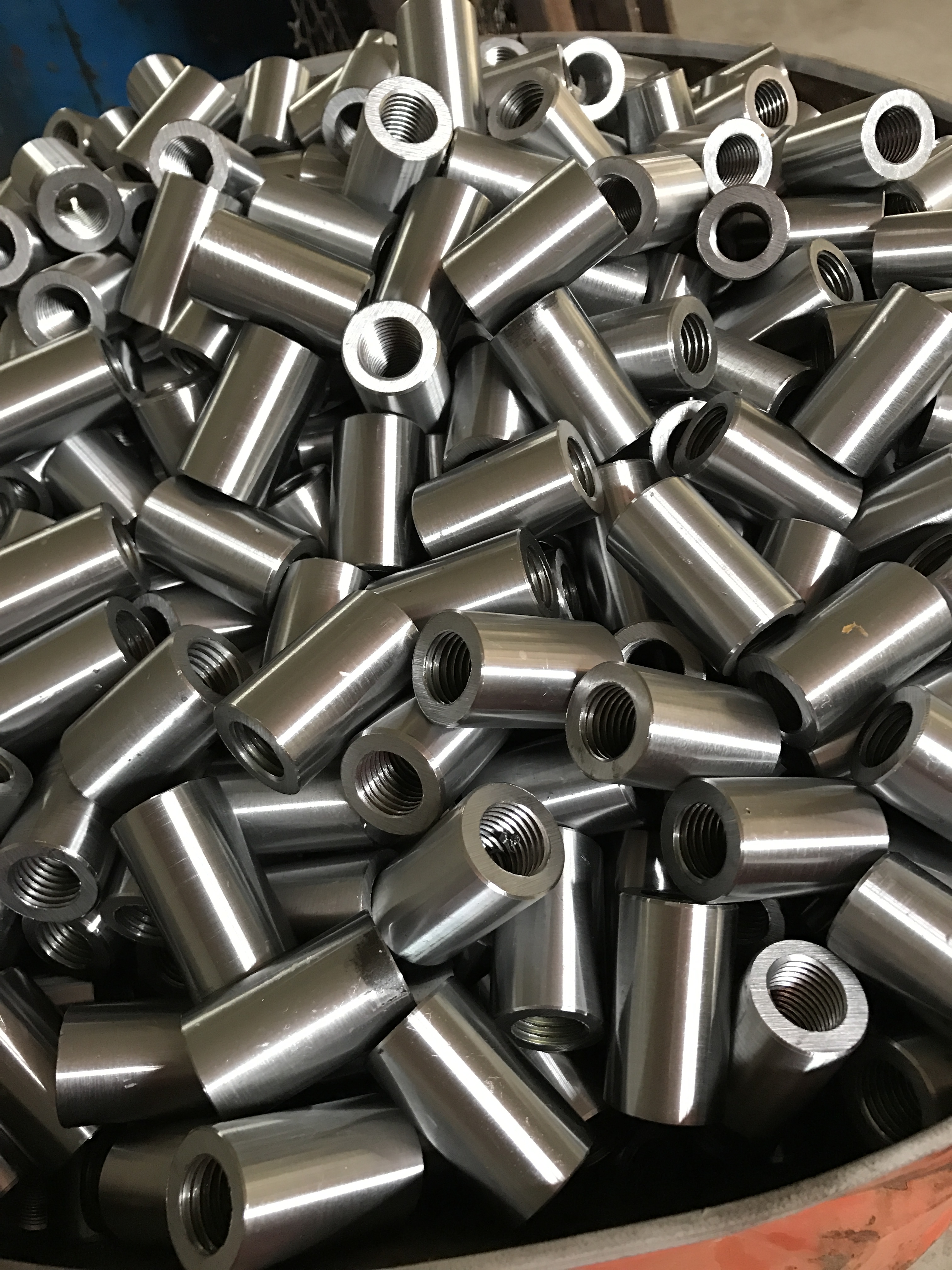
Conclusion
The 95 mm threading limit is a real constraint, but it is a machine-selection constraint rather than a coupler-design one. The fix is to match three things: the required thread length for the coupler in use, the maximum threading length of the machine, and the 16–40 mm size range shared by both. The CBT40A at 120 mm and the CBT40L at 100/200 mm give the margin that the 40MO at 95 mm and the 40AO at 90 mm with block do not.
For evaluation-stage buyers, the practical next step is to list the bar diameters and coupler types in the project, convert the longest coupler body into a required thread length, and compare that number against the machine specification. Where the requirement sits near 95 mm, move up to the longer-thread machine rather than working at the limit. CANGZHOU BARTECH CONSTRUCTION MATERIAL CO., LTD. supplies both the threading machines and the matching couplers, which keeps the thread geometry, the coupler body, and the bar schedule in one specification chain.
Have Questions or Need More Details?
Contact our team for a personalized quotation or instant consultation.
Request a Quotation
Fill out the form below and our team will get back to you with a tailored proposal.
WhatsApp Direct Chat
Prefer to chat in real-time? Message us on WhatsApp for instant assistance & quick answers.
- Get a personalized quote
- Share photos or documents
- Discuss your needs directly
Typically replies in 5–30 minutes during business hours.