
Rebar AUTO Threading Machine 40AO vs. CBT40A: Which Coupler Threading Setup Fits Your Project?
A mechanical rebar splice only works when two things agree: the thread rolled onto the bar end, and the rebar coupler that has to grip it. That is why the threading machine is not a generic equipment purchase. The Rebar AUTO Threading Machine 40AO and the Rebar Threading Machine CBT40A are both rebar thread rolling machines built by Cangzhou Bartech Construction Material Co., Ltd., a rebar coupler and rebar threading machine supplier established in 2008, and both process rebar from 16 mm to 40 mm on a 380 V / 50 Hz supply.
The real question is not which model looks stronger on a specification sheet. It is how bars are handled on your site or in your factory, how much thread your coupler design actually needs, and how the machine fits the rest of the connection workflow. This head-to-head guide compares the two models using published specifications only, then translates those specifications into the decisions a buyer has to make before placing an order.
Short answer: Both machines cover 16–40 mm rebar and share the same 1:23 quick / 1:29 slow speed ratios. The 40AO is the AUTO TYPE unit: air clamping at 0.4–0.8 MPa, a 5.5 kW or 7.5 kW main motor, and a maximum threading length of 90 mm with the block fitted or 150 mm without it. The CBT40A is the compact rolling machine: 5.5 kW, a maximum threading length of 120 mm, and 590 kg net weight against 860 kg. Choose the 40AO when automatic bar clamping and volume throughput matter most; choose the CBT40A when a smaller, lighter machine with a longer standard thread length matters more.
Problem Definition: Why the Threading Setup Decides Coupler Fit
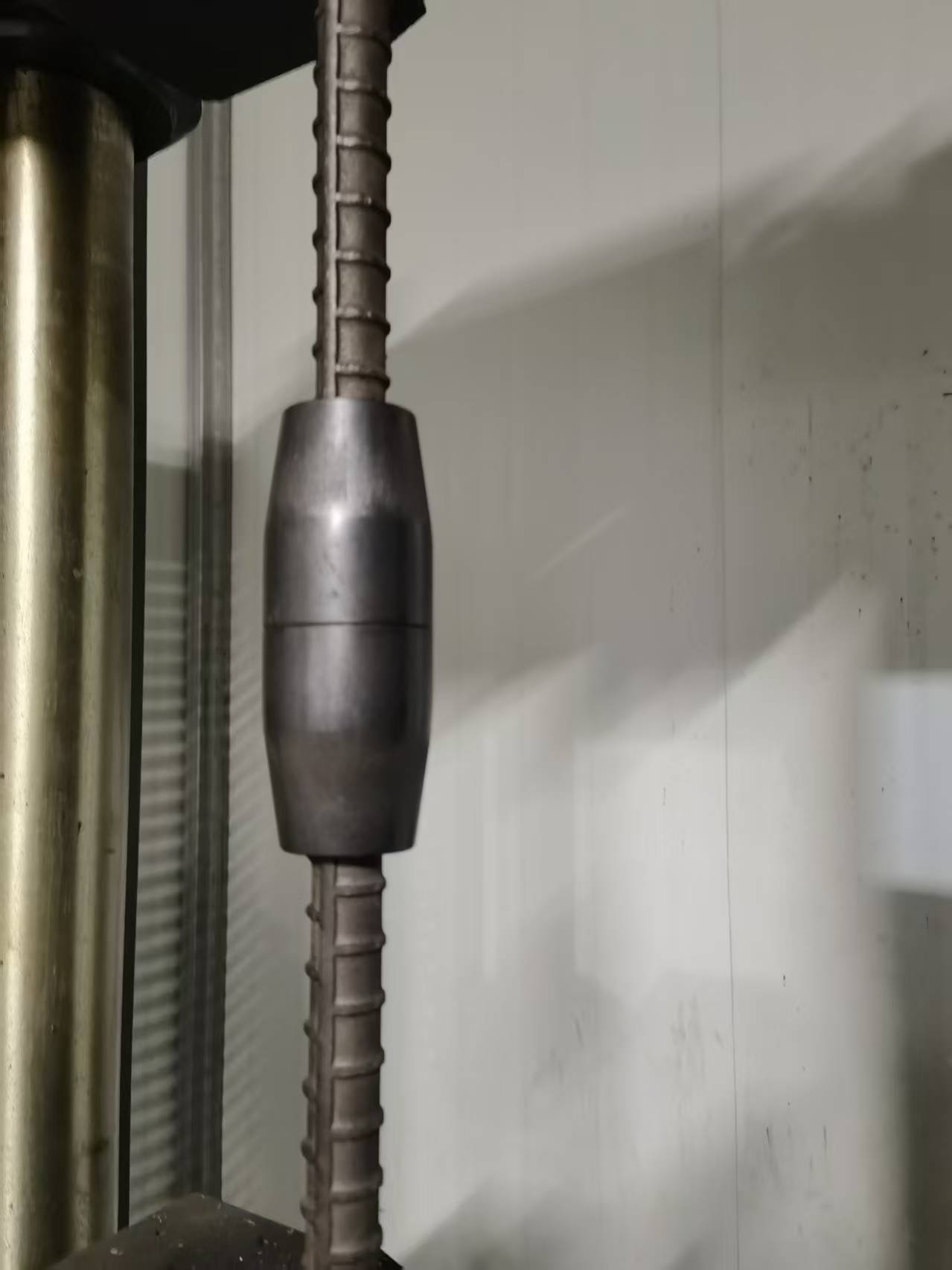
A rebar coupler is a sleeve, not a clamp. The bars do not touch inside it; the rolled thread carries the load transfer from one bar to the coupler and then to the next bar. That means the thread geometry produced at the bar end — pitch, angle and length — has to match the coupler family the project specified. A machine that threads “something close” is not a solution.
The complication is that coupler families are not dimensionally interchangeable, and the differences appear even at the same nominal bar size. Take size 40 bar as one example:
- Rolling rebar coupler, size 40: thread M40.2×3.0 at a 60° angle, outer diameter 59 mm, length 95 mm.
- Upsetting rebar coupler, size 40: thread M45×4.0 at a 60° angle, outer diameter 62 mm, length 90 mm.
- Pressing rebar coupler, size φ40: outer diameter 70 mm, length 240 mm, wall thickness 11.0 mm.
- ONE-TOUCH rebar coupler, size φ40: outer diameter 83 mm, length 200 mm.
Same rebar diameter, four different sleeve and thread geometries. A thread rolling machine therefore has to be selected against a specific coupler programme, not against a general idea of “threading rebar”. Two failure modes follow from getting this wrong. If the machine cannot deliver enough thread length, the coupler cannot be assembled to its designed engagement. If the setup forces unnecessary repositioning or re-clamping of every bar, cycle time rises and the labour saving that justified mechanical splicing in the first place disappears.
This is exactly where the 40AO and CBT40A separate: not in the rebar sizes they handle, but in how they hold the bar and how much thread they can produce in one pass.
Industry Background: Where Threading Equipment Sits in Mechanical Splicing
Mechanical splicing is no longer a niche alternative to lap splicing. The global rebar coupler market was valued at USD 1.82 billion in 2025 and is projected to reach USD 3.47 billion by 2034, according to a 2026 Dataintelo market research report. Asia Pacific accounted for 41.3% of global revenue in 2025 — consistent with the concentration of coupler and threading-machine manufacturing in the region, including Hebei-based suppliers such as Bartech.
Standards determine what a project will ask you to document. Mechanical splices are commonly specified against ISO 15835, ASTM A615 and BS 8110, and the ISO 15835 series deliberately separates the problem into parts: Part 1 sets requirements for couplers used for mechanical splices of steel reinforcing bars, Part 2 sets the test methods, and Part 3 sets the rules for certification and self-evaluation. For trade and customs paperwork, rebar couplers are classified under HS code 7307.92.90.
The supplier side matters in the same way. Cangzhou Bartech Construction Material Co., Ltd. was established in 2008, operates a 1,000 m² manufacturing facility with approximately 30 staff, and reports an annual production capacity of 3,600,000 units supported by a 10-engineer R&D team. Its export ratio is 100%, with markets across Asia, the Middle East and South America, including Vietnam, Malaysia, Kuwait, Qatar, UAE, Saudi Arabia and Mexico. Its published material specification lists S45C (tensile strength above 600 MPa) and 40Cr (approximately 980 MPa) as the grades used for its couplers.
Against that background, the question “40AO or CBT40A?” is really a workflow question: continuous automatic threading for volume, or a lighter rolling machine for flexible site use.
Detailed Solution: 40AO and CBT40A, Specification by Specification
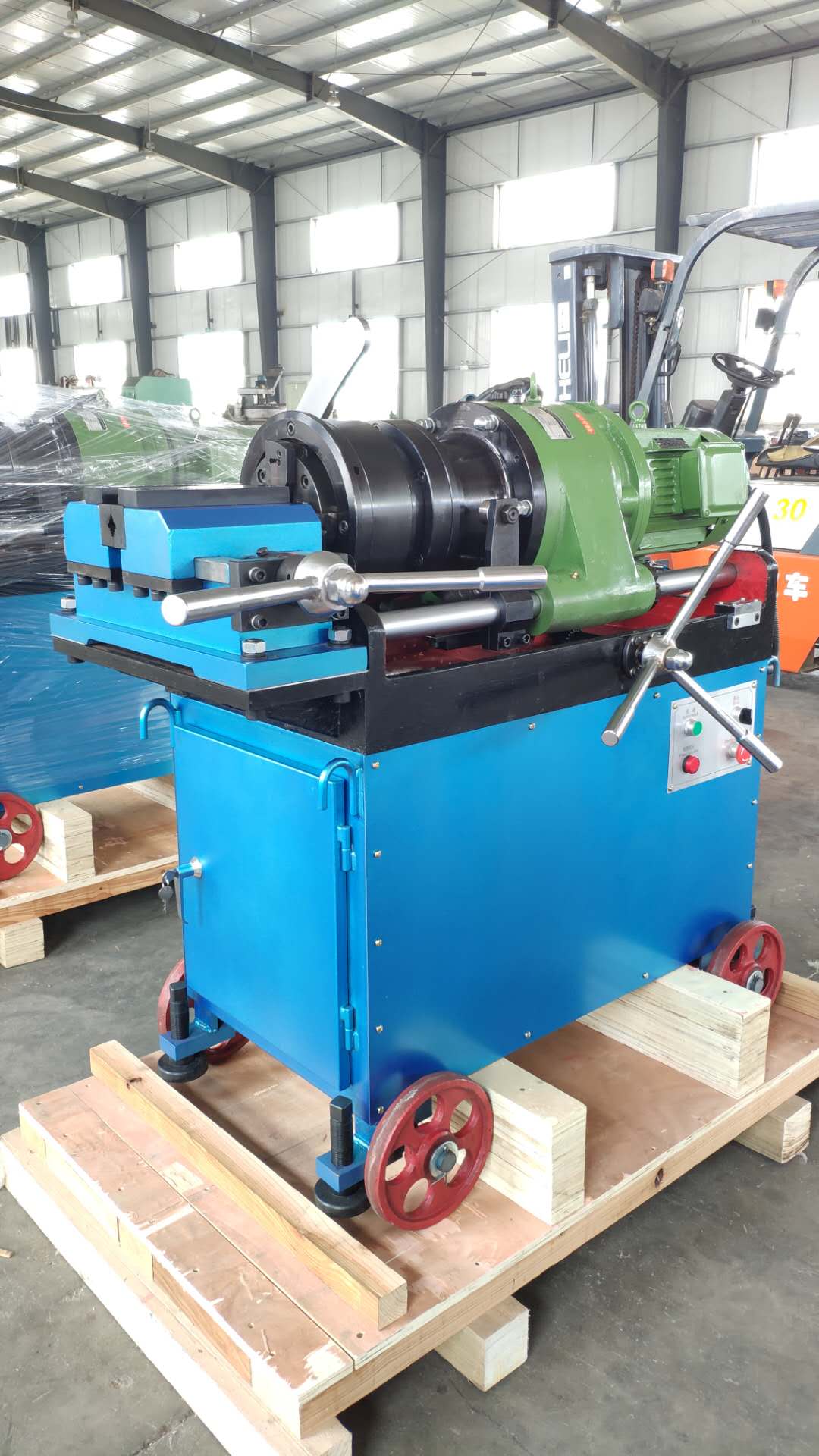
The 40AO: a Rebar Thread Rolling Machine of AUTO TYPE
The 40AO is classified as a Rebar Thread Rolling Machine AUTO TYPE and is made of carbon steel. It processes rebar sizes from 16 mm to 40 mm. The main motor is rated 5.5 kW or 7.5 kW at 1450 r/min, and there is a separate water pump rated 0.12 kW at 1450 r/min. Power source is 380 V / 50 Hz, and the speed ratio is 1:23 for quick threading or 1:29 for slow threading. Bar clamping is pneumatic: air power for clamping the rebar is 0.4–0.8 MPa. Maximum threading length is 90 mm with the block fitted, or 150 mm without it. Overall dimensions are 1950 × 700 × 1120 mm and net weight is 860 kg.
Typical application scenarios listed for this model are construction projects, high buildings, airport projects, high-railway stations and big bridges across the sea.
The CBT40A: a Compact Rolling Machine with a Longer Standard Thread
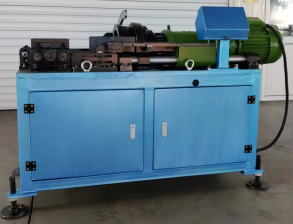
The CBT40A is a Rebar Threading Machine in the Rebar Thread Rolling Machine category, also made of carbon steel, with the same 16–40 mm rebar range. Main motor power is 5.5 kW on a 380 V / 50 Hz supply, and the speed ratio is again 1:23 quick or 1:29 slow. Its published maximum threading length is 120 mm. Overall dimensions are 1180 × 670 × 1150 mm (1300 × 790 × 1340 mm), and net weight is 590 kg. It is designed for construction projects, high buildings, airport projects, high-railway stations and big bridges across the sea.
Read side by side, the two machines look nearly identical on the electrical side and clearly different on the mechanical side. That is the whole decision.
Where the Two Machines Actually Diverge
- Bar clamping and operator workload. The 40AO clamps the bar with air pressure of 0.4–0.8 MPa — the “AUTO” in its name. The published CBT40A data does not list pneumatic clamping. If your operators should not be manually holding and re-clamping every bar, this is the first dividing line.
- Threading length. CBT40A: 120 mm maximum. 40AO: 90 mm with the block fitted, 150 mm without it. If your coupler programme needs roughly 100–120 mm of thread and you want to run with the block in place, the CBT40A maximum covers it directly. If you need more than 120 mm, the 40AO without the block reaches 150 mm.
- Footprint and weight. 860 kg at 1950 × 700 × 1120 mm versus 590 kg at 1180 × 670 × 1150 mm. A lighter, shorter machine changes how easily it is repositioned between levels, moved by hoist, or packed for export freight.
- Motor options. The 40AO is offered with a 5.5 kW or 7.5 kW main motor; the CBT40A lists 5.5 kW.
Step-by-Step Breakdown: Choosing in Six Steps
- Fix your bar diameter range first. Both models cover 16–40 mm. If your project regularly works below 16 mm, neither machine is the correct answer and the conversation should move to a different model.
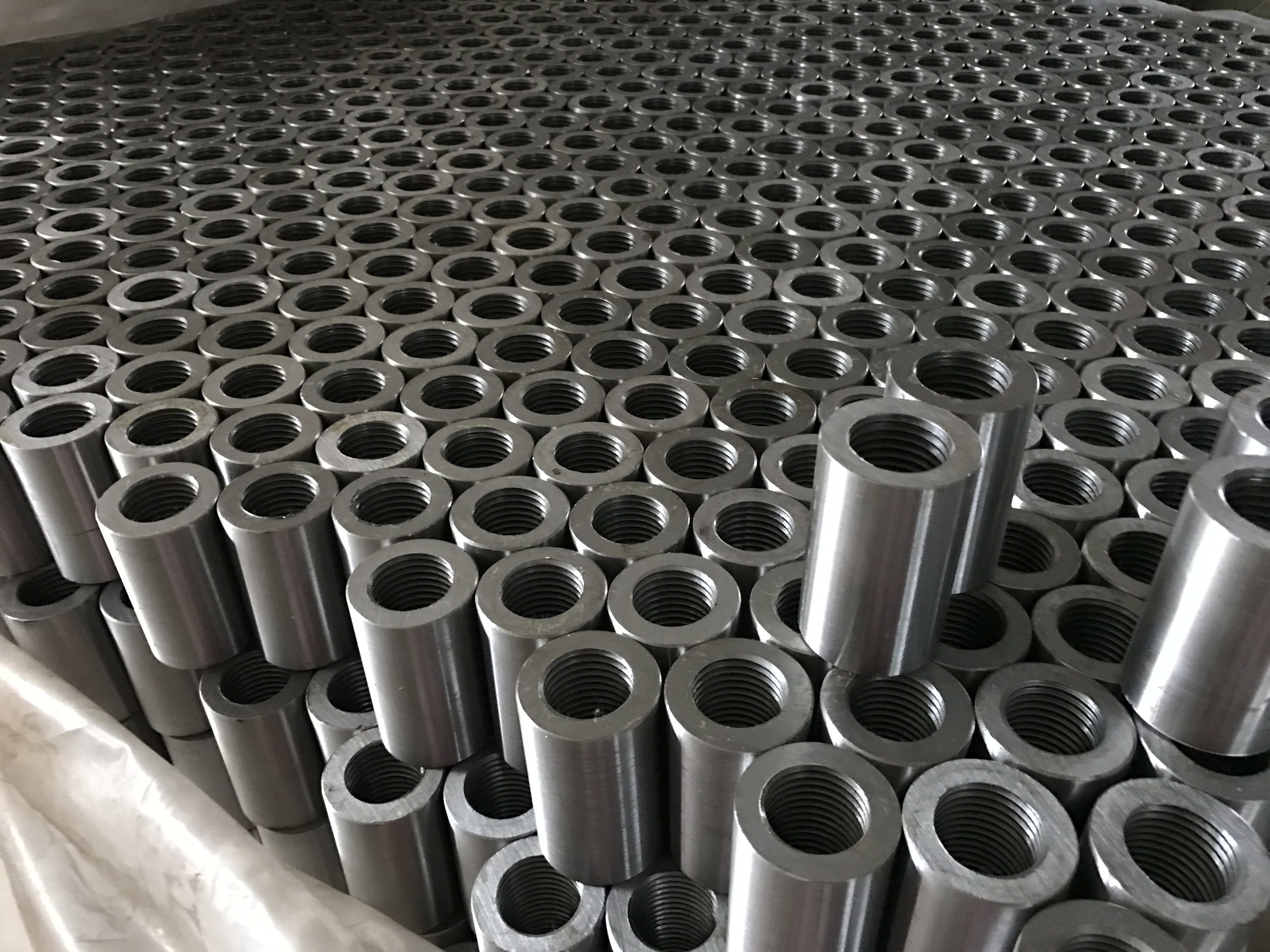
- Fix the coupler family and its thread. Rolling, upsetting, cold pressing and ONE-TOUCH couplers each have their own outer diameter, length and thread specification. A size 40 rolling coupler is threaded M40.2×3.0 at 60°; a size 40 upsetting coupler is threaded M45×4.0 at 60°. Pick the coupler first, then the machine.
- Convert the coupler into a required thread length. Compare that number against the 120 mm CBT40A maximum and the 90 mm / 150 mm figures for the 40AO. This single comparison usually settles the choice.
- Decide automatic versus manual bar handling. If throughput depends on continuous, repeatable clamping, the 40AO’s 0.4–0.8 MPa air clamping is the relevant feature.
- Check the site services. Both machines need 380 V / 50 Hz. The 40AO additionally needs an air supply of 0.4–0.8 MPa, which has to be planned into the site layout or factory line.
- Plan the assembly and documentation chain. Threading is only step one. Coupler assembly is done with a rebar electric torque wrench: the BOC 8-42 covers 12–40 mm rebar and 16–32 coupler sizes with a maximum torque of 400 N·m and 9.5 kg net weight; the BOC 8-32 covers 8–32 mm rebar with a maximum torque of 350 N·m and 4.5 kg net weight. Document control then follows the standard the project specified.
Use Cases: Which Machine Fits Which Project
Super high-rise building cores
In tall building work, the operating condition is typically an outdoor construction environment on a super high-rise structure with normal tropical temperature and humidity. The function is straightforward — connect the rebars — and the method is threading the bar ends with a rebar threading machine. Matched equipment is the rebar threading machine itself, and the special requirement stated for this scenario is ISO and CE documentation. Bartech lists this application across multiple markets including the United Arab Emirates, Australia and India. High vertical volume with repetitive clamping favours the automatic bar handling of the 40AO.
High-railway and long-span structural work
High-railway projects run under outdoor, open-air conditions with tropical high temperatures. The workflow is different: upsetting, thread cutting, then assembling the rebar coupler for the connection, supported by a rebar upsetting machine and a rebar thread cutting machine. The stated special requirement is again CE and ISO documentation, and Bartech lists Mexico and global markets for this scenario. Where the sequence depends on cut and upset threads rather than long rolled threads, the threading machine choice is driven by how the bars are fed into the line.
Rebar threading factories and pre-threading yards
This is the scenario that maps most directly onto the 40AO. Rebar end pre-threading happens at the factory with large quantities of bars, in an indoor production environment at normal room temperature, running in continuous automatic threading mode. The special requirements listed are long-life rib cutters and rollers, plus a strong shaft and machine parts; matched equipment is a rebar thread rolling machine with its spare parts. Bartech lists Qatar and global markets for this application. Continuous automatic processing of large batches is precisely where automatic clamping earns its place.
Construction projects in wet, high-humidity climates
On general construction projects — high buildings, hotels, airport stations — the working condition is often an outdoor tropical site with high humidity and rainy periods and continuous all-day operation. The product’s role is rebar mechanical connection that maintains structural strength and complies with construction standards, and the stated requirement is compliance with CE and ISO standards with durability for long-term use. The matched equipment set is a rebar threading machine, a rebar cutting machine and a rebar coupler electric wrench. Bartech lists Vietnam and global markets for this scenario. Here the lighter CBT40A has an advantage in a setting where machines are frequently repositioned between levels and work fronts.
Comparison Table: 40AO vs. CBT40A
| Attribute | Rebar AUTO Threading Machine 40AO | Rebar Threading Machine CBT40A |
|---|---|---|
| Machine category | Rebar Thread Rolling Machine, AUTO TYPE | Rebar Thread Rolling Machine |
| Rebar size range | 16–40 mm | 16–40 mm |
| Main motor power | 5.5 kW or 7.5 kW at 1450 r/min | 5.5 kW |
| Water pump power | 0.12 kW at 1450 r/min | Not stated in the published data |
| Power source | 380 V / 50 Hz | 380 V / 50 Hz |
| Speed ratio | 1:23 quick / 1:29 slow | 1:23 quick / 1:29 slow |
| Bar clamping | Air power 0.4–0.8 MPa | Not stated in the published data |
| Maximum threading length | 90 mm with block / 150 mm without block | 120 mm |
| Overall dimensions | 1950 × 700 × 1120 mm | 1180 × 670 × 1150 mm (1300 × 790 × 1340 mm) |
| Net weight | 860 kg | 590 kg |
| Material | Carbon steel | Carbon steel |
| Typical applications | Construction projects, high buildings, airport projects, high-railway stations, big bridges across the sea | Construction projects, high buildings, airport projects, high-railway stations, big bridges across the sea |
FAQ
1. Do the 40AO and CBT40A support couplers that meet ISO 15835 requirements?
A threading machine produces the bar-end thread; conformity is a property of the coupler-and-splice system, not of the machine. ISO 15835-1:2018 specifies the requirements for couplers used for mechanical splices of steel reinforcing bars, ISO 15835-2:2018 specifies the applicable test methods, and ISO 15835-3:2018 specifies the rules for certification and self-evaluation. Mechanical splices are also commonly specified against ASTM A615 and BS 8110. In practice, treat these as three separate documents to request — the requirement standard, the test method, and the conformity evidence — and then confirm that the thread geometry your machine produces matches the coupler family you buy. A size 40 rolling coupler, for example, takes M40.2×3.0 at 60°, while a size 40 upsetting coupler takes M45×4.0 at 60°. Applications such as super high-rise building work commonly state ISO and CE documentation as a project requirement.
2. Which model should I choose if I need a longer thread or a higher-throughput setup?
On thread length, the CBT40A is rated to 120 mm, while the 40AO delivers 90 mm with the block fitted and 150 mm without it. If a thread of roughly 100–120 mm is enough and you want to keep the block in place, the CBT40A covers that directly; if you need beyond 120 mm, the 40AO without the block reaches 150 mm. On throughput and labour, the deciding feature is clamping: the 40AO clamps the bar pneumatically at 0.4–0.8 MPa and is offered with a 5.5 kW or 7.5 kW main motor, which suits continuous automatic pre-threading of large batches. Both machines share the same 1:23 quick and 1:29 slow speed ratios, so the difference is in how the bar is held and how much thread is produced per pass, not in the gear ratios.
3. How should I compare the cost of a 40AO setup against a CBT40A setup?
Compare total setup cost, not machine price alone, because the configurations differ. Four cost drivers are visible in the published specifications: the 40AO can be specified with either a 5.5 kW or 7.5 kW main motor; the 40AO requires an air supply of 0.4–0.8 MPa for clamping, which may mean compressor capacity you do not currently have; machine weight differs by 270 kg (860 kg versus 590 kg), which affects lifting arrangements and export freight; and the number of threading machines, cutters and electric torque wrenches you need is set by your required daily bar count. A dated quotation built around your rebar diameters, coupler family and required thread length is the only reliable comparison. Bartech’s contact channel for quotations is sales@chinabartech.cn.
4. Can I validate a threading and coupler setup before committing to volume?
Validation should test the complete link, not just the machine. Send the bar diameter range (16–40 mm is covered by both models), the coupler family you intend to use — rolling, upsetting, cold pressing or ONE-TOUCH — the required thread length, and the thread specification you must hit, such as M25.6×3.0 at 60° for a size 25 rolling coupler (OD 38 mm, length 62 mm). With those inputs, the thread length can be checked against the 120 mm CBT40A maximum and the 90 mm / 150 mm 40AO figures, and the coupler dimensions can be matched at the same time. Machine and coupler samples for a trial connection can then be arranged through sales@chinabartech.cn or WhatsApp +86 13785685215.
5. What determines lead time on a 40AO or CBT40A order?
Lead time is driven by configuration and order quantity rather than by the model name alone. Cangzhou Bartech operates a 1,000 m² manufacturing facility with approximately 30 staff and reports an annual production capacity of 3,600,000 units, supported by a 10-engineer R&D team, and the company exports 100% of its output to markets in Asia, the Middle East and South America. To receive an accurate schedule, include the model, the motor option (5.5 kW or 7.5 kW for the 40AO), whether your site has an air supply of 0.4–0.8 MPa, your coupler types and sizes, the thread length required, and the destination port, and ask for delivery alongside the packing details. Send that list to sales@chinabartech.cn or WhatsApp +86 13785685215 and ask for a dated delivery commitment.
Conclusion: The Decision Rule
If both machines handle your rebar range and both run on your site voltage, the choice reduces to three questions. First, how long does your coupler programme demand? Under roughly 120 mm, the CBT40A’s published maximum is sufficient; above that, the 40AO without the block reaches 150 mm. Second, who holds the bar? If clamping has to be automatic and repeatable across thousands of bars — the factory pre-threading case in Qatar, or dense vertical cores in tall buildings — the 40AO’s 0.4–0.8 MPa air clamping is the relevant capability. Third, how mobile does the machine have to be? At 590 kg and 1180 × 670 × 1150 mm, the CBT40A is the lighter unit to reposition and ship; at 860 kg and 1950 × 700 × 1120 mm, the 40AO is the heavier, automation-oriented machine.
Whichever model you select, the surrounding workflow matters just as much: match the coupler family and its thread, plan the assembly step with the right electric torque wrench, and document the connection against the standard your project specifies. That combination — machine, coupler, tooling and documentation — is what makes a mechanical splice hold.
Need help matching a threading machine to your coupler programme?
Send Cangzhou Bartech your rebar diameters, coupler type and required thread length, and the team will confirm which model fits — 40AO or CBT40A — and what the rest of the setup needs.
Email: sales@chinabartech.cn | WhatsApp: +86 13785685215 | www.chinabartech.cn
Request a machine and coupler sample pack, or a dated quotation for your project quantities.
Have Questions or Need More Details?
Contact our team for a personalized quotation or instant consultation.
Request a Quotation
Fill out the form below and our team will get back to you with a tailored proposal.
WhatsApp Direct Chat
Prefer to chat in real-time? Message us on WhatsApp for instant assistance & quick answers.
- Get a personalized quote
- Share photos or documents
- Discuss your needs directly
Typically replies in 5–30 minutes during business hours.