
Rebar Coupler Compliance: Aligning Specs with Project Standards
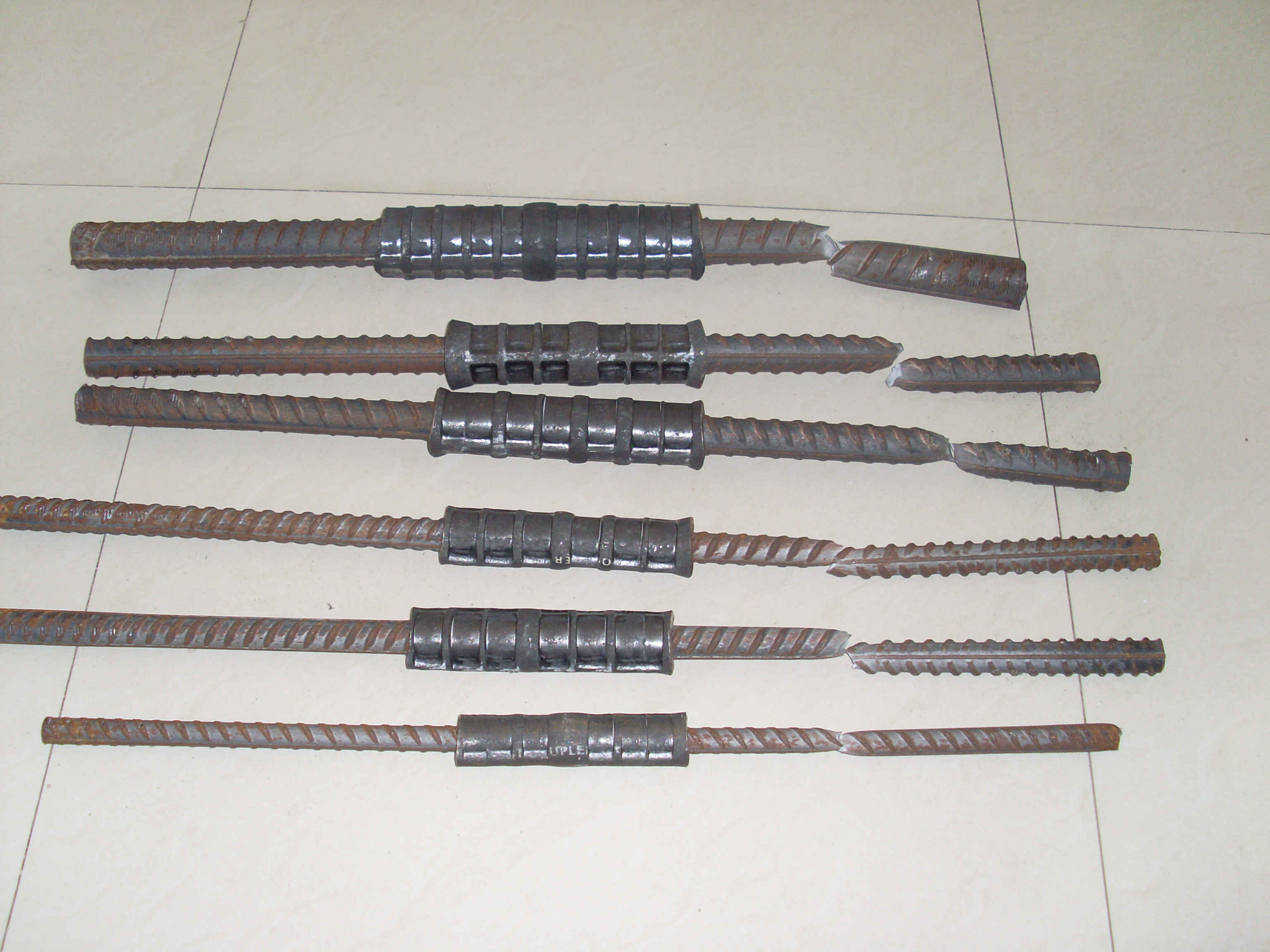
Rebar coupler from the Bartech 16-40 model range, supplied against a defined specification set rather than a generic description.
Aligning a rebar coupler to a project standard is a documentation exercise before it is a purchasing decision. The buyer's task is to place two sets of numbers side by side: the specifications a project's acceptance criteria require, and the specifications a supplier can state, document and repeat in production. This guide sets out how to run that comparison for rebar couplers in the 16-40 model range and for the threading machines that prepare the bar ends, using only specification data published by Cangzhou Bartech Construction Material Co., Ltd.
What Goes Wrong When Coupler Specs Are Not Mapped to Project Criteria
Most coupler acceptance problems on site trace back to three unverified items: the thread specification, the coupler geometry, and the document set that travels with the shipment. A coupler can be dimensionally correct and still be rejected because its thread designation does not match the approved splice detail, or because the material test report does not name the grade the structural drawing calls for.
Three mismatch patterns recur in mechanical splice procurement:
- Thread form mismatch. A parallel threaded coupler uses a rolled thread produced on the bar end. An upsetting coupler requires the bar end to be forged before threading. A pressing coupler uses no thread at all. These are different connection systems with different tooling, and they are not interchangeable inside one approved splice detail.
- Geometry mismatch. Outer diameter and length determine whether the coupler sits inside the reinforcement cage and whether the concrete cover still works. Two couplers rated for the same bar size can differ substantially in outer diameter depending on the connection type.
- Document mismatch. Certificate numbers, valid dates and scope of application are checked by the buyer's QA team, not by the sales conversation. An undocumented specification is treated as an unverified specification, regardless of how the product performs.
Practical rule: if a specification cannot be stated in numbers and supported by a document, it should not be written into a purchase order.
Industry Background: Framework Standards, Project Criteria and Supplier Data
Three different things are commonly collapsed into the single word compliance: the international framework standard, the project's own acceptance criteria, and the supplier's documented specification. They are separate documents, and all three have to be aligned before shipment.
At framework level, published industry references govern mechanical rebar splices through standards including ISO 15835, ASTM A615 and BS 8110, with Eurocode 2 often replacing BS 8110 in EU markets. These frameworks define how mechanical splices are classified and tested, but they do not describe any individual supplier's product.
At market level, demand for rebar couplers continues to expand. Third-party research published by Dataintelo valued the global rebar coupler market at USD 1.82 billion in 2025 and projects USD 3.47 billion by 2034, a compound annual growth rate of 7.4%. Building construction accounted for 47.6% of total revenue in 2025, and Asia Pacific contributed approximately 41.3% of global revenue in the same year. More projects and more regional specification variations translate directly into more specification-alignment work for buyers.
At supplier level, the documented position of Cangzhou Bartech Construction Material Co., Ltd. is specific and checkable. The company is a China-based supplier of rebar couplers and rebar threading machines, founded in 2008, exporting 100% of its output to markets in Asia, the Middle East and South America, including Vietnam, Malaysia, Kuwait, Qatar, the UAE, Saudi Arabia and Mexico. Its documentation holdings are:
- CE Certificate Nr.SC-PSC-4-2025-12-14, issued 2025-12-04, valid until 2030-12-03, scope EU Construction Products Regulation, standard MTZ202512021CPR.
- ISO 9001:2015 certificate 31623Q10713R1S, issued 2021-02-05, valid until 2026-12-21, scope sales of rebar couplers, rebar connection equipment and related spare parts, standard GB/T19001-2016 / ISO9001:2015.
That is the documented starting point. Bartech's published product data does not itself declare conformity to ISO 15835, ASTM A615, BS 8110 or Eurocode 2. Where a project requires verification against one of those frameworks, the requirement belongs in the purchasing terms and should be confirmed in writing before shipment rather than inferred from the certificate list.
The Specification Set That Must Be Mapped
Model range and material options
Bartech rebar couplers are offered across the model range 16/18/20/22/25/28/32/36/40, covering rebar from 16 mm to 40 mm. Material is specified per coupler type: carbon steel 45# and alloy steel 40CR for rolling (parallel thread) and upsetting couplers, carbon steel Q355B for pressing couplers, and alloy steel 40CR for one-touch couplers.
Material choice is a specification decision, not only a commercial one. If the structural drawing names a grade, that grade must appear in the coupler material statement and in the material test report supplied with the order. That is the difference between a claim and a verifiable record.
Thread geometry: M16.5*2.5 through M40.2*3.0 at a 60-degree thread angle
Parallel thread (rolling) couplers use a 60-degree thread angle, with thread designation and pitch scaling by bar size, from M16.5*2.5 at bar size 16 to M40.2*3.0 at bar size 40. Upsetting couplers, which are threaded after the bar end is forged, use a different thread series, from M20*2.5 at bar size 16 to M45*4.0 at bar size 40, also at a 60-degree thread angle. Because the two series differ, the thread designation on the approved splice detail determines which coupler type is acceptable.
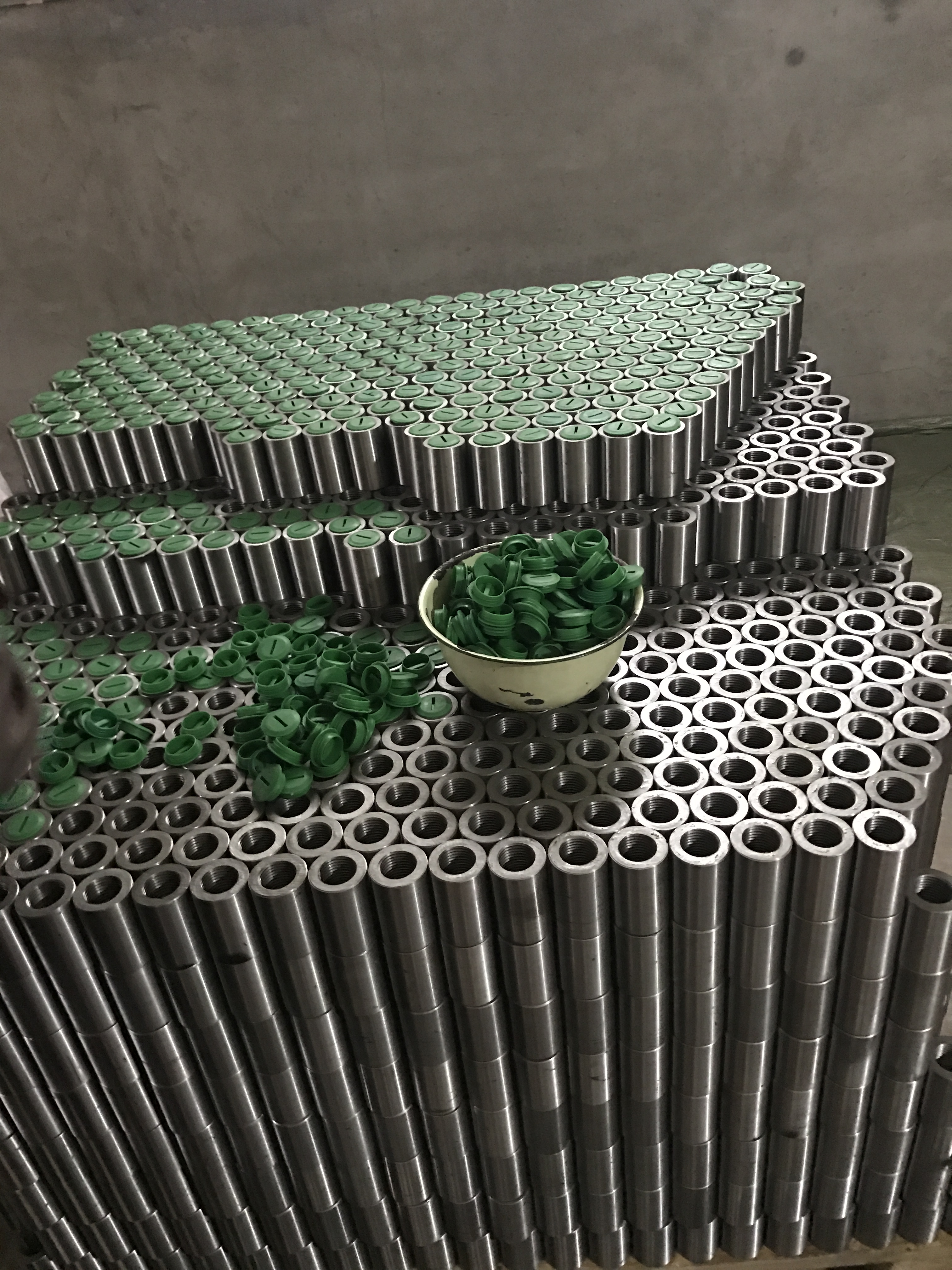
Parallel thread rebar coupler: thread designation and outer diameter both scale with bar size from 16 to 40.
Table 1. Parallel thread (rolling) coupler specifications
| Rebar size (mm) | Coupler OD x Length (mm) | Thread | Thread angle |
|---|---|---|---|
| 16 | 24 x 42 | M16.5*2.5 | 60 degrees |
| 18 | 27 x 45 | M18.5*2.5 | 60 degrees |
| 20 | 30 x 50 | M20.5*2.5 | 60 degrees |
| 22 | 33 x 54 | M22.5*2.5 | 60 degrees |
| 25 | 38 x 62 | M25.6*3.0 | 60 degrees |
| 28 | 42 x 68 | M28.6*3.0 | 60 degrees |
| 32 | 48 x 76 | M32.6*3.0 | 60 degrees |
| 36 | 53 x 84 | M36.6*3.0 | 60 degrees |
| 40 | 59 x 95 | M40.2*3.0 | 60 degrees |
Table 2. Coupler type, material and published dimension example
| Coupler type | Published material | Size coverage | Published dimension example |
|---|---|---|---|
| Rolling / parallel thread | Carbon steel 45#, Alloy steel 40CR | 16-40 | Bar size 25: OD 38 mm x length 62 mm, thread M25.6*3.0, 60 degrees |
| Upsetting | Carbon steel 45#, Alloy steel 40CR | 16-40 | Bar size 25: OD 40 mm x length 60 mm, thread M30*3.5, 60 degrees |
| Pressing | Carbon steel Q355B | 16-40 | Bar size 25: OD 45 mm, length 150 mm, thickness 7.4 mm |
| One-touch | Alloy steel 40CR | 11-16 up to 40 | Bar size 25: OD 56 mm, length 143 mm |
Bartech lists the same typical application set for the coupler range: construction projects, high buildings, airport projects, high-railway stations and large bridges including sea-crossing bridges.
Machine parameters: CBT40A, CBT40L, 40AO and 40MO
Thread quality depends on the machine that produces it, so machine parameters belong in the same specification review as the coupler. All four threading machines cover rebar from 16 mm to 40 mm and run on a 380V/50Hz power source.
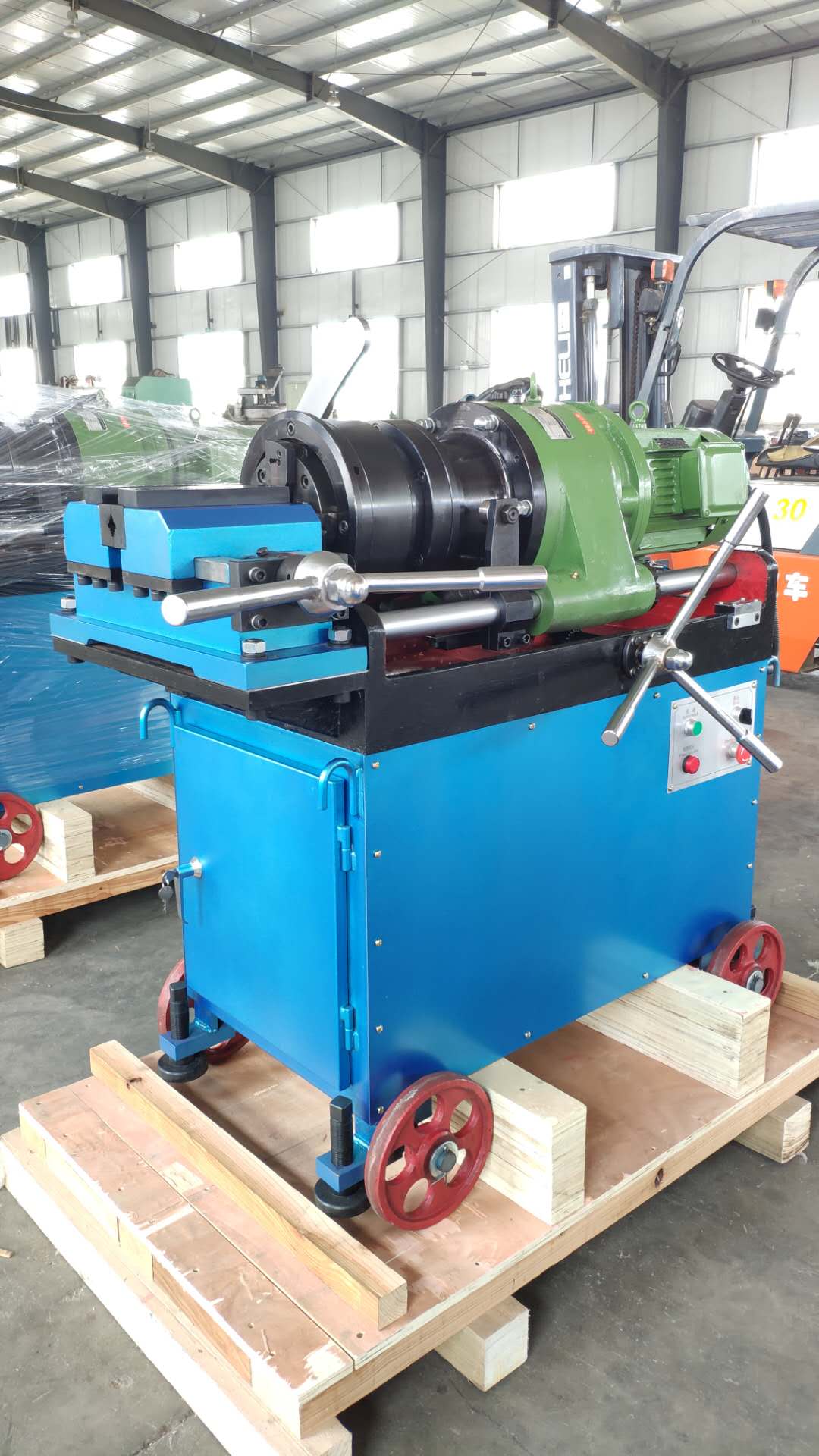
Rebar thread rolling machine: maximum threading length is a specification item, not an afterthought.
Table 3. Threading machine parameters
| Model | Type | Rebar size | Main motor / power source | Speed ratio | Max threading length | Net weight |
|---|---|---|---|---|---|---|
| CBT40A | Thread rolling machine | 16-40 mm | 5.5 kW, 380V/50Hz | 1:23 quick or 1:29 slow | 120 mm | 590 kg |
| CBT40L | Thread rolling machine | 16-40 mm | 5.5 kW, 380V/50Hz | 1:23 quick or 1:29 slow | 100 mm / 200 mm | 420 kg |
| 40AO | Automatic thread rolling machine | 16-40 mm | 5.5 kW / 7.5 kW, 380V/50Hz; water pump 0.12 kW; air clamping 0.4-0.8 MPa | 1:23 quick or 1:29 slow | 90 mm with block / 150 mm without block | 860 kg |
| 40MO | Quick-type thread rolling machine | 16-40 mm | 5.5 kW, 1450 r/min, 380V/50Hz | 1:19 quick or 1:23 slow | 95 mm (150 mm without block) | 680 kg |
Step-by-Step: Mapping Coupler and Machine Specs to Acceptance Criteria
The sequence below turns a project document and a product data set into a checkable order. Each step produces a written record, which is what a QA reviewer will ask for later.
- Read the acceptance criteria before the catalogue. Identify whether the project references a framework standard, a national standard, or only an internal splice detail, and identify what evidence the reviewer will expect. This step decides which of the following steps matters most.
- Convert bar size to coupler model. Coupler models are defined by rebar size, with the available range covering 16, 18, 20, 22, 25, 28, 32, 36 and 40 mm. A bar size outside this range cannot be matched to this range without a customization review.
- Match thread form, designation and angle. Confirm whether the approved detail is a rolled parallel thread, an upset thread, or a pressed connection. For threaded types, confirm the exact thread designation, for example M16.5*2.5 through M40.2*3.0 for parallel thread, and confirm the 60-degree thread angle.
- Confirm material grade and request the evidence. Match the material statement to the drawing: carbon steel 45#, alloy steel 40CR, or carbon steel Q355B. Then request the material test report that names that grade.
- Confirm the machine envelope against the required thread length. Compare the maximum threading length of the selected machine with the thread length the splice detail requires. Published limits are 120 mm for CBT40A, 100 mm or 200 mm for CBT40L, 90 mm with block or 150 mm without block for 40AO, and 95 mm or 150 mm for 40MO.
- Check outer diameter against cover and cage geometry. Outer diameter is published per bar size and per coupler type, so the check is arithmetic rather than approximate. Pressing couplers are the larger-diameter option for a given bar size, which matters where cover is tight.
- Lock documents and purchasing terms before shipment. Write the model, thread, material, quantity, packing, inspection method, certificate copies and validity dates into the purchase order, and confirm the acceptance criteria in writing with the supplier before the goods leave the factory.
Documentation and Quality Checks to Complete Before Shipment
Two certificate sets underpin a Bartech order, and both carry dates that need checking against the shipment date.

CE certificate Nr.SC-PSC-4-2025-12-14, issued 2025-12-04 and valid until 2030-12-03, scope EU Construction Products Regulation.
- CE certificate validity. Nr.SC-PSC-4-2025-12-14 runs from 2025-12-04 to 2030-12-03 under standard MTZ202512021CPR, with a scope covering the EU Construction Products Regulation.
- ISO 9001:2015 validity. Certificate 31623Q10713R1S runs from 2021-02-05 to 2026-12-21 under GB/T19001-2016 / ISO9001:2015, with a scope covering the sales of rebar couplers, rebar connection equipment and related spare parts. Because this certificate expires during 2026, a buyer planning a shipment at the end of 2026 or later should confirm renewal status in writing as part of the order.
- In-process quality documentation. Bartech's stated quality control combines a material test report, production testing on 10% of output during production lines, and 100% appearance surface checking.
- Customization record. Where coupler outer diameter, inner diameter or thread is customized under the OEM model, the approved drawing becomes the acceptance reference and should be attached to the order.
- After-sales route. Online technical support is the stated after-sales channel, which is the correct path for thread or assembly questions during the first production runs on site.
Project Use Cases: What Aligned Specifications Look Like in Practice
Two documented supply cases show the pattern in different regions and project types.
The first is a Kuwait-based construction enterprise purchasing standard rebar couplers for outdoor construction work, at a scale of 400,000 couplers per year for the duration of its construction projects. The recorded outcome combines easy connection with higher strength, stable quality and good operational performance. The related product set covers pressing couplers and one-touch couplers in the 16-40 range, supported by the CBT40A threading machine.
The second is a client in Vietnam applying rebar couplers in tall building construction and railway station construction, at an annual project scale of 500,000 units. The recorded performance attributes are high strength, good quality, a clear outer surface and strict thread specifications. Both cases sit inside the standard 16-40 model range, which is what makes them comparable to a new project instead of being a one-off reference.
What these cases do not do is replace a specification review. Annual volume and application type tell a buyer that a configuration is repeatable at scale; they do not tell a buyer whether the thread designation in their own approved detail matches. That check remains step three of the mapping sequence above.
Choosing the Preferred Configuration for Your Project Type
Preference should follow constraints rather than familiarity. The published parameters point to different configurations for different site conditions.
- Where the longest thread is required on site: CBT40A supports a maximum threading length of 120 mm, the longest among the rolling machines listed here, with a net weight of 590 kg and dimensions of 1180 x 670 x 1150 mm.
- Where machine handling and movement matter: CBT40L weighs 420 kg with dimensions of 1210 x 610 x 1120 mm, and offers a 100 mm or 200 mm threading length option.
- Where repetitive production benefits from automation: 40AO adds pneumatic clamping at 0.4-0.8 MPa, an optional 7.5 kW motor and a 0.12 kW water pump, at 860 kg.
- Where cycle time is the priority: 40MO runs a quicker 1:19 speed ratio in the quick setting compared with 1:23 on the other models.
- Where on-site threading is not practical: pressing couplers made from carbon steel Q355B remove the threading step and connect by pressing, with published outer diameters from 30 mm at bar size 16 to 70 mm at bar size 40.
- Where the largest diameter is acceptable: one-touch couplers in alloy steel 40CR offer the fastest connection method, with published dimensions from OD 35 mm for 11-16 mm bar up to OD 83 mm and 200 mm length at bar size 40.
One specification caution: a preference for a connection type is only valid inside the approved splice detail. If the project detail specifies a parallel thread, a pressing coupler is not a substitute regardless of site convenience.
Frequently Asked Questions
What should be confirmed before a rebar coupler order is shipped?
Confirm five items in writing: the coupler model against the rebar size within the 16-40 range; the thread designation and the 60-degree thread angle; the material grade, being carbon steel 45#, alloy steel 40CR or carbon steel Q355B depending on coupler type; the validity dates of the CE certificate Nr.SC-PSC-4-2025-12-14 (valid until 2030-12-03) and the ISO 9001:2015 certificate 31623Q10713R1S (valid until 2026-12-21); and the quality documents, comprising a material test report, production testing on 10% of output during production lines, and 100% appearance surface checking.
Can coupler dimensions and threads be customized to match a specific project standard?
Yes. Cangzhou Bartech operates an OEM model in which coupler outer diameter, inner diameter and thread can be customized, with monthly capacity of 300,000 couplers and a stated lead time of 7-30 days depending on quantity. Where a customization is approved, the approved drawing becomes the acceptance reference for the order and should be attached to the purchasing documents.
What drives the cost of a rebar coupler order?
Cost is driven by coupler type, material grade, thread specification, quantity and whether the item is a stock size or a custom configuration. Stock couplers carry no minimum order quantity, which allows a smaller first order for verification purposes before committing to project volumes. A specification-led enquiry, stating bar size, thread, material and quantity, produces a comparable quotation instead of a range.
How can a sample be validated before a bulk order?
Sample validation follows the same checks as production: a material test report, production testing on 10% of output during production lines, 100% appearance surface checking, and online technical support for interpretation. The sample should be measured against the same acceptance criteria that will apply to the bulk order, including thread designation, 60-degree thread angle, outer diameter and length.
What lead time and capacity should be planned?
Lead time is 7-30 days depending on quantity. Monthly coupler capacity is 300,000 units, and annual output is 3,600,000 units, supported by a 1000 square metre production facility and a 10-engineer R&D team. To start a specification review, send the rebar size, thread requirement, material grade and quantity to sales@chinabartech.cn or through chinabartech.cn for a sample or quotation.
Conclusion: The Order Is Only as Compliant as Its Documentation
A rebar coupler is compliant to a project when three things line up and can be shown on paper: the coupler model and thread match the approved splice detail, the material grade is stated and supported by a material test report, and the certificate and quality documents are valid at the date of shipment. Bartech's published data makes each of those items checkable, from the 16-40 model range and the 60-degree thread angle through to the threading machine limits on CBT40A, CBT40L and 40AO.
The work that remains is the buyer's: extract the acceptance criteria, run the seven mapping steps, and confirm purchasing terms and acceptance criteria in writing before shipment. Doing that before the order is issued costs a few hours; doing it after the goods arrive costs a container.
Review Your Specification Against the Published Data
Send your rebar size, required thread designation, material grade and project quantity, and Cangzhou Bartech will confirm the matching coupler model, threading machine configuration and available documentation set.
Email: sales@chinabartech.cn | Website: www.chinabartech.cn | Technical guides: blog.chinabartech.cn
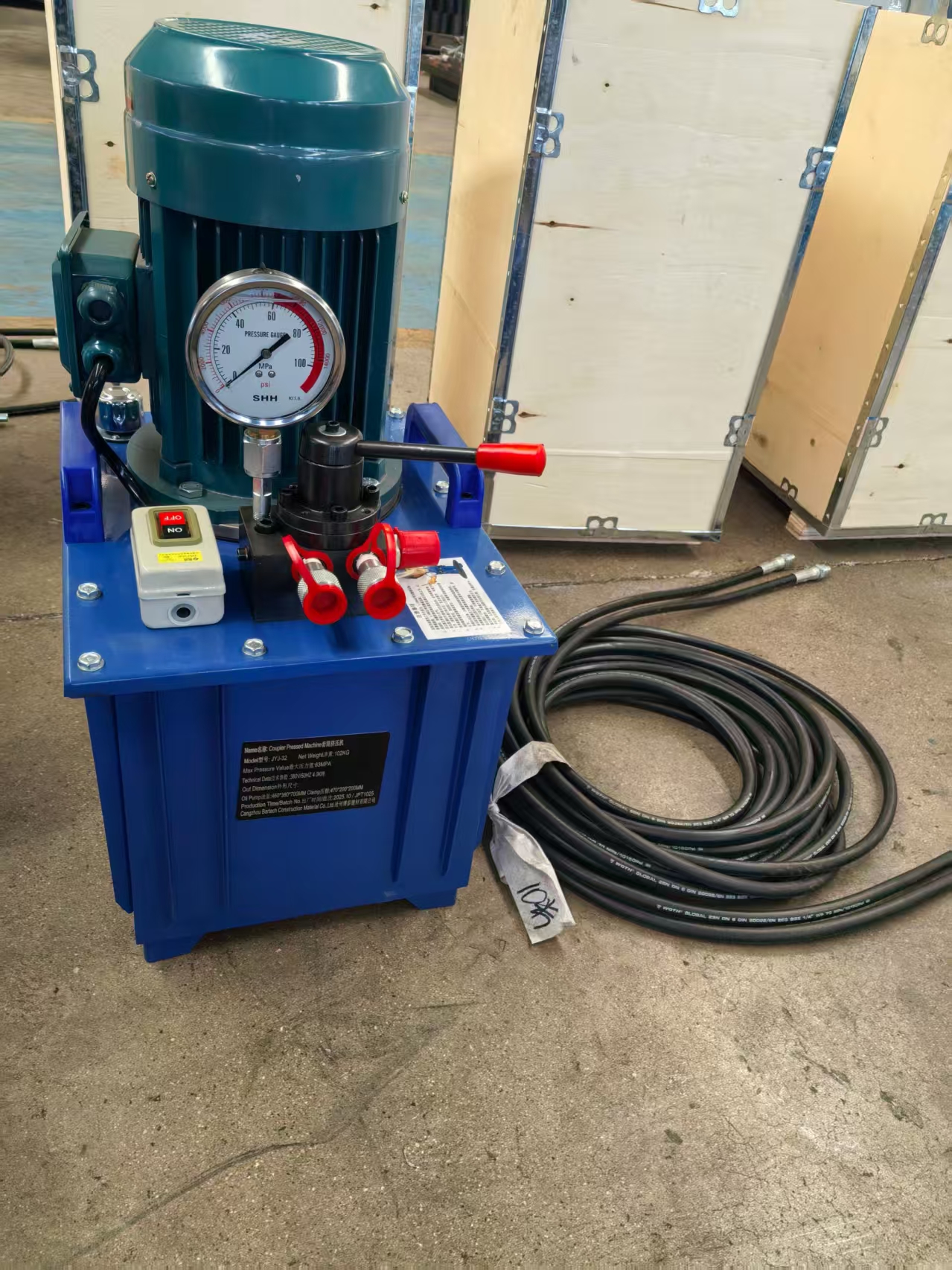
Where on-site threading is not practical, pressing equipment and Q355B couplers replace the threaded connection route.
Have Questions or Need More Details?
Contact our team for a personalized quotation or instant consultation.
Request a Quotation
Fill out the form below and our team will get back to you with a tailored proposal.
WhatsApp Direct Chat
Prefer to chat in real-time? Message us on WhatsApp for instant assistance & quick answers.
- Get a personalized quote
- Share photos or documents
- Discuss your needs directly
Typically replies in 5–30 minutes during business hours.