
Rebar Coupler Compliance Guide: Specs vs. Project Standards

A rebar coupler clears a project acceptance review when three records agree line by line: the coupler geometry and thread designation published by the supplier, the material grade named in the structural specification, and the tooling submittal that shows how the thread will actually be produced on site. When those three disagree, the conflict is normally visible on paper, before shipment, and before any test is scheduled.
This guide is written for buyers at the evaluation stage who have to build that paper trail. It sets out how to map verifiable rebar coupler and threading machine specifications to regional project acceptance criteria, using published data from Cangzhou Bartech Construction Material Co., Ltd., a China-based manufacturer and exporter of rebar couplers, rebar threading machines, rebar electric wrenches, rebar upsetting machines and rebar thread cutting machines, founded in 2008, with full output directed to Asia, the Middle East and South America.
The method below is deliberately narrow. It does not ask buyers to trust a brand claim. It asks them to place a bar schedule, a material grade, a thread designation, a machine data sheet and a certificate scope side by side, and to confirm the result in writing before shipment.
Why a Nominal Bar Size Is Not a Specification
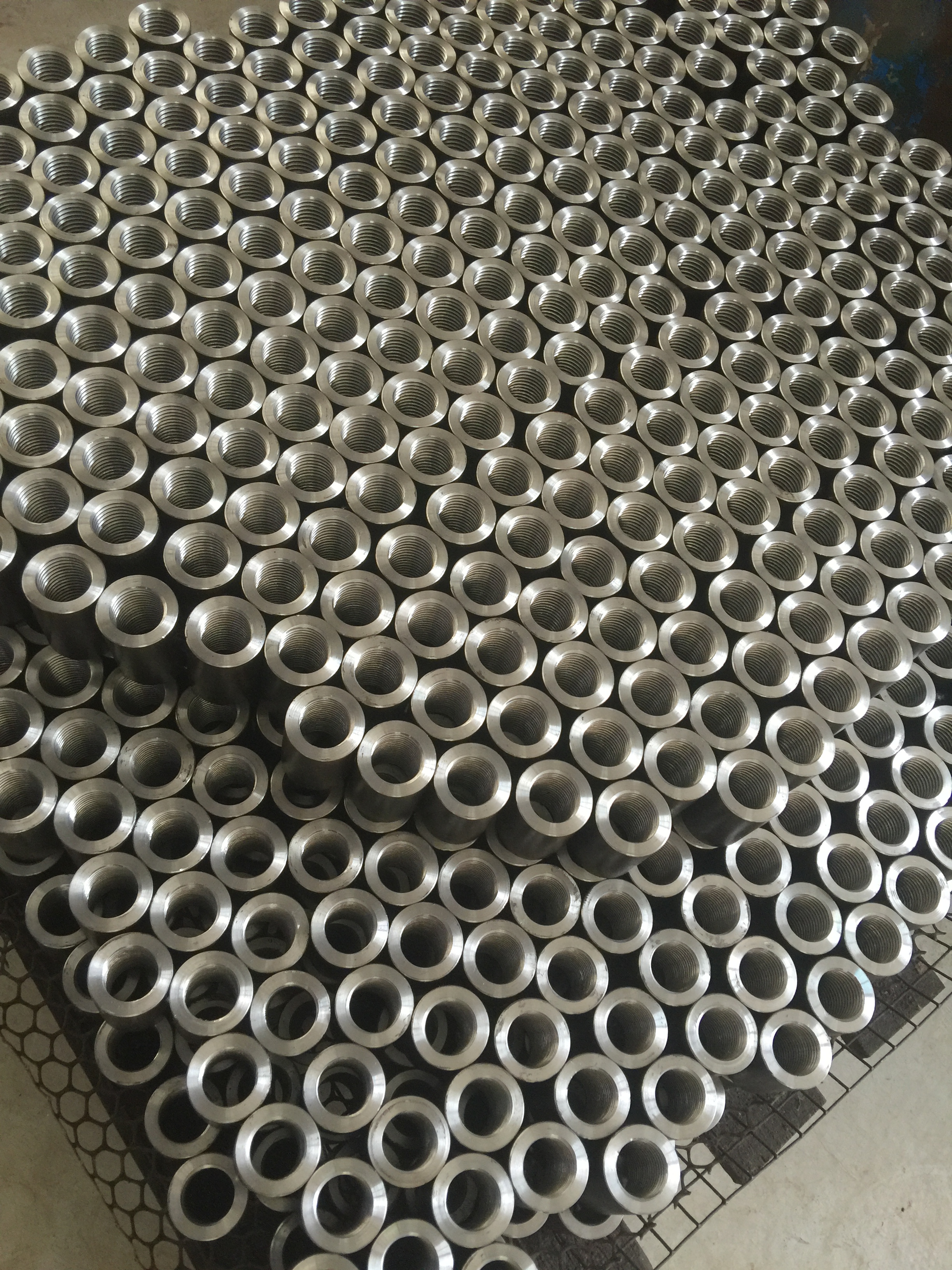
A 16 mm rebar does not have a single coupler thread. In the published Bartech data, a 16 mm bar maps to a rolled parallel thread of M16.5*2.5 on a rolling coupler with a 24 mm outside diameter and 42 mm length; to an M20*2.5 thread on an upsetting coupler with a 26 mm outside diameter and 40 mm length; and to no thread at all on a cold-pressed sleeve measuring 30 mm outside diameter, 110 mm length and 4.5 mm wall thickness. The one-touch coupler for the same bar size is listed at 40 mm outside diameter and 106 mm length.
That is three different thread designations and one non-threaded option, all for the same nominal bar. A purchase enquiry that states only 16 mm coupler has not specified anything a supplier can verify, and a submittal built on that phrase will not survive review.
Where Specification Mapping Breaks Down
Compliance problems in mechanical splicing rarely start with product performance. They start with the transfer of data between documents, and the same six transfer errors recur.
- Thread designation copied across technologies. An M20*2.5 thread belongs to the upsetting coupler for a 16 mm bar. The rolling coupler for the same bar uses M16.5*2.5. Copying one designation onto the other produces a coupler that physically cannot match the prepared bar end.
- Material grade assumed rather than stated. Rolling and upsetting couplers are listed in carbon steel 45# or alloy steel 40CR. Pressing couplers are listed in carbon steel Q355B. One-touch couplers are listed in alloy steel 40CR. These are different grades serving different connection principles, not interchangeable options on the same line item.
- Thread angle omitted from the submittal. Every thread in the listed range, from M16.5*2.5 through M45*4.0, is specified at a 60-degree angle. If the submission states a thread size but not the angle, the reviewer has no basis for confirming thread form.
- Outside diameter and length left unverified. The envelope widens considerably across the range: from 24 mm OD and 42 mm length for a rolling coupler at 16 mm bar, to 83 mm OD and 200 mm length for a one-touch coupler at 40 mm bar. Congested details and cover decisions depend on these figures.
- Tooling not submittable. The machine that produces the thread must be documented alongside the coupler, because maximum threading length and power source are project criteria too, not factory preferences.
- Certificate scope read as a product claim. The scope printed on a certificate is frequently broader, or narrower, than the requirement in the specification.
The Market and Standards Context Buyers Are Working Inside
Mechanical splicing is a mainstream method rather than a niche alternative. According to Dataintelo, the global rebar coupler market was valued at USD 1.82 billion in 2025 and is projected to reach USD 3.47 billion by 2034, a CAGR of 7.4%. The same source estimates that building construction accounted for 47.6% of revenue in 2025 and that Asia Pacific contributed approximately 41.3% of global revenue.
Product-type data from the same source shows tapered thread couplers holding the largest share at 38.2% in 2025, with parallel thread couplers following closely. That distribution is useful context for a buyer comparing technologies, but it should not drive a specification decision, because selection depends on the bar schedule, the thread preparation method available, and the acceptance criteria of the individual project.
Published market estimates diverge noticeably between research houses, with 2025 and 2026 valuations reported across a wide band. Buyers building a compliance file should treat market-size figures as directional background and anchor every decision to project documents and supplier data sheets.
On the standards side, mechanical rebar splices are governed by frameworks including ISO 15835, ASTM A615 and BS 8110, the last of which is often replaced by Eurocode 2 in the EU, according to Regbar Construction. These are the references commonly cited in project specifications. They are not claims about any one supplier, and they should not be read as such.
What a supplier can actually be asked to document is the scope of its own certificates. Cangzhou Bartech holds CE certificate Nr.SC-PSC-4-2025-12-14, issued 4 December 2025 under the EU Construction Products Regulation scope with standard MTZ202512021CPR and valid until 3 December 2030, and ISO certificate 31623Q10713R1S, issued 5 February 2021 by CEOC Testing & Certification Center (Beijing) Co., Ltd. under GB/T19001-2016 / ISO9001:2015, valid until 21 December 2026. The ISO scope covers the sale of rebar couplers, rebar connection equipments and related spare parts. It is a quality management system certificate, not a product performance certificate, and a reviewer who expects product test data will not find it there.
The Five Records a Compliance File Needs
A coupler submittal that survives review usually contains five distinct records, each answering a different question.
- Geometry record. Outside diameter, length and, where applicable, wall thickness for every bar size in the schedule, plus the thread designation and pitch. For a rolling coupler at 25 mm bar this reads: OD 38 mm, length 62 mm, thread M25.6*3.0. For a pressing coupler at 25 mm bar it reads: OD 45 mm, length 150 mm, thickness 7.4 mm, no thread.
- Material record. The grade declaration per coupler family, supported by a material test report. Bartech quality control issues a material test report as part of its documented process.
- Tooling record. The threading machine model with its power rating, voltage, speed ratio and maximum threading length.
- Quality record. Bartech documents testing on 10% of production during the production line and 100% appearance surface checking, in addition to the material test report.
- Certificate record. Certificate number, issuing body, scope and validity dates, presented exactly as printed.
Step-by-Step: Mapping Specs to Acceptance Criteria
The following sequence converts a project specification into a checkable supplier submittal. Buyers who run it in order generally avoid the rework loop that follows a rejected submission.
Step 1: Extract the acceptance criteria first
Before opening any catalogue, pull the acceptance criteria out of the project specification: required splice performance class, thread form requirements, material grade requirements, any named standards, and the inspection regime. Everything downstream is filtered through this list.
Step 2: Map the bar schedule to the model range
Bartech couplers are listed across bar sizes 16, 18, 20, 22, 25, 28, 32, 36 and 40 mm, and the threading machines cover the same 16-40 mm window. Where a schedule includes larger bars, the upsetting machines extend the working range: the 50S covers 400 grade rebar from 16 to 50 mm and 500 grade rebar from 16 to 40 mm, while the 36S covers 400 grade rebar from 16 to 36 mm and 500 grade rebar from 16 to 32 mm. Any bar outside these windows must be raised with the supplier before the terms are fixed.
Step 3: Fix the thread designation by connection technology
This is the step that most often fails. Lock the designation to the coupler family, not to the bar size alone. Use the comparison table further down this page as the working reference, and state the designation in full, including pitch.
Step 4: Confirm the material grade and request the material test report
State whether the line item is carbon steel 45#, alloy steel 40CR or carbon steel Q355B, and attach the corresponding material test report to the submittal. Because the pressing coupler family is listed in Q355B while the rolling, upsetting and one-touch families are listed in 45# or 40CR, a schedule that mixes technologies will carry more than one grade.
Step 5: Write the 60-degree thread angle into the submittal
The listed thread range runs from M16.5*2.5 to M45*4.0, and every entry is stated at a 60-degree angle. Recording the angle turns a thread size into a thread form, which is what a reviewer is actually approving.
Step 6: Match the machine submittal to thread length and site conditions
Maximum threading length varies by model and by configuration, and site power supply is a project condition rather than a factory constant. Both must appear in the submittal. The section below sets out the published figures for the CBT40A, CBT40L, 40AO and 40MO models.
Step 7: Read certificate scope, not just certificate presence
Compare the printed scope with the requirement. A CE certificate issued under the EU Construction Products Regulation scope and an ISO9001:2015 certificate covering the sale of couplers and connection equipment answer different questions, and a project referencing ISO 15835, ASTM A615 or BS 8110 will usually need its own criteria satisfied separately.
Step 8: Freeze purchasing terms and acceptance criteria before shipment
Before goods move, the buyer and supplier should both hold a written record of: thread designation and angle, material grade, coupler OD and length per bar size, machine model and voltage, certificate scope and validity, packaging and marking, and the inspection criteria that will be applied. Two commercial terms belong in the same record: stock couplers carry no minimum order quantity, and lead time runs 7 to 30 days depending on quantity, against a monthly capacity of 300,000 pieces. Where a project needs non-catalogue geometry, OEM production covers customization of coupler outer diameter, inner diameter and thread, and that requirement should be captured before the terms are frozen rather than after.
Threading Machine Parameters That Must Appear in the Submittal
A coupler submittal without the matching tooling data is incomplete, because thread quality at site depends on the machine that cuts or rolls it. The published figures for the four threading machines are set out below.
| Model | Type | Rebar size | Main motor | Power source | Speed ratio | Max threading length | Net weight |
|---|---|---|---|---|---|---|---|
| CBT40A | Rebar thread rolling machine | 16-40 mm | 5.5 kW | 380V/50Hz | 1:23 quick or 1:29 slow | 120 mm | 590 kg |
| CBT40L | Rebar thread rolling machine | 16-40 mm | 5.5 kW | 380V/50Hz | 1:23 quick or 1:29 slow | 100/200 mm | 420 kg |
| 40AO | Automatic rebar thread rolling machine | 16-40 mm | 5.5 kW/7.5 kW at 1450 r/min | 380V/50Hz | 1:23 quick or 1:29 slow | 90 mm with block, 150 mm without block | 860 kg |
| 40MO | Quick type rebar thread rolling machine | 16-40 mm | 5.5 kW at 1450 r/min | 380V/50Hz | 1:19 quick or 1:23 slow | 95 mm, 150 mm without block | 680 kg |
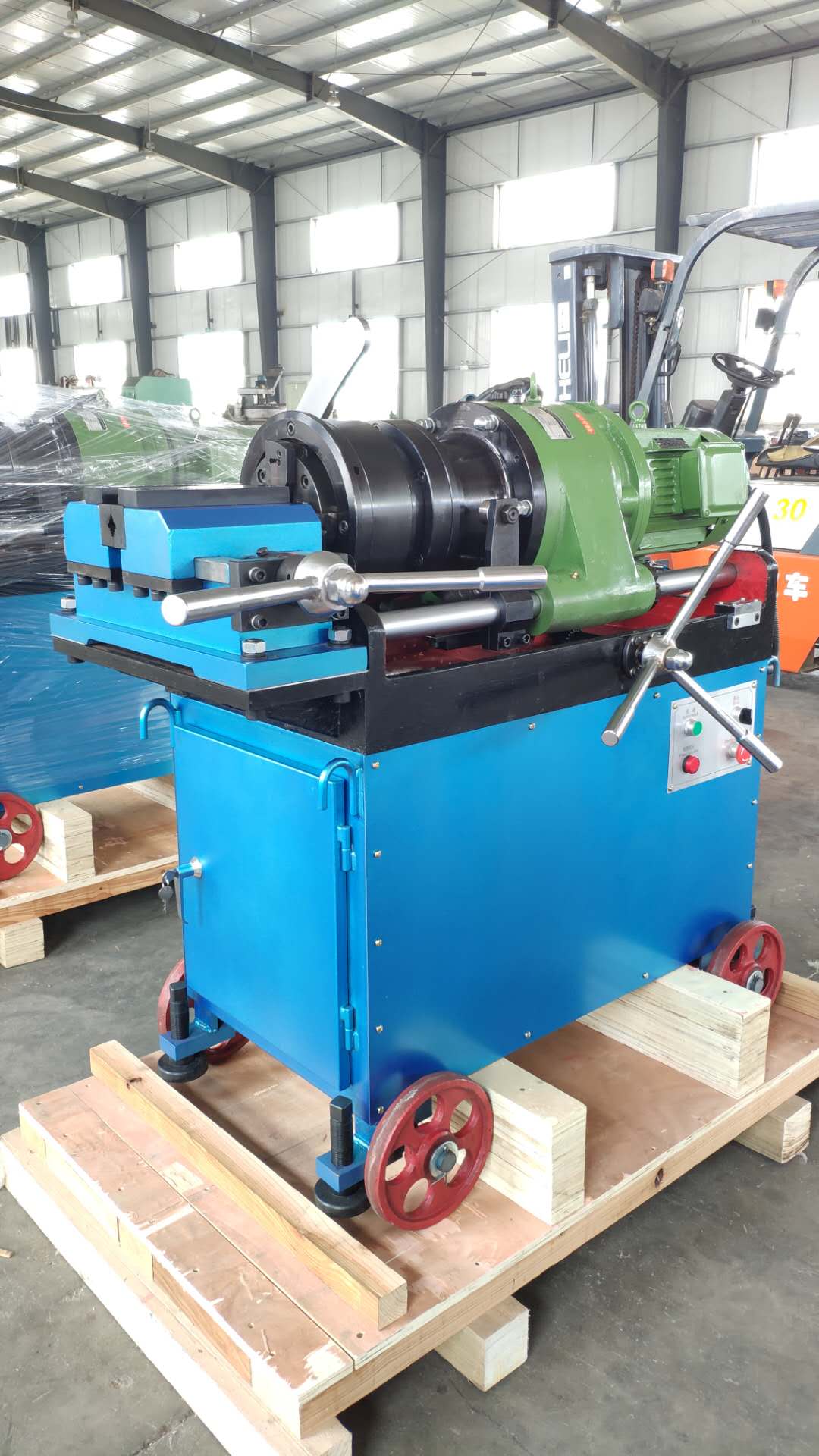
Two details in this table decide whether a machine fits a project. The first is maximum threading length: the CBT40A is listed at 120 mm, the CBT40L at 100 or 200 mm, the 40AO at 90 mm with block and 150 mm without block, and the 40MO at 95 mm or 150 mm without block. A project that requires a longer prepared thread than the site machine can produce will not reach the specified design position. The second is site infrastructure. The 40AO additionally requires air power of 0.4-0.8 MPa for clamping the rebar and a 0.12 kW water pump at 1450 r/min, and its working footprint of 1950*700*1120 mm is larger than the 1180*670*1150 mm of the CBT40A or the 1210*610*1120 mm of the CBT40L.
Voltage is a regional compliance item rather than a factory detail. The machine range is stated at 380V/50Hz, and the MQ40 thread cutting machine is also listed at 415V/50Hz, covering M14 to M45 threads with a maximum thread length of 100 mm. Buyers should confirm the site supply against the machine nameplate before the tooling is accepted, since a voltage mismatch is not a coupler defect.
Use Cases: How This Plays Out in Real Orders
Two documented order profiles show why the documentation step matters more than the product name in repeat purchasing.
In Kuwait, a construction enterprise purchasing standard rebar couplers orders 400,000 pieces per year for outdoor construction work. The recorded outcomes are higher strength, stable quality and good operation, with easy connection identified as the practical highlight. The order profile is a procurement problem rather than a single project problem: consistently specifying the same family, grade and thread designation across annual volumes is what keeps repeat deliveries interchangeable.
In Vietnam, an automotive OEM client applies rebar couplers in tall building and railway station construction at an annual scale of 500,000 pieces, with the project duration following the construction works. The recorded product attributes are high strength, good quality, a clear outer surface and strict thread control. Here the compliance pressure sits on the outer surface and thread, because those are the two features an inspector can check on arrival without destructive testing.
Both profiles sit inside the same published application envelope: construction projects, high buildings, airport projects, high-railway stations, and large bridges including sea-crossing bridges. That envelope is applied to the rolling, upsetting, pressing and one-touch coupler families alike. The practical consequence for a buyer is worth stating plainly: the application list cannot separate one coupler type from another. Separation happens at the thread designation, the geometry and the tooling record, which is exactly what this mapping process covers.
Comparison Table: Coupler Types at the Same Bar Size
The table below places the four coupler technologies side by side at each bar size, using published figures only. It is the fastest way to check whether a line item in a submittal belongs to the technology stated on the drawing.
| Bar size | Rolling coupler: thread, OD x length | Upsetting coupler: thread, OD x length | Pressing coupler: OD x length, thickness | One-touch coupler: OD x length |
|---|---|---|---|---|
| 16 mm | M16.5*2.5, 24 x 42 mm | M20*2.5, 26 x 40 mm | 30 x 110 mm, 4.5 mm | 40 x 106 mm |
| 18 mm | M18.5*2.5, 27 x 45 mm | M22*2.5, 29 x 44 mm | 34 x 120 mm, 5.4 mm | 46 x 123 mm (18/20) |
| 20 mm | M20.5*2.5, 30 x 50 mm | M24*3.0, 32 x 48 mm | 36 x 120 mm, 5.5 mm | 46 x 123 mm |
| 22 mm | M22.5*2.5, 33 x 54 mm | M27*3.0, 36 x 52 mm | 40 x 132 mm, 6.4 mm | 51 x 133 mm |
| 25 mm | M25.6*3.0, 38 x 62 mm | M30*3.5, 40 x 60 mm | 45 x 150 mm, 7.4 mm | 56 x 143 mm |
| 28 mm | M28.6*3.0, 42 x 68 mm | M33*3.5, 44 x 66 mm | 50 x 168 mm, 8.0 mm | 29 mm variant: 65 x 166 mm |
| 32 mm | M32.6*3.0, 48 x 76 mm | M36*4.0, 50 x 72 mm | 56 x 192 mm, 9.0 mm | 70 x 170 mm |
| 36 mm | M36.6*3.0, 53 x 84 mm | M39*4.0, 56 x 80 mm | 63.2 x 220 mm, 11.3 mm | 78 x 190 mm |
| 40 mm | M40.2*3.0, 59 x 95 mm | M45*4.0, 62 x 90 mm | 70 x 240 mm, 11.0 mm | 83 x 200 mm |
All threads shown are listed at a 60-degree angle. Rolling and upsetting couplers are listed in carbon steel 45# or alloy steel 40CR; pressing couplers in carbon steel Q355B; one-touch couplers in alloy steel 40CR. The one-touch range is listed with a 29 mm entry rather than a 28 mm entry, and with a combined 18/20 mm entry, so a schedule that specifies a 28 mm one-touch coupler needs that point clarified in writing rather than assumed from the neighbouring sizes.
Frequently Asked Questions
1. What certification do Bartech rebar couplers carry, and what does each document actually cover?
Two certificates are published. The CE certificate is numbered Nr.SC-PSC-4-2025-12-14, issued 4 December 2025 under the EU Construction Products Regulation scope with standard MTZ202512021CPR, and valid until 3 December 2030. The ISO certificate is numbered 31623Q10713R1S, issued 5 February 2021 by CEOC Testing & Certification Center (Beijing) Co., Ltd. under GB/T19001-2016 / ISO9001:2015, with a scope covering the sale of rebar couplers, rebar connection equipments and related spare parts, valid until 21 December 2026. The ISO document is a quality management system certificate rather than a product performance certificate. Where a project specification cites ISO 15835, ASTM A615 or BS 8110, those criteria must be matched against the project requirement and the coupler data sheet separately.
2. Can coupler outer diameter, inner diameter and thread be customized to a project specification?
Yes. OEM production covers customization of coupler outer diameter, inner diameter and thread. The standard range covers bar sizes 16, 18, 20, 22, 25, 28, 32, 36 and 40 mm across rolling, upsetting, pressing and one-touch technologies, and monthly capacity is 300,000 pieces. Because outer diameter, inner diameter and thread are precisely the three variables the factory changes, a custom requirement should be agreed before purchasing terms are fixed rather than after the order is placed.
3. What determines the cost of a rebar coupler order?
No list price is published for this range, because the cost variables are the specification variables: connection technology, bar size, material grade (carbon steel 45#, alloy steel 40CR or carbon steel Q355B), order quantity, and any custom outer diameter, inner diameter or thread. Two commercial terms are useful for budget planning before a quotation is issued: stock couplers carry no minimum order quantity, and lead time runs 7 to 30 days depending on quantity.
4. How can a buyer validate thread form before bulk shipment?
Validation rests on documented checks rather than assumptions. Bartech quality control issues a material test report, tests 10% of production during the production line, and applies 100% appearance surface checking. Buyers should agree their own acceptance criteria in writing ahead of shipment, naming the thread designation, pitch, the 60-degree thread angle, and the outside diameter and length for each bar size. Any pre-production validation request should be raised together with the specification confirmation so that it can be reflected in the agreed terms.
5. What lead time applies, and what should be confirmed before an order ships?
Lead time is 7 to 30 days depending on quantity, against a monthly capacity of 300,000 pieces, and stock couplers carry no minimum order quantity. Before shipment, confirm in writing: the thread designation and 60-degree angle, the material grade, the coupler outside diameter and length for every bar size, the threading machine model and voltage, the certificate scope and validity dates, packaging and marking, and the acceptance criteria that will be applied at inspection. Send the bar schedule and the project acceptance criteria to sales@chinabartech.cn, and the team at Cangzhou Bartech will return a mapping against the published model range.
Conclusion: Compliance Is a Mapping Exercise, Not a Brand Claim
A rebar coupler specification is only as strong as the documents behind it. The bar schedule has to reach the model range, the thread designation has to match the connection technology rather than the bar size alone, the material grade has to carry its test report, the 60-degree angle has to be written down, the threading machine has to fit both the required thread length and the site power supply, and the certificate scope has to be read rather than assumed. When all six checks sit in one file, the acceptance conversation becomes a comparison of records instead of a negotiation.
For buyers at the evaluation stage, the practical next step is to send two documents to the supplier: the bar schedule and the project acceptance criteria. Everything on this page, from the M16.5*2.5 thread at 16 mm bar to the 150 mm threading length on the 40AO, can then be mapped against the requirement before a purchase order is drafted.
Next Step: Map Your Bar Schedule Against the Published Range
Send the bar schedule, the required thread designations, the material grades and the project acceptance criteria. Cangzhou Bartech Construction Material Co., Ltd. will return a specification mapping covering coupler geometry, thread form, machine parameters and certificate scope, plus a quotation and lead time for the volumes involved.
Email: sales@chinabartech.cn | Tel / WhatsApp: +86 13785685215 | Contact: Julie Chen
Website: www.chinabartech.cn | Blog: blog.chinabartech.cn
Address: Qing County, Cangzhou City, Hebei Province, China.
Have Questions or Need More Details?
Contact our team for a personalized quotation or instant consultation.
Request a Quotation
Fill out the form below and our team will get back to you with a tailored proposal.
WhatsApp Direct Chat
Prefer to chat in real-time? Message us on WhatsApp for instant assistance & quick answers.
- Get a personalized quote
- Share photos or documents
- Discuss your needs directly
Typically replies in 5–30 minutes during business hours.