
Rebar Coupler Standards Compliance Guide for Global Construction Projects
A rebar coupler is compliant with a global construction project when three things can be demonstrated at the same time: the steel grade matches the specification, the thread geometry is dimensionally repeatable, and the finished splice is documented against the standard named in the design drawings. Certificates support that evidence chain - they do not replace it.
This guide is written for engineers, procurement managers and importers who must approve or reject rebar couplers that will be installed outside the country where they were manufactured. It concentrates on the three material grades that dominate international specifications - carbon steel 45#, Q355B and alloy steel 40CR - on the 60° thread angle that governs thread fit, and on the dimensional tables that decide whether a coupler can physically be built into a structure.
What Compliance Actually Means for a Mechanical Rebar Splice
A compliant rebar coupler is a mechanical splice component whose steel grade, thread geometry and dimensional tolerances can be verified against the standard named in the project specification. Compliance is not one document; it is a chain of checkable attributes.
Four verifiable layers make up that chain:
- Material. The coupler body's steel grade is declared and traceable - carbon steel 45#, carbon steel Q355B, or alloy steel 40CR.
- Thread geometry. Thread angle, pitch and diameter are specified and reproducible. Bartech threaded coupler specifications record a 60° thread angle across the range.
- Dimensions. Outer diameter and overall length sit inside the envelope the drawing allows, including concrete cover and rebar congestion.
- Evidence. A material test report and inspection records travel with the shipment, and the assessment standard is named - ISO 15835, ASTM A615, or BS 8110, which is often replaced by Eurocode 2 in the EU (Regbar Construction).
Cangzhou Bartech Construction Material Co., Ltd. is a China-based manufacturer and exporter of rebar couplers and rebar connection machines, operating from Qing County, Cangzhou City, Hebei Province, and exporting 100% of its output to Asia, the Middle East and South America.
Where Coupler Compliance Usually Breaks Down
Most compliance problems on international rebar coupler orders are not manufacturing defects. They are specification and documentation gaps that only surface after the container has arrived on site.
- Standard mismatch. The structural drawing names a splice standard, but the supplier's coupler was qualified against a different one, so the submittal cannot be approved.
- Grade substitution. A coupler arrives in a steel grade that is close to, but not the same as, the specified grade. Because carbon steel 45#, Q355B and alloy steel 40CR behave differently under thread forming and pressing, a substitution changes the process, not just the label.
- Thread geometry drift. The thread produced on the rebar does not match the coupler's internal thread, usually because thread angle or pitch was not controlled during rolling, upsetting or cutting.
- Dimensional envelope breach. Coupler outer diameter or length pushes the bar outside the permitted concrete cover, or creates congestion that cannot be assembled in a tight joint.
- Missing test evidence. The steel is acceptable, but there is no material test report or inspection record to prove it.
Each of these points is checkable before the order is placed. The sections that follow set out what to check and what the documented values are.
Industry Background: Why Compliance Is Now a Procurement Issue
Mechanical splicing has moved from a specialty technique to a mainstream procurement category, and the compliance workload has grown with it. The global rebar coupler market was valued at USD 1.82 billion in 2025 and is projected to reach USD 3.47 billion by 2034, a CAGR of 7.4% (Dataintelo).
Building construction represents the dominant application, accounting for 47.6% of total rebar coupler revenue in 2025, and Asia Pacific is the largest regional market at approximately 41.3% of global revenue in the same year (Dataintelo). By product type, tapered thread couplers held the largest share at 38.2% in 2025, with parallel thread couplers close behind (Dataintelo).
Two consequences follow for buyers. First, specification diversity is increasing: the same project may be engineered to ISO 15835, ASTM A615 or Eurocode 2 depending on the owner and the region. Second, parallel thread systems - the family Bartech manufactures - are a substantial and growing part of that volume, which means thread geometry control is where a large share of compliance risk now sits.
The Three Material Grades Behind Most Export Specifications
The steel grade determines how a coupler is formed, how the thread is produced, and which connection method can be used at all. Bartech supplies couplers in three grades, and each one maps to a specific connection type.
Carbon steel 45#
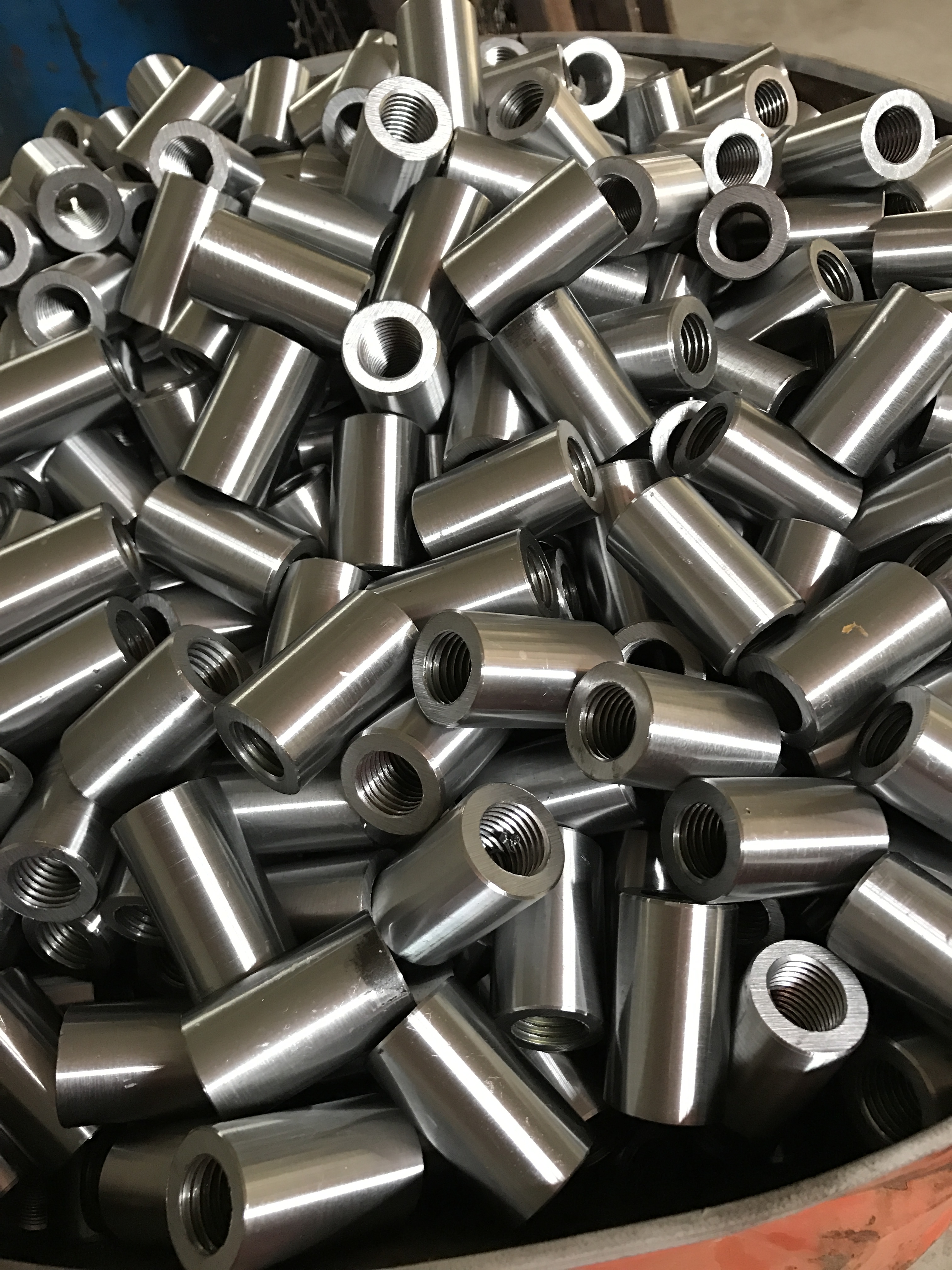
Carbon steel 45# is a medium-carbon steel used for threaded coupler bodies. It appears in both rolling rebar couplers and upsetting rebar couplers, where the coupler body is machined and internally threaded to receive a rolled or upset parallel thread. It is the grade most frequently specified for general construction projects, high buildings, airport projects, high-railway stations and large cross-sea bridges.
Carbon steel Q355B
Q355B is a structural low-alloy carbon steel used for the cold pressing rebar coupler. In pressing couplers there is no thread at all - the connection is made by hydraulically pressing the coupler sleeve onto the bar, so the material must deform predictably rather than be cut or rolled. This is why the pressing coupler is supplied in Q355B rather than 45#.
Alloy steel 40CR
Alloy steel 40CR is used where higher hardenability is required. It is available for rolling and upsetting couplers and it is the standard grade for the one-touch rebar coupler, which relies on a quick mechanical connection rather than a threaded or pressed joint.
| Coupler type | Steel grade (documented) | Connection principle |
|---|---|---|
| Rolling rebar coupler | Carbon steel 45# / Alloy steel 40CR | Parallel thread rolled on rebar |
| Upsetting rebar coupler | Carbon steel 45# / Alloy steel 40CR | Parallel thread on upset bar end |
| Cold pressing rebar coupler | Carbon steel Q355B | Hydraulic pressing of sleeve onto bar |
| One-touch rebar coupler | Alloy steel 40CR | Quick mechanical connection |
Thread Angle and Thread Geometry: The 60° Requirement
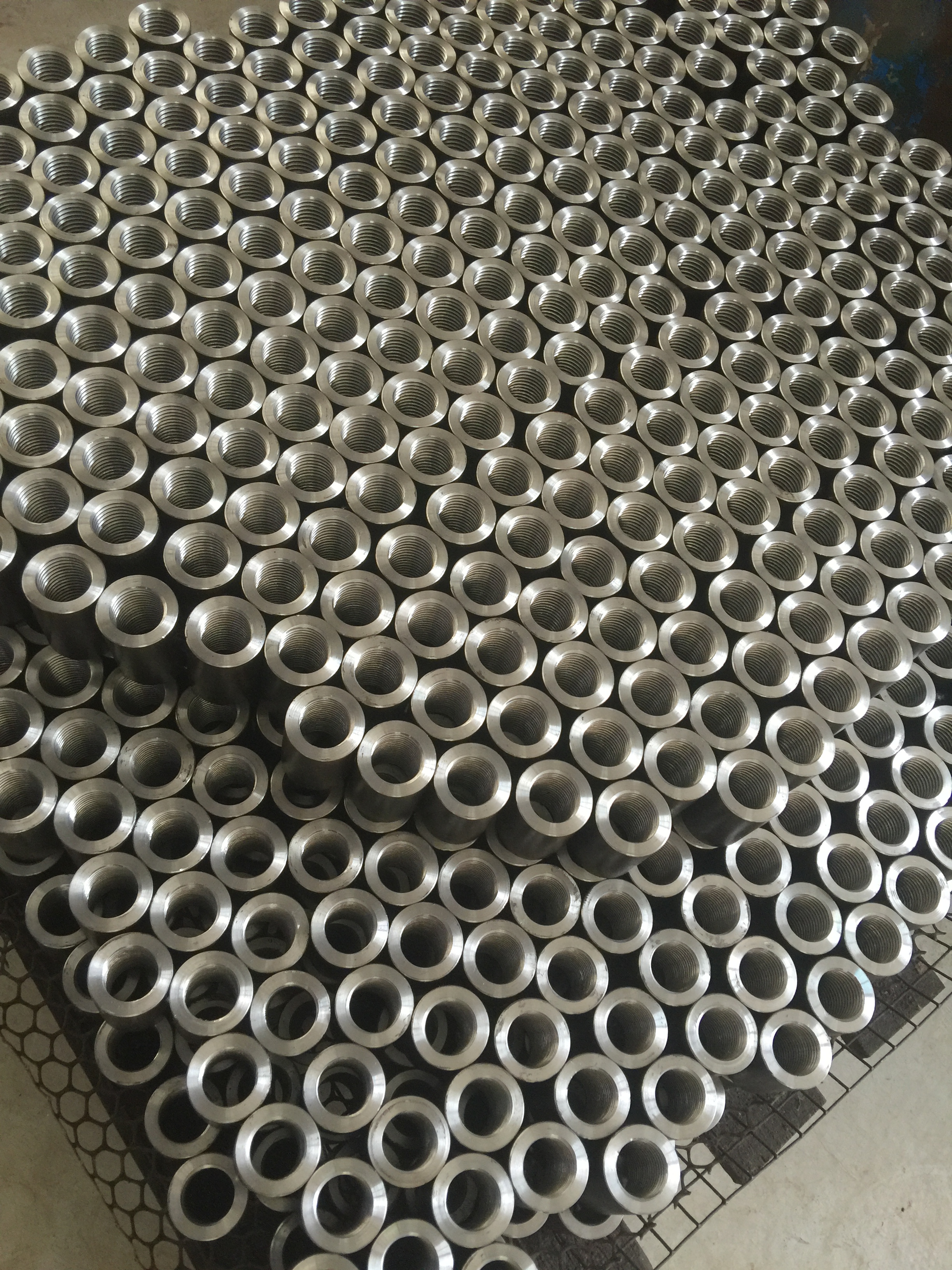
Thread angle is the single most under-checked compliance item on parallel thread couplers. In the Bartech coupler range, every threaded specification line carries a 60° thread angle, from M16.5×2.5 on the smallest rolling coupler to M45×4.0 on the largest upsetting coupler.
The 60° value matters because it is shared by both sides of the joint. The external thread formed on the rebar and the internal thread cut into the coupler body must have the same thread angle and the same pitch, or the flanks will not seat across their full contact area. When the angle differs, the splice may still assemble, but the load transfer path is reduced and the connection becomes dependent on partial contact.
Two design consequences follow for project engineers:
- The thread series is not interchangeable between connection methods. Rolling couplers use one pitch family (for example M25.6×3.0 at 25 mm bar), while upsetting couplers use a different family (M30×3.5 at 25 mm bar). A coupler cannot be swapped between methods without re-checking the bar-end preparation.
- Thread quality depends on the tooling used to produce it. Rolled and cut threads are produced by different machines and produce different surface conditions, which is why tooling is part of the compliance discussion, not a separate purchase.
Cold pressing and one-touch couplers do not use a threaded joint, so thread angle does not apply. For those types the compliance focus shifts to wall thickness, pressing force and dimensional fit.
Dimensional Reference: What the Drawings Must Match
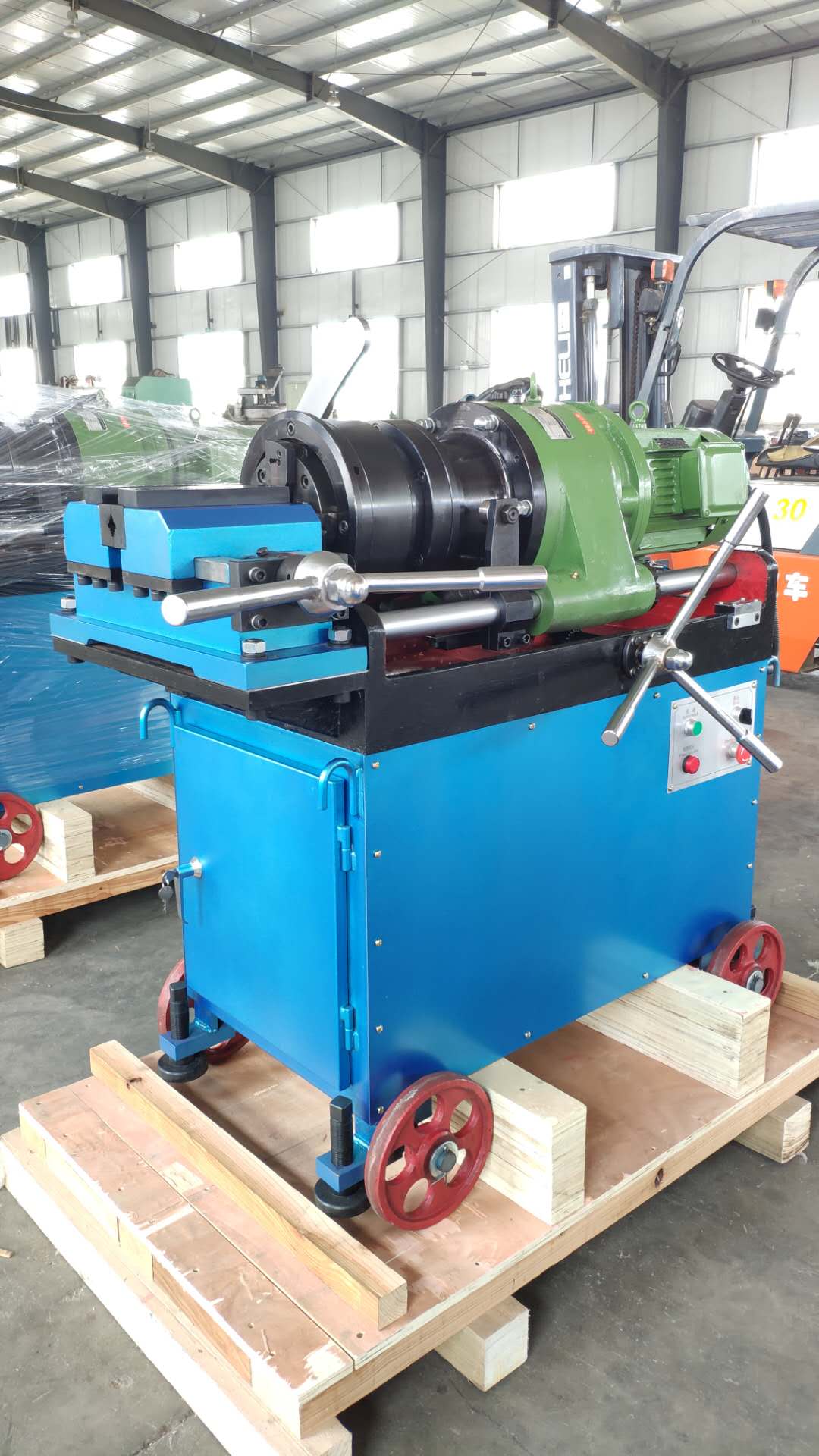
Outer diameter and length are the dimensions that most often determine whether a splice can be built. The tables below reproduce the documented dimensions for the Bartech rebar coupler range across bar sizes 16 mm to 40 mm.
Threaded couplers: rolling and upsetting
| Bar size (mm) | Rolling coupler OD × Length (mm) | Rolling thread | Upsetting coupler OD × Length (mm) | Upsetting thread |
|---|---|---|---|---|
| 16 | 24 × 42 | M16.5×2.5, 60° | 26 × 40 | M20×2.5, 60° |
| 18 | 27 × 45 | M18.5×2.5, 60° | 29 × 44 | M22×2.5, 60° |
| 20 | 30 × 50 | M20.5×2.5, 60° | 32 × 48 | M24×3.0, 60° |
| 22 | 33 × 54 | M22.5×2.5, 60° | 36 × 52 | M27×3.0, 60° |
| 25 | 38 × 62 | M25.6×3.0, 60° | 40 × 60 | M30×3.5, 60° |
| 28 | 42 × 68 | M28.6×3.0, 60° | 44 × 66 | M33×3.5, 60° |
| 32 | 48 × 76 | M32.6×3.0, 60° | 50 × 72 | M36×4.0, 60° |
| 36 | 53 × 84 | M36.6×3.0, 60° | 56 × 80 | M39×4.0, 60° |
| 40 | 59 × 95 | M40.2×3.0, 60° | 62 × 90 | M45×4.0, 60° |
Pressing and one-touch couplers
| Size (mm) | Cold pressing coupler, Q355B: OD × Length × Wall (mm) | One-touch coupler, 40CR: OD × Length (mm) |
|---|---|---|
| φ11-16 | - | 35 × 100 |
| φ16 | 30 × 110 × 4.5 | 40 × 106 |
| φ18 | 34 × 120 × 5.4 | - |
| φ18/20 | - | 46 × 123 |
| φ20 | 36 × 120 × 5.5 | - |
| φ22 | 40 × 132 × 6.4 | 51 × 133 |
| φ25 | 45 × 150 × 7.4 | 56 × 143 |
| φ28 | 50 × 168 × 8.0 | - |
| φ29 | - | 65 × 166 |
| φ32 | 56 × 192 × 9.0 | 70 × 170 |
| φ36 | 63.2 × 220 × 11.3 | 78 × 190 |
| φ40 | 70 × 240 × 11.0 | 83 × 200 |
Step-by-Step: Verifying Coupler Compliance Before You Order
Compliance is cheapest to fix before the purchase order is signed. The following sequence is designed for evaluation-stage review and can be repeated as an incoming inspection checklist.
- Name the standard first. Identify the splice standard referenced in the structural drawings - ISO 15835, ASTM A615 or BS 8110 / Eurocode 2 - and confirm the supplier can document against it. Do not accept a generic quality statement in place of a named standard.
- Fix the steel grade in writing. State carbon steel 45#, Q355B or alloy steel 40CR explicitly. Because the grade determines the connection method, a grade change is a design change.
- Confirm the thread specification. Check that the coupler's thread designation (for example M25.6×3.0 for a 25 mm rolling coupler) matches the thread the site will produce, and that the 60° thread angle is stated on both sides of the joint.
- Verify the dimensional envelope. Use the tables above to confirm OD and length against cover, congestion and joint access. For on-site assembly in tight joints, this step prevents most rework.
- Confirm the evidence package. Bartech quality control covers a material test report, 10% production testing during the production lines, and 100% appearance surface checking, with pre-shipment testing as the acceptance criterion.
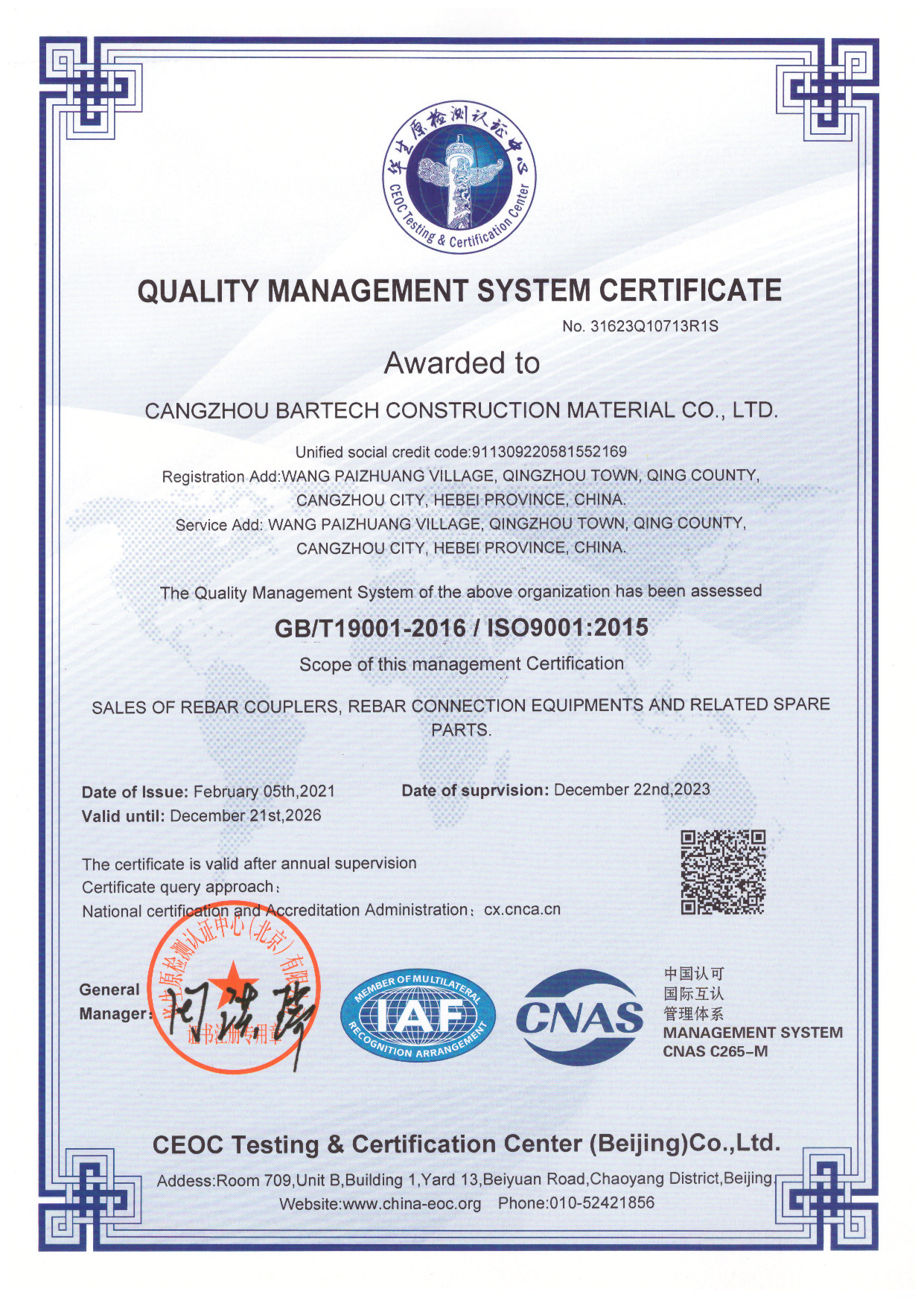
- Check the certification scope and validity. Bartech holds a CE certificate (Nr.SC-PSC-4-2025-12-14) for the EU market, issued under the EU Construction Products Regulation and valid from 2025-12-04 to 2030-12-03, and ISO 9001:2015 certification (31623Q10713R1S), valid from 2021-02-05 to 2026-12-21, covering the sale of rebar couplers, rebar connection equipment and related spare parts. Check that the products you are ordering fall inside the stated scope.
- Match the tooling. Confirm that the threading, pressing or wrenching equipment on site is rated for the bar sizes ordered (see the tooling table below).
- Agree the commercial terms. Bartech offers FOB or CIF delivery terms, 30% TT prepayment to confirm the order and 70% by TT once goods are ready before shipment, with a pre-shipment test as the acceptance criterion. Stock couplers carry no minimum order quantity.
Tooling Compliance: Producing a Conforming Thread in the Field
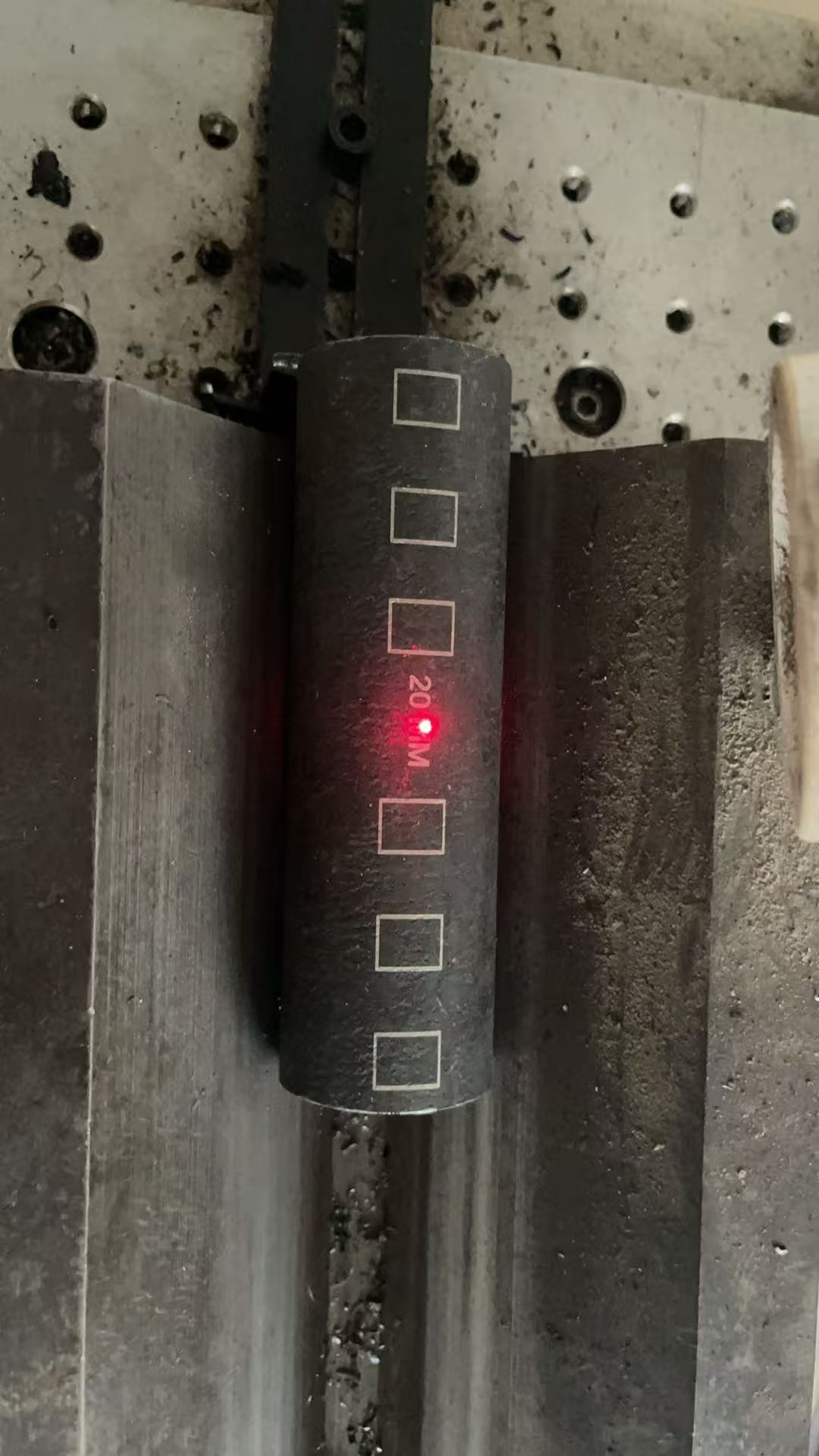
Even a compliant coupler will not produce a compliant splice if the thread or the pressing is wrong. Tooling is therefore part of the compliance chain, and its ratings should be checked against the bar schedule.
| Equipment | Model | Rebar range | Key documented specification |
|---|---|---|---|
| Rebar thread rolling machine | CBT40A | 16-40 mm | 5.5 kW, 380V/50Hz, speed ratio 1:23 quick or 1:29 slow, max threading length 120 mm, net weight 590 kg |
| Rebar thread rolling machine | CBT40L | 16-40 mm | 5.5 kW, 380V/50Hz, max threading length 100/200 mm, net weight 420 kg |
| Rebar auto threading machine | 40AO | 16-40 mm | 5.5/7.5 kW, air clamping 0.4-0.8 MPa, net weight 860 kg |
| Rebar threading machine, quick type | 40MO | 16-40 mm | 5.5 kW, speed ratio 1:19 quick or 1:23 slow, max threading length 95 mm |
| Rebar upsetting machine (auto) | 36S | 400 rebar 16-36 mm; 500 rebar 16-32 mm | 7.5 kW, max pressure 31.5 MPa, 36 s cycle time |
| Rebar upsetting machine (auto) | 50S | 400 rebar 16-50 mm; 500 rebar 16-40 mm | 11 kW, oil pump flux 16 ml/r, max pressure 31.5 MPa |
| Rebar thread cutting machine | MQ40 | M14-M45 | 5.5 kW, 380V/50Hz or 415V/50Hz, max thread length 100 mm |
| Rebar coupler pressing machine | CBT32 | 16-32 mm | 4 kW, clamp tension 50T, max oil pump pressure 70 MPa |
| Rebar electric torque wrench | BOC 8-32 | 8-32 mm | Max torque 350 N·m, 21V 6.0AH battery |
| Rebar electric torque wrench | BOC 8-42 | 12-40 mm rebar / 16-32 coupler | Max torque 400 N·m, 21V 6.0AH battery |
Note the electrical specification: the threading, upsetting, cutting and pressing machines listed operate on 380V/50Hz, with the MQ40 also available for 415V/50Hz. Projects in regions with different supply voltages should have this confirmed at the quotation stage rather than on arrival.
Verified Project Use Cases
Two documented reference projects illustrate how compliance checks translate into site results.
Kuwait: outdoor construction, standard rebar couplers
A construction enterprise purchasing standard rebar couplers for outdoor construction work in Kuwait, serving global markets, runs an annual supply of 400,000 rebar couplers. The reported highlights are easy connection, higher strength, stable quality and good operation results. For a compliance review, the relevant point is scale and repeatability: a documented annual volume of this size requires the dimensional and material controls described above to hold consistently across production batches.
Vietnam: tall buildings and railway stations
A Vietnamese project used 500,000 rebar couplers per year in tall building construction and railway station construction, and was supplied to an automotive OEM client. The reported performance attributes are high strength, good quality, clear outer surface and strict thread. The emphasis on clear outer surface and strict thread is directly relevant to the thread geometry section above - it indicates that thread conformity, not just material grade, was the acceptance-critical attribute on that project.

Coupler Type Comparison: Compliance at a Glance
The following table summarises the documented attributes a reviewer needs in order to compare coupler types on compliance grounds rather than on price alone.
| Attribute | Rolling coupler | Upsetting coupler | Cold pressing coupler | One-touch coupler |
|---|---|---|---|---|
| Documented steel grade | Carbon steel 45# / Alloy steel 40CR | Carbon steel 45# / Alloy steel 40CR | Carbon steel Q355B | Alloy steel 40CR |
| Thread angle | 60° | 60° | Not applicable | Not applicable |
| Thread designation example (25 mm bar) | M25.6×3.0 | M30×3.5 | - | - |
| Covered bar size range | 16-40 mm | 16-40 mm | φ16-φ40 | φ11-φ40 |
| OD at 25 mm bar | 38 mm | 40 mm | 45 mm | 56 mm |
| Length at 25 mm bar | 62 mm | 60 mm | 150 mm | 143 mm |
| Primary compliance check | Thread pitch and 60° angle match | Upset end geometry and thread match | Wall thickness and pressing pressure | Dimensional fit and connection integrity |
Frequently Asked Questions
1. Which standards apply to rebar couplers used in global construction projects?
Mechanical rebar splices are governed by international standards including ISO 15835, ASTM A615, and BS 8110, which is often replaced by Eurocode 2 in the EU (Regbar Construction). Alongside the design standard, buyers usually require supplier-side quality certification: Cangzhou Bartech holds a CE certificate (Nr.SC-PSC-4-2025-12-14) for the EU market under the EU Construction Products Regulation, valid to 2030-12-03, and ISO 9001:2015 certification (31623Q10713R1S) covering the sale of rebar couplers, rebar connection equipment and related spare parts, valid to 2026-12-21.
2. Can coupler material grade, thread and dimensions be customised to a project specification?
Yes. Cangzhou Bartech offers OEM production and customisation of coupler outer diameter, inner diameter and thread. The standard range covers bar sizes 16 mm to 40 mm across rolling, upsetting, pressing and one-touch couplers, with documented thread designations from M16.5×2.5 to M45×4.0 at a 60° thread angle for threaded types. Monthly production capacity is 300,000 units.
3. What are the minimum order quantity and payment terms?
For stock couplers there is no minimum order quantity. Delivery terms are FOB or CIF. Payment terms are 30% TT prepayment to confirm the order, with the remaining 70% by TT once the goods are ready and before shipment. The acceptance criterion is a pre-shipment test.
4. What quality evidence is provided for a coupler order?
Quality control covers a material test report, 10% production testing during the production lines, and 100% appearance surface checking. Pre-shipment testing acts as the acceptance criterion. This evidence package is what allows a project reviewer to connect a delivered coupler back to its declared steel grade - carbon steel 45#, Q355B or alloy steel 40CR.
5. What is the lead time, and what support is available after delivery?
Lead time is 7-30 days depending on order quantity, supported by a monthly capacity of 300,000 units and export experience across the Middle East, Asia and South America. Online technical support is provided as after-sales service for global markets. To check a specific bar schedule against the dimensional tables in this guide, or to request a quotation, contact the team at www.chinabartech.cn or email sales@chinabartech.cn.
Conclusion
Rebar coupler compliance on a global project comes down to matching three verifiable attributes: the correct steel grade, a reproducible 60° thread geometry where threads are used, and dimensions that fit the drawing. Certificates are useful only when they map onto those attributes - which is why the CE certificate (Nr.SC-PSC-4-2025-12-14, EU Construction Products Regulation, valid to 2030) and the ISO 9001:2015 certificate (31623Q10713R1S) are worth citing together with the material grades and thread specifications they apply to.
The practical workflow is straightforward: name the standard, fix the grade, confirm the thread, check the envelope, verify the evidence, then match the tooling. Applied before the purchase order rather than after delivery, that sequence removes most of the rework risk that makes international coupler procurement expensive.
Next Step: Check Your Bar Schedule Against These Tables
Cangzhou Bartech Construction Material Co., Ltd. manufactures and exports rebar couplers and rebar connection machines from Qing County, Cangzhou City, Hebei Province, China, founded in 2008 with a 1000 m² facility, 10 engineers and an annual output of 3,600,000 units.
Send your bar schedule and specified standard for a dimensional and grade match, or request a quotation, sample arrangement and pre-shipment test plan.
Website: www.chinabartech.cn | Blog: blog.chinabartech.cn | Email: sales@chinabartech.cn | Tel / WhatsApp: +86 13785685215
Have Questions or Need More Details?
Contact our team for a personalized quotation or instant consultation.
Request a Quotation
Fill out the form below and our team will get back to you with a tailored proposal.
WhatsApp Direct Chat
Prefer to chat in real-time? Message us on WhatsApp for instant assistance & quick answers.
- Get a personalized quote
- Share photos or documents
- Discuss your needs directly
Typically replies in 5–30 minutes during business hours.