
Rebar Coupler Thread Specs & 60-Degree Angle Accuracy Guide
Rebar Coupler Thread Specifications and 60-Degree Angle Accuracy: A Technical Guide for Models 16–40
Thread specification decides whether a mechanical rebar splice behaves like a continuous bar or like a joint waiting to slip. For parallel thread rebar couplers covering bar models 16 to 40, Cangzhou Bartech Construction Material Co., Ltd. works to a thread designation range of M16.5×2.5 through M32.6×3.0 and holds a 60-degree thread angle across the entire range, with coupler body outer diameters from 30 mm at φ16 to 70 mm at φ40, body lengths from 110 mm to 240 mm, and wall thicknesses from 4.5 mm to 11.0 mm.
Those four variables — thread designation, thread angle, outer diameter and body length — determine how force moves from bar to coupler to bar. This guide explains how they work together across models 16–40, how body geometry scales with bar size, how carbon steel grades and alloy steel 40CR compare as selection parameters, and how to verify thread accuracy before a single bar is threaded on site. It is written for procurement engineers, importers and site quality staff who approve coupler specifications at the decision stage.
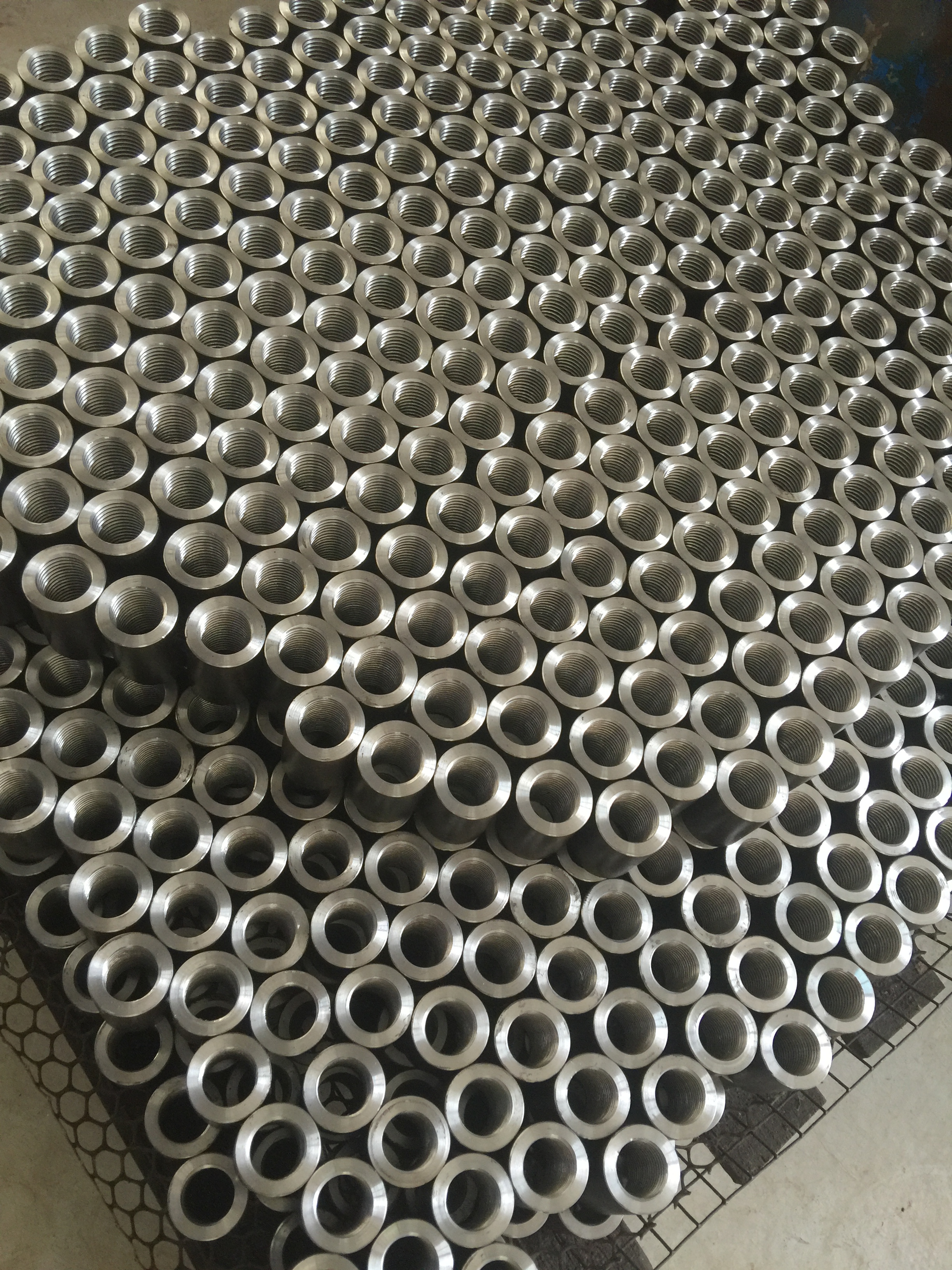
Problem Definition: Why “φ25 Coupler” Is Not a Specification
A purchase order that says only “φ25 coupler” confirms one dimension and leaves the connection undefined. Two couplers can both match a 25 mm bar and still produce different joints, because the joint is created by the thread: its designation, its pitch, its included angle, and the length of bar thread that actually engages inside the coupler body.
The documented field risk for parallel thread systems is not a cracked coupler body. It is incomplete engagement: a connection is made “not well if the worker does not wrench the rebars into the middle of the couplers.” The approved control is procedural and dimensional at the same time — thread the bar end to the correct length, then wrench both bar ends until they meet each other inside the coupler body. If the thread length is short, or the thread angle deviates enough that the threads bind before the bar ends meet, the finished joint can look complete on a visual check while never engaging the full coupler section.
Three specification variables cause most of this:
- Thread designation and pitch — whether the bar thread and coupler thread are generated to the same nominal diameter and pitch.
- Thread angle accuracy — the 60-degree form must be consistent along the full engaged length.
- Body geometry — outer diameter, length and wall thickness must be matched to the bar size, because they set the available thread engagement and the load-bearing wall section.
Confirming only the bar diameter leaves all three open. That is the gap this page closes.
Industry Background: How Thread Specification Sits in the Market
The commercial weight behind these technical details is visible in third-party market research. The global rebar coupler market was valued at USD 1.82 billion in 2025 and is projected to reach USD 3.47 billion by 2034, a CAGR of 7.4% (Dataintelo, 2025). Building construction is the dominant application, accounting for 47.6% of total revenue in 2025, and Asia Pacific is the largest regional market at approximately 41.3% of global revenue in 2025.
By product type, tapered thread couplers held the largest share at 38.2% in 2025, followed closely by parallel thread couplers — which is exactly why thread designation and angle accuracy are commercially relevant: the parallel thread segment is a large, closely contested part of the market, and specification clarity is a normal buyer expectation rather than a niche engineering concern.
Market size estimates do diverge between research houses (Business Research Insights shows USD 1.54 billion for 2026; QY Research shows USD 0.8 billion for 2025), so treat headline market value as directional demand evidence and keep it out of specification decisions. What should drive a specification decision is the standards framework: mechanical rebar splices are governed by international standards including ISO 15835, ASTM A615, and BS 8110 (often replaced by Eurocode 2 in the EU). Bartech holds CE certification Nr. SC-PSC-4-2025-12-14, valid until 2030, and ISO9001:2015 (31623Q10713R1S). The standard sets the performance target for the splice; the thread specification is how that target is met in production and on site.
The Thread Specification System: M16.5×2.5 to M32.6×3.0 at 60 Degrees
Bartech's parallel thread coupler range for models 16–40 is defined by a thread designation span of M16.5×2.5 to M32.6×3.0. Each designation carries two pieces of information: the nominal thread diameter and the pitch in millimetres. The pitch steps up with bar size — from 2.5 mm at the small end of the range to 3.0 mm at the large end — so that a larger bar load is carried by a coarser, deeper thread that remains practical to cut and roll in production.
Why the 60-degree thread angle is the accuracy reference
The thread form used on these couplers is the parallel metric thread form with a 60-degree included thread angle, applied consistently across all model sizes from 16 to 40. The angle matters because a parallel thread transfers load through flank contact between the bar thread and the coupler thread. If the included angle deviates, the contact pattern shifts to a narrower band of flanks, the engaged length stops working uniformly, and the joint relies on fewer threads than the specification assumes. This is why thread angle accuracy is checked as a specification item, not merely as a machining detail.
Angle control also has a practical installation consequence. When bar thread and coupler thread share the same 60-degree form and the same pitch, the two bar ends can be wrenched smoothly toward the centre of the coupler. When they do not, friction increases before the bar ends meet — the exact failure mode described in the field risk record for parallel thread splices.
How outer diameter, length and wall thickness scale with bar size
Coupler body geometry is not a single formula — it is a size-by-size table. The verified dimensions for the range are shown below, from φ16 up to φ40.
| Rebar size | Coupler outer diameter | Coupler length | Wall thickness |
|---|---|---|---|
| φ16 | 30 mm | 110 mm | 4.5 mm |
| φ18 | 34 mm | 120 mm | 5.4 mm |
| φ20 | 36 mm | 120 mm | 5.5 mm |
| φ22 | 40 mm | 132 mm | 6.4 mm |
| φ25 | 45 mm | 150 mm | 7.4 mm |
| φ28 | 50 mm | 168 mm | 8.0 mm |
| φ32 | 56 mm | 192 mm | 9.0 mm |
| φ36 | 63.2 mm | 220 mm | 11.3 mm |
| φ40 | 70 mm | 240 mm | 11.0 mm |
How Outer Diameter and Length Influence Load Capacity
Load capacity in a parallel thread splice is governed by two things at once: how much thread is engaged, and how much coupler material surrounds that engaged thread. Both are functions of the geometry in the table above.
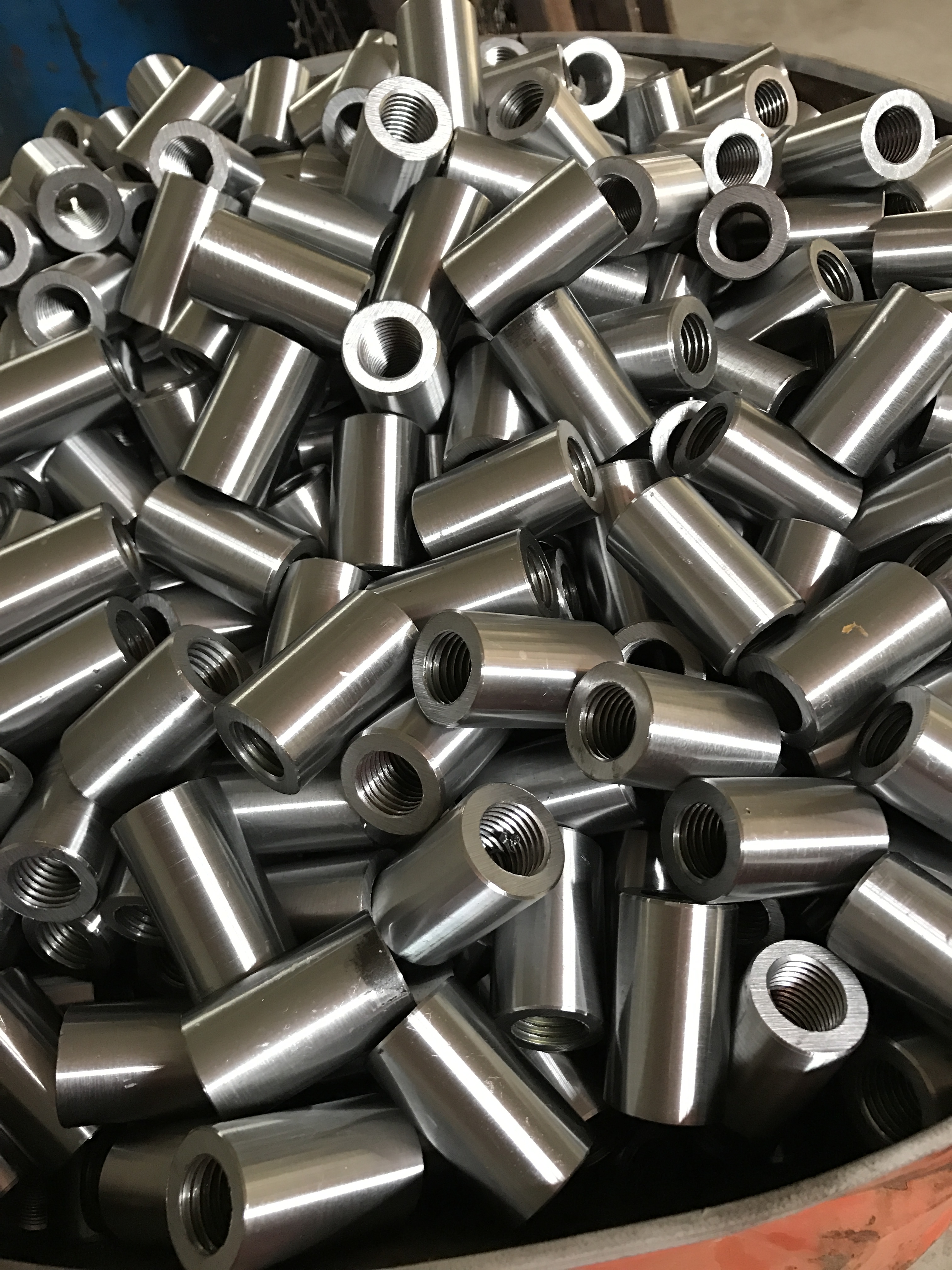
As bar size increases, the force the splice must transfer increases with the bar cross-section. Three geometry responses follow in the Bartech range:
- Outer diameter increases from 30 mm at φ16 to 70 mm at φ40, which creates room for a larger thread diameter and a thicker load-bearing wall around it.
- Body length increases from 110 mm at φ16 to 240 mm at φ40, which lengthens the engaged thread zone and allows the two bar ends to develop load inside the coupler rather than at a single plane.
- Wall thickness increases from 4.5 mm at φ16 to 11.0 mm at φ40, which supports the threaded region against the tensile and hoop stresses generated while the coupler transfers bar force.
The practical implication for a buyer is simple and testable: a coupler body proportioned for a small bar cannot be substituted onto a larger bar simply because the thread starts. The φ16 body (30 mm outer diameter, 110 mm length, 4.5 mm wall) and the φ40 body (70 mm outer diameter, 240 mm length, 11.0 mm wall) exist because the two joints are asked to do different amounts of work. Matching the coupler body to the bar size is therefore a load-capacity decision, not a fitting decision.
Material Selection: Carbon Steel Grades and Alloy Steel 40CR
Thread geometry defines how the load is transferred; body material defines how much of that load path survives handling, installation torque and service conditions. Bartech supplies couplers in different raw material grades matched to different rebar grades. The selection parameters that matter in practice are the bar grade specified for the project, the coupler type (parallel thread, cold pressing, or one-touch), and the corrosion protection required by the site.
Within the range, carbon steel 45# and alloy steel 40CR are the two material options used as thread-specification selection parameters. Bartech's one-touch coupler range — covering model sizes 16, 18, 20, 22, 25, 28, 32, 36 and 40 and intended for the construction industry with typical applications in high-rise buildings, airport projects, high-railway stations and large bridges — is made of Alloy Steel 40CR. The rebar pressing coupler series, which covers the same size set from 16 to 40, is made of carbon steel Q355B. When a project specifies a material grade, confirm it against the coupler type being quoted, not against the size alone.
| Material | Where it appears in the Bartech range | Selection parameter |
|---|---|---|
| Carbon steel 45# | Coupler body material option | General structural splicing where a carbon steel grade is specified |
| Carbon steel Q355B | Rebar pressing coupler series, sizes 16–40 | Cold pressing connection systems |
| Alloy steel 40CR | One-touch coupler range, sizes 16–40 | Higher-demand splicing where an alloy steel grade is specified |
Step-by-Step: Verifying Thread Specification Before and During Installation
The following sequence turns the specification into a checkable process. It can be run at quotation stage, at sample approval, and again during site training.
- Fix the thread designation against the bar size. Confirm that the thread designation being quoted falls inside the M16.5×2.5 to M32.6×3.0 range for models 16–40, and that the pitch matches the designation. Never accept “same size” as a substitute for a designation.
- Confirm the 60-degree thread form. Verify that bar thread and coupler thread are both produced to the parallel metric 60-degree form, and that the verification method (thread gauge or first-article measurement) is agreed before mass threading begins.
- Check body geometry against the size table. Outer diameter, length and wall thickness must match the published value for that bar size — for example 45 mm / 150 mm / 7.4 mm at φ25, or 70 mm / 240 mm / 11.0 mm at φ40.
- Select the material grade deliberately. Choose carbon steel or alloy steel 40CR according to the rebar grade and the project specification, and match the material to the coupler type being supplied.
- Control the threaded length at the bar end. The bar end must be threaded to the correct length so that full engagement is physically possible inside the coupler body.
- Wrench both bar ends until they meet in the middle of the coupler. This is the single most important site control for parallel thread couplers. A connection is not acceptable if the bar ends do not meet inside the coupler body.
- Document and train. Bartech sends clients detailed operation documents and provides operational training so that threading length and wrenching to centre are executed consistently by every crew, not only by the first one.
Where These Thread Specifications Fit: Use Cases
The applications that justify this level of specification control are the ones with dense reinforcement, high load concentration, or difficult access. The Bartech coupler range is designed for construction projects including high buildings, airport projects, high-railway stations and big bridges across the sea — and the market data supports that emphasis, with building construction alone accounting for 47.6% of 2025 rebar coupler revenue.
- High-rise building cores and columns: congested cages where lap lengths cannot be accommodated and bar-end alignment must be predictable.
- Cross-sea bridges: large-diameter bars where φ36 and φ40 coupler bodies (63.2 mm and 70 mm outer diameter) are specified, and where weather independence of the connection matters.
- Airport and high-railway station projects: long, repetitive bar runs where consistent thread designation reduces rework across large crews.
- Tunnels and metro works: sequenced pours where mechanical splices remove the weather exposure that affects welded connections.
In all four settings, the coupler advantage over traditional methods comes from process control rather than from a single property: compared with traditional on-site rebar lap binding, couplers offer 50%–70% lower cost, easier operation and better quality control, with installation speed 3–5 times faster than lap tying; with factory pre-threading, on-site installation is 2–4 times faster than welding. Against traditional welding specifically, the connection is not affected by weather conditions and reduces worker cost by 50%. Those gains only hold if the thread specification is honoured, because the speed advantage comes from parts that fit together the first time.
Comparison Tables: Dimensions, Materials and Field Performance
The three tables below summarise the decision data on this page: verified body geometry by bar size, the coupler-type comparison with material grades, and the performance comparison against traditional connection methods.
| Comparison point | Parallel thread coupler (Bartech) | Cold pressing coupler (Bartech) | One-touch coupler (Bartech) |
|---|---|---|---|
| Thread specification | M16.5×2.5 to M32.6×3.0 across models 16–40, 60-degree thread angle | Tightened by pressing rather than by threading | Threaded/pressed connection for fast assembly |
| Covered sizes | 16, 18, 20, 22, 25, 28, 32, 36, 40 | 16, 18, 20, 22, 25, 28, 32, 36, 40 | 16, 18, 20, 22, 25, 28, 32, 36, 40 |
| Body material | Carbon steel or alloy steel 40CR per project specification | Carbon steel Q355B | Alloy steel 40CR |
| Typical application | Construction projects, high buildings, airport projects, high-railway stations, big bridges across the sea | Cold pressing connection systems for the same project types | High-rise buildings, airport projects, high-railway stations, large bridges |
| Performance measure | Rebar coupler connection | Traditional lap tying | Traditional welding |
|---|---|---|---|
| Installation speed | Baseline reference | 3–5 times slower than couplers | 2–4 times slower than couplers (with factory pre-threading) |
| Cost | 50%–70% lower overall cost than the alternative methods | Higher | 50% lower worker cost with couplers |
| Weather dependency | Not affected by weather conditions | Site-dependent | Directly affected by weather |
| Quality control | Easier quality control, with thread and engagement checks | Harder to verify visually | Harder to verify visually |
FAQ: Thread Specifications, Angle Accuracy and Ordering
1. Which standards govern rebar coupler thread specifications?
Mechanical rebar splices are governed by international standards including ISO 15835, ASTM A615, and BS 8110, which is often replaced by Eurocode 2 in the EU. These standards define the required performance of the splice itself, while the thread designation, thread angle and coupler body geometry are the manufacturer's method of meeting that requirement. Compliance evidence should be checked alongside the thread specification: Cangzhou Bartech Construction Material Co., Ltd. holds CE certification Nr. SC-PSC-4-2025-12-14, valid until 2030, and ISO9001:2015 (31623Q10713R1S).
2. Can thread specifications and coupler materials be adapted for a specific project?
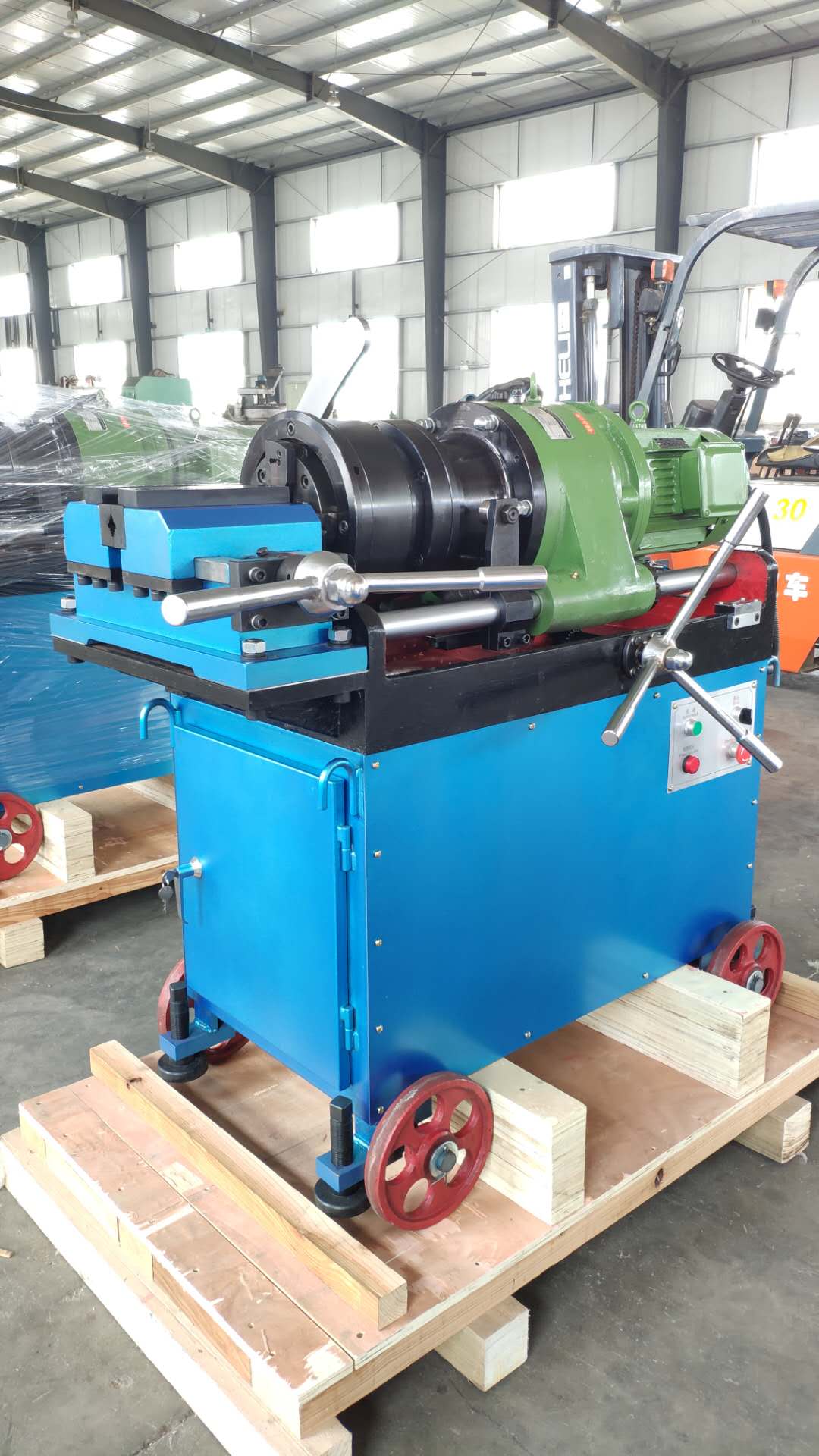
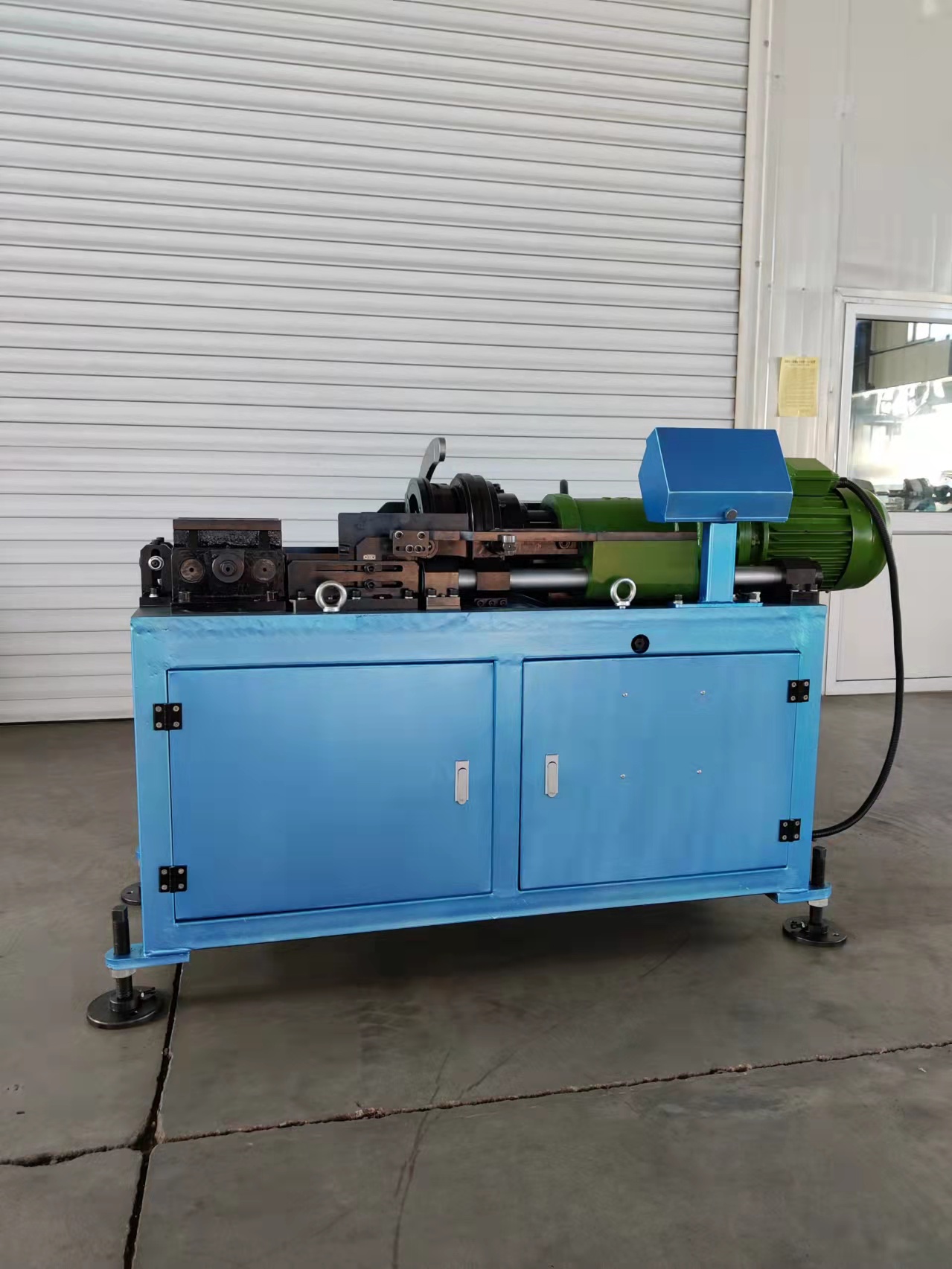
Yes, within a documented range. The parallel thread coupler range covers models 16 to 40 with thread designations from M16.5×2.5 to M32.6×3.0, and body dimensions are fixed size by size — from 30 mm outer diameter and 110 mm length at φ16 up to 70 mm outer diameter and 240 mm length at φ40. Material can be selected between carbon steel grades and alloy steel 40CR depending on the coupler type and the specified rebar grade. For upset-end and threading operations, Bartech's machine line includes the CBT40A rebar threading machine with a 5.5 kW power rating supporting rebar sizes from 16 mm to 40 mm, and the 50S rebar upsetting machine, which processes rebar sizes 16–50 mm for 400 rebar and 16–40 mm for 500 rebar.
3. How does thread specification affect rebar coupler cost?
Cost is driven mainly by body material, outer diameter, length and machining time, which is why the larger sizes use more steel: a φ40 coupler body is 70 mm in outer diameter and 240 mm long, against 30 mm and 110 mm at φ16. Specification decisions should still be evaluated on installed cost rather than unit price. Compared with traditional on-site rebar lap binding, coupler connections offer 50%–70% lower cost, easier operation and better quality control, with installation speed 3–5 times faster than lap tying; against traditional welding, worker cost is 50% lower and on-site installation is 2–4 times faster when threads are pre-formed in the factory.
4. Can we validate thread angle accuracy and fit before placing a production order?
Yes, and it is the recommended step. Request sample couplers with the matching bar-end thread preparation, then verify three things: that the bar thread and coupler designation correspond (for example M16.5×2.5 through M32.6×3.0 for models 16–40), that both threads carry the 60-degree parallel metric form, and that a threaded bar can be wrenched so the two bar ends meet each other inside the coupler body. That last check addresses the main documented risk of parallel thread systems, where a connection is made poorly if the worker does not wrench the rebars into the middle of the coupler. Bartech issues detailed operation documents and provides operational training to support this validation.
5. How is production scheduled once the thread specification is confirmed?
Scheduling is confirmed per order once the thread designation, material grade and quantity are fixed. Bartech's capacity context is relevant here: the company was founded in 2008, operates a 1,000 m² factory with 30 employees and 10 R&D engineers, and produces 3,600,000 pieces annually, with 100% of output exported to markets including Vietnam, Malaysia, Kuwait, Qatar, UAE, Saudi Arabia and Mexico. Confirming the thread specification early removes sample approval from the critical path. To start, send the bar size, required thread designation, preferred material and order quantity to the Bartech team at www.chinabartech.cn or sales@chinabartech.cn.
Conclusion: Specification First, Then Order
Thread specification is the difference between a mechanically spliced bar and a mechanically spliced joint. In the Bartech parallel thread coupler range for models 16–40, that specification has four parts: a thread designation from M16.5×2.5 to M32.6×3.0, a 60-degree thread angle held across the range, body geometry matched to bar size (30 mm / 110 mm / 4.5 mm at φ16 through 70 mm / 240 mm / 11.0 mm at φ40), and a body material selected between carbon steel grades and alloy steel 40CR.
Buyers who confirm all four items — and who then verify that bar ends are wrenched to meet inside the coupler body — get the performance the standards ask for, without the rework that follows an incomplete specification. Buyers who confirm only the bar diameter inherit the risk.
Next Step: Request a Sample and Confirm Your Thread Specification
Cangzhou Bartech Construction Material Co., Ltd. supplies rebar couplers and rebar threading machines to importers, distributors and project buyers worldwide, with CE certification (Nr. SC-PSC-4-2025-12-14, valid until 2030) and ISO9001:2015 (31623Q10713R1S).
Send your rebar size, required thread designation, material grade and project application to sales@chinabartech.cn or WhatsApp +86 13785685215, and request a sample set with the matching operation documents so thread angle and engagement can be validated before the order is placed.
Website: www.chinabartech.cn | Address: Qing County, Cangzhou City, Hebei Province, China.
Have Questions or Need More Details?
Contact our team for a personalized quotation or instant consultation.
Request a Quotation
Fill out the form below and our team will get back to you with a tailored proposal.
WhatsApp Direct Chat
Prefer to chat in real-time? Message us on WhatsApp for instant assistance & quick answers.
- Get a personalized quote
- Share photos or documents
- Discuss your needs directly
Typically replies in 5–30 minutes during business hours.