
Scenario-Based Rebar Coupler Application Guide: High-Rise, Airport, Rail, and Bridge Projects
Mechanical rebar splicing is a constraint decision before it is a product decision. A coupler that works cleanly in a high-rise core wall is not automatically the right choice for a pressed splice in a bridge pier, and a coupler that carries the documents for one market may not satisfy the compliance route of another. The project scenario — the structure, the rebar schedule, the site conditions, and the equipment that will physically install the splice — determines which coupler type makes sense.
This guide maps rolling, pressing, upsetting, and ONE-TOUCH rebar couplers in sizes 16 to 40 to four documented project scenarios: high-rise buildings, airport projects, high-railway stations, and large bridges. It then connects each coupler choice to the tooling that prepares and closes the splice, including rebar threading machines, upsetting machines, thread cutting machines, cold pressing machines, and electric torque wrenches.

Problem Definition: Why One Coupler Type Cannot Cover Every Project
The reason a single coupler specification fails across a portfolio of projects is that the constraints stack on top of one another rather than sit side by side. A buyer fixing a coupler type early, before the scenario is defined, usually ends up correcting one of the following variables later:
- Rebar diameter and spliced position. Column, core wall, slab, and pier splices place different demands on coupler outer diameter and length, because the coupler has to fit inside the reinforcement cage without clashing with adjacent bars.
- Thread geometry. Rolling and upsetting couplers are defined by thread size, pitch, and a 60° thread angle, so the coupler and the machine that cuts or rolls the thread must be specified together.
- Raw material against exposure. Carbon steel 45#, carbon steel Q355B, and alloy steel 40CR are not interchangeable across applications; the material choice follows the splice demand and the corrosion strategy of the project.
- Site equipment and utilities. Some machines require 380V/50Hz power, others require compressed air for clamping, and pressing requires a dedicated hydraulic unit. Site power and access decide which method is practical.
- Compliance documents. Airport, rail, and bridge packages normally specify standards and certificates before any technical review begins.
- Delivery schedule. Splicing equipment is consumed as the structure rises, so lead time has to track the construction programme rather than the purchasing calendar.
When these six items are fixed in the wrong order, the result is predictable: couplers that arrive before the correct tooling, or tooling that cannot produce the thread the coupler was ordered with.
Industry Background: A Market Where Splicing Choices Are Getting More Structured
Rebar coupler demand is concentrated in exactly the project types this guide covers. According to Dataintelo market research, the global rebar coupler market was valued at USD 1.82 billion in 2025 and is projected to reach USD 3.47 billion by 2034, a CAGR of 7.4%. Building construction represents the dominant application, accounting for 47.6% of total revenue in 2025, while Asia Pacific is the largest regional market with approximately 41.3% of global revenue in the same year.
The product mix is also instructive for buyers. Dataintelo reports that tapered thread couplers held the largest product type share at 38.2% in 2025, followed closely by parallel thread couplers. In practice this means specification documents frequently compare both families, and a supplier that only offers one connection principle will be excluded from part of the tender list — one reason a supplier portfolio spanning rolling, upsetting, pressing, and ONE-TOUCH couplers is commercially useful.
On the standards side, mechanical rebar splices are governed by international references including ISO 15835, ASTM A615, and BS 8110, which in the EU is often replaced by Eurocode 2. Project specifications usually name one of these frameworks, and the coupler type, the thread form, and the supporting test documentation are then reviewed against it.
Detailed Solution: Mapping Coupler Types to Documented Project Scenarios
Cangzhou Bartech Construction Material Co., Ltd. is a China-based supplier of rebar couplers and rebar connection equipment, exporting since 2008 to markets across Asia, the Middle East, and South America, including Vietnam, Malaysia, Kuwait, Qatar, the UAE, Saudi Arabia, and Mexico. Its documented product range covers rolling (parallel thread), upsetting, cold pressing, and ONE-TOUCH couplers in sizes 16 to 40, together with the machines that install them. The scenario mapping below follows the company's own application records.
High-Rise Buildings
For tall buildings, the documented working condition is outdoor construction on super high-rise structures under normal tropical temperature and humidity. The documented function is connecting rebars, and the documented operation mode is threading rebar ends with a rebar threading machine before assembly. The matched equipment recorded for this scenario is rebar threading machines, and the related products listed are the rolling rebar coupler, the ONE-TOUCH rebar coupler, the CBT40L threading machine, the 40MO quick-type threading machine, and the BOC 8-42 electric torque wrench. The stated special requirement is ISO and CE certification.
That combination points to a rolling (parallel thread) coupler as the default starting point: thread sizes run from M16.5×2.5 at 16 mm rebar up to M40.2×3.0 at 40 mm, all at a 60° thread angle, which keeps the coupler outer diameter relatively compact — 24 mm to 59 mm — and therefore easier to place inside congested column and wall cages.
Airport Projects
Airport work appears across Bartech's documented applicable industries for couplers, threading machines, pressing machines, upsetting machines, and electric torque wrenches. Airport packages typically combine large floor plates with concentrated column and wall reinforcement, so the practical split is between threaded splicing for vertical and heavy reinforcement, and pressing where a cold-formed splice suits the placement sequence.
For that reason, an airport specification is best reviewed as a mixed package rather than a single coupler type: rolling couplers in the sizes the bar schedule actually calls for, a threading machine matched to the largest diameter on site, and an electric torque wrench sized to the coupler range being closed. The BOC 8-42 wrench is documented for 12–40 mm rebar and 16–32 couplers with a maximum torque value of 400 N·m, while the BOC 8-32 is documented for 8–32 mm rebar with a maximum torque value of 350 N·m.
High-Railway Stations
For high-railway work, the documented scenario is outdoor open-air construction in a tropical high-temperature climate, with CE and ISO certification stated as the special requirement. The documented operation mode is upsetting, thread cutting, and then assembling the rebar coupler, and the matched equipment recorded is the rebar upsetting machine together with the rebar thread cutting machine.
This is the clearest case where the coupler type follows the tooling rather than the reverse. Upsetting couplers are documented from 16 mm (OD 26 mm, length 40 mm, thread M20×2.5) to 40 mm (OD 62 mm, length 90 mm, thread M45×4.0), all at 60°, and the supporting machines are the 36S and 50S automatic upsetting machines plus the MQ40 thread cutting machine. A buyer specifying this route needs to confirm the upsetting machine covers the largest bar in the schedule: the 36S is documented for 400-grade rebar 16–36 mm and 500-grade rebar 16–32 mm, while the 50S is documented for 400-grade rebar 16–50 mm and 500-grade rebar 16–40 mm.
Large Bridge Projects
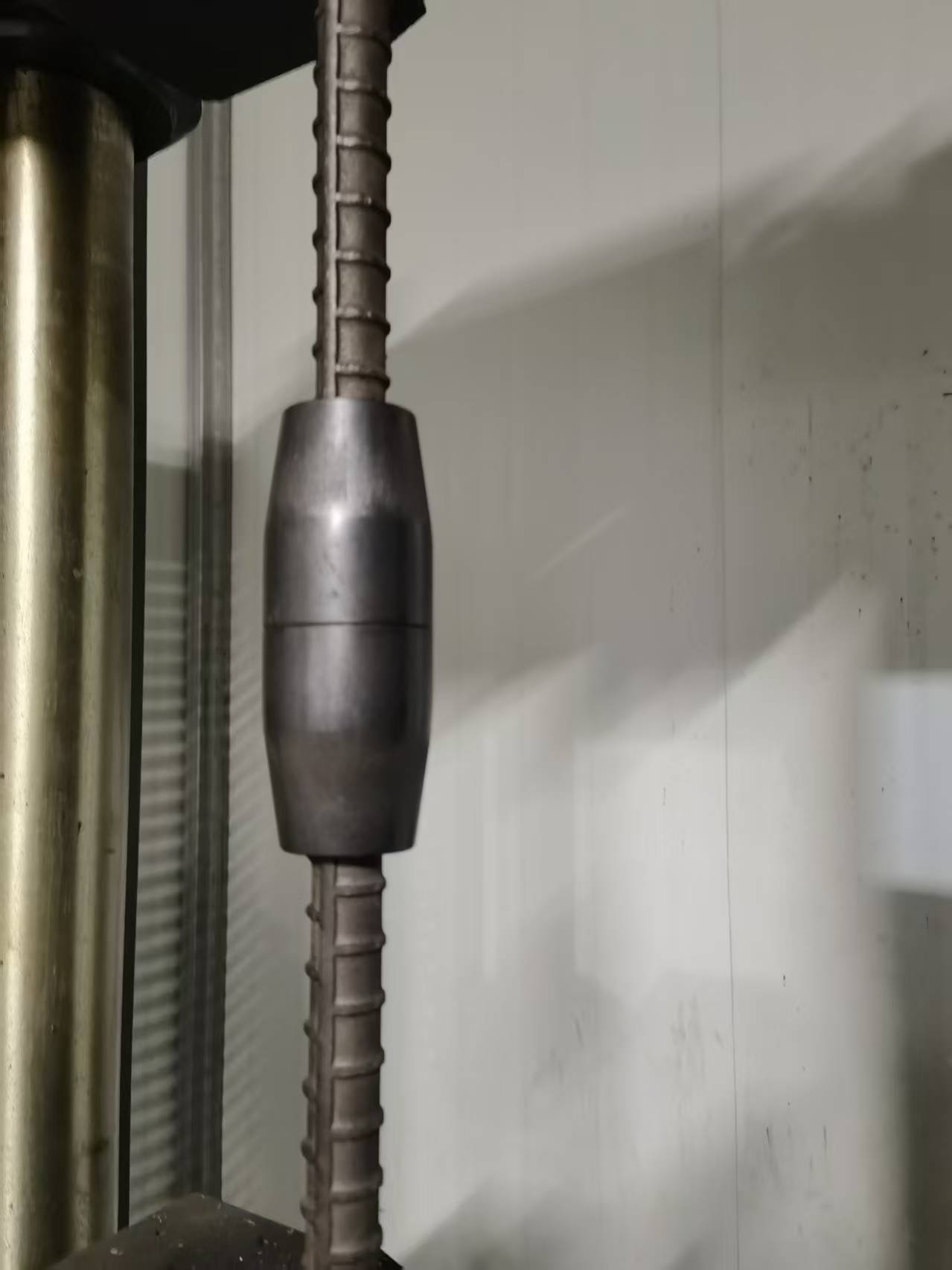
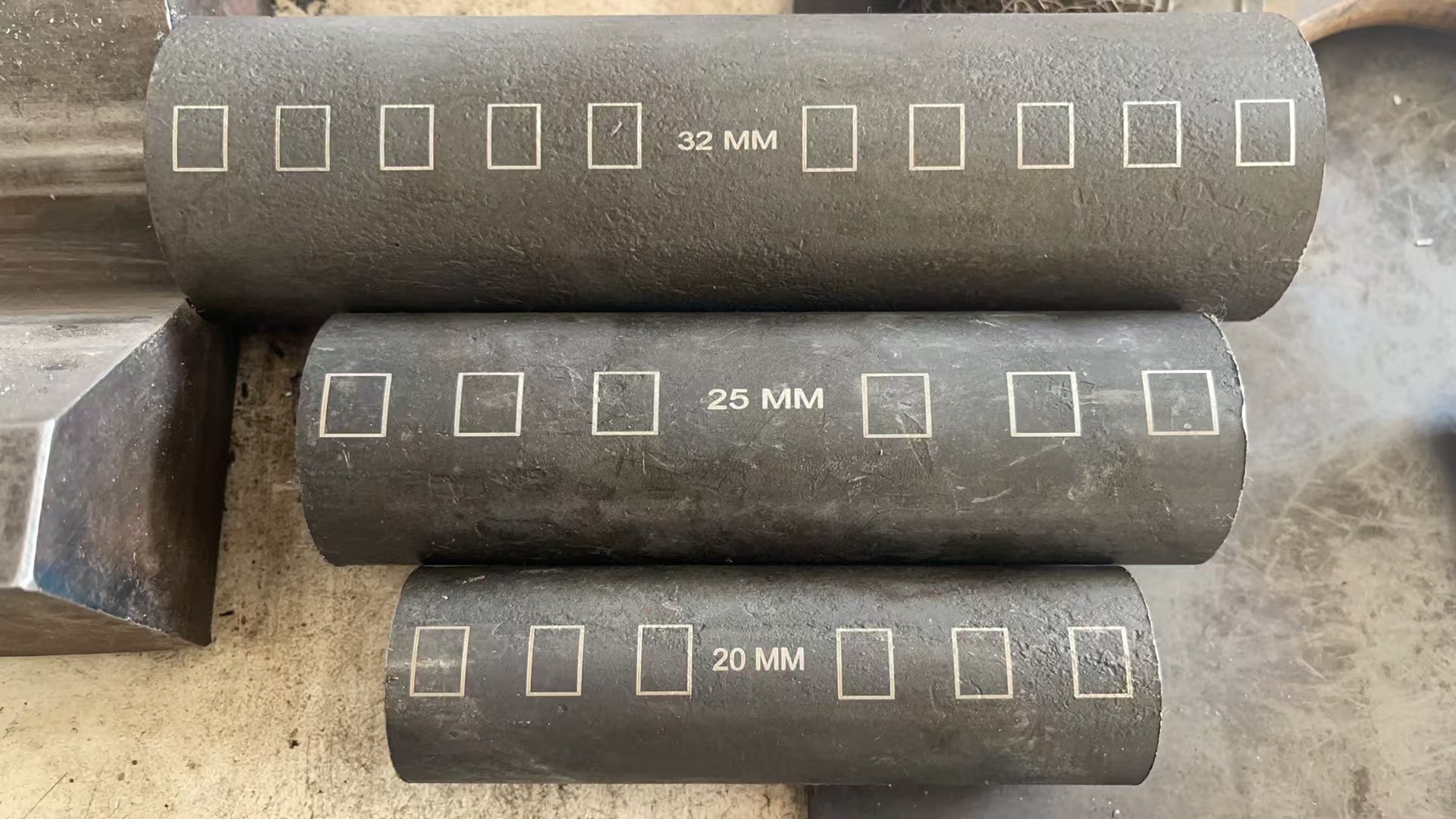
Bridge and marine-crossing work is where cold pressing is most often documented in Bartech's records. Pressing couplers use carbon steel Q355B and are produced from 16 mm (OD 30 mm, length 110 mm, wall thickness 4.5 mm) up to 40 mm (OD 70 mm, length 240 mm, wall thickness 11.0 mm), with thickness increasing progressively across the range. The matched machine is the CBT32 coupler pressing machine, documented at 4 kW with a clamp tension of 50T, a maximum oil pump pressure of 70 MPa, a 5-metre oil pump line, and 380V/50Hz power supply.
For the heaviest bridge reinforcement, a rolling coupler in alloy steel 40CR remains the documented option alongside pressing, because the 36 mm and 40 mm rolling sizes are available with M36.6×3.0 and M40.2×3.0 threads. In practice, bridge packages are frequently split: large-diameter piers and main girders on one connection principle, deck and secondary reinforcement on another.
Coupler Type Reference: Documented Sizes, Geometry, and Materials
The table below consolidates the coupler data that determines whether a type fits a given project scenario. All values are drawn from Bartech's published product specifications for the 16/18/20/22/25/28/32/36/40 model series.
| Coupler type | Rebar size range | Outer diameter (OD) | Length | Thread / angle | Documented material |
|---|---|---|---|---|---|
| Rolling (parallel thread) | 16–40 mm | 24–59 mm | 42–95 mm | M16.5×2.5 to M40.2×3.0, 60° | Carbon steel 45#, alloy steel 40CR |
| Upsetting | 16–40 mm | 26–62 mm | 40–90 mm | M20×2.5 to M45×4.0, 60° | Carbon steel 45#, alloy steel 40CR |
| Cold pressing | 16–40 mm | 30–70 mm | 110–240 mm (thickness 4.5–11.3 mm) | Pressed, no thread | Carbon steel Q355B |
| ONE-TOUCH | φ11–φ40 | 35–83 mm | 100–200 mm | Quick-connection design | Alloy steel 40CR |
Step-by-Step: Matching a Coupler and Its Tooling to a Project
The sequence below reflects how the scenario data, the coupler geometry, and the equipment list have to be reconciled before an order is released. Skipping a step usually shifts the problem downstream to the site.
- Fix the rebar schedule first. Confirm the diameters actually used in columns, walls, slabs, and piers, and note whether the largest bar is 32 mm, 36 mm, or 40 mm. This single input removes most incorrect coupler selections, because the size range bounds OD and length.
- Identify where the splice sits. Vertical column and core-wall splices favour a compact coupler such as the rolling type, while slab and pavement splices are more tolerant of the longer pressing coupler body.
- Choose the connection principle. Rolling (threaded), upsetting (upset end plus thread), pressing (cold-formed), or ONE-TOUCH (quick connection). Each one locks in a different machine requirement.
- Match the raw material to the demand and exposure. Carbon steel 45# and alloy steel 40CR are documented for rolling and upsetting couplers; carbon steel Q355B is documented for pressing couplers; alloy steel 40CR is documented for the ONE-TOUCH range.
- Match the machine to the coupler, not the other way round. Confirm rebar size coverage, main motor power, power supply, and maximum threading length before confirming the coupler order.
- Verify power and site services. Threading machines are documented at 380V/50Hz; the 40AO auto threading machine additionally requires air clamping at 0.4–0.8 MPa; the CBT32 pressing machine requires power for a 4 kW main motor and hydraulic pressure up to 70 MPa.
- Check thread geometry against the drawing. Pitch, thread diameter, and the 60° angle must match the coupler supplied, particularly where a specification references ISO 15835, ASTM A615, or BS 8110.
- Validate compliance documents and then a first batch. Confirm the certification file before production, then validate with a small run against the site's own acceptance criteria.
Supporting Equipment: What Each Machine Does in a Coupler-Based Splice
Couplers and machines are sold as a system for a reason: the coupler geometry is only achievable if the preparation equipment produces the matching thread or profile. The documented Bartech equipment line covers thread rolling, upsetting, thread cutting, cold pressing, and final tightening.
| Model | Equipment type | Documented key parameters | Role in the splice |
|---|---|---|---|
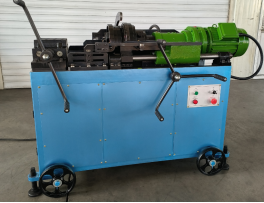
| CBT40A | Rebar thread rolling machine | 16–40 mm; 5.5 kW; 380V/50Hz; speed ratio 1:23 quick or 1:29 slow; max threading length 120 mm; 590 kg | On-site thread rolling |
| CBT40L | Rebar thread rolling machine | 16–40 mm; 5.5 kW; 380V/50Hz; max threading length 100/200 mm; 420 kg | Longer thread lengths |
| 40MO | Thread rolling machine, quick type | 16–40 mm; 5.5 kW; 1:19 quick or 1:23 slow; max threading length 95 mm (150 mm without block); 680 kg | Faster cycle on repetitive work |
| 40AO | Thread rolling machine, auto type | 16–40 mm; 5.5/7.5 kW; water pump 0.12 kW; air clamping 0.4–0.8 MPa; max threading 90 mm with block / 150 mm without; 860 kg | Automated clamping |
| 36S | Upsetting machine, auto | 400 rebar 16–36 mm; 500 rebar 16–32 mm; 7.5 kW; max pressure 31.5 MPa; 1000 kg | Upset end preparation |
| 50S | Upsetting machine, auto | 400 rebar 16–50 mm; 500 rebar 16–40 mm; 11 kW; max pressure 31.5 MPa; 1200 kg | Upset end preparation, larger bars |
| MQ40 | Thread cutting machine (manual) | M14–M45; max thread length 100 mm; 5.5 kW 1450 r/min; 380V/50Hz or 415V/50Hz; cutting forward speed 1:35 | Thread cutting after upsetting |
| CBT32 | Coupler pressing machine | 16–32 mm; 4 kW; clamp tension 50T; max oil pump pressure 70 MPa; oil pump length 5 m | Cold pressing |
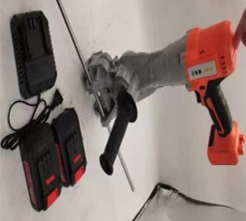
| BOC 8-42 | Electric torque wrench | 12–40 mm rebar, 16–32 coupler; max torque 400 N·m; 21V 6.0Ah battery; 9.5 kg | Final tightening |
| BOC 8-32 | Electric torque wrench | 8–32 mm rebar with host claw; max torque 350 N·m; 21V 6.0Ah battery; 4.5 kg | Lighter-duty tightening |
Comparison Table: Coupler Type Against Scenario, Material, and Tooling
| Coupler type | Documented scenario emphasis | Documented material | Required tooling | Size coverage |
|---|---|---|---|---|
| Rolling (parallel thread) | Tall buildings / high-rise — documented with rebar threading machines and the BOC 8-42 wrench | Carbon steel 45#, alloy steel 40CR | Rebar threading machine (CBT40L, 40MO, 40AO, CBT40A) + electric torque wrench | 16–40 mm |
| Upsetting | High-railway stations — documented as upsetting, thread cutting, then coupler assembly | Carbon steel 45#, alloy steel 40CR | Upsetting machine (36S / 50S) + thread cutting machine MQ40 | 16–40 mm |
| Cold pressing | Bridge and large-scale structural work; also documented for factory pre-processing | Carbon steel Q355B | Coupler pressing machine CBT32 | 16–40 mm (machine 16–32 mm) |
| ONE-TOUCH | Repetitive assembly in tall-building records; listed with threading machines and the BOC 8-42 wrench | Alloy steel 40CR | Documented with rebar threading machines and electric torque wrench | φ11–φ40 |
Reading the table correctly: the scenario column describes where Bartech's records place each coupler type, not a rule that excludes other combinations. A project should still confirm the coupler type against its own bar schedule, splice position, and specification framework before ordering.
Compliance and Certification Constraints
Airport, rail, and bridge packages normally gate technical review behind document review, so certification is a selection constraint rather than a formality. Bartech holds a CE certificate, number Nr.SC-PSC-4-2025-12-14, issued by CERTIFICATION CENTER under standard MTZ202512021CPR for the EU market under the EU Construction Products Regulation, valid from 4 December 2025 to 3 December 2030.
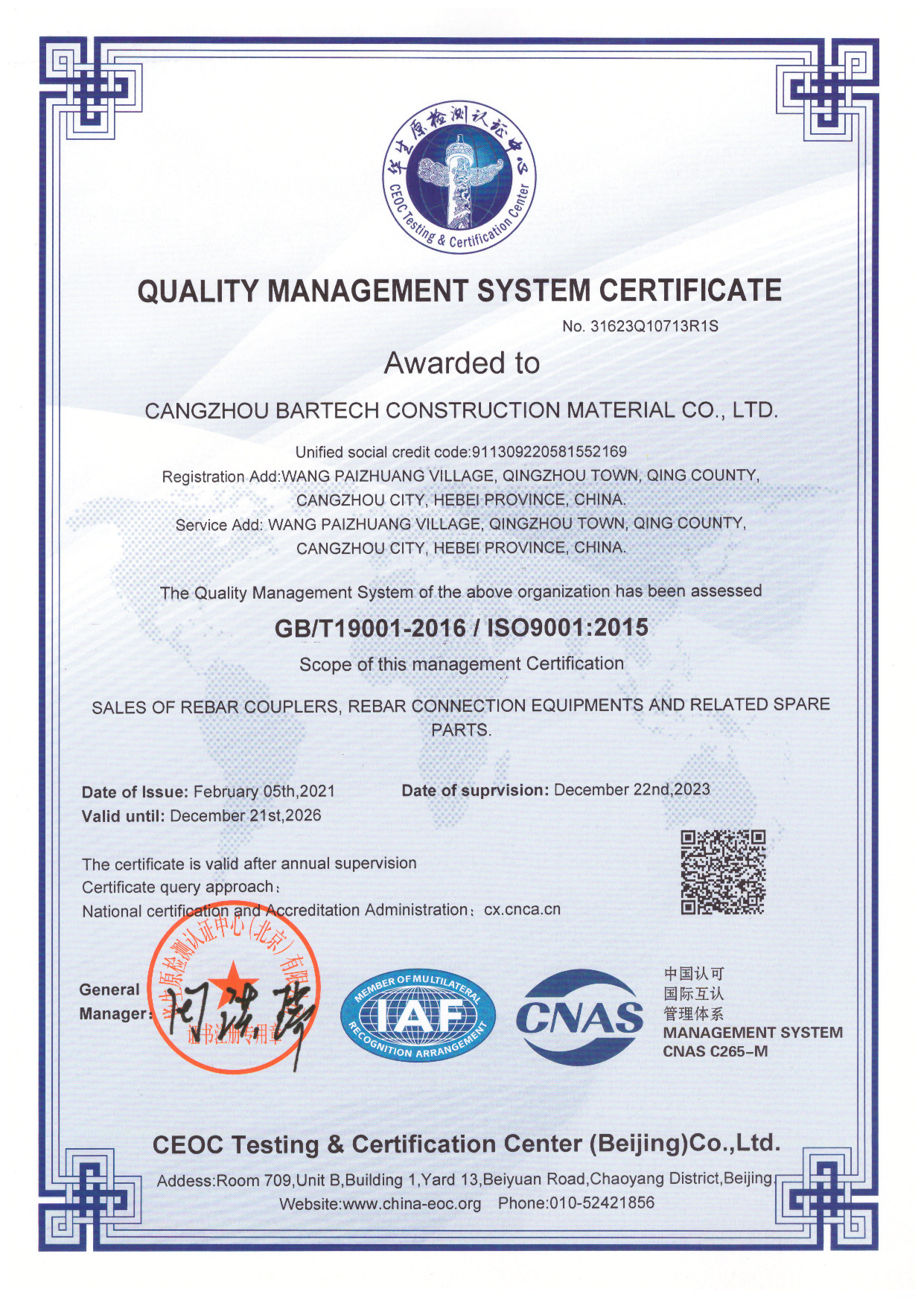
The company also holds ISO certification number 31623Q10713R1S, issued by CEOC Testing & Certification Center (Beijing) Co., Ltd. under GB/T19001-2016 / ISO9001:2015, covering the sale of rebar couplers, rebar connection equipment, and related spare parts, valid until 21 December 2026. Both documents apply across the coupler range from 16 mm to 40 mm.
Two practical points follow. First, certification scope should be matched to the products being purchased, not just to the supplier name. Second, where a project specification references ISO 15835, ASTM A615, or BS 8110, the thread form and the associated test documentation should be confirmed alongside the certificate file, because the standards describe the splice requirement while the certificate describes the supplier's compliance route.
Documented Use Cases at Project Scale
Two repeat-order cases illustrate how the scenario mapping translates into volume. A construction enterprise in Kuwait purchasing standard rebar couplers for outdoor construction work is documented at 400,000 units per year, using the pressing coupler range and the CBT40A threading machine. The recorded result is higher strength, stable quality and good operation, with easy connection noted as the highlight.
A second case, an automotive OEM buyer in Vietnam supplied at 500,000 units per year for tall-building and railway-station construction work, is documented with the pressing rebar coupler. The recorded highlights are high strength, good quality, a clear outer surface, and a strict thread requirement — a useful reminder that surface condition and thread discipline are inspected attributes on site, not cosmetic details.
Behind these volumes, the operational figures that a project planner needs are: monthly capacity of 300,000 units, annual output of 3,600,000 units, a factory of 1,000 m² with 30 employees and a 10-engineer R&D team, and a 100% export ratio. Quality control is documented as a material test report, 10% production testing during production lines, and 100% appearance and surface checking. After-sales support is provided online, and the production mode includes OEM with customization of coupler outer diameter, inner diameter, and thread.
FAQ: Rebar Coupler Selection by Project Scenario
Which certifications apply to Bartech rebar couplers used in airport, rail, and bridge projects?
Cangzhou Bartech Construction Material Co., Ltd. holds CE certification number Nr.SC-PSC-4-2025-12-14, issued by CERTIFICATION CENTER under standard MTZ202512021CPR for the EU market under the EU Construction Products Regulation, valid from 4 December 2025 to 3 December 2030. The company also holds ISO certification number 31623Q10713R1S, issued by CEOC Testing & Certification Center (Beijing) Co., Ltd. under GB/T19001-2016 / ISO9001:2015, valid until 21 December 2026, covering the sale of rebar couplers, rebar connection equipment, and related spare parts. Where a project specification references ISO 15835, ASTM A615, or BS 8110, the thread form and supporting documents should be confirmed against that framework before release.
Which coupler type fits each project scenario?
In Bartech's documented records, high-rise and tall-building work is associated with rolling (parallel thread) and ONE-TOUCH couplers installed with rebar threading machines and an electric torque wrench. High-railway station work is documented with upsetting couplers assembled after upsetting and thread cutting on the 36S or 50S upsetting machine and the MQ40 thread cutting machine. Cold pressing couplers in carbon steel Q355B, pressed on the CBT32 machine, are documented for bridge and large structural applications. Airport projects appear as an applicable industry across the coupler and machine range, so the split follows the bar schedule and splice position rather than a single fixed type.
What raw materials and size ranges are available for these couplers?
Rolling and upsetting couplers are documented in carbon steel 45# and alloy steel 40CR; cold pressing couplers are documented in carbon steel Q355B; ONE-TOUCH couplers are documented in alloy steel 40CR. The model series covers sizes 16, 18, 20, 22, 25, 28, 32, 36, and 40, with rolling coupler outer diameters from 24 mm to 59 mm, upsetting coupler outer diameters from 26 mm to 62 mm, and pressing coupler outer diameters from 30 mm to 70 mm. Customization is available on coupler outer diameter, inner diameter, and thread.
Can a small validation quantity be ordered before a full project release?
Bartech's stated order policy is that stock couplers carry no order minimum quantity, which allows a first validation quantity to be placed before the full project package is released. Validation is supported by the documented quality-control process: a material test report, 10% production testing during production lines, and 100% appearance and surface checking. Online technical support is available during and after validation.
What lead time and monthly capacity should a project planner assume?
The documented lead time is 7–30 days depending on order quantity, against a monthly capacity of 300,000 units and annual output of 3,600,000 units. Because splicing consumables are drawn down as the structure progresses, lead time should be scheduled against the construction programme rather than the purchasing calendar. For a project-specific quotation or a sample request, contact Julie Chen at sales@chinabartech.cn or WhatsApp +86 13785685215.
Conclusion: Fix the Scenario, Then Fix the Coupler
The four project types covered here — high-rise buildings, airport projects, high-railway stations, and large bridges — do not require four unrelated products. They require the same size range of 16 to 40 mm couplers, specified in the right order: scenario first, then connection principle, then raw material, then tooling, then compliance documents.
Rolling couplers in carbon steel 45# or alloy steel 40CR carry the tightest geometry and suit congested vertical reinforcement. Upsetting couplers pair with the 36S or 50S upsetting machine and the MQ40 thread cutting machine where the upset-and-cut route is specified. Cold pressing couplers in carbon steel Q355B, pressed on the CBT32, serve bridge and large structural work. ONE-TOUCH couplers in alloy steel 40CR cover repetitive assembly. Each route is only as reliable as the machine that prepares the bar end and the wrench that closes the splice.
Next Step: Match Your Project Scenario to a Coupler and Tooling Set
Send your rebar schedule, splice positions, and project type, and Cangzhou Bartech Construction Material Co., Ltd. can confirm the coupler type, raw material, and supporting machine configuration.
Email: sales@chinabartech.cn
Tel / WhatsApp: +86 13785685215
Website: www.chinabartech.cn
Address: Qing County, Cangzhou City, Hebei Province, China
Have Questions or Need More Details?
Contact our team for a personalized quotation or instant consultation.
Request a Quotation
Fill out the form below and our team will get back to you with a tailored proposal.
WhatsApp Direct Chat
Prefer to chat in real-time? Message us on WhatsApp for instant assistance & quick answers.
- Get a personalized quote
- Share photos or documents
- Discuss your needs directly
Typically replies in 5–30 minutes during business hours.