What Are Rebar Couplers and How Do They Connect Reinforcement Bars?
A rebar coupler is a short steel sleeve that joins two lengths of reinforcing bar end to end so they behave as one continuous bar. The joint is mechanical: instead of overlapping two bars, or fusing them with heat, the bar ends are prepared and the coupler itself carries the load from one bar into the next.
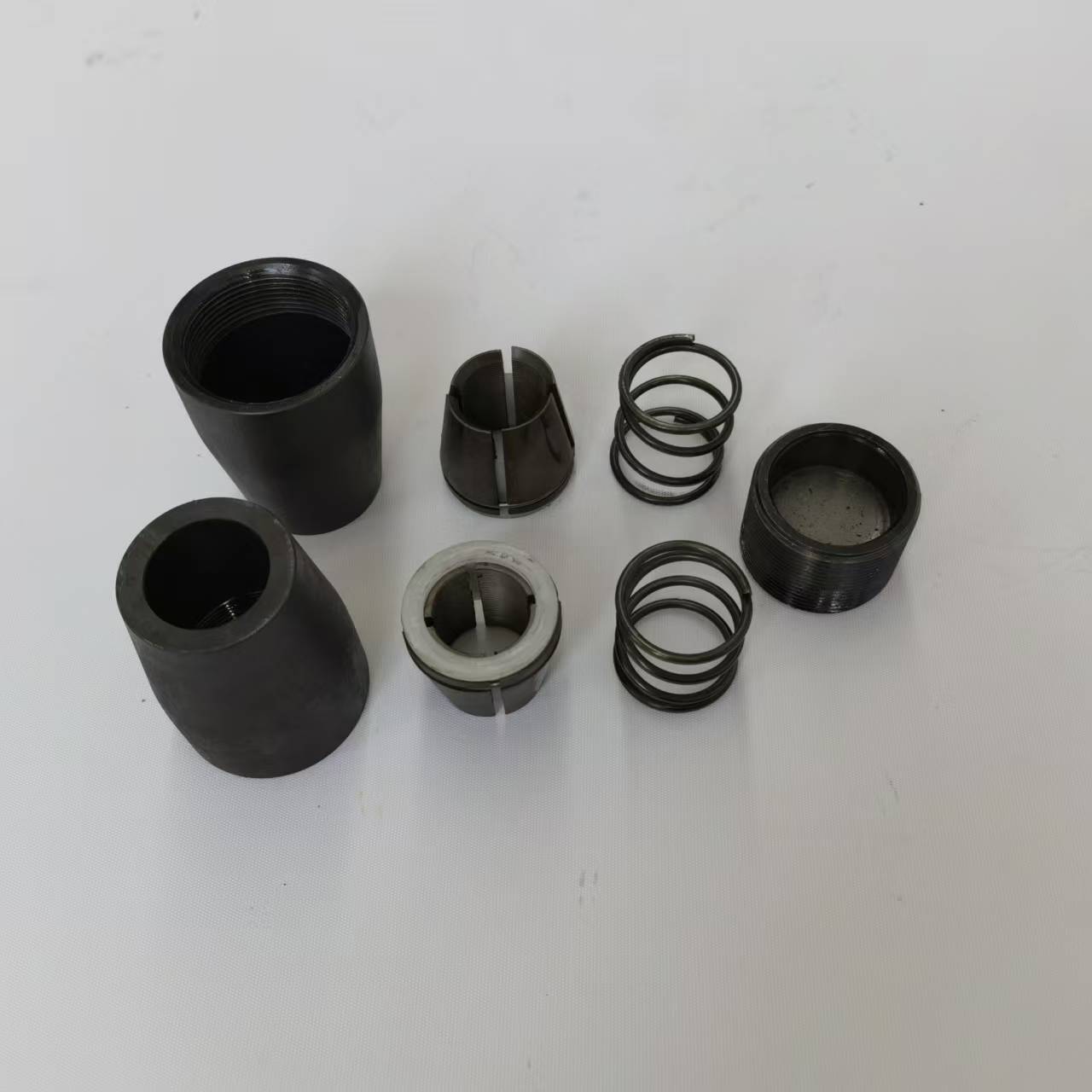
A mechanical rebar splice joins two bars in line, without a lap overlap and without welding.
If you are an engineer meeting mechanical splices for the first time, the practical questions are narrow and specific. What is inside the coupler? How is the bar end prepared? Which machine or tool does the work? And how do you tell one coupler type from another when the drawings only say "mechanical splice"?
This explainer answers those questions for the three connection families made by Cangzhou Bartech Construction Material Co., Ltd. — rolling, pressing, and ONE-TOUCH — using Bartech’s published model ranges and base material data. It is written as a foundation article, not as a buying decision, so that later specification choices are easier to read.
A rebar coupler connects two bars by gripping a prepared bar end on each side. Threaded systems (rolling and ONE-TOUCH) use a coupler with an internal thread that matches a thread formed on the bar end. Cold pressing uses a thicker-walled carbon steel sleeve that is crimped over two plain bar ends by a hydraulic pressing machine. Bartech supplies these coupler series for bar sizes from 16 mm to 40 mm, with the ONE-TOUCH series listed from φ11–16 up to φ40, in carbon steel (45#), alloy steel (40CR) and, for pressing couplers, Q355B carbon steel.
Why Not Just Lap or Weld? Defining the Problem a Coupler Solves
Reinforcing bar is delivered to site in fixed lengths, so almost every column, wall, beam, slab and foundation has joints. Three methods are used to make those joints continuous: lap splicing, welding, and mechanical splicing with a coupler.
- Lap splicing overlaps two bars over a required length. It works, but it consumes extra bar, adds congestion at the joint, and makes it harder to place and compact concrete around dense reinforcement — a common problem in columns and in large-diameter vertical bars.
- Welding fuses the bars, but it depends on qualified welding procedures, skilled welders, and site quality control. Weather, heat input and rebar chemistry all affect the outcome.
- Mechanical splicing prepares each bar end and locks the two ends together inside a coupler. The bars stay in line, the joint is repeatable, and the quality check happens on a defined feature — a thread, a pressed sleeve, or a torque value.
The practical consequence for a beginner is simple: a coupler is not a clamp. It is an engineered connection whose performance depends on three things working together — the bar preparation, the coupler body, and the tooling used to assemble it. Change any one of them and the joint changes.
Industry Background: Where Rebar Couplers Sit in 2026 Construction
Mechanical splicing is no longer a niche method. The global rebar coupler market was valued at USD 1.82 billion in 2025 and is projected to reach USD 3.47 billion by 2034, with Asia Pacific accounting for 41.3% of global revenue in 2025 according to market research published by Dataintelo.
In trade documentation, rebar couplers are commonly tracked under HS code 7307.92.90, within the group of tube or pipe fittings of iron or steel.
On the technical side, a beginner should know that coupler requirements are published in a three-part framework. ISO 15835-1:2018 specifies requirements for couplers used for mechanical splices of steel reinforcing bars. ISO 15835-2:2018 specifies the test methods that apply to those couplers. ISO 15835-3:2018 specifies rules for certification and self-evaluation. Market research on the category also references ASTM A615 and BS 8110 (Eurocode 2) as frameworks that mechanical splices are commonly checked against, while BS 8597 addresses reinforcement couplers in the UK market.
That split matters at procurement stage. A standard that defines requirements is not the same as a test report that proves a specific product met them, and neither is the same as a certificate held by a supplier.
The material side of the equation
Coupler performance starts with steel. Bartech produces rebar couplers from S45C (45#) carbon steel with tensile strength above 600 MPa and from 40Cr alloy steel at approximately 980 MPa tensile strength. Pressing couplers in the same programme are made from Q355B carbon steel, where the wall thickness of the sleeve does much of the work.
Bartech is a rebar coupler and rebar threading machine supplier based in Qing County, Cangzhou City, Hebei Province, China, founded in 2008, exporting 100% of its output to markets including Vietnam, Malaysia, Kuwait, Qatar, UAE, Saudi Arabia and Mexico.
What Exactly Is a Rebar Coupler? Parts, Materials and Thread Basics
Strip away the marketing and a rebar coupler is a small set of measurable features:
- Body (sleeve) — the outer steel shell. Its outer diameter and length are the two numbers a drawing will normally quote.
- Bore — either a machined internal thread (threaded systems) or a smooth bore that will be pressed onto the bars (pressing systems).
- Wall thickness — critical in pressing couplers, where it is quoted per size, for example 4.5 mm at φ16 and 11.0 mm at φ40.
- Thread geometry — both the rolled and upset threaded series listed in the Bartech range use a 60° thread flank angle, with coupler threads such as M16.5×2.5 at size 16 and M40.2×3.0 at size 40 for the rolling series.
- Protective thread caps — plastic caps that protect a threaded bar end before the coupler is assembled, which is a practical detail on sites where threading and assembly happen on different days.
The model designation of the couplers is written as 16/18/20/22/25/28/32/36/40. That series refers to the nominal bar size the coupler fits, which is why the same coupler family is quoted with nine different outer diameters and lengths.
The Three Main Coupler Types and How They Connect Bars
All three types below are assembled onto prepared bar ends, but the preparation step and the locking action are different. That difference is what decides which machine appears on site.
1. Rolling (Parallel Thread) Rebar Coupler
In a rolling system the bar end is threaded with a thread rolling machine. The coupler has a matching internal thread, so the connection is made by screwing the coupler onto the first bar end, bringing the second threaded bar into the other side, and tightening until the joint is closed.
Bartech rolling couplers are listed in carbon steel 45# or alloy steel 40CR and are available across the full 16–40 series. Because the coupler only has to span two threaded ends, this is the most compact of the three bodies — the size 16 coupler has a 24 mm outer diameter and a 42 mm length.
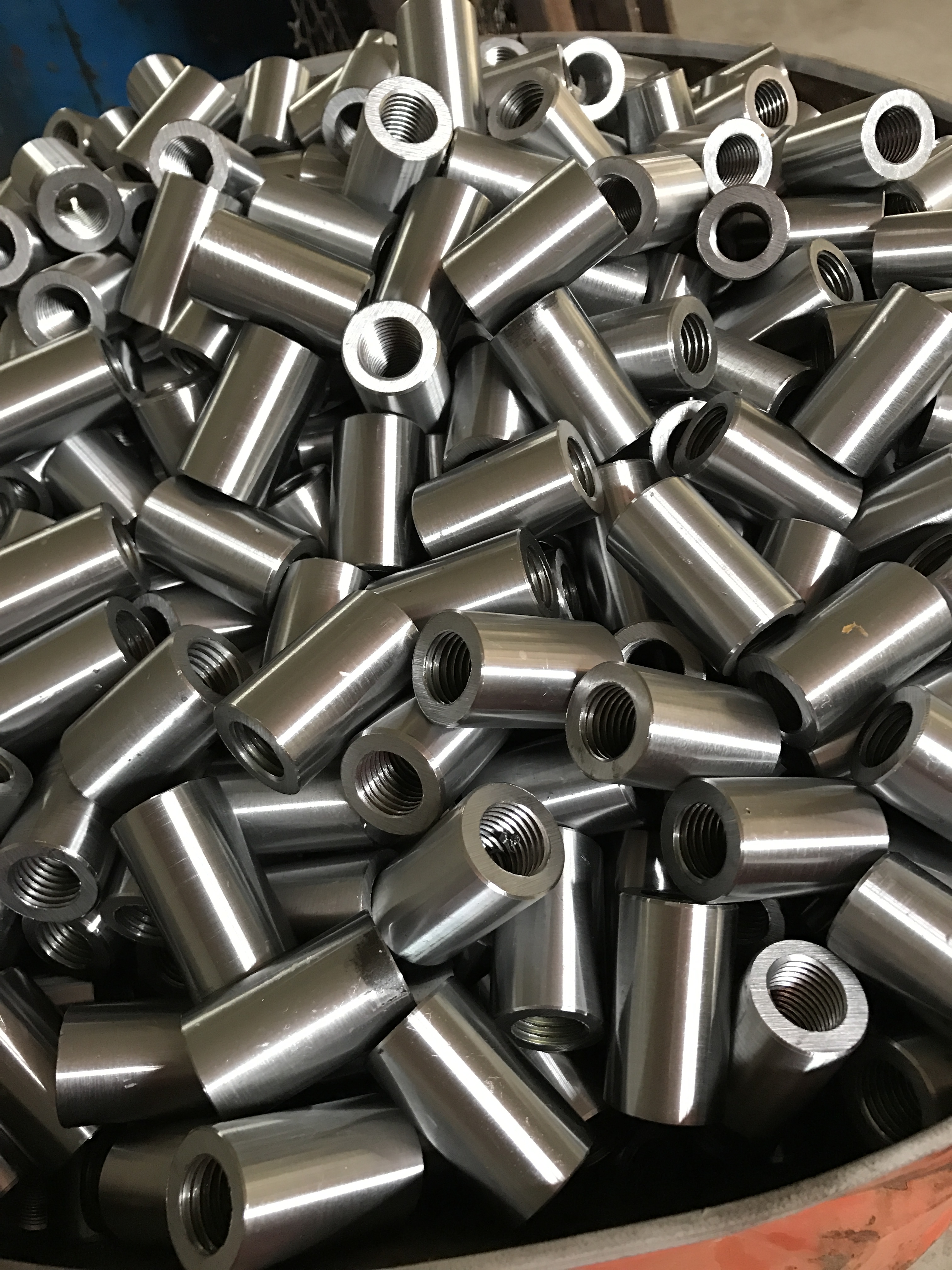
Parallel thread rebar couplers — the bar end is rolled to a thread that matches the coupler bore.
| Bar size | Coupler OD | Coupler length | Coupler thread | Flank angle |
|---|---|---|---|---|
| 16 | 24 mm | 42 mm | M16.5 × 2.5 | 60° |
| 25 | 38 mm | 62 mm | M25.6 × 3.0 | 60° |
| 40 | 59 mm | 95 mm | M40.2 × 3.0 | 60° |
2. Pressing (Cold Pressing) Rebar Coupler
A pressing coupler takes a different route. No thread is cut on the bar. The sleeve is slid over the two bar ends and a hydraulic pressing machine crimps the sleeve so the bar ends are locked inside it by deformation.
Bartech pressing couplers are produced in Q355B carbon steel and are noticeably heavier in section than a threaded coupler: at φ16 the sleeve is 30 mm outside diameter, 110 mm long with a 4.5 mm wall; at φ40 it is 70 mm outside diameter, 240 mm long with an 11.0 mm wall. The matching pressing machine, model CBT32, covers 16 mm to 32 mm bar, uses a 4 kW main motor on 380 V / 50 Hz supply, applies 50 T of clamp tension, and works at a maximum oil pump pressure of 70 MPa.
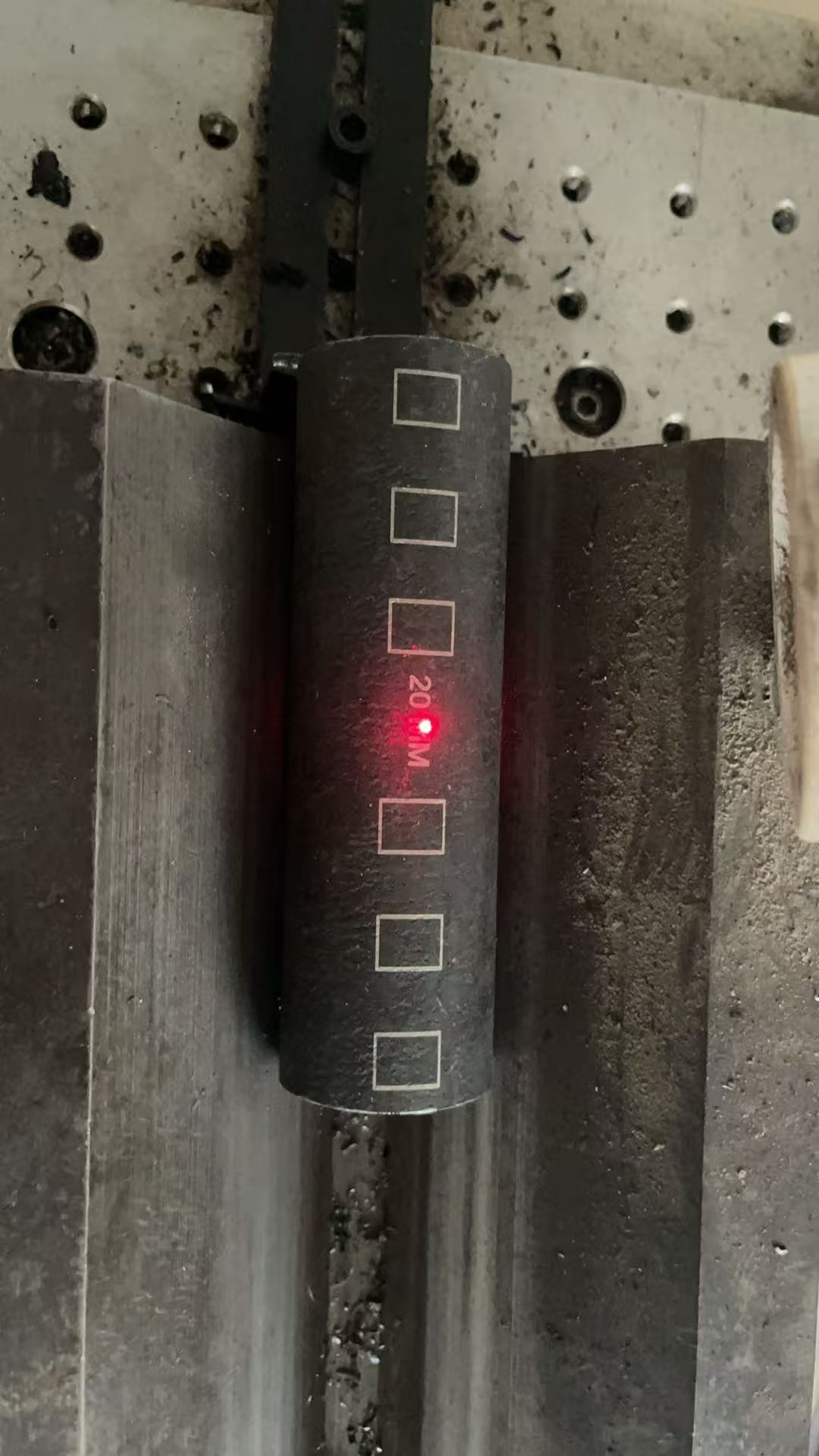
Cold pressing couplers carry a thicker wall — the crimp, not a thread, transfers the load.
| Bar size | Coupler OD | Coupler length | Wall thickness |
|---|---|---|---|
| φ16 | 30 mm | 110 mm | 4.5 mm |
| φ25 | 45 mm | 150 mm | 7.4 mm |
| φ40 | 70 mm | 240 mm | 11.0 mm |
3. ONE-TOUCH Rebar Coupler
The ONE-TOUCH series is Bartech’s quick-connection option. It is made entirely from 40CR alloy steel and its sleeve body is deliberately larger than a rolling coupler — 35 mm outer diameter at the φ11–16 entry size, rising to 83 mm at φ40. That extra body volume is the visible difference on a site walk.
Assembly follows the threaded route: bar ends are prepared with a threading machine, then the coupler is positioned and fastened with an electric torque wrench rather than a manual wrench. Bartech lists two wrenches for this job: the BOC 8-32 for 8–32 mm rebar and the BOC 8-42 for 12–40 mm rebar with 16–32 couplers. Both run on a 6.0 Ah, 900 W, 21 V battery; the BOC 8-32 develops a maximum torque of 350 N·m and weighs 4.5 kg, while the BOC 8-42 develops 400 N·m and weighs 9.5 kg.
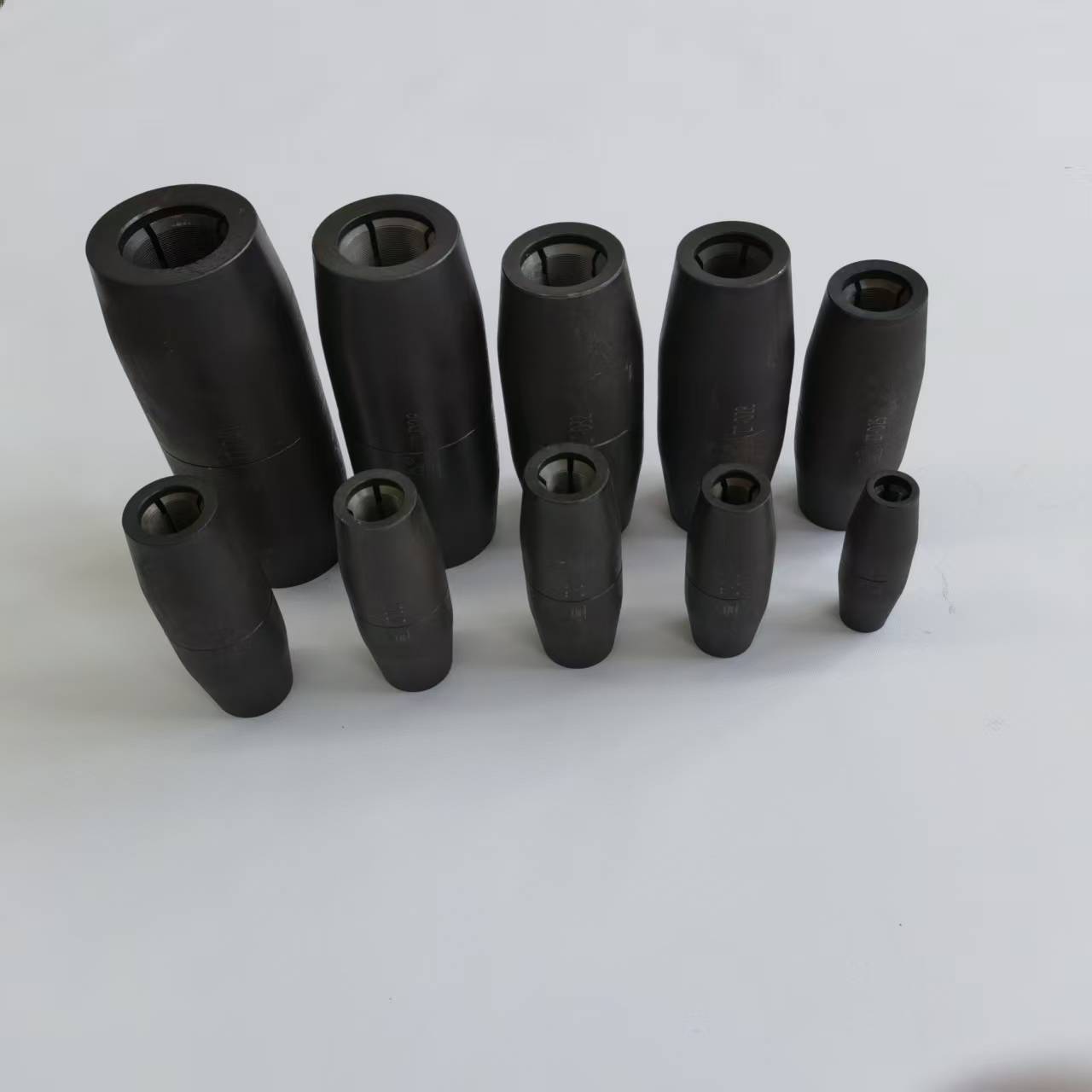
The ONE-TOUCH coupler is an alloy steel sleeve assembled on threaded bar ends and fastened with an electric torque wrench.
| Size reference | Coupler OD | Coupler length | Material |
|---|---|---|---|
| φ11–16 | 35 mm | 100 mm | Alloy steel 40CR |
| φ25 | 56 mm | 143 mm | Alloy steel 40CR |
| φ40 | 83 mm | 200 mm | Alloy steel 40CR |
Step-by-Step: How a Mechanical Splice Is Actually Made On Site
The sequence below is the general order of work for a coupler connection. Step 3 changes depending on which of the three types you are using.
- Confirm the bar and the coupler. Check the bar nominal size against the coupler series, since the rolling, pressing and ONE-TOUCH bodies are quoted per bar size across the 16–40 range.
- Prepare the bar end. Cut the end square and clean it. This step decides how well the coupler sits and how much of the bar is engaged.
- Form the connection surface. For rolling couplers the end is threaded with a rebar thread rolling machine such as the CBT40L (16–40 mm bar, 5.5 kW, 380 V / 50 Hz, maximum threading length 100/200 mm) or the CBT40A (16–40 mm, maximum threading length 120 mm). For ONE-TOUCH couplers the ends are also threaded before assembly. For pressing couplers this step is skipped — the bar end stays plain and the machine does the work later.
- Protect the thread if assembly is delayed. Thread caps keep dust, grit and site damage off a prepared end.
- Position the coupler. Bring the two prepared ends into the coupler from opposite sides and check engagement on both.
- Lock the joint. Threaded systems are tightened with the electric torque wrench (BOC 8-32 or BOC 8-42). Pressing systems are crimped with the CBT32 pressing machine, which covers 16–32 mm bar and develops up to 70 MPa of oil pump pressure through a 5 metre hose.
- Inspect and record. Check thread engagement or crimp position, the visible joint line, and the tightening value used.
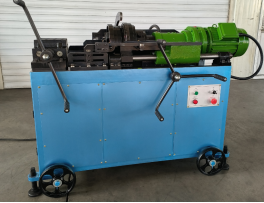
Step 3 in practice: a rebar thread rolling machine forms the thread that the coupler will grip.
Comparison Table: Rolling vs. Pressing vs. ONE-TOUCH
| Attribute | Rolling (parallel thread) | Pressing (cold pressing) | ONE-TOUCH |
|---|---|---|---|
| Bar size coverage | 16, 18, 20, 22, 25, 28, 32, 36, 40 | 16, 18, 20, 22, 25, 28, 32, 36, 40 | Listed from φ11–16 up to φ40 |
| Base material | Carbon steel 45# or alloy steel 40CR | Carbon steel Q355B | Alloy steel 40CR |
| Bar end preparation | Threaded by rolling machine | Plain cut end, no thread | Threaded by rolling machine |
| Locking action | Coupler screwed onto both threaded ends and tightened | Sleeve crimped over both plain ends | Coupler assembled and fastened with electric torque wrench |
| Body profile | Compact — 24 mm OD at size 16 | Thick wall — 4.5 mm at φ16 to 11.0 mm at φ40 | Largest body — 35 mm OD at φ11–16 |
| Typical tooling | CBT40L, CBT40A, 40MO, 40AO thread rolling machines | CBT32 pressing machine | BOC 8-32 or BOC 8-42 electric torque wrench |
| Where it tends to fit | Congested joints where a slim coupler helps | Work where threading the bar end is not practical | Repetitive, high-cycle assembly |
Read this table as a starting point, not a decision. Coupler type, bar size, material and tooling must be confirmed against the project specification and the applicable test evidence for the specific product. A published standard such as ISO 15835 defines requirements and test methods; it does not by itself demonstrate that a given coupler model met them.
Where These Couplers Are Used
Bartech lists the applicable industries for its coupler and machine range as construction projects, high-rise buildings, airport projects, high-railway stations and large bridges, and its application data is organised by project type:
- High-rise building construction. Outdoor construction of super high-rise structures, with threaded bar ends, coupler assembly and electric wrench fastening as the standard operation sequence. Documents for this application reference ISO and CE certification as a project requirement.
- High railway and rail station work. Outdoor open-air construction in high-temperature climates, where the operation sequence combines upsetting, thread cutting and coupler assembly with matching equipment.
- General construction projects. Outdoor tropical sites with high humidity, where the coupler is used to extend bar length and height continuously through the working day; documentation for these projects references CE and ISO compliance and long-term durability.
- Pre-threading at factory level. Indoor, high-volume bar end preparation ahead of delivery, using dedicated rebar threading machines in continuous production.
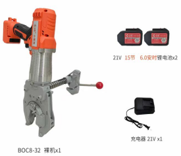
The BOC 8-32 torque wrench develops up to 350 N·m for coupler fastening on 8–32 mm rebar.
Reported first-party usage gives a sense of scale. One construction enterprise in Kuwait purchasing standard rebar couplers takes 400,000 units per year for outdoor construction work, and reports higher strength, stable quality and good operation as the outcome, with easy connection as the working highlight. A customer in Vietnam takes 500,000 units per year for tall building and railway station construction work, reporting stable operation with high strength, clear outer surfaces and strict thread control.
A Beginner Engineer’s Pre-Specification Checklist
Before a coupler type goes into a specification, these are the questions worth answering on paper:
- Bar size and grade. Does the coupler series actually cover the bar diameters in the drawing, and the bar grades used?
- Material of the coupler body. Carbon steel 45#, alloy steel 40CR, or Q355B for pressing — each behaves differently and is tied to a different process.
- Thread or crimp specification. For threaded types, confirm the coupler thread, pitch and the 60° flank angle against the bar end preparation.
- Tooling availability. A coupler type is only usable if the matching threading machine, pressing machine or torque wrench is on site and maintained.
- Compliance evidence. Match the applicable standard, the test method and the product-specific report, rather than accepting one document for all three.
- Volume, lead time and spares. Confirm the supplier can repeat the order and support the equipment afterwards.
Frequently Asked Questions
Which standards apply to rebar couplers, and what certification does Bartech hold?
Requirements for couplers used in mechanical splices of steel reinforcing bars are published in ISO 15835-1:2018; the corresponding test methods are in ISO 15835-2:2018, and the rules for certification and self-evaluation are in ISO 15835-3:2018. Projects may also reference ASTM A615, BS 8110 (Eurocode 2), or BS 8597 for reinforcement couplers. Cangzhou Bartech Construction Material Co., Ltd. holds a CE certificate under standard MTZ202512021CPR, certificate number Nr.SC-PSC-4-2025-12-14, issued by CERTIFICATION CENTER and valid for the EU market from 4 December 2025 to 3 December 2030. The company also holds ISO 9001:2015 certification, certificate number 31623Q10713R1S, issued by CEOC Testing & Certification Center (Beijing) Co., Ltd. under GB/T19001-2016 / ISO9001:2015, covering the sale of rebar couplers, rebar connection equipment and related spare parts, valid to 21 December 2026. As a rule, ask for the standard, the test report and the certificate as three separate items.
Can a coupler be customized for a specific thread or diameter?
Yes, within defined limits. Bartech operates an OEM production mode in which the coupler outer diameter, inner diameter and thread can be customized. The company runs a 10-engineer R&D team and reports a monthly coupler capacity of 300,000 units, with an annual output of 3,600,000 units. Customization requests should always be accompanied by the bar size and grade, the required thread specification, and the quantity, because the tooling used to prepare the bar end has to match the coupler that is supplied.
What drives the cost of rebar couplers?
There is no single list price for rebar couplers, because the cost is driven by bar size, coupler type, material grade, order quantity and the machining involved. A size 16 rolling coupler at 24 mm outer diameter and a size 40 pressing coupler at 70 mm outer diameter and 11.0 mm wall are very different amounts of steel and machine time. For stock couplers, Bartech places no minimum order quantity, which makes it practical to test a requirement on a small order before moving to project volumes. A dated quotation based on your actual size and quantity mix is the only reliable cost figure.
Can I validate a coupler before placing a production order?
Validation starts with documents and dimensions rather than volume. Bartech’s quality control includes a material test report for the steel, 10% production testing during production runs, and 100% appearance surface checking. For a first evaluation, request the material test report, the dimensional and thread data for the exact model, and a sample to check against your bar preparation and tooling. Online technical support is available for fitting and assembly questions. Sample and documentation requests can be raised directly with the sales team before any bulk commitment.
What is the lead time and how much can be supplied?
Lead time is quoted as 7 to 30 days depending on order quantity, against a monthly capacity of 300,000 couplers and an annual output of 3,600,000 units. Because capacity is planned monthly, the practical planning step is to share the bar sizes, coupler types and volumes early so that the threading or pressing equipment can be matched to the same schedule.
To move from explanation to a real specification — send the bar sizes, the connection type you are considering, and the project timeline, and Bartech can confirm the coupler models, the matching tooling and a dated quotation.
Next step: sample, specification check or quotation
Cangzhou Bartech Construction Material Co., Ltd. (Bartech) supplies rebar couplers and rebar threading machines to export markets including Asia, the Middle East and South America. Share your bar sizes, coupler type and quantity, and the team will confirm the matching coupler models and tooling.

Contact: Julie Chen — sales@chinabartech.cn · Tel / WhatsApp: +86 13785685215
WhatsApp: Send a message
Website: www.chinabartech.cn · Address: Qing County, Cangzhou City, Hebei Province, China.
Conclusion
A rebar coupler is a steel sleeve that makes two bars continuous without a lap and without welding. Three connection families cover most site conditions. Rolling couplers grip a rolled parallel thread and stay compact in the joint. Pressing couplers skip threading entirely and lock a plain bar end inside a thick-walled Q355B sleeve. ONE-TOUCH couplers use an alloy steel 40CR body and are assembled on threaded ends with an electric torque wrench. Bartech supplies all three across a 16–40 mm model series, with tooling matched to each type.
For a beginner engineer, the useful habit is to think in four connected items — bar end preparation, coupler body, assembly tool, and compliance evidence. Get those four aligned on paper before the bars arrive, and the joint on site becomes a process rather than a surprise.
Have Questions or Need More Details?
Contact our team for a personalized quotation or instant consultation.
Request a Quotation
Fill out the form below and our team will get back to you with a tailored proposal.
WhatsApp Direct Chat
Prefer to chat in real-time? Message us on WhatsApp for instant assistance & quick answers.
- Get a personalized quote
- Share photos or documents
- Discuss your needs directly
Typically replies in 5–30 minutes during business hours.