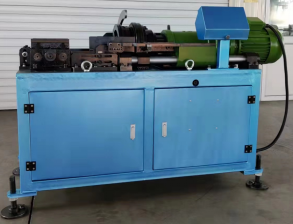
Rebar Coupler 101: Types, Materials, and Buying Basics
Rebar Coupler 101: Types, Materials, and Buying Basics
A rebar coupler is a mechanical splicing device used to connect two reinforcing steel bars end-to-end. It transfers structural loads from one bar to the next through a threaded joint, a pressed sleeve, or a swaged connection. Rebar couplers are widely used in reinforced concrete structures where lap splices are impractical because of rebar congestion, limited splice length, or the need for full structural continuity.
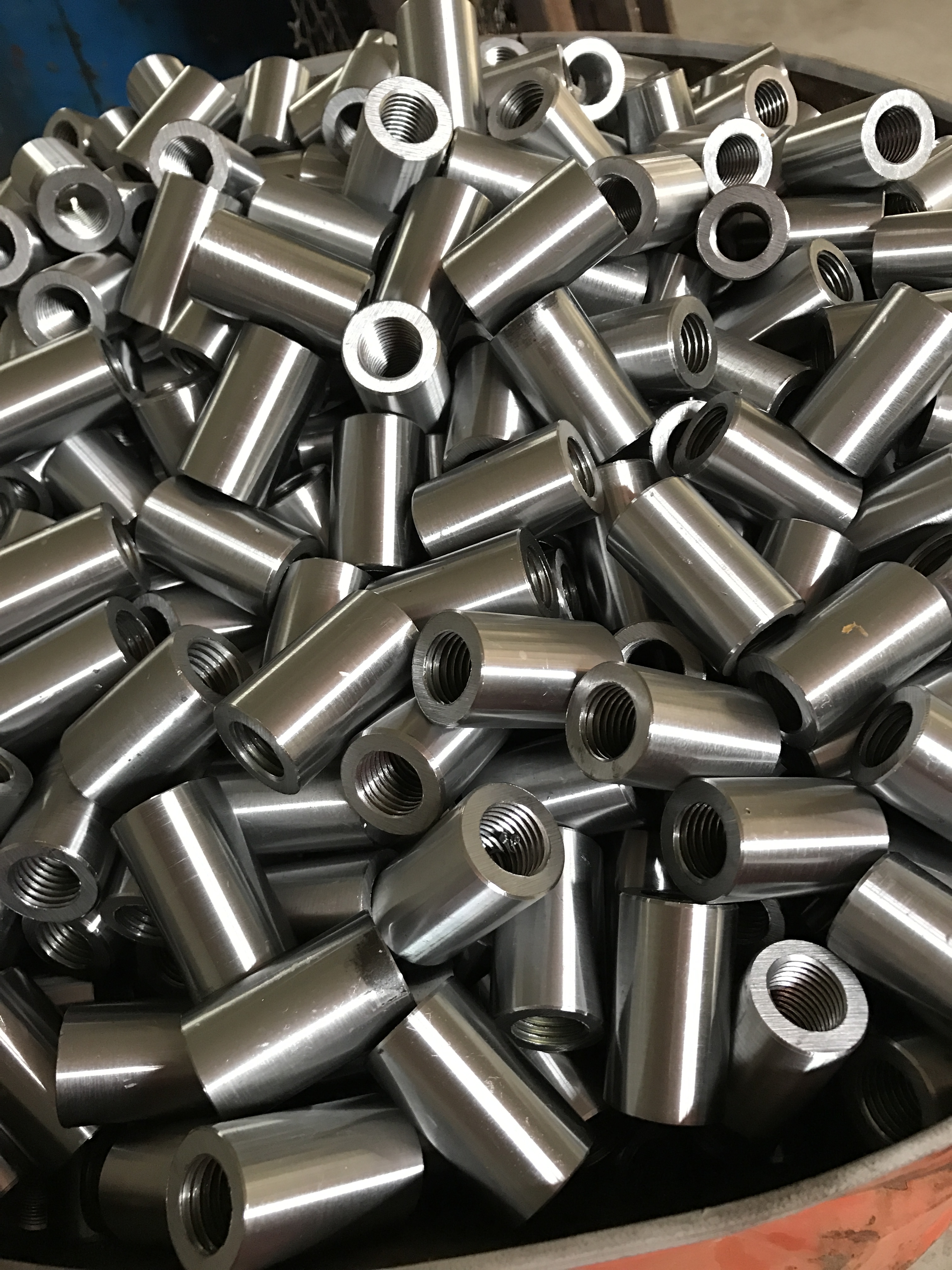
This primer is written for construction buyers, site engineers, and procurement teams who are new to rebar mechanical connections. It explains what a rebar coupler is, which types are available, what materials and standards matter, and how to approach a first purchase.
Why Use a Rebar Coupler Instead of Lap Splicing?
Traditional rebar splicing uses lap lengths. Two bars overlap side by side, and the surrounding concrete bonds with the steel to transfer forces from one bar to the other. This method is simple, but it has practical limits. First, it consumes extra steel, which increases material cost. Second, overlapping bars create congestion in columns, walls, and beam-column joints, making concrete placement difficult. Third, in heavily reinforced sections, it can be hard to fit long lap lengths into the formwork.
Mechanical rebar couplers solve these problems. They create a direct load path between bars, shorten the joint, reduce steel congestion, and make installation easier in tight spaces. They are also an alternative to on-site welding, which requires skilled labor and can create heat-affected zones in the steel. For many projects, rebar couplers improve construction speed and produce a more predictable connection.
Industry Background: A Growing Market for Mechanical Splices
The global rebar coupler market is expanding. According to Dataintelo, the market was valued at USD 1.82 billion in 2025 and is projected to reach USD 3.47 billion by 2034, with a compound annual growth rate (CAGR) of 7.4%. Building construction is the dominant application, accounting for 47.6% of total revenue in 2025. Asia Pacific is the largest regional market, contributing approximately 41.3% of global revenue.
Product type data shows that tapered thread couplers held the largest share at 38.2% in 2025, followed closely by parallel thread couplers. Parallel thread systems are common in projects where the coupler position on the bar must be controlled and where bar rotation is limited.
Mechanical rebar splices are governed by international standards, including ISO 15835, ASTM A615, and BS 8110. In the European Union, BS 8110 is often replaced by Eurocode 2. Buyers should verify which standard applies to their project specification before selecting a coupler type.
Main Types of Rebar Couplers
Rebar couplers fall into several families based on how the rebar end is prepared and how the connection is made. One manufacturer that covers the main families is Cangzhou Bartech Construction Material Co., Ltd. (Bartech). Bartech was established in 2008, operates a manufacturing facility of 1,000 square meters, and employs approximately 30 staff. Its annual production capacity is 3,600,000 units, and its R&D team includes 10 engineers. Export business accounts for 100% of sales, with main markets in Asia, the Middle East, and South America, including Vietnam, Malaysia, Kuwait, Qatar, UAE, Saudi Arabia, and Mexico.
Bartech offers four main rebar coupler types: rolled thread, upset forged, cold extrusion, and quick connection (ONE-TOUCH). Each type uses a different installation method and suits different project conditions.
Rolled Thread Rebar Coupler (Parallel Thread)
The rolled thread rebar coupler is made of carbon steel 45# or alloy steel 40CR. Model designations cover sizes 16, 18, 20, 22, 25, 28, 32, 36, and 40. All models have a 60-degree thread angle. For example, size 16 has an outer diameter of 24 mm and a length of 42 mm, with thread specification M16.5 × 2.5. Size 40 has an outer diameter of 59 mm and a length of 95 mm, with thread specification M40.2 × 3.0.
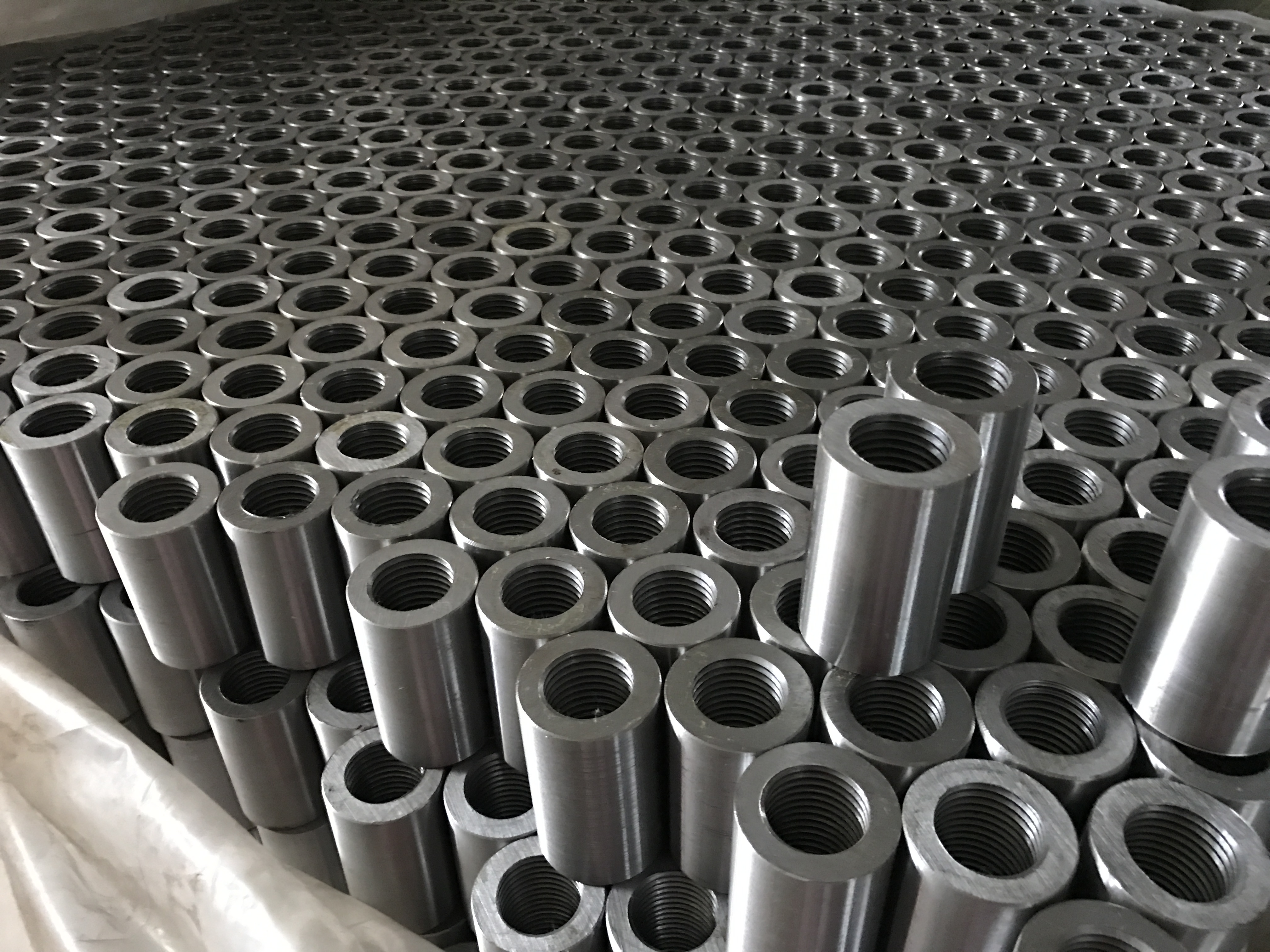
The rebar end is threaded with a rebar thread rolling machine. Because the rolling machine cuts the thread into the bar, the coupler is screwed onto the end and tightened. This type is widely used in high-rise buildings, airports, bridge projects, and general construction.
Upset Forged Rebar Coupler
The upsetting rebar coupler is also available in the model series 16, 18, 20, 22, 25, 28, 32, 36, and 40. It is made of carbon steel 45# or alloy steel 40CR. The rebar end is first upset to increase its cross-section, then threaded. This allows a larger thread size than the bar diameter, which preserves more of the bar's load capacity. For example, size 16 uses thread M20 × 2.5 with an outer diameter of 26 mm and a length of 40 mm. Size 40 uses thread M45 × 4.0 with an outer diameter of 62 mm and a length of 90 mm.
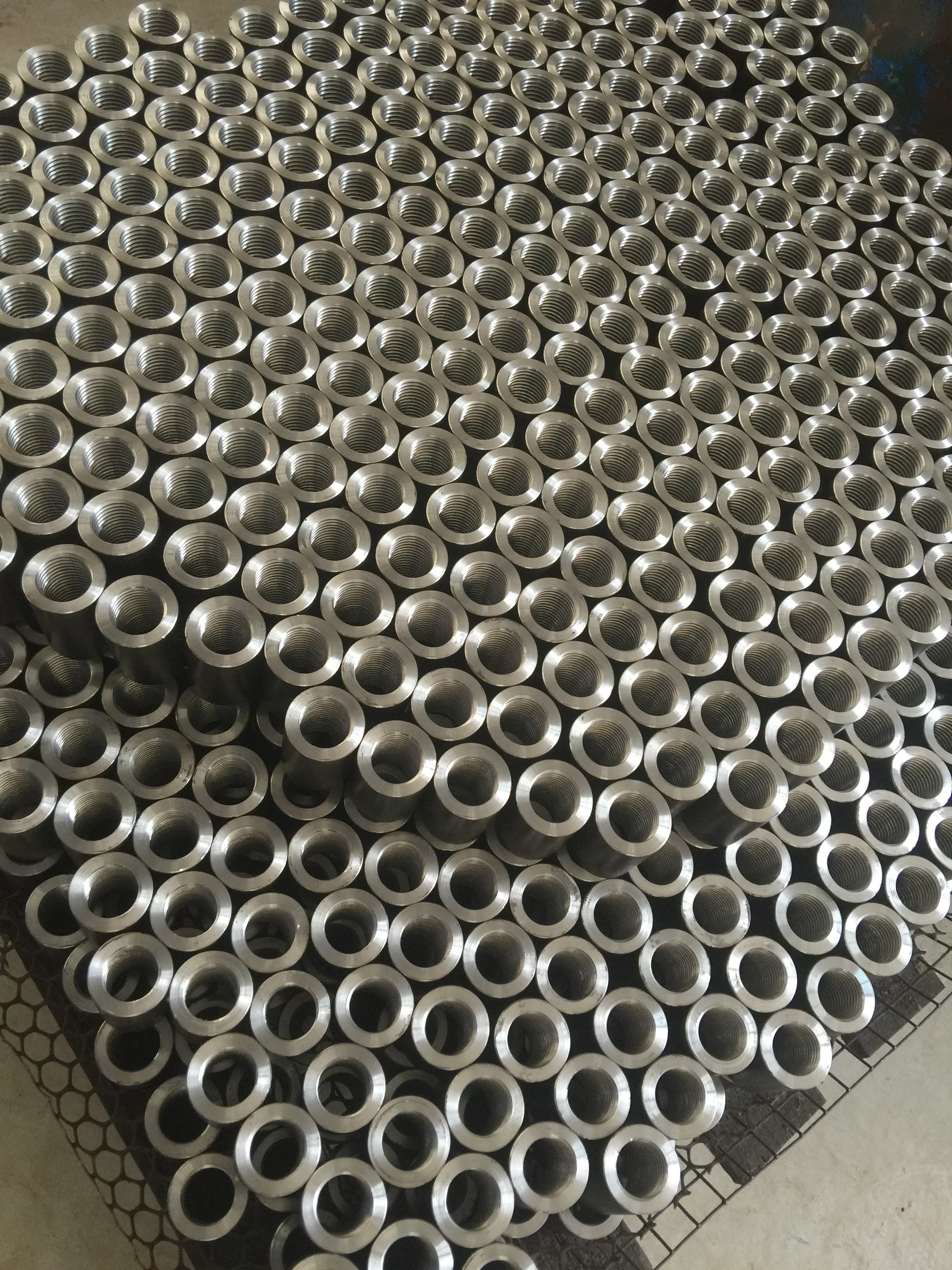
Upsetting is used in applications where higher connection strength and fatigue performance are required, such as big bridges across the sea, high-railway stations, and metro projects. The additional process step requires an upsetting machine and a thread cutting machine.
Cold Extrusion Rebar Coupler (Cold Pressing)
The cold pressing rebar coupler is made of carbon steel Q355B. Instead of threading the rebar, the connection is made by pressing a sleeve onto the rebar ends with a rebar coupler pressing machine. Sizes range from φ16 to φ40. For example, φ16 has an outer diameter of 30 mm, a length of 110 mm, and a thickness of 4.5 mm. φ40 has an outer diameter of 70 mm, a length of 240 mm, and a thickness of 11.0 mm.
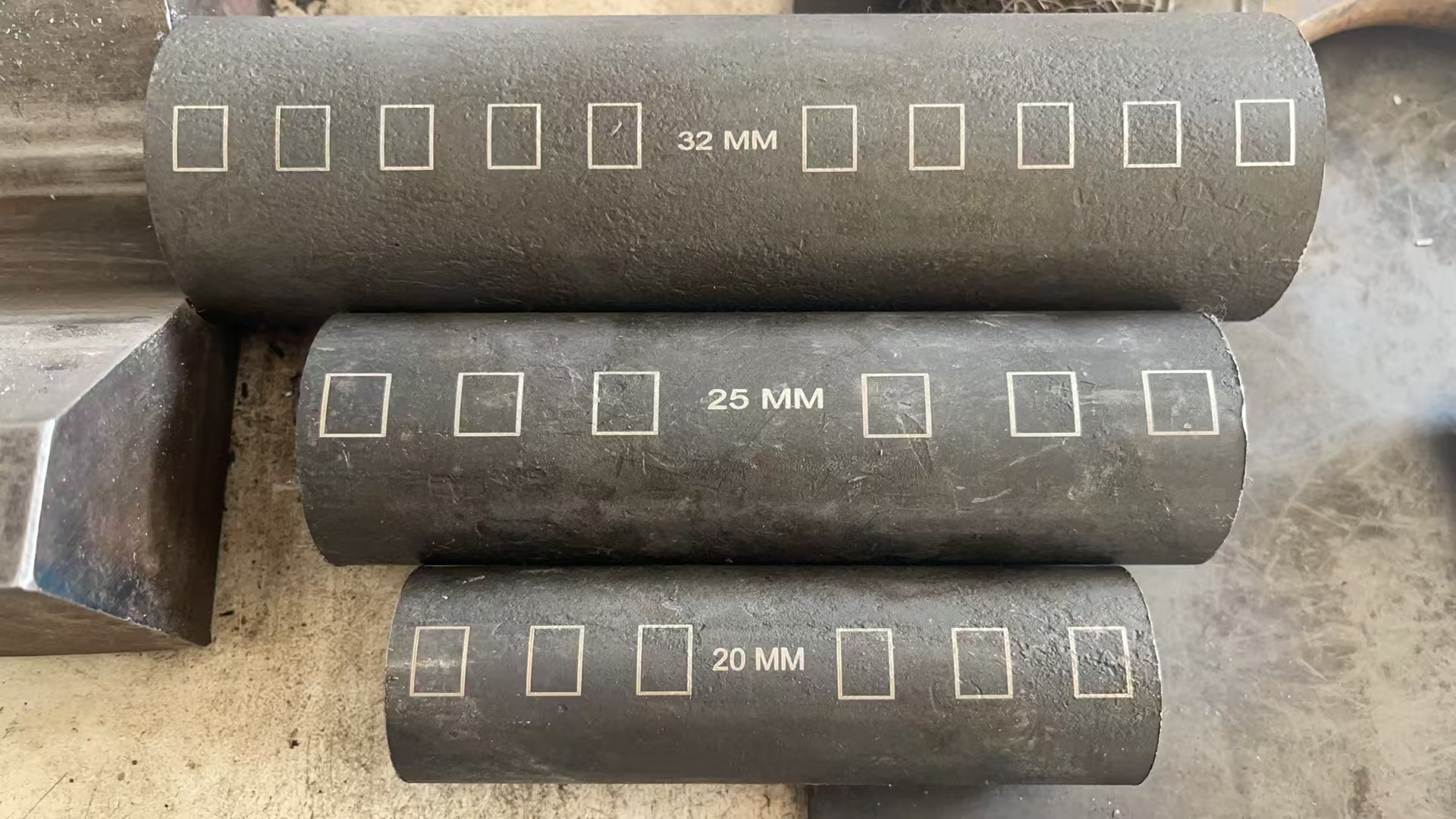
Cold pressing is useful on site because it does not require rotating the rebar and the installation is performed with clamps. Bartech's CBT32 pressing machine, for example, handles rebar sizes from 16 mm to 32 mm, with a main motor power of 4 kW, a maximum oil pump pressure of 70 MPa, and a clamps tension of 50 t.
Quick Connection Rebar Coupler (ONE-TOUCH)
The ONE-TOUCH rebar coupler is made of alloy steel 40CR and is designed for fast on-site assembly. Model sizes include φ11-16, φ16, φ18/20, φ22, φ25, φ29, φ32, φ36, and φ40. Due to the quick-connection structure, the outer dimensions are larger than standard rolled types. For example, φ11-16 has an outer diameter of 35 mm and a length of 100 mm. φ40 has an outer diameter of 83 mm and a length of 200 mm.
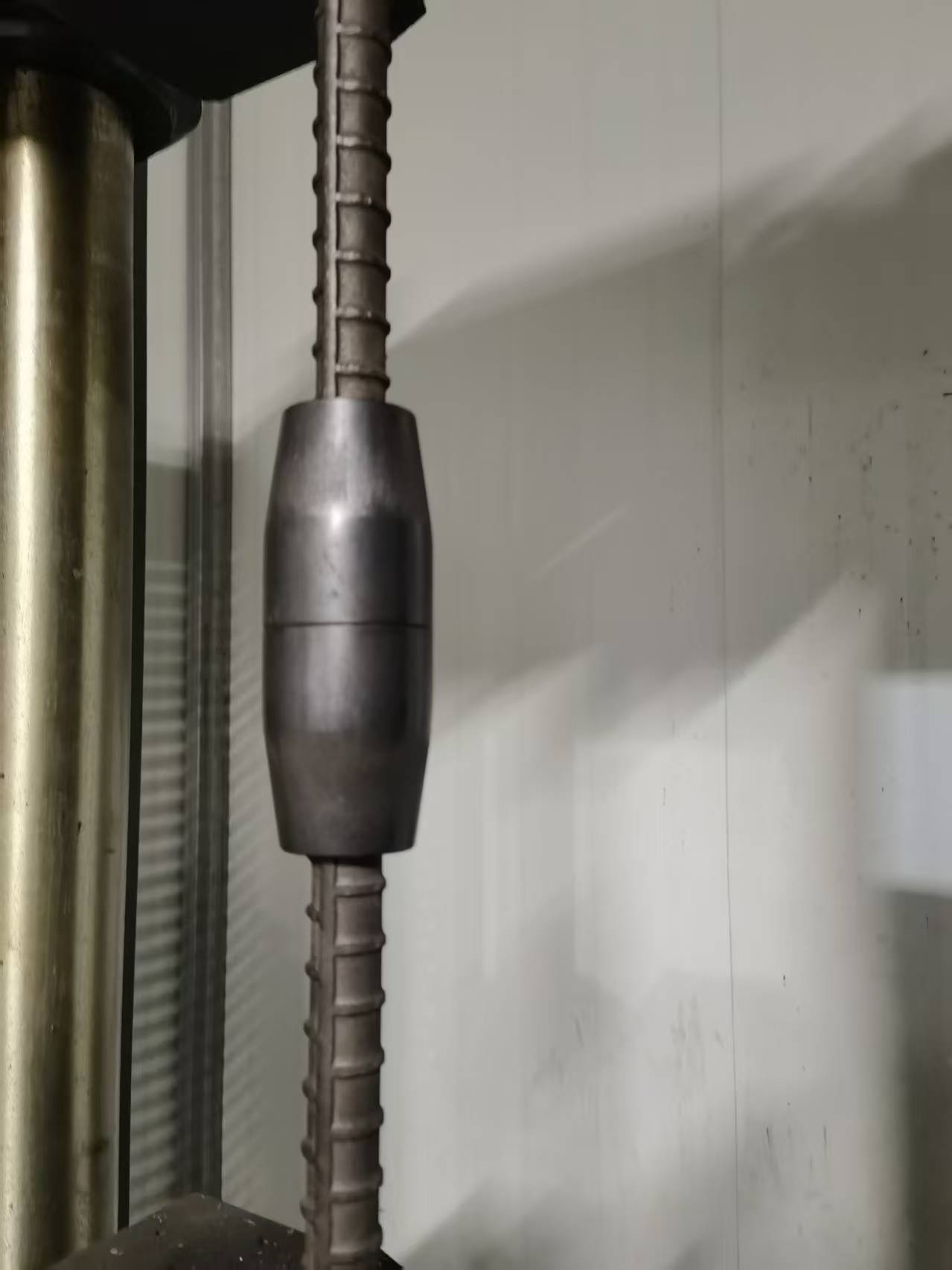
Quick connection couplers are valuable when crews need to make many splices quickly and when rebar rotation is difficult. The coupler is installed with an electric torque wrench, such as the BOC 8-32 model, which supports 8–32 mm rebar with maximum torque of 350 N·m.
How to Select a Rebar Coupler: Step-by-Step
For a first-time buyer, the selection process can be reduced to seven practical steps.
Step 1: Confirm the rebar diameter and steel grade. Coupler models are selected by rebar diameter. Typical diameters are 16, 18, 20, 22, 25, 28, 32, 36, and 40 mm. The steel grade affects the required connection strength.
Step 2: Determine the connection form allowed by the project specification. Some projects require parallel thread, others allow upsetting or cold pressing. Check the structural drawings and local practices before choosing.
Step 3: Check the applicable standard. Confirm whether the project follows ISO 15835, ASTM A615, BS 8110, or Eurocode 2. This determines which test documents and certificates you need.
Step 4: Match the coupler model to the rebar size. Compare the outer diameter, length, thread size, and thread pitch. For example, a rolled thread coupler for size 16 uses M16.5 × 2.5; an upsetting coupler for size 16 uses M20 × 2.5.
Step 5: Verify installation equipment. Rolled thread couplers need a rebar threading machine. Upset forged couplers need an upsetting machine. Cold extrusion couplers need a pressing machine. Quick connection couplers need an electric torque wrench. Make sure the equipment is available on site or can be supplied together.
Step 6: Ask the supplier for dimensional data and material certification. Request specifications for the exact model, confirm the material grade, and ask for certificates, including CE and ISO 9001 where relevant.
Step 7: Request a sample and confirm lead time. Before placing a bulk order, test the coupler on your actual rebar. Sampling is the fastest way to verify that the thread fits and that installation is practical.
Application Scenarios
High-Rise Buildings
In tall buildings, rebar diameters are large and reinforcement congestion is heavy. Rebar couplers are used to connect vertical and horizontal bars without long lap lengths. This application scenario is common in the UAE, Australia, India, and many other countries. It operates in an outdoor environment for super high-rise buildings with normal tropical temperature and humidity. ISO and CE certificates are usually required, and the supporting equipment is a rebar threading machine.
Bridges, High-Railway Stations, and Sea Bridges
For big bridges across the sea and high-railway stations, the connection must resist dynamic loads and provide long-term durability. Upsetting, thread cutting, and coupler assembly are typical steps. This scenario is common in Mexico and globally, operates outdoors in tropical high-temperature climates, and requires CE and ISO certification. Supporting equipment includes rebar upsetting machines and thread cutting machines.
Metro and Tunnel Projects
In tunnels and metro structures, space is limited. Mechanical splicing avoids long laps and reduces rebar congestion. Cold pressing couplers can be useful when bar rotation is difficult. In humid and rainy construction environments, such as Vietnam, construction is continuous all day, and components must be durable for long-term use.
Factory Pre-Threading
Some projects pre-thread large quantities of rebar ends at a factory before sending bars to the site. This scenario is common in Qatar and globally. It operates in an indoor factory environment at normal room temperature, with continuous automatic threading processing. For this application, the priorities are long-life rib cutters and rollers, and strong shafts and machine parts.
Comparison of Rebar Coupler Types
| Coupler Type | Material | Size Range | Thread Angle | Outer Diameter | Length | Installation |
|---|---|---|---|---|---|---|
| Rolled Thread | Carbon steel 45# / Alloy steel 40CR | 16–40 | 60° | 24–59 mm | 42–95 mm | Threading machine |
| Upset Forged | Carbon steel 45# / Alloy steel 40CR | 16–40 | 60° | 26–62 mm | 40–90 mm | Upsetting + thread cutting |
| Cold Extrusion | Carbon steel Q355B | φ16–φ40 | N/A | 30–70 mm | 110–240 mm | Cold pressing machine |
| ONE-TOUCH | Alloy steel 40CR | φ11-16–φ40 | N/A | 35–83 mm | 100–200 mm | Electric torque wrench |
The table is based on standard model data from Bartech's product range. For a specific project, confirm the exact dimensions with the supplier, because thread pitches and lengths can vary with rebar grade and project standard.
Frequently Asked Questions
What standards apply to rebar couplers?
Mechanical rebar splices are governed by international standards including ISO 15835, ASTM A615, and BS 8110, which is often replaced by Eurocode 2 in the EU. Cangzhou Bartech holds CE certification (certificate number SC-PSC-4-2025-12-14, valid until 2030) and ISO 9001:2015 (certificate number 31623Q10713R1S). Confirm the applicable standard in your project specification and request the corresponding certificates.
What types of rebar couplers does Bartech offer?
Bartech offers rolled thread rebar couplers, upset forged rebar couplers, cold extrusion rebar couplers, and quick connection (ONE-TOUCH) rebar couplers. They are available in model series from 16 mm to 40 mm, in materials such as carbon steel 45#, alloy steel 40CR, and carbon steel Q355B.
How much do rebar couplers cost?
Price depends on the connection type, material grade, size, and order quantity. For example, cold extrusion couplers have larger bodies and more material mass than rolled thread couplers in the same size range. Because steel prices change with the market, the most practical way to estimate your budget is to send the model list and quantities to the supplier and request a formal quotation.
Can I get a sample before placing a bulk order?
Yes. You can contact the Bartech sales team by email at sales@chinabartech.cn or WhatsApp at +86 13785685215. Provide the rebar diameter, coupler type, and project standard so the team can recommend the correct model and prepare a sample.
What is the lead time for rebar coupler orders?
Lead time depends on the model, quantity, and current production schedule. Bartech's annual production capacity is 3,600,000 units, which supports regular bulk orders. For an exact lead time, confirm at the quotation stage, because projects using alloy materials or very large quantities may require additional production planning. Requesting a sample and a quote together is the best next step for a new order.
Conclusion
Rebar couplers are a fundamental part of modern reinforced concrete construction. They reduce steel congestion, speed up assembly, and provide a structural connection that can be tested and documented. Choosing the right coupler means matching the type to the project: rolled thread for general construction, upset forged for high-load and fatigue-sensitive structures, cold extrusion for on-site pressing, and ONE-TOUCH for quick installation.
For a first purchase, start with clearly documented specifications. Verify the rebar sizes, confirm material grades, check the applicable standard, and ask for samples. Bartech, a manufacturer established in 2008 with export experience in Asia, the Middle East, and South America, provides standard model data for all four coupler families and can be contacted for project-specific recommendations.
Next step: To request samples, a quotation, or a catalog, contact Cangzhou Bartech Construction Material Co., Ltd. at sales@chinabartech.cn or WhatsApp +86 13785685215. Include your rebar diameters and coupler type to get a faster response.