Rebar Coupler Selection Guide: Types, Specs, and Industry Applications
Rebar Coupler Selection Guide: Types, Specs, and Industry Applications
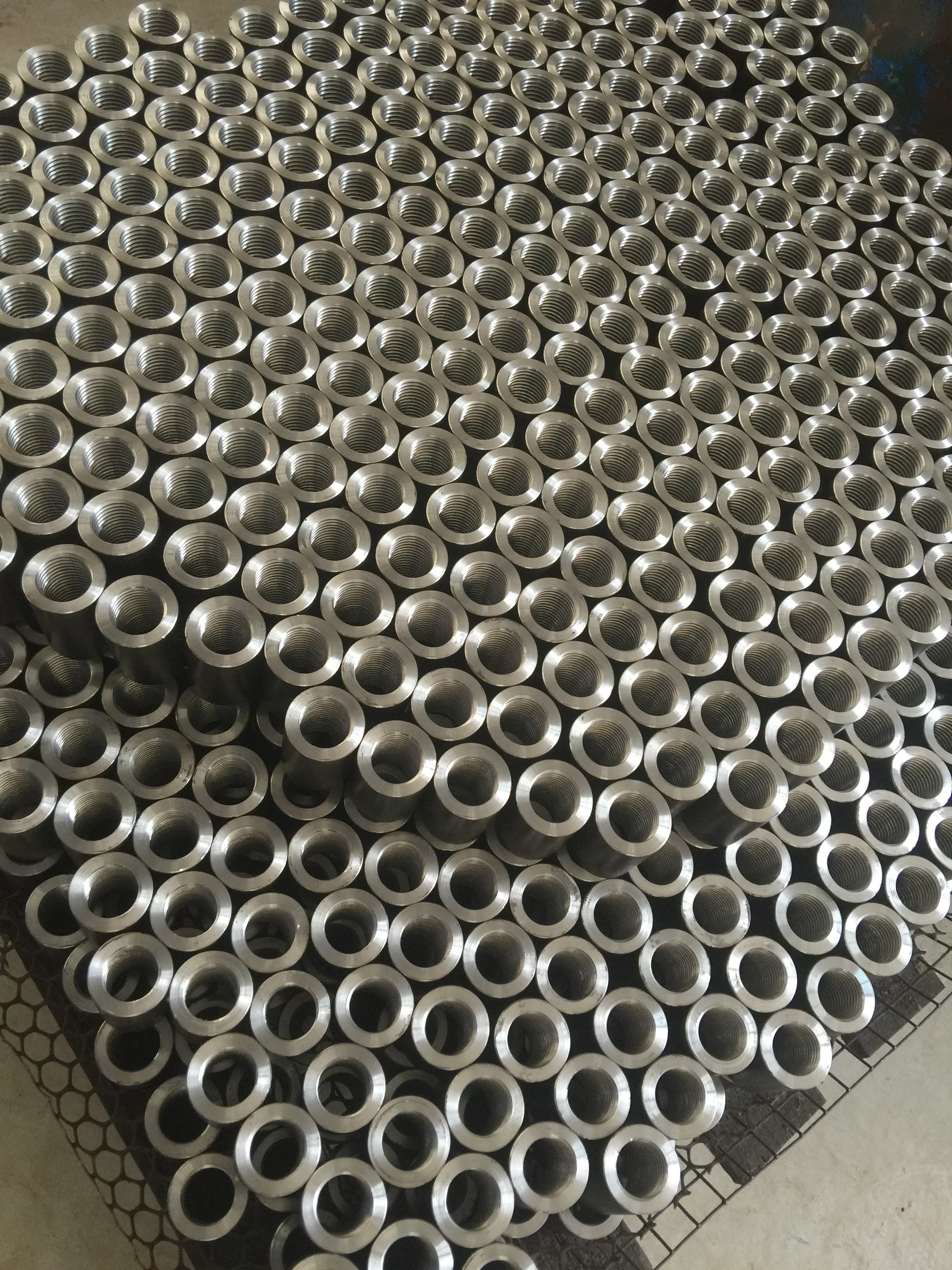
Reinforcement steel (rebar) mechanical connections are a critical element in modern concrete structures. Choosing the right rebar coupler directly affects build speed, structural integrity, and project compliance. This guide — built on product data from CANGZHOU BARTECH CONSTRUCTION MATERIAL CO. LTD. (Bartech), a China-based manufacturer established in 2008 with an annual output of 3.6 million units — walks through the main rebar coupler technologies, their specifications, and how to match them to your project needs.
Why Mechanical Rebar Coupling Matters
Traditional lap splicing consumes extra steel, creates congestion, and often fails to meet seismic or high-stress requirements. Mechanical couplers provide full-strength, code-compliant connections without overlapping bars. The global rebar coupler market was valued at USD 1.82 billion in 2025 and is projected to grow at a CAGR of 7.4% to USD 3.47 billion by 2034 (Dataintelo). Building construction alone accounted for 47.6% of revenue, and Asia Pacific contributed 41.3% of global demand — regions where Bartech already exports to markets including Vietnam, Malaysia, Kuwait, Qatar, UAE, Saudi Arabia, and Mexico.
Four Core Rebar Coupler Technologies
CANGZHOU BARTECH CONSTRUCTION MATERIAL CO. LTD. produces rebar couplers based on four distinct processes: Rolled Thread (parallel thread rolling), Upset Forged, Cold Pressing, and One-Touch Quick Connection. Each suits different rebar grades, diameters, and site conditions.
1. Rolled Thread (Parallel Thread) Rebar Coupler
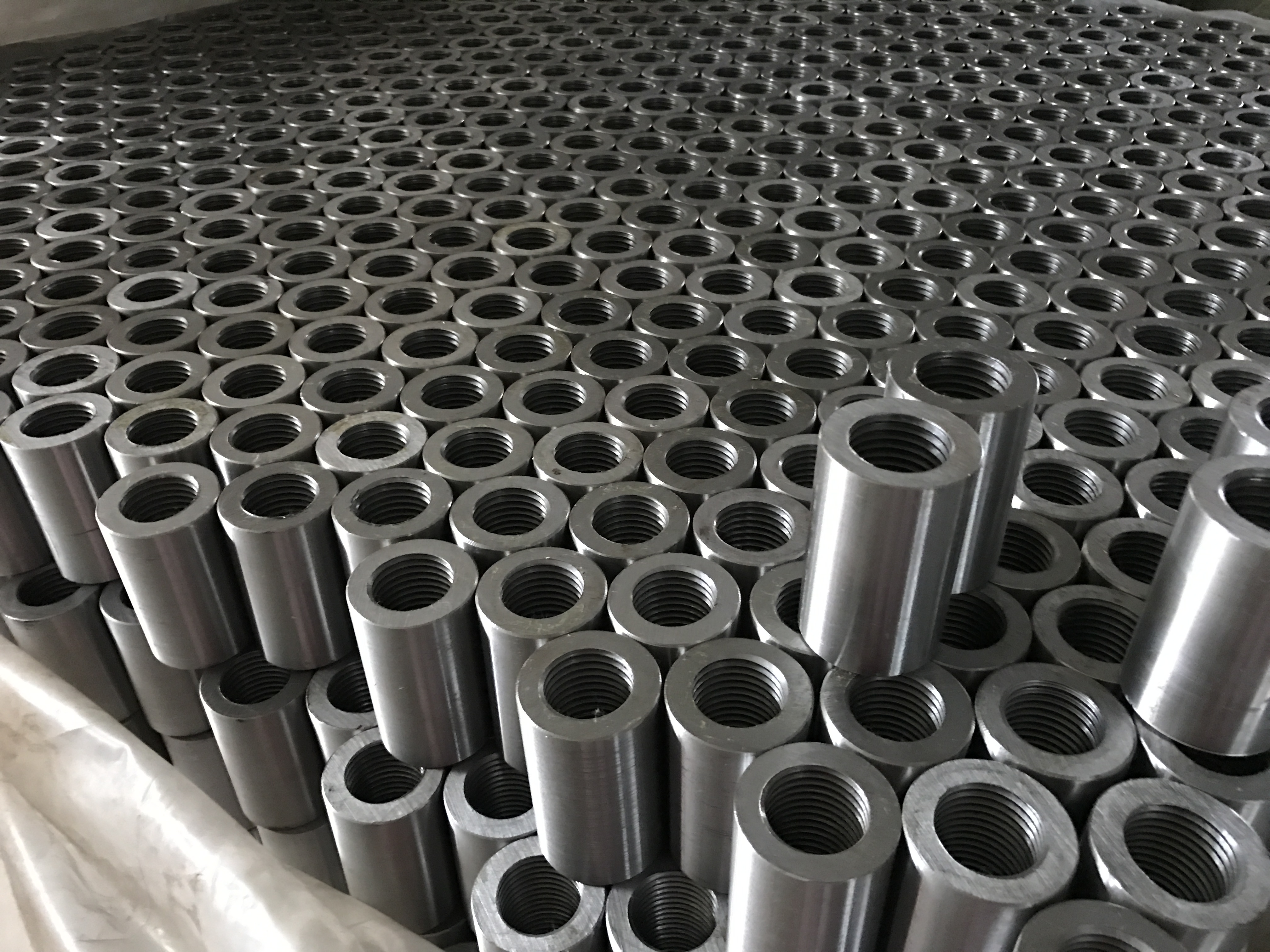
The rolled thread coupler uses cold-rolling to form a 60° parallel thread directly on the rebar end. Models: 16, 18, 20, 22, 25, 28, 32, 36, 40. Outer diameters range from 24 mm (size 16) to 59 mm (size 40), and lengths from 42 mm to 95 mm. Primary material is carbon steel 45#; alloy steel 40CR is an alternative. Thread specifications vary, e.g., M16.5×2.5 for size 16, up to M40.2×3.0 for size 40. This type is widely used in high-rise buildings and bridges where the rebar end must be prepared with a threading machine.
2. Upset Forged Rebar Coupler
The upset forging process enlarges the rebar end before threading, providing a larger thread diameter for higher load capacity. Models 16–40. Outer diameters from 26 mm (size 16) to 62 mm (size 40), lengths 40–90 mm. Threads: 60° pitch, e.g., M20×2.5 (size 16) to M45×4.0 (size 40). Materials: carbon steel 45# or alloy steel 40CR. Typical applications: high-speed railways, metro tunnels, and seismic zones where maximum fatigue resistance is needed. Supporting equipment includes an automatic upsetting machine (models 36S or 50S) and a thread cutting machine (MQ40).
3. Cold Pressing Rebar Coupler
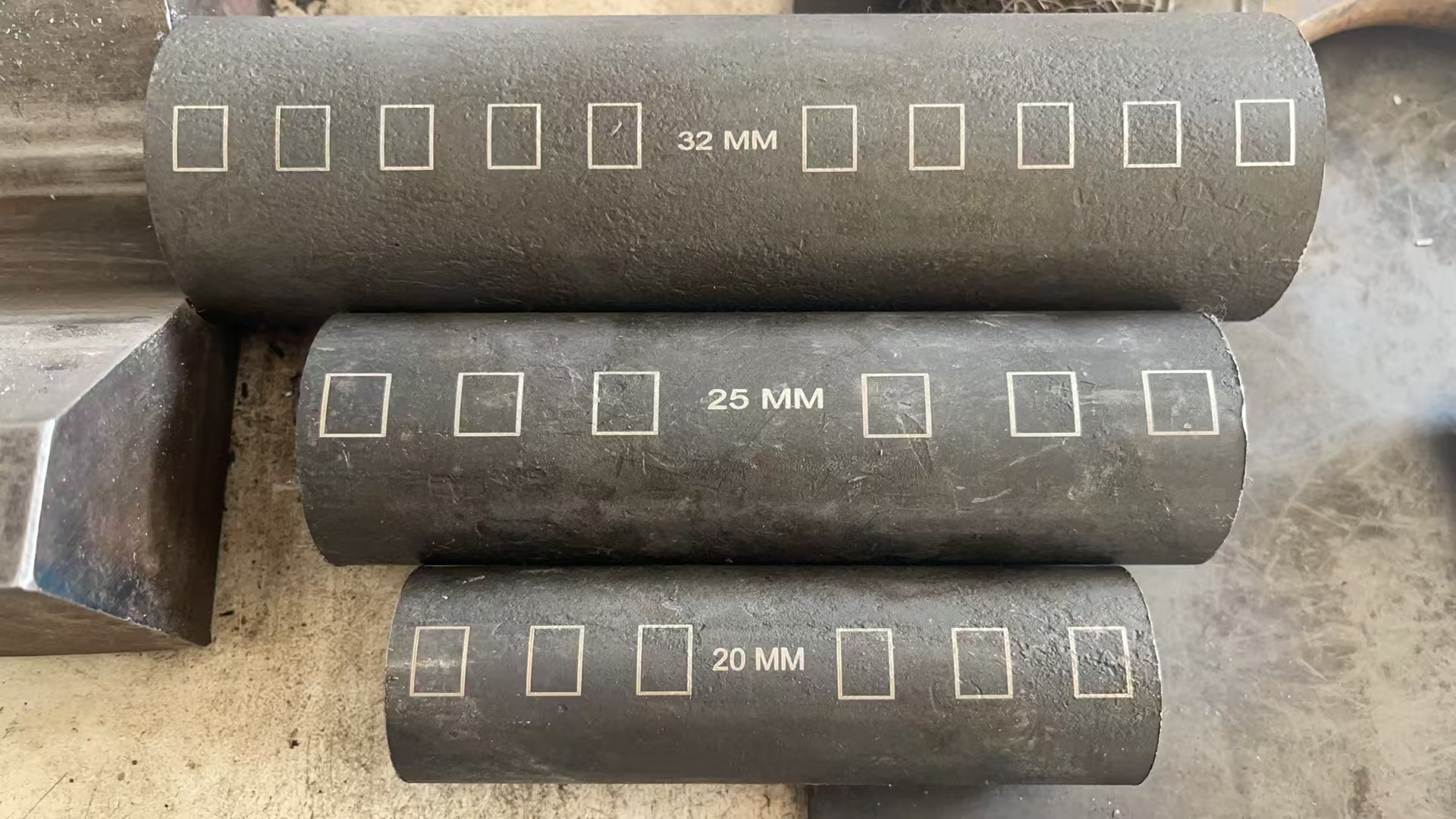
Cold pressing couplers (model series 16–40) are made from carbon steel Q355B. Instead of threading, the coupler is hydraulically pressed onto the rebar ends. Dimensional specs: size φ16 has OD 30 mm, length 110 mm, wall 4.5 mm; the largest φ40 has OD 70 mm, length 240 mm, wall 11.0 mm. Process is fast, no pre-threading required, and ideal for factory rebar prefabrication. The compatible pressing machine is model CBT32 (4 kW motor, 50 T clamp tension, 70 MPa max pressure).
4. One-Touch Quick Connection Coupler
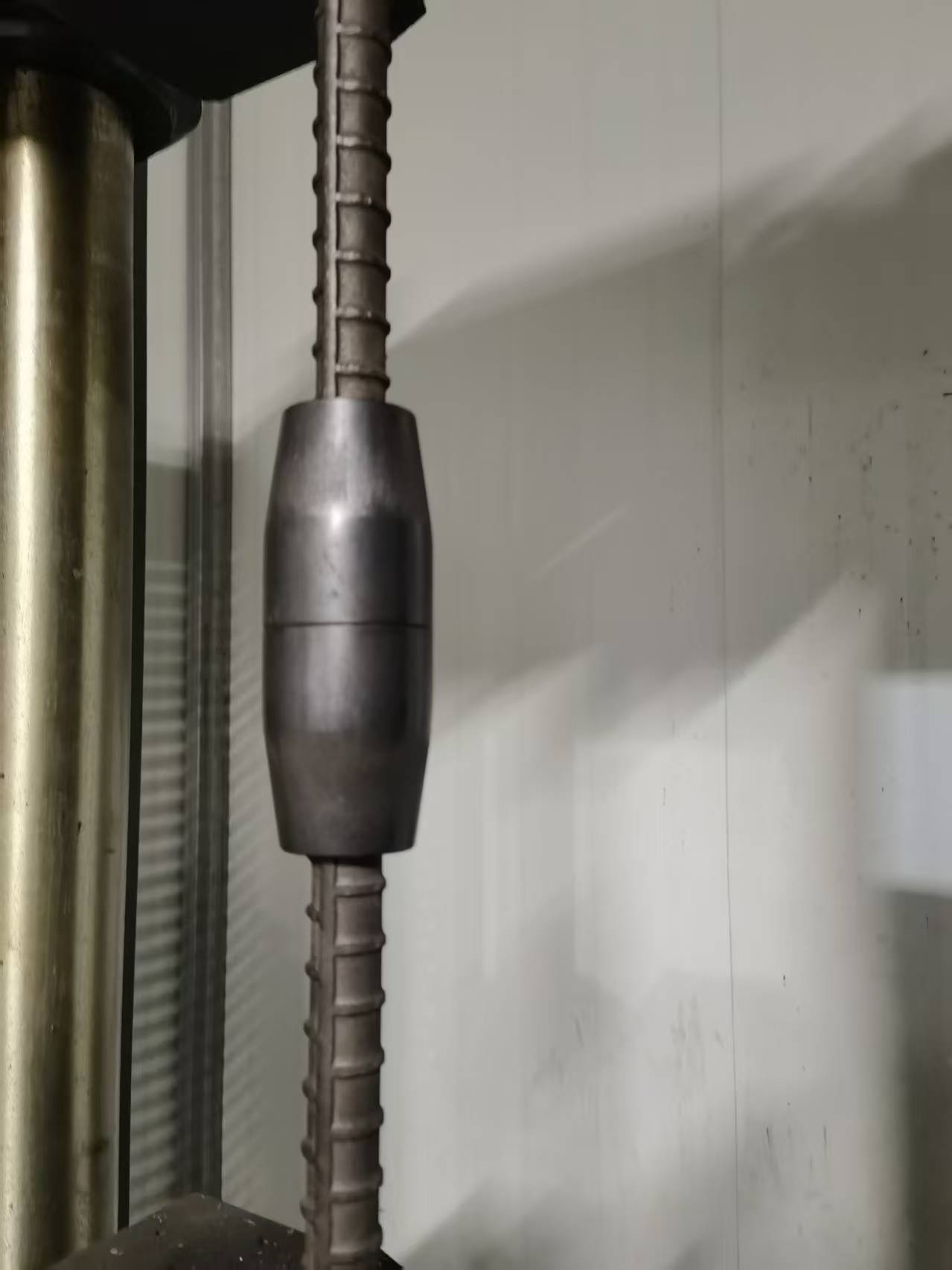
The One-Touch coupler (also called quick coupler) is made entirely of alloy steel 40CR. Models: φ11-16 up to φ40. Dimensions: for φ11-16, OD 35 mm, length 100 mm; for φ40, OD 83 mm, length 200 mm. It requires no rotating of the rebar — just insert and lock with a simple tool. Best suited for overhead or confined spaces where traditional wrenches are difficult to use. An electric torque wrench (models BOC 8-32 or BOC 8-42) can speed up installation.
Selection Decision Framework
Follow these steps when evaluating couplers for your project:
- Define rebar grade and diameter. All Bartech couplers cover sizes 16–40 mm; confirm your rebar’s yield strength (e.g., 400 MPa or 500 MPa).
- Identify mechanical requirements. For static loads, rolled thread or one-touch suffices. For seismic or fatigue-critical connections, upset forged offers the largest thread root.
- Assess installation environment. Cold pressing and one-touch minimise on-site labour and equipment footprint.
- Check certification. Bartech holds CE certification (Nr. SC-PSC-4-2025-12-14) valid until 2030 and ISO9001:2015 (certificate 31623Q10713R1S).
- Factor total cost. One-touch and cold pressing reduce labour and machine investment but may have higher per-unit material cost; compare against threaded types.
Technical Comparison Table
| Parameter | Rolled Thread | Upset Forged | Cold Pressing | One-Touch |
|---|---|---|---|---|
| Model range | 16 – 40 | 16 – 40 | 16 – 40 | φ11-16 – φ40 |
| Material | Carbon steel 45# or alloy 40CR | Carbon steel 45# or alloy 40CR | Carbon steel Q355B | Alloy steel 40CR |
| Thread angle | 60° | 60° | N/A (pressed) | N/A (locking) |
| Max OD for size 40 | 59 mm | 62 mm | 70 mm | 83 mm |
| Min OD for size 16 | 24 mm | 26 mm | 30 mm | 40 mm |
| Installation method | Torque wrench or threading machine | Upsetting + thread cutting + wrench | Hydraulic pressing machine (CBT32) | Insert & lock, electric wrench |
| Ideal use case | High-rise, bridges (general connection) | High-speed rail, seismic zones | Factory pre-fab, standard construction | Overhead, tight spaces, rapid assembly |
Use Cases Across Industries
- Tall buildings (e.g., UAE, Australia, India): Rolled thread couplers, processed by rebar threading machines (models CBT40A, CBT40L, 40MO), are standard. Special requirement: ISO and CE certificates.
- High-speed railways (e.g., Mexico): Upset forged couplers paired with automatic upsetting machine 50S (11 kW, rebar up to 50 mm) and thread cutting machine MQ40 deliver the needed fatigue strength.
- Bridges & metro tunnels: Cold pressing couplers offer fast assembly in precast segments. Pressing machine CBT32 (4 kW, 50 T clamp force) is used on-site.
- Rebar prefabrication factories (e.g., Qatar): Continuous automatic threading with the 40AO machine (5.5/7.5 kW, auto-clamping) and one-touch couplers for quick final assembly.
Frequently Asked Questions

Ready to specify the right rebar coupler?
Contact the Bartech team:
Conclusion
Selecting a rebar coupler is not a one-size-fits-all decision. Rolled thread couplers offer simplicity and wide availability; upset forged couplers deliver maximum strength; cold pressing suits volume-oriented prefabrication; and one-touch couplers solve installation in restricted zones. CANGZHOU BARTECH CONSTRUCTION MATERIAL CO. LTD., with 16 years of export experience, 10 R&D engineers, and CE/ISO certifications, provides all four types with transparent specifications. Evaluate your project’s rebar size, load requirements, and site constraints — then match them to the coupler that meets your compliance and budget goals.