Rebar Coupler Types in 2026: A Technical Comparison and Selection Guide
Rebar Coupler Types in 2026: A Technical Comparison and Selection Guide
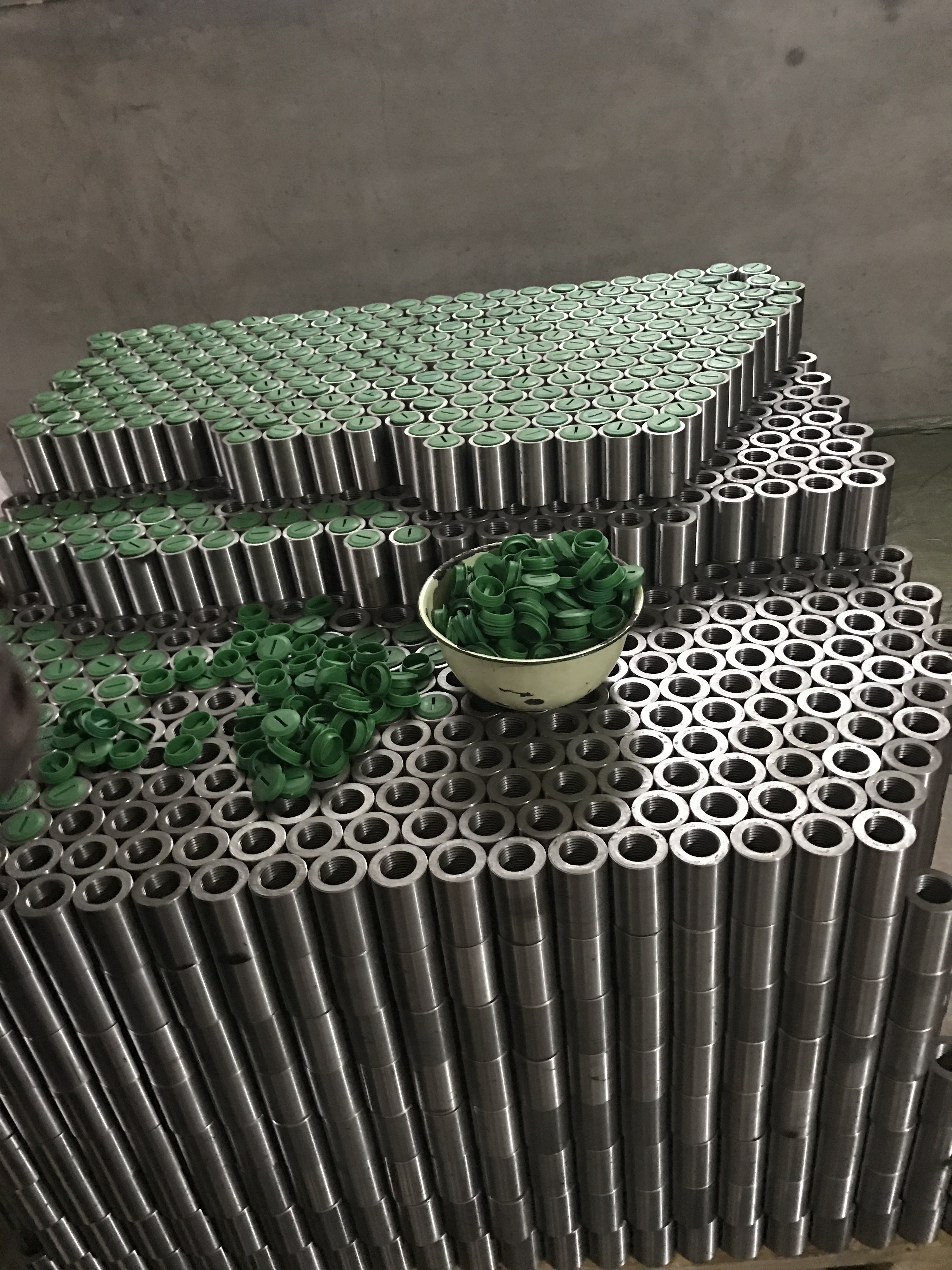
Rebar couplers are mechanical splices used to connect reinforcing bars end-to-end. The global rebar coupler market was valued at USD 1.82 billion in 2025 and is projected to reach USD 3.47 billion by 2034, growing at a CAGR of 7.4%. For engineers, contractors and distributors, the choice of rebar coupler type has a direct impact on structural integrity, installation speed and project budget. This guide compares the four main rebar coupler technologies supplied by Cangzhou Bartech Construction Material Co., Ltd., a manufacturer in Cangzhou, China, that has exported rebar couplers and connection equipment since 2008.
Problem Definition: Why Rebar Coupler Type Selection Is Critical
In reinforced concrete structures, overlapping bars and welding are traditional splicing methods, but they have known limitations. Lap splicing increases steel congestion and consumes extra bar length. Welding is not always allowed, particularly for high-strength rebar or in seismic and fatigue-sensitive zones.
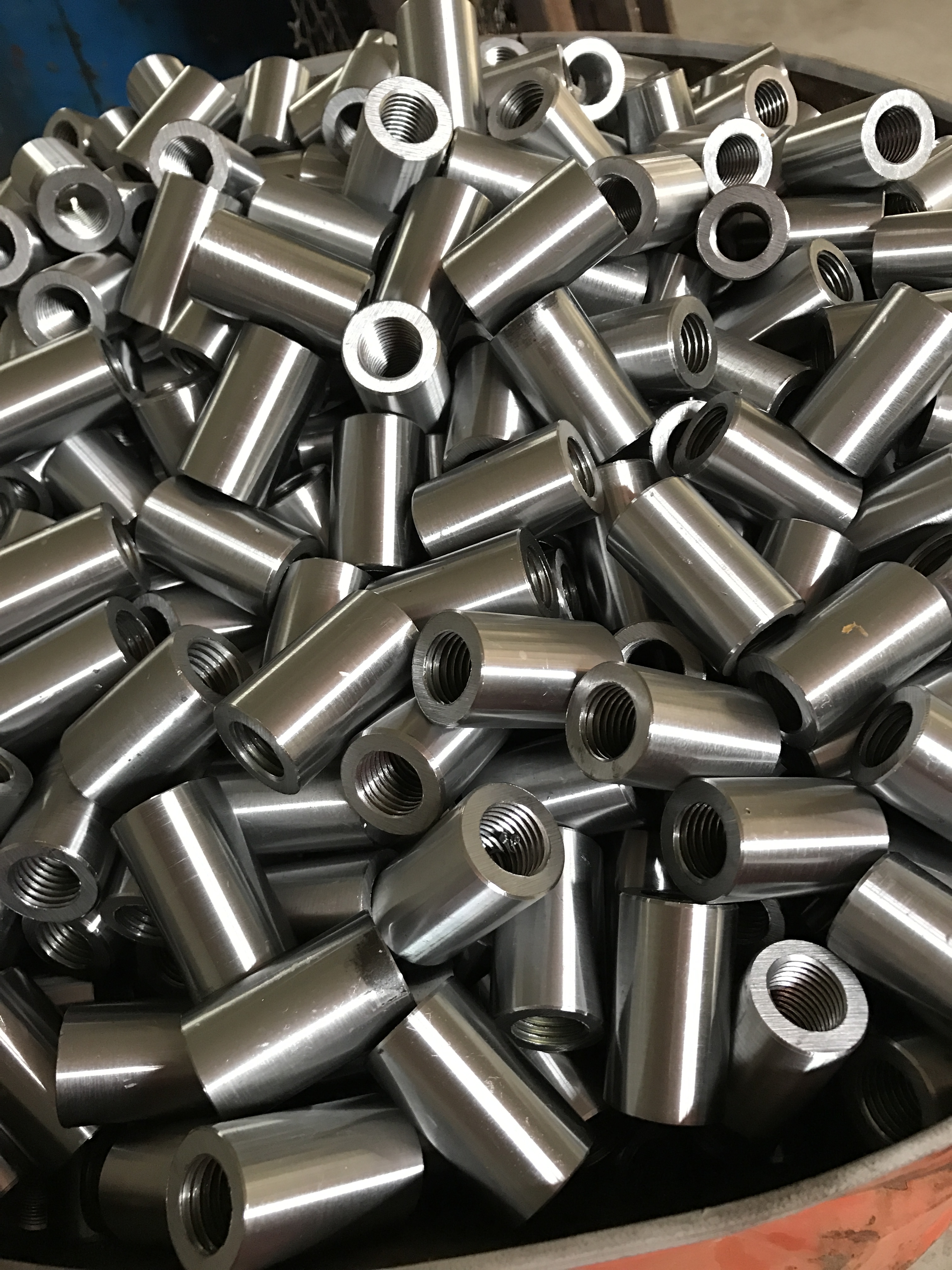
Mechanical rebar couplers provide an alternative by transferring load between bar ends through a threaded or pressed connection. They are used in construction projects, high buildings, airport projects, high-railway stations and large bridges, including sea-crossing bridges. However, different coupler designs require different field preparation, tooling and quality control. Choosing the wrong rebar coupler type can lead to thread stripping, slower installation, extra tooling costs or failed acceptance tests.
Industry Background: Rebar Coupler Market Trends in 2026
The rebar coupler market is expanding. According to Dataintelo, building construction represented 47.6% of total revenue in 2025, and Asia Pacific contributed approximately 41.3% of global revenue. This regional concentration explains why many international buyers rely on manufacturers with proven supply experience to Asia, the Middle East and South America.
By product type, tapered thread couplers held the largest share at 38.2% in 2025, followed closely by parallel thread couplers. Tapered systems are widely used, but parallel thread systems remain popular for applications that benefit from controlled bar-end preparation and consistent field threads.
Mechanical rebar splices are referenced in international standards including ISO 15835, ASTM A615 and BS 8110, with Eurocode 2 commonly used in the EU. Buyers should confirm that the coupler supplier’s quality system and test documentation align with the standard specified for the project.
Detailed Solution: Rebar Coupler Types Offered by Cangzhou Bartech
Cangzhou Bartech Construction Material Co., Ltd. is located in Qing County, Cangzhou City, Hebei Province, China. The company started exporting rebar couplers in 2008 and now serves markets in Asia, the Middle East and South America, with 100% of its products exported. Its main product categories include rebar couplers, rebar threading machines, rebar electric wrenches, rebar upsetting machines, rebar thread cutting machines, rebar cold pressing machines and one-touch rebar couplers.
Bartech’s factory covers 1,000 square meters, has 30 employees and a 10-person R&D team. Annual coupler output is 3,600,000 pieces. The company holds CE certificate Nr.SC-PSC-4-2025-12-14, valid until 2030, and ISO9001:2015 certificate number 31623Q10713R1S, covering the sales of rebar couplers and rebar connection equipment.
For OEM buyers, Bartech offers customization of coupler outer diameter, inner diameter and thread. Monthly OEM capacity is 300,000 pieces. The following sections describe the main rebar coupler families.
1. Parallel Thread Rebar Coupler (Rolled Thread Type)
Parallel thread rebar couplers, also called rolled thread rebar couplers, are formed by rolling threads onto the rebar end using a rebar threading machine. The standard coupler size range is 16–40 mm. Materials are carbon steel 45# or alloy steel 40CR.
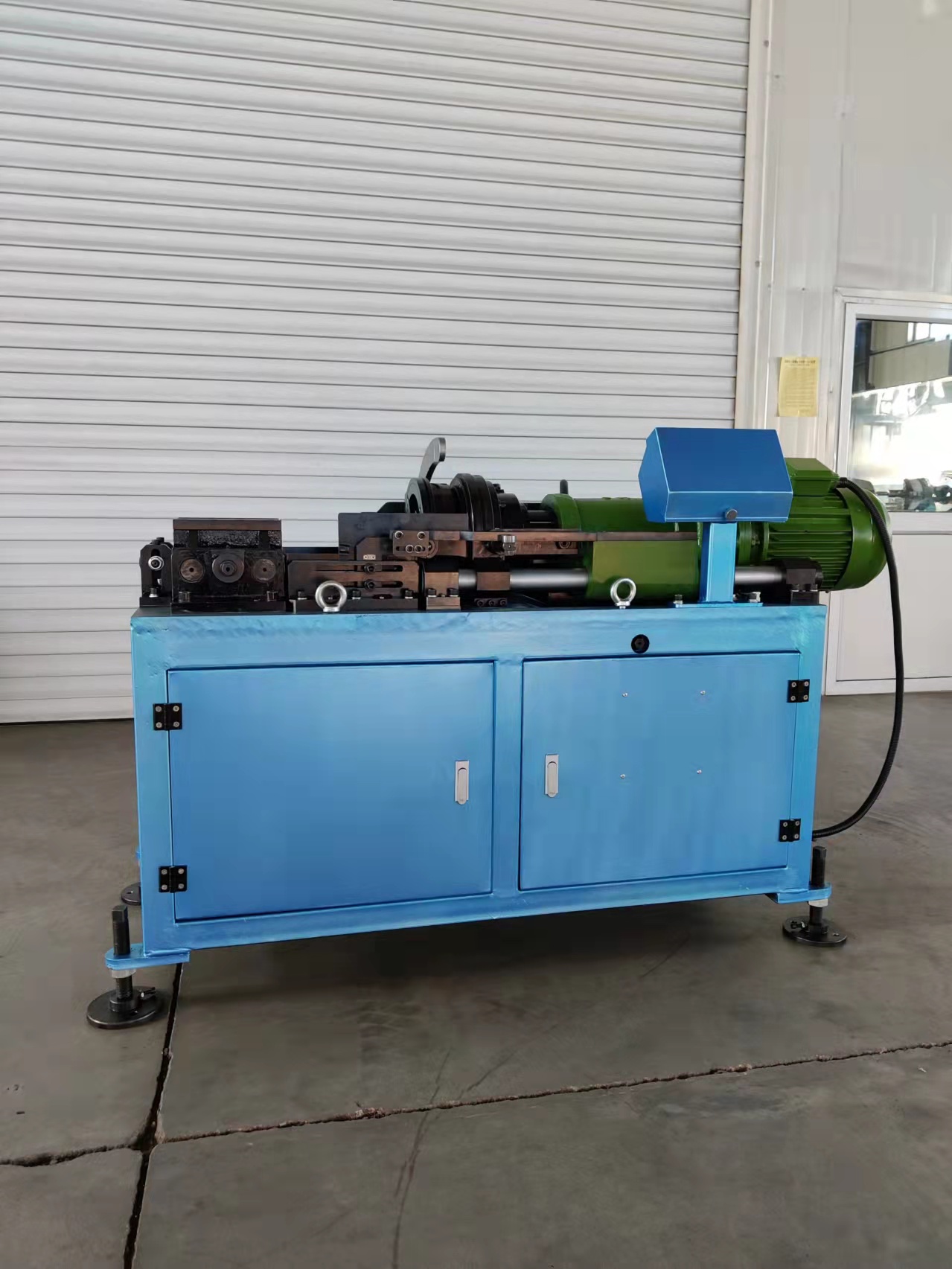
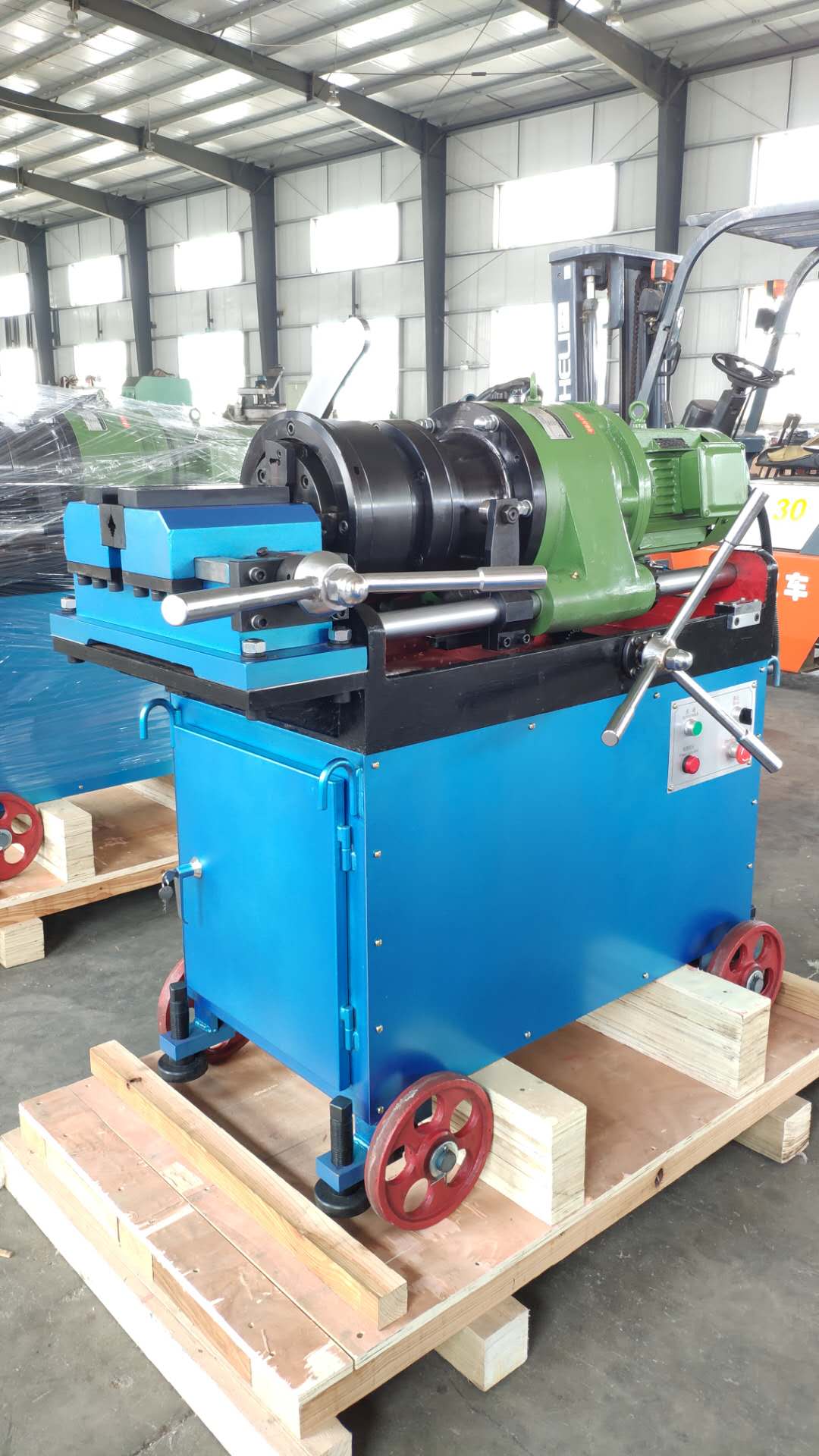
Bartech’s CBT40A rebar threading machine has a main motor power of 5.5kW, supports 16–40 mm rebar and offers quick or slow operating modes. Maximum threading length is 120 mm; the net weight is 590 kg. The CBT40L machine extends maximum threading length to 100/200 mm and weighs 420 kg. These machines are commonly used for preparing rebars for parallel thread couplings.
2. Upset Forged Rebar Coupler
Upset forged rebar couplers are used when the rebar end is enlarged, or upset, before threading. This increases the thread engagement area and is especially useful for larger bar diameters and higher load requirements.
Available sizes for upset couplers are 16, 18, 20, 22, 25, 28, 32, 36 and 40 mm. Representative dimensions include:
- 16 mm: OD 26 mm × length 40 mm, thread M20×2.5
- 20 mm: OD 32 mm × length 48 mm, thread M24×3.0
- 25 mm: OD 40 mm × length 60 mm, thread M30×3.5
- 32 mm: OD 50 mm × length 72 mm, thread M36×4.0
- 40 mm: OD 62 mm × length 90 mm, thread M45×4.0
Bartech supplies automatic upsetting machines for this process. The 36S model supports 400 rebar sizes 16–36 mm and 500 rebar sizes 16–32 mm, with a 7.5kW motor and maximum pressure of 31.5 Mpa. The 50S model handles 400 rebar 16–50 mm and 500 rebar 16–40 mm, with an 11kW motor.
3. Cold Extrusion / Cold Pressing Rebar Coupler
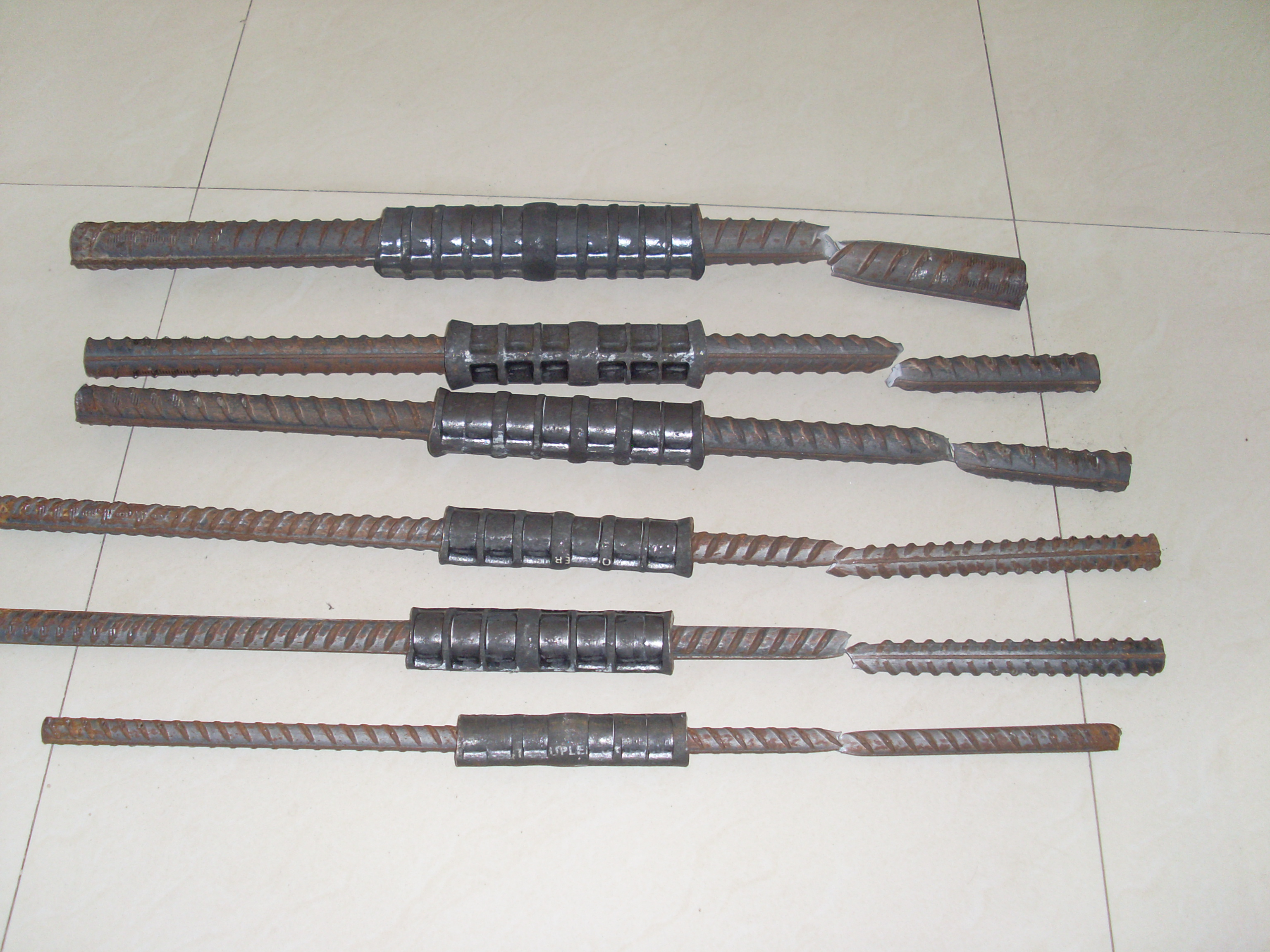
Cold pressing rebar couplers, also called cold extrusion couplers, use a sleeve that is pressed onto the rebar ends with a hydraulic press. The sleeve material is carbon steel Q355B. Sizes range from 16 mm to 40 mm.
- φ16: OD 30 mm, length 110 mm, thickness 4.5 mm
- φ20: OD 36 mm, length 120 mm, thickness 5.5 mm
- φ25: OD 45 mm, length 150 mm, thickness 7.4 mm
- φ32: OD 56 mm, length 192 mm, thickness 9.0 mm
- φ40: OD 70 mm, length 240 mm, thickness 11.0 mm
The CBT32 rebar coupler pressing machine handles 16–32 mm rebar, has 50T clamp tension and a maximum oil pump pressure of 70 MPa. Cold pressing is useful when fast, on-site connection is needed without thread cutting on the bar end.
4. Quick Connection / One-Touch Rebar Coupler
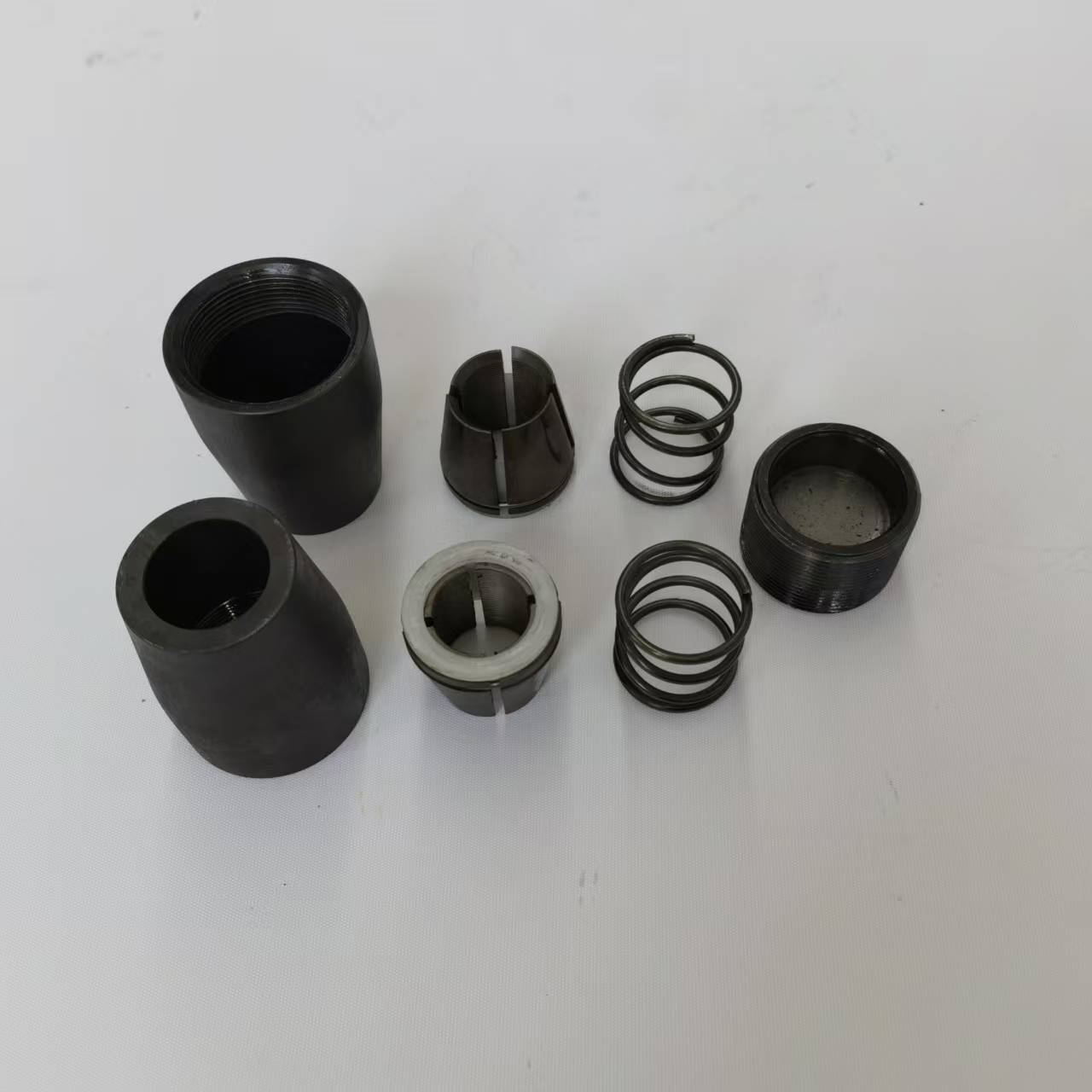
One-touch rebar couplers are designed for fast mechanical connection without conventional threading of the full bar. They are made of alloy steel 40CR and are available in sizes from φ11–16 mm up to φ40 mm. Representative sizes include φ16 with OD 40 mm and length 106 mm, φ25 with OD 56 mm and length 143 mm, and φ32 with OD 70 mm and length 170 mm.
This type is useful in confined or congested reinforcement areas where rotating a full rebar bar is impractical. Bartech also supplies rebar electric torque wrenches, such as the BOC 8-32 and BOC 8-42 models, to help control tightening on rebar connection systems.
Step-by-Step Breakdown: How to Choose and Deploy Rebar Couplers
Step 1: Define the structural and site requirements
Identify rebar diameter, steel grade, load type and the applicable design standard. This defines the required coupler strength and ductility.
Step 2: Select the coupler technology
Parallel thread couplers are a common starting point for general building work. Upset forged couplers suit larger bars or higher thread engagement. Cold pressing couplers are useful for fast field installation. One-touch couplers are ideal for confined areas and rapid connection.
Step 3: Verify material and certification
Confirm that the coupler material matches the project specification. Bartech uses carbon steel 45#, alloy steel 40CR and carbon steel Q355B, depending on coupler type. Check CE and ISO9001:2015 certificates and request material test reports when required.
Step 4: Confirm installation tooling
Each rebar coupler type uses specific equipment. Parallel thread couplers require a rebar threading machine and a torque wrench. Upset couplers require an upsetting machine plus threading equipment. Cold pressing couplers need a rebar coupler pressing machine. One-touch couplers may use an electric torque wrench for final locking. Verify voltage, frequency and site power availability, such as 380V/50Hz.
Step 5: Plan quality control
Bartech’s quality control includes material test reports, 10% production testing on the production lines and 100% appearance surface checking. For critical projects, buyers can request additional inspection documentation.
Step 6: Manage lead time and order volume
Stock couplers have no minimum order quantity. OEM orders with custom dimensions have a monthly capacity of 300,000 pieces. Lead time is 7–30 days depending on quantity.
Use Cases: Verified Project Applications
Kuwait: outdoor construction with 400,000 couplers per year
A construction enterprise in Kuwait used Bartech standard rebar couplers for outdoor construction work, with an annual procurement volume of approximately 400,000 pieces. The result was higher strength, stable quality and good operational performance, supported by easy connection during assembly.
Vietnam: tall building and railway station construction with 500,000 units per year
An automotive OEM in Vietnam applied Bartech rebar couplers in tall building and railway station construction, with an annual project scale of around 500,000 units. The project highlighted high strength, good quality, clear outer surface and strict thread specifications.
Comparison Table: Rebar Coupler Types at a Glance
| Type | Connection Method | Bar Size Range | Coupler Material | Notable Feature | Best Suited Applications |
|---|---|---|---|---|---|
| Parallel Thread / Rolled Thread | Thread rolled directly onto rebar end | 16–40 mm | Carbon steel 45# / alloy steel 40CR | Requires rebar threading machine; quick/slow operating modes | Construction projects, high buildings, airports, railway stations, bridges |
| Upset Forged | Bar end enlarged then threaded | 16–40 mm | Carbon steel 45# / alloy steel 40CR | Larger thread area for higher strength | High-rise buildings, heavy load structures |
| Cold Pressing | Sleeve pressed onto bar ends | 16–40 mm | Carbon steel Q355B | No on-site thread cutting; uses pressing machine | Fast outdoor construction, speed-oriented sites |
| One-Touch / Quick Connection | Rapid mechanical lock | φ11–40 mm | Alloy steel 40CR | Fast; suitable for congested rebar areas | Confined spaces, quick assembly, high-rise construction |
FAQ
1. Are Cangzhou Bartech rebar couplers CE and ISO9001 certified?
Yes. Bartech holds CE certificate Nr.SC-PSC-4-2025-12-14, valid until 2030, and ISO9001:2015 certificate number 31623Q10713R1S. These certifications apply to rebar couplers, rebar connection equipment and related spare parts.
2. What rebar coupler types and sizes does Bartech offer?
Bartech offers parallel thread (rolled thread), upset forged, cold pressing and one-touch rebar couplers. Standard coupler sizes range from 16 mm to 40 mm, and one-touch sizes begin at φ11–16 mm. Materials include carbon steel 45#, alloy steel 40CR and carbon steel Q355B.
3. Does Bartech have a minimum order quantity for rebar couplers?
For stock couplers, there is no minimum order quantity. This makes it possible to start with a small quantity for evaluation. For OEM couplers with custom outer diameter, inner diameter or thread, monthly capacity is 300,000 pieces.
4. Can I order samples or small test batches?
Because stock couplers have no minimum order quantity, small test batches are practical. Bartech’s quality control includes material test reports, 10% production testing and 100% appearance surface checking, which helps buyers verify consistency before large orders.
5. What is the lead time for rebar coupler orders?
Lead time is typically 7–30 days based on quantity. For a detailed quotation and availability, contact Bartech at sales@chinabartech.cn or via WhatsApp at +86 13785685215.
Conclusion
Rebar couplers are a key decision in reinforced concrete construction. Parallel thread, upset forged, cold pressing and one-touch systems each have distinct advantages. Cangzhou Bartech Construction Material Co., Ltd. supplies all four types with ISO9001:2015 and CE certification, OEM customization and more than a decade of export experience. Buyers should define their structural requirements, confirm material and standards, verify tooling and plan quality control before ordering.
Need a rebar coupler specification or quotation for your next project?
Email sales@chinabartech.cn or WhatsApp +86 13785685215.