Rebar Couplers Explained: Types, Working Principles, and Tooling for Mechanical Splices
Rebar Couplers Explained: Types, Working Principles, and Tooling for Mechanical Splices
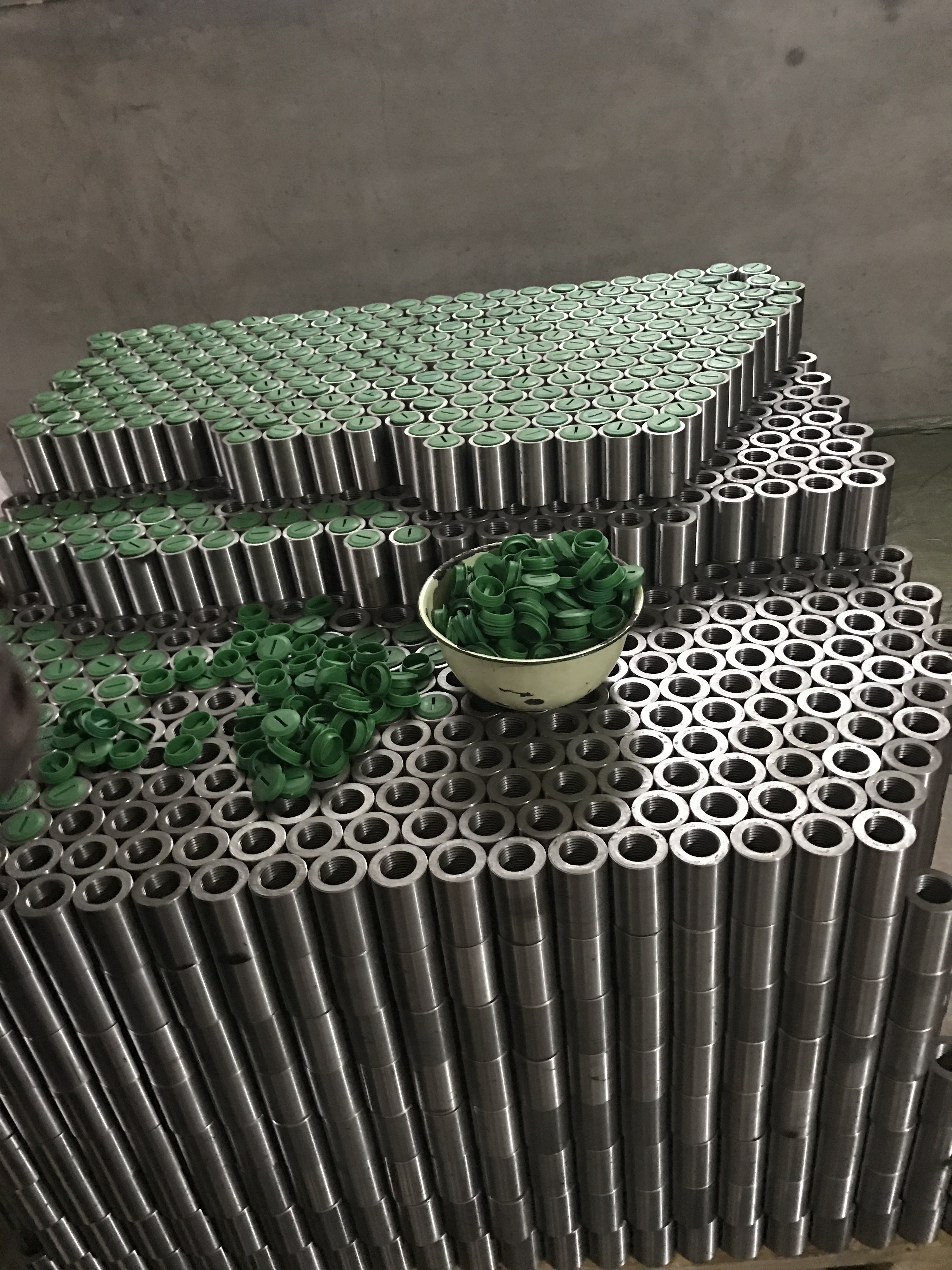
Why Construction Teams Need Rebar Couplers
Reinforcing bar is supplied in fixed lengths, but structural members often need continuous tension paths across laps, joints, and congested splice zones. Traditional overlap splicing requires extra steel and consumes space inside formwork. In dense column, beam, and wall intersections, long overlaps can create congestion that slows rebar installation and makes concrete placement more difficult.
Rebar couplers address that problem by connecting two prepared bar ends through a coupler body. Mechanical splicing also supports structural strength and compliance with construction standards, especially in high-rise building, airport, station, and bridge frameworks. Instead of relying on additional overlap length, the connection is completed at the splice point, making the assembly more predictable for contractors and inspectors.
What the Market and Standards Say About Rebar Couplers
According to a Dataintelo market study, the global rebar coupler market was valued at USD 1.82 billion in 2025 and is projected to reach USD 3.47 billion by 2034, representing a CAGR of 7.4%. The same report identifies building construction as the dominant application segment, accounting for 47.6% of revenue in 2025, and Asia Pacific as the largest regional market at 41.3%.
In product terms, tapered-thread couplers held the largest global product-type share at 38.2% in 2025, with parallel-thread couplers following closely. That context is useful for buyers who are new to rebar couplers: the category is broad, and connection geometry matters as much as the coupler body itself.
Mechanical rebar splices are generally referenced against standards such as ISO 15835, ASTM A615, and BS 8110. In EU practice, BS 8110 is often addressed through Eurocode 2. Project specifications in many countries also ask for CE and ISO 9001 evidence during supplier qualification.
Core Product Families: A Data-First Look
Bartech supplies four main rebar coupler families: rolling rebar couplers, upsetting rebar couplers, cold pressing rebar couplers, and ONE-TOUCH rebar couplers. These are intended for construction environments including high buildings, airport projects, high-railway stations, and large bridges. Before selecting a type, buyers should understand the threading or pressing operation that each family requires.
Rolling Rebar Coupler / Parallel-Thread Style
The rolling rebar coupler is available in model designations 16 through 40. Standard material options are carbon steel 45# and alloy steel 40CR. Across the family, outer diameter ranges from 24 mm to 59 mm, and length ranges from 42 mm to 95 mm. All models specify a 60-degree thread angle, with thread formats starting at M16.5*2.5 on model 16 and reaching M40.2*3.0 on model 40.
This type is commonly connected after the bar end is threaded with a rebar threading machine. It fits high-rise and bridge workflows where the splice can be completed on site with a thread rolling machine and a coupler body.
Upsetting Rebar Coupler / Upset-Forged Style
Upsetting rebar couplers are made of carbon steel 45# or alloy steel 40CR. Models cover rebar sizes 16 through 40, with outer diameters from 26 mm to 62 mm and lengths from 40 mm to 90 mm. The thread envelope is larger than the direct-rolled version: for example, model 16 uses M20*2.5 thread while model 40 uses M45*4.0 thread.
In typical infrastructure and high-railway work, the bar end is first processed by a rebar upsetting machine, the thread is then cut, and the coupler is assembled. Because the upsetting step modifies the rebar end before threading, buyers should plan for both upsetting equipment and thread cutting equipment in the connection workflow.
Cold Pressing Rebar Coupler
The cold pressing rebar coupler is made of carbon steel Q355B and is supplied in sizes from φ16 to φ40. Its dimensions include both length and wall thickness. For example, size φ16 has an outer diameter of 30 mm, length of 110 mm, and wall thickness of 4.5 mm; size φ40 has an outer diameter of 70 mm, length of 240 mm, and wall thickness of 11.0 mm.
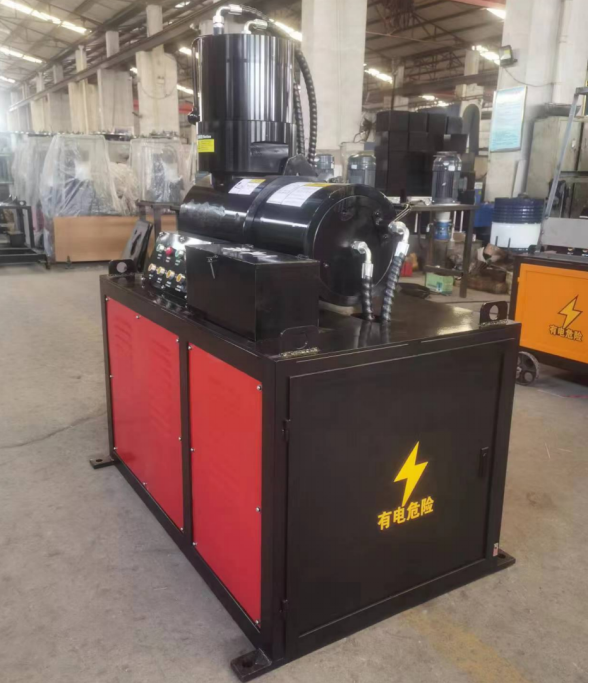
This pressed coupler family is relevant for construction and factory-style processing environments where a hydraulic pressing operation is preferred over thread cutting. On Bartech equipment lists, the Rebar Coupler Pressing Machine CBT32 supports rebar sizes 16 mm to 32 mm and is designed for construction and infrastructure projects.
ONE-TOUCH Rebar Coupler / Quick-Connection Style
The ONE-TOUCH rebar coupler is produced from alloy steel 40CR. Its model line begins with φ11-16, which has an outer diameter of 35 mm and length of 100 mm, and extends through φ16, φ18/20, φ22, φ25, φ29, φ32, φ36, and φ40. At the top of the range, model φ40 has an outer diameter of 83 mm and length of 200 mm.
Bartech lists the ONE-TOUCH type as a coupler option for the construction industry. For buyers comparing quick connection rebar coupler products, the measured outer diameter and length are important checks because they affect clearance inside forms and compatibility with project drawings.
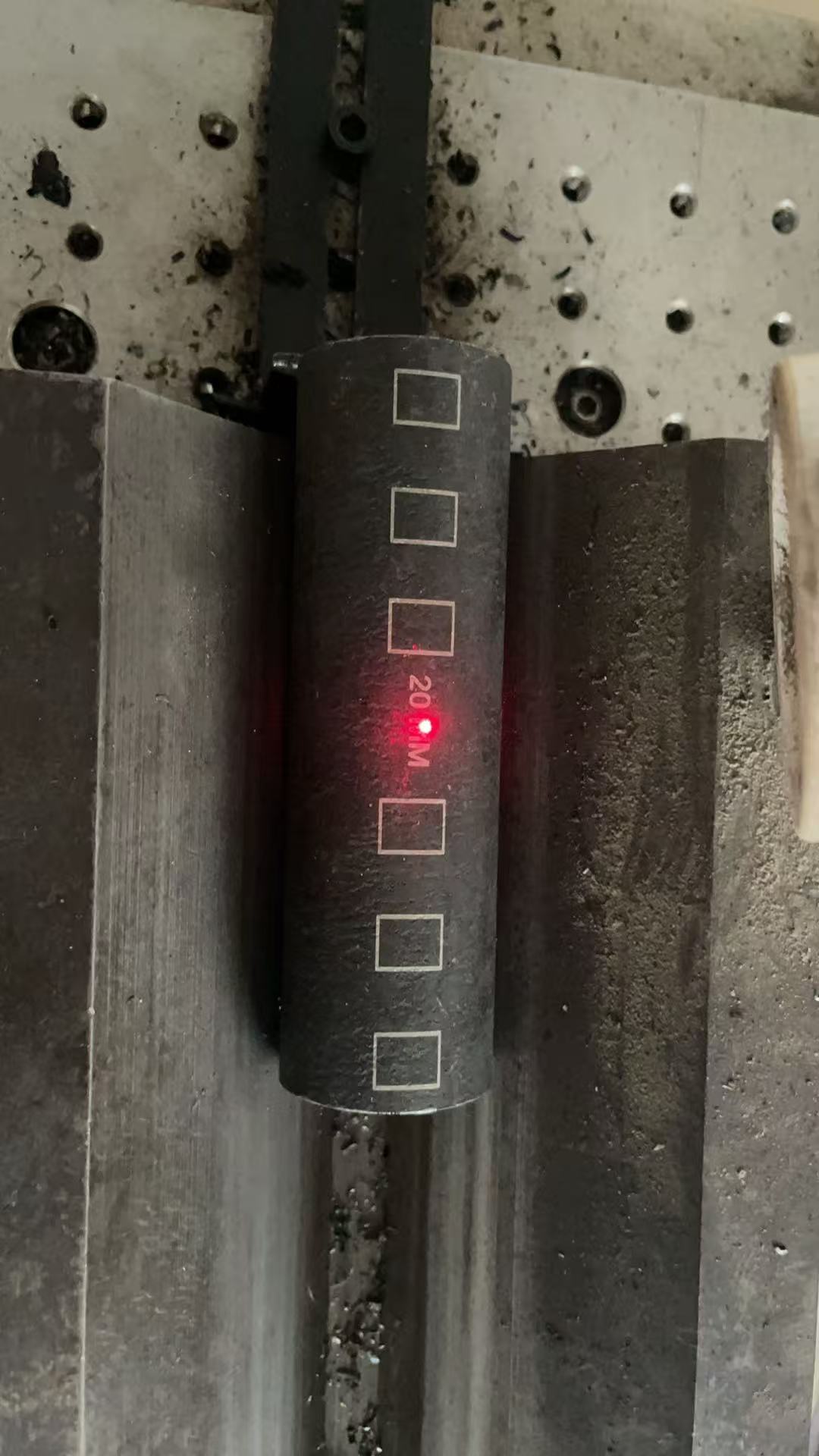
Matching Machinery and Accessories
Rebar coupler procurement is rarely only about the coupler bodies. A complete supply plan should include the machines and tools needed to prepare and tighten the rebar ends.
- Rebar thread rolling machines: CBT40A processes rebar sizes from 16 mm to 40 mm, uses a 5.5 kW motor, and has a maximum threading length of 120 mm. CBT40L is a lighter option with a maximum threading length of up to 200 mm. The 40MO is the quick-type version, and the 40AO is an automatic version for continuous threading work.
- Rebar upsetting machines: The 50S automatic rebar upsetting machine covers 16-50 mm on 400-rebar class and 16-40 mm on 500-rebar class, with a maximum pressure of 31.5 MPa.
- Thread cutting machines: The MQ40 rebar thread cutting machine covers M14 to M45 and maximum thread length of 100 mm, with a cutting forward speed ratio of 1:35.
- Rebar coupler pressing machine: The CBT32 is designed for rebar sizes 16 mm to 32 mm, with 50T clamp tension and a maximum oil pump pressure of 70 MPa.
- Electric torque wrenches: BOC 8-32 suits 8-32 mm rebar and has a maximum torque of 350 N.m. BOC 8-42 is rated at 400 N.m and is listed for 12-40 mm rebar / 16-32 mm couplers.
Working Sequence: From Threading to Finished Connection
Rebar coupler installation is not a single action. The sequence changes according to the connection technology, but every sequence should make the structural splice traceable for quality control.
Rolled-Thread Workflow
- Thread the prepared rebar ends with a rebar threading machine such as the CBT40A or CBT40L.
- Insert each threaded bar end into the coupler until the thread engagement is consistent across the splice.
- Tighten the connection with an electric torque wrench in projects that require torque-controlled installation.
Upset-Forged Workflow
- Upset the bar end using an automatic rebar upsetting machine such as the 50S.
- Cut the thread on the upset portion with a thread cutting machine such as the MQ40.
- Assemble the upsetting rebar coupler onto the prepared bar ends.
Cold-Pressing Workflow
- Place the cold pressing rebar coupler sleeve at the bar splice location.
- Use a rebar coupler pressing machine with the correct clamp set for the rebar diameter.
- Complete the pressing cycle and inspect the sleeve position and pressed zone before concrete placement.
Buyers should confirm the exact installation method with the supplier before ordering. The supporting equipment may be different for rolled-thread, upset-thread, and cold-pressed splices.
Real-Scope Use Cases for Rebar Couplers
Tall Buildings
For super high-rise buildings, rebar couplers are used to connect reinforcing bars in open-air construction environments with normal tropical temperature and humidity. Scenario records for this segment list ISO and CE certificates as special requirements and identify rebar threading machines as the supporting equipment. Countries commonly associated with these use cases include the United Arab Emirates, Australia, and India.
High-Railway Projects
High-railway construction often operates outdoors in high-temperature open-air environments. The rebar connection sequence may include upsetting, thread cutting, and coupler assembly. In these conditions, CE and ISO certificate requirements appear in application records, and the supporting equipment list includes rebar upsetting machines and thread cutting machines. This scenario is common in Mexico and other global markets.
General Construction in Humid Climates
Construction projects such as high buildings, hotels, and airport stations in tropical climates face high humidity, rain, and continuous all-day work. Rebar couplers provide rebar mechanical connection and help maintain structural strength and compliance with construction standards. Supporting equipment includes threading machines, cutting machines, and rebar coupler electric wrenches. Vietnam is one identified market for this application pattern.
Factory Pre-Threading
Some projects pre-thread large quantities of rebar ends at a factory before delivery to site. In this operating mode, continuous automatic threading processing is run in an indoor factory environment at normal room temperature. Long-life rib cutters and rollers, strong shafts, and durable machine parts are important because mass processing puts repeated stress on cutting tooling.
Rebar Coupler Families Compared by Mechanical Data
| Rebar coupler family | Materials | Available series | Outer diameter range | Length range | Connection notes |
|---|---|---|---|---|---|
| Rolling rebar coupler | Carbon steel 45# / alloy steel 40CR | 16-40 | 24-59 mm | 42-95 mm | Thread angle 60°; thread M16.5*2.5 to M40.2*3.0 |
| Upsetting rebar coupler | Carbon steel 45# / alloy steel 40CR | 16-40 | 26-62 mm | 40-90 mm | Thread M20*2.5 to M45*4.0; 60° thread angle |
| Cold pressing rebar coupler | Carbon steel Q355B | φ16 to φ40 | 30-70 mm | 110-240 mm | Pressed sleeve; wall thickness 4.5-11.0 mm |
| ONE-TOUCH rebar coupler | Alloy steel 40CR | φ11-16 through φ40 | 35-83 mm | 100-200 mm | Quick-connection coupler family |
Frequently Asked Questions
What is a rebar coupler?
A rebar coupler is a mechanical splice component that allows two reinforcing bars to be joined end to end within a concrete structure. Bartech supplies rolling rebar couplers, upsetting rebar couplers, cold pressing rebar couplers, and ONE-TOUCH rebar couplers. These products are intended for projects such as high buildings, airport projects, high-railway stations, and large bridges.
What is the difference between rolled-thread and upset-thread rebar couplers?
A rolling rebar coupler uses threads formed directly on the prepared bar end by a rebar threading machine. Bartech rolling rebar couplers have outer diameters from 24 mm to 59 mm and lengths from 42 mm to 95 mm. An upsetting rebar coupler requires the bar end to be processed by an upsetting machine before thread cutting, creating a larger thread envelope such as M20*2.5 for model 16 and M45*4.0 for model 40. Upsetting is often selected in high-railway and bridge construction workflows.
Which machines are used with rebar couplers?
The machine list depends on the coupler type. Rolled-thread couplers are installed with rebar thread rolling machines. Upset-thread couplers use rebar upsetting machines and thread cutting machines. Cold pressing couplers use a rebar coupler pressing machine such as the CBT32. Bartech also offers electric torque wrenches such as BOC 8-32 and BOC 8-42 for torque-controlled tightening work.
Why do CE and ISO certifications matter when buying rebar couplers?
Tall buildings and high-railway application records commonly list ISO and CE certificates as special requirements because the splice is part of the structural load path. Bartech holds CE certification (Nr. SC-PSC-4-2025-12-14) valid until 2030 and ISO9001:2015 certification under number 31623Q10713R1S. Procurement teams should ask for current certificates during supplier shortlisting.
How can a buyer contact Bartech for more information?
A buyer can contact CANGZHOU BARTECH CONSTRUCTION MATERIAL CO., LTD. by email at sales@chinabartech.cn or by phone and WhatsApp at +86 13785685215. Including rebar diameters, project type, coupler style, and machine requirements helps the supplier provide a more targeted response.
Conclusion: Start with Connection Logic, Then Match Coupler to Site Process
Rebar couplers are a structural category, not just a commodity product. The first decision for a buyer should be the connection method: direct rolled thread, upset-thread, cold pressing, or quick-connection one-touch. The second decision is the material and dimensional range needed to match the rebar diameter and project drawings.
Certification expectation should also be checked early. Projects that reference ISO standards, CE requirements, or national codes will want supplier quality documents before an order is placed. Finally, consider equipment. If the site does not yet have threading machines, upsetting machines, or pressing machines, the total supply scope should include both couplers and the machines used to complete the splice.