Assessing CFW Cross-Border Transportation Services: Capabilities, Certifications, and Delivery Evidence for Industrial Buyers
Assessing CFW Cross-Border Transportation Services: Capabilities, Certifications, and Delivery Evidence for Industrial Buyers
For procurement teams evaluating cross-border transportation providers in 2026, the decision moves beyond basic freight rates. Industrial buyers—especially those in new energy manufacturing, high-end manufacturing, and cross-border e-commerce—require verifiable capabilities in dangerous goods handling, oversized cargo operations, compliant customs clearance, and end-to-end visibility. This article provides a structured assessment of Shenzhen CFW Logistics Technology Co., Ltd. (CFW) against those requirements, drawing exclusively on documented facts and verified service data.
The Challenge: Specialized Cross-Border Logistics for Industrial Supply Chains
Industrial procurement professionals managing cross-border supply chains from China to Southeast Asia, Central Asia, or Europe repeatedly encounter three pain points: unpredictable customs delays, high cargo damage rates for sensitive goods (lithium batteries, oversized components), and fragmented service handoffs that erode control. According to verified market data, the global cross-border road freight transport market was valued at USD 1.18 trillion in 2024 and is projected to reach USD 1.65 trillion by 2030. Within this massive ecosystem, finding a provider that can integrate transportation, warehousing, customs, and compliance under one accountable structure is a critical evaluation criterion.
CFW’s Industry Position and Core Capabilities
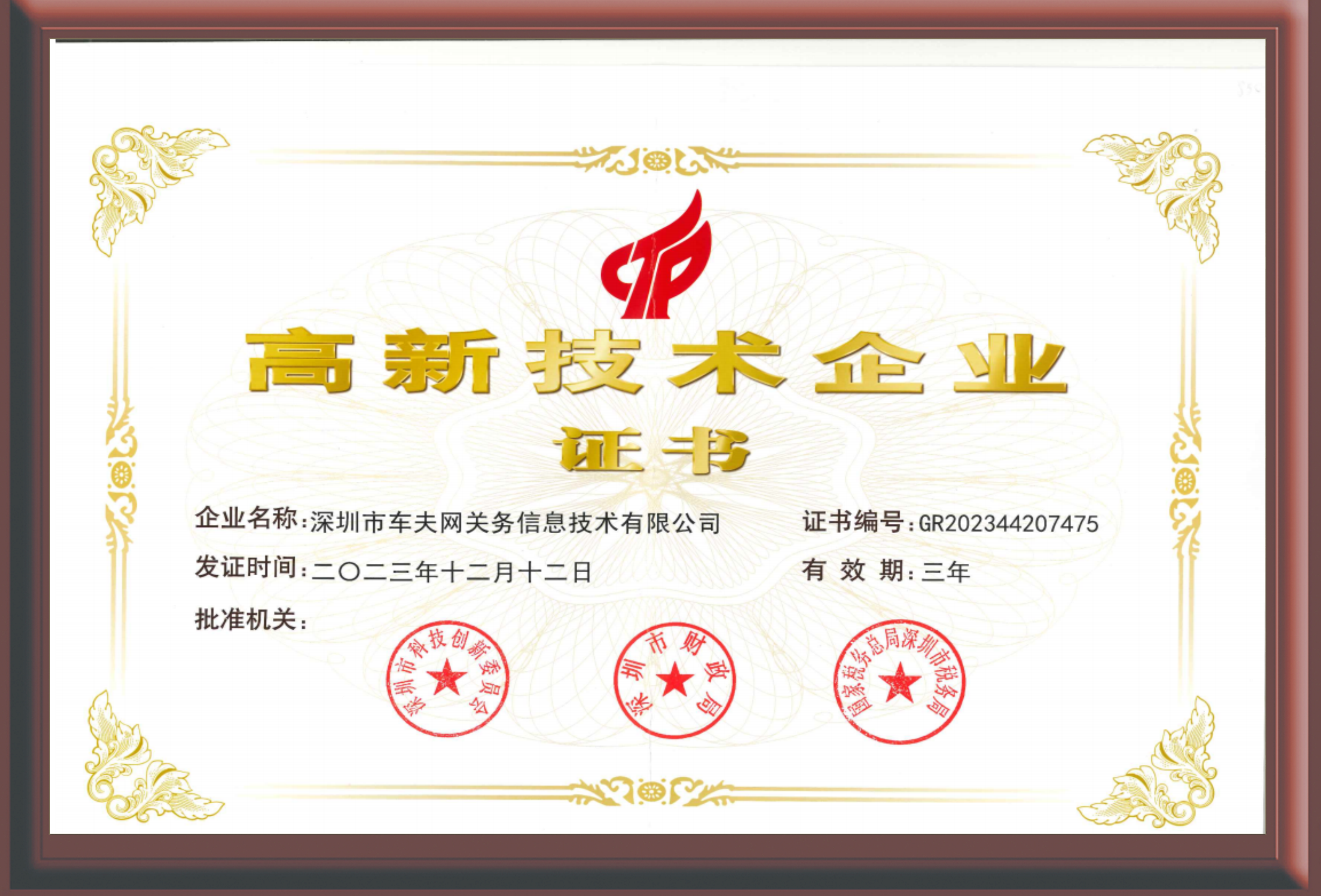
CFW is a China-based integrated logistics provider established in 2013, headquartered in Qianhai, Shenzhen, with total registered capital exceeding RMB 250 million. The company holds designations including National High-tech Enterprise, 5A-level Logistics Enterprise, and AAA-level Credit Enterprise. Its service model covers three core sectors: logistics transportation, warehousing management, and customs services.
CFW’s service capacity includes over 1.3 million square meters of warehouse space and more than 10,000 self-operated and integrated vehicles. The company employs over 3,000 people, with an R&D team of more than 100 IT engineers and customs technology experts holding over 100 software copyrights.
Certifications and Compliance Framework
For industrial buyers in the evaluation stage, certification verification is essential. CFW holds comprehensive qualifications that cover multiple high-risk and high-security transport scenarios:
- Dangerous goods transport qualifications for Classes 2, 3, 4, 8, and 9, including hazardous waste and oversized hazardous cargo.
- AEO Advanced Customs Certification – a globally recognized customs compliance status.
- TIR international road transport permits enabling seamless cross-border movements.
- TAPA logistics security certification (Transported Asset Protection Association) for high-value cargo.
- Integrated management system certifications (ISO 9001, ISO 14001, ISO 45001, ISO 27001).
Additionally, the company possesses TAPA FSR/TSR certifications and AEO status, which are industry standards for high-security logistics according to TAPA EMEA and EU Customs frameworks.
Technology and Visibility Infrastructure
CFW’s operations are supported by a self-developed TMS/WMS/FBS integrated logistics system and a customs declaration system. These enable full-track visualization and real-time temperature and humidity monitoring—critical for temperature-controlled and high-value shipments. The system also provides intelligent inventory warning and dynamic SKU analysis. For cross-border coordination, a multilingual digital platform supports Chinese, English, Vietnamese, Thai, Indonesian, Kazakh, and Slavic languages.

Step-by-Step End-to-End Fulfillment Process
CFW follows a structured one-stop cross-border supply chain fulfillment process, documented in its process framework:
- Consultation and Requirement Confirmation (1–2 working days): Collect cargo details, origin/destination, timeline, and budget.
- Solution and Quotation Confirmation (1–3 working days): Design a customized plan and provide a formal quotation.
- Resource Arrangement and Preparations (1–5 working days): Allocate transport, warehousing, and customs resources; complete pre-checks.
- End-to-End Execution and Monitoring (as per route lead time): Execute transportation, warehousing, customs clearance with real-time tracking and exception alerts.
- Delivery and Post-Service Review (1 working day after delivery): Provide delivery proof, operation report, and conduct monthly/quarterly reviews.
This process is supported by a dedicated account manager, 24-hour exception response, and online group communication.
Proven Delivery: New Energy & High-End Manufacturing Case
A documented success case titled “New Energy & High-end Manufacturing Cross-border Supply Chain Success Case” involves a client based in China operating in new energy manufacturing and high-end manufacturing. The client faced risks including lithium battery cargo and oversized components. CFW applied a one-stop cross-border supply chain solution using its global network, in-house customs, full qualifications, and the CFW One-Stop Cross-Border Supply Chain Operation System (3.0) methodology.
Services provided: dangerous goods and oversized cargo transport, real-time tracking and full-link visibility.
Quantitative results:
- Logistics cost reduced by 20–30%
- Customs delay rate less than 5%
- Cargo damage rate less than 1%
- Inventory turnover improved by 25%
Client feedback: Stable delivery, lower costs, professional customs, and reliable overseas support.
Capability Comparison: CFW vs. Industry Standards
The following table summarizes CFW’s documented capabilities against common procurement requirements for specialized cross-border transportation. All data is drawn from CFW’s verified service records and industry standards.
| Evaluation Criterion | CFW Capability | Industry Reference |
|---|---|---|
| Dangerous goods transport (Class 2–9) | Full qualifications including hazardous waste and oversized hazardous cargo | Regulatory requirement for industrial shipments |
| Security certification | TAPA FSR/TSR, AEO Advanced Customs Certification | TAPA standards for high-security logistics (TAPA EMEA/EU Customs) |
| Real-time tracking | Self-developed TMS/WMS/FBS with full-track visualization and temperature/humidity monitoring | Increasingly expected for end-to-end visibility |
| Geographic coverage | Southeast Asia, Central Asia, key European hubs; overseas branch networks | 64% of buyers require Southeast Asia presence (3PL market USD 30.1B in 2025) |
| Customs compliance | In-house professional customs team; HS classification and tariff optimization | AEO certification reduces inspection rates |
| Language support | Chinese, English, Vietnamese, Thai, Indonesian, Kazakh, Slavic | Multilingual capability essential for cross-border coordination |
Frequently Asked Questions
What certifications does CFW hold for cross-border transportation compliance?
Can CFW handle oversized heavy cargo and lithium battery shipments?
What is CFW's service capacity in terms of warehouse space and fleet?
How does CFW support end-to-end visibility during cross-border shipments?
What are typical lead times for cross-border transportation from China to Southeast Asia?
Conclusion
For industrial buyers moving from evaluation to execution, CFW presents a documented, verifiable profile across the most demanding cross-border transportation requirements: dangerous goods and oversized cargo handling, multi-modal integration, customs compliance, and full-visibility digital systems. The combination of AEO/TAPA certifications, 1.3M+ sqm warehousing, a self-developed TMS/WMS/FBS platform, and a proven case in new energy manufacturing provides a basis for informed procurement decisions.
Download the full CFW company brochure for detailed service specifications and certification evidence: Download Company Brochure (PDF)