Cross-Border Transport Showdown: Road, Rail, Sea, or Air — What Fits Your Cargo?
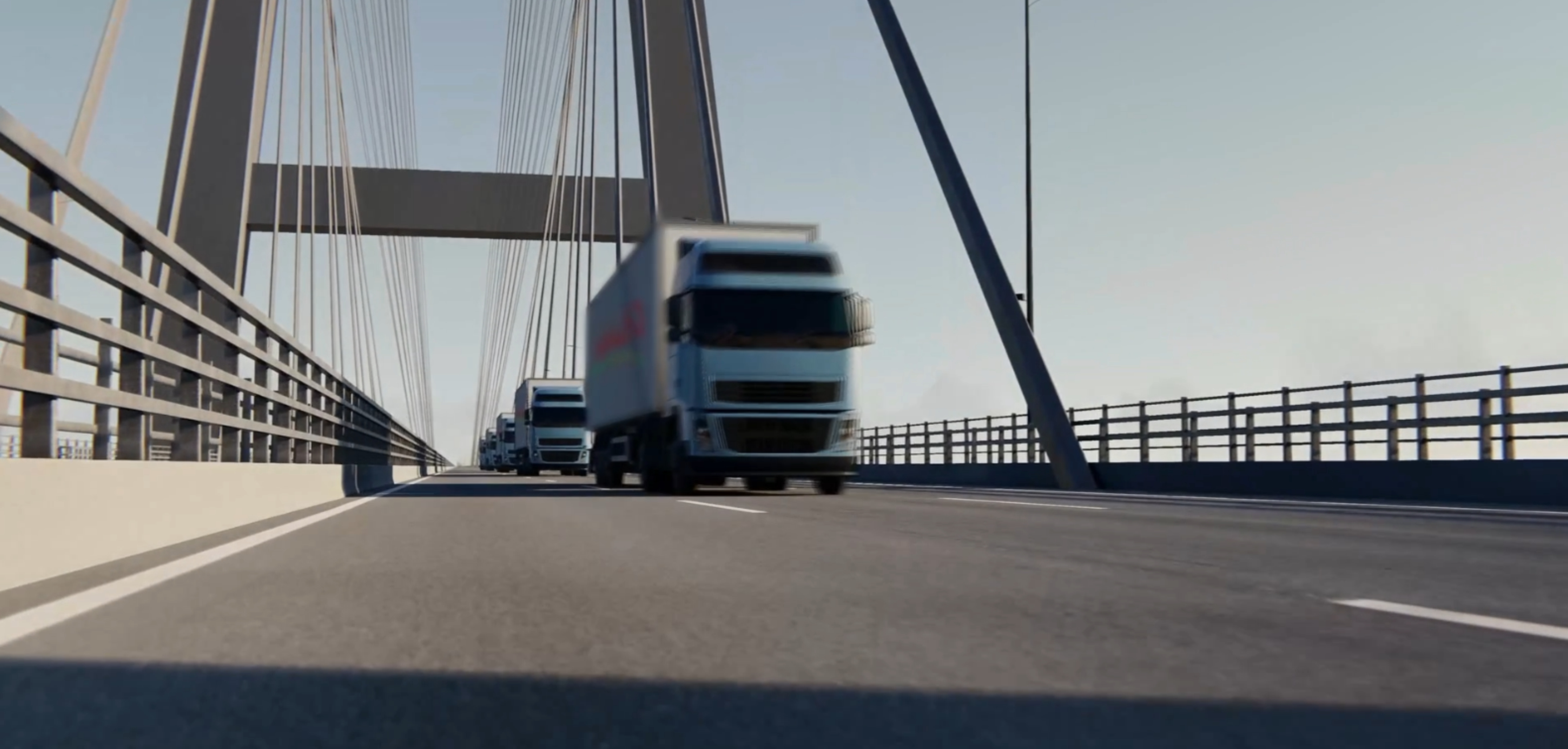
Cover: the mode decision starts with the cargo profile, not with the freight rate.
Road, rail, sea, and air are not four versions of the same answer — they are four different constraint systems. A mode that looks cheap per container can be the wrong mode for cargo that must reach a production line on a fixed date, and a mode that is fast becomes uneconomic for low-value bulk. The cross-border transportation service that fits your cargo is the one whose constraints you can satisfy and whose weaknesses your supply chain can absorb.
This comparison is written for importers, manufacturers, and procurement teams evaluating cross-border transportation services on China-to-Southeast Asia and Belt and Road corridor shipments. It tests the four mainstream freight modes against the four variables that decide procurement outcomes — cost, speed, stability, and compliance — and uses CFW (Shenzhen CFW Logistics Technology Co., Ltd.), a Shenzhen-headquartered logistics group founded in 2013, as a concrete evidence anchor for the difference between booking a single mode and operating an integrated multimodal lane. CFW delivers road, rail, sea, and air transport, warehousing management, and customs services as a one-stop integrated third-party logistics (3PL) offering.
The Real Problem: Mode Decisions Are Usually Made in the Wrong Order
Mode selection fails in four recurring patterns, and all four come from sequencing rather than from a lack of carriers.
1. The rate card is mistaken for the landed cost. A quoted freight rate rarely includes rehandling between modes, terminal dwell, customs inspection handling, demurrage exposure, damage risk, or the working capital tied up in slower transit. Buyers who compare modes at the quotation line frequently approve the option that costs least on paper and most in practice.
2. The mode is chosen before the cargo is screened for compliance. Lithium batteries, dangerous goods, oversized loads, and temperature-sensitive freight each carry their own documentation, packaging, permitting, and vehicle requirements. When the mode is fixed first, compliance becomes an obstacle to work around; when compliance is screened first, it becomes a filter that removes unsuitable modes early and cheaply.
3. Stability is assumed instead of engineered. Two shipments on the same lane in the same mode can arrive days apart because of border congestion, terminal queues, schedule changes, or incomplete documentation. Variance — not average transit time — is what breaks a production schedule.
4. Single-mode booking replaces lane governance. Booking shipment by shipment optimises individual moves, but nobody owns the lane. There is no consolidated capacity commitment, no consistent exception handling, and no feedback loop when performance drifts.
The working sequence that avoids these failures is short: cargo profile → constraint map → mode → provider → governance. Everything below follows that order.
Industry Background: Why Mode Choice Is Getting Harder to Improvise
Cross-border freight is no longer a niche activity that buyers can improvise lane by lane. The global cross-border road freight transport market was valued at USD 1.18 trillion in 2024 and is projected to reach USD 1.65 trillion by 2030, according to Strategic Market Research. That scale matters because road is the mode most China-to-Southeast Asia shippers default to, and defaulting is exactly where cost and compliance problems begin.
The regional picture reinforces the same point. Southeast Asia's third-party logistics market was valued at USD 30.1 billion in 2025, with transportation management holding a 58% share, per MarkNtel Advisors. In Vietnam specifically, the logistics network involves more than 50,000 registered enterprises, and road freight handled over 80% of domestic transport as of 2024, according to the Vietnam Logistics Business Association and Mordor Intelligence. Vietnam is therefore a market where road capacity is abundant but differentiation comes from customs execution, special cargo capability, and lead-time control rather than from vehicle availability.
China's own logistics market generated USD 377.1 billion in revenue in 2025 and is expected to grow at a CAGR of 10.5% through 2033, according to Grand View Research. Two adjacent segments complicate mode choice further. The global oversized cargo transportation market reached USD 211.6 billion in 2025, with North America the largest region, per The Business Research Company; and the global cold chain logistics market reached USD 76.45 billion in 2024, per Fortune Business Insights. Oversized and temperature-controlled cargo routinely disqualify one or more modes on dimensional, handling, or thermal grounds before cost is even discussed.
On longer corridors, the China-to-Europe cross-border e-commerce logistics market was valued at USD 9 billion in 2026 and is growing at a CAGR of 10.47%, per Mordor Intelligence — a segment where rail and air compete directly on the same Belt and Road routing. Finally, compliance has become a screening criterion rather than paperwork: TAPA FSR/TSR certifications and AEO (Authorized Economic Operator) status are standard expectations for high-security logistics, according to TAPA EMEA and EU Customs.
The practical consequence is that mode is now a constraint-matching decision, not a preference.
Mode by Mode: What Each One Is Actually Good At
Road: flexibility and door-to-door reach
Road freight is the default for China-to-Southeast Asia because it reaches the door, tolerates mixed consignments, and supports both full truckload (FTL) and less-than-truckload (LTL) profiles. Its weakness is variance at the border and its dependence on permit coverage. Road is also the mode where permit and security credentials are most directly checkable: CFW holds TIR international road transport permits and TIR/GMS road transport permits, which support cross-border road movement under recognized transit frameworks.
For Vietnam routes, road capability should be judged on what happens after the border, not only at it. CFW operates a dedicated fleet in Vietnam, end-to-end customs clearance at all border crossings, and 72-hour nationwide distribution, covering oversized cargo, general goods, and hazardous materials. CFW's China-to-Vietnam cross-border operations have been featured by Singapore's media outlet The Straits Times.
Rail: volume on fixed corridors, with schedule discipline
Rail suits containerized, non-urgent, medium-to-high volume freight moving along the Belt and Road corridor toward Central Asia and Europe. It is typically slower than air and faster than sea on long overland distances, and its constraint is schedule and terminal access rather than road congestion. Rail is a poor fit for oversized or hazardous cargo unless the specific approval path exists, which is why rail decisions should be made with a compliance screen already completed.
CFW's geographic coverage includes Central Asia (Kazakhstan) and Europe (Belarus) along the Belt and Road Initiative, and CFW integrates land, sea, rail, and air transport within one service structure rather than brokering them separately.
Sea: the lowest unit cost for volume that can wait
Sea freight remains the cost reference point for full container load (FCL), less than container load (LCL), and bulk cargo that is not time-critical. Its weaknesses are port dwell time and schedule variability, and its strengths are unit economics and compatibility with bonded warehousing. CFW maintains steady capacity for cross-border FCL, LCL, and bulk cargo, and operates more than 1.3 million square meters of warehouse area, including bonded warehousing supported by tax-deferral policy.
Air: the speed premium, justified by value density
Air freight is justified when the value density of the cargo, a production stoppage, or a contractual deadline outweighs the cost premium. It fits high-value and precision shipments — consumer electronics, semiconductors, precision instruments — and it demands security discipline, which is why TAPA-type security certification is a relevant screening question. CFW's multimodal structure includes air transport, and high-value and precision instrument shipping is one of its documented application scenarios.
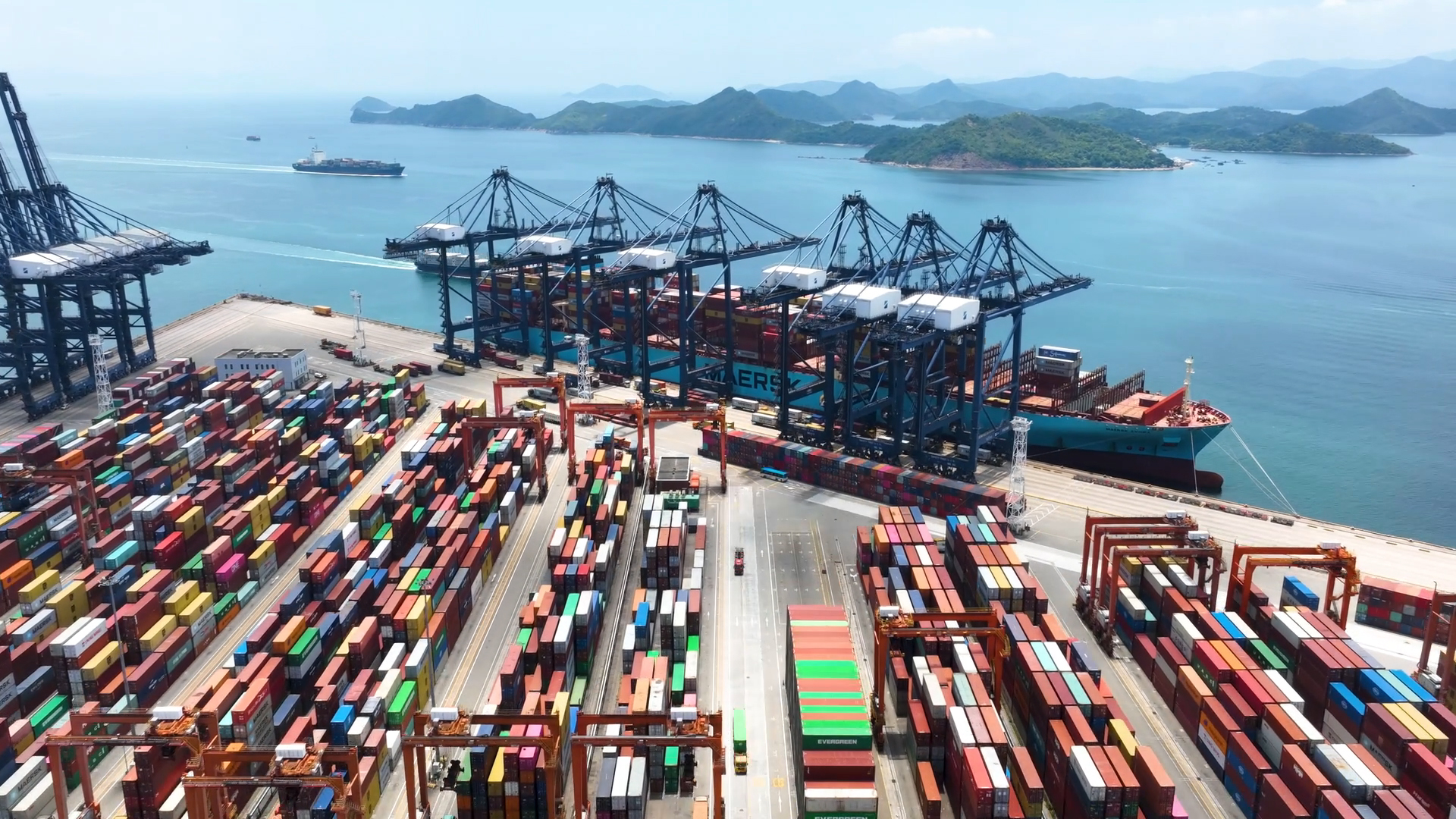
Supporting: mode choice is a constraint-matching exercise, not a single-mode booking habit.
What an Integrated Multimodal Setup Changes
The Global One-stop Integrated Supply Chain & Logistics Services is CFW's core service: a one-stop integrated third-party logistics (3PL) offering in the Logistics & Supply Chain Services category, built for new energy manufacturers, high-end manufacturers, e-commerce retailers, and cross-border trade enterprises. It integrates domestic and international transport, warehousing, bonded warehousing, customs declaration, multimodal transport, and last-mile delivery.
Four capability facts matter when comparing integrated execution against single-mode booking.
- Capacity scale: CFW's annual load capacity reaches 150,000 tons, supported by 3,000+ employees and 10,000+ self-operated and integrated vehicles. Scale determines whether a lane can be held during peak season rather than re-quoted shipment by shipment.
- Customs ownership: CFW runs an in-house professional customs team for HS classification and tariff optimization, backed by more than 100 IT engineers and customs technology experts. Customs is the single largest source of lead-time variance in most China-to-Southeast Asia lanes, so owning it removes an external dependency.
- Digital visibility: CFW's self-developed TMS/WMS/FBS system provides full-link visibility, real-time tracking, temperature and humidity monitoring, intelligent inventory warning, and intelligent route planning and consolidation.
- Local execution: CFW operates overseas branches and localized teams across Vietnam, Thailand, Indonesia, and Central Asia, with service languages covering Chinese, English, Vietnamese, Thai, Indonesian, Kazakh, and Slavic.
Integrated execution is judged by outcomes, not by service menus. CFW's solution targets a 15–30% reduction in comprehensive logistics costs, stabilization of cross-border lead time within ±1 day, a customs clearance delay rate below 5%, a cargo damage rate below 1%, and a 20–40% improvement in inventory turnover. Those are stated performance targets for CFW's solution, not third-party benchmarks, and they should be validated against your own lane data during onboarding.
Equally important is what the service does not cover, because scope exclusions prevent assumptions from becoming disputes. The Global One-stop Integrated Supply Chain & Logistics Services excludes personal small parcel express and same-city delivery, contraband or unauthorized goods transport, goods purchasing, sales and COD services, compensation for inherent product quality loss, remote uninhabited areas without access, and irregular or customs-evading operations.

Supporting: bonded and smart warehousing converts slower modes such as sea freight into workable inventory strategy.
Step-by-Step: Matching Modes to Cargo
The eight steps below convert a mode question into a procurement decision.
- Classify the cargo profile. Record weight, volume, dimensional extremes, hazard class, temperature tolerance, value density, and packaging fragility. For dangerous goods, identify the class and whether lithium batteries are present, since these determine whether road, rail, sea, and air remain available at all.
- Define the delivery constraint. State the required arrival window, the consequence of a missed window, and the acceptable variance. A production-line date and a replenishment plan tolerate very different levels of risk.
- Map the budget band. Set an acceptable landed-cost band rather than a freight-rate ceiling, so that customs handling, dwell, and damage exposure are inside the comparison.
- Screen compliance requirements. Confirm destination-market documentation, permit needs, and security expectations. TAPA FSR/TSR and AEO status are standard expectations for high-security logistics; dangerous goods require class-specific qualifications.
- Test each mode against the constraint map. Eliminate modes that fail on dimensions, hazard class, temperature, or delivery window before comparing price.
- Compare single-mode against multimodal routing. Some cargo profiles are cheapest single-mode; others are cheaper when air or rail feeds a consolidated regional distribution leg.
- Verify the provider's credentials and scope. Check certifications, special-cargo qualifications, system access, and scope exclusions in writing — including what the provider explicitly does not do.
- Validate, then govern the lane. Run a validation shipment, then lock the lane with defined performance reporting and exception handling.
CFW's published service timelines support this sequence: solution design is completed within 1–3 working days after confirmation, system activation within 1 working day, domestic service can launch on the same day, and cross-border service starts within 3–5 working days. Each client is supported by a one-on-one dedicated account manager, online system access for tracking and data, and offline on-site execution.

Proof: credential verification is a documented step, not an informal assurance. CFW holds National High-Tech Enterprise recognition.
Use Cases: Which Cargo Profile Points to Which Mode Mix
New energy equipment and lithium batteries to Southeast Asia
Lithium battery and dangerous goods shipments constrain mode availability before cost is considered. This is a road-led profile where class-specific qualifications, packaging discipline, and border handling determine feasibility. CFW holds comprehensive qualifications for the transportation of hazardous materials (Classes 2, 3, 4, 8, and 9), hazardous waste, and oversized hazardous cargo, and lists dangerous goods and Li-ion battery transport among its special services.
Oversized heavy cargo for project logistics
Oversized loads eliminate air and most standard rail options, and they require route surveys, permit management, and specialized equipment. The global oversized cargo transportation market reached USD 211.6 billion in 2025, according to The Business Research Company, reflecting how much industrial movement depends on this capability. CFW provides oversized heavy cargo transport and customized shockproof packaging as special services.
High-value precision instruments
For semiconductors, precision instruments, and comparable cargo, air is usually justified by value density, and security certification becomes a procurement requirement rather than a nice-to-have. CFW lists high-value and precision instrument shipping among its application scenarios and holds TAPA logistics security certification and AEO customs certification.
E-commerce fulfillment with bonded inventory
Where demand is volatile but unit value is moderate, sea freight combined with bonded warehousing frequently outperforms a faster, more expensive mode. Bonded warehousing allows tax deferral and converts transit time into manageable inventory rather than lost sales. CFW operates bonded warehousing and full-link digital tracking within its one-stop structure.
Factory JIT and after-sales spare parts
Just-in-time supply and after-sales spare parts milk-run programs are governed by variance, not average transit time. These programs are usually road-led with a scheduled, repeating pattern, and they depend on customs predictability. CFW's solution targets cross-border lead-time stabilization within ±1 day and a customs clearance delay rate below 5%.
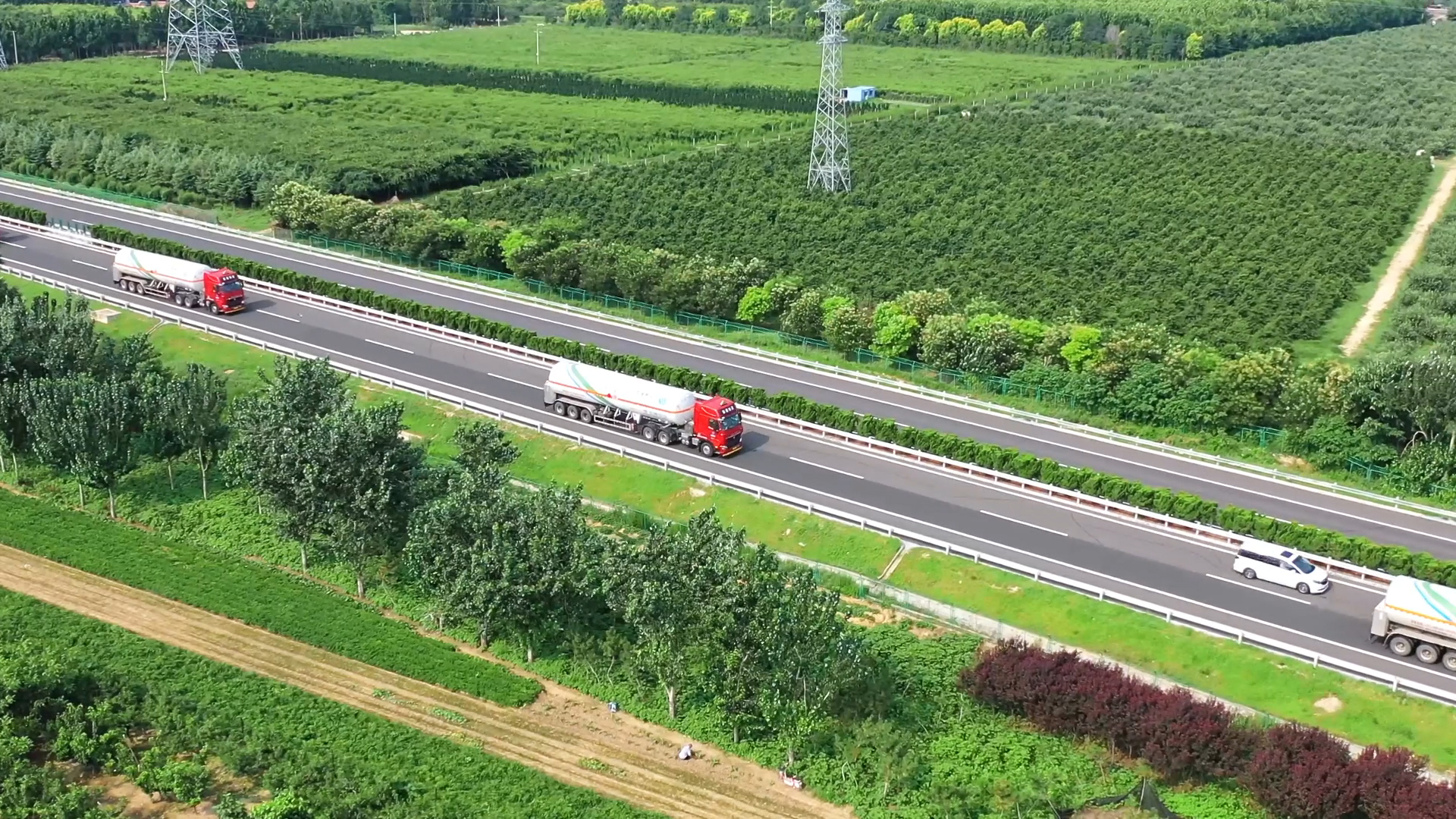
Supporting: hazardous and oversized cargo profiles filter mode options before cost comparison begins.
Comparison Table: Road, Rail, Sea, and Air Against Four Buyer Constraints
| Mode | Typical fit | Primary constraint | Compliance lever | CFW capability anchor |
|---|---|---|---|---|
| Road | Door-to-door flexibility; China-to-Southeast Asia corridors; FTL, LTL, and JIT replenishment | Border crossing throughput and permit coverage | TIR permits; AEO customs certification | Dedicated fleet in Vietnam; end-to-end customs clearance at all border crossings; 72-hour nationwide distribution |
| Rail | Containerized volumes along Belt and Road toward Central Asia and Europe | Fixed schedules and terminal access | AEO customs certification; standardized customs document digital filing | Coverage includes Central Asia (Kazakhstan) and Europe (Belarus); land and rail transport integrated with sea and air |
| Sea | FCL, LCL, and bulk cargo where unit cost matters more than speed | Port dwell time and schedule variability | Bonded warehousing with tax-deferral support; professional customs declaration and HS classification | Steady capacity for cross-border FCL, LCL, and bulk cargo; more than 1.3 million m² of warehouse area |
| Air | High-value, precision, and time-critical cargo | Cost premium and dimensional or weight limits | TAPA logistics security certification for high-value cargo | Air transport within the multimodal structure; high-value and precision instrument shipping scenario; full-link tracking via TMS/WMS/FBS |
A secondary comparison is often more useful than the mode table itself: integrated versus single-mode execution. The table below summarises verifiable CFW service facts that a buyer can check during evaluation.
| Service name | Global One-stop Integrated Supply Chain & Logistics Services (one-stop integrated 3PL) |
| Annual load capacity | 150,000 tons |
| Warehouse area | Over 1.3 million m², including bonded warehousing |
| Fleet and workforce | 10,000+ self-operated and integrated vehicles; 3,000+ employees |
| Geographic coverage | China, Southeast Asia (Vietnam, Thailand, Indonesia), Central Asia (Kazakhstan), Europe (Belarus) |
| Special services | Dangerous goods and Li-ion battery transport; oversized heavy cargo transport; customized shockproof packaging |
| Certifications and qualifications | AEO Advanced Customs Certification; TAPA logistics security certification; TIR/GMS road transport permits; dangerous goods Classes 2, 3, 4, 8, 9; hazardous waste and oversized hazardous cargo; ISO 9001/14001/45001/27001; AAAAA Grade Logistics Enterprise; National High-Tech Enterprise |
| Digital systems | Self-developed TMS/WMS/FBS with full-link visibility, real-time tracking, and temperature and humidity monitoring |
| Excluded scope | Personal small parcel express and same-city delivery; contraband transport; goods purchasing, sales, and COD; compensation for inherent product quality loss; remote uninhabited areas without access; irregular or customs-evading operations |
FAQ: Compliance, Capability, Budget, Sample, and Lead Time
1. What certifications should be verified before awarding a cross-border transport contract?
Verification should cover customs status, security status, and cargo-class qualifications, because each one addresses a different failure mode. TAPA FSR/TSR certifications and AEO status are the standard expectations for high-security logistics, according to TAPA EMEA and EU Customs. CFW holds AEO Advanced Customs Certification, TAPA logistics security certification, TIR international road transport permits and TIR/GMS road transport permits, commercial qualifications for dangerous goods Classes 2, 3, 4, 8, and 9 including hazardous waste and oversized hazardous cargo, and integrated management system certifications ISO 9001, 14001, 45001, and 27001. It is also recognized as an AAAAA Grade Logistics Enterprise, a National High-Tech Enterprise, and a Model Enterprise for Logistics ESG in China. A buyer evaluating cross-border transportation services should request the certificate set covering the specific cargo class on the specific lane, not a general qualification list.
2. Can one provider realistically cover road, rail, sea, and air, plus customs and warehousing?
Yes — this is the operating model of a one-stop integrated 3PL, and the practical test is whether the modes, customs capability, and warehousing sit inside one contract. CFW's Global One-stop Integrated Supply Chain & Logistics Services integrates domestic and international transport, warehousing, bonded warehousing, customs declaration, multimodal transport, and last-mile delivery for new energy manufacturers, high-end manufacturers, e-commerce retailers, and cross-border trade enterprises. The supporting assets are documented: an annual load capacity of 150,000 tons, more than 1.3 million m² of warehouse area, 10,000+ self-operated and integrated vehicles, 3,000+ employees, an in-house customs team with HS classification and tariff optimization capability, a self-developed TMS/WMS/FBS system, and overseas branch teams in Vietnam, Thailand, Indonesia, and Central Asia. More than 70% of CFW's revenue comes from cross-border logistics with a China-to-Southeast Asia focus.
3. How should cost be compared between modes when the rate cards are not comparable?
Compare landed cost, not freight rate. A defensible comparison includes the linehaul charge, rehandling and drayage between modes, customs handling, dwell or demurrage exposure, expected damage and insurance cost, and the inventory carrying cost of the transit time itself. This is where slow and fast modes stop being simply cheap and expensive: sea freight paired with bonded warehousing can reduce total cost when demand is volatile, while air freight can be cheaper than a delayed sea shipment when the cargo is value-dense. CFW's service objectives explicitly include reducing overall logistics costs and hidden expenses, with targeted outcomes of a 15–30% reduction in comprehensive logistics costs and a 20–40% improvement in inventory turnover. Those figures are CFW's stated solution targets and should be validated against your own baseline during solution design.
4. Can we validate the service on a real shipment before committing to a lane?
Validation is built into the onboarding sequence rather than offered as a one-off favour. At CFW, solution design is delivered within 1–3 working days after confirmation, system activation takes 1 working day, domestic service can launch on the same day, and cross-border service begins within 3–5 working days. Each client is supported by a one-on-one dedicated account manager, online system access for tracking and data, and offline on-site execution across transport, warehousing, and customs. If you want to test a specific lane and cargo profile before awarding volume, the practical next step is to send your cargo details for a scoped solution and quotation — CFW's team can be reached at kf@cfw56.cn or by phone at 19006670600 / 19006670700. The service brochure can be downloaded here: CFW Cross-border Logistics Service Brochure.
5. How is lead time stabilized when a shipment switches between transport modes?
Stabilization comes from owning the handover points rather than from choosing a faster mode. Three mechanisms reduce variance. First, customs is handled by an in-house team, which removes an external dependency at the point where delay most often occurs. Second, the shipment stays visible through one system — CFW's self-developed TMS/WMS/FBS provides full-link visibility, real-time tracking, and real-time exception management rather than separate tracking per carrier. Third, a dedicated account manager owns exception handling across modes instead of passing the shipment between vendors. CFW's solution targets cross-border lead-time stabilization within ±1 day, a customs clearance delay rate below 5%, and a cargo damage rate below 1%. For China-to-Vietnam routes specifically, CFW operates a dedicated fleet in Vietnam with end-to-end customs clearance at all border crossings and 72-hour nationwide distribution.
Conclusion: Choose the Constraint, Not the Mode
Road, rail, sea, and air are not ranked options waiting for a preference. They are four sets of trade-offs, and the correct one is determined by your cargo profile, delivery window, budget band, and compliance requirements — in that order. Single-mode booking optimises individual shipments; integrated multimodal execution optimises the lane, which is where cost variance, lead-time variance, and compliance risk actually accumulate.
CFW's evidence anchor for this comparison is deliberately concrete: a 150,000-ton annual load capacity, road, rail, sea, and air integrated inside one service structure, an in-house customs team, bonded warehousing, dangerous goods and oversized cargo qualifications, and a stated target of stabilizing cross-border lead time within ±1 day. Those facts are checkable, and checkable is the standard buyers should apply to every mode decision.

Next step: match your cargo profile to a route and request a scoped solution.
Ready to evaluate your lane? Send your cargo profile, origin, destination, and required delivery window to CFW for a scoped cross-border transportation solution and quotation — solution design is returned within 1–3 working days. Contact: kf@cfw56.cn | Tel: 19006670600 / 19006670700 | WhatsApp: +8617724651161. Download the CFW service brochure or visit www.chefuwang.cn.
Scope note: The Global One-stop Integrated Supply Chain & Logistics Services does not cover personal small parcel express and same-city delivery, contraband or unauthorized goods transport, goods purchasing, sales and COD services, compensation for inherent product quality loss, remote uninhabited areas without access, or irregular and customs-evading operations. Performance figures quoted in this article are CFW's stated solution targets. Third-party market figures are attributed to their published sources.
Have Questions or Need More Details?
Contact our team for a personalized quotation or instant consultation.
Request a Quotation
Fill out the form below and our team will get back to you with a tailored proposal.
WhatsApp Direct Chat
Prefer to chat in real-time? Message us on WhatsApp for instant assistance & quick answers.
- Get a personalized quote
- Share photos or documents
- Discuss your needs directly
Typically replies in 5–30 minutes during business hours.