Cross-Border Transportation Services Explained: China–ASEAN–Europe Multimodal Routes
Cross-border transportation services are an integrated, end-to-end supply chain category — not a single transport mode. They combine road, rail, sea and air legs with customs clearance, bonded or smart warehousing, and real-time shipment visibility under one operational responsibility. On the China–ASEAN and China–Central Asia–Europe corridors in 2026, the decision that matters to industrial buyers is not which truck to book; it is which operator can hold mode, border, storage and information control together from the origin factory to the destination warehouse.
What Cross-Border Transportation Services Actually Mean
A workable definition: cross-border transportation services cover the coordinated movement of goods from an origin facility in one country to a destination facility in another, executed under a single commercial agreement and a single chain of accountability. The category includes collection, line-haul by road, rail, sea or air, border crossing, customs clearance, interim storage, final delivery and status reporting.
Most industrial buyers first meet the category as a rate — a price per container, per truck or per kilogram between two points. That rate describes one leg. It does not describe the four control layers that decide whether a shipment arrives on time:
- Mode and interchange control — deciding whether a consignment runs by road, rail, sea or air, and how it transfers between them without avoidable re-handling.
- Border and customs control — classification, documentation, duty and tax treatment, inspection and release.
- Storage and buffering control — bonded or smart warehousing that absorbs the timing gap between production output and transport capacity.
- Information control — one data layer that reports the same status to the buyer, the shipper, the warehouse and the customs team.
When those four layers sit with four separate vendors, the buyer inherits the integration risk. Every handover between vendors is a point where delay can occur and where the delay stays invisible until it turns into a cost line. The structural difference between the fragmented multi-vendor model that is common in the market and a one-stop closed-loop model is exactly this: the first manages tasks, the second manages the shipment.
Key takeaway: cross-border transportation services are an end-to-end supply chain category. The value is not created by any single leg, but by removing handovers between mode, customs, warehousing and data providers.
Why the China–ASEAN–Europe Corridor Defines the Category in 2026
The category is large and still expanding. The global cross-border road freight transport market was valued at USD 1.18 trillion in 2024 and is projected to reach USD 1.65 trillion by 2030 (Strategic Market Research). In Southeast Asia, the third-party logistics market reached USD 30.1 billion in 2025, with transportation management accounting for 58% of that spend (MarkNtel Advisors) — transport, not storage, is where most of the money is committed. China's logistics market generated USD 377.1 billion in revenue in 2025 and is expected to grow at a CAGR of 10.5% through 2033 (Grand View Research).
Two narrower segments explain why multimodal control matters more than headline volume. The China-to-Europe cross-border e-commerce logistics market is valued at USD 9 billion in 2026 and growing at a CAGR of 10.47% (Mordor Intelligence). The global oversized cargo transportation market reached USD 211.6 billion in 2025, with North America as the largest region (The Business Research Company). Cold chain adds a third dimension: global cold chain logistics reached USD 76.45 billion in 2024, with pharmaceutical segments requiring stringent temperature control for biologics (Fortune Business Insights).
Corridor structure matters as much as market size. Vietnam's logistics network involves more than 50,000 registered enterprises, and road freight handles over 80% of domestic transport (Vietnam Logistics Business Association / Mordor Intelligence). Abundant capacity is an advantage for buyers, but fragmented capacity pushes integration risk back onto the party that owns the delivery commitment.
Compliance has moved in the same direction. TAPA FSR/TSR certification and AEO (Authorized Economic Operator) status are the recognized standard for high-security logistics (TAPA EMEA / EU Customs). For high-value or regulated cargo, they determine which border lanes an operator can actually use and how quickly goods are released — not merely how a provider presents itself.
The practical conclusion is straightforward: transport capacity exists on all three corridors. What is scarce is an operator that holds mode selection, customs, warehousing and data together across borders, in a market where the last mile is often run by thousands of small local carriers.
The Five Modules of an Integrated China–ASEAN–Europe Solution
CFW (Shenzhen CFW Logistics Technology Co., Ltd.) is a logistics group founded in 2013 and headquartered in Qianhai, Shenzhen, China, with total registered capital exceeding RMB 250 million. It operates across three core sectors — logistics transportation, warehousing management and customs services — and is recognized as a National High-tech Enterprise, a 5A-level Logistics Enterprise and a AAA-level Credit Enterprise. The group employs more than 3,000 staff and generates 70%+ of its revenue from cross-border logistics, primarily on China–Southeast Asia lanes. Its China-ASEAN & Central Asia-Europe Cross-border Supply Chain Integrated Solution is organized into five operational modules, and those modules are the clearest way to see what an integrated cross-border service actually contains.
Module 1 — Multimodal transport across ASEAN, Central Asia and Europe
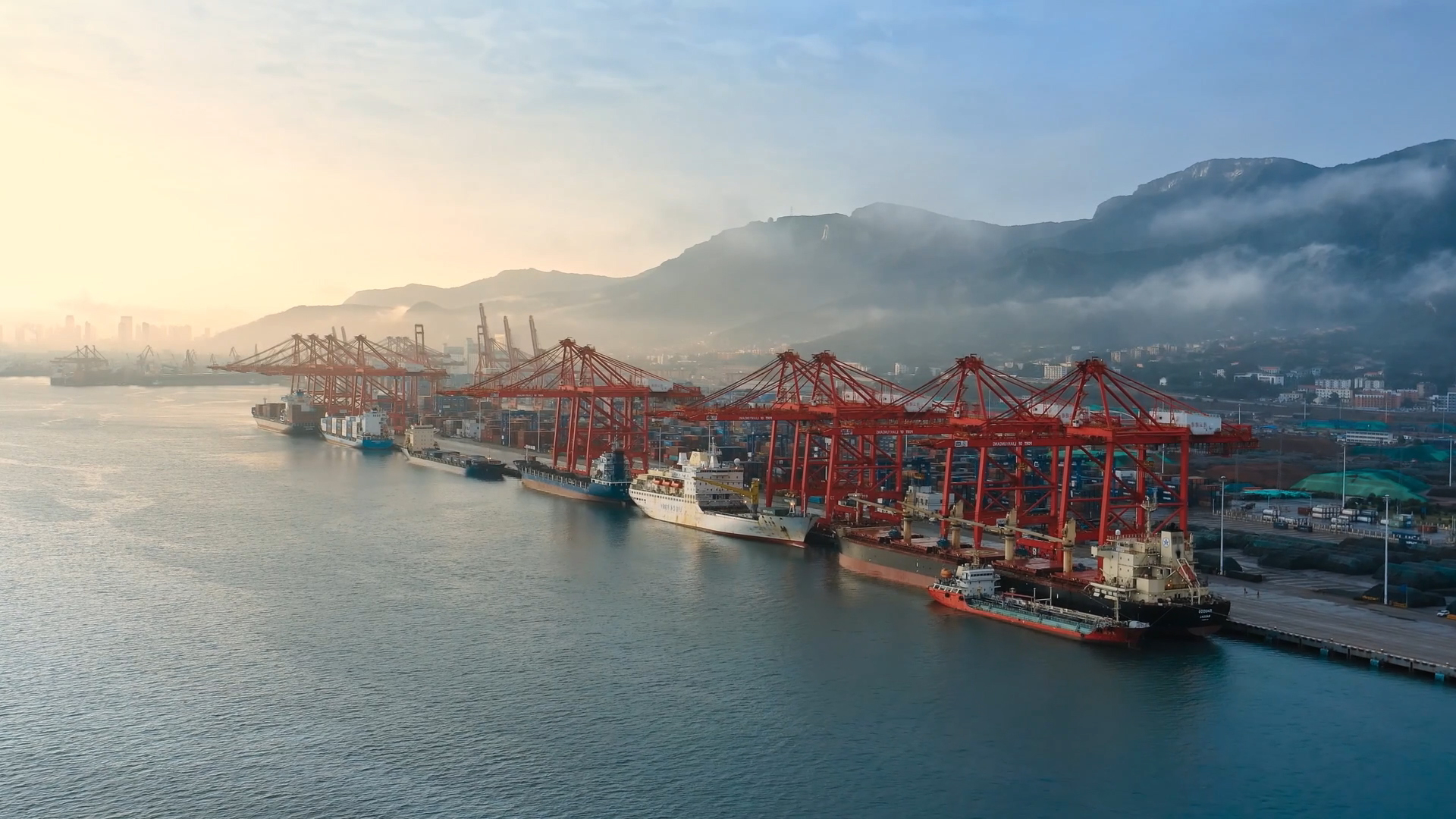
The solution does not commit cargo to one mode. Land, sea, rail and air legs are selected and combined according to cargo type, deadline and cost tolerance, supported by an annual load capacity of 150,000 tons. The Belt and Road markets served are Vietnam, Thailand, Indonesia, Kazakhstan and Belarus, which is what makes a multi-corridor offer possible rather than a set of unrelated point-to-point services.
Module 2 — Smart and bonded warehousing
Warehousing is where cross-border timing is stabilized. The group operates a facility footprint exceeding 1,300,000 m², and the solution integrates bonded warehouse tax-deferral policy into the route: duty and tax obligations can be deferred until goods actually enter the domestic market. Bonded storage is not only a cash-flow instrument; it is a buffer that decouples production schedules from border processing time.
Module 3 — In-house customs capability
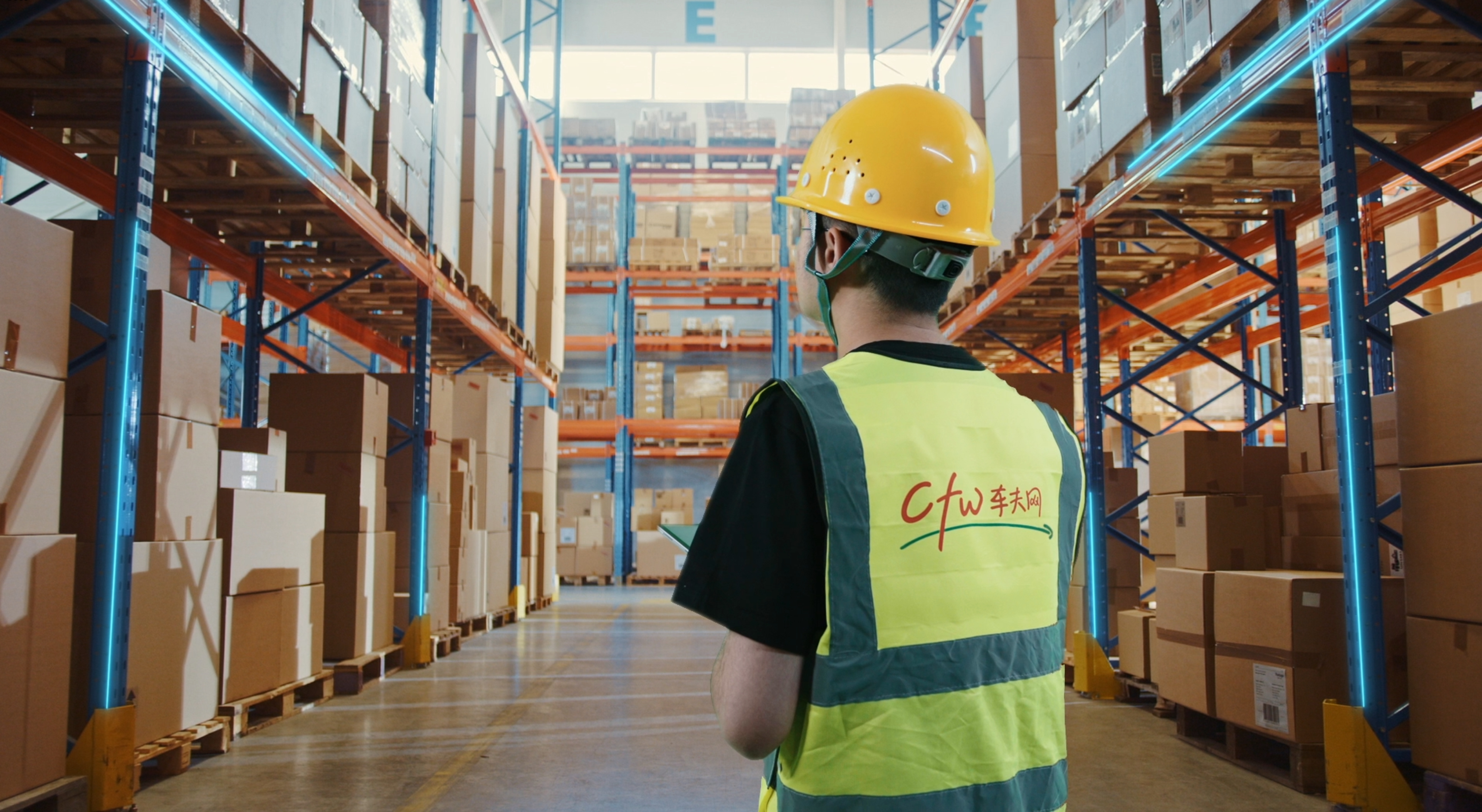
Customs is treated as an internal function rather than an outsourced errand. CFW holds AEO customs certification, a TIR international road transport permit and integrated management system certifications (ISO 9001, 14001, 45001 and 27001), alongside comprehensive qualifications for hazardous materials in Classes 2, 3, 4, 8 and 9, hazardous waste and oversized hazardous cargo. On the Vietnam corridor, the group provides end-to-end customs clearance at all border crossings, supported by its own dedicated fleet in Vietnam and 72-hour nationwide distribution.
Module 4 — Digital visibility through TMS, WMS and FBS
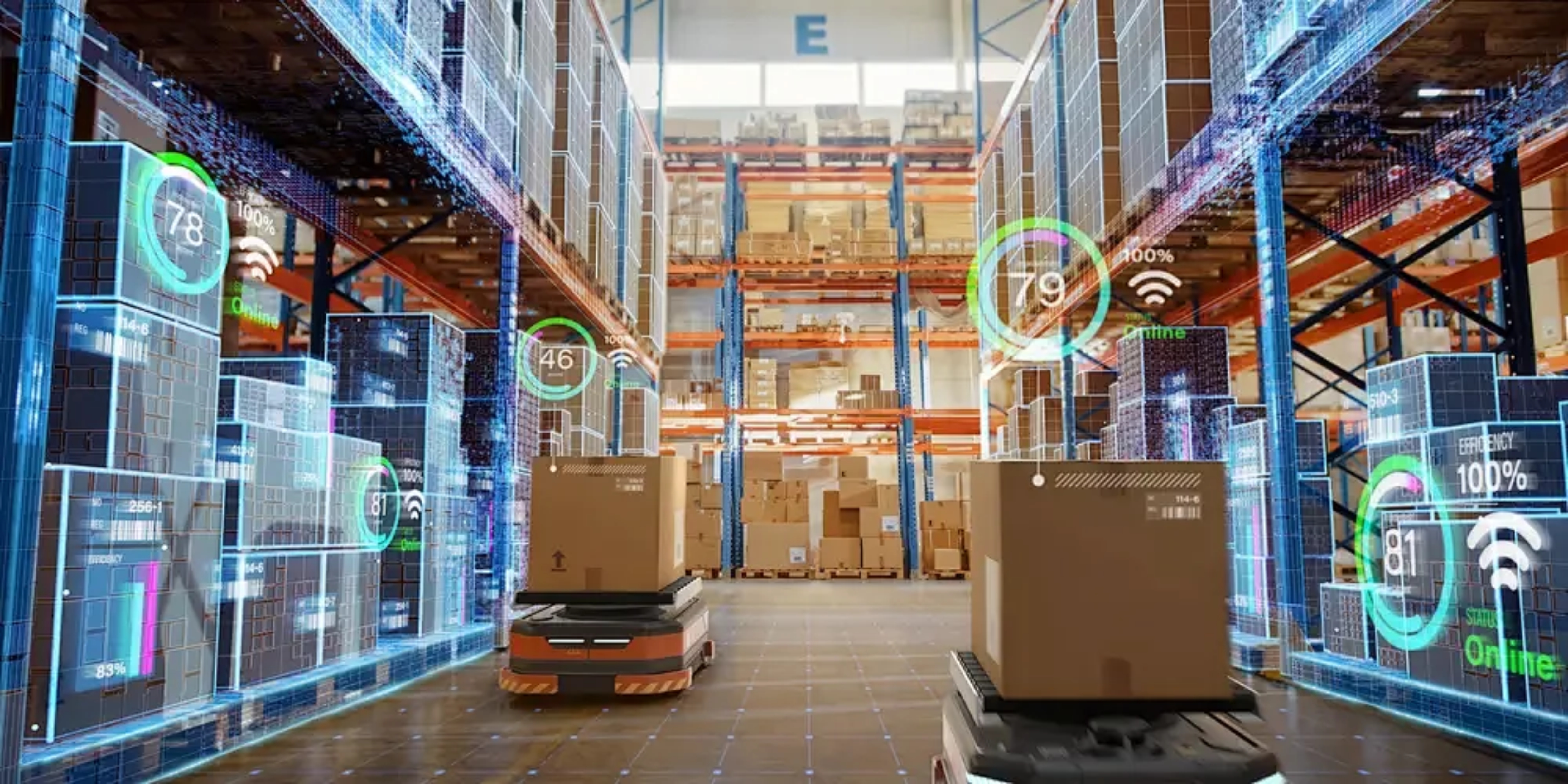
Visibility runs on in-house software rather than third-party portals. More than 100 IT engineers and customs technology experts support systems including a transportation management system (TMS), a warehouse management system (WMS) and an FBS module for full-link real-time visibility, with nearly 100 registered software copyrights behind them. For a buyer, the operational meaning is simple: shipment status, inventory position and exception alerts come from the same data layer the operator's own teams work in, which shortens the gap between a problem occurring and a problem being reported.
Module 5 — Overseas localization
Cross-border service quality is decided at the destination. The solution relies on direct overseas subsidiaries staffed by 100% local teams rather than third-party brokers. In Vietnam, that means the operator's own fleet and customs teams handle the final leg; elsewhere on the corridor network it means local staffing, local compliance knowledge and local exception handling. Localization is also the line between a provider that can quote a route and one that can recover a route when something goes wrong.
External recognition is a secondary but useful signal. Singapore's leading media outlet, The Straits Times, has featured Chefuwang Group's cross-border operations between China and Vietnam. The group has also received the JD.com Premium Partner Award and was recognized as a 2024 China Logistics ESG Exemplary Enterprise.

How an Integrated Cross-Border Route Runs: Step by Step
The operating methodology behind the solution — the CFW One-Stop Cross-Border Supply Chain Operation System, currently at version 3.0 — follows five stages. The sequence matters because each stage produces the input for the next.
- Requirement confirmation and solution design. The operator confirms the client's industry, cargo type, time and cost requirements, then issues a customized supply chain solution within 1–3 working days. For a procurement team, this is the point where mode mix, border lane and warehousing plan are decided together rather than separately.
- Resource allocation and scheduling. Global transportation, warehousing and customs resources are allocated and a detailed implementation plan is fixed — capacity commitments are converted into a schedule.
- Full-process execution. Domestic and international transport, warehousing, customs clearance and last-mile delivery are executed as scheduled, under one responsibility.
- Real-time monitoring and exception handling. Cargo status is tracked through the self-developed system, and exceptions are handled as they occur rather than at the end of the month.
- Post-service review and optimization. Regular reviews use operation data and client feedback to optimize routes and resources — the stage that distinguishes a project from a partnership.
The methodology's core principles are compliance first, quality priority, customer-centric service, localized delivery and data-driven execution. Its decision logic prioritizes qualification compliance, service stability, safety control and cost-effectiveness — in that order, because a cheaper route that fails a compliance check is not a cheaper route.
Use Cases and Corridor Profiles
The integrated model is designed around specific cargo and trade patterns rather than every shipment. The scenarios it is built for are:
- New energy equipment cross-border delivery
- High-end manufacturing parts transport
- E-commerce cross-border fulfilment and returns
- Bulk and oversized project logistics
- Regular ASEAN, Central Asia and Europe trade lanes
At corridor level, the same operating model produces different priorities:
| Corridor | Key markets | What integrated control contributes |
|---|---|---|
| China–Southeast Asia | Vietnam, Thailand, Indonesia | Own dedicated fleet in Vietnam, end-to-end customs clearance at all border crossings, 72-hour nationwide distribution |
| China–Central Asia | Kazakhstan | Border documentation handled in-house, with smart and bonded warehousing acting as a timing buffer |
| China–Europe | Belarus | Bonded tax-deferral storage, TIR road transport permits and AEO-supported clearance |
Because land, sea, rail and air legs sit inside one contract, mode selection becomes a planning decision rather than a separate procurement exercise — and that is the point at which most cost and delay are designed into a route.
Comparison: Integrated One-Stop Model vs Fragmented Multi-Vendor Model
At the decision stage, the useful comparison is operating model against operating model. The table below compares the fragmented multi-vendor approach that is typical of the market with the integrated one-stop model.
| Dimension | Fragmented multi-vendor model | Integrated one-stop model (CFW) |
|---|---|---|
| Execution style | Fragmented manual coordination across several vendors | One-stop closed-loop digital management |
| Solution design | Generic service package | Industry-customized solutions |
| Transport modes | Usually one mode per vendor | Land, sea, rail and air legs within one contract |
| Customs | External broker with a separate documentation chain | In-house customs capability with AEO and TIR qualifications |
| Warehousing | Independent warehouse provider | Smart and bonded warehousing integrated into the route |
| Destination support | Third-party brokers | Direct overseas subsidiaries with 100% local teams |
| Visibility | Status obtained by phone and email | Self-developed TMS, WMS and FBS real-time visibility |
| Regulated cargo | Often excluded or subcontracted | Full qualification operation for hazardous Classes 2, 3, 4, 8, 9 and oversized cargo |
Cost and Performance: What Changes in the First Year
Cost is usually the reason buyers compare models, so it should be quoted together with its baseline. The table below states the measured improvement, the benchmark it is measured against, and how it is verified.
| Metric | Baseline | Integrated model result |
|---|---|---|
| Comprehensive logistics cost | Industry average cost level with a 5–10% annual increase and high hidden expenses | Stable, controlled cost level with a 20–30% reduction against baseline |
| Improvement rate | Industry average cost reduction of 5–10% | 20–30% reduction in comprehensive logistics costs |
| Return on investment | — | 200–300% |
| Time to impact | — | 3 months from cooperation start |
| Measurement method | — | Financial records, client cost comparison reports and internal operation data |
| Proof sources | — | Client project reports, operation records and verified financial data |
Two caveats belong beside those figures. First, a 20–30% reduction refers to comprehensive logistics cost — including the hidden expenses that rarely appear in a rate card — and it depends on cargo profile, corridor, volume and how fragmented the current setup is. Second, the three-month time to impact is tied to the first quarter of cooperation, which is why the solution-design stage deserves serious attention rather than a quick signature.
Limitations and Non-Applicable Scenarios
A category explanation that omits boundaries is not useful for procurement. Cross-border services of this type are not designed for personal small parcel express, contraband or unauthorized goods, market sales and risk bearing, or extremely remote uninhabited areas. Moving goods is not the same as taking ownership of market risk, and no logistics provider substitutes for that.
Three practical constraints should also be tested during evaluation. Regulated cargo — hazardous materials, lithium batteries and oversized project loads — requires qualification matching before a rate is meaningful. Peak-season capacity on specific corridors can tighten regardless of contract terms. And bonded tax deferral depends on destination-market rules rather than provider preference. Buyers should confirm qualification scope, the actual legal entity at destination, and the data the provider is willing to expose, before comparing prices.
Frequently Asked Questions
For high-security and regulated cargo, the recognized standards are TAPA FSR/TSR certification and AEO (Authorized Economic Operator) status, which are treated as standard for high-security logistics (TAPA EMEA / EU Customs). Beyond those, buyers should verify TIR international road transport permits for road corridors, integrated management system certifications such as ISO 9001, 14001, 45001 and 27001, and — where relevant — explicit hazardous materials qualifications. CFW holds TIR, TAPA and AEO certifications plus ISO 9001, 14001, 45001 and 27001, together with comprehensive qualifications for hazardous materials in Classes 2, 3, 4, 8 and 9, hazardous waste and oversized hazardous cargo.
Capability follows qualification scope rather than fleet size. CFW's verified scope covers hazardous materials in Classes 2, 3, 4, 8 and 9, hazardous waste and oversized hazardous cargo, and its operating model includes bulk and oversized project logistics alongside general goods. Temperature-controlled movement is a separate qualification question: the global cold chain logistics market reached USD 76.45 billion in 2024, with pharmaceutical segments requiring stringent temperature control for biologics (Fortune Business Insights), and buyers should verify the specific temperature range and validation evidence rather than infer it from a general multimodal claim.
Against an industry baseline of average cost levels rising 5–10% annually with high hidden expenses, and an industry-average cost reduction of 5–10%, the integrated model delivers a 20–30% reduction in comprehensive logistics costs, with a 200–300% ROI and a time to impact of 3 months from cooperation start. The figures are measured through financial records, client cost comparison reports and internal operation data, with proof from client project reports, operation records and verified financial data. Actual results depend on cargo profile, corridor and volume.
A customized supply chain solution is issued within 1–3 working days of requirement confirmation, covering industry, cargo type, and time and cost requirements. On the Vietnam corridor, execution is supported by a dedicated own fleet in Vietnam, end-to-end customs clearance at all border crossings and 72-hour nationwide distribution. During execution, cargo status is monitored through the self-developed system and exceptions are handled in real time rather than at review points.
Start with a solution design and quote rather than a rate comparison. Provide your industry, cargo type, and time and cost requirements, and CFW's team will return a customized cross-border supply chain solution within 1–3 working days, including mode mix, customs approach and warehousing plan. Contact: kf@cfw56.cn, Tel 19006670600 / 19006670700, WhatsApp +8617724651161. The full corporate brochure is available here: CFW company brochure (PDF).
Conclusion: Treat Cross-Border Transportation as a Control System, Not a Rate
Cross-border transportation services only become a distinct category when mode, customs, warehousing and data are held together. The corridor economics support the investment: cross-border road freight is moving from USD 1.18 trillion in 2024 toward a projected USD 1.65 trillion by 2030 (Strategic Market Research), Southeast Asian 3PL spend reached USD 30.1 billion in 2025 with transportation management at 58% (MarkNtel Advisors), and China-to-Europe cross-border e-commerce logistics alone is valued at USD 9 billion in 2026 (Mordor Intelligence). What those numbers reward is control, not tonnage.
For cargo that is oversized, regulated, high-value or deadline-critical, an operator with in-house customs, bonded and smart warehousing, self-developed TMS/WMS/FBS visibility and local teams at destination removes more risk than a lower headline rate adds. The China–ASEAN–Europe multimodal question in 2026 is therefore not which corridor to use, but whether to assemble that control system from several vendors or buy it as one.
Next Step: Solution Design and Quote
Send your cargo profile — industry, cargo type, origin/destination and time and cost requirements — and receive a customized China–ASEAN or China–Europe cross-border solution within 1–3 working days.
Email: kf@cfw56.cn | Tel: 19006670600 / 19006670700 | WhatsApp: +8617724651161
Download the CFW company brochure (PDF)

Third-party market data referenced in this article: Strategic Market Research (cross-border road freight transport market, 2024–2030); MarkNtel Advisors (Southeast Asia 3PL market, 2025); Grand View Research (China logistics market, 2025); Mordor Intelligence (China-to-Europe cross-border e-commerce logistics market, 2026); The Business Research Company (oversized cargo transportation market, 2025); Fortune Business Insights (global cold chain logistics market, 2024); Vietnam Logistics Business Association / Mordor Intelligence (Vietnam road freight structure); TAPA EMEA / EU Customs (TAPA FSR/TSR and AEO standards).
Have Questions or Need More Details?
Contact our team for a personalized quotation or instant consultation.
Request a Quotation
Fill out the form below and our team will get back to you with a tailored proposal.
WhatsApp Direct Chat
Prefer to chat in real-time? Message us on WhatsApp for instant assistance & quick answers.
- Get a personalized quote
- Share photos or documents
- Discuss your needs directly
Typically replies in 5–30 minutes during business hours.