Cross-Border Transportation Services: Ranking Partners by Customs and Visibility
Rank cross-border transportation services by two questions before you discuss price: who owns your customs declaration, and who owns the data that tells you where the cargo is at this moment. Quotations from different providers often look interchangeable — similar lanes, similar equipment, similar transit bands — but the operating models behind them are not. A provider that clears customs with its own team and runs its own tracking platform can commit to a sequence of events and explain a deviation. A provider that subcontracts both can only relay what someone else reported.
This article ranks partner profiles rather than rate cards. It sets out the evidence a buyer needs to place a candidate in a tier, why the tiers behave differently when a shipment goes wrong, and how to verify the claims during an evaluation. CFW Group (Shenzhen CFW Logistics Technology Co., Ltd.), a logistics group established in 2013 and headquartered in Qianhai, Shenzhen, appears throughout as the documented reference profile, because its in-house customs team, self-developed TMS/WMS/FBS systems and certification portfolio are described in its own published materials on CFW Group. The framework itself applies to any candidate on China–Southeast Asia, China–Central Asia or China–Europe corridors.

What actually separates one cross-border transportation service from another
Cross-border transportation services combine physical movement, customs formalities and information flow. Most providers can arrange the first. Far fewer control the second and third directly. When a container sits at a border for an extra day, the difference between a two-hour answer and a two-day answer is rarely the driver — it is whether the provider's own staff filed the declaration and whether the provider's own system generated the exception signal.
That is why capability-led evaluation starts with ownership. Ownership determines who is accountable, how fast information travels and whether a corrective action is within the provider's authority or must be negotiated with a third party. Two providers with identical lane coverage can therefore carry very different operational risk.
Rate comparison is still necessary, but it is a later step. A rate quoted for a lane the provider cannot clear consistently, or cannot see across handoffs, is not a comparable price — it is a price attached to a different service.
The problem: the two points where buyers lose control
Procurement teams usually discover the gap after award, in one of two places. The first is the border: the declaration is handled by a broker the provider introduced but does not manage, so HS classification decisions, document corrections and duty questions travel through an extra layer. The second is the tracking screen: the milestone feed stops at the border because the provider's visibility ends where its own vehicles end, and inland data arrives by email or not at all.
Both failures are structural rather than accidental. A provider without an in-house customs team cannot instruct a broker to prioritise a release; it can only ask. A provider without its own transport or warehouse management system cannot display a status its subcontractor has not sent. Under those conditions, a service level agreement on transit time is difficult to enforce, because neither party has the same view of what happened.
The practical consequence for an industrial buyer is that lead-time promises become probabilistic. Production schedules built on a quoted transit band inherit that uncertainty, which is why the evaluation stage — not the negotiation stage — is where the two differentiators should be tested.
Industry background: certification has become the floor, not the differentiator
Customs status has moved from a nice-to-have to a baseline expectation in China-origin trade. AEO-certified companies accounted for 44.2% of China's total foreign trade value in the first seven months of 2026, according to General Administration of Customs data reported by China Daily in August 2026. When roughly half of traded value moves through AEO-certified entities, holding the certification no longer distinguishes a provider; what distinguishes it is whether the certification sits on the party that actually files your declaration.
Reporting around the same programme has cited an 80% reduction in import clearance time for specific industrial firms holding AEO status. That figure reflects those firms' own circumstances and commodity profiles, so it should be read as directional evidence that customs standing affects release speed — not as a benchmark you can apply to your own lane.
The same logic applies to security and road-transport credentials. A TIR international road transport permit and TAPA logistics security certification indicate that a provider has been assessed against defined frameworks for cross-border transit and cargo protection. They tell you the management system exists. They do not tell you who in the organisation answers the phone when a seal is broken at a border crossing at 2 a.m. — which is precisely the information the ranking below is designed to surface.
The ranking method: two gates, four tiers
The framework uses two gates and no weighted score. Weighting invites false precision; most buyers cannot defend a 30/70 split, and suppliers quickly learn to optimise for whichever number is published. Gates are more defensible: a candidate either produces evidence of ownership or it does not, and the evidence can be re-checked.
Gate one — customs execution ownership. Ask who prepares and files the declaration, who holds the HS classification decision, who communicates with the border authority, and whether the provider's own employees perform those tasks. Acceptable evidence includes an organisational description of an in-house customs function, named customs roles, and documented responsibility for classification and documentation. A statement that the provider "has strong customs partners" is not evidence of ownership.
Gate two — visibility ownership. Ask which system produced the status the buyer sees, whether that system is operated by the provider or licensed from a third party, how granular the milestones are, and what happens to the data feed when cargo moves on a subcontracted leg. Acceptable evidence includes named platforms, described data fields, exception-alert logic and buyer-facing access. A tracking page that displays only "in transit" until final delivery is not visibility ownership.
Two conditions disqualify a candidate from the upper tiers regardless of size or price: undisclosed subcontracting of the customs declaration, and a milestone feed that terminates at the border crossing.
The ranked partner profiles
The tiers are ordered by degree of control over the two gates, not by company size, revenue or lane count. A very large asset-based carrier can legitimately sit in tier three if its customs work is brokered, and a mid-sized integrated logistics provider can sit in tier one if both functions are genuinely in-house.
| Tier | Customs ownership | Visibility ownership | What the profile can evidence | Residual risk |
|---|---|---|---|---|
| 1 — Dual-owned integrator | In-house customs team performing classification, documentation and declaration | Proprietary transport, warehouse and billing systems with buyer-facing access | Single accountable party from booking to proof of delivery; internally generated exception data | Dependence on one organisation's capacity in peak season |
| 2 — Customs-owned, visibility rented | In-house customs function; declaration control retained | Licensed or third-party TMS, telematics or portal | Reliable declaration handling; milestone continuity depends on subcontracted legs | Data gaps at modal or border handoffs |
| 3 — Asset-led carrier, brokered customs | Outsourced to brokers at each border | Fleet telematics for owned assets only | Strong physical execution on owned legs; limited customs authority | Split accountability when clearance stalls |
| 4 — Rate-led reseller | Subcontracted and often undisclosed | Partner status relayed manually or by email | Commercial aggregation and flexible capacity sourcing | No independent verification of either gate |
Tier one is the only profile in which a single organisation can both act on a customs problem and observe its effect without waiting for a third party. That combination is what makes a firm transit commitment operationally credible rather than merely contractual.
Tier four is not automatically unsuitable. For one-off, low-value or non-urgent movements, aggregation can be efficient. It becomes unsuitable when the buyer's production plan depends on a delivery window, because neither gate can be independently verified from the provider's own systems.
Applying the rubric: how CFW documents ownership
CFW Group illustrates what tier-one evidence looks like in practice. Its published capability material describes an in-house professional customs team responsible for HS classification and tariff optimisation, supported by a dedicated customs compliance team, alongside a self-developed TMS/WMS/FBS logistics system providing full-track visualisation, real-time temperature and humidity monitoring, intelligent inventory warning and standardised digital filing of customs documents.
Those two facts map directly onto the gates: the customs function is staffed internally rather than brokered, and the visibility layer is built and operated by the provider. The table below separates what each documented item proves from what it does not.
| Rubric criterion | Documented position | What it establishes | What it does not establish |
|---|---|---|---|
| Customs execution | In-house customs team for HS classification and tariff optimisation; customs compliance team | Named internal responsibility for declaration quality | Release times at a specific border on a specific day |
| Visibility | Self-developed TMS, WMS and FBS; full-track visualisation; real-time temperature and humidity monitoring | Provider-operated data layer rather than a licensed portal | That every subcontracted leg is instrumented to the same granularity |
| Compliance standing | AEO Advanced Customs Certification; TIR international road transport permit; TAPA logistics security certification; ISO 9001, ISO 14001, ISO 45001 and ISO 27001 | Assessed management systems covering customs, security and quality | Automatic transfer of those credentials to a partner or subcontractor |
| Special cargo scope | Dangerous goods qualifications for Classes 2, 3, 4, 8 and 9, plus hazardous waste and oversized hazardous cargo | Qualification breadth for lithium battery, chemical and out-of-gauge consignments | Route-specific permits, which still require per-shipment confirmation |
| Operating capacity | Over 1.3 million m² of warehouse area, 3,000+ employees, 10,000+ self-operated and integrated vehicles, overseas branches in Southeast Asia, Central Asia and Europe | Physical and organisational scale behind the commitment | Guaranteed capacity allocation during peak periods |

The self-developed systems claim is reinforced by a technical organisation that CFW describes as more than 100 IT engineers and customs technology experts, working under a National High-tech Enterprise designation. For an evaluating buyer, the relevant point is not the headcount but the implication: system changes, new data fields and integration requests are handled inside the provider rather than raised with a software vendor.

What the ownership profile is worth at the outcome level
Ownership matters because it changes what a provider can promise. CFW's published solution material states expected outcomes for its China-ASEAN & Central Asia-Europe Cross-border Supply Chain Integrated Solution of a 15–30% reduction in comprehensive logistics costs, cross-border lead time stabilised within ±1 day, a customs clearance delay rate below 5%, a cargo damage rate below 1%, and a 20–40% improvement in inventory turnover. These are stated expectations for the integrated solution, not guarantees that apply automatically to every lane or commodity.
A documented cooperation case in new energy and high-end manufacturing reports results inside those bands: logistics cost reduced by 20–30%, customs delay rate below 5%, cargo damage rate below 1% and inventory turnover improved by 25%. Because the case involves one client profile over recurring shipments, it illustrates a plausible outcome rather than a market average. The mechanism connecting the two gates to those numbers is straightforward — internal classification decisions shorten document corrections, and system-generated exception alerts shorten the reaction time when a border stop occurs.
A seven-step verification sequence before award
Run this sequence in order. Each step produces a document or a named answer that can be attached to the evaluation record, so the ranking is auditable rather than impressionistic.
- Request the customs organisation chart. Ask for the names of the functions that classify goods, prepare documentation and communicate with the border authority, and confirm they are employees rather than introduced brokers.
- Test the classification trail. Send two ambiguous SKUs and ask for the HS reasoning in writing. A team that owns classification will explain the logic; a broker-mediated provider will return a number without the reasoning.
- Ask for a live system walkthrough. Request a screen share of the visibility platform on an active shipment, not a slide. Note which milestones are system-generated and which are entered manually.
- Locate the data boundary. Ask what the buyer sees when cargo moves on a subcontracted leg or waits at a border. The answer defines the real limit of visibility ownership.
- Confirm certificate scope. Verify that the AEO Advanced Customs Certification, TIR international road transport permit and TAPA logistics security certification belong to the contracting entity and cover the relevant activity, not only a group affiliate.
- Match special-cargo qualifications to the actual consignment. For lithium battery, chemical or out-of-gauge cargo, confirm the applicable dangerous goods class, packaging and route permits in writing.
- Pilot one lane for four to six weeks. Measure on-time pickup, border dwell time and exception-notification latency against the provider's own committed values, then compare the two candidates on the same lane.
Steps one to four test the gates. Steps five to seven test whether the documented capability survives contact with your own freight profile.
Which buyer profile needs which tier
New energy and lithium battery manufacturers. Dangerous goods qualifications and declaration accuracy are both mandatory, so the customs gate is non-negotiable. A provider holding Classes 2, 3, 4, 8 and 9 qualifications plus an in-house classification team removes the most common cause of border delay for battery consignments. CFW's documented scope includes these classes together with lithium battery transport qualifications.
High-value and precision equipment. The visibility gate dominates, because the buyer needs to intervene before a deviation becomes a loss. Real-time monitoring and exception alerts are more valuable here than a marginally faster standard transit band.
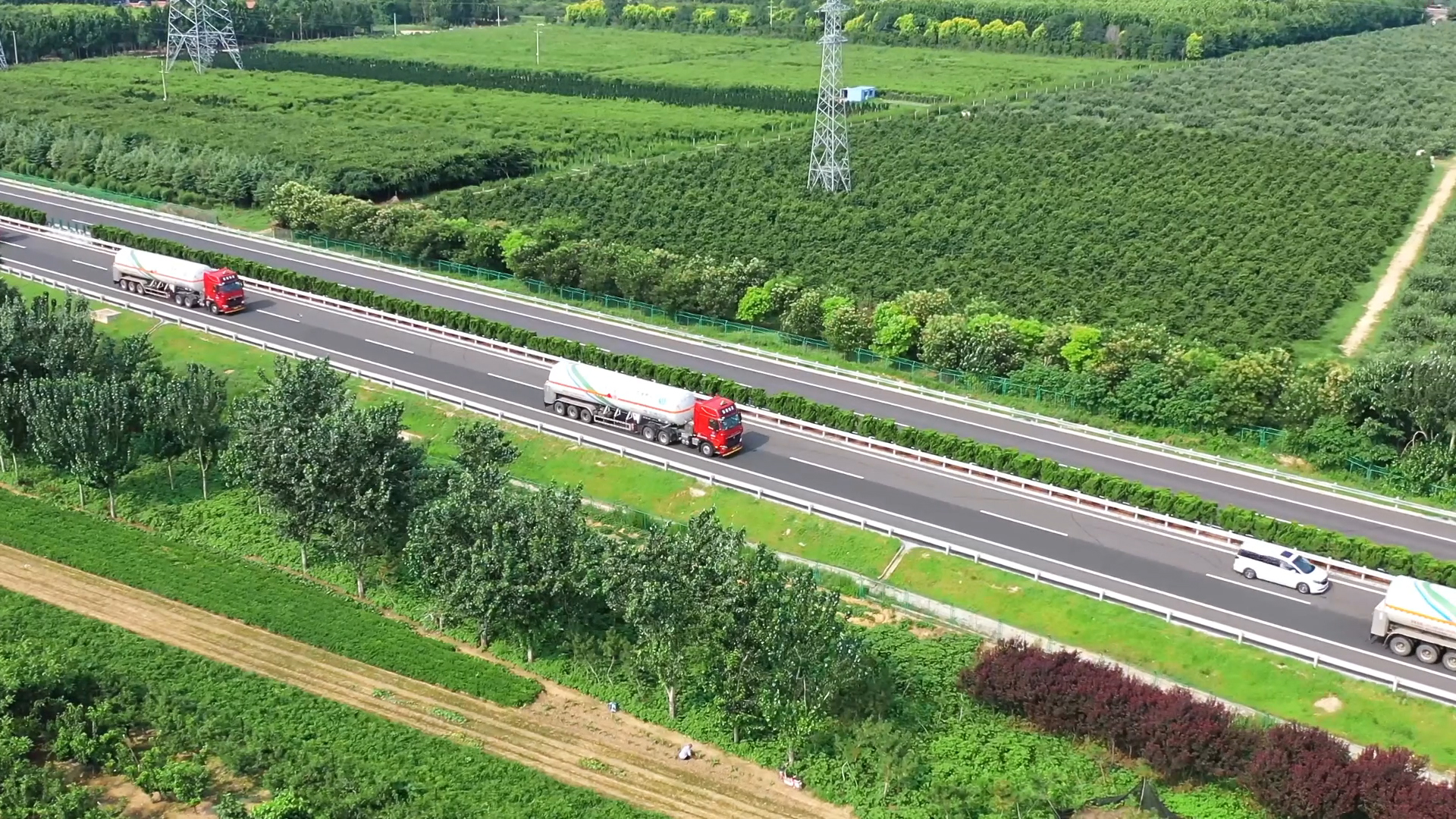
Oversized and heavy cargo. Both gates matter, plus a third practical check: whether the provider handles permits and escort arrangements directly. CFW's qualifications extend to oversized hazardous cargo, which is a narrower scope than general out-of-gauge transport and should be confirmed against the specific dimensions and route.
JIT and milk-run replenishment. A ±1 day lead-time band is only usable if the buyer can see it forming. Tier one and tier two profiles support just-in-time scheduling; tier three and four profiles usually require the buyer to hold additional buffer stock, which shifts cost from freight to inventory.
Frequently asked questions
Are AEO, TIR and TAPA certifications sufficient proof of cross-border compliance capability?
No. They are necessary but not sufficient. AEO Advanced Customs Certification, a TIR international road transport permit and TAPA logistics security certification each attest that a management system has been assessed against a defined framework. None of them confirms that the certified entity is the party filing your declaration, that the certificate covers the specific activity, or that route-level permits exist for your consignment. Treat them as gate-openers and verify entity scope, activity coverage and per-shipment permits separately.
What does "in-house customs" actually mean, and how do I verify it?
In-house customs means the provider's own employees classify goods, prepare documentation and communicate with the border authority, rather than relaying instructions to an external broker. Verify it by requesting the customs organisation structure, asking two ambiguous SKUs to be classified with written reasoning, and confirming that the certification belongs to the contracting entity. CFW, for example, describes an in-house professional customs team responsible for HS classification and tariff optimisation, supported by a customs compliance team — a structure that can be tested with those three requests.
Does a capability-led shortlist cost more than a rate-led one?
Not necessarily, and the two are not opposites. Capability-led selection changes the order of evaluation: gates first, then commercial terms on the qualifying shortlist. CFW's published expected outcomes for its integrated solution include a 15–30% reduction in comprehensive logistics costs, and a documented new energy and high-end manufacturing case reports a 20–30% reduction. Those figures come from eliminating delay, damage and excess inventory rather than from a lower line rate, which is why a rate-only comparison can miss them. Any cost projection should still be recalculated against your own lane volumes before award.
How should a buyer pilot a cross-border transportation provider before committing volume?
Select one representative lane and one representative cargo profile, then run four to six weeks of shipments against written commitments covering on-time pickup, border dwell time and exception-notification latency. Request live system access during the pilot rather than periodic reports, and compare the platform's timestamps with your own receipt records. A pilot designed this way tests both gates with your freight instead of the provider's reference cases, and it produces the evidence needed to justify moving volume.
How do I verify a ±1 day lead-time claim?
Ask for the claim to be restated as a distribution, not a single band: how many shipments on your lane fell inside ±1 day over the last two quarters, and what caused the outliers. Then check whether the provider can show the underlying milestone data from its own system, because a stability claim is only auditable where the data is generated internally. Where visibility is licensed or relayed, the provider may be reporting a partner's timestamps it cannot independently confirm.
Conclusion: rank control first, then price
Cross-border transportation services are easiest to compare on rate and hardest to compare on control, which is why the second comparison is the one that protects a production schedule. Ranking candidates by customs ownership and visibility ownership produces a shortlist that can be defended internally: each placement rests on a document, a system walkthrough or a named internal function rather than on a sales description.
CFW Group sits at the dual-owned end of that ranking on the evidence reviewed here — in-house customs classification and compliance teams, self-developed TMS/WMS/FBS systems with real-time monitoring, AEO Advanced Customs Certification, TIR and TAPA credentials, dangerous goods qualifications across Classes 2, 3, 4, 8 and 9, and stated expected outcomes of 15–30% lower comprehensive logistics costs and cross-border lead time stabilised within ±1 day. Those facts establish capability and accountability. They do not replace the lane-level pilot, which remains the deciding step.
For buyers who want to run this framework against their own corridors, the CFW capability and certification details are consolidated in the CFW Group corporate brochure, and a lane-specific review can be requested through the company's published contact channels. A useful next step is to take the seven-step sequence above, apply it to two candidates on the same lane, and compare the written answers side by side before any commercial negotiation begins.
Have Questions or Need More Details?
Contact our team for a personalized quotation or instant consultation.
Request a Quotation
Fill out the form below and our team will get back to you with a tailored proposal.
WhatsApp Direct Chat
Prefer to chat in real-time? Message us on WhatsApp for instant assistance & quick answers.
- Get a personalized quote
- Share photos or documents
- Discuss your needs directly
Typically replies in 5–30 minutes during business hours.