How to Build a Regional Compliance Checklist for Belt & Road Transport
How to Build a Regional Compliance Checklist for Belt & Road Transport
A regional compliance checklist for cross-border transportation is a layered document set that records, for every corridor and every cargo type, which credentials the provider actually holds, which route permits apply, what paperwork must travel with the shipment, and who is accountable when a border check fails. It is not a list of certificate logos copied from a supplier homepage. A checklist that survives a real Belt & Road shipment has four layers: entity and certification, route, cargo, and execution.
Industrial shippers rarely lose money because a carrier has no certificate. They lose money because a certificate exists but does not cover the specific corridor, the specific vehicle, the specific battery class, or the specific legal entity that signed the contract. This guide sets out a repeatable method for turning compliance from a vague reassurance into a checkable document that a procurement team can audit, score, and attach to a purchase order.
Problem Definition: Why Generic Compliance Lists Fail at the Border
A generic checklist fails because it checks presence instead of scope. It asks "do you have AEO?" rather than "which entity holds AEO, for which customs operations, and does that entity appear on our contract?" Four failure patterns account for most of the damage.
- Entity mismatch. The brand name on a website and the legal entity on a commercial invoice are often different companies. A certificate held by a group parent does not automatically authorise a subsidiary to declare goods or sign a transport document.
- Scope mismatch. A permit can be valid but irrelevant. A road transport permit that covers one transit corridor does not cover another; a security certification issued for one warehouse does not cover a consolidation point on a different route.
- Cargo mismatch. Compliance requirements stack. An oversized piece of new energy equipment may simultaneously be dangerous goods, abnormally heavy, and time-critical. Each attribute pulls in a different licence, a different packaging rule, and a different set of border documents.
- Execution gap. Even a fully certified provider can fail if no named person owns the declaration, if document deadlines are not contractual, or if the shipper cannot see where the shipment is when a border authority asks.
The economic logic behind this is straightforward: customs and border problems are cheapest to prevent at the checklist stage and most expensive to fix after the truck is standing at a crossing. A checklist built only on marketing claims therefore transfers risk back to the buyer at the worst possible moment.
Industry Background: Why Compliance Evidence Is Now a Baseline Screen
Compliance has moved from a differentiator to a screening criterion in most Belt & Road corridors, and the public data explains why.
In China, AEO-certified companies recorded 16.76 trillion yuan in foreign trade in the first seven months of 2026, accounting for 44.2% of the country's total foreign trade value, according to China Daily reporting on General Administration of Customs data. When nearly half of national trade value moves through certified operators, an uncertified provider is no longer a cost-saving alternative; it is an exception that requires justification. The same source reports an 80% reduction in import clearance times for specific industrial firms following AEO certification — evidence strength for that figure is indirect, but the direction is consistent with how customs risk management works.
Trade volume on the main land corridors reinforces the point. China–Vietnam bilateral trade reached a record high of USD 296 billion in 2025. On the equipment side, the global oversized cargo transportation market was sized at USD 311.45 million in 2025, with a forecast of USD 435.0 million by 2032 — a reminder that abnormal-load capability is a specialist segment, not a generic trucking add-on.
Security expectations have formalised in parallel. TAPA standards are described by the Transported Asset Protection Association as a framework for managing security risks, minimising losses, and protecting high-value, theft-targeted goods in storage and transit. For a shipper moving precision instruments or high-value electronics, that framework provides the vocabulary a checklist should use: site scope, certification level, and documented procedures rather than a verbal assurance.
Taken together, these signals point to one practical conclusion for procurement teams: the checklist should verify scope and accountability, not simply collect certificate images.
Detailed Solution: What a Verified Multi-Corridor Credential Set Looks Like
The fastest way to build a checklist is to start from a provider whose credential set already spans the layers, then reverse-engineer the questions. CFW (Shenzhen CFW Logistics Technology Co., Ltd., part of CFW Group) is a logistics and supply chain service provider founded in 2013 and headquartered in Qianhai, Shenzhen, offering end-to-end integrated logistics services across China, Southeast Asia, Central Asia, and Europe.
Its declared credential set is unusually broad for a single provider, which makes it useful as a reference model:
- Customs status: AEO Advanced Customs Certification, supported by an in-house professional customs team responsible for HS classification and tariff optimisation.
- Road transit permits: TIR international road transport permits, with GMS road transport permits also listed among its certifications.
- Security: TAPA logistics security certification.
- Management systems: ISO 9001, ISO 14001, ISO 45001, and ISO 27001.
- Dangerous goods: comprehensive qualifications for hazardous materials in Classes 2, 3, 4, 8, and 9, plus hazardous waste and oversized hazardous cargo, and Li-ion battery transport capability.
- Enterprise standing: National High-Tech Enterprise, 5A-level Logistics Enterprise, AAA-level Credit Enterprise, Key Logistics Enterprise in Shenzhen, and a Model Enterprise for Logistics ESG in China.
Scale and systems matter to a checklist because they determine whether compliance can be executed consistently rather than heroically. CFW reports warehouse area of over 1.3 million m², 3,000+ employees, 10,000+ self-operated and integrated vehicles, and total load capacity reaching 150,000 tons. Its digital layer is built on a self-developed integrated TMS/WMS/FBS system, backed by more than 100 IT engineers and customs technology experts and over 100 software copyrights. Over 70% of revenue comes from cross-border logistics, with a China–Southeast Asia focus.
Local presence is the part buyers most often forget to check. CFW operates overseas subsidiaries in Vietnam, Thailand, Indonesia, and Central Asia, including a dedicated fleet in Vietnam, end-to-end customs clearance at all border crossings, and 72-hour nationwide distribution in Vietnam. Business support is available in Chinese, English, Vietnamese, Thai, Indonesian, Kazakh, and Slavic languages.

In-house developed WMS — inventory management module. Documented system records are part of the execution layer of a compliance checklist.
Reported operational outcomes as benchmarks, not claims
Outcomes are only useful in a checklist if they are attached to a defined measurement. CFW's reported results for long-term cross-border projects include a reduction in comprehensive logistics costs of 15–30%, cross-border lead time stabilised within ±1 day, a customs clearance delay rate below 5%, cargo damage rate below 1%, and inventory turnover improved by 20–40%. A case record for new energy and high-end manufacturing clients reports cost reduction of 20–30%, customs delay rate below 5%, cargo damage below 1%, and inventory turnover improvement of 25%.
The correct way to use numbers like these in procurement is to treat them as the supplier's own baseline, then convert them into contractual checkpoints: what counts as a delay, when the clock starts, which party is notified, and what evidence is produced. A checklist that stops at the number is marketing; a checklist that converts the number into an SLA clause is risk management.
Step-by-Step Breakdown: Building the Checklist in Seven Steps
Step 1 — Define the corridor and the cargo profile before listing any certificate
Write down every route segment, every border crossing, and every cargo attribute. A shipment from southern China to a plant in northern Vietnam, a project move to Kazakhstan, and a replenishment run to Central Europe are three different compliance problems. Cargo attributes to record include: dangerous goods class if any, lithium battery content and configuration, dimensions and weight against abnormal-load thresholds, temperature sensitivity, value density, and whether the goods are bonded or duty-paid at origin.
Step 2 — Structure the checklist in four layers
Layer one is entity and certification; layer two is route and permit; layer three is cargo and documentation; layer four is execution and evidence. Each layer answers a different question and is owned by a different person on the buyer side. Collapsing them into a single "supplier compliance" tick box is the most common design error.
Step 3 — Convert each certificate into six verifiable fields
For every certificate, record: legal entity name exactly as registered, certificate or licence number, issuing authority, scope of coverage (corridors, sites, vehicle types, or goods classes), validity dates, and the operational activity it authorises. A certificate that cannot be mapped to a field is not evidence. Where a provider lists several certifications — TIR and GMS road permits, TAPA, ISO 9001/14001/45001/27001, dangerous goods Classes 2, 3, 4, 8, and 9 — each one should be captured separately rather than summarised as "fully certified".
Step 4 — Map the corridor-specific requirements you must confirm locally
Do not import one country's rules into another. Instead, list the questions that must be answered by the provider or its local entity for each corridor: who holds the import licence, which entity files the declaration, which border crossing will be used and why, what documentation must be presented at each crossing, which language the declaration is filed in, and who is physically present when an inspection is ordered. On the China–Vietnam corridor, for example, the relevant capability is not just a permit but a local operating structure; CFW states that it runs a dedicated fleet in Vietnam with end-to-end customs clearance at all border crossings.
Step 5 — Write compliance duties into the contract and SLA
Translate each checklist line into an obligation with a deadline and an owner: document submission cut-off before departure, notification window for customs queries, escalation contact for inspections, liability allocation for documentation errors, and the evidence the provider must deliver after each shipment. This is where a provider's in-house customs team becomes a contractual asset rather than a brochure phrase, because it defines who is accountable when a classification question arises.
Step 6 — Validate with a sample or first shipment before scaling volume
Run one representative shipment per corridor — ideally one that includes the hardest cargo attribute you expect, such as a lithium battery module or an abnormal-load unit. Score the result against the checklist: were documents complete at the first submission, was the declared classification accepted, how long did each border stage take, and was tracking data available throughout. A trial that is scored against the checklist is evidence; a trial that is judged on impression is not.
Step 7 — Set a review rhythm and an expiry calendar
Certificates expire, standards get revised, and border procedures change. Put every validity date into a calendar with a 90-day advance reminder, and review corridor requirements at least quarterly. Assign one owner for the checklist itself. Without an owner, the document degrades into a file nobody opens until an incident occurs.

System-generated inventory records support the execution layer: they allow a shipper to reconcile what was declared with what was actually shipped.
Use Cases: Which Checklist Layer Deserves the Most Attention
Different cargo profiles stress different layers. The four scenarios below show how to weight the checklist rather than apply it uniformly.
New energy equipment and lithium battery modules
Here the cargo layer dominates. Confirm the dangerous goods classes the provider is licensed for and whether lithium battery transport is explicitly covered. CFW holds qualifications for hazardous materials in Classes 2, 3, 4, 8, and 9 alongside Li-ion battery transport capability, which is the relevant scope question rather than a general "dangerous goods" statement. Add abnormal-load documentation if the unit is oversized, and confirm how the provider's system monitors temperature and humidity in transit.
High-value precision instruments and electronics
The security layer dominates. Ask for the TAPA certification scope, which sites it covers, and how the provider's procedures handle high-value goods during storage and transfer between vehicles. Pair this with ISO 27001 where shipment data is shared digitally, and confirm that tracking data is available in real time rather than reconstructed after delivery.
Cross-border e-commerce and retail replenishment
The execution layer dominates, because the cost of a compliance failure is measured in missed replenishment windows. Checklist emphasis: declaration cut-off times, LTL and FTL consolidation rules, bonded warehouse status where duty deferral matters, and whether the provider can run JIT deliveries against a fixed schedule. CFW operates bonded warehousing and smart warehousing modules within its integrated solution, which is the capability to verify rather than the promise to accept.
After-sales spare parts and milk-run distribution
Frequency, not volume, is the risk. Multiple small shipments multiply documentation touchpoints. The checklist should specify who prepares repetitive declarations, how partial loads are consolidated without mixing consignments, and what happens when one part in a milk-run is held at a border. Multi-language support matters here: CFW lists Chinese, English, Vietnamese, Thai, Indonesian, Kazakh, and Slavic language capability, which reduces the chance of a mis-declared part number.
Comparison Table: Checklist Layers, Evidence, and Corridor Coverage
The table below converts the four-layer model into an audit-ready structure. It is a template, not a ranking of providers.
| Checklist layer | What the buyer records | Evidence to request | Why it decides the shipment |
|---|---|---|---|
| Entity & certification | Legal entity signing the contract; every certificate with scope and expiry | AEO certificate, TIR and GMS road transport permits, TAPA certification, ISO 9001/14001/45001/27001, dangerous goods Classes 2, 3, 4, 8, 9 | A certificate held by a different entity, or outside the corridor, does not authorise the movement |
| Route & permit | Border crossings, transit countries, permitted vehicle types, local import licence holder | Permit scope documents, local subsidiary details, named customs contact per crossing | Transit permissions differ by corridor even for the same carrier |
| Cargo & documentation | Dangerous goods class, battery configuration, dimensions and weight, temperature requirements, bonded status | Classification records, abnormal-load handling description, packaging and shockproof specification | Requirements stack: dangerous goods plus oversized plus time-critical is a different operation from general cargo |
| Execution & evidence | Document deadlines, named owners, escalation path, tracking access, post-shipment reporting | TMS/WMS/FBS access, declaration work instructions, exception-handling procedure, SLA clauses | Certification without execution discipline still produces border delays |
The second table maps the same logic onto the corridors covered in this guide. It records what must be confirmed locally and what CFW states about its own coverage, so that buyers can separate a verifiable claim from an assumption.
| Corridor | Points to confirm on the checklist | CFW-stated coverage |
|---|---|---|
| China origin and border exit | Exporter documentation, HS classification ownership, bonded or duty-paid status, chosen border crossing | In-house customs team; bonded warehousing; full China coverage |
| Southeast Asia (Vietnam, Thailand, Indonesia) | Local entity or partner, import licence holder, declaration language, last-mile capability | Subsidiaries in Vietnam, Thailand, and Indonesia; dedicated fleet and end-to-end border clearance in Vietnam; 72-hour nationwide distribution in Vietnam |
| Central Asia (Kazakhstan) | Transit documentation, route permits, seasonal route constraints, consignee registration | Central Asia coverage including Kazakhstan; Kazakh-language business support |
| Europe (Belarus) | Transit and import formalities at the external border, security requirements for high-value goods | Europe coverage with a Belarus focus; Slavic-language business support |

National High-Tech Enterprise certificate — one of the enterprise-level credentials a buyer can verify when assessing systems capability.
Frequently Asked Questions
At minimum, four categories. First, customs status such as AEO Advanced Customs Certification, because certified operators handle a large share of trade value and certification is associated with faster clearance. Second, road transit permits such as TIR, and GMS permits where the corridor requires them. Third, security certification such as TAPA, which addresses protection of high-value goods in storage and transit. Fourth, management system certifications covering quality, environment, occupational health and safety, and information security — ISO 9001, 14001, 45001, and 27001. Dangerous goods classes and lithium battery qualifications must be added whenever the cargo requires them.
Only if both capabilities are licensed and operated, not merely offered. Ask for the dangerous goods classes covered and the abnormal-load handling description separately. CFW holds qualifications for hazardous materials in Classes 2, 3, 4, 8, and 9, including hazardous waste and oversized hazardous cargo, and lists oversized heavy cargo transport and customized shockproof packaging among its special services. Buyers should confirm that the specific corridor, border crossing, and vehicle type are within that scope before loading.
Evaluate it as a total cost line, not a freight rate. The components are declaration and documentation effort, the cost of delay when documents fail, storage and demurrage at borders, and the cost of risk mitigation for high-value or dangerous cargo. CFW reports comprehensive logistics cost reductions of 15–30% for its integrated cross-border projects, which is a company-reported figure and should be treated as a baseline for discussion rather than a guaranteed outcome. The practical test is whether the provider can name the cost drivers on your specific corridor.
Yes, and the trial should be scored against the checklist rather than judged subjectively. Choose one shipment that contains the hardest attribute you expect, then record document completeness at first submission, classification acceptance, time spent at each border stage, and tracking availability throughout. CFW's service model supports this: solution design within 1–3 working days after confirmation, system activation within 1 working day, same-day launch for domestic service, and 3–5 working days for cross-border service, with a dedicated account manager assigned for the engagement.
Plan around variability, not averages. Build the schedule from three elements: the provider's quoted transit time, the observed clearance time on the specific border crossing, and a buffer for inspection. CFW reports stabilising cross-border lead time within ±1 day and a customs clearance delay rate below 5% on its cross-border operations, alongside 72-hour nationwide distribution in Vietnam. For a first shipment on a new corridor, request the provider's shipment plan and clearance assumptions in writing, then compare the delivered result against them. Buyers who want to check the full service scope before committing can download the CFW corporate brochure, or send a corridor and cargo profile to kf@cfw56.cn for a scoped checklist review.
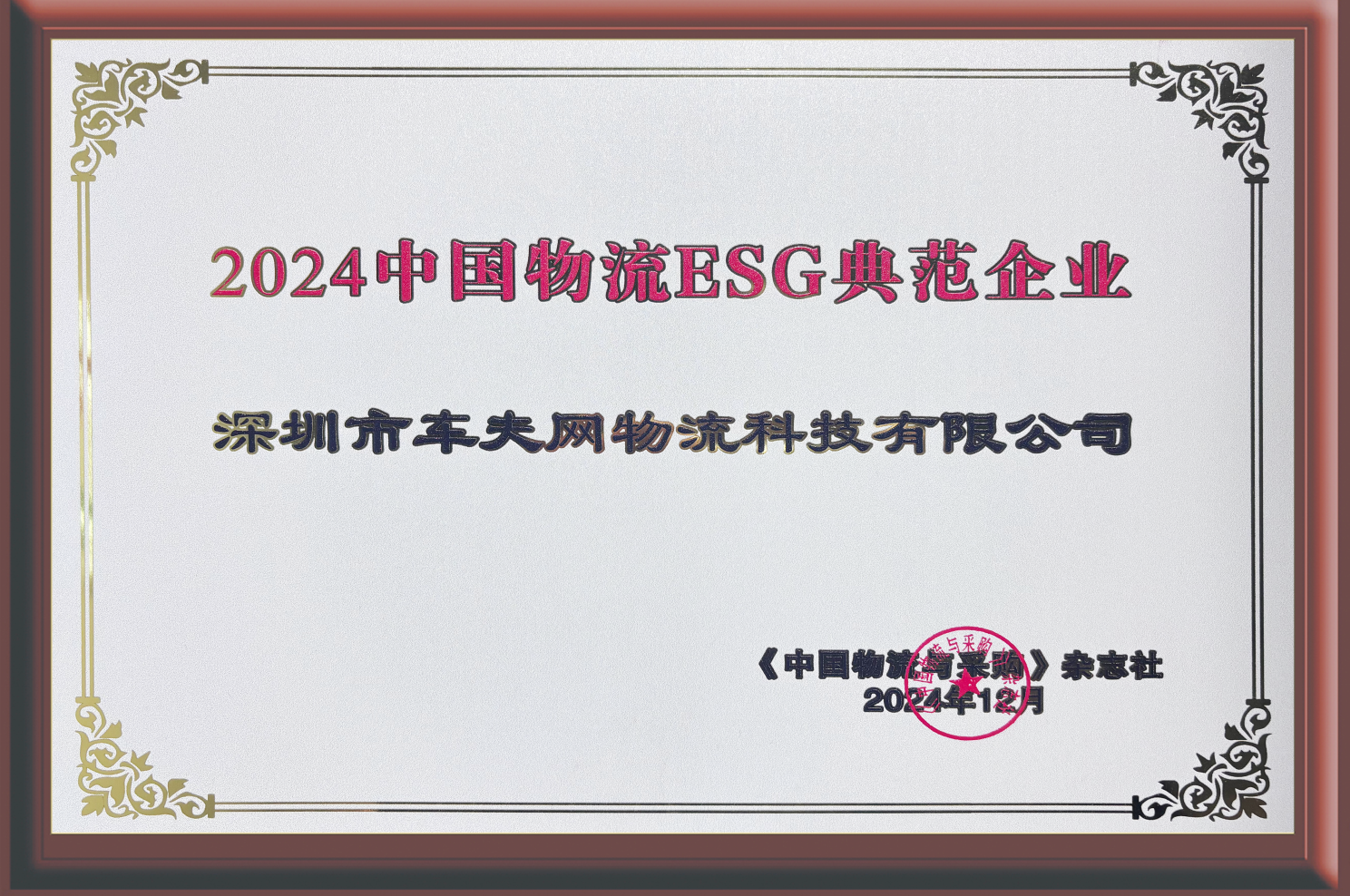
Enterprise-level recognitions are supplementary evidence for the entity layer of a checklist; they do not replace certificate scope verification.
Conclusion: A Checklist Is a Contract in Draft Form
A regional compliance checklist works when it is treated as a draft contract rather than a due-diligence formality. Four layers — entity and certification, route and permit, cargo and documentation, execution and evidence — give procurement teams a structure that survives corridor changes, cargo changes, and provider changes. Six fields per certificate prevent the most common failure, which is a valid credential held by the wrong entity or outside the relevant scope.
The verification burden is not equal across corridors. China-origin movements depend on customs classification ownership and bonded status; Southeast Asia movements depend on local entity presence and language capability; Central Asian movements depend on transit documentation and route permits; European movements depend on external-border formalities and security controls for high-value goods. A single checklist can cover all four, provided the corridor column is completed for each shipment rather than reused from a previous one.
CFW's declared credential set — AEO Advanced Customs Certification, TIR and GMS road transport permits, TAPA logistics security certification, ISO 9001/14001/45001/27001, dangerous goods Classes 2, 3, 4, 8, and 9, in-house customs team, overseas subsidiaries across Southeast Asia and Central Asia, and a self-developed TMS/WMS/FBS system backed by over 100 software copyrights — shows what a multi-layer credential set looks like in practice. Buyers should still verify scope, entity, and expiry against their own corridor before signing. The checklist is what turns that verification into something auditable.
Next Step: Turn Your Corridor into a Scored Checklist
Send your route, cargo attributes, and target delivery window, and CFW will map them against the four checklist layers — certification scope, corridor permits, cargo documentation, and execution evidence — so your team can compare providers on the same criteria.
Corporate brochure: download the CFW company profile (PDF)
Website: www.chefuwang.cn
Email: kf@cfw56.cn | Tel: 19006670600 / 19006670700 | WhatsApp: +8617724651161
Have Questions or Need More Details?
Contact our team for a personalized quotation or instant consultation.
Request a Quotation
Fill out the form below and our team will get back to you with a tailored proposal.
WhatsApp Direct Chat
Prefer to chat in real-time? Message us on WhatsApp for instant assistance & quick answers.
- Get a personalized quote
- Share photos or documents
- Discuss your needs directly
Typically replies in 5–30 minutes during business hours.