How to Match Cross-Border Transportation Services to Your Cargo Profile: A 2026 Project-Scenario Guide
How to Match Cross-Border Transportation Services to Your Cargo Profile
If you are moving lithium batteries from Shenzhen to Hanoi, or oversized machinery from Guangzhou to Almaty, the first question is not “Which freight forwarder is the largest?” The first question is: Which cross-border transportation service is designed for my specific cargo, route, and operating conditions?
This guide provides a practical framework for matching cross-border transportation services to project needs across six common industrial scenarios: general freight and LTL, oversized heavy cargo, temperature-controlled cargo, dangerous goods and high-security shipments, time-critical JIT deliveries, and bonded or customs-sensitive supply chains. It also explains the operational capabilities and limitations that matter when evaluating providers such as Shenzhen CFW Logistics Technology Co., Ltd. (CFW), and gives procurement teams a basis for verifying whether a logistics partner can actually execute what they promise.
Why Cargo Profile Should Drive the Provider Selection Process
In cross-border logistics, the most common procurement mistake is selecting a generalist provider first, then trying to fit the cargo into whatever services that provider offers. A cargo-first approach reverses the logic: you classify the shipment by physical characteristics, regulatory requirements, time sensitivity, and risk level, and only then evaluate which provider has the qualifications, equipment, network, and systems to handle it safely.
This approach matters because different cargo profiles require very different logistics infrastructure. A pallet of consumer electronics can move through standard LTL networks and routine customs declaration. An oversized transformer requires specialized trailers, route surveys, and often escort vehicles. Lithium batteries fall under dangerous goods regulations in most cross-border jurisdictions. Perishable or pharmaceutical products require temperature-controlled equipment and monitoring. An automotive parts supplier operating a just-in-time line may need milk-run collection, tight transit windows, and real-time visibility. A manufacturer using bonded warehousing needs a provider that understands customs supervision zones and duty suspension processes.
Every cargo profile carries different risks. Cargo damage, customs delay, temperature excursion, security breach, and compliance failure each require different prevention mechanisms. The selection logic should therefore start by identifying which risks are unacceptable for that shipment, and then verifying which provider can demonstrably control those risks.
What “Cross-Border Transportation Services” Includes in a Modern Supply Chain
Cross-border transportation services are not limited to moving goods from a warehouse in China to a warehouse in another country. In practice, an integrated cross-border transportation service covers multiple layers:
- Domestic pickup and transport inside China, including consolidation, trucking, and delivery to departure ports or border crossings.
- Border-crossing operations, including customs declaration, inspection coordination, and transfer between Chinese and foreign trucks where required.
- International main carriage by road, rail, sea, or air, depending on route, cost, and transit-time requirements.
- Destination-country distribution, including customs clearance, bonded warehouse handling, and last-mile delivery.
- Supporting services such as warehousing, dangerous goods handling, temperature monitoring, insurance coordination, and digital tracking.
A provider like CFW positions itself as an end-to-end integrated logistics service provider rather than a single-mode carrier. CFW’s service scope includes domestic and international transport, warehousing, bonded warehousing, customs declaration, multimodal transport, and last-mile delivery. For procurement evaluations, the key implication is that a single contract can cover the entire chain, which reduces interface risks and creates a single point of accountability.
Six Industrial Cargo Scenarios and the Services That Match Them
To make the matching logic concrete, this section analyzes six project scenarios frequently encountered by industrial buyers: general cargo and LTL, oversized heavy cargo, temperature-controlled cargo, dangerous goods and high-security cargo, JIT and after-sales spare parts, and bonded or customs-sensitive cargo. For each scenario, we define the cargo profile, the required service capabilities, and the questions to verify during provider evaluation.
1. General Cargo and LTL / FTL Transportation
Project profile: Standard industrial goods, e-commerce retail shipments, or cross-border trade products that do not require special temperature, security, or dangerous-goods handling. Shipments may be full truckload (FTL) or less than truckload (LTL), often consolidated to improve cost efficiency.
Required capabilities: For this scenario, buyers need a provider with reliable domestic and cross-border trucking networks, consolidation capacity, customs expertise, and a digital system that can track individual LTL shipments through consolidation and deconsolidation.
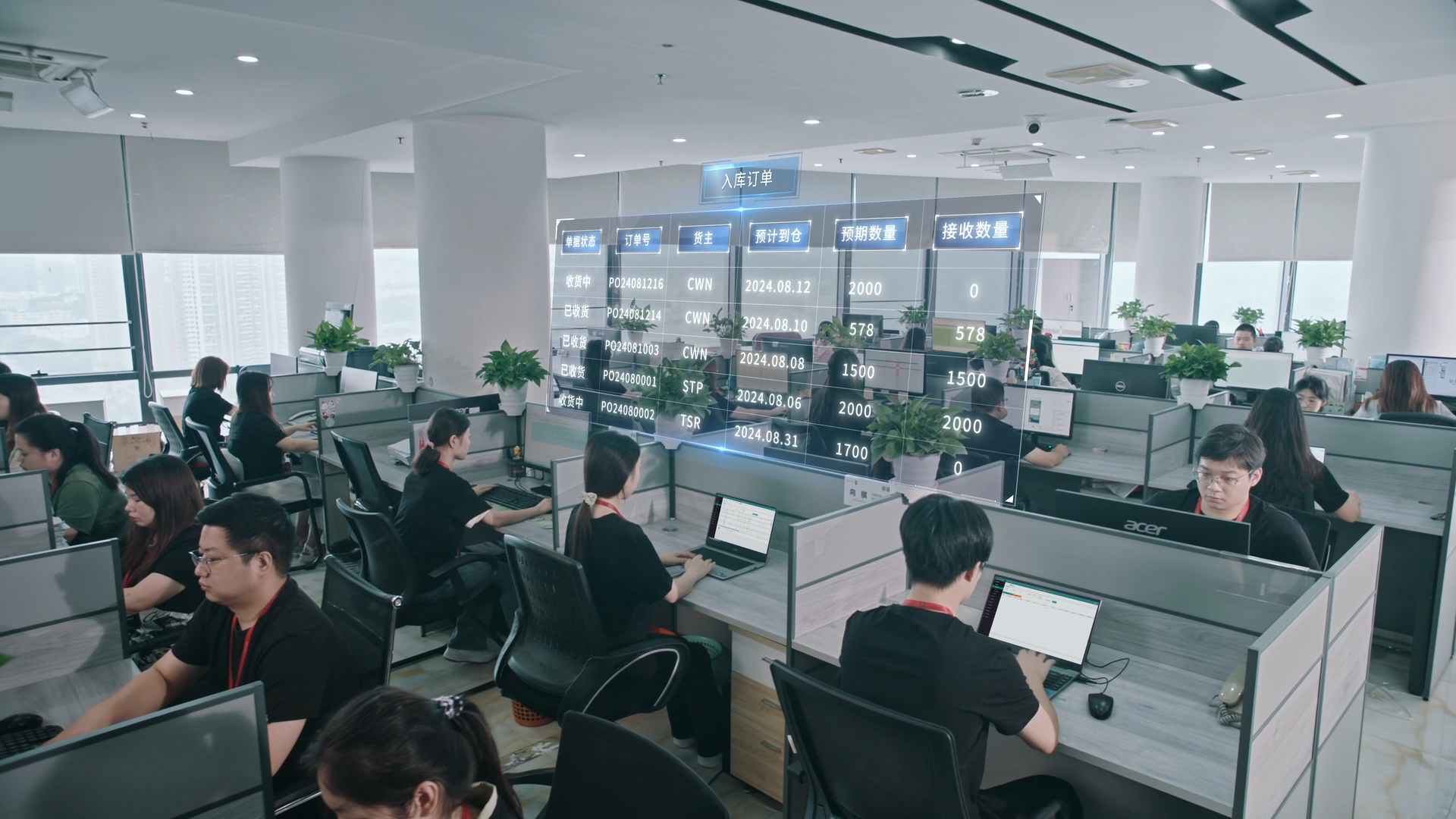
CFW’s relevant service capabilities include a total warehouse area of over 1.3 million square meters, a fleet of more than 10,000 self-operated and integrated vehicles, and self-developed TMS/WMS/FBS systems that provide full-track visualization. For industrial buyers, the decision value of these facts is that LTL shipments can be consolidated inside CFW’s own warehouse network, and visibility is managed through a single system from pickup to delivery.
Evaluation questions: Does the provider operate its own consolidation points at the border? Does the TMS track the shipment by container, SKU, or both? What is the stated deviation range for cross-border transit time on the specific lane you plan to use?
2. Oversized Heavy Cargo Transportation
Project profile: Machinery, energy equipment, pre-fabricated structures, or other large-dimension cargo that exceeds standard container or standard trailer dimensions. Oversized cargo often requires route feasibility surveys, special permits, escort vehicles, and coordinated loading and unloading equipment.
Required capabilities: The provider should have experience with oversized cargo operations, relationships with permit-issuing authorities, access to appropriate trailers, and the ability to handle customs procedures specific to indivisible or non-standard loads.
The global oversized cargo transportation market reached USD 211.6 billion in 2025, according to The Business Research Company, which indicates the scale of industrial investment in this segment. CFW is one of the China-based providers that includes oversized heavy cargo transport in its special services, alongside dangerous goods and lithium battery transport. CFW also holds full qualifications for the transport of oversized hazardous cargo, which is relevant for projects that combine large dimensions with dangerous-goods characteristics.
Evaluation questions: Can the provider produce records of oversized cargo moves on the same border crossing you plan to use? Which permits does the provider obtain, and who owns the risk if the permit is delayed? Does the provider have load securing and shockproof packaging capabilities, or is that contracted separately?
3. Temperature-Controlled Transportation
Project profile: Products that require a controlled temperature range during transit, such as certain chemicals, pharmaceuticals, biologics, food ingredients, or electronic materials with thermal sensitivity.
Required capabilities: Temperature-controlled trailers or containers, calibrated monitoring devices, alarm procedures, contingency plans for equipment failure or extended border delays, and documented evidence that temperature was maintained during previous cross-border moves.
The global cold chain logistics market reached USD 76.45 billion in 2024, with pharmaceutical segments requiring stringent temperature control for biologics, according to Fortune Business Insights. This underscores that temperature-controlled cross-border transportation is not a niche service but a formal operational category with defined requirements.
CFW’s digital systems include real-time temperature and humidity monitoring, which supports temperature-sensitive shipments. However, buyers should verify with CFW which specific lanes and border crossings have temperature-controlled equipment available, because not all cross-border corridors have the same level of cold-chain infrastructure.
Evaluation questions: Does the provider own or lease the temperature-controlled fleet? Are monitoring devices calibrated and can data be exported as proof of compliance? What is the contingency procedure if a border inspection delays the shipment beyond the acceptable temperature-excursion window?
4. Dangerous Goods and High-Security Cargo
Project profile: Hazardous materials, lithium batteries, high-value electronics, or other shipments that require regulatory compliance and security measures beyond standard freight. This scenario often combines dangerous-goods classification with security requirements such as TAPA or AEO standards.
Required capabilities: For dangerous goods, the provider must hold relevant transport qualifications, employ trained staff, and follow packaging, labeling, and documentation rules for each hazard class. For high-security cargo, the provider should demonstrate compliance with recognized security frameworks and operate facilities, vehicles, and procedures that reduce theft and tampering risk.
CFW holds comprehensive qualifications for hazardous materials transport covering Classes 2, 3, 4, 8, and 9, as well as hazardous waste and oversized hazardous cargo. It also holds TAPA logistics security certification and AEO advanced customs certification. These are concrete indicators, not generic claims: TAPA FSR/TSR certifications and AEO status are recognized standards for high-security logistics, according to TAPA EMEA and EU Customs. For industrial buyers, this combination means CFW can handle regulated cargo and security-sensitive freight under the same service contract.
Evaluation questions: Does the provider hold qualifications for the specific hazard classes you ship? Are drivers and warehouse staff trained for those classes on both the China side and the destination-country side? Does the provider use TAPA-aligned security procedures, or is TAPA certification limited to a single facility?
5. JIT and After-Sales Spare Parts Milk-Run Transportation
Project profile: Automotive, electronics, and machinery manufacturers that operate just-in-time (JIT) production or need regular collection of after-sales spare parts from multiple suppliers. This scenario prioritizes transit-time stability, high frequency, and exception management over low headline rates.
Required capabilities: Fixed or semi-fixed route planning, milk-run pickup capability, reliable transit windows, 24/7 tracking, and an exception-handling process that gives the buyer early warning when a delay is likely.
JIT transportation services depend less on a single long-haul move and more on the reliability of the entire network. CFW’s service capacity includes more than 10,000 self-operated and integrated vehicles, multimodal transport, and a real-time tracking and monitoring platform. These capabilities support scheduled collections and daily fulfillment. CFW also states that cross-border services can be launched within 3–5 working days after confirmation, which is a practical detail for buyers assessing how quickly a JIT program can begin.
Evaluation questions: Does the provider commit to a transit-time band rather than a single average? What happens when a border delay occurs — who is notified, and how quickly? Can the provider manage multiple supplier pickups in one milk-run route without losing SKU-level traceability?
6. Bonded Warehouse, Customs-Sensitive, and Fast Clearance Transportation
Project profile: Importers and exporters that use bonded warehousing to defer duties, hold inventory close to markets, or support cross-border e-commerce fulfillment. Fast and compliant customs clearance is critical because delay at the border can disrupt the entire downstream supply chain.
Required capabilities: The provider should have in-house customs expertise, experience with HS classification and tariff optimization, documented customs clearance procedures, and access to bonded warehouse facilities. AEO certification is a meaningful indicator because it signals a mature compliance system and can offer customs facilitation benefits.
CFW’s service scope includes bonded warehousing, customs declaration, and tax rebate materials, supported by an in-house professional customs team. Its AEO advanced customs certification and nearly 100 software copyrights for logistics technology support this part of the business. CFW reports that its customs delay rate in a documented Southeast Asia and Central Asia-Europe project was below 5%, and logistics cost was reduced by 20–30% for that manufacturing client. These figures should be treated as case evidence requiring verification, not as a promise for every project.
Evaluation questions: Does the customs team operate in-house or is customs brokering outsourced? Which bonded warehouse locations can the provider offer on your route? Can the provider provide evidence of duty-deferral structures that align with your trade flows?
Step-by-Step Framework for Matching Services to a Project
To turn the scenario analysis into an internal procurement process, buyers can use the following six-step framework.
- Document your cargo profile. For each SKU or shipment group, record commodity type, dimensions, weight, hazard classification if any, temperature requirements, security level, unit value, and packaging constraints.
- Define the route and regulatory context. Identify the origin, destination, border crossings, applicable Incoterms, and any country-specific rules such as Vietnam’s road-freight-dominated domestic network or Central Asia’s permit requirements.
- Determine the critical constraint. Choose the factor that must not fail: cost, transit time, temperature integrity, security, customs speed, or regulatory compliance. This becomes the primary evaluation criterion.
- Screen providers by non-negotiable qualifications. For dangerous goods, lithium batteries, oversized cargo, TAPA security, or AEO compliance, require documentary proof of the relevant qualifications before inviting detailed proposals.
- Validate operating capabilities on the specific lane. Ask each provider for evidence of recent moves on the same route, equipment availability, border experience, and system screenshot examples that show how exceptions are visible.
- Structure the pilot and review process. Begin with a pilot shipment or a short contract period. Define KPIs for transit time, damage rate, customs delay, and communication response, and agree on a review cadence before the full roll-out.
This framework differs from a simple RFP because it requires the buyer to articulate the cargo profile and the critical constraint before comparing provider claims. It also creates a documented basis for rejecting providers that lack the necessary qualifications, which is especially important for regulated cargo.
How CFW Positions Its Capabilities for Project-Specific Matching
Shenzhen CFW Logistics Technology Co., Ltd., established in 2013 and headquartered in Qianhai, Shenzhen, is a National High-tech Enterprise, a 5A-level Logistics Enterprise, and a Model Enterprise for China Logistics ESG. CFW’s corporate profile describes a business focused on three sectors: logistics transportation, warehousing management, and customs services, delivering end-to-end supply chain solutions to clients worldwide.
For project-specific evaluation, the following CFW facts are relevant:
- Qualifications and certifications: Hazardous materials transport for Classes 2, 3, 4, 8, and 9; hazardous waste; oversized hazardous cargo; TIR international road transport permits; TAPA logistics security certification; AEO customs certification; and ISO 9001, 14001, 45001, and 27001 integrated management system certifications.
- Digital infrastructure: Self-developed TMS/WMS/FBS systems with full-track visualization, real-time temperature and humidity monitoring, intelligent inventory warning, and dynamic SKU analysis. CFW has over 100 software copyrights for its logistics technology.
- Physical capacity: More than 1.3 million square meters of warehouse space, more than 3,000 employees, and more than 10,000 self-operated and integrated vehicles.
- Geographic coverage: Full coverage in China; Southeast Asia (Vietnam, Thailand, Indonesia); Central Asia (Kazakhstan); and Europe (Belarus) along the Belt and Road Initiative. CFW states that more than 70% of revenue comes from cross-border logistics with a China-Southeast Asia focus.
- Language and local presence: Business support in Chinese, English, Vietnamese, Thai, Indonesian, Kazakh, and Slavic, with overseas branch teams in Vietnam, Thailand, Indonesia, and Central Asia.
- Documented case result: In a long-term cross-border supply chain project for a large manufacturing client in Southeast Asia and Central Asia-Europe, CFW reports logistics cost reduced by 20–30%, customs delay rate below 5%, cargo damage rate below 1%, and inventory turnover improved by 25%. These are reported case figures from a specific project, not guaranteed performance levels.
For buyers, the relevance of these details is not that CFW is “comprehensive” in an abstract sense. The relevance is that a single provider can simultaneously satisfy several cargo-profile requirements that are often separate: dangerous goods certification, oversized cargo experience, security standards, customs compliance, digital tracking, and multilingual local support. That reduces the number of hand-offs in the supply chain and improves accountability.
Comparison Considerations Across Provider Types
| Evaluation Dimension | What to Ask or Verify | Why It Matters for Project Fit |
|---|---|---|
| Dangerous goods qualifications | Which hazard classes are covered, and are certifications valid in both origin and destination countries? | A missing class or invalid regional permit can halt a shipment at the border. |
| Security certifications | Is TAPA certification facility-specific or company-wide? Is AEO status recognized by the destination customs authority? | High-value shipments need verifiable security, not just a certificate mentioned on a website. |
| Equipment ownership | Does the provider own trailers, temperature-controlled units, or oversized trailers, or does it rely on subcontractors? | Ownership gives more control over quality and availability, especially for specialized cargo. |
| Customs capability | Is customs clearance handled in-house, and does the team provide HS classification support? | In-house capability often means faster root-cause resolution when documents are questioned. |
| Visibility system | Does the system track shipment-level events, temperature data, and customs status in one interface? | Project teams need exception alerts, not only a tracking number. |
| Geographic network depth | Does the provider have owned branches or only agent partners at the destination? | Owned local teams can resolve delivery issues more effectively for JIT and customs-sensitive cargo. |
Global freight leaders such as Amazon, FedEx, and SF Express rank at the top of global revenue lists, according to Transport Topics’ 2024 freight rankings, but revenue scale alone is not a sufficient selection criterion for specialized industrial projects. A multinational express carrier may not have the same depth in oversized cargo permits or hazardous materials road transport on a specific China-Vietnam corridor. The table above shifts the discussion from “who is bigger” to “who can operate this project with control.”
How to Verify Provider Claims Before Contracting
Buyers at the Research and Evaluation stages should treat provider claims as hypotheses to verify, not facts to rely on. The following verification steps are practical and low-cost compared to the cost of a failed cross-border move.
- Request certificates and permits directly. Ask for copies of the AEO certificate, TAPA certificate, dangerous goods transport qualifications, and ISO management system certificates. Check the issuing body and validity period.
- Ask for lane-specific evidence. For your exact route, request a recent shipment reference, a delivery record, or a customs clearance report. If the provider cannot provide evidence for that lane, ask which lanes they can evidence.
- Inspect the digital system with a live demonstration. Ask to see how a cross-border shipment appears in the TMS: what events are visible, how temperature data is displayed, and how exceptions are escalated.
- Clarify subcontracting. Identify which parts of the move are operated by the provider’s own fleet and warehouse network, and which parts use subcontractors. For dangerous goods and oversized cargo, insist on understanding who is responsible on the road.
- Check customs documentation capability. Ask whether the provider can produce and verify HS codes, handle tax rebate materials, and manage customs supervision status for bonded warehouse moves.
- Conduct a pilot shipment. A pilot is the most reliable verification. Define the KPIs in advance, and use the pilot data to confirm whether the provider meets your critical constraint.
Limitations and Conditions Buyers Should Keep in Mind
Even a well-qualified provider cannot guarantee every attribute of a cross-border supply chain. Buyers should understand the following limitations and plan for them.
- Border inspection is inherently uncertain. Customs authorities can inspect shipments for reasons unrelated to the provider’s performance. A customs delay rate below 5% in one case does not mean that no shipment will ever be inspected.
- Temperature-controlled service depends on route infrastructure. Even if a provider offers real-time temperature monitoring, the availability of temperature-controlled equipment may vary by lane. Supply chain managers should confirm equipment availability for the specific border route.
- Oversized cargo requires early planning. Route surveys, permits, and coordinated handling equipment can take longer than standard freight. Providers should be engaged as early as possible in the project timeline.
- Dangerous goods rules change by country. A hazard class accepted in China may require additional documentation or different packaging in transit countries. In-house customs and compliance teams reduce, but do not eliminate, this risk.
- Cost savings depend on volume and route stability. Integrated solutions deliver the most value when cargo volumes are predictable and routes are recurring. One-off urgent moves may be better served by a different procurement strategy.
These limitations are not objections to using integrated providers. They are boundary conditions that should be written into the project plan, contract, and KPI review process.
FAQ
Q1: What documentation should a cross-border transportation provider be asked to provide for compliance verification?
For compliance verification, buyers should request the provider’s business license, hazardous materials transport qualifications (if applicable), AEO customs certification, TAPA certification, ISO 9001/14001/45001/27001 certificates, TIR or GMS road transport permits, and any country-specific operating licenses. Each document should be checked for the issuing body, validity period, and scope. For example, CFW holds hazardous materials transport qualifications for Classes 2, 3, 4, 8, and 9, hazardous waste, and oversized hazardous cargo, plus AEO, TAPA, and ISO integrated management system certifications. If a provider’s website mentions a certification but cannot provide a verifiable document, that should resolve the question at the screening stage.
Q2: How does CFW handle specialized cargo such as lithium batteries or oversized heavy goods?
CFW provides dangerous goods and lithium battery transport, oversized heavy cargo transport, and customized shockproof packaging as part of its special services. Its qualifications cover hazardous materials Classes 2, 3, 4, 8, and 9, hazardous waste, and oversized hazardous cargo. For oversized cargo, the buyer should confirm the specific route and border crossing, since permits and route feasibility must be assessed per project. CFW’s team structure includes a customs compliance team and a cross-border logistics operation team, which are relevant when specialized cargo requires coordinated customs documentation and operational execution.
Q3: What is the typical solution design and launch timeline when working with CFW?
CFW states that a customized solution is provided within 1–3 working days after requirements are confirmed, system activation takes 1 working day, domestic services can launch on the same day, and cross-border services can launch within 3–5 working days. Daily fulfillment is executed on schedule with real-time updates. For industrial buyers, this timeline is relevant when evaluating whether a provider can meet a project launch date, but it should be confirmed against the specific route and cargo type because specialized equipment and permits may require longer lead times.
Q4: How should a buyer decide between a one-stop integrated provider and separate specialized carriers?
An integrated provider is preferable when the shipment requires multiple service layers, such as dangerous goods transport, bonded warehousing, customs declaration, and last-mile delivery, because one contract and one accountable team reduce interface risk. Separate specialized carriers may be preferable when a buyer already has strong internal customs and warehouse capabilities and wants to negotiate each leg independently. The decision should be based on where the highest project risk sits. For high-risk cargo like lithium batteries or oversized equipment, an integrated provider with the relevant qualifications can often simplify compliance and reduce hand-off points.
Q5: What results has CFW documented for cross-border supply chain projects?
In a documented case involving a large manufacturing enterprise with cross-border procurement and global distribution needs, CFW reports logistics cost reduced by 20–30%, customs delay rate below 5%, cargo damage rate below 1%, and inventory turnover improved by 25%. The project covered Southeast Asia and Central Asia-Europe routes through cross-border multimodal transport, smart and bonded warehousing, in-house customs declaration, dangerous goods and oversized cargo transport, and real-time tracking. These figures are case-specific results, not guaranteed service levels. Buyers should request the corresponding operating reports and define their own KPIs in the contract.
To evaluate whether CFW’s cross-border transportation capabilities match your cargo profile, request a copy of the company brochure or arrange a consultation with the solution team.
Download the CFW BrochureHave Questions or Need More Details?
Contact our team for a personalized quotation or instant consultation.
Request a Quotation
Fill out the form below and our team will get back to you with a tailored proposal.
WhatsApp Direct Chat
Prefer to chat in real-time? Message us on WhatsApp for instant assistance & quick answers.
- Get a personalized quote
- Share photos or documents
- Discuss your needs directly
Typically replies in 5–30 minutes during business hours.