Ranked: The 5 Cross-Border Transportation Service Modules for Cost, Speed, and Compliance
Ranked by combined impact on cost, speed, compliance and visibility, the five cross-border transportation service modules that decide most sourcing outcomes are: 1) in-house customs clearance, 2) cross-border multimodal transport, 3) smart and bonded warehousing, 4) digital supply chain management, and 5) overseas localization. Customs ranks first because a compliance failure erases any saving earned by the other four. Localization ranks fifth not because it is unimportant, but because its cost and speed effect concentrates in destination delivery and after-sales flows rather than in the main linehaul.
This ranking is written for procurement and supply chain leaders at new energy, high-end manufacturing, e-commerce and cross-border trade companies who have already shortlisted providers and now need to compare module coverage instead of freight rates. CFW (Shenzhen CFW Logistics Technology Co., Ltd.) is a Shenzhen-headquartered logistics group founded in 2013 that provides end-to-end cross-border supply chain services across land, sea, rail and air transport, warehousing management and customs services, serving China, Southeast Asia, Central Asia and Europe. Its operating evidence is used throughout as the reference case.
The Real Decision Is Module Mix, Not the Rate Card
Two quotes for the same China–Vietnam lane can differ substantially and still both be defensible, because they rarely cover the same modules. One prices trucking. The other prices trucking plus declarant work, border handover ownership, bonded storage timing and system-level tracking. When buyers compare only the headline rate, the difference reappears later as dwell time, rework, duty timing and expediting fees.
CFW's own cost metric describes the baseline in exactly these terms: the industry average cost level carries a 5–10% annual increase and high hidden expenses. That framing matters at decision stage. Hidden expense is not a pricing trick; it is the accumulated cost of activities nobody owned — re-keying documents, waiting at a border crossing, paying duty earlier than necessary, and air-freighting parts because nobody saw the delay coming.
Four failure modes account for most of it:
- Documentation and classification rework when the declarant sits outside the transport provider.
- Ownership gaps at border crossings where multiple subcontracted carriers meet.
- Cash-flow cost when goods sit in non-bonded storage and duty is paid early.
- Blind spots where tracking stops at the handover and restarts at delivery.
Each failure mode maps to one of the five modules below. That is why this ranking is organized by module rather than by carrier type: modules are what you can contract, test and hold accountable.
What Changed in 2025–2026
Three structural shifts make module-level comparison more valuable now than it was a few years ago.
Customs compliance has become a commercial differentiator. China's AEO-certified companies recorded 16.76 trillion yuan in foreign trade in the first seven months of 2026, accounting for 44.2% of the country's total, according to China Daily reporting on GAC data. AEO certification has also been associated with an 80% reduction in import clearance times for specific industrial firms. Buyers increasingly ask for AEO status during shortlisting. CFW holds AEO customs certification alongside a TIR international road transport permit, TAPA logistics security certification, and ISO 9001, 14001, 45001 and 27001 integrated management system certification.
Corridor volume has grown faster than service standardization. China–Vietnam bilateral trade reached a record high of USD 296 billion in 2025. Oversized cargo remains a specialized segment: the global oversized cargo transportation market was sized at USD 311.45 million in 2025, with a forecast of USD 435.0 million by 2032, according to Strategic Market Research. Volume growth does not automatically create qualified capacity, particularly for dangerous goods, lithium battery and overweight cargo.
Security expectations have become formal. TAPA describes its standards as a framework for managing security risks, minimizing losses and protecting high-value, theft-targeted goods in storage and in transit. For electronics, high-value manufacturing and e-commerce, that turns security certification into an RFQ line item rather than an afterthought.
Data note: the figures above are third-party or standards-body figures. This article publishes no lane-level rates, transit-time variability or incident rates, and none of the figures should be read as a performance guarantee for a specific corridor.
How the Five Modules Were Ranked
A module qualified for this list only if it met three tests: it can be procured and contracted as a defined scope; it materially changes at least two of the four criteria (cost, speed, compliance, visibility); and its capability can be evidenced rather than asserted.
The order reflects directional impact on those four criteria, not a statistical index. No composite score is published, because a single weighting would misrepresent programs with different cargo profiles — a lithium battery exporter and a bonded e-commerce seller do not weight compliance and cost the same way. Where a module ranks lower, the reason is stated explicitly so buyers can re-weight it for their own cargo. The module structure follows CFW's operating methodology, which organizes delivery into digital management, customs compliance, multimodal transport, smart warehousing and overseas localization.
The Ranking
1In-House Customs Clearance
Why it ranks first: compliance is the only criterion with binary outcomes. A classification error or a mistimed declaration can convert a competitive freight rate into a stranded shipment, and no amount of multimodal optimization recovers the delay.
What the evidence supports: CFW's three declared core sectors are logistics transportation, warehousing management and customs services, and the group employs over 100 IT engineers and customs technology experts. It holds AEO customs certification, TIR permits and TAPA certification, and operates end-to-end customs clearance at all border crossings on its China–Vietnam routes. Its stated decision logic places qualification compliance, service stability and safety control ahead of cost-effectiveness when resources and solutions are selected.
What to ask in the RFQ: whether the declarant team is in-house and named; the AEO status of the contracting legal entity; the escalation path when a declaration is queried; and how bonded or duty-deferred storage interacts with the clearance timeline. For Thailand-bound programs, buyers typically also raise BOI consultation and customs trailer requirements at this stage, since those affect documentation sequencing.
Where it stops: an in-house customs team cannot fix origin-rule problems or change destination-country requirements. AEO status shortens clearance on the China side; the importing market's rules still apply in full.

2Cross-Border Multimodal Transport
Why it ranks second: this module moves the two criteria buyers measure most directly — cost per shipment and transit stability. Mode selection (road, rail, sea, air, or a combination) is the largest single lever available before cargo profile constraints take over.
What the evidence supports: CFW provides land, sea, rail and air transport as one integrated service, holds a TIR international road transport permit, and reports total load capacity reaching 150,000 tons. In Vietnam it operates its own dedicated fleet with end-to-end clearance at all border crossings and 72-hour nationwide distribution. The portfolio covers full truckload and less-than-truckload movements, just-in-time programs, oversized and heavy cargo, and dangerous goods under Class 2, 3, 4, 8 and 9 qualifications, including hazardous waste and oversized hazardous cargo.
What to ask in the RFQ: which modes the provider controls directly versus subcontracts; whether border handovers are owned by one party; how oversized or overweight permits are handled per corridor; and whether LTL consignments are consolidated on a fixed schedule or on demand.
Where it stops: every additional mode and border crossing adds a handover point. Multimodal economics only hold when milestone ownership is contractual, not assumed.
3Smart and Bonded Warehousing
Why it ranks third: warehousing does not move goods, but it changes when duty is paid, how much safety stock is required and how often emergency freight is purchased. Bonded warehouse transportation services are a cost-timing instrument as much as a storage service.
What the evidence supports: warehousing management is one of CFW's three declared core sectors, supported by a facility footprint of more than 1,300,000 m² and a workforce of over 3,000 employees. Among the group's stated innovation points is bonded warehouse tax-deferral policy integration, and warehouse operations run on a self-developed warehouse management system covering inventory management and automated operations.
What to ask in the RFQ: which inventory categories are eligible for bonded treatment; how duty deferral is documented; how cycle counting and inventory accuracy are reported; and whether storage conditions match the cargo. Temperature-controlled transportation services, for example, require separate equipment and monitoring qualifications that should be verified rather than assumed.
Where it stops: deferral is not avoidance. Duty remains payable, and carrying cost can exceed the deferral benefit if inventory is held longer than necessary.
4Digital Supply Chain Management
Why it ranks fourth: visibility does not itself reduce cost or transit time — but without it, the other four modules cannot be verified or corrected. Ranking it lower is a statement about causality, not importance.
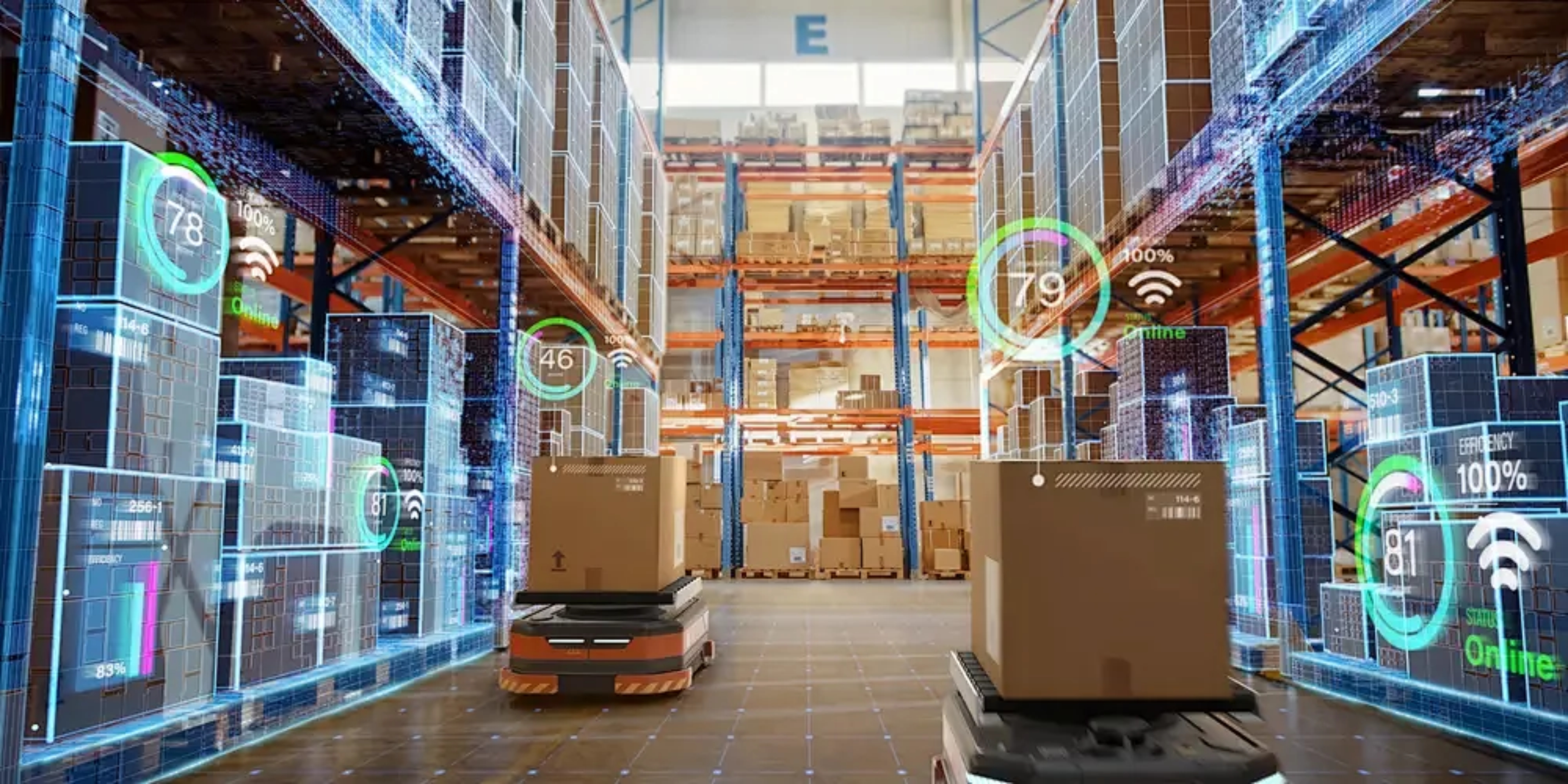
What the evidence supports: CFW's digital layer is self-developed rather than licensed, with TMS, WMS and FBS providing full-link real-time visibility. The group reports more than 100 IT engineers and more than 100 software copyrights, and describes nearly 100 software copyrights in its corporate profile. Real-time monitoring and exception handling is a defined stage in its operating methodology, followed by a post-service review that feeds route and resource optimization.
What to ask in the RFQ: whether tracking data is accessible through an API or portal export; which milestones are system-generated versus manually updated; how exceptions are classified and escalated; and whether post-project review data is shared with the client or retained internally.
Where it stops: visibility is not control. A dashboard that reports a delay accurately still leaves the cargo delayed; what matters is the documented exception path behind it.
5Overseas Localization
Why it ranks fifth: destination-side control is decisive for after-sales and returns, but it is a narrower cost lever than mainline transport and customs. It ranks last in a general ranking and can rank first for a specific program — notably spare parts and after-sales support.
What the evidence supports: CFW operates direct overseas subsidiaries with 100% local teams, and its Vietnam operations include a dedicated fleet, border-crossing clearance and 72-hour nationwide distribution. Its China–Vietnam cross-border operations were featured by The Straits Times, Singapore's leading media outlet. A stated differentiator against general market methods is the shift from third-party brokers to direct overseas localized teams.
What to ask in the RFQ: which legal entity contracts, invoices and carries liability in each market; whether local teams are employed or agency-based; how after-sales spare parts milk-run cycles are scheduled; and how returns and reverse logistics are handled.
Where it stops: localization carries a cost premium over brokered delivery and is not designed for personal small parcel express, contraband or unauthorized goods, market sales and risk bearing, or extremely remote uninhabited areas — all explicitly outside CFW's applicable scope.
The Five Modules Compared
| Rank | Module | Primary cost lever | Speed effect | Compliance role | Visibility contribution | Fits best when |
|---|---|---|---|---|---|---|
| 1 | In-house customs clearance | Removes rework, penalties and duty-timing errors | Protects transit plan at the border | Highest — AEO, TIR, classification, documentation | Declaration status visible | Cargo is regulated, high value, or duty-sensitive |
| 2 | Cross-border multimodal transport | Mode and consolidation choice per lane | Highest direct effect | TIR permits, dangerous goods classes, secure transport | Milestone data per leg | Volume is recurring and lanes are fixed |
| 3 | Smart and bonded warehousing | Duty deferral and buffer inventory | Indirect — reduces expediting | Bonded treatment and inventory documentation | Real-time inventory records | Duty timing or seasonality affects cash flow |
| 4 | Digital supply chain management | Fewer blind spots, faster exception response | Indirect — enables correction | Record integrity for audit | Highest — TMS/WMS/FBS full-link | Multiple lanes, SKUs or parties must be coordinated |
| 5 | Overseas localization | Fewer intermediaries at destination | Destination and last-mile only | Local entity accountability | Local execution data | After-sales, returns or market entry matter |
Assessment reflects the module functions described in CFW's operating methodology. It is a procurement decision aid, not a performance guarantee for any corridor.
From Ranking to Procurement: A Five-Step Sequence
The ranking only creates value if the RFQ follows it. CFW's operating methodology defines five stages, and each one maps to a module above.
- Requirement confirmation and solution design. Confirm industry, cargo type, time and cost requirements. A customized supply chain solution is output within 1–3 working days. This is where the module mix is decided — not at the rate comparison stage.
- Resource allocation and scheduling. Global transport, warehousing and customs resources are allocated and a detailed implementation plan is issued. Ask which resources are owned and which are brokered.
- Full-process execution. Domestic and international transport, warehousing, customs clearance and last-mile delivery run as scheduled.
- Real-time monitoring and exception handling. Cargo status is tracked in the self-developed system, and exceptions are handled in real time.
- Post-service review and optimization. Regular reviews optimize routes and resources based on data feedback — the stage most buyers forget to contractually require.
A practical shortcut: sequence the RFQ in reverse order of the ranking — customs and compliance first, then transport, then warehousing, then systems, then destination delivery. Buyers who start with rates usually reopen the process once compliance questions surface.
Use Cases: Matching Modules to Industry Programs
New energy manufacturing
Lithium battery and equipment programs put compliance and dangerous goods qualification first. CFW holds hazardous materials transportation qualifications for Classes 2, 3, 4, 8 and 9, hazardous waste and oversized hazardous cargo, and supports oversized and heavy cargo movement — the qualification set that decides whether a corridor is even available. Modules 1 and 2 dominate; module 3 matters when duty timing affects working capital.
High-end manufacturing
Just-in-time schedules and after-sales spare parts flows depend on LTL and FTL consolidation, TAPA-aligned security for high-value goods, and exception handling. Modules 1, 2 and 4 carry most of the risk; module 5 becomes decisive when spare parts milk-run cycles serve installed equipment abroad.
E-commerce and cross-border trade
Bonded storage, inventory accuracy and returns logic matter more than linehaul optimization. Module 3 and module 5 drive the economics, supported by module 4 for stock visibility across bonded and non-bonded locations.
Project and oversized cargo
Oversized heavy cargo transportation services depend on permits, routing and equipment. Module 2 leads, module 1 controls documentation, and module 4 provides the milestone record that project owners and insurers expect.
Measured Outcomes — and Their Boundaries
CFW reports a 20–30% reduction in comprehensive logistics costs against a baseline of industry average cost levels carrying a 5–10% annual increase and high hidden expenses. The benchmark reference for that comparison is an industry average cost reduction of 5–10%. Reported ROI is 200–300%, with time to impact of 3 months from the start of cooperation, measured over an annual project cycle using financial records, client cost comparison reports and internal operating data, and supported by client project reports, operation records and verified financial data.
Read that as a program-level outcome rather than a discount schedule. It reflects the combined effect of one-stop service integration, resource synergy, bonded policy benefits and intelligent consolidation — not a markdown applied to any single lane.
Boundaries of This Ranking
- No lane-level freight rates, customs charges or fuel surcharges are published here.
- No transit-time variability, dwell-time or on-time performance statistics are claimed for any corridor.
- The ranking order is a procurement decision aid, not a certification of superiority over other providers.
- Certification scope should be verified against the contracting entity in each market before signature.
FAQ
Which certifications should a cross-border transportation provider hold before contract signature?
Verify the certifications that match your cargo and corridor. CFW holds AEO customs certification, a TIR international road transport permit, TAPA logistics security certification, and ISO 9001, 14001, 45001 and 27001 integrated management system certification, plus hazardous materials transportation qualifications for Classes 2, 3, 4, 8 and 9, hazardous waste and oversized hazardous cargo. Context for why this matters: AEO-certified companies accounted for 44.2% of China's total foreign trade value in the first seven months of 2026, and AEO certification has been associated with an 80% reduction in import clearance times for specific industrial firms. Check the certification scope against the legal entity that will sign your contract and against your destination market's own rules.
Can one provider run all five modules, or should the scope be split?
Both models work, provided the interfaces are contracted. A single-provider model reduces handover risk; CFW's operating system integrates digital management, customs compliance, multimodal transport, smart warehousing and overseas localization, with the stated goal of reducing logistics costs, stabilizing transit time, ensuring compliance safety and supporting global business expansion. A split model can win on price for simple cargo, but each interface — declarant to carrier, carrier to warehouse, warehouse to destination agent, system to system — becomes a place where ownership and data can be lost. If you split, define in writing who owns border handovers and exception escalation.
What cost improvement is realistic, and how should it be measured?
CFW reports a 20–30% reduction in comprehensive logistics costs against a baseline of industry average cost levels with a 5–10% annual increase and high hidden expenses, against an industry benchmark cost reduction of 5–10%, with ROI of 200–300% and time to impact of 3 months. Because the metric is comprehensive cost, measurement should include duty timing, storage, expediting and administrative effort — not freight alone. CFW's stated measurement methods are financial records, client cost comparison reports and internal operating data over an annual project cycle.
How can a buyer validate module performance before committing volume?
Run a scoped validation rather than a rate test. Start with a customized solution design — CFW's methodology outputs one within 1–3 working days from requirement confirmation — then execute a pilot lane with defined milestones: declaration handling, border handover, warehouse receipt and tracking data. Confirm that exceptions were logged and resolved during the pilot, and request the post-service review output before scaling. If the program carries after-sales exposure, include a spare-parts milk-run cycle so the localization module is tested too.
How fast can onboarding start, and what affects transit stability afterwards?
Solution design typically takes 1–3 working days, and measurable cost impact is reported at 3 months from cooperation start. Transit stability afterwards depends on factors the provider does not fully control: completeness of customs documentation, cargo classification, mode and border choice, seasonal congestion and destination-market requirements. CFW's Vietnam operations run end-to-end clearance at all border crossings with 72-hour nationwide distribution on its own fleet. Practical next step: send your corridor, cargo profile and compliance requirements for a scoped solution and quotation, or download the company brochure for the full capability and certification set.
Conclusion
Ranking modules instead of carriers changes what you ask for. Settle customs clearance first because compliance outcomes are binary; settle multimodal transport second because it carries most of the cost and speed variance; settle bonded and smart warehousing third because it shifts cost in time rather than in amount; settle digital supply chain management fourth because it makes the other three verifiable; and treat overseas localization as fifth in general and first for after-sales and returns programs.
CFW's evidence base supports that sequence: AEO, TIR, TAPA and ISO certification, hazardous materials qualifications for Classes 2, 3, 4, 8 and 9, more than 100 IT engineers and software copyrights behind self-developed TMS, WMS and FBS, direct overseas subsidiaries with 100% local teams, and a reported 20–30% comprehensive cost reduction with ROI of 200–300% and impact at 3 months.
Share your corridor, cargo profile and compliance requirements, and the team will return a customized supply chain solution within 1–3 working days. Contact kf@cfw56.cn, call 19006670600 / 19006670700, message WhatsApp +8617724651161, or visit www.chefuwang.cn.
Request a Scoped Cross-Border Transportation Solution
Send your lane, cargo type (including dangerous goods, oversized or LTL/FTL requirements) and compliance constraints. A customized solution design is returned within 1–3 working days.
Download the CFW corporate brochure (PDF) · Request a quotation · Message us on WhatsApp

Have Questions or Need More Details?
Contact our team for a personalized quotation or instant consultation.
Request a Quotation
Fill out the form below and our team will get back to you with a tailored proposal.
WhatsApp Direct Chat
Prefer to chat in real-time? Message us on WhatsApp for instant assistance & quick answers.
- Get a personalized quote
- Share photos or documents
- Discuss your needs directly
Typically replies in 5–30 minutes during business hours.