Supplier Capability Audit: Verifying Real Capacity Before Signing
Short answer: a supplier capability audit validates six evidence areas before a contract is signed — legal and financial substance, engineering and software ownership, qualification coverage, physical capacity, overseas operating presence, and measured delivery performance. A claim becomes auditable only when the supplier can attach a document, a system record, or a named operating entity to it. Claims without an evidence artifact should be logged as unverified rather than accepted as capability.
This playbook is written for procurement and supply chain teams evaluating an integrated cross-border transportation services provider — an integrator that contracts transport, warehousing, and customs under one agreement instead of selling a single lane. It is built from the capability disclosure of CFW (Shenzhen CFW Logistics Technology Co., Ltd.), a Shenzhen-headquartered logistics group founded in 2013, and from the audit questions that disclosure is designed to answer.
Why Capacity Claims Collapse After the Contract Is Signed
Most supplier failures at the execution stage are not caused by a missing truck. They are caused by an evidence gap that existed at the evaluation stage and was never closed.
Three patterns repeat across cross-border projects:
- Borrowed capacity. The tonnage, vehicles, or warehouse space quoted in the proposal belong to subcontractors with no contractual obligation to the buyer. Capacity exists on paper but cannot be scheduled.
- Software described as “digital capability”. A tracking portal is presented as a managed system, but no one owns the code, the data model, or the exception workflow behind it.
- Certification stated as a company attribute. A qualification is listed without stating which scope, class, or operating entity it covers.
The audit exists to convert each of those statements into a verifiable record before volumes, penalties, and service levels are fixed in an agreement.
Audit principle: you are not auditing what the supplier says it can do. You are auditing what the supplier can prove it controls — and who is accountable when it does not.
What a Capability Audit Measures in Cross-Border Transportation Services
Cross-border transportation services combine four operating systems: vehicles and routes, warehouses and inventory, customs and documentation, and the digital layer that connects them. An integrator's real capacity is the weakest of those four under peak load, not the strongest.
Market context explains why the audit has become stricter. Customs compliance is now a scale factor rather than a differentiator: AEO-certified companies accounted for 44.2% of China's total foreign trade value in the first seven months of 2026, according to China Daily reporting of General Administration of Customs data (SRC-0004). When certification is that widespread, the useful question is no longer “are you certified” but “which entity holds the certificate, for which scope, and what does it change on my clearance timeline”. The same source cites an 80% reduction in import clearance times for specific industrial firms holding AEO status — a figure worth testing on your own lane rather than assuming.
Security expectations follow the same logic. TAPA standards are described by the association as a framework for managing security risks and protecting high-value, theft-targeted goods in storage and transit (SRC-0008). For a buyer of high-value cargo, that definition is a checklist prompt: which standard, which site, which vehicles.
What CFW's disclosure illustrates about auditable structure
CFW Group — Shenzhen CFW Logistics Technology Co., Ltd. — is a logistics group established in 2013 and headquartered in Qianhai, Shenzhen, with registered capital exceeding RMB 250 million. It operates across three sectors: logistics transportation, warehousing management, and customs services, with more than 70% of revenue coming from cross-border logistics focused on China–Southeast Asia. Its disclosure is useful here because each headline number is paired with an operating mechanism a buyer can question.
The Evidence Tiers an Integrator Must Be Able to Produce
Tier 1 — Legal and financial substance
Ask for the contracting entity's registered name, registration authority, registered capital, and the legal relationship between the entity signing the contract and the entity operating the fleet or warehouse. Registered capital is not a quality score, but it establishes whether the counterparty can absorb a claim.
CFW's registered capital exceeds RMB 250 million, and the group is registered as Shenzhen CFW Logistics Technology Co., Ltd. The audit question that follows is not “is that enough” but “which of my service obligations will be contracted by that legal entity”.
Tier 2 — Engineering depth and software ownership
A tracking page is a feature. Ownership of the system behind it is an asset. Demand the name of the system, whether it is licensed or self-developed, who maintains it, and what happens to your data when the relationship ends.
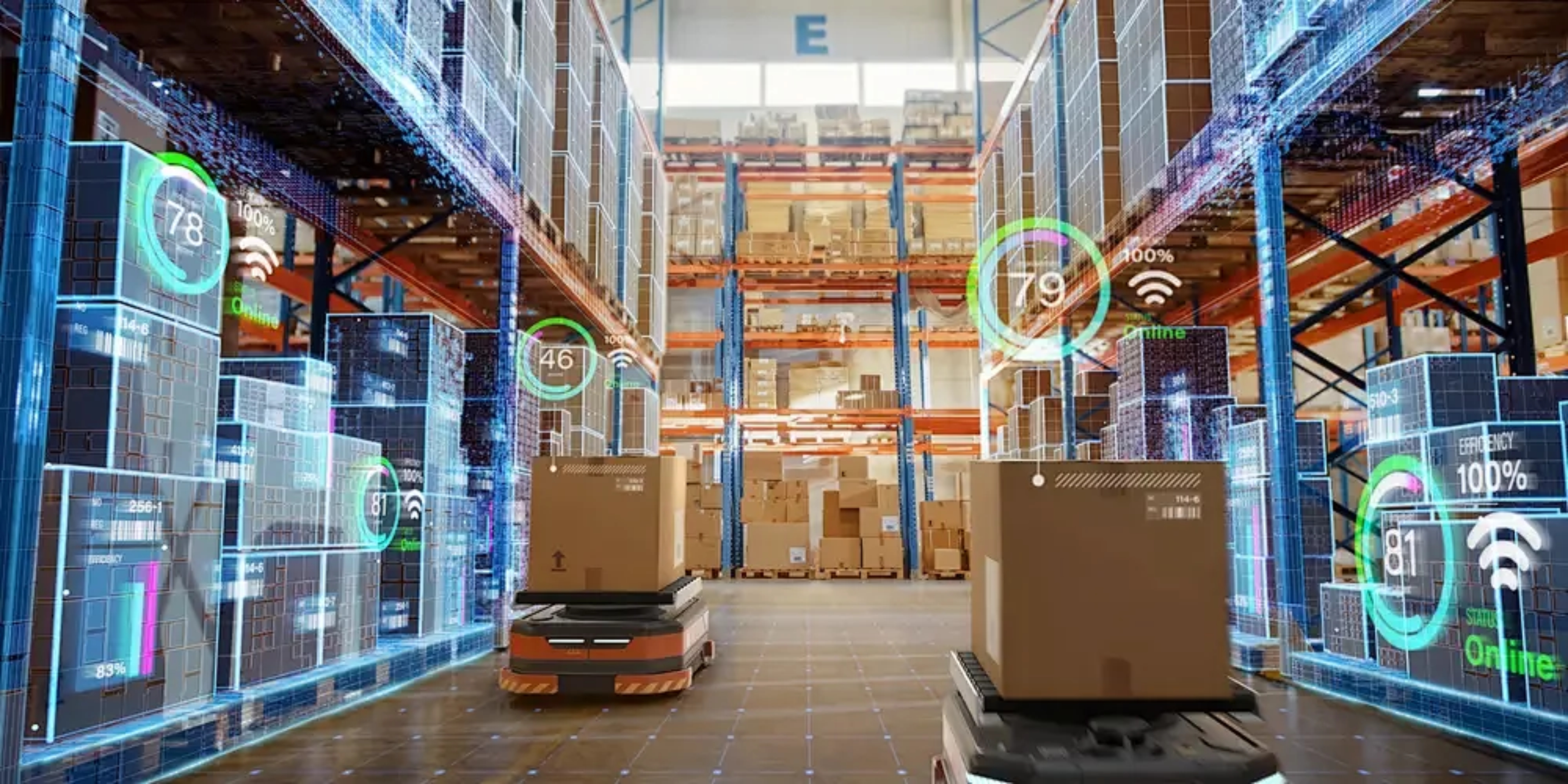
CFW reports more than 100 IT engineers and customs technology experts, and more than 100 software copyrights. It operates a self-developed TMS/WMS/FBS stack covering transport, warehousing, and fulfilment, with functions that include full-track visualization, real-time temperature and humidity monitoring, intelligent inventory warning, dynamic SKU analysis, intelligent route planning and consolidation, and digital filing of customs documents. System activation is stated at one working day.
Tier 3 — Qualification coverage by class and scope
Certificates should be read as scopes, not badges. For a cross-border integrator, the minimum set covers customs status, road transit, security, management systems, and dangerous goods.
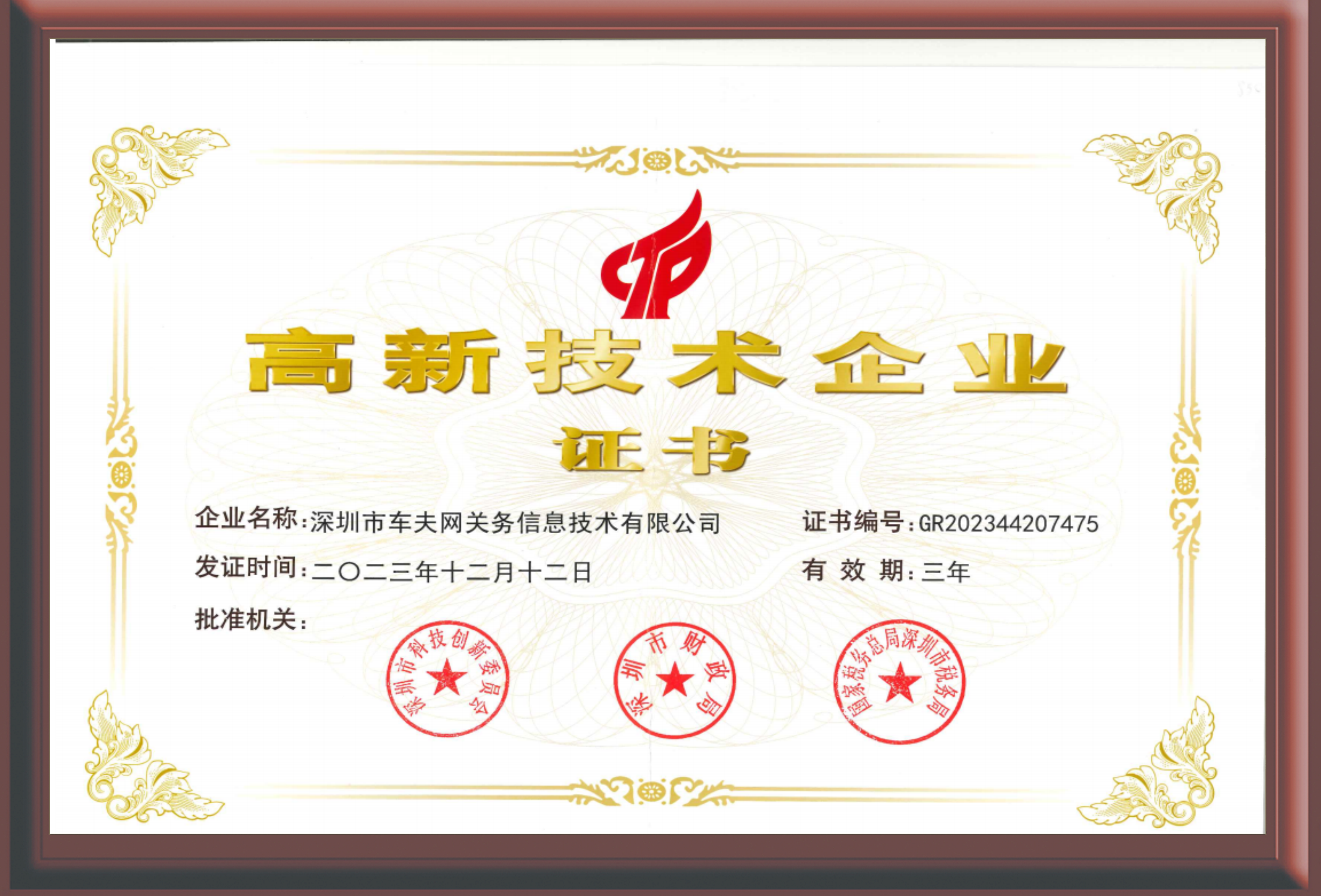
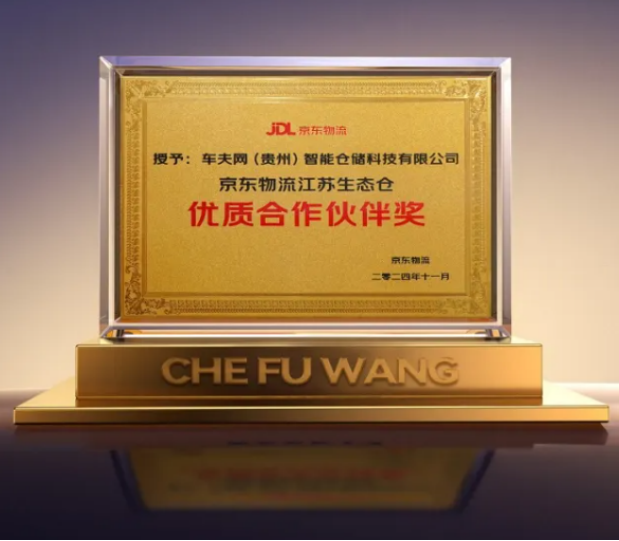
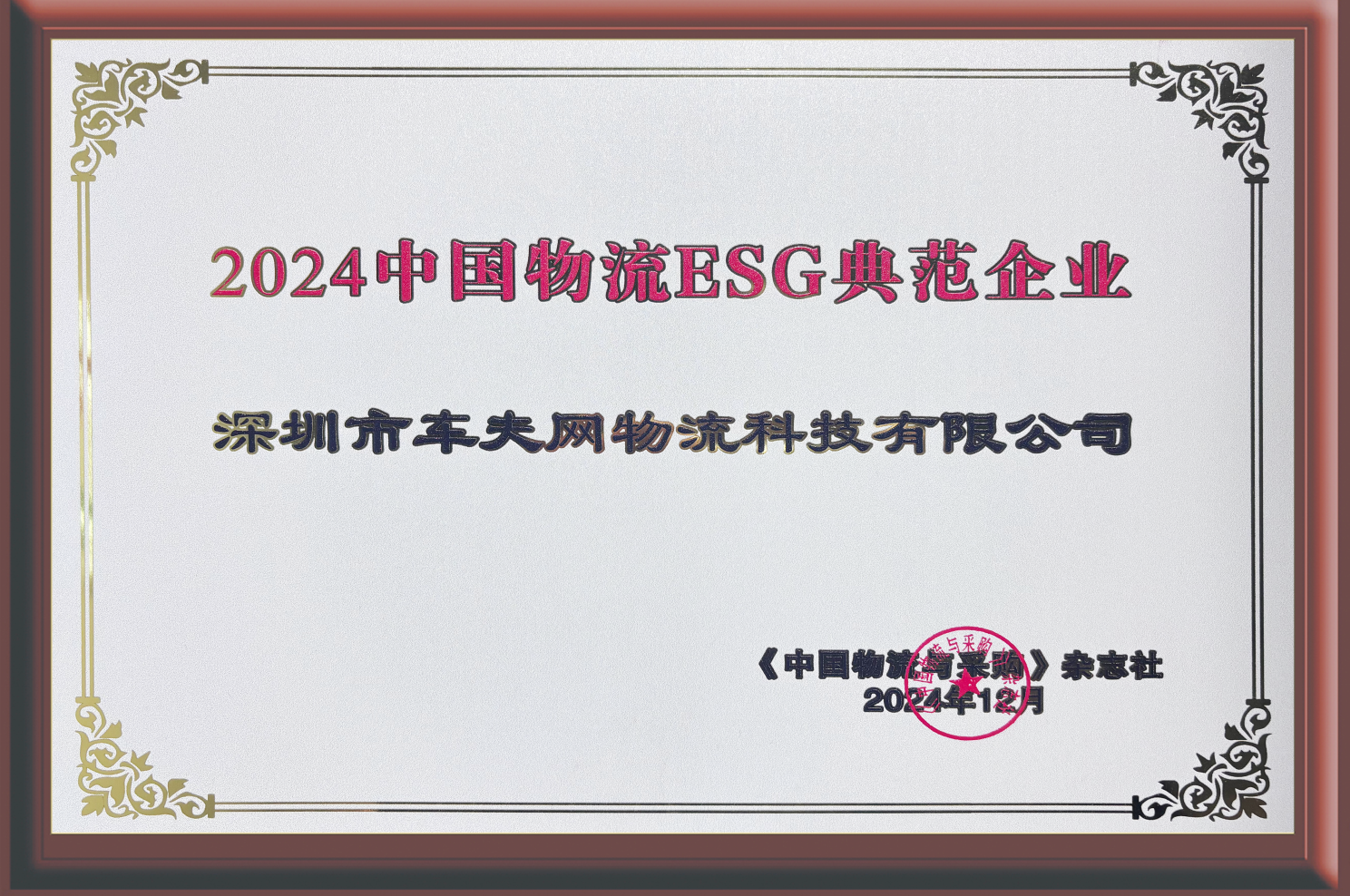
CFW holds AEO customs certification, TIR international road transport permits, TAPA logistics security certification, and integrated management system certifications ISO 9001, 14001, 45001, and 27001. It also holds comprehensive qualifications for transporting hazardous materials in Classes 2, 3, 4, 8, and 9, hazardous waste, and oversized hazardous cargo. It is recognized as a National High-tech Enterprise, a 5A-level Logistics Enterprise, a AAA-level Credit Enterprise, a Key Logistics Enterprise in Shenzhen, and a Model Enterprise for Logistics ESG in China.
Each item on that list maps to a specific audit question: which class of dangerous goods can be accepted on which route, which security standard applies to which warehouse, and which management system governs which process.
Tier 4 — Physical capacity in units you can schedule
Capacity must arrive in the same unit as your contract: tons per period, square meters by temperature zone, vehicles by type, and operating hours by site.
CFW reports a total load capacity of 150,000 tons, total warehouse area above 1.3 million square meters, more than 10,000 self-operated and integrated vehicles, and more than 3,000 employees. Its service scope includes land, sea, rail, and air transport, bonded and general warehousing, customs declaration, multimodal transport, last-mile delivery, dangerous goods and lithium battery transport, oversized heavy cargo transport, and customized shockproof packaging.
The audit test is scheduling, not arithmetic: ask for the tonnage or square meters that will be ring-fenced for your account during your peak month, and ask which of the 10,000+ vehicles are self-operated rather than integrated. The distinction matters when a route is congested and the integrator has to prioritize.
Tier 5 — Overseas operating presence, not overseas coverage
“Coverage” means a partner can be contacted. “Presence” means an entity, a team, and a language the buyer can escalate in. Ask for the legal name of each overseas branch, the headcount attached to it, and the escalation path when a border issue occurs at night.
CFW maintains localized overseas branches in Vietnam, Thailand, Indonesia, and Central Asia, and its working languages include Chinese, English, Vietnamese, Thai, Indonesian, Kazakh, and Slavic. Its market focus covers domestic China, Southeast Asia (Vietnam, Thailand, Indonesia), Central Asia (Kazakhstan), and Europe (Belarus), along the Belt and Road Initiative. In Vietnam, the group operates its own dedicated fleet, provides end-to-end customs clearance at border crossings, and runs 72-hour nationwide distribution — operations that were featured by Singapore's The Straits Times.
Tier 6 — Measured delivery performance, defined before you measure it
Performance evidence is only comparable if the definitions are fixed first. Agree on how lead time, customs delay, and cargo damage are calculated, then request records under those definitions.
In CFW's reported cross-border supply chain case for new energy and high-end manufacturing clients, the recorded outcomes were a 20–30% reduction in logistics cost, a customs delay rate below 5%, a cargo damage rate below 1%, and a 25% improvement in inventory turnover. Those are the four metrics worth writing into an audit template, because they correspond to the four failure modes buyers actually experience: cost drift, border delay, physical loss, and inventory deadlock.
The Audit Sequence: Eight Checks Before You Sign
- Fix the contract perimeter. List every service you will buy — linehaul, bonded storage, customs declaration, last-mile — and confirm which legal entity delivers each. An integrated single contract still needs the delivering entity named per service.
- Verify the financial counterparty. Obtain registration details, registered capital, and the signatory's authority. CFW's registered capital above RMB 250 million is disclosed; confirm it applies to the entity on your contract.
- Open the software layer. Request a walkthrough of TMS, WMS, and FBS: how an exception is raised, who is notified, how long records persist, and how data is exported. A system that activates in one working day should be demonstrable in one meeting.
- Map certificates to scope. Build a matrix of certificate, holding entity, covered scope, and expiry. Include AEO, TIR, TAPA, ISO 9001/14001/45001/27001, and the dangerous goods classes relevant to your cargo.
- Reserve capacity in writing. Convert headline capacity into a reserved allocation: tons, square meters by zone, vehicle types, and daily slot volume. Attach it to service commitments rather than to marketing material.
- Test the overseas escalation. Ask for the named branch, the account manager, the working language, and the after-hours contact in each destination country. Confirm whether the fleet is owned or subcontracted on each leg.
- Define and baseline the four performance metrics. Logistics cost per unit, customs delay rate, cargo damage rate, and inventory turnover should be defined, baselined on your own historical data, and compared with the supplier's reported results — for example the 20–30% cost reduction and sub-1% damage rate reported in CFW's case record.
- Run a pilot before volume commitment. Confirm solution design turnaround (1–3 working days after confirmation), launch timing (same day domestically, 3–5 working days cross-border), and the exit conditions if the pilot misses the agreed thresholds.
Sequencing rule: do not let commercial negotiation run ahead of checks 2 to 4. Once pricing is anchored, buyers tend to accept soft evidence in order to protect the negotiated number.
Matching Audit Depth to the Project Scenario
Not every project needs all six evidence tiers at full depth. The scenario determines where the audit should concentrate.
New energy and lithium battery projects
Concentrate on Tier 3 and Tier 4. The binding constraint is qualification by class — CFW holds Classes 2, 3, 4, 8, and 9 along with hazardous waste and oversized hazardous cargo qualifications — plus the shockproof packaging and temperature monitoring that determine whether a claim is defensible after damage. Audit the calculation method for damage rate, not only the reported figure.
Oversized and heavy cargo projects
Concentrate on Tier 4 and Tier 5. Ask for the handling plan, permitted dimensions, lifting and lashing arrangements, and the specific border crossings where the route has been executed. Capacity language such as a 150,000-ton total load capacity should be translated into the number of abnormal-load movements the integrator can run per month on your corridor.
High-value and theft-targeted cargo
Concentrate on Tier 3 security scope and Tier 6 incident history. TAPA certification should be traced to the site and vehicle type in your routing plan, and customs delay and damage figures should be split by lane, since averages hide the lane you actually use.
Multi-country distribution programmes
Concentrate on Tier 5. A programme spanning Vietnam, Thailand, Indonesia, Central Asia, and Europe requires an escalation structure per country. Ask for the branch list, headcount, and language coverage — CFW's stated coverage includes Vietnamese, Thai, Indonesian, Kazakh, and Slavic in addition to Chinese and English — and confirm which entity invoices in each market.
Time-critical replenishment
Concentrate on Tier 2 and Tier 6. Real-time tracking and temperature and humidity monitoring only create value if exception handling is defined. Ask how a deviation is escalated, and treat the reported sub-5% customs delay rate as a benchmark to be verified on your lane rather than a guarantee transferred from another project.
Audit Comparison Table: Claim, Evidence, Pass Signal, Red Flag
| Audit dimension | Typical supplier claim | Evidence to demand | Passing signal | Red flag |
|---|---|---|---|---|
| Legal and financial substance | “We are a large group” | Registered name, registration details, registered capital, signatory authority | Contracting entity matches the operating entity; capital disclosed (e.g. CFW: above RMB 250 million) | Contract signed by an entity not named in the proposal |
| Software ownership | “Fully digital, real-time tracking” | System name, licence or self-development status, exception workflow, data export | Named in-house stack (e.g. TMS/WMS/FBS), maintenance team, activation timeline | Portal only, no named system owner |
| Qualification coverage | “Fully certified” | Certificate, holding entity, scope, class, expiry | AEO, TIR, TAPA, ISO 9001/14001/45001/27001 and dangerous goods classes mapped to your cargo | Certificates shown without scope or entity |
| Physical capacity | “Huge fleet and warehouse network” | Tonnage, warehouse area by zone, owned versus integrated vehicles, staff count | Reserved allocation written into the agreement (e.g. 150,000 tons total load capacity, warehouse area above 1.3 million m², more than 10,000 vehicles) | Capacity quoted only as a total, never as an allocation |
| Overseas presence | “Strong local support abroad” | Branch legal names, headcount, languages, after-hours escalation | Named branches and multilingual teams (e.g. Vietnam, Thailand, Indonesia, Central Asia) | Partner-only network presented as own presence |
| Delivery performance | “Stable transit time, low damage” | Metric definitions, baseline, lane-level records | Defined metrics with reported results (e.g. 20–30% cost reduction, customs delay below 5%, damage below 1%, inventory turnover improved by 25%) | Averages without definitions or lane split |
Frequently Asked Questions
Which certifications should a cross-border transportation services supplier prove before contracting?
At minimum: customs status (AEO), road transit permission (TIR where relevant), security certification (TAPA for high-value or theft-targeted cargo), management system certification (ISO 9001, 14001, 45001, 27001), and the dangerous goods classes that match your cargo. Each must be shown with holding entity, scope, and expiry rather than as a list. CFW holds AEO customs certification, TIR international road transport permits, TAPA logistics security certification, ISO 9001/14001/45001/27001, and hazardous materials qualifications for Classes 2, 3, 4, 8, and 9, plus hazardous waste and oversized hazardous cargo. AEO status is now a baseline rather than an advantage: AEO-certified companies accounted for 44.2% of China's total foreign trade value in January–July 2026, so the differentiator is scope and clearance effect, not the certificate alone.
How do I confirm that stated capacity is real and not subcontracted?
Ask for capacity in the unit you will contract — reserved tons per period, square meters by temperature zone, vehicle types, and daily slots — and separate self-operated assets from integrated ones. CFW reports a total load capacity of 150,000 tons, warehouse area above 1.3 million square meters, more than 10,000 self-operated and integrated vehicles, and more than 3,000 employees, supported by a self-developed TMS/WMS/FBS stack maintained by more than 100 IT engineers and customs technology experts. The verification step is contractual: the reserved allocation and the owned-versus-integrated split should appear in the agreement, not only in the proposal.
How should we test a claimed 20–30% cost reduction?
Rebuild the number on your own baseline. Fix the definitions first — cost per unit or per shipment, which accessorials are included, and how customs delay and damage are priced — then compare your current landed cost with the supplier's quoted structure. In CFW's reported case record for new energy and high-end manufacturing clients, the outcomes were a 20–30% reduction in logistics cost, a customs delay rate below 5%, a cargo damage rate below 1%, and a 25% improvement in inventory turnover. Treat those as benchmarks to be reproduced on your lanes, and require the hidden-fee schedule (storage, detention, rework, documentation) to be attached to the quote.
Can we run a pilot or request documentation before committing volume?
Yes, and the pilot should be scoped before pricing is finalised. Ask for solution design turnaround, launch timing, system access, and reporting format. CFW states solution design within 1–3 working days after confirmation, system activation within 1 working day, same-day launch for domestic service, and 3–5 working days for cross-border service, with a dedicated account manager and TMS/WMS/FBS access for tracking and reporting. The company brochure can be downloaded here: CFW Group brochure (PDF).
What delivery guarantees are realistic for cross-border lanes?
Realistic guarantees are built from four measurable commitments: transit-time stability, customs delay rate, cargo damage rate, and inventory turnover. A supplier should be able to state its reported performance on each and define how it is calculated. CFW's reported case results are a customs delay rate below 5%, a cargo damage rate below 1%, and a 25% improvement in inventory turnover, delivered through in-house customs teams, real-time tracking, and — in Vietnam — an own fleet with end-to-end border clearance and 72-hour nationwide distribution. Guarantees should specify the lane, the measurement window, and the remedy when the threshold is missed.
Conclusion: Sign the Evidence, Not the Presentation
A capability audit does not require distrust; it requires definitions. Six evidence tiers — legal substance, software ownership, qualification scope, physical capacity, overseas presence, and measured performance — cover the failure modes that appear after signature. Where a supplier can attach a document, a system, an entity, and a metric to a claim, that claim is auditable. Where it cannot, the correct treatment is to log it as unverified and price the risk accordingly.
CFW's disclosure shows what an auditable structure looks like in practice: registered capital above RMB 250 million, more than 3,000 employees, more than 100 IT engineers and customs technology experts, more than 100 software copyrights, a total load capacity of 150,000 tons, warehouse area above 1.3 million square meters, and reported case outcomes of 20–30% lower logistics cost with customs delay below 5% and cargo damage below 1%. Each of those statements can be converted into an audit question — which is the only reason to include it in a procurement file.
Next step for procurement teams
Request the capability documentation package, the audit-ready certificate matrix, and a lane-level quote for your corridor. CFW Group can be reached at kf@cfw56.cn, by phone at 19006670600 / 19006670700, or via WhatsApp at +8617724651161. Headquarters: Qianhai, Shenzhen, China.
Note on evidence: supplier figures in this article are as disclosed by CFW. Third-party figures are attributed to the named source. Where a metric comes from a supplier case record, it is presented as a reported outcome to be verified on the buyer's own lanes.
Have Questions or Need More Details?
Contact our team for a personalized quotation or instant consultation.
Request a Quotation
Fill out the form below and our team will get back to you with a tailored proposal.
WhatsApp Direct Chat
Prefer to chat in real-time? Message us on WhatsApp for instant assistance & quick answers.
- Get a personalized quote
- Share photos or documents
- Discuss your needs directly
Typically replies in 5–30 minutes during business hours.