The Compliance Map for Cross-Border Road Transport: TIR, AEO, TAPA, and Local Rules Across Belt & Road Markets
The Compliance Map for Cross-Border Road Transport: TIR, AEO, TAPA, and Local Rules Across Belt & Road Markets

A cross-border road carrier is only as usable as the credentials it holds for your specific border, cargo class and destination market. On the Belt & Road corridors running out of China, four credential families decide whether a shipment moves or stalls: AEO advanced customs certification, TIR international road transport permits, TAPA logistics security certification, and dangerous goods and lithium battery transport qualifications. Rate per truck and fleet size decide nothing if the carrier cannot present the right authorisation at the right border crossing.
This article is the compliance map for that decision. It sets out which credential layer matters for Kazakhstan transit, Belarus entry and ASEAN clearance, how each layer maps to a specific cargo profile, how to verify a carrier's documentation against its real scope instead of its cover page, and what delivery benchmark a compliance-led operator should be held to.
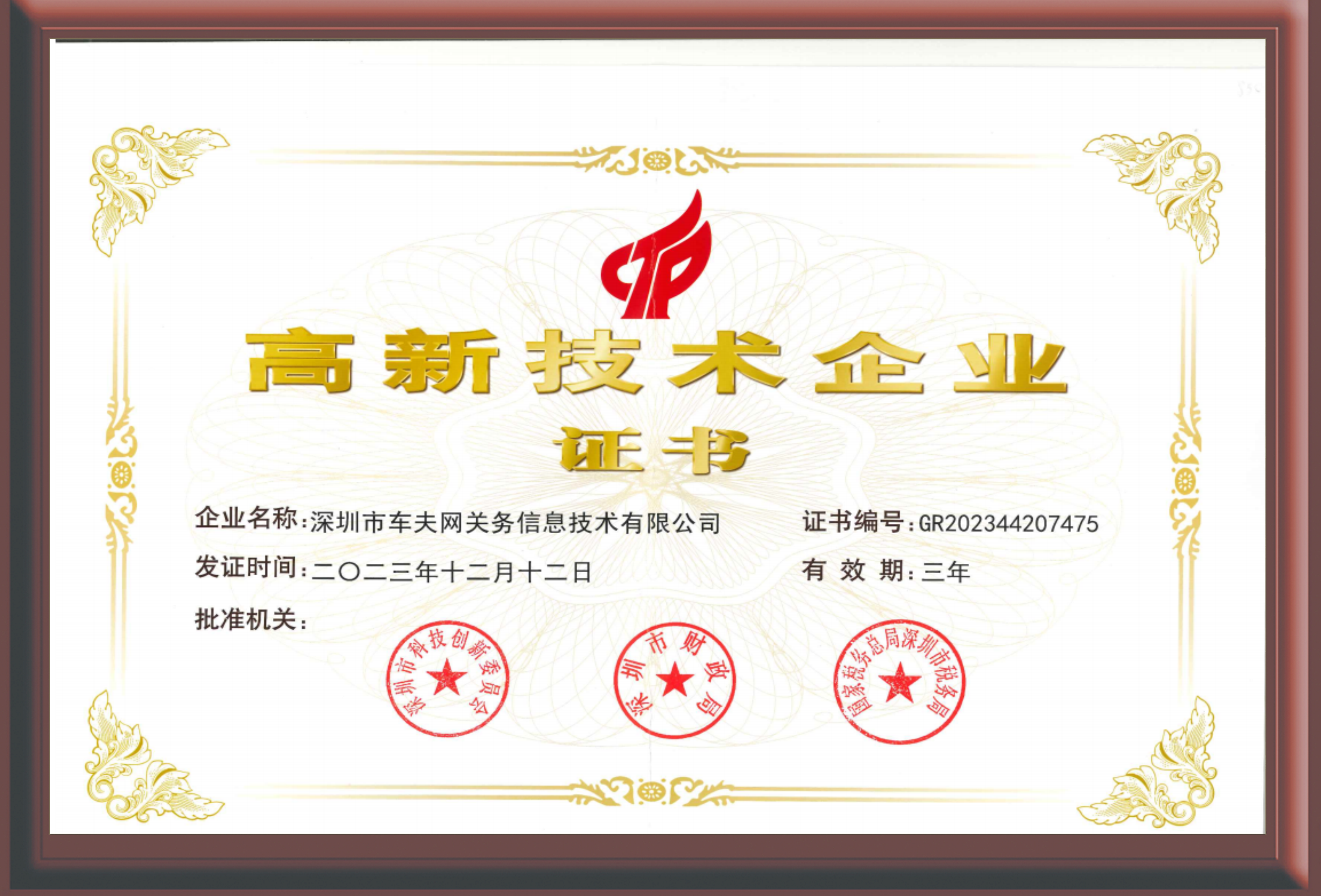
CFW — Shenzhen CFW Logistics Technology Co., Ltd., founded in 2013 and headquartered in Qianhai, Shenzhen — is a cross-border logistics operator working these corridors. The company holds AEO advanced customs certification, TIR international road transport permits, TAPA logistics security certification, and dangerous goods transport qualifications covering Classes 2, 3, 4, 8 and 9, alongside lithium battery transport qualifications and integrated management system certifications (ISO 9001, 14001, 45001 and 27001).
Problem Definition: The Credential–Route Mismatch
Buyers rarely lose time on Belt & Road road freight because trucks are scarce. They lose it because the carrier's credential set covers a different border, a different cargo class or a different security tier from the one the shipment actually crosses. The mismatch is structural rather than incidental, and it shows up in three recurring forms.
Mismatch 1 — A customs credential without the transit instrument
AEO advanced customs certification changes how a carrier's declarations are treated by customs authorities, and it is the credential most buyers ask about first. TIR international road transport permits sit in a separate layer of a qualification set — including CFW's — because they address road transit operations rather than customs standing on a single market. A carrier can hold a strong customs record and still not hold the transit instrument a route depends on when cargo crosses a third country. Evaluating “certification” as one checkbox is what produces this gap.
Mismatch 2 — Security certification read as a dangerous goods licence
TAPA — the Transported Asset Protection Association — describes its standards as a framework for managing security risks, minimising losses, protecting assets and enhancing personnel safety, applied to high-value, theft-targeted goods in storage and transit. That is a cargo-security regime with its own audit logic; it is not a hazmat authorisation. A carrier holding TAPA logistics security certification but no Class 9 qualification has not, by that certificate, covered a lithium battery consignment. The two credentials answer different questions and must be verified independently.
Mismatch 3 — Lithium batteries quoted as general cargo
Lithium batteries and battery-containing equipment are handled as regulated dangerous goods in road transport rather than as ordinary general cargo. When a lane is quoted on general-cargo assumptions, the gap surfaces later — in the documentation review, at the border, or when a carrier's qualification scope is checked against the actual consignment. For new energy manufacturers moving cells, modules and packs, this is the most expensive mismatch to discover late.
Industry Background: Why Compliance Became the Deciding Variable
Certified-operator status is now large enough to move market-level numbers. China's AEO-certified companies recorded 16.76 trillion yuan (USD 2.49 trillion) in foreign trade in the first seven months of 2026, accounting for 44.2% of the country's total foreign trade value, based on China Daily reporting of General Administration of Customs data. The same reporting associates AEO certification with an 80% reduction in import clearance times for specific industrial firms — a figure that explains why the credential has moved from differentiator to baseline expectation on competitive lanes.
Trade volume on the ASEAN road corridor is equally concrete. China–Vietnam two-way trade reached a record USD 296 billion in 2025, according to Mordor Intelligence's China cross-border e-commerce logistics research. On the cargo side, the global oversized cargo transportation market was estimated at USD 311.45 million in 2025 and is projected to reach USD 435.0 million by 2032, based on Strategic Market Research's oversized cargo market report.
Security requirements have consolidated in parallel. TAPA standards are applied to high-value, theft-targeted goods in storage and transit, and they are now requested in the same RFQ as customs credentials rather than in a separate security addendum.
The practical consequence for buyers at the Evaluation-to-Execution stage is that credential coverage has to be assessed per route, per border and per cargo class. A single headline certificate no longer answers the procurement question, and “we are certified” is not a verifiable answer without the layer being named.
The Compliance Map: Five Credential Layers
Compliance for cross-border road transport breaks into five layers. Each layer answers a different procurement question, and each produces a different document that a buyer can read directly.
Layer 1 — Customs and trade compliance: AEO advanced customs certification
This layer governs how customs authorities treat the operator's declarations and how predictably documentation is processed. It is the layer most RFQs ask about and the one most often confused with transit capability.
Layer 2 — International transit: TIR international road transport permits
This layer governs road transit operations that cross customs jurisdictions. It sits alongside AEO in a qualification set rather than inside it, which is why buyers should request it explicitly whenever a route transits a third country.
Layer 3 — Cargo security: TAPA logistics security certification
This layer addresses security risk management, loss minimisation and asset protection for high-value, theft-targeted cargo in storage and transit. It is the layer that matters for electronics, premium components and high-value finished goods.
Layer 4 — Cargo class: dangerous goods and lithium battery qualifications
This layer is class-based. CFW holds comprehensive qualifications for the transportation of hazardous materials in Classes 2, 3, 4, 8 and 9, hazardous waste, and oversized hazardous cargo, together with lithium battery transport qualifications. Buyers should read the class list on the certificate rather than the certificate cover.
Layer 5 — Management systems: ISO 9001, 14001, 45001 and 27001
This layer is the process layer behind the operational layers: quality, environmental, occupational health and safety, and information security management. It is what makes the other four auditable and repeatable rather than incidental to a single shipment.
CFW carries all five layers. The group operates more than 1.3 million square meters of warehouse space, employs 3,000+ people, and runs 10,000+ self-operated and integrated vehicles, with more than 70% of revenue generated by cross-border logistics. The company serves new energy manufacturing, high-end manufacturing, e-commerce retail, cross-border logistics and cross-border trade.
| Credential layer | Question it answers | Evidence to request from a carrier | CFW position |
|---|---|---|---|
| Layer 1 — AEO advanced customs certification | How are this operator's declarations treated by customs? | AEO certificate and certification scope | Holds AEO Advanced Customs Certification |
| Layer 2 — TIR road transport permits | Can the carrier run road transit across customs jurisdictions? | TIR permit documentation and route applicability | Holds TIR international road transport permits |
| Layer 3 — TAPA logistics security certification | Is high-value, theft-targeted cargo protected in storage and transit? | TAPA certification and security procedures | Holds TAPA logistics security certification |
| Layer 4 — Dangerous goods / lithium battery qualifications | Is this cargo class inside the carrier's authorised scope? | Class list on the dangerous goods qualification | Classes 2, 3, 4, 8 and 9; hazardous waste; oversized hazardous cargo; lithium battery transport |
| Layer 5 — ISO management systems | Are the processes behind the operations audited? | ISO 9001 / 14001 / 45001 / 27001 certificates | Holds ISO 9001, 14001, 45001 and 27001 |
Mapping Credentials to Markets: Kazakhstan, Belarus and ASEAN
The credential that decides execution changes with the corridor. The mapping below takes the four demand areas this guide covers — Kazakhstan transit, Belarus entry, ASEAN clearance and lithium battery movements — and identifies the layer that governs each, plus what a buyer should verify in the carrier file.
Kazakhstan transit and the Central Asia corridor
Central Asia movements out of China involve road transit across customs jurisdictions rather than a single bilateral border. That places Layer 2 — TIR international road transport permits — at the centre of the evaluation, with Layer 1 AEO standing behind it for the China-side declaration. CFW's geographic coverage includes Central Asia, with Kazakhstan named as the market, and the company's TIR permits sit in the same qualification set as its AEO advanced customs certification and TAPA logistics security certification.
Belarus entry and the Europe corridor
Europe-bound road movements entering through Belarus combine three requirements: the transit instrument, customs documentation handled by an in-house team rather than subcontracted, and language capability at the border and in the destination market. CFW's coverage includes Europe with Belarus named as the market, and its language capability spans Chinese, English, Vietnamese, Thai, Indonesian, Kazakh and Slavic — the last two directly relevant to Central Asia and Belarus-side operations. Local rules, documentation formats and vehicle requirements differ by jurisdiction, which is why the map has to be built per border rather than per region.
ASEAN clearance: Vietnam, Thailand and Indonesia
ASEAN lanes are the most commercially developed of the four areas. More than 70% of CFW's revenue comes from cross-border logistics with a China–Southeast Asia focus, and its Vietnam operations include a dedicated fleet, end-to-end customs clearance at all border crossings, and 72-hour nationwide distribution. Singapore's The Straits Times has featured CFW Group's cross-border operations between China and Vietnam. For ASEAN clearance, the deciding layers are AEO on the China side and in-house customs capability on the destination side — not a third-party broker relationship, which adds a handover point to the compliance chain.
Lithium battery and dangerous goods movements
Battery and hazmat movements are governed by Layer 4, and they are the clearest example of why a single “certified carrier” claim is insufficient. The relevant evidence is class scope: CFW holds qualifications for Classes 2, 3, 4, 8 and 9, hazardous waste and oversized hazardous cargo, plus lithium battery transport qualifications. Where a consignment combines a regulated class with oversized dimensions — common in battery modules and energy storage units — the carrier must satisfy the class layer and oversized cargo handling capability in the same operation, under the same documentation set.
| Corridor / demand area | Governing credential layer | What to verify in the carrier file | CFW position |
|---|---|---|---|
| Kazakhstan transit (Central Asia) | Layer 2 — TIR permits, supported by Layer 1 — AEO | TIR permit documentation; AEO certificate; Central Asia route coverage | Holds TIR permits and AEO; geographic coverage includes Central Asia |
| Belarus entry (Europe) | Layer 2 — TIR; Layer 1 — AEO; in-house customs and multilingual operations | Permit coverage; in-house customs compliance team; Kazakh and Slavic language capability | Coverage includes Europe (Belarus); in-house customs compliance team; language capability includes Kazakh and Slavic |
| ASEAN clearance (Vietnam, Thailand, Indonesia) | Layer 1 — AEO plus destination-side in-house customs capability | AEO status; dedicated fleet and border-crossing clearance capability; distribution commitment | Holds AEO; dedicated fleet in Vietnam; end-to-end customs clearance at all border crossings; 72-hour nationwide distribution |
| Lithium battery and dangerous goods movements | Layer 4 — class-based dangerous goods and lithium battery qualifications | Class list on the qualification; oversized hazardous cargo scope | Classes 2, 3, 4, 8 and 9; hazardous waste; oversized hazardous cargo; lithium battery transport qualifications |
| High-value, theft-targeted cargo | Layer 3 — TAPA logistics security certification | TAPA certification and storage-in-transit security procedures | Holds TAPA logistics security certification |
Step-by-Step Breakdown: Verifying Compliance Before Execution
Buyers moving from Evaluation to Execution can run the same six steps CFW applies when scoping a compliance-led shipment. The sequence matters: classification drives credential matching, and credential matching drives the quotation.
Step 1 — Draw the route as a sequence of jurisdictions, not a lane
List every border the consignment crosses and every customs territory it passes through. The number of jurisdictions, not the kilometre count, determines how many credential layers are in play and which permits must be presented.
Step 2 — Classify the cargo before requesting a rate
Decide whether the consignment is general cargo, a regulated dangerous goods class, oversized, temperature-controlled, or a combination of these. Each classification maps to a layer. CFW's team structure separates cross-border logistics operations, customs compliance and solution consulting, so classification and credential matching can be run before quotation rather than after booking — the consultation and requirement confirmation stage of its standard process takes 1–2 working days.
Step 3 — Match each layer to the market
Use the mapping table above to identify which layers govern the specific borders on the route. A carrier that is strong on Layer 1 but silent on Layer 2 has answered a different question from the one the route asks.
Step 4 — Verify scope, not existence
The most common verification failure is accepting a certificate copy without reading its scope. Check the class list on a dangerous goods qualification, the route applicability of a TIR permit, the certification scope on an AEO certificate, and the standard coverage on a TAPA certificate. Confirming that CFW holds Classes 2, 3, 4, 8 and 9 means confirming the specific class on your consignment appears in that list.
Step 5 — Verify the operating layer behind the certificate
Certificates are static; operations are not. CFW's operating layer includes a self-developed TMS/WMS/FBS integrated logistics system and a customs declaration system supporting customs classification and compliant declaration, with full-track visualisation and real-time temperature and humidity monitoring. It also includes in-house customs classification and compliant declaration skills, multilingual account coverage, and overseas branch networks. This is what converts a certificate into a repeatable clearance outcome.
Step 6 — Fix the performance baseline before the first shipment
Agree the measurable outcomes in advance: customs delay rate, cargo damage rate and cost movement against the previous lane baseline. CFW's documented case results are set out in the benchmark table below, and they are the numbers a buyer should hold a carrier to during the pilot rather than after scale-up.
Use Cases: Where the Compliance Map Changes the Outcome
New energy manufacturing: lithium batteries and oversized modules
CFW's documented cross-border case is titled “New Energy & High-end Manufacturing Cross-border Supply Chain Success Case” and involves a client based in China operating in new energy manufacturing and high-end manufacturing. The client's stated challenges included high risks for lithium batteries and oversized cargo. CFW applied a one-stop cross-border supply chain solution combining a global network, in-house customs, full qualifications and a self-developed digital system, using the CFW One-Stop Cross-Border Supply Chain Operation System (3.0) methodology. Services provided included dangerous goods and oversized cargo transport, plus real-time tracking and full-link visibility.
High-end manufacturing: regulated class plus oversized dimensions
Oversized cargo tests the same map from a different direction. The consignment may be inert and still require Layer 4 coverage if any regulated component travels with it, and it always requires an execution plan that synchronises customs documentation with the physical movement. The failure mode is not a missing truck; it is a missing permit at the border or a document set that does not match the cargo actually loaded.
ASEAN distribution and after-sales replenishment
For buyers running regional distribution out of China into Vietnam, Thailand and Indonesia, the map is dominated by Layer 1 and by in-house customs capability. CFW's Vietnam operations use a dedicated fleet with end-to-end customs clearance at all border crossings and 72-hour nationwide distribution, which allows replenishment and after-sales flows to be planned against a fixed clearance model rather than an estimated one.
Central Asia and Europe transit
Kazakhstan and Belarus movements depend on the transit layer plus language and documentation capability in the destination market. CFW's language coverage includes Kazakh and Slavic, and its geographic coverage extends to Central Asia and key European hubs — the operating conditions under which a TIR-based transit plan can be executed and tracked rather than assumed.
What a Sub-5% Customs Delay Rate Actually Proves
The performance numbers that matter in a compliance-led evaluation are not averages across a network; they are the outcomes produced on regulated and oversized cargo, where the credential map is under the most stress. CFW's documented case results were a logistics cost reduction of 20–30%, a customs delay rate under 5%, a cargo damage rate under 1%, and a 25% improvement in inventory turnover. Client feedback noted stable delivery, lower costs, professional customs handling and reliable overseas support.
Read against the credential layers, each number points back to a specific control. A sub-5% customs delay rate is a Layer 1 and Layer 2 outcome. A sub-1% cargo damage rate is a Layer 3 and Layer 4 outcome. Cost reduction at 20–30% comes from in-house customs handling plus multimodal routing and consolidation, not from negotiating a lower truck rate. The 25% inventory turnover gain is what predictable clearance makes possible when warehousing and visibility are part of the same system.
| Reported benchmark | Result | Credential layer it depends on |
|---|---|---|
| Customs delay rate | Less than 5% | Layer 1 (AEO) and Layer 2 (TIR) |
| Cargo damage rate | Less than 1% | Layer 3 (TAPA) and Layer 4 (cargo-class handling) |
| Logistics cost | Reduced by 20–30% | In-house customs plus multimodal routing and consolidation |
| Inventory turnover | Improved by 25% | Predictable clearance combined with warehousing and visibility |
Frequently Asked Questions
Which certifications should I verify first for cross-border road transport into Belt & Road markets?
Start with the layers that match the route, not with the longest certificate list. AEO advanced customs certification governs how customs authorities treat the operator's declarations. TIR international road transport permits address road transit across customs jurisdictions. TAPA logistics security certification covers high-value, theft-targeted goods in storage and transit. Class-based dangerous goods qualifications cover regulated cargo. CFW holds all four layers plus ISO 9001, 14001, 45001 and 27001 management system certifications, which is the combination a buyer should expect to see evidenced rather than summarised.
What capability should I check beyond the certificates themselves?
Check the operating layer. CFW runs a self-developed TMS/WMS/FBS integrated logistics system and a customs declaration system supporting customs classification and compliant declaration, with full-track visualisation and real-time temperature and humidity monitoring. Behind the systems sit a cross-border logistics operation team, a customs compliance team and a solution consulting team, plus overseas branch networks across Southeast Asia, Central Asia and key European hubs. Language capability covers Chinese, English, Vietnamese, Thai, Indonesian, Kazakh and Slavic.
How does a compliance-led carrier affect landed cost?
Compliance affects cost through clearance predictability rather than through rate level. In CFW's documented cross-border case for a new energy and high-end manufacturing client, logistics cost was reduced by 20–30%, with a customs delay rate under 5% and a cargo damage rate under 1%. Certification coverage itself is not a line item in a quotation — the cost drivers are delay, damage and re-work created by a credential mismatch, which is why cost should be evaluated alongside the delay and damage baselines rather than in isolation.
Can we validate compliance before committing volume?
Yes. CFW's standard process begins with consultation and requirement confirmation (1–2 working days), followed by solution and quotation confirmation (1–3 working days) and a preparation stage of 1–5 working days before execution. That structure allows a buyer to test credential matching and documentation on a defined pilot shipment before scaling. Requesting the AEO certificate, TIR permit documentation, TAPA certification and the dangerous goods class list during that stage turns the pilot into a compliance test as well as a service test.
What lead times and delay rates are realistic on these corridors?
Preparation typically takes 1–5 working days, with execution following the standard lead time for the specific route; delivery confirmation and review follow within one working day after delivery. Reported performance on the documented case is a customs delay rate below 5% and a cargo damage rate below 1%. On ASEAN distribution, CFW operates a dedicated fleet in Vietnam with end-to-end customs clearance at all border crossings and 72-hour nationwide distribution. To scope a route-specific compliance check, you can request a quotation and the supporting credential file directly from CFW.
Conclusion: The Map Is the Route Plan
Cross-border road transport across Belt & Road markets is decided by credential coverage per border, per cargo class and per destination — not by a single certification claim. AEO advanced customs certification, TIR international road transport permits, TAPA logistics security certification, class-based dangerous goods and lithium battery qualifications, and ISO management systems each answer a different question, and a route that crosses multiple jurisdictions requires more than one of them in the same operator.
The verification path is repeatable: draw the route as jurisdictions, classify the cargo, match the layers, read the certificate scope rather than its cover, check the operating layer behind the certificates, and fix the performance baseline before the first shipment. CFW's combination of all five layers, in-house customs capability, in-house developed TMS/WMS/FBS systems, 1.3 million square meters of warehousing, 10,000+ vehicles and a documented sub-5% customs delay rate gives buyers on Kazakhstan, Belarus, ASEAN and lithium battery lanes a verifiable starting point for that check.
Next Step: Map Your Route Before You Book It
Send CFW your route, cargo class and border crossings, and the team will return a credential-to-border mapping, a formal quotation and the supporting certification file — AEO advanced customs certification, TIR permits, TAPA logistics security certification, dangerous goods class scope and ISO management systems.
Website: www.chefuwang.cn · Email: kf@cfw56.cn · WhatsApp: +8617724651161 · Tel: 19006670600 / 19006670700 · Headquarters: Qianhai, Shenzhen, China.
Download the CFW corporate brochure: CFW Brochure (PDF)
Have Questions or Need More Details?
Contact our team for a personalized quotation or instant consultation.
Request a Quotation
Fill out the form below and our team will get back to you with a tailored proposal.
WhatsApp Direct Chat
Prefer to chat in real-time? Message us on WhatsApp for instant assistance & quick answers.
- Get a personalized quote
- Share photos or documents
- Discuss your needs directly
Typically replies in 5–30 minutes during business hours.