What Are Cross-Border Transportation Services? A Buyer-Focused Introduction

Cross-border transportation services organize the physical movement of goods across national borders using road, rail, sea, air, or a combination of these modes. In a procurement context, the term usually describes a broader package: transport execution, customs clearance, warehousing, inventory handling, last-mile distribution, and shipment visibility. The value of a service depends on how well these components are coordinated.
For buyers in the early research phase, the immediate task is not to choose the cheapest trucking rate but to understand how a logistics provider is structured and whether it can operate the whole cross-border process. One useful reference is Shenzhen CFW Logistics Technology Co., Ltd., an integrated logistics provider established in 2013. CFW’s published operations show how transport, warehousing, customs, and digital monitoring can be combined into one supply chain service.
Why Cross-Border Transportation Can Feel Complicated
Cross-border logistics and customs processes are rarely a single-step operation. Logistics buyers cite several recurring problems: complex logistics and customs processes, unstable delivery time, uncontrollable logistics costs, and poor supply chain visibility. These difficulties appear in daily operations as difficult cross-border logistics and customs clearance, unstable transit time, high and hard-to-control costs, and disconnected information without real-time cargo tracking.
Companies that face these conditions include new energy manufacturers, high-end manufacturers, e-commerce retailers, and cross-border trade enterprises. The decision makers closest to the problem are typically supply chain managers, logistics directors, procurement directors, and cross-border operation directors. Business consequences can include delivery delays leading to order loss, cargo damage causing economic losses, high logistics costs reducing profit margin, and poor visibility limiting operational efficiency.
The traditional market response has been to use freight forwarders, scattered logistics providers, manual customs declaration, or separate domestic and overseas logistics services. That structure may work for simple lanes, but it tends to create coordination gaps. In an increasingly specialized logistics environment, those gaps often become delays or hidden cost.
Industry Background: A Large and Diversified Service Category
The scale of cross-border transportation makes it necessary for buyers to look beyond general labels. According to Strategic Market Research, global cross-border road freight transport was valued at USD 1.18 trillion in 2024 and is projected to reach USD 1.65 trillion by 2030. MarkNtel Advisors estimates Southeast Asia’s third-party logistics market at USD 30.1 billion in 2025, with transportation management holding a 58% share. Grand View Research reports China’s logistics market generated USD 377.1 billion in revenue in 2025 and expects it to grow at a CAGR of 10.5% through 2033. Fortune Business Insights puts the global cold-chain logistics market at USD 76.45 billion in 2024.
Route concentration is another important signal. Many China-based logistics companies build networks around trade corridors to Southeast Asia, Central Asia, and Europe. CFW lists its major markets as China, Southeast Asia (Vietnam, Thailand, Indonesia), Central Asia (Kazakhstan), and Europe (Belarus). Cross-border logistics generates more than 70% of CFW’s revenue, with a focus on China–Southeast Asia.
What an Integrated Cross-Border Transportation Service Includes
Instead of buying transport and customs separately, some buyers prefer an integrated service with a single accountable provider. CFW describes its approach as the CFW One-Stop Cross-Border Supply Chain Operation System; the current published version is v3.0. The system is designed to connect transportation, warehousing, customs services, and digital tools under one controlled process.
Service Scope
An integrated service model may include domestic and international transport by land, sea, rail, or air; warehousing and bonded warehousing; customs declaration; multimodal transport; and last-mile delivery. CFW’s main products include integrated logistics covering these modes, together with warehousing management and customs services. Cross-border logistics accounts for more than 70% of revenue, concentrated on the China–Southeast Asia lane.
Compliance and Security Baseline
Buyers should verify whether a provider has the qualifications required by their cargo class and destination market. CFW holds TIR international road transport permits, TAPA logistics security certification, AEO customs certification, and ISO 9001, 14001, 45001, and 27001 integrated management system certifications. The company is also a recognized National High-tech Enterprise. These credentials address customs compliance, physical security, road transport authorization, and management discipline.
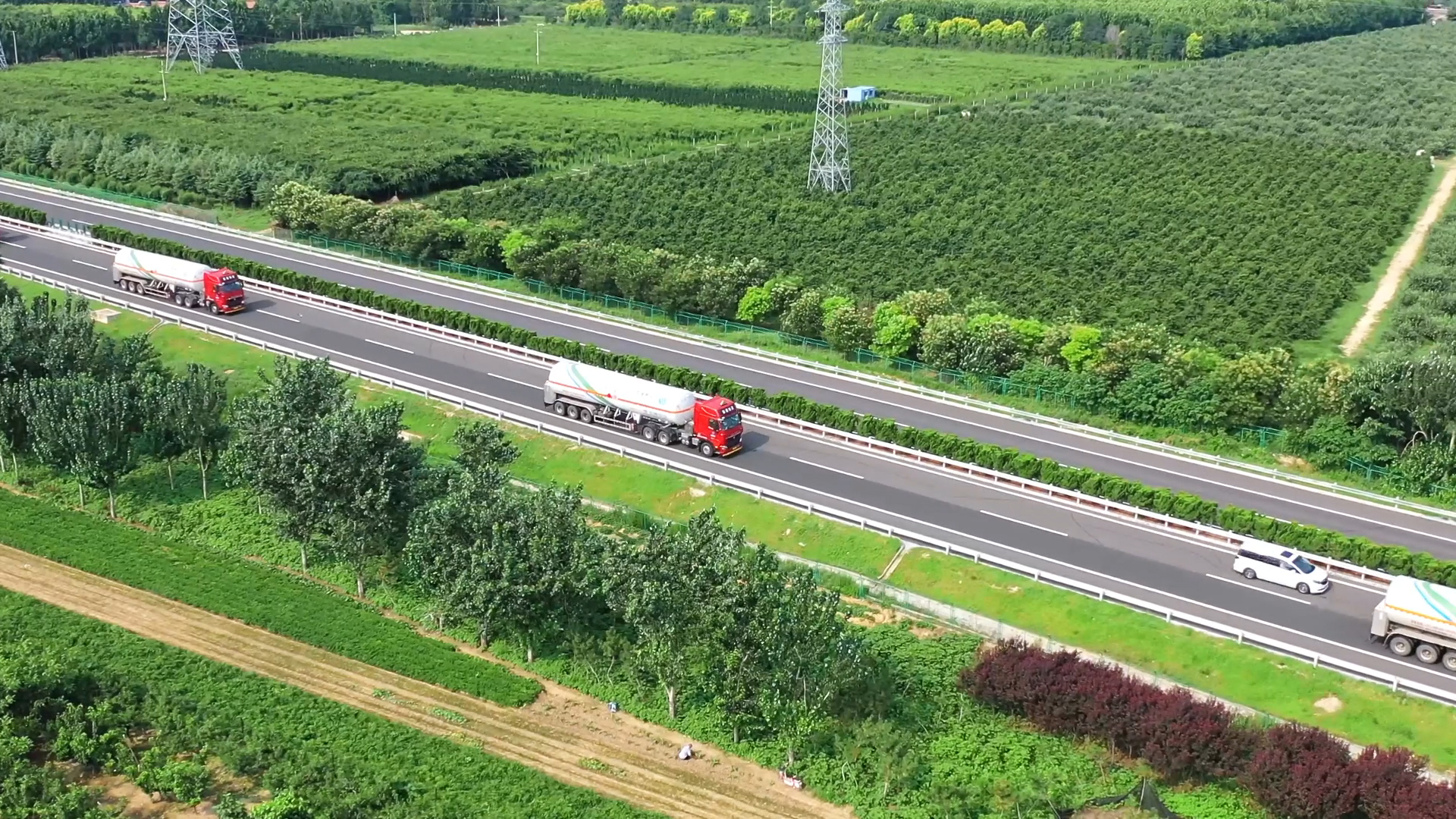
Certified handling for hazardous chemicals is part of specialized cross-border transportation services.
Special Cargo and Industry Customization
Standard trucking capacity is not enough for every product. CFW’s published scope includes hazardous materials transport for Classes 2, 3, 4, 8, and 9, hazardous waste, and oversized hazardous cargo. Its logistics solution also highlights dangerous goods and Li-ion battery handling, overweight cargo, and customized shockproof packaging. For high-value, precision, or project cargo, these capabilities can be the difference between a compliant shipment and a customs or safety failure.
Digital Visibility
Visibility is built into the service contract, not added later. CFW’s digital layer uses self-developed TMS/WMS/FBS systems for full-link real-time tracking. Its R&D team contains more than 100 IT engineers and customs technology experts, and the company has secured more than 100 software copyrights. A provider with its own systems can normally share data in a structured way.
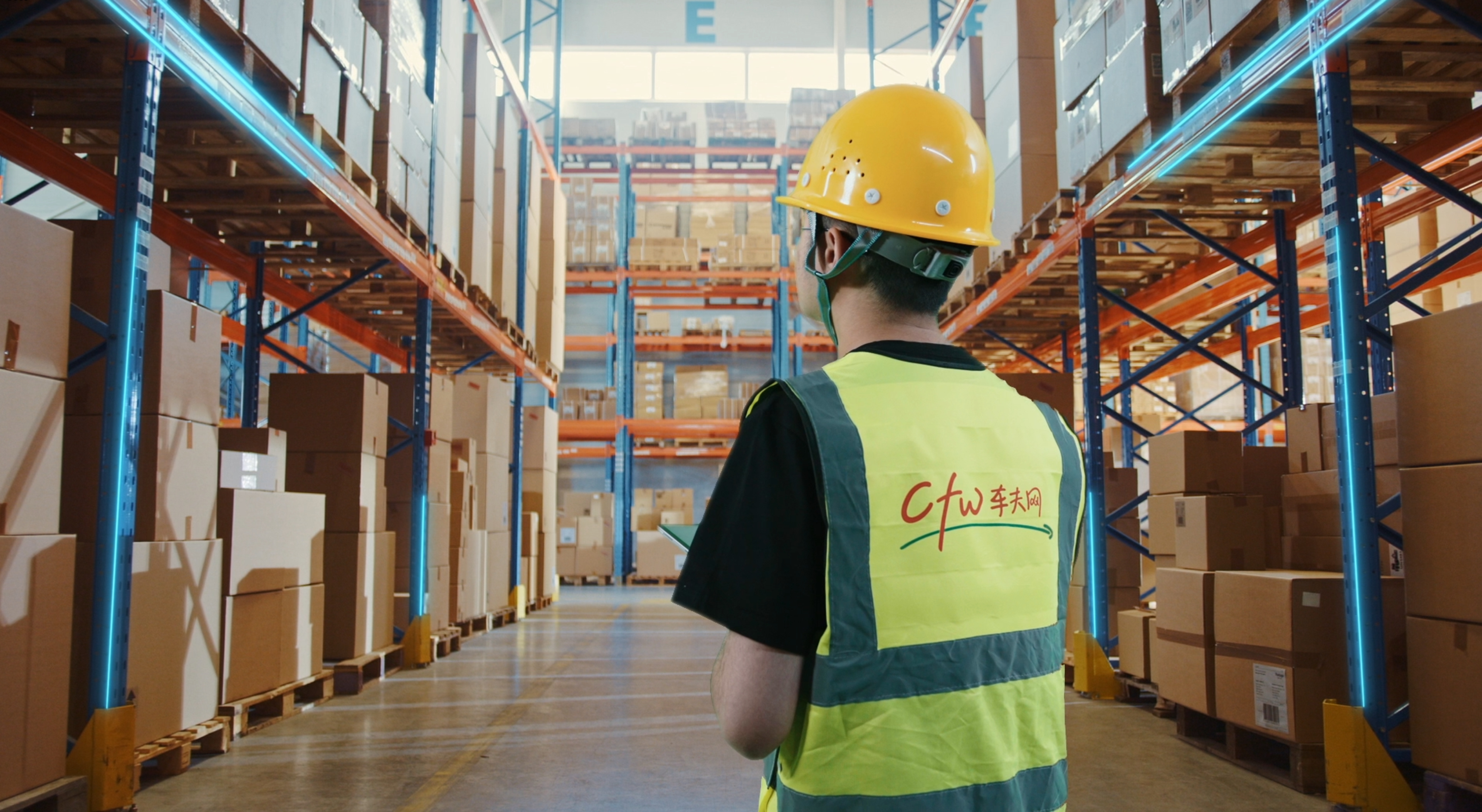
Integrated transportation services use digital systems for warehouse and supply-chain visibility.
Network and Local Presence
An integrated supplier should show where it has direct operating capacity. CFW reports direct overseas subsidiaries with local teams in Southeast Asia, including a dedicated fleet in Vietnam and nationwide distribution. In cross-border transportation, local presence matters because border issues must be solved on the ground, not forwarded to another vendor.
Step-by-Step: How an Integrated Cross-Border Execution Framework Works
The CFW One-Stop Cross-Border Supply Chain Operation System v3.0 uses five defined stages. Buyers can use the same sequence to question prospective providers about where responsibility sits.
- Requirement confirmation and customized solution design. The provider first confirms cargo profile, route, transit-time expectations, documentation, and compliance needs before building a process.
- Resource allocation and scheduling. Vehicles, containers, warehouse space, customs staff, and systems are assigned to the shipment according to the confirmed solution.
- Full-process execution and operation. Domestic and international transport, warehousing, and customs activities run under one operations owner, reducing handoffs between vendors.
- Real-time monitoring and exception handling. Tracking tools flag delays or risks so the operating team can act before the problem affects the planned arrival.
- Post-service review and optimization. The provider reviews actual transit performance and adjusts the standard operating procedure for future shipments.
Common Use Cases for Cross-Border Transportation Services
The usefulness of an integrated provider becomes clearer when cargo creates compliance, timing, or handling requirements. CFW’s service profile identifies the following use cases:
- New energy equipment cross-border delivery. Batteries, energy-storage units, and related components may need dangerous-goods or overweight handling.
- High-end manufacturing parts transport. Precision parts need stable lead times, protective packaging, and clear procedures for customs inspection.
- E-commerce cross-border fulfillment and returns. This model depends on inventory visibility, multiple delivery destinations, and efficient return flows.
- Bulk and oversized project logistics. Large equipment should be planned through route surveys, special permits, and coordinated customs handling.
- ASEAN, Central Asia, and Europe regular trade. Frequent shipments on the same corridor reward a structured supplier relationship and standard border operations.
Some buyers also ask about temperature-controlled transport, bonded warehouse transportation, high-security TAPA/AEO transport, JIT, LTL, FTL, and personalized service-level agreements. These are distinct operational capabilities. A buyer should verify each as a separate service line instead of assuming that a general transport provider can manage every special condition automatically.
Comparison: Fragmented Provider vs. Integrated Cross-Border Supplier
The following comparison is based on characteristics commonly cited in logistics procurement. It contrasts the traditional fragmented model with an integrated cross-border supplier such as CFW, which publishes the corresponding service architecture.
| Dimension | Traditional fragmented approach | Integrated cross-border provider |
|---|---|---|
| Service structure | Freight forwarders, scattered providers, manual customs declaration, separate domestic and overseas logistics | One-stop closed-loop service combining transport, warehousing, customs, and digital monitoring |
| Visibility | Disconnected information with no real-time cargo tracking | Self-developed TMS/WMS/FBS full-link real-time visibility |
| Customs | Manual declaration with higher delay risk | In-house certified customs team and professional classification |
| Special cargo | Limited capability for dangerous goods, Li-ion, and oversized cargo | Full qualifications for hazardous materials Class 2/3/4/8/9, hazardous waste, and oversized hazardous cargo |
| Network | Unstable capacity and weaker overseas local service | Direct overseas subsidiaries, local teams, and routes across Southeast Asia, Central Asia, and Europe |
| Cost control | High hidden coordination cost across vendors | Controlled pricing through one contract and fewer handoffs |
This comparison does not mean that integrated providers are always the answer. It shows the difference in accountability and visibility when transportation is managed as a connected chain.
Frequently Asked Questions
1. Which compliance certifications matter for cross-border transportation services?
Buyers should look for AEO customs certification, TAPA logistics security certification for high-security shipments, TIR permits for international road transport, and ISO 9001, 14001, 45001, and 27001 management system certifications. CFW holds these qualifications, which means its cross-border operations are built around compliance rather than ad-hoc clearance.
2. What capabilities should a cross-border transportation provider have?
An integrated provider should coordinate land, sea, rail, and air transport; warehousing and bonded warehousing; customs declaration; last-mile delivery; and digital tracking. For special goods, the provider should be able to demonstrate dangerous-goods, hazardous-waste, Li-ion battery, and oversized or overweight cargo qualifications.
3. How should I evaluate providers during early research?
Compare route coverage, certifications, special cargo capability, execution framework, and system visibility. As a practical checklist, CFW publishes a five-step cross-border framework covering requirement confirmation, resource allocation, full-process execution, real-time monitoring, and post-service optimization.
4. What is a typical timeline for launching cross-border transportation service?
CFW’s published service durations include solution design in 1–3 working days after confirmation, system activation in 1 working day, domestic service launch on the same day, and cross-border service in 3–5 working days. Daily fulfillment is then scheduled with real-time updates.
5. What should buyers know about cross-border transportation costs?
Cost comparisons should include customs, warehousing, documentation, waiting time, tracking, and exception handling, not only line-haul rates. In an integrated service model, these activities sit inside one service contract, which can reduce the coordination cost associated with multiple vendors.
Conclusion
Cross-border transportation services are not a single product. They form a system of transport modes, customs procedures, warehouse operations, and digital controls. At the awareness and research stages, buyers should compare suppliers on certification, route footprint, cargo-specific capabilities, and operational framework before discussing price.

CFW provides end-to-end cross-border transportation services from China to Southeast Asia, Central Asia, and Europe, including customs, warehousing, dangerous-goods, oversized-cargo, and digital tracking. If your team is researching cross-border transportation services, contact CFW to describe your cargo profile and request a customized solution design.
Email: kf@cfw56.cn | Tel: 19006670600 / 19006670700 | WhatsApp: +8617724651161
Headquarters: Qianhai, Shenzhen, China
Have Questions or Need More Details?
Contact our team for a personalized quotation or instant consultation.
Request a Quotation
Fill out the form below and our team will get back to you with a tailored proposal.
WhatsApp Direct Chat
Prefer to chat in real-time? Message us on WhatsApp for instant assistance & quick answers.
- Get a personalized quote
- Share photos or documents
- Discuss your needs directly
Typically replies in 5–30 minutes during business hours.