Kyphoplasty Application Guide: KB0115, KB0120, and KB0210S1 in Spine and Pain Settings
Kyphoplasty balloon catheters are not interchangeable across clinical settings. Access gauge, radiopaque marker span, channel inner diameter, working length, and maximum inflation volume together decide what a balloon can achieve inside a fractured vertebral body — and which department can realistically build a routine around it. A configuration that performs well in a tertiary hospital spine theatre may be oversized for a single-level case in an interventional pain clinic, and the reverse is equally true.
This application guide maps three CHANGMEI Kyphoplasty Balloon Catheter models — KB0115, KB0120, and KB0210S1 — to the settings where they are most often specified: orthopedic surgery, spine surgery, pain management, and interventional pain clinics. It also covers the Kyphoplasty Tool Kit KT-00-05, the 11G instrument set used in orthopedic and spine procedures, and the BI-20A-10 Balloon Inflator that supplies the hydraulic side of a percutaneous kyphoplasty (PKP) system. The purpose is practical: help buyers align device choice with procedure setting instead of treating every kyphoplasty system as a like-for-like substitute.
Problem Definition: Why Setting-Specific Device Selection Matters
"Kyphoplasty system" is often used as if it described a single product. In practice it describes a procedural platform: an inflatable bone tamp, a working-channel instrument set, an inflation device, and a cement delivery path. Two systems that carry the same category label can differ in ways that change the case mix a facility can accept.
- Gauge (8G vs 11G). Gauge sets the access channel dimension and therefore how much hardware passes through the pedicle into the vertebral body. It also determines which tool kit and which balloon family are compatible.
- Radiopaque marker distance. The span between the two radiopaque markers defines the working balloon segment that the surgeon localizes under fluoroscopy. A 10 mm span, a 15 mm span, and a 20 mm span create cavities of different lengths.
- Channel inner diameter. The 8G catheters in this guide specify ≥3.65 mm; the 11G catheters specify ≥3.10 mm. The lumen dimension must match the tool kit and access hardware the facility already stocks.
- Maximum inflation volume. Ranging from 3 cc to 6 cc across the models below, this specification sets the largest cavity a single balloon can create.
The typical selection failure is predictable: a hospital standardizes on one balloon SKU for cost reasons, then finds that the marker span or the gauge does not match the access approach its surgical team prefers for a particular patient group. The corrective step is to select by setting first and by price second.
Industry Background: Where Balloon Kyphoplasty Is Delivered
Balloon kyphoplasty is indicated for the minimally invasive treatment of painful vertebral compression fractures (VCFs) caused by osteoporosis, low-energy trauma, and neoplasia including spinal metastases and multiple myeloma. Additional applications include symptomatic vertebral hemangiomas and osteolytic lesions requiring percutaneous vertebral augmentation. The procedure restores vertebral body height, corrects kyphotic deformity, provides rapid pain relief, and enables early mobilization.
CHANGMEI lists four delivery settings for its PKP products — orthopedic surgery, spine surgery, pain management, and interventional pain clinics — and identifies tertiary hospitals, spine ambulatory surgery centers (ASCs), and interventional radiology suites as the facility types that use them. That spread reflects how the procedure has moved: out of hospital spine theatres and into ASCs and pain practices, where case volume, room turnover, and per-case economics drive different equipment decisions.
Four reference points are useful when building a 2026 procurement case:
- Published market research estimates the global kyphoplasty market at USD 764.13 million in 2025, projected to reach USD 1,342.29 million by 2034. Published estimates vary substantially by scope — some figures are roughly double this depending on whether bone cement and vertebroplasty procedures are counted inside the "kyphoplasty" definition — so the definition behind any quoted number should be confirmed before it is used in a business case.
- North America accounted for a revenue share in the 42.5%–50.0% range in 2025, making it the largest regional market for kyphoplasty devices.
- For US ambulatory surgery centers, the 2025 Medicare ASC rate tables list kyphoplasty (CPT 22513 and 22514) at approximately USD 3,510.84, a 3.5% increase over 2024 — a direct input into ASC per-case cost modelling.
- On the supply side, Jiangsu Changmei Medtech states it was the first Chinese company to obtain the EU Medical Device Regulation (MDR) CE certificate for kyphoplasty system products, and the company reports that its kyphoplasty balloon catheters hold approximately 80% of the Chinese domestic market in this category.
Compliance context matters here too. EU MDR (Regulation (EU) 2017/745) has been a significant barrier for suppliers still in transition, which makes a supplier's certification position a practical constraint when a distributor assembles a tender-ready range for European customers.
Detailed Solution: Mapping the CHANGMEI Models to Procedure Settings
The shared platform behind all three models
All three catheters in this guide are built on the same construction logic: a medical-grade thermoplastic polyurethane (TPU) balloon film mounted on a polyurethane (PU) shaft, radiopaque markers, a stainless-steel stylet for pushability, and polycarbonate handle components. Each unit is ethylene oxide (EO) sterilized for single use, validated for a 3-year shelf life, and passes factory pressure and seal testing to reduce intraoperative burst or leakage risk. The balloon film uses a four-wing pleating process, which supports radial support, biocompatibility, environmental stress-crack resistance, and smooth passage through the trocar after deflation.
The KB-series catheters described here carry CE-MDR marking and ISO 13485 certification, and hold US market authorization under FDA 510(k) clearance K223709 (Product Code HRX, Class II, 21 CFR 888.1100, cleared August 16, 2023). Constrained burst pressure is ≥400 PSI across every model covered in this guide.
KB0115 — the 15 mm balloon on the 8G platform
| Specification | KB0115 |
|---|---|
| Size / type | 8G |
| Distance of two radiopaque markers | 15 mm |
| Channel inner diameter | ≥3.65 mm |
| Overall length | 315 mm |
| Maximum volume | 4 cc |
| Constrained burst pressure | ≥400 PSI |
| Paired tool kit | KT-00-01 (8G) |
| Paired inflator | BI-20A-10 (20 cc, 30 atm) |
Setting fit. The KB0115 targets a mid-length working segment. A 15 mm marker span is long enough to create a contained central cavity in a typical osteoporotic VCF, yet shorter than the 20 mm KB0120 when the surgeon wants a more conservative cavity length inside a smaller vertebral body. Because it sits on the 8G platform with a ≥3.65 mm channel inner diameter and a 315 mm overall length, it integrates with the 8G KT-00-01 tray that many hospital spine programmes already stock. Its listed application settings are orthopedic surgery, spine surgery, pain management, and interventional pain clinics.
Narrow-access alternative. Buyers who need the same 15 mm marker span but a narrower 11G access profile and a shorter working length should specify the KB0115S1, which measures 280 mm overall with a channel inner diameter of ≥3.10 mm and a maximum volume of 4 cc.
KB0120 — the 20 mm balloon with the largest fill volume
| Specification | KB0120 |
|---|---|
| Size / type | 8G |
| Distance of two radiopaque markers | 20 mm |
| Channel inner diameter | ≥3.65 mm |
| Overall length | 315 mm |
| Maximum volume | 6 cc |
| Constrained burst pressure | ≥400 PSI |
| Paired tool kit | KT-00-01 (8G) |
| Paired inflator | BI-20A-10 (20 cc, 30 atm) |
Setting fit. The KB0120 carries the longest marker span and the largest maximum inflation volume in this three-model comparison — 20 mm and 6 cc. It is the model to specify when the procedural objective is a longer, larger contained void and a greater opportunity for vertebral height restoration and kyphotic deformity correction, which is the profile tertiary hospital spine and orthopedic teams usually pursue in the operating room under local anesthesia. The 8G access and 315 mm length keep it compatible with the same KT-00-01 tray and BI-20A-10 inflator as the KB0115.
Narrow-access alternative. The KB0120S1 delivers the same 20 mm marker span and 6 cc maximum volume on the 11G platform, at 280 mm overall length with a ≥3.10 mm channel inner diameter.
KB0210S1 — the 10 mm balloon on the 11G platform
| Specification | KB0210S1 |
|---|---|
| Size / type | 11G |
| Distance of two radiopaque markers | 10 mm |
| Channel inner diameter | ≥3.10 mm |
| Overall length | 280 mm |
| Maximum volume | 3 cc |
| Constrained burst pressure | ≥400 PSI |
| Paired tool kit | KT-00-05 (11G) |
| Paired inflator | BI-20A-10 (20 cc, 30 atm) |
Setting fit. The KB0210S1 is the most compact configuration in this set: a 10 mm marker span, 3 cc maximum volume, 280 mm overall length, and a ≥3.10 mm channel inner diameter on an 11G platform. That combination suits targeted, single-level work where the access channel is narrow and the created cavity is deliberately small — the profile commonly requested in pain management and interventional pain clinic workflows, and in spine ASCs that value a lighter instrument tray. It is engineered to pair with the KT-00-05 11G tool kit and the BI-20A-10 balloon inflator as one interoperable vertebral augmentation system.
Kyphoplasty Tool Kit KT-00-05 for orthopedic surgery
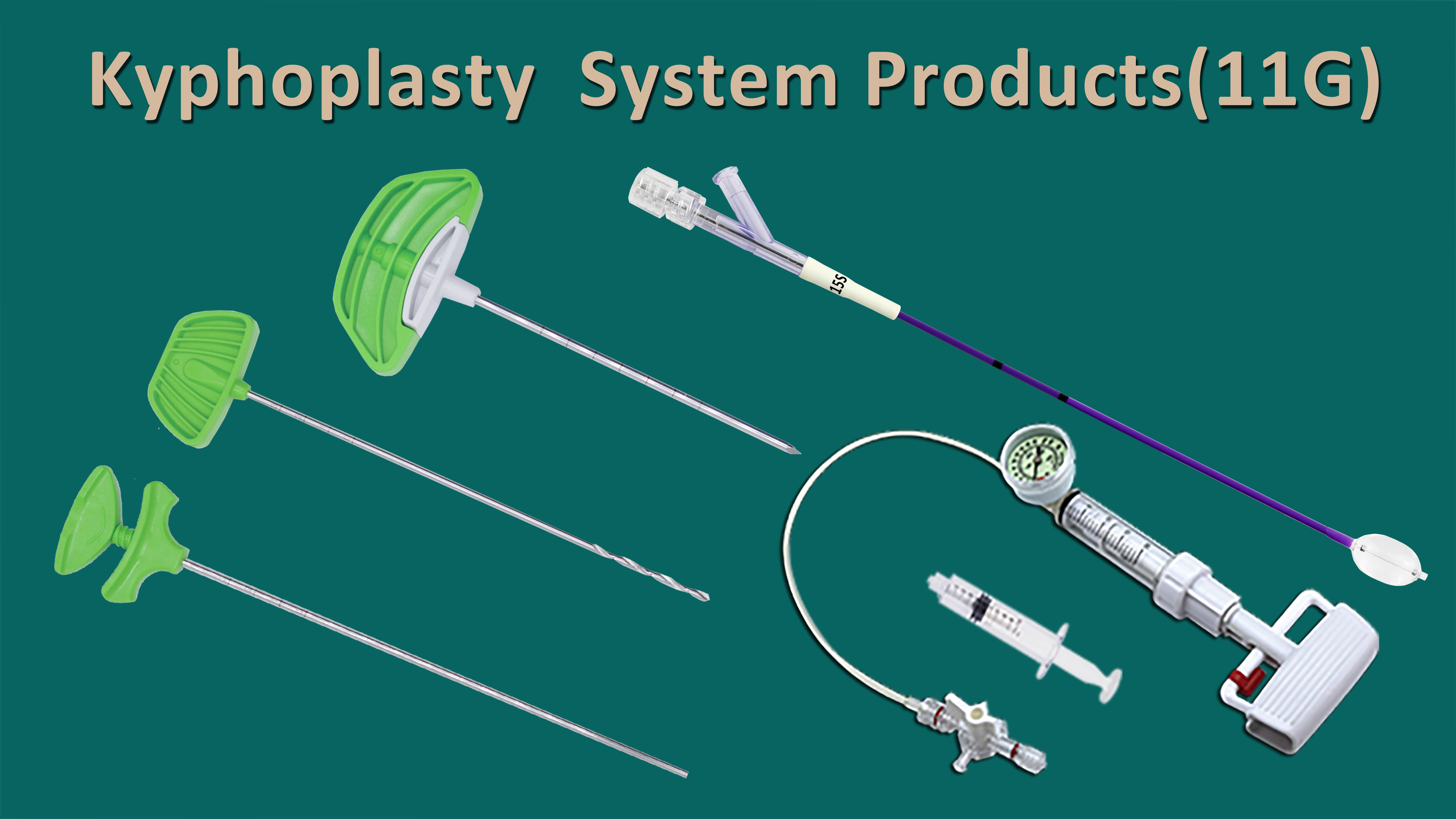
The KT-00-05 is an 11G, CE-marked (CE 0123) and ISO 13485-certified PKP instrument set for percutaneous vertebral augmentation. It gives orthopedic and spine surgeons the working channel needed for balloon inflation and bone cement delivery in balloon kyphoplasty and vertebroplasty. Each sterile, single-use kit contains:
- 2 puncture expandor modules for controlled tract dilation
- 1 bone drill for cortical penetration, with a cutting tip in 32Cr13Mo stainless steel
- 6 bone cement filling devices for controlled polymethylmethacrylate (PMMA) delivery into the created vertebral cavity
Most metal parts are produced from 06Cr19Ni10 medical-grade stainless steel, and joint connection strength is rated at not less than 100 N, so the tray tolerates tight pedicular navigation without disassembly. The kit is EO-sterilized and single-use. In a procedure plan, the KT-00-05 is the access and delivery counterpart to the KB0210S1 catheter and the BI-20A-10 inflator; the three components are engineered to work as one 11G system. For 8G programmes, the equivalent tray is the KT-00-01, a 14-piece instrument set combining puncture devices, a puncture expandor module, expandor devices, a bone drill, guide wires, and six bone cement filling devices, paired with the 8G KB0210, KB0115, or KB0120 catheter.
The BI-20A-10 balloon inflator completes the system
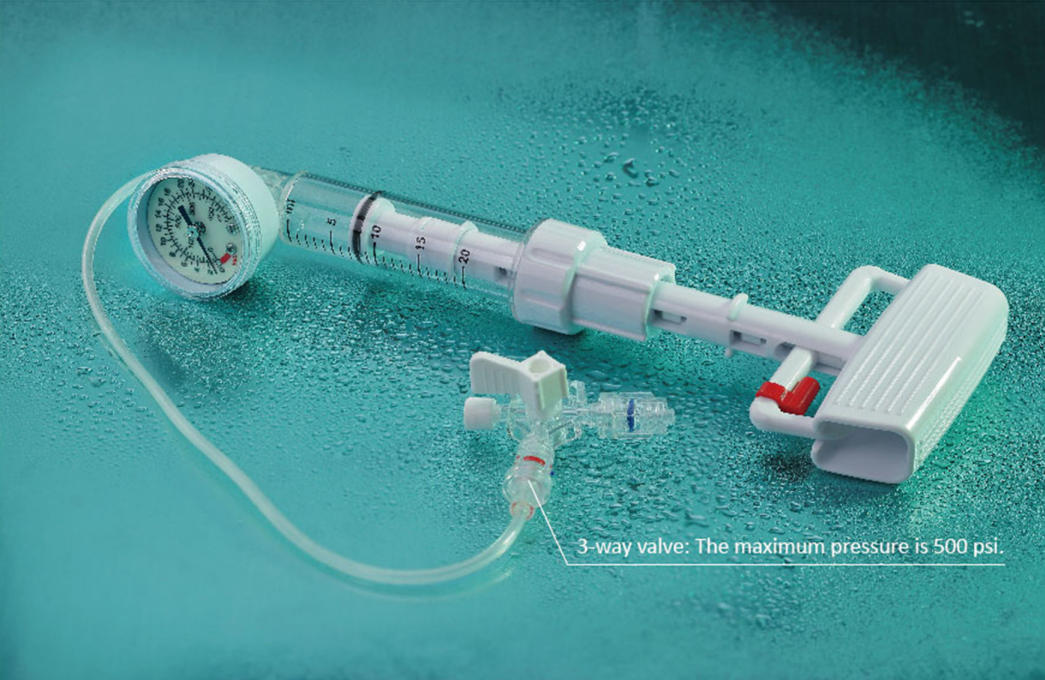
The BI-20A-10 is a single-use, CE-MDR and ISO 13485 certified kyphoplasty balloon inflation device with a 20 cc nominal capacity and a 30 atm maximum pressure, supplied preconfigured with a 10 ml syringe for immediate hydraulic connection to kyphoplasty balloon catheters. The barrel, threaded sleeve, three-way valve, and joint are molded from polycarbonate, the connecting tube from polyurethane, the piston from silicone rubber, the pull rod from POM, and the push rod from PC/ABS. A screw-fixed fluorescent pressure gauge supports readability in low-light operating rooms, and the O-type low-friction plunger with an ergonomic handle lets the operator build and hold pressure steadily while dilating the vertebral body under fluoroscopy. Its intended use is hydraulic pressurization of kyphoplasty balloon catheters to dilate the vertebral body and form a cavity for bone cement injection in PKP and vertebroplasty.
Step-by-Step Breakdown: Selecting a Setting-Appropriate PKP System
- Confirm the indication and complete imaging. Kyphoplasty is indicated only for painful VCFs of osteoporotic, low-energy traumatic, or neoplastic origin. Cross-sectional imaging (CT or MRI) is required before the case to evaluate posterior wall integrity, canal diameter, and any neural compression.
- Screen contraindications before equipment is committed. Absolute contraindications include burst fractures with posterior cortical disruption, retropulsed bone fragments in the spinal canal, asymptomatic fractures, active systemic or local infection, uncorrectable coagulopathy, and allergy to implant components such as PMMA, contrast medium, or latex. Relative contraindications include severe spinal stenosis, vertebral collapse beyond 75–80% of original height, and non-ambulatory paraplegic patients.
- Choose the access gauge. Select the 8G family (KB0115, KB0120, KB0210) with the KT-00-01 tray when the programme works through an 8G channel, or the 11G family (KB0115S1, KB0120S1, KB0210S1) with the KT-00-05 tray when a narrower access profile and shorter working length are preferred.
- Choose the marker span and fill volume. Match the cavity the team intends to create: 10 mm span with 3–4 cc volume, 15 mm span with 4 cc, or 20 mm span with 6 cc.
- Verify system interoperability. Confirm that the catheter, tool kit, and inflator form one matched set. The BI-20A-10 provides 20 cc nominal capacity at up to 30 atm, while the catheters in this guide are rated to a constrained burst pressure of ≥400 PSI.
- Plan cavity creation. Under biplane fluoroscopy, a working cannula is introduced transpedicularly or parapedicularly into the anterior two-thirds of the fractured vertebral body. The inflatable bone tamp is inserted through the cannula and inflated with iodinated contrast to a predetermined pressure limit — typically 50–300 psi depending on vertebral body resistance — creating a contained central cavity and partially restoring vertebral height while reducing the local kyphotic angle.
- Deliver the cement and document traceability. After deflation and balloon removal, low-viscosity PMMA bone cement is hand-injected into the contained cavity under low pressure, which limits extravasation compared with direct vertebroplasty injection. The six bone cement filling devices in the KT-00-05 support multiple controlled fills from one tray. All catheters and kits are single-use and EO-sterilized with a 3-year shelf life — never re-sterilize or reuse, and always follow the official instructions for use.
Use Cases: Four Settings, Four Configurations
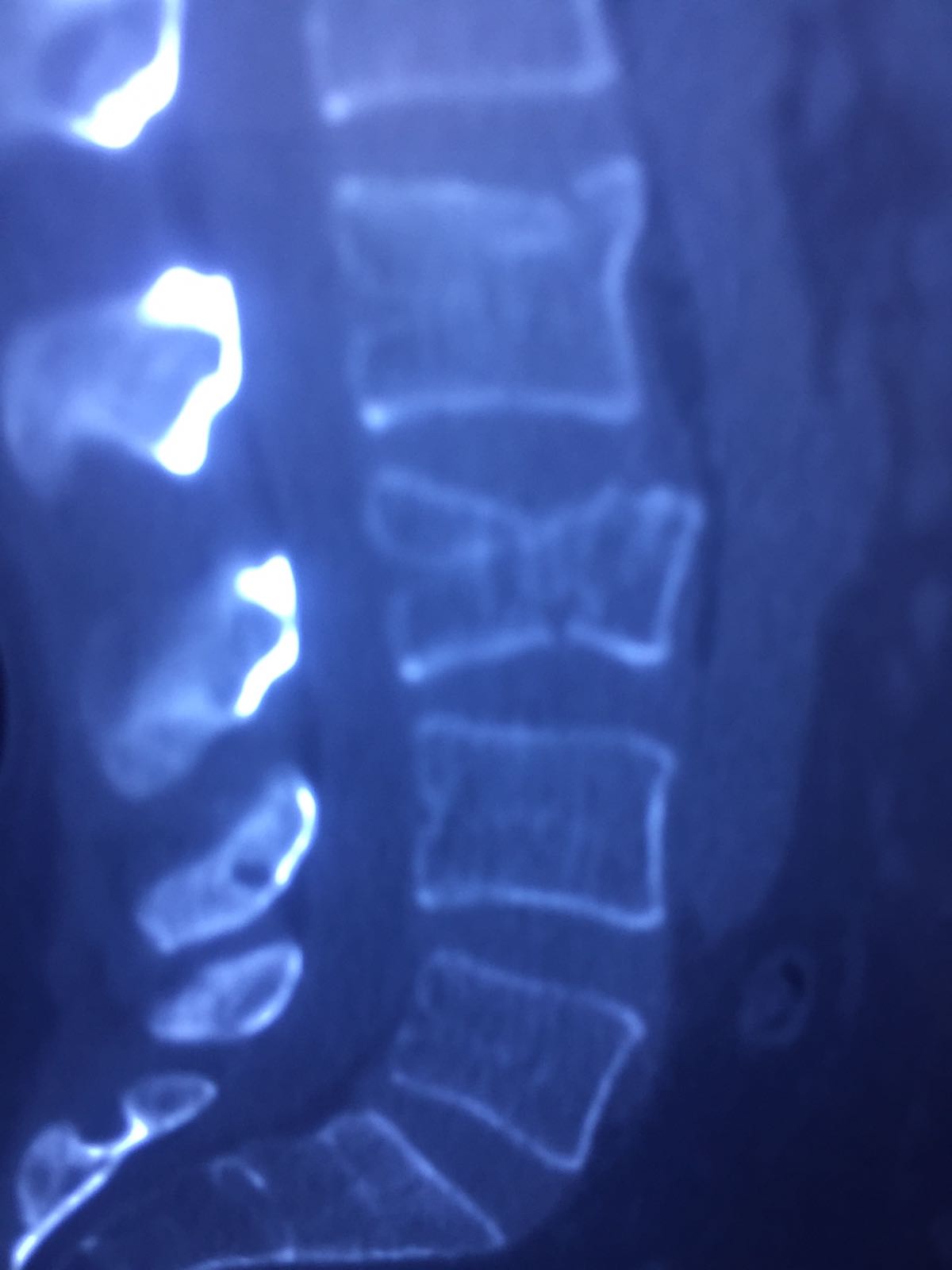
1. Tertiary hospital orthopedic and spine operating room. Multi-level osteoporotic VCF cases where height restoration is a stated objective favour the 20 mm, 6 cc KB0120 on the 8G platform, paired with the KT-00-01 tray and the BI-20A-10 inflator. The longer marker span supports cavity creation across a longer working segment under local anesthesia, and the 8G channel gives the team room to work with familiar access hardware.
2. Interventional pain clinic or spine ASC. Single-level, narrow-access cases with a deliberately small target cavity are the natural fit for the 11G KB0210S1 — 10 mm marker span, 3 cc maximum volume, 280 mm length — paired with the KT-00-05 tool kit. A lighter, compact tray reduces shelf space and preparation steps in a facility where the procedure is one of several in a daily list.
3. Interventional radiology suite. When the team wants a mid-length cavity and the option of a shorter working length, the 15 mm configuration applies: KB0115 on the 8G platform, or KB0115S1 on the 11G platform with the KT-00-05 tray.
4. Documented project application — egg shell technique in VCF. CHANGMEI publishes a clinical reference report on the use of its kyphoplasty platform in vertebral compression fractures managed with the egg shell technique in Kuwait. For distributors and hospital procurement teams, documented project applications of this kind are useful evidence when evaluating whether a supplier's devices have been used in real procedure settings rather than only in catalogue listings.
Comparison Table: Model and Accessory Specifications
The two tables below place the three guide models alongside their family counterparts and the two vertebral augmentation tool kits, using only published CHANGMEI specifications.
| Model | Gauge | Marker distance | Channel ID | Overall length | Max volume | Burst pressure | Paired tool kit |
|---|---|---|---|---|---|---|---|
| KB0115 | 8G | 15 mm | ≥3.65 mm | 315 mm | 4 cc | ≥400 PSI | KT-00-01 |
| KB0120 | 8G | 20 mm | ≥3.65 mm | 315 mm | 6 cc | ≥400 PSI | KT-00-01 |
| KB0210S1 | 11G | 10 mm | ≥3.10 mm | 280 mm | 3 cc | ≥400 PSI | KT-00-05 |
All three models share the same balloon construction (medical-grade TPU film, PU shaft, radiopaque markers, stainless-steel stylet), CE-MDR marking, ISO 13485 certification, EO sterilization, single-use design, and a 3-year validated shelf life. All pair with the BI-20A-10 balloon inflator (20 cc nominal capacity, 30 atm maximum pressure).
| Related model | Gauge | Marker distance | Channel ID | Overall length | Max volume | Burst pressure |
|---|---|---|---|---|---|---|
| KB0115S1 | 11G | 15 mm | ≥3.10 mm | 280 mm | 4 cc | ≥400 PSI |
| KB0120S1 | 11G | 20 mm | ≥3.10 mm | 280 mm | 6 cc | ≥400 PSI |
| KB0210 | 8G | 10 mm | ≥3.65 mm | 315 mm | 4 cc | ≥400 PSI |
| Tool kit | Gauge | Contents | Paired catheter | Paired inflator | Certification |
|---|---|---|---|---|---|
| KT-00-05 | 11G | 2 puncture expandor modules, 1 bone drill, 6 bone cement filling devices | KB0210S1 (also KB0115S1, KB0120S1) | BI-20A-10 | CE 0123, ISO 13485 |
| KT-00-01 | 8G | 2 puncture devices, 1 puncture expandor module, 2 expandor devices, 1 bone drill, 2 guide wires, 6 bone cement filling devices | KB0210 (also KB0115, KB0120) | BI-20A-10 | CE 0123, ISO 13485 |
FAQ
Are CHANGMEI kyphoplasty balloon catheters single-use, and how are they sterilized?
The kyphoplasty balloon catheters covered in this guide are single-use sterile medical devices; reuse is prohibited. They are sterilized by ethylene oxide (EO) and validated for a 3-year shelf life. Use the device immediately once the package is opened, do not re-sterilize or reuse it, and always follow the official instructions for use.
What are the contraindications for a kyphoplasty balloon catheter?
The device is not applicable for patients with a damaged vertebral posterior edge, nerve injury, infection at the operative site, or uncorrectable coagulopathy. Broader procedural screening also excludes burst fractures with posterior cortical disruption, retropulsed bone fragments in the spinal canal, asymptomatic fractures, active systemic or local infection, and allergy to implant components such as PMMA, contrast medium, or latex. Full contraindications are listed in the instructions for use and should be reviewed before any clinical operation.
How should a buyer choose between the 8G and 11G kyphoplasty models?
Gauge determines the access channel dimension and the compatible instrument tray. The 8G family — KB0115 (15 mm, 4 cc), KB0120 (20 mm, 6 cc), and KB0210 (10 mm, 4 cc) — works with the KT-00-01 tool kit. The 11G family — KB0115S1 (15 mm, 4 cc), KB0120S1 (20 mm, 6 cc), and KB0210S1 (10 mm, 3 cc) — works with the KT-00-05 tool kit and shares a 280 mm overall length with a ≥3.10 mm channel inner diameter.
Which catheter configuration fits a pain management clinic or a single-level narrow-access case?
The KB0210S1 is designed for that profile: 11G access, a 10 mm distance between the two radiopaque markers, a 3 cc maximum inflation volume, and a 280 mm overall length, paired with the KT-00-05 11G tool kit and the BI-20A-10 inflator. Where a longer cavity is required through the same narrow access, the KB0115S1 (15 mm marker span, 4 cc) or the KB0120S1 (20 mm marker span, 6 cc) can be specified instead, and both remain compatible with the KT-00-05 tray.
What quality and regulatory documentation should be expected from the manufacturer?
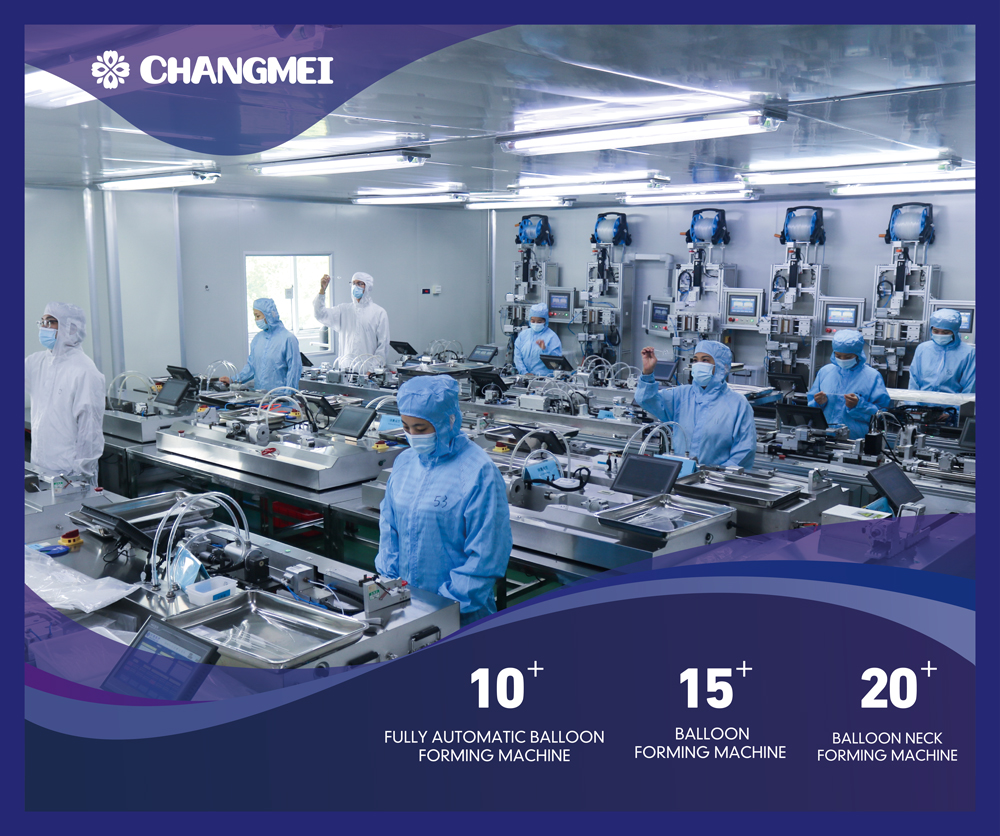
The KB-series kyphoplasty balloon catheters are CE-MDR marked, ISO 13485 certified, and hold US market authorization under FDA 510(k) clearance K223709 (Product Code HRX, Class II, 21 CFR 888.1100, cleared August 16, 2023). The KT-00-05 tool kit carries CE marking (CE 0123) and ISO 13485 certification. Components are manufactured under a TÜV SÜD-audited quality system at Jiangsu Changmei Medtech's 51,985 m² facility with GMP-class cleanroom production, and annual kyphoplasty balloon catheter capacity reaches 1,000,000 units. For buyers who want to verify these points against a written specification, samples, a formal quotation, and the product catalogue can be requested directly from the manufacturer; the CE and FDA kyphoplasty system brochure is available for download below.
Conclusion: Start From the Setting, Then Choose the Model
Aligning kyphoplasty device choice with procedure setting is a short, disciplined exercise. Confirm the indication and imaging, screen the contraindications, choose the access gauge, then match the marker span and maximum inflation volume to the cavity the team intends to create. On that logic, the CHANGMEI range resolves cleanly: the KB0120 (20 mm, 6 cc, 8G) for larger height-restoration work in hospital spine and orthopedic theatres, the KB0115 (15 mm, 4 cc, 8G) for mid-length cavities with familiar 8G access, and the KB0210S1 (10 mm, 3 cc, 11G) for narrow-access, single-level procedures in pain management and interventional pain clinic settings — with the KT-00-05 tool kit and BI-20A-10 inflator completing a matched 11G system and the KT-00-01 set covering the 8G pathway. Standardizing on a single SKU across all four settings is the decision most likely to create friction later; matching the model to the setting is the decision that holds up across a tender cycle.
Jiangsu Changmei Medtech Co., Ltd. was established in 2013 and specializes in the full-cycle development of minimally invasive surgical instruments. Its main products are the Kyphoplasty Balloon Catheter, Kyphoplasty Tool Kit, and Balloon Inflator, manufactured at a 51,985 m² facility by approximately 235 staff, with export business accounting for 30% of total sales. Major markets include the EU, USA, Asia, South America, and Middle East. The company states it holds approximately 80% of the Chinese domestic market for kyphoplasty balloon catheters and supplies member companies of Stryker and Medtronic.
Next Step: Match a Kyphoplasty System to Your Setting
CHANGMEI supports hospitals, spine ASCs, interventional pain clinics, and distributors with model-level selection support, samples for evaluation, formal quotations, OEM/ODM customization on gauge, length, and instrument configuration, and regulatory documentation packages.
Product catalogue and specifications: Kyphoplasty System Products (8G & 11G) — CE and FDA brochure
Contact: Mark | Email: cyz@czmed.com | Tel / WhatsApp: +86 138-1368-7682 | Website: www.czmed.com
Tell us your procedure setting, access gauge, and expected case volume, and we will confirm which KB-series balloon catheter, tool kit, and inflator combination fits your programme.